From Collections to Engagement: 
The Changing Role of Liaison 
Librarians 
Kathryn Crowe 
University of North Carolina at Greensboro 
Academic Library Director’s Forum 
Shanghai, China 
November 2014
Changing roles 
Traditional 
• Reference desk 
• Collection management 
• Information literacy 
• Consultations 
New trends 
• Engaged and embedded 
• Scholarly communication 
• Curriculum design 
• Streamlined collection 
management 
• In-depth research 
assistance
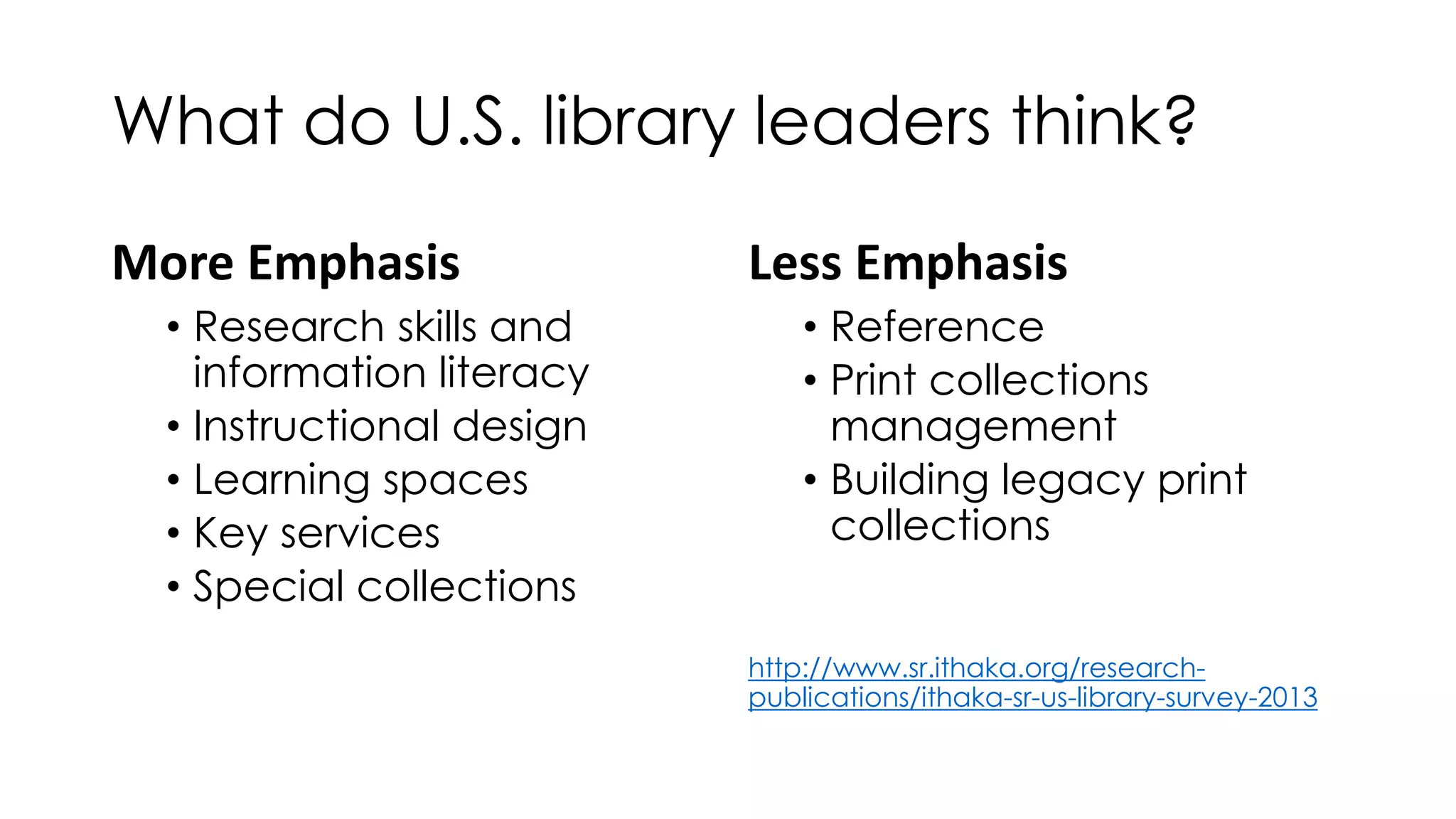
What do U.S. library leaders think? 
More Emphasis 
• Research skills and 
information literacy 
• Instructional design 
• Learning spaces 
• Key services 
• Special collections 
Less Emphasis 
• Reference 
• Print collections 
management 
• Building legacy print 
collections 
http://www.sr.ithaka.org/research-publications/ 
ithaka-sr-us-library-survey-2013
Leveraging the Liaison Model (Ithaka 
S&R 2014) 
Themes 
• Shifting focus to work of 
scholars 
• Address new demands 
and expectations 
• Promoting tools and 
templates 
Recommendations 
• Align with university goals 
and indicators 
• Collaborate with campus 
assessment 
• Quantify progress toward 
goals 
http://www.sr.ithaka.org/blog-individual/ 
leveraging-liaison-model-defining- 
21st-century-research-libraries-implementing- 
21st
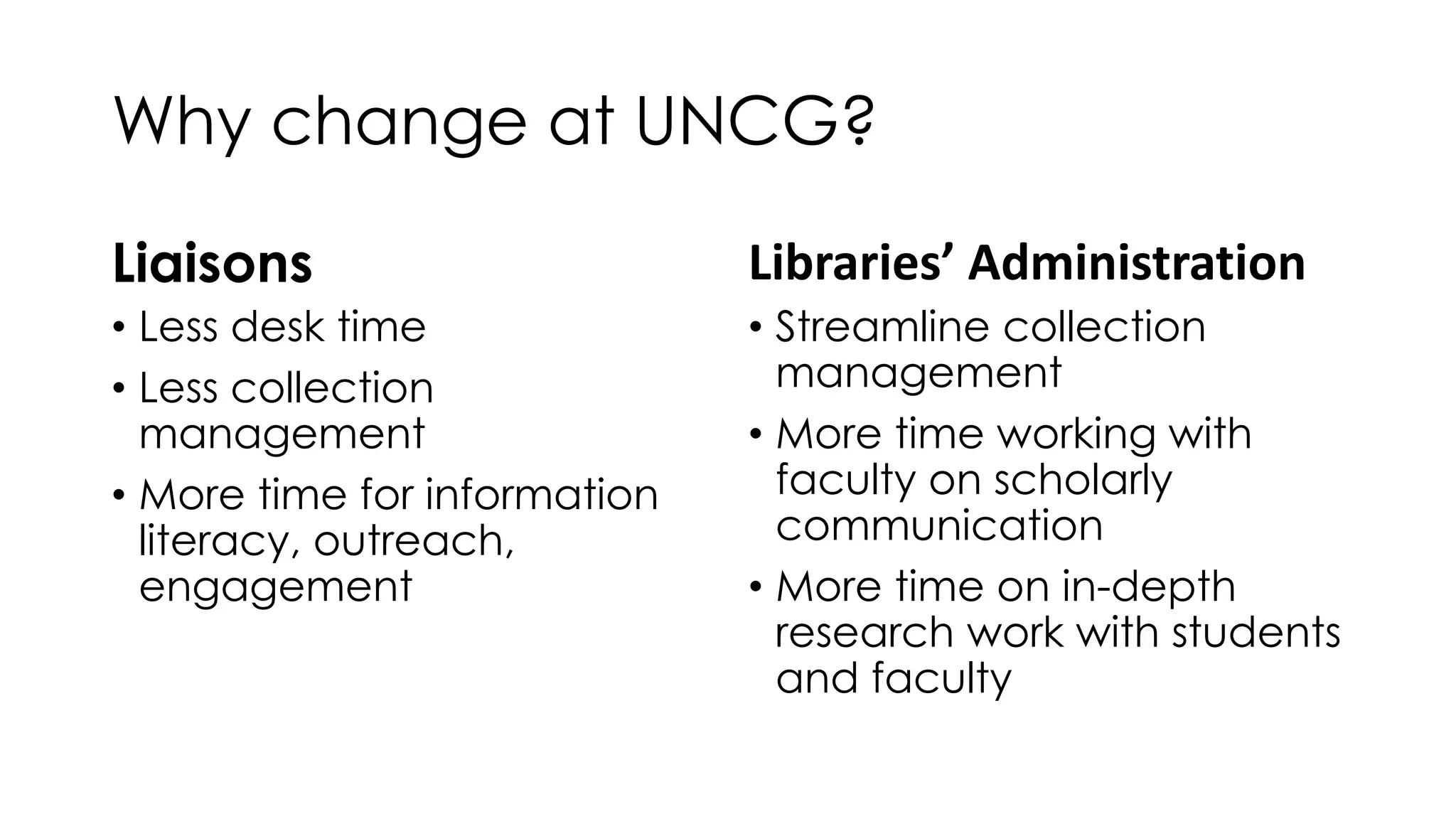
Why change at UNCG? 
Liaisons 
• Less desk time 
• Less collection 
management 
• More time for information 
literacy, outreach, 
engagement 
Libraries’ Administration 
• Streamline collection 
management 
• More time working with 
faculty on scholarly 
communication 
• More time on in-depth 
research work with students 
and faculty
Reorganization process 
• Appointed task force 
to: 
• Examine past and 
current liaison 
responsibilities 
• Benchmark other 
libraries 
• Recommend models for 
new organizational 
structure
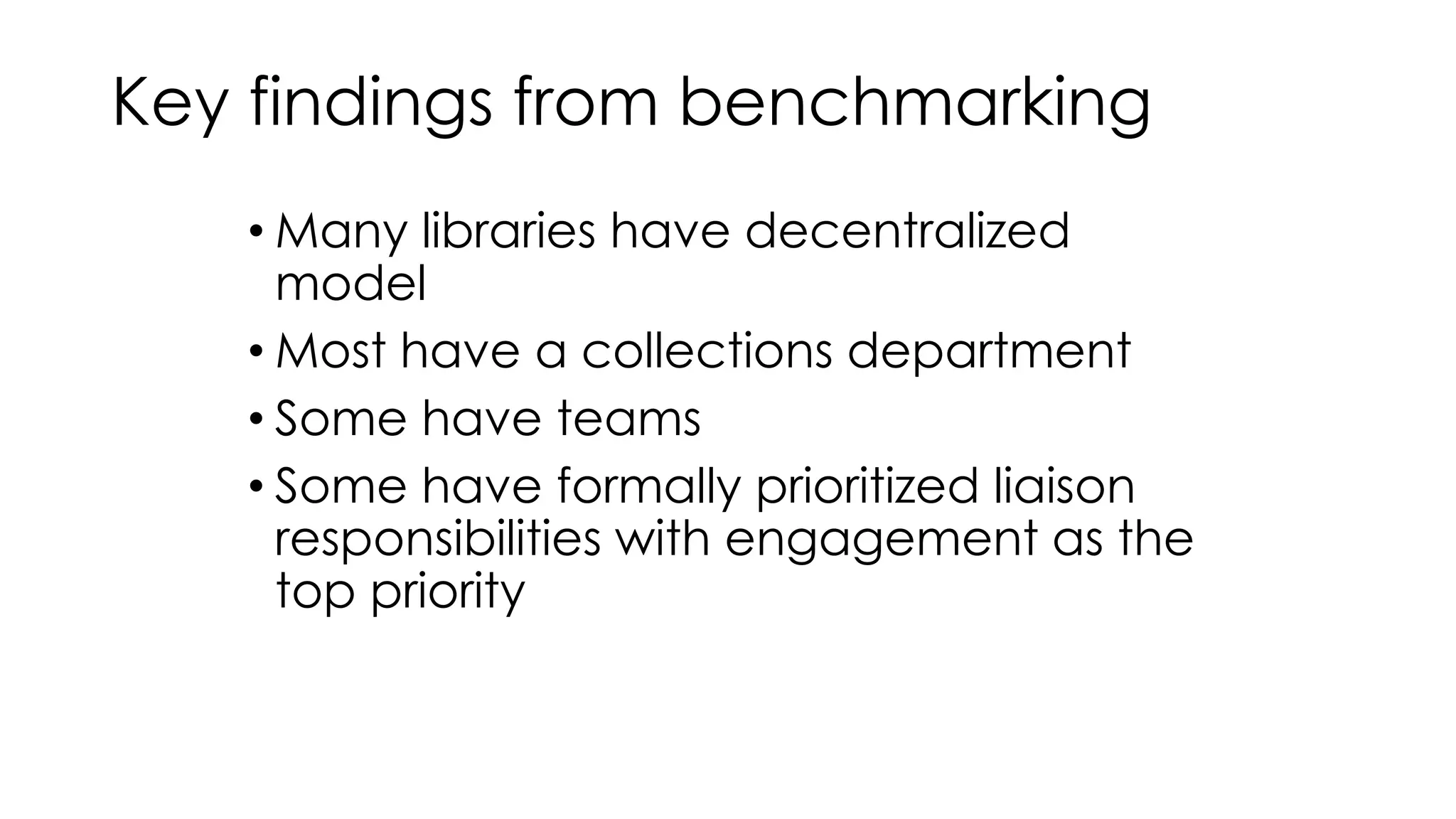
Key findings from benchmarking 
• Many libraries have decentralized 
model 
• Most have a collections department 
• Some have teams 
• Some have formally prioritized liaison 
responsibilities with engagement as the 
top priority
Previous structure 
Reference & 
Instructional 
Services 
Electronic 
Resources & 
Information 
Technology 
Library 
Administration 
Various liaisons Various liaisons Various liaisons 
Collection Management Committee 
(chaired by head of Collections) 
(also included non-liaisons, ex. the head of Acquisitions)
New structure 
Instruction 
Coordinator 
Head, Research, 
Outreach and 
Instruction 
AD for Collections 
& Scholarly 
Communications 
The leadership 
team, along with the 
3 subject team 
coordinators 
Humanities 
Team 
Social 
Science 
Team 
Natural 
Science 
Team 
AD for 
Public 
Services 
Staff & 
student 
worker 
support 
Reference Desk 
Coordinator
Functional teams: 
Composed of liaisons from each 
subject team plus other librarians & staff 
Instruction 
Team 
Social 
Science 
Team 
Humanities 
Team 
Natural 
Science 
Team 
Reference 
Desk Team 
Collections 
Team 
Scholarly 
Communications 
Team
Planning & implementation timeline (2013-14) 
2013 
Jan Feb March April May June July Aug Sep Oct Nov Dec 
Implement Collections 
Team in Acquisitions 
Liaisons track their tasks 
& work load, & 
contemplate prioritizing 
& dropping roles 
Liaisons officially 
prioritize roles 
Begin formation of ”Liaison 
Department” with teams & 
functional coordinators 
Establish best practices & have 
training on working in teams 
Discuss roles of 
functional coordinators 
Increased focus on scholarly 
communication, open 
access, & research support
Planning & implementation timeline 
2014 
Jan Feb March April May June July Aug Sep Oct Nov Dec 
+ 
Redefined roles 
of liaisons continue 
Liaisons evaluate 
developments 
so far 
Final Implementation
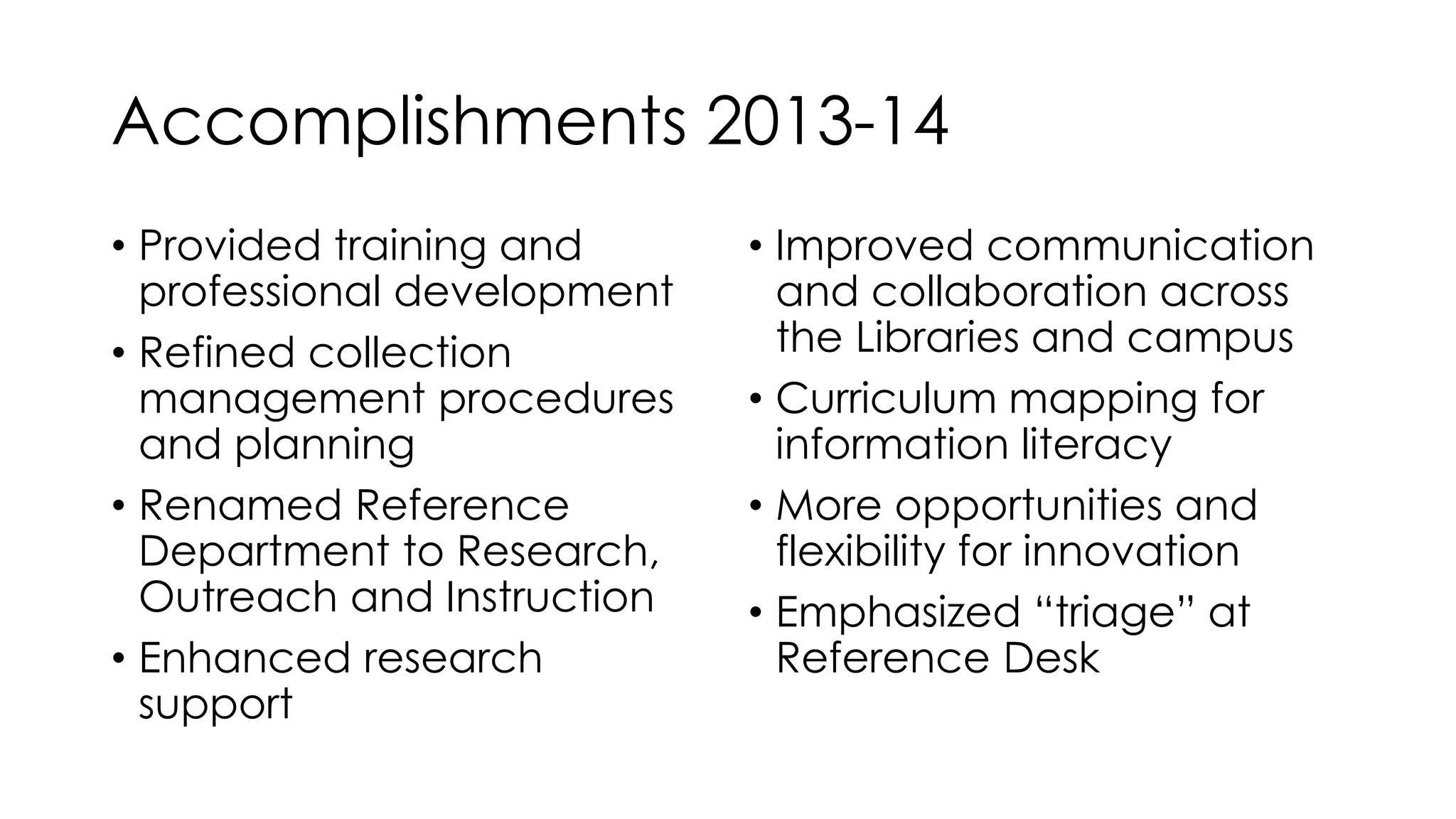
Accomplishments 2013-14 
• Provided training and 
professional development 
• Refined collection 
management procedures 
and planning 
• Renamed Reference 
Department to Research, 
Outreach and Instruction 
• Enhanced research 
support 
• Improved communication 
and collaboration across 
the Libraries and campus 
• Curriculum mapping for 
information literacy 
• More opportunities and 
flexibility for innovation 
• Emphasized “triage” at 
Reference Desk
Challenges 
• Team structure can be “messy” 
• Some resistance to change 
• Communication -- much improved but always an issue! 
• What do we give up? 
• Staffing issues
What’s next? 
• Focus goals and measures 
• Continue training and professional development 
• Monthly informal “coffee break” meetings 
• Increase communication of value to the campus 
• Improve collections planning 
• Refine performance evaluation process
Recommendations 
• Must have buy-in and participation at all levels 
• Align with library and university goals 
• You can’t communicate too much! 
• Tell your story
More information 
• Liaison Task Force Report 
• http://tinyurl.com/liaisontf 
• Email: 
kmcrowe@uncg.edu

From Collections to Engagement: The Changing Role of Liaison Librarians

  • 1.
    From Collections toEngagement: The Changing Role of Liaison Librarians Kathryn Crowe University of North Carolina at Greensboro Academic Library Director’s Forum Shanghai, China November 2014
  • 2.
    Changing roles Traditional • Reference desk • Collection management • Information literacy • Consultations New trends • Engaged and embedded • Scholarly communication • Curriculum design • Streamlined collection management • In-depth research assistance
  • 3.
    What do U.S.library leaders think? More Emphasis • Research skills and information literacy • Instructional design • Learning spaces • Key services • Special collections Less Emphasis • Reference • Print collections management • Building legacy print collections http://www.sr.ithaka.org/research-publications/ ithaka-sr-us-library-survey-2013
  • 4.
    Leveraging the LiaisonModel (Ithaka S&R 2014) Themes • Shifting focus to work of scholars • Address new demands and expectations • Promoting tools and templates Recommendations • Align with university goals and indicators • Collaborate with campus assessment • Quantify progress toward goals http://www.sr.ithaka.org/blog-individual/ leveraging-liaison-model-defining- 21st-century-research-libraries-implementing- 21st
  • 5.
    Why change atUNCG? Liaisons • Less desk time • Less collection management • More time for information literacy, outreach, engagement Libraries’ Administration • Streamline collection management • More time working with faculty on scholarly communication • More time on in-depth research work with students and faculty
  • 6.
    Reorganization process •Appointed task force to: • Examine past and current liaison responsibilities • Benchmark other libraries • Recommend models for new organizational structure
  • 7.
    Key findings frombenchmarking • Many libraries have decentralized model • Most have a collections department • Some have teams • Some have formally prioritized liaison responsibilities with engagement as the top priority
  • 8.
    Previous structure Reference& Instructional Services Electronic Resources & Information Technology Library Administration Various liaisons Various liaisons Various liaisons Collection Management Committee (chaired by head of Collections) (also included non-liaisons, ex. the head of Acquisitions)
  • 9.
    New structure Instruction Coordinator Head, Research, Outreach and Instruction AD for Collections & Scholarly Communications The leadership team, along with the 3 subject team coordinators Humanities Team Social Science Team Natural Science Team AD for Public Services Staff & student worker support Reference Desk Coordinator
  • 10.
    Functional teams: Composedof liaisons from each subject team plus other librarians & staff Instruction Team Social Science Team Humanities Team Natural Science Team Reference Desk Team Collections Team Scholarly Communications Team
  • 11.
    Planning & implementationtimeline (2013-14) 2013 Jan Feb March April May June July Aug Sep Oct Nov Dec Implement Collections Team in Acquisitions Liaisons track their tasks & work load, & contemplate prioritizing & dropping roles Liaisons officially prioritize roles Begin formation of ”Liaison Department” with teams & functional coordinators Establish best practices & have training on working in teams Discuss roles of functional coordinators Increased focus on scholarly communication, open access, & research support
  • 12.
    Planning & implementationtimeline 2014 Jan Feb March April May June July Aug Sep Oct Nov Dec + Redefined roles of liaisons continue Liaisons evaluate developments so far Final Implementation
  • 13.
    Accomplishments 2013-14 •Provided training and professional development • Refined collection management procedures and planning • Renamed Reference Department to Research, Outreach and Instruction • Enhanced research support • Improved communication and collaboration across the Libraries and campus • Curriculum mapping for information literacy • More opportunities and flexibility for innovation • Emphasized “triage” at Reference Desk
  • 14.
    Challenges • Teamstructure can be “messy” • Some resistance to change • Communication -- much improved but always an issue! • What do we give up? • Staffing issues
  • 15.
    What’s next? •Focus goals and measures • Continue training and professional development • Monthly informal “coffee break” meetings • Increase communication of value to the campus • Improve collections planning • Refine performance evaluation process
  • 16.
    Recommendations • Musthave buy-in and participation at all levels • Align with library and university goals • You can’t communicate too much! • Tell your story
  • 17.
    More information •Liaison Task Force Report • http://tinyurl.com/liaisontf • Email: kmcrowe@uncg.edu

Editor's Notes

  • #5 Great model is National Science Library of Chinese Academy of Sciences.
  • #7 Had a traditional reference dept. Most liaisons in Reference. Liaisons wanted to do less collection management and desk work to focus on information literacy and consultations. Administration wanted liaisons to work with scholarly communication. Issues with no clear line of authority for many liaison responsibilities
  • #10 TF recommended several models; This is what we decided on. Changed Reference Dept name to “Research, Outreach and Instruction.”
  • #11 “Instruction” includes instructional technology. We decided it’s not useful to separate instruction from instructional tech. We will probably create the Scholarly Communications Team in the near future.
  • #14 Dept name change reflects activities, SC team new, data management guide, better and more intentional planning for collections , more flexibility, Team training, in-house on resources, teaching techniques; webinars; meetings less formal, more focused, Open house to inform all Libraries staff on changes and why. Retreat discussed the academic year, accomplishments and plans for the future
  • #15 Didn’t accomplish as much as we wanted; no clear line of authority; performance reviews an issue
  • #16 Especially need training in SC and data management