Fringe Benefits: 
Why They Matter
Stay Competitive 
You must stay competitive and find a balance between 
employee retention and backlog. Focus on indirect costs and 
what can be done to reduce them and/or make them variable.
Cut the Fringe? 
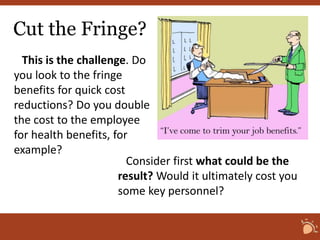
This is the challenge. Do 
you look to the fringe 
benefits for quick cost 
reductions? Do you double 
the cost to the employee 
for health benefits, for 
example? 
Consider first what could be the 
result? Would it ultimately cost you 
some key personnel?
Fringe Rate – What Does it Cost? 
Fringe benefits are accounted for in the fringe rate 
(total cost of fringe benefits/wages), a multiplier used 
to calculate the total cost of labor. 
Fringe rates within the BBRS-supported companies 
range from 30 percent to 100 percent (depending on 
the employee’s wages and benefits elected), with an 
average rate of about 45 percent, so for every $1 of 
labor, there is a total cost of $1.45 to include fringe 
benefits.
Fringe Benefits – What are They? 
Fringe benefits are costs paid by 
employers on behalf of their 
employees in addition to normal wages 
and salaries …
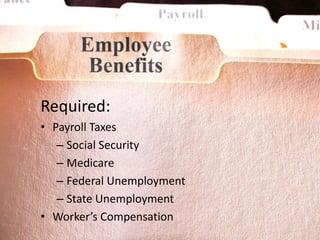
Required: 
• Payroll Taxes 
– Social Security 
– Medicare 
– Federal Unemployment 
– State Unemployment 
• Worker’s Compensation
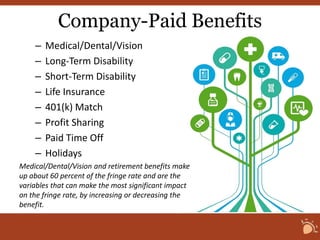
Company-Paid Benefits 
– Medical/Dental/Vision 
– Long-Term Disability 
– Short-Term Disability 
– Life Insurance 
– 401(k) Match 
– Profit Sharing 
– Paid Time Off 
– Holidays 
Medical/Dental/Vision and retirement benefits make 
up about 60 percent of the fringe rate and are the 
variables that can make the most significant impact 
on the fringe rate, by increasing or decreasing the 
benefit.
Optional Company Offerings 
• Company Offerings 
– Flexible Spending Account 
– Discount Programs 
Optional, but valued by employees
Cost vs. Value 
• A great fringe benefit package typically comes with a 
significant price tag, but is a key factor in attracting 
and retaining personnel. 
• Some of the most frequently leveraged benefits to 
retain “high-performing employees” were health 
care and retirement benefits, according to a 2013 
report from the Society for Human Resource 
Management (SHRM).
Reference materials 
• One in five (20 percent) organizations reported 
leveraging their benefits program to retain 
employees, according to State of Employee Benefits 
in the Workplace—Leveraging Benefits to Retain 
Employees - See more at: 
http://www.shrm.org/hrdisciplines/benefits/articles/ 
pages/benefits-recruit-retain-communicate. 
aspx#sthash.KbQVnpXH.dpuf 
• (http://www.shrm.org/hrdisciplines/benefits/articles 
/pages/benefits-recruit-retain-communicate.aspx).

Fringe Benefits: Why They Matter

  • 1.
  • 2.
    Stay Competitive Youmust stay competitive and find a balance between employee retention and backlog. Focus on indirect costs and what can be done to reduce them and/or make them variable.
  • 3.
    Cut the Fringe? This is the challenge. Do you look to the fringe benefits for quick cost reductions? Do you double the cost to the employee for health benefits, for example? Consider first what could be the result? Would it ultimately cost you some key personnel?
  • 4.
    Fringe Rate –What Does it Cost? Fringe benefits are accounted for in the fringe rate (total cost of fringe benefits/wages), a multiplier used to calculate the total cost of labor. Fringe rates within the BBRS-supported companies range from 30 percent to 100 percent (depending on the employee’s wages and benefits elected), with an average rate of about 45 percent, so for every $1 of labor, there is a total cost of $1.45 to include fringe benefits.
  • 5.
    Fringe Benefits –What are They? Fringe benefits are costs paid by employers on behalf of their employees in addition to normal wages and salaries …
  • 6.
    Required: • PayrollTaxes – Social Security – Medicare – Federal Unemployment – State Unemployment • Worker’s Compensation
  • 7.
    Company-Paid Benefits –Medical/Dental/Vision – Long-Term Disability – Short-Term Disability – Life Insurance – 401(k) Match – Profit Sharing – Paid Time Off – Holidays Medical/Dental/Vision and retirement benefits make up about 60 percent of the fringe rate and are the variables that can make the most significant impact on the fringe rate, by increasing or decreasing the benefit.
  • 8.
    Optional Company Offerings • Company Offerings – Flexible Spending Account – Discount Programs Optional, but valued by employees
  • 9.
    Cost vs. Value • A great fringe benefit package typically comes with a significant price tag, but is a key factor in attracting and retaining personnel. • Some of the most frequently leveraged benefits to retain “high-performing employees” were health care and retirement benefits, according to a 2013 report from the Society for Human Resource Management (SHRM).
  • 10.
    Reference materials •One in five (20 percent) organizations reported leveraging their benefits program to retain employees, according to State of Employee Benefits in the Workplace—Leveraging Benefits to Retain Employees - See more at: http://www.shrm.org/hrdisciplines/benefits/articles/ pages/benefits-recruit-retain-communicate. aspx#sthash.KbQVnpXH.dpuf • (http://www.shrm.org/hrdisciplines/benefits/articles /pages/benefits-recruit-retain-communicate.aspx).