The Best Practices In Benefits Design
SEAN ZAYON
Agency Owner & Lead Benefits Consultant
P: 267-422-2881
E: myphillyinsurancebroker@gmail.com
The Value Of Employee
Benefits
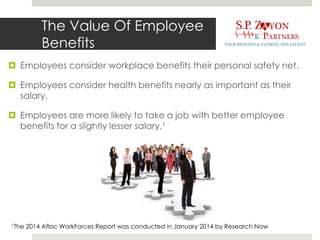
 Employees consider workplace benefits their personal safety net.
 Employees consider health benefits nearly as important as their
salary.
 Employees are more likely to take a job with better employee
benefits for a slightly lesser salary.1
1The 2014 Aflac WorkForces Report was conducted in January 2014 by Research Now
Benefits Package is a
Tool for Employers
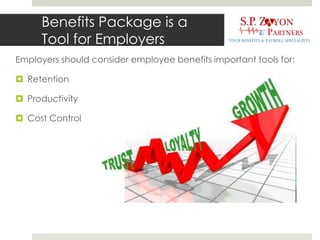
Employers should consider employee benefits important tools for:
 Retention
 Productivity
 Cost Control
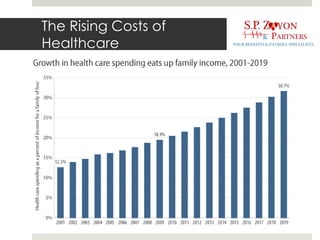
The Rising Costs of
Healthcare
Medical Plans are
Important – and Expensive
 75% of employees rank medical benefits are the most important benefit
after salary.
 Healthcare-related expenditures:
• Represent 17.8% of the U.S. economy(2013) and expected to reach 47%
by 2024.
• Equal three times U.S. defense spending budget (2013)
• Is greater than the amount Americans spend on food, housing and
transportation combined.
 Choosing the right plan is a matter of:
• Balancing premiums and benefits
• Considering all costs of coverage
Types of Plans
• HMOs
• POS
• PPOs
• Indemnity plans (aka “Major Medical”)
Balancing Premiums
and Benefits
But to choose the right plan………
You must consider all costs!
Benefits Monthly Premiums
Members Cost At
Point Of Service
Richer
More Modest
Higher
Higher
Lower
Lower
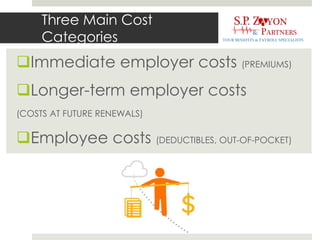
Three Main Cost
Categories
Immediate employer costs (PREMIUMS)
Longer-term employer costs
(COSTS AT FUTURE RENEWALS)
Employee costs (DEDUCTIBLES, OUT-OF-POCKET)
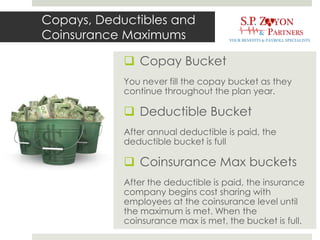
Copays, Deductibles and
Coinsurance Maximums
 Copay Bucket
You never fill the copay bucket as they
continue throughout the plan year.
 Deductible Bucket
After annual deductible is paid, the
deductible bucket is full
 Coinsurance Max buckets
After the deductible is paid, the insurance
company begins cost sharing with
employees at the coinsurance level until
the maximum is met. When the
coinsurance max is met, the bucket is full.
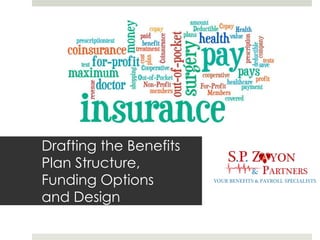
Drafting the Benefits
Plan Structure,
Funding Options
and Design
Contributions
The basis of cost-sharing with employees
Common structures include:
• Employer pays 100% for employee-only coverage, employee
must contribute for dependent coverage.
• Employers and employees share the costs for both employee-
only and dependent coverage.
Can be structured according to employee
classification
Subject to non-discrimination rules
Plan Offerings
Important guidelines:
Keep offerings to two or three plans
maximum, preferably with a “base
plan/buy up” approach
Do not offer plans more than two benefit
levels apart
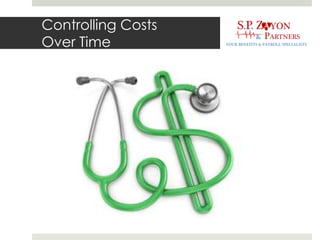
Controlling Costs
Over Time
Relationship Between
Premium and Claims
20% of the population drives 80% of the healthcare
claims
Pools spread risk among many rather than just a few
Premium dollars are polled to help pay large claims
Every group may not have a large claim every year,
but every year groups have large claims
Healthier population = lower healthcare costs = lower
premiums
Strategies to Help
Control Costs
Consider higher cost-sharing with employees
Maximize network discounts with an extensive
provider network
Encourage generic substitution and use of home
delivery
Consider use of TeleMedicine services and
Supplemental Insurance (i.e. Aflac)
Educate employees on wise plan use
Encourage preventive care
Consider use of Wellness Programs
Reduce Exposure with a
Higher Deductible Plan
 Higher deductibles
• Employees still have the benefit of copays from doctor visits and
prescriptions
• Preventive care covered at 100%
• Lowers premium costs
 Adding Supplemental Insurance (i.e. Aflac)
• Helps employees with out-of-pocket expenses like copays and
deductibles pertaining to accidents or illnesses.
 Adding TeleMedicine Services
• Phone a doctor – Saves time and money.
• Discount Dental, Vision, Prescriptions, vitamins
Make it a Package
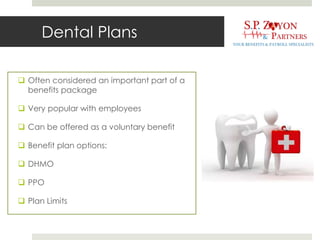
Dental Plans
 Often considered an important part of a
benefits package
 Very popular with employees
 Can be offered as a voluntary benefit
 Benefit plan options:
 DHMO
 PPO
 Plan Limits
Disability Plans
 Disability coverage protects both ministry assets – your people – and
your employees financial security
 One in three employees will be disabled before retirement
 The vast majority of disability claims arise from common conditions like
cardiovascular disease, arthritis, back pain, cancer, pregnancy or
joint issues
 Shot and Long-term disability plans have benefits that coordinate to
provide maximum protection throughout a disability
 Can be offered as a voluntary benefit.
 Can help lower the cost of worker compensation by covering off the
job injuries and keeping employees from filing false claims
Supplemental Insurance
 May be offered as a voluntary benefit
 Policies include:
• Accident
• Hospital Confinement Indemnity
• Cancer/Specified-Disease
• Critical Illness (Specified Health Event)
• Vision
• TeleMedicine
Other Benefits
 Life Insurance
 Annuities
 Retirement Plans
 401(k), 403(b)
 College Planning
 Stock Options
Benefits Design

Benefits Design

  • 1.
    The Best PracticesIn Benefits Design SEAN ZAYON Agency Owner & Lead Benefits Consultant P: 267-422-2881 E: myphillyinsurancebroker@gmail.com
  • 2.
    The Value OfEmployee Benefits  Employees consider workplace benefits their personal safety net.  Employees consider health benefits nearly as important as their salary.  Employees are more likely to take a job with better employee benefits for a slightly lesser salary.1 1The 2014 Aflac WorkForces Report was conducted in January 2014 by Research Now
  • 3.
    Benefits Package isa Tool for Employers Employers should consider employee benefits important tools for:  Retention  Productivity  Cost Control
  • 4.
    The Rising Costsof Healthcare
  • 5.
    Medical Plans are Important– and Expensive  75% of employees rank medical benefits are the most important benefit after salary.  Healthcare-related expenditures: • Represent 17.8% of the U.S. economy(2013) and expected to reach 47% by 2024. • Equal three times U.S. defense spending budget (2013) • Is greater than the amount Americans spend on food, housing and transportation combined.  Choosing the right plan is a matter of: • Balancing premiums and benefits • Considering all costs of coverage
  • 6.
    Types of Plans •HMOs • POS • PPOs • Indemnity plans (aka “Major Medical”)
  • 7.
    Balancing Premiums and Benefits Butto choose the right plan……… You must consider all costs! Benefits Monthly Premiums Members Cost At Point Of Service Richer More Modest Higher Higher Lower Lower
  • 8.
    Three Main Cost Categories Immediateemployer costs (PREMIUMS) Longer-term employer costs (COSTS AT FUTURE RENEWALS) Employee costs (DEDUCTIBLES, OUT-OF-POCKET)
  • 9.
    Copays, Deductibles and CoinsuranceMaximums  Copay Bucket You never fill the copay bucket as they continue throughout the plan year.  Deductible Bucket After annual deductible is paid, the deductible bucket is full  Coinsurance Max buckets After the deductible is paid, the insurance company begins cost sharing with employees at the coinsurance level until the maximum is met. When the coinsurance max is met, the bucket is full.
  • 10.
    Drafting the Benefits PlanStructure, Funding Options and Design
  • 11.
    Contributions The basis ofcost-sharing with employees Common structures include: • Employer pays 100% for employee-only coverage, employee must contribute for dependent coverage. • Employers and employees share the costs for both employee- only and dependent coverage. Can be structured according to employee classification Subject to non-discrimination rules
  • 12.
    Plan Offerings Important guidelines: Keepofferings to two or three plans maximum, preferably with a “base plan/buy up” approach Do not offer plans more than two benefit levels apart
  • 13.
  • 14.
    Relationship Between Premium andClaims 20% of the population drives 80% of the healthcare claims Pools spread risk among many rather than just a few Premium dollars are polled to help pay large claims Every group may not have a large claim every year, but every year groups have large claims Healthier population = lower healthcare costs = lower premiums
  • 15.
    Strategies to Help ControlCosts Consider higher cost-sharing with employees Maximize network discounts with an extensive provider network Encourage generic substitution and use of home delivery Consider use of TeleMedicine services and Supplemental Insurance (i.e. Aflac) Educate employees on wise plan use Encourage preventive care Consider use of Wellness Programs
  • 16.
    Reduce Exposure witha Higher Deductible Plan  Higher deductibles • Employees still have the benefit of copays from doctor visits and prescriptions • Preventive care covered at 100% • Lowers premium costs  Adding Supplemental Insurance (i.e. Aflac) • Helps employees with out-of-pocket expenses like copays and deductibles pertaining to accidents or illnesses.  Adding TeleMedicine Services • Phone a doctor – Saves time and money. • Discount Dental, Vision, Prescriptions, vitamins
  • 17.
    Make it aPackage
  • 18.
    Dental Plans  Oftenconsidered an important part of a benefits package  Very popular with employees  Can be offered as a voluntary benefit  Benefit plan options:  DHMO  PPO  Plan Limits
  • 19.
    Disability Plans  Disabilitycoverage protects both ministry assets – your people – and your employees financial security  One in three employees will be disabled before retirement  The vast majority of disability claims arise from common conditions like cardiovascular disease, arthritis, back pain, cancer, pregnancy or joint issues  Shot and Long-term disability plans have benefits that coordinate to provide maximum protection throughout a disability  Can be offered as a voluntary benefit.  Can help lower the cost of worker compensation by covering off the job injuries and keeping employees from filing false claims
  • 20.
    Supplemental Insurance  Maybe offered as a voluntary benefit  Policies include: • Accident • Hospital Confinement Indemnity • Cancer/Specified-Disease • Critical Illness (Specified Health Event) • Vision • TeleMedicine
  • 21.
    Other Benefits  LifeInsurance  Annuities  Retirement Plans  401(k), 403(b)  College Planning  Stock Options