INTRODUCTION TO
VOLUNTARY BENEFITS
 Created by
 Ron Atkinson, PMP
Objective
2


     Provide brief education for business
     owners and HR professionals on the
     current market conditions that favor
      adding Voluntary Benefits to their
              benefits portfolio.


              INTRODUCTION TO VOLUNTARY BENEFTIS
Current Market Conditions
3
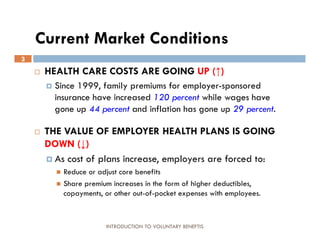
       HEALTH CARE COSTS ARE GOING UP (↑)
           Since 1999, family premiums for employer-sponsored
            insurance have increased 120 percent while wages have
            gone up 44 percent and inflation has gone up 29 percent.

       THE VALUE OF EMPLOYER HEALTH PLANS IS GOING
        DOWN (↓)
         As cost of plans increase, employers are forced to:
               Reduce or adjust core benefits
               Share premium increases in the form of higher deductibles,
                copayments, or other out-of-pocket expenses with employees.


                            INTRODUCTION TO VOLUNTARY BENEFTIS
Current Market Conditions
4

       A COMPREHENSIVE BENEFITS PACKAGE IS
        CRUCIAL FOR :
           Employee retention (satisfaction)
           Talent recruitment in a highly competitive market.

       THE RECENT ECONOMIC DOWNTURN HAS FORCED
        COMPANIES TO REVIEW HOW FUNDS FOR
        EMPLOYEE BENEFITS ARE SPENT.
           Health care benefits are the basis of many corporate
            challenges and can often make the difference between
            profitability and red ink.
                         INTRODUCTION TO VOLUNTARY BENEFTIS
Challenge
5


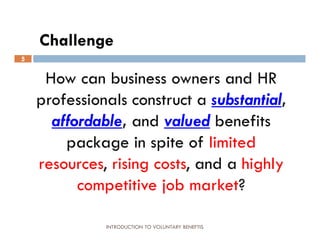
     How can business owners and HR
    professionals construct a substantial,
      affordable, and valued benefits
        package in spite of limited
    resources, rising costs, and a highly
          competitive job market?

              INTRODUCTION TO VOLUNTARY BENEFTIS
Voluntary Benefits
6
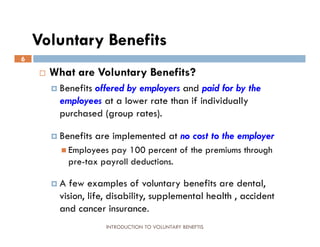
       What are Voluntary Benefits?
         Benefitsoffered by employers and paid for by the
          employees at a lower rate than if individually
          purchased (group rates).

         Benefits   are implemented at no cost to the employer
           Employees  pay 100 percent of the premiums through
             pre-tax payroll deductions.

        A   few examples of voluntary benefits are dental,
          vision, life, disability, supplemental health , accident
          and cancer insurance.
                       INTRODUCTION TO VOLUNTARY BENEFTIS
Voluntary Benefits
7
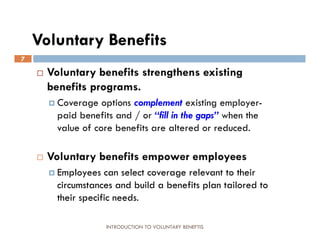
       Voluntary benefits strengthens existing
        benefits programs.
         Coverage   options complement existing employer-
          paid benefits and / or “fill in the gaps” when the
          value of core benefits are altered or reduced.

       Voluntary benefits empower employees
         Employees   can select coverage relevant to their
          circumstances and build a benefits plan tailored to
          their specific needs.

                      INTRODUCTION TO VOLUNTARY BENEFTIS
Voluntary Benefits - Summary
8


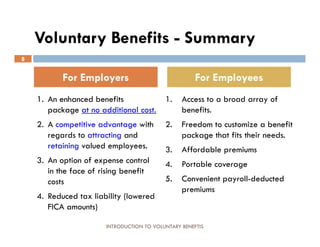
           For Employers                              For Employees
    1. An enhanced benefits                1.    Access to a broad array of
       package at no additional cost.            benefits.
    2. A competitive advantage with        2.    Freedom to customize a benefit
       regards to attracting and                 package that fits their needs.
       retaining valued employees.         3.    Affordable premiums
    3. An option of expense control        4.    Portable coverage
       in the face of rising benefit
       costs                               5.    Convenient payroll-deducted
                                                 premiums
    4. Reduced tax liability (lowered
       FICA amounts)

                       INTRODUCTION TO VOLUNTARY BENEFTIS
Conclusions
9

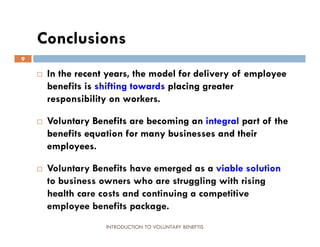
       In the recent years, the model for delivery of employee
        benefits is shifting towards placing greater
        responsibility on workers.

       Voluntary Benefits are becoming an integral part of the
        benefits equation for many businesses and their
        employees.

       Voluntary Benefits have emerged as a viable solution
        to business owners who are struggling with rising
        health care costs and continuing a competitive
        employee benefits package.
                     INTRODUCTION TO VOLUNTARY BENEFTIS
Closing / Biography
10


      THANK YOU FOR YOUR TIME
               QUESTIONS / COMMENTS
                     Ron Atkinson PMP
             Email : ratkinson.vb@gmail.com
                 Phone: 202.497.8927
                Linked-in : Ron Atkinson


              INTRODUCTION TO VOLUNTARY BENEFTIS

INTRO TO VOLUNTARY BENEFITS

  • 1.
    INTRODUCTION TO VOLUNTARY BENEFITS Created by Ron Atkinson, PMP
  • 2.
    Objective 2 Provide brief education for business owners and HR professionals on the current market conditions that favor adding Voluntary Benefits to their benefits portfolio. INTRODUCTION TO VOLUNTARY BENEFTIS
  • 3.
    Current Market Conditions 3  HEALTH CARE COSTS ARE GOING UP (↑)  Since 1999, family premiums for employer-sponsored insurance have increased 120 percent while wages have gone up 44 percent and inflation has gone up 29 percent.  THE VALUE OF EMPLOYER HEALTH PLANS IS GOING DOWN (↓)  As cost of plans increase, employers are forced to:  Reduce or adjust core benefits  Share premium increases in the form of higher deductibles, copayments, or other out-of-pocket expenses with employees. INTRODUCTION TO VOLUNTARY BENEFTIS
  • 4.
    Current Market Conditions 4  A COMPREHENSIVE BENEFITS PACKAGE IS CRUCIAL FOR :  Employee retention (satisfaction)  Talent recruitment in a highly competitive market.  THE RECENT ECONOMIC DOWNTURN HAS FORCED COMPANIES TO REVIEW HOW FUNDS FOR EMPLOYEE BENEFITS ARE SPENT.  Health care benefits are the basis of many corporate challenges and can often make the difference between profitability and red ink. INTRODUCTION TO VOLUNTARY BENEFTIS
  • 5.
    Challenge 5 How can business owners and HR professionals construct a substantial, affordable, and valued benefits package in spite of limited resources, rising costs, and a highly competitive job market? INTRODUCTION TO VOLUNTARY BENEFTIS
  • 6.
    Voluntary Benefits 6  What are Voluntary Benefits?  Benefitsoffered by employers and paid for by the employees at a lower rate than if individually purchased (group rates).  Benefits are implemented at no cost to the employer  Employees pay 100 percent of the premiums through pre-tax payroll deductions. A few examples of voluntary benefits are dental, vision, life, disability, supplemental health , accident and cancer insurance. INTRODUCTION TO VOLUNTARY BENEFTIS
  • 7.
    Voluntary Benefits 7  Voluntary benefits strengthens existing benefits programs.  Coverage options complement existing employer- paid benefits and / or “fill in the gaps” when the value of core benefits are altered or reduced.  Voluntary benefits empower employees  Employees can select coverage relevant to their circumstances and build a benefits plan tailored to their specific needs. INTRODUCTION TO VOLUNTARY BENEFTIS
  • 8.
    Voluntary Benefits -Summary 8 For Employers For Employees 1. An enhanced benefits 1. Access to a broad array of package at no additional cost. benefits. 2. A competitive advantage with 2. Freedom to customize a benefit regards to attracting and package that fits their needs. retaining valued employees. 3. Affordable premiums 3. An option of expense control 4. Portable coverage in the face of rising benefit costs 5. Convenient payroll-deducted premiums 4. Reduced tax liability (lowered FICA amounts) INTRODUCTION TO VOLUNTARY BENEFTIS
  • 9.
    Conclusions 9  In the recent years, the model for delivery of employee benefits is shifting towards placing greater responsibility on workers.  Voluntary Benefits are becoming an integral part of the benefits equation for many businesses and their employees.  Voluntary Benefits have emerged as a viable solution to business owners who are struggling with rising health care costs and continuing a competitive employee benefits package. INTRODUCTION TO VOLUNTARY BENEFTIS
  • 10.
    Closing / Biography 10 THANK YOU FOR YOUR TIME QUESTIONS / COMMENTS Ron Atkinson PMP Email : ratkinson.vb@gmail.com Phone: 202.497.8927 Linked-in : Ron Atkinson INTRODUCTION TO VOLUNTARY BENEFTIS