“Flex can address needs of both employers and employees”


                                                 By:
                                                 Anupriya Verma
                                                 10 PG (J) 06
Introduced by MNCs

Options provided by companies around taxable allowances

 Menu of optional benefits

Best fits individual’s needs

Customize their benefit packages

Potential of cost saving to both employers and employees

Compliant with Section 125 of the Internal Revenue Code
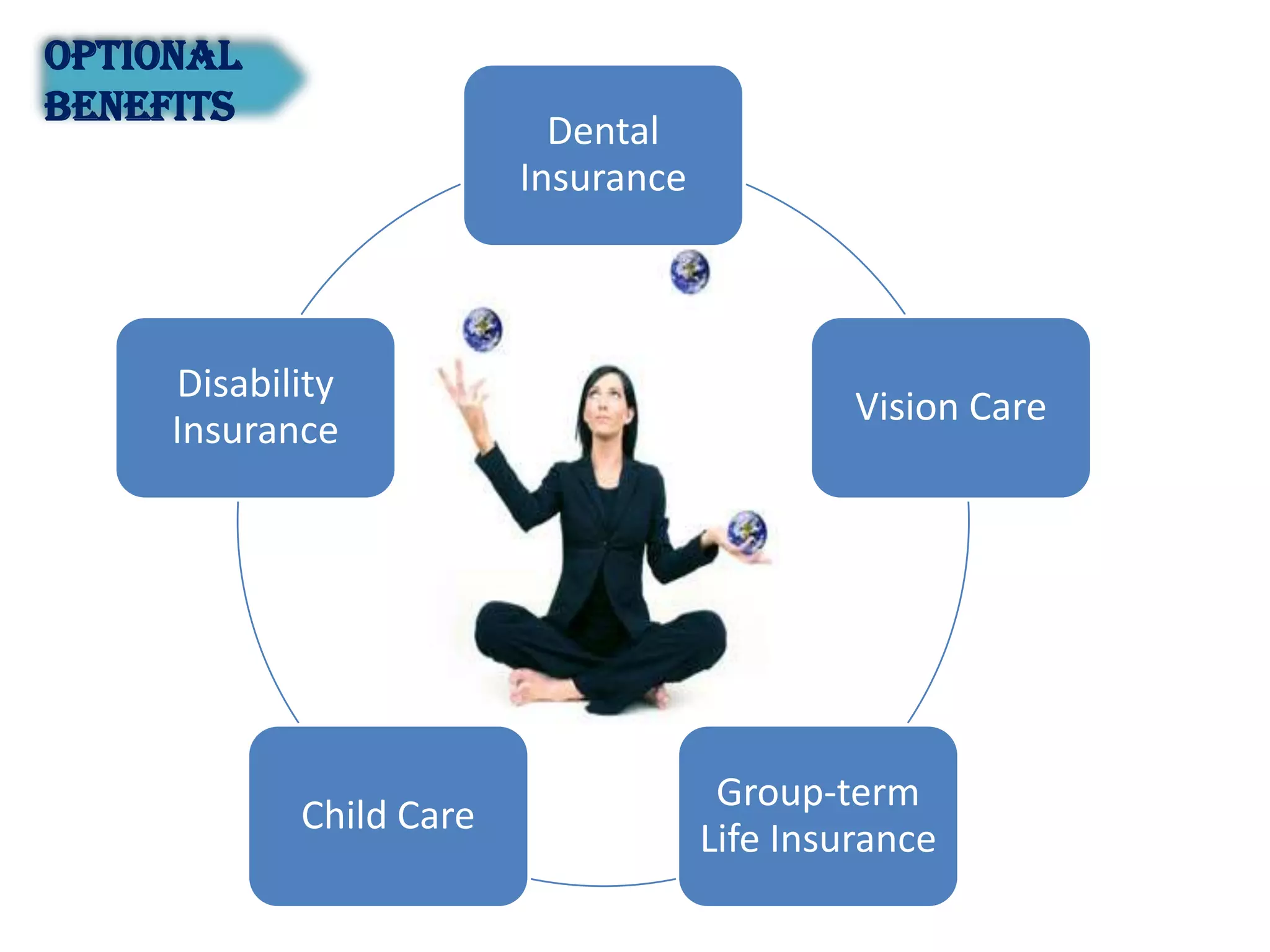
Optional
Benefits
                           Dental
                         Insurance


     Disability
                                              Vision Care
     Insurance


                                      Group-term
            Child Care
                                     Life Insurance
Most popular
flexible benefits
   Lifestyle Benefits:
   •Holidays
   •Mobile phones
   • Education
   • Child care
   • Transport
   reimbursement
   • Food vouchers

   Medical Benefits:
   •GP
   •Maternal
   •Dental
   •Optical

   Personal Insurance:
   •Health screening
   •Spa
   •Fitness
How Flex
          Works
Defined-contribution concept
Fixed number of flex credits
Based on their salary, marital status, number of dependents,
career
   level, performance and/or tenure
 Use these credits to “buy” their benefits
Core-plus plans: Medical insurance, legally-required benefits,
long-
                     term disability insurance, and
retirement benefits
Modular plans: Holidays, transport reimbursement, food
vouchers
Dual income families - duplicate medical benefits
Employers control the allocations of the credits; also the price
tag on
   the benefits
Provides employers with the mechanism to shift some future
Flex as a talent
      retention strategy

Cost-effective ways to maximize the value
of benefits programs

 Valuable tool to satisfy employee needs
and ultimately assist in retaining talent

Helping the businesses to meet the needs
of a diverse staff

Attract and retain talent – driving force in
implementing Flex
Advantages of Flex
                     Benefit Schemes

Employees choose benefits to meet their needs, so value these more highly

Employers have a known fixed cost regardless of the benefits chosen

Employees appreciate the true value of their benefits and don't receive
unwanted
  benefits

Employees have a sense of participation and control

Dual career couples avoid duplication of benefits

Employers are seen as responsive and caring

The benefits package aids recruitment and retention

Employers are better placed to demand flexible working practices
Challenges in
implementing Flex
Main
   Reasons

•Costs (80%) and administration (79%) - two
  main obstacles

•Uncertainty over where to find a qualified vendor

•Lack of market data (27%)

• More complicated to administer

•Record and maintain each employee's benefit
package

•Must maintain adequate communication

•Offer the opportunity to re-visit their benefit choices
Companies
   Providing Flex


Phillips

ABN AMRO Bank

IBM

Various law firms
Conclusion
Flex is neither known or widely practised yet

Only 51 per cent of the respondents were aware of Flex

High attrition rates at BPOs, the administrative complexities outweigh
advantages of Flex

Encashable monthly awards and vacation leaves treated as manna

Forty-nine per cent of the respondents were willing to implement Flex
within a year

Companies can break-even in a year if Flex is deployed on a co-share
basis

Indian labour market has not yet matured enough, No one wants to be
first
Refere
  nces
•Business World Issue Dated 10-16 March 2009

•http://www.referenceforbusiness.com/index.html

•http://www.mercer.com/referencecontent.htm?idContent=13182

•http://www.employeebenefits.co.uk/

•http://www.mercer.com/homepage.htm?siteLanguage=100
Sharing benefits

Sharing benefits

  • 1.
    “Flex can addressneeds of both employers and employees” By: Anupriya Verma 10 PG (J) 06
  • 2.
    Introduced by MNCs Optionsprovided by companies around taxable allowances  Menu of optional benefits Best fits individual’s needs Customize their benefit packages Potential of cost saving to both employers and employees Compliant with Section 125 of the Internal Revenue Code
  • 3.
    Optional Benefits Dental Insurance Disability Vision Care Insurance Group-term Child Care Life Insurance
  • 4.
    Most popular flexible benefits Lifestyle Benefits: •Holidays •Mobile phones • Education • Child care • Transport reimbursement • Food vouchers Medical Benefits: •GP •Maternal •Dental •Optical Personal Insurance: •Health screening •Spa •Fitness
  • 5.
    How Flex Works Defined-contribution concept Fixed number of flex credits Based on their salary, marital status, number of dependents, career level, performance and/or tenure  Use these credits to “buy” their benefits Core-plus plans: Medical insurance, legally-required benefits, long- term disability insurance, and retirement benefits Modular plans: Holidays, transport reimbursement, food vouchers Dual income families - duplicate medical benefits Employers control the allocations of the credits; also the price tag on the benefits Provides employers with the mechanism to shift some future
  • 6.
    Flex as atalent retention strategy Cost-effective ways to maximize the value of benefits programs  Valuable tool to satisfy employee needs and ultimately assist in retaining talent Helping the businesses to meet the needs of a diverse staff Attract and retain talent – driving force in implementing Flex
  • 7.
    Advantages of Flex Benefit Schemes Employees choose benefits to meet their needs, so value these more highly Employers have a known fixed cost regardless of the benefits chosen Employees appreciate the true value of their benefits and don't receive unwanted benefits Employees have a sense of participation and control Dual career couples avoid duplication of benefits Employers are seen as responsive and caring The benefits package aids recruitment and retention Employers are better placed to demand flexible working practices
  • 8.
  • 9.
    Main Reasons •Costs (80%) and administration (79%) - two main obstacles •Uncertainty over where to find a qualified vendor •Lack of market data (27%) • More complicated to administer •Record and maintain each employee's benefit package •Must maintain adequate communication •Offer the opportunity to re-visit their benefit choices
  • 10.
    Companies Providing Flex Phillips ABN AMRO Bank IBM Various law firms
  • 11.
    Conclusion Flex is neitherknown or widely practised yet Only 51 per cent of the respondents were aware of Flex High attrition rates at BPOs, the administrative complexities outweigh advantages of Flex Encashable monthly awards and vacation leaves treated as manna Forty-nine per cent of the respondents were willing to implement Flex within a year Companies can break-even in a year if Flex is deployed on a co-share basis Indian labour market has not yet matured enough, No one wants to be first
  • 12.
    Refere nces •BusinessWorld Issue Dated 10-16 March 2009 •http://www.referenceforbusiness.com/index.html •http://www.mercer.com/referencecontent.htm?idContent=13182 •http://www.employeebenefits.co.uk/ •http://www.mercer.com/homepage.htm?siteLanguage=100