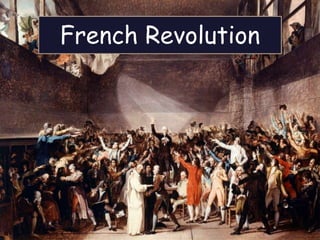
French Revolution
The Estates System
• The First Estate: Clergy members were
0,5% of the population. They were exempt
from all taxes
• The Second Estate: Nobles were 1.5% of
the population. They paid very little taxes.
• The Third Estate: 98% of the population.
They were the rich bourgoisie, working
class, and peasants. They paid heavy
taxes
Financial Distress
• France still had to pay war debts from their
loss in the Seven Years War and their aid
in the American Revolution
• The Nobles spent a lot of money
• Only the poorest people had to pay taxes
• It was a time of poor harvests
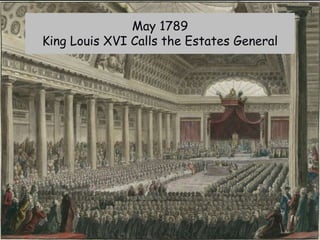
May 1789
King Louis XVI Calls the Estates General
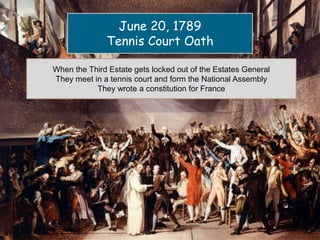
June 20, 1789
Tennis Court Oath
When the Third Estate gets locked out of the Estates General
They meet in a tennis court and form the National Assembly
They wrote a constitution for France
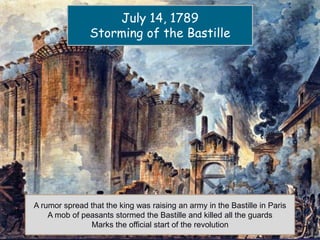
July 14, 1789
Storming of the Bastille
A rumor spread that the king was raising an army in the Bastille in Paris
A mob of peasants stormed the Bastille and killed all the guards
Marks the official start of the revolution
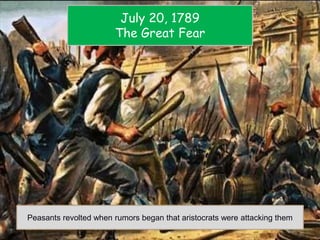
July 20, 1789
The Great Fear
Peasants revolted when rumors began that aristocrats were attacking them
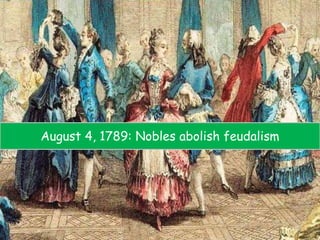
August 4, 1789: Nobles abolish feudalism
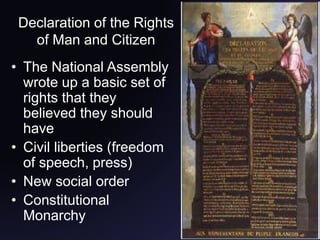
Declaration of the Rights
of Man and Citizen
• The National Assembly
wrote up a basic set of
rights that they
believed they should
have
• Civil liberties (freedom
of speech, press)
• New social order
• Constitutional
Monarchy
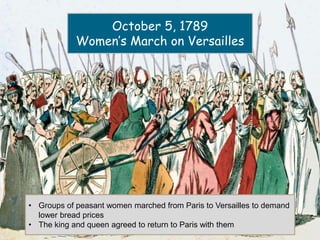
October 5, 1789
Women’s March on Versailles
• Groups of peasant women marched from Paris to Versailles to demand
lower bread prices
• The king and queen agreed to return to Paris with them
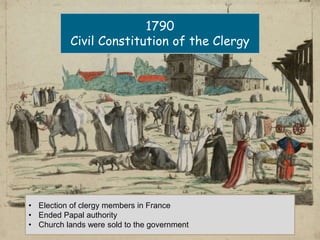
1790
Civil Constitution of the Clergy
• Election of clergy members in France
• Ended Papal authority
• Church lands were sold to the government
Constitution of 1791
• Created a constitutional monarchy (similar
to England’s monarchy)
• A Legislative Assembly was formed to help
in the law making process
• Equal rights were guaranteed to everyone
(including Jews and Protestants)
• No more promigeniture
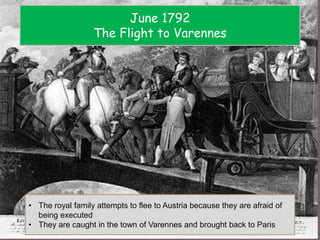
June 1792
The Flight to Varennes
• The royal family attempts to flee to Austria because they are afraid of
being executed
• They are caught in the town of Varennes and brought back to Paris
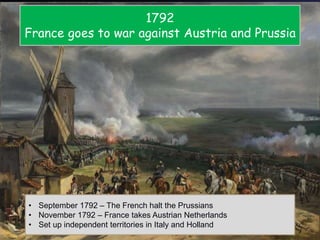
1792
France goes to war against Austria and Prussia
• September 1792 – The French halt the Prussians
• November 1792 – France takes Austrian Netherlands
• Set up independent territories in Italy and Holland
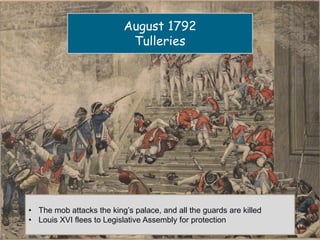
August 1792
Tulleries
• The mob attacks the king’s palace, and all the guards are killed
• Louis XVI flees to Legislative Assembly for protection
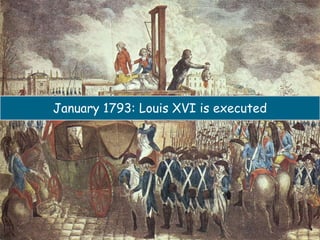
January 1793: Louis XVI is executed
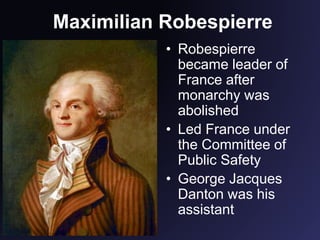
Maximilian Robespierre
• Robespierre
became leader of
France after
monarchy was
abolished
• Led France under
the Committee of
Public Safety
• George Jacques
Danton was his
assistant
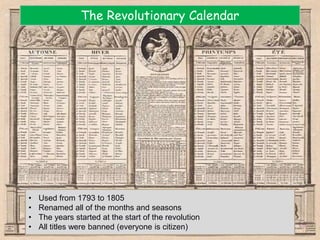
The Revolutionary Calendar
• Used from 1793 to 1805
• Renamed all of the months and seasons
• The years started at the start of the revolution
• All titles were banned (everyone is citizen)
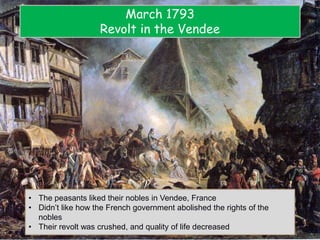
March 1793
Revolt in the Vendee
• The peasants liked their nobles in Vendee, France
• Didn’t like how the French government abolished the rights of the
nobles
• Their revolt was crushed, and quality of life decreased
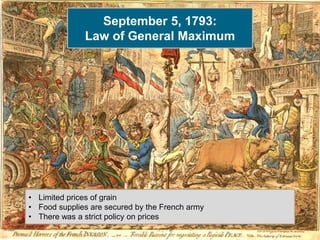
September 5, 1793:
Law of General Maximum
• Limited prices of grain
• Food supplies are secured by the French army
• There was a strict policy on prices
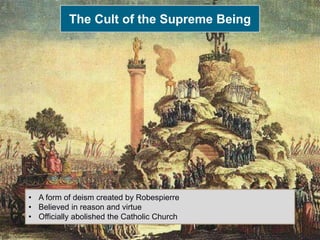
The Cult of the Supreme Being
• A form of deism created by Robespierre
• Believed in reason and virtue
• Officially abolished the Catholic Church
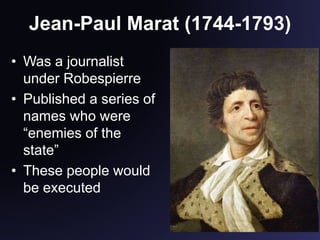
Jean-Paul Marat (1744-1793)
• Was a journalist
under Robespierre
• Published a series of
names who were
“enemies of the
state”
• These people would
be executed
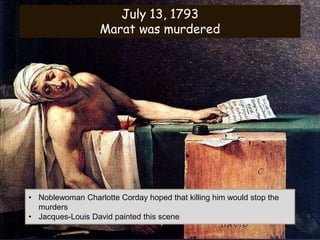
July 13, 1793
Marat was murdered
• Noblewoman Charlotte Corday hoped that killing him would stop the
murders
• Jacques-Louis David painted this scene
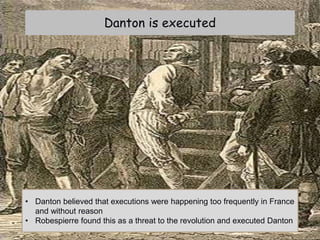
Danton is executed
• Danton believed that executions were happening too frequently in France
and without reason
• Robespierre found this as a threat to the revolution and executed Danton
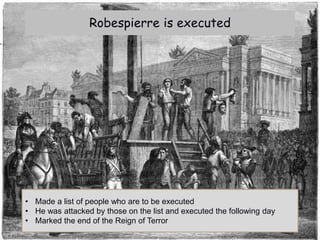
Robespierre is executed
• Made a list of people who are to be executed
• He was attacked by those on the list and executed the following day
• Marked the end of the Reign of Terror
Legacies of the French
Revolution
• Changed the French government
– No more feudalism
– Peasants had more power
• Led to other revolutions around the world
– The Haitian Revolution was a slave revolt
inspired by the French
– The Latin American Revolts were inspired by the
French Revolution
• Napoleon Bonaparte gained power and takes
over France

French Revolution

  • 1.
  • 2.
    The Estates System •The First Estate: Clergy members were 0,5% of the population. They were exempt from all taxes • The Second Estate: Nobles were 1.5% of the population. They paid very little taxes. • The Third Estate: 98% of the population. They were the rich bourgoisie, working class, and peasants. They paid heavy taxes
  • 3.
    Financial Distress • Francestill had to pay war debts from their loss in the Seven Years War and their aid in the American Revolution • The Nobles spent a lot of money • Only the poorest people had to pay taxes • It was a time of poor harvests
  • 4.
    May 1789 King LouisXVI Calls the Estates General
  • 5.
    June 20, 1789 TennisCourt Oath When the Third Estate gets locked out of the Estates General They meet in a tennis court and form the National Assembly They wrote a constitution for France
  • 6.
    July 14, 1789 Stormingof the Bastille A rumor spread that the king was raising an army in the Bastille in Paris A mob of peasants stormed the Bastille and killed all the guards Marks the official start of the revolution
  • 7.
    July 20, 1789 TheGreat Fear Peasants revolted when rumors began that aristocrats were attacking them
  • 8.
    August 4, 1789:Nobles abolish feudalism
  • 9.
    Declaration of theRights of Man and Citizen • The National Assembly wrote up a basic set of rights that they believed they should have • Civil liberties (freedom of speech, press) • New social order • Constitutional Monarchy
  • 10.
    October 5, 1789 Women’sMarch on Versailles • Groups of peasant women marched from Paris to Versailles to demand lower bread prices • The king and queen agreed to return to Paris with them
  • 11.
    1790 Civil Constitution ofthe Clergy • Election of clergy members in France • Ended Papal authority • Church lands were sold to the government
  • 12.
    Constitution of 1791 •Created a constitutional monarchy (similar to England’s monarchy) • A Legislative Assembly was formed to help in the law making process • Equal rights were guaranteed to everyone (including Jews and Protestants) • No more promigeniture
  • 13.
    June 1792 The Flightto Varennes • The royal family attempts to flee to Austria because they are afraid of being executed • They are caught in the town of Varennes and brought back to Paris
  • 14.
    1792 France goes towar against Austria and Prussia • September 1792 – The French halt the Prussians • November 1792 – France takes Austrian Netherlands • Set up independent territories in Italy and Holland
  • 15.
    August 1792 Tulleries • Themob attacks the king’s palace, and all the guards are killed • Louis XVI flees to Legislative Assembly for protection
  • 16.
    January 1793: LouisXVI is executed
  • 17.
    Maximilian Robespierre • Robespierre becameleader of France after monarchy was abolished • Led France under the Committee of Public Safety • George Jacques Danton was his assistant
  • 18.
    The Revolutionary Calendar •Used from 1793 to 1805 • Renamed all of the months and seasons • The years started at the start of the revolution • All titles were banned (everyone is citizen)
  • 19.
    March 1793 Revolt inthe Vendee • The peasants liked their nobles in Vendee, France • Didn’t like how the French government abolished the rights of the nobles • Their revolt was crushed, and quality of life decreased
  • 20.
    September 5, 1793: Lawof General Maximum • Limited prices of grain • Food supplies are secured by the French army • There was a strict policy on prices
  • 21.
    The Cult ofthe Supreme Being • A form of deism created by Robespierre • Believed in reason and virtue • Officially abolished the Catholic Church
  • 22.
    Jean-Paul Marat (1744-1793) •Was a journalist under Robespierre • Published a series of names who were “enemies of the state” • These people would be executed
  • 23.
    July 13, 1793 Maratwas murdered • Noblewoman Charlotte Corday hoped that killing him would stop the murders • Jacques-Louis David painted this scene
  • 24.
    Danton is executed •Danton believed that executions were happening too frequently in France and without reason • Robespierre found this as a threat to the revolution and executed Danton
  • 25.
    Robespierre is executed •Made a list of people who are to be executed • He was attacked by those on the list and executed the following day • Marked the end of the Reign of Terror
  • 26.
    Legacies of theFrench Revolution • Changed the French government – No more feudalism – Peasants had more power • Led to other revolutions around the world – The Haitian Revolution was a slave revolt inspired by the French – The Latin American Revolts were inspired by the French Revolution • Napoleon Bonaparte gained power and takes over France