12: Middle Colonies
                    Dutch Empire
 In the earth 1600s, the Dutch were particularly
  successful in North America, shipping more
  cargo than France, Spain and England
  combined

 Amsterdam, the Dutch capital, was the
  greatest economic center in Northern Europe

 The Dutch had an unusual government; a
  decentralized, liberal republic with religious
  freedom, in addition to greater tolerance to
  new ideas

 With its great wealth, the Dutch created the
  most powerful navy in Europe, and in 1628
  captured a Spanish treasure fleet with 200,000
  pounds of silver

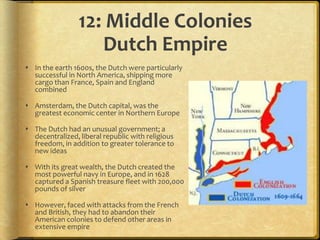
 However, faced with attacks from the French
  and British, they had to abandon their
  American colonies to defend other areas in
  extensive empire
12: Middle Colonies
                 New Netherland
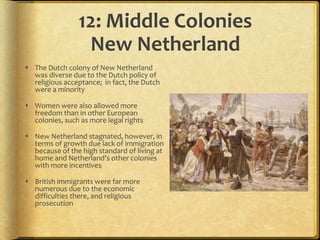
 The Dutch colony of New Netherland
  was diverse due to the Dutch policy of
  religious acceptance; in fact, the Dutch
  were a minority

 Women were also allowed more
  freedom than in other European
  colonies, such as more legal rights

 New Netherland stagnated, however, in
  terms of growth due lack of immigration
  because of the high standard of living at
  home and Netherland’s other colonies
  with more incentives

 British immigrants were far more
  numerous due to the economic
  difficulties there, and religious
  prosecution
12: Middle Colonies
             The Navigation Acts
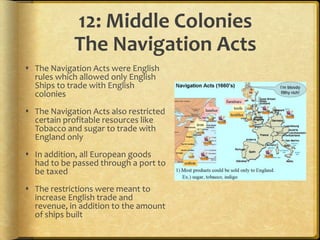
 The Navigation Acts were English
  rules which allowed only English
  Ships to trade with English
  colonies
 The Navigation Acts also restricted
  certain profitable resources like
  Tobacco and sugar to trade with
  England only
 In addition, all European goods
  had to be passed through a port to
  be taxed
 The restrictions were meant to
  increase English trade and
  revenue, in addition to the amount
  of ships built
12: Middle Colonies
    Dutch Conflict With Britain
 The Dutch fought three wars in
  protest against the navigation
  acts, but they ended in a draw
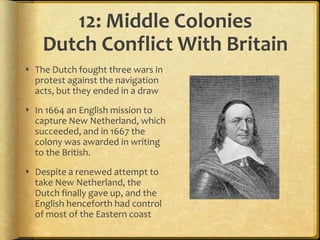
 In 1664 an English mission to
  capture New Netherland, which
  succeeded, and in 1667 the
  colony was awarded in writing
  to the British.
 Despite a renewed attempt to
  take New Netherland, the
  Dutch finally gave up, and the
  English henceforth had control
  of most of the Eastern coast
11: Carolina
       British Settlement of Carolina
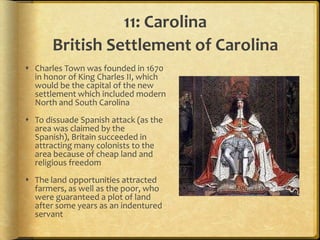
 Charles Town was founded in 1670
  in honor of King Charles II, which
  would be the capital of the new
  settlement which included modern
  North and South Carolina
 To dissuade Spanish attack (as the
  area was claimed by the
  Spanish), Britain succeeded in
  attracting many colonists to the
  area because of cheap land and
  religious freedom
 The land opportunities attracted
  farmers, as well as the poor, who
  were guaranteed a plot of land
  after some years as an indentured
  servant
11: Carolina
                   The Gun Trade
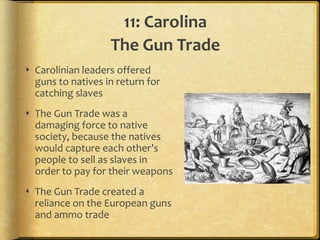
 Carolinian leaders offered
  guns to natives in return for
  catching slaves
 The Gun Trade was a
  damaging force to native
  society, because the natives
  would capture each other’s
  people to sell as slaves in
  order to pay for their weapons
 The Gun Trade created a
  reliance on the European guns
  and ammo trade
11: Carolina
                                Georgia
 In the 1720s, Georgia was founded in honor
  of King George

 The Georgia Trustees, a group of London
  philanthropists and social
  reformers, wanted to use Georgia as a
  social experiment by sending poor English
  there to teach them about hard work

 The funding for the colony by the English
  Parliament made Georgia the first colony
  paid for by British people directly

 It was forbidden for the imported colonists
  to use slave labor on their farms, and was
  the first colony to do so

 Eventually these new colonists rejected the
  Georgia Trustees, and the colony became
  similar to the Carolinas
11: Carolina
                               Rice
The Carolinas decided that they needed
a staple export of their colony
Colonists began producing tar and
eventually became the leader in tar
exports
However the Carolina’s success with
growing rice made it their top export
product
From 1700 to 1740, exports of rice went
for 400,000 pounds to 4.3 million
pounds
The need for workers to cultivate the
product created a large importation of
slaves

France and england

  • 2.
    12: Middle Colonies Dutch Empire  In the earth 1600s, the Dutch were particularly successful in North America, shipping more cargo than France, Spain and England combined  Amsterdam, the Dutch capital, was the greatest economic center in Northern Europe  The Dutch had an unusual government; a decentralized, liberal republic with religious freedom, in addition to greater tolerance to new ideas  With its great wealth, the Dutch created the most powerful navy in Europe, and in 1628 captured a Spanish treasure fleet with 200,000 pounds of silver  However, faced with attacks from the French and British, they had to abandon their American colonies to defend other areas in extensive empire
  • 3.
    12: Middle Colonies New Netherland  The Dutch colony of New Netherland was diverse due to the Dutch policy of religious acceptance; in fact, the Dutch were a minority  Women were also allowed more freedom than in other European colonies, such as more legal rights  New Netherland stagnated, however, in terms of growth due lack of immigration because of the high standard of living at home and Netherland’s other colonies with more incentives  British immigrants were far more numerous due to the economic difficulties there, and religious prosecution
  • 4.
    12: Middle Colonies The Navigation Acts  The Navigation Acts were English rules which allowed only English Ships to trade with English colonies  The Navigation Acts also restricted certain profitable resources like Tobacco and sugar to trade with England only  In addition, all European goods had to be passed through a port to be taxed  The restrictions were meant to increase English trade and revenue, in addition to the amount of ships built
  • 5.
    12: Middle Colonies Dutch Conflict With Britain  The Dutch fought three wars in protest against the navigation acts, but they ended in a draw  In 1664 an English mission to capture New Netherland, which succeeded, and in 1667 the colony was awarded in writing to the British.  Despite a renewed attempt to take New Netherland, the Dutch finally gave up, and the English henceforth had control of most of the Eastern coast
  • 6.
    11: Carolina British Settlement of Carolina  Charles Town was founded in 1670 in honor of King Charles II, which would be the capital of the new settlement which included modern North and South Carolina  To dissuade Spanish attack (as the area was claimed by the Spanish), Britain succeeded in attracting many colonists to the area because of cheap land and religious freedom  The land opportunities attracted farmers, as well as the poor, who were guaranteed a plot of land after some years as an indentured servant
  • 7.
    11: Carolina The Gun Trade  Carolinian leaders offered guns to natives in return for catching slaves  The Gun Trade was a damaging force to native society, because the natives would capture each other’s people to sell as slaves in order to pay for their weapons  The Gun Trade created a reliance on the European guns and ammo trade
  • 8.
    11: Carolina Georgia  In the 1720s, Georgia was founded in honor of King George  The Georgia Trustees, a group of London philanthropists and social reformers, wanted to use Georgia as a social experiment by sending poor English there to teach them about hard work  The funding for the colony by the English Parliament made Georgia the first colony paid for by British people directly  It was forbidden for the imported colonists to use slave labor on their farms, and was the first colony to do so  Eventually these new colonists rejected the Georgia Trustees, and the colony became similar to the Carolinas
  • 9.
    11: Carolina Rice The Carolinas decided that they needed a staple export of their colony Colonists began producing tar and eventually became the leader in tar exports However the Carolina’s success with growing rice made it their top export product From 1700 to 1740, exports of rice went for 400,000 pounds to 4.3 million pounds The need for workers to cultivate the product created a large importation of slaves