Behavior Design
           Stop being neutral,
     and start influencing decisions.

                    #sxbehavior


 Chris Risdon      Nick Disabato   Brad Nunnally
@livebysatellite     @nickdpi       @bnunnally
Framing Behavior Design


     Chris Risdon
       @livebysatellite

    chris@adaptivepath.com

       chrisrisdon.com
Framing Behavior Design Chris
          5 minute break
    Design Decisions Nick
          5 minute break
  Ethical Frameworks Brad
              Q&A
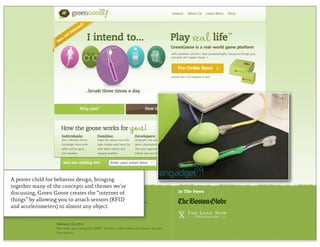
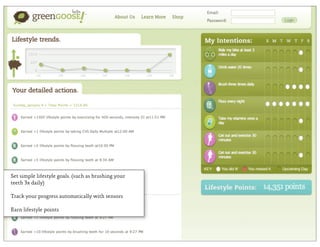
A poster child for behavior design, bringing
together many of the concepts and themes we’re
discussing, Green Goose creates the “internet of
things” by allowing you to attach sensors (RFID
and accelerometers) to almost any object.
Set simple lifestyle goals. (such as brushing your
teeth 3x daily)

Track your progress automatically with sensors

Earn lifestyle points
Ever since I started as an IA in the 90s, I’ve
thought about the impact of my design decisions.

But it was 3 years ago I started to dive deeper into
the psychology of how we made decisions and
were influenced by technology.
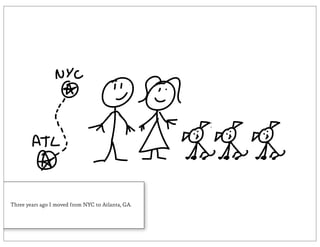
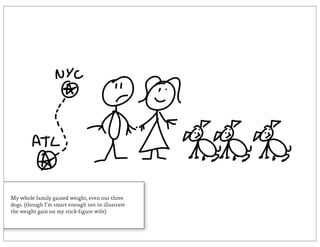
Three years ago I moved from NYC to Atlanta, GA.
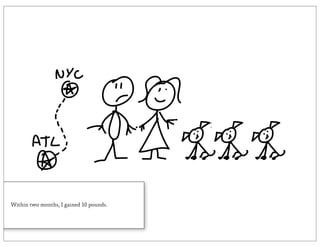
Within two months, I gained 10 pounds.
My whole family gained weight, even our three
dogs. (though I’m smart enough not to illustrate
the weight gain on my stick-figure wife)
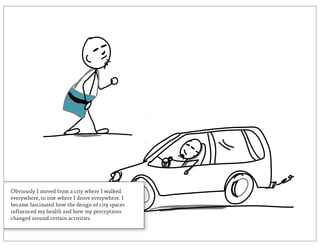
Obviously I moved from a city where I walked
everywhere, to one where I drove everywhere. I
became fascinated how the design of city spaces
influenced my health and how my perceptions
changed around certain activities.
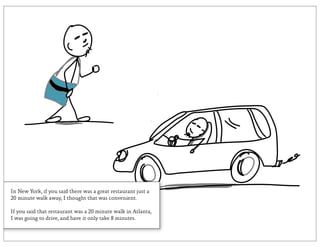
In New York, if you said there was a great restaurant just a
20 minute walk away, I thought that was convenient.

If you said that restaurant was a 20 minute walk in Atlanta,
I was going to drive, and have it only take 8 minutes.
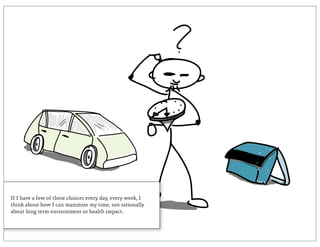
If I have a few of these choices every day, every week, I
think about how I can maximize my time, not rationally
about long term environment or health impact.
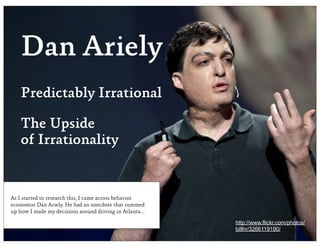
Dan Ariely
    Predictably Irrational

    The Upside
    of Irrationality


As I started to research this, I came across behavior
economist Dan Ariely. He had an anecdote that summed
up how I made my decisions around driving in Atlanta....

                                                           http://www.flickr.com/photos/
                                                           billhr/3266119190/
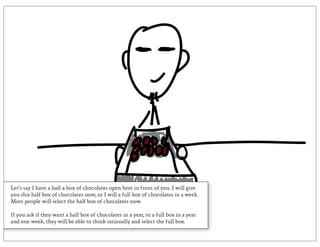
Let’s say I have a half a box of chocolates open here in front of you. I will give
you this half box of chocolates now, or I will a full box of chocolates in a week.
Most people will select the half box of chocolates now.

If you ask if they want a half box of chocolates in a year, or a full box in a year
and one week, they will be able to think rationally and select the full box.
“
                     Active Design is the idea that we can
                     design...buildings to encourage people to
                     get more exercise...

                     By attacking obesity through urban
                     design and architecture, governments
                     are beginning to realize that designers
                     might be their best warriors in the


                                                                  ”
                     battle against obesity and its costs.

Active Design are guidelines by the city in conjunction
with architects and urban planning academics.             —Fast Company
“
                     This strategy recognizes that the
                     public’s underlying motivations are not
                     about health, but rather, about what is


                                                        ”
                     convenient and enjoyable.


These examples reinforce the fact that we, as
designers, are not simply designing for cognition –
or to support behavior.                               —Fast Company
Data
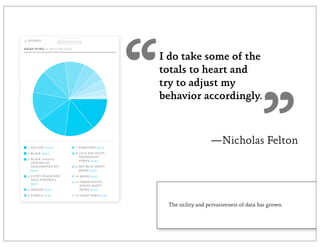
“   I do take some of the
    totals to heart and
    try to adjust my
    behavior accordingly.


                      —Nicholas Felton
                                            ”
     The utility and pervasiveness of data has grown.
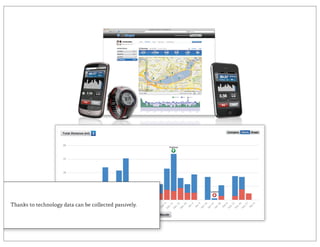
Thanks to technology data can be collected passively.
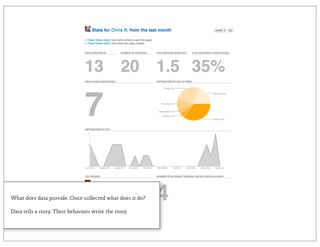
What does data provide. Once collected what does it do?

Data tells a story. Their behaviors write the story.
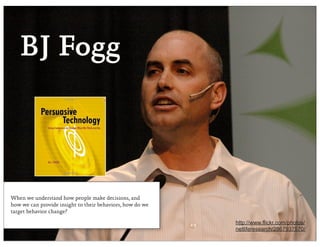
BJ Fogg


When we understand how people make decisions, and
how we can provide insight to their behaviors, how do we
target behavior change?

                                                           http://www.flickr.com/photos/
                                                           netliferesearch/2867937570/
90999
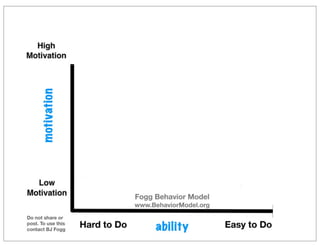
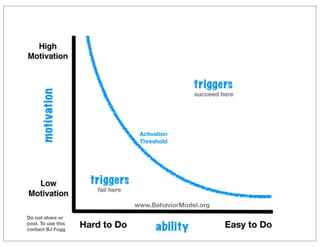
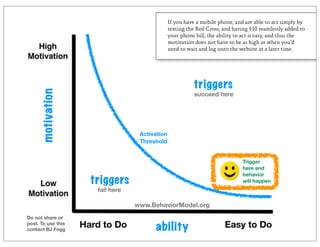
Imagine sitting at an airport killing time before a flight, you
see a story about a disaster somewhere across the globe. This
story, and it’s images are the data.

A call to donate to the Red Cross through their website is the
trigger. Your ability is limited by waiting to get on the web.
If you have a mobile phone, and are able to act simply by
texting the Red Cross, and having $10 seamlessly added to
your phone bill, the ability to act is easy, and thus the
motivation does not have to be as high as when you’d
need to wait and log onto the website at a later time.
Persuasion
Let’s talk about “persuasion.” It’s a loaded word when
discussing behavior design.
Usability


                                                                                            Persuasion


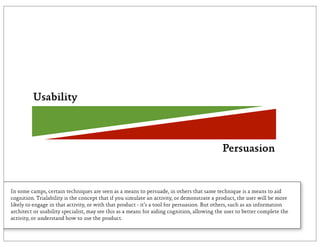
In some camps, certain techniques are seen as a means to persuade, in others that same technique is a means to aid
cognition. Trialability is the concept that if you simulate an activity, or demonstrate a product, the user will be more
likely to engage in that activity, or with that product - it’s a tool for persuasion. But others, such as an information
architect or usability specialist, may see this as a means for aiding cognition, allowing the user to better complete the
activity, or understand how to use the product.
Usability


                                                      Persuasion


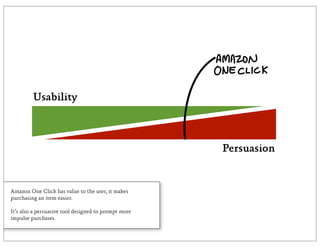
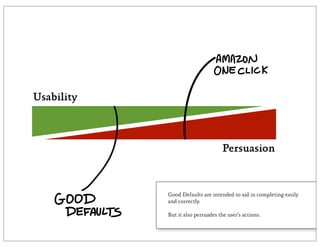
Amazon One Click has value to the user, it makes
purchasing an item easier.

It’s also a persuasive tool designed to prompt more
impulse purchases.
Usability


                                    Persuasion


            Good Defaults are intended to aid in completing easily
            and correctly.

            But it also persuades the user’s actions.
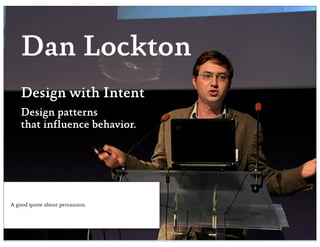
Dan Lockton
    Design with Intent
    Design patterns
    that influence behavior.


A good quote about persuasion.
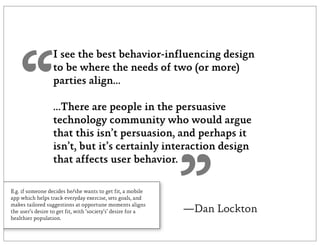
I see the best behavior-influencing design


   “              to be where the needs of two (or more)
                  parties align...

                  ...There are people in the persuasive
                  technology community who would argue
                  that this isn’t persuasion, and perhaps it
                  isn’t, but it’s certainly interaction design


                                                              ”
                  that affects user behavior.

E.g. if someone decides he/she wants to get fit, a mobile
app which helps track everyday exercise, sets goals, and
makes tailored suggestions at opportune moments aligns
the user’s desire to get fit, with ‘society’s’ desire for a   —Dan Lockton
healthier population.
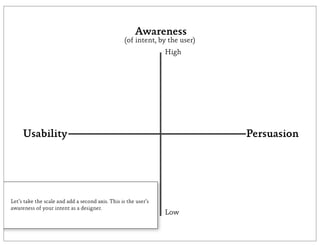
Awareness
                                                   (of intent, by the user)
                                                                 High


     Usability                                                                Persuasion


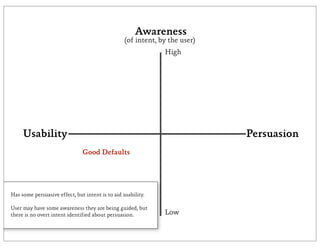
Let’s take the scale and add a second axis. This is the user’s
awareness of your intent as a designer.
                                                                 Low
Awareness
                                                  (of intent, by the user)
                                                               High


     Usability                                                               Persuasion
                               Good Defaults


Has some persuasive effect, but intent is to aid usability.

User may have some awareness they are being guided, but
there is no overt intent identified about persuasion.          Low
Awareness
                                                (of intent, by the user)
                                                              High


     Usability                                                                    Persuasion
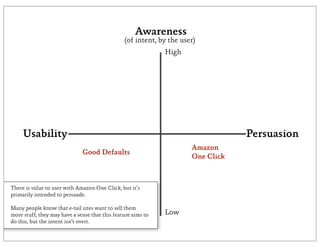
                                                                      Amazon
                              Good Defaults
                                                                      One Click


There is value to user with Amazon One Click, but it’s
primarily intended to persuade.

Many people know that e-tail sites want to sell them
more stuff, they may have a sense that this feature aims to   Low
do this, but the intent isn’t overt.
Awareness
                                               (of intent, by the user)
                                                            High


     Usability                                                                       Persuasion
                                                                     Amazon
                             Good Defaults
                                                                     One Click


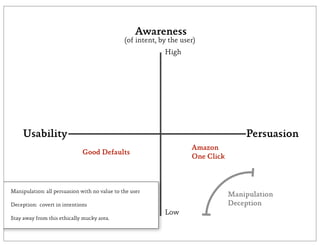
Manipulation: all persuasion with no value to the user
                                                                                 Manipulation
Deception: covert in intentions                                                  Deception
                                                            Low
Stay away from this ethically mucky area.
Awareness
                                                     (of intent, by the user)
                                                                    High


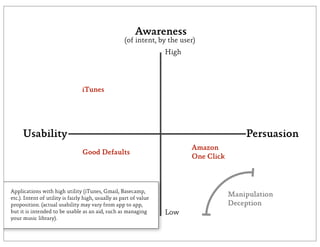
                                 iTunes


     Usability                                                                             Persuasion
                                                                           Amazon
                                 Good Defaults
                                                                           One Click


Applications with high utility (iTunes, Gmail, Basecamp,
etc.). Intent of utility is fairly high, usually as part of value
                                                                                       Manipulation
proposition. (actual usability may vary from app to app,                               Deception
but it is intended to be usable as an aid, such as managing         Low
your music library).
Awareness
                                                 (of intent, by the user)
                                                               High


                               iTunes                                  Green Goose


     Usability                                                                         Persuasion
                                                                       Amazon
                               Good Defaults
                                                                       One Click


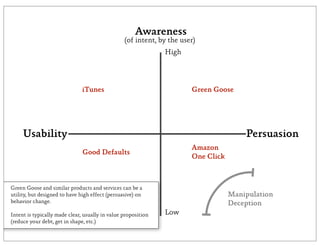
Green Goose and similar products and services can be a
utility, but designed to have high effect (persuasive) on                          Manipulation
behavior change.                                                                   Deception
Intent is typically made clear, usually in value proposition   Low
(reduce your debt, get in shape, etc.)
Awareness
                                               (of intent, by the user)
                                                            High


                             iTunes                                  Green Goose


     Usability                                                                       Persuasion
                                                                     Amazon
                             Good Defaults
                                                                     One Click


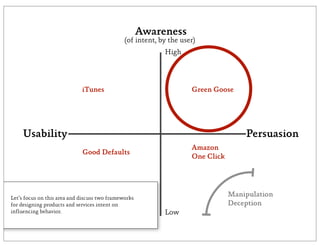
Let’s focus on this area and discuss two frameworks
                                                                                 Manipulation
for designing products and services intent on                                    Deception
influencing behavior.                                       Low
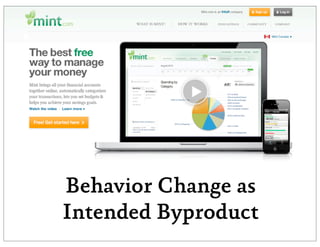
Behavior Change as
Intended Byproduct
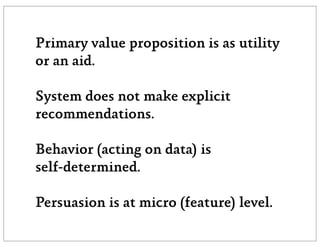
Primary value proposition is as utility
or an aid.

System does not make explicit
recommendations.

Behavior (acting on data) is
self-determined.

Persuasion is at micro (feature) level.
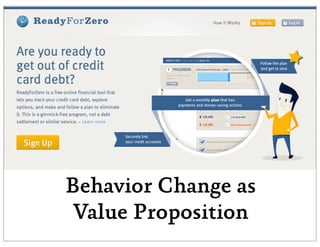
Behavior Change as
 Value Proposition
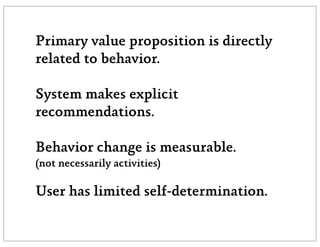
Primary value proposition is directly
related to behavior.

System makes explicit
recommendations.

Behavior change is measurable.
(not necessarily activities)

User has limited self-determination.
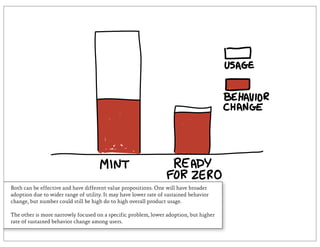
Both can be effective and have different value propositions. One will have broader
adoption due to wider range of utility. It may have lower rate of sustained behavior
change, but number could still be high do to high overall product usage.

The other is more narrowly focused on a specific problem, lower adoption, but higher
rate of sustained behavior change among users.
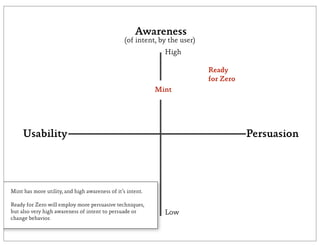
Awareness
                                                 (of intent, by the user)
                                                              High

                                                                            Ready
                                                                            for Zero
                                                            Mint


     Usability                                                                         Persuasion


Mint has more utility, and high awareness of it’s intent.

Ready for Zero will employ more persuasive techniques,
but also very high awareness of intent to persuade or         Low
change behavior.
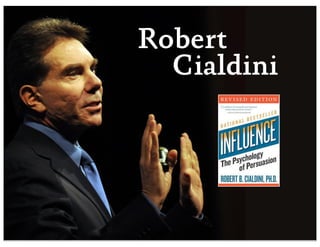
Robert
  Cialdini
Commitment
                             and Consistency

The idea that once we commit to something, we have
internal pressures to follow through consistently with
our commitment.
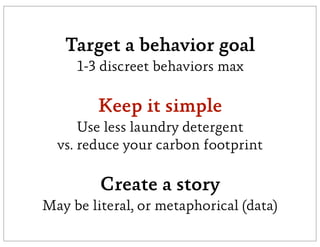
Target a behavior goal
     1-3 discreet behaviors max

        Keep it simple
      Use less laundry detergent
  vs. reduce your carbon footprint

         Create a story
May be literal, or metaphorical (data)
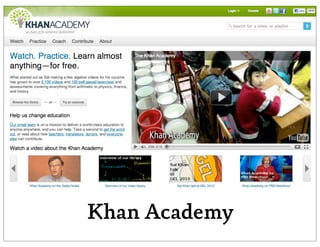
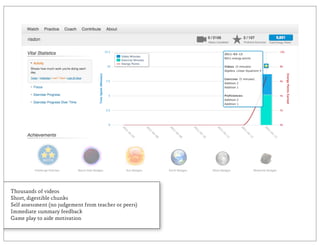
Khan Academy
Thousands of videos
Short, digestible chunks
Self assessment (no judgement from teacher or peers)
Immediate summary feedback
Game play to aide motivation
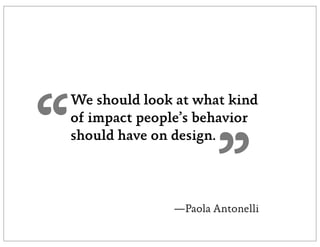
“
    We should look at what kind
    of impact people’s behavior
    should have on design.


                          ”
                  —Paola Antonelli
Framing Behavior Design


     Chris Risdon
       @livebysatellite

    chris@adaptivepath.com

       chrisrisdon.com

Framing Behavior Design

  • 1.
    Behavior Design Stop being neutral, and start influencing decisions. #sxbehavior Chris Risdon Nick Disabato Brad Nunnally @livebysatellite @nickdpi @bnunnally
  • 2.
    Framing Behavior Design Chris Risdon @livebysatellite chris@adaptivepath.com chrisrisdon.com
  • 3.
    Framing Behavior DesignChris 5 minute break Design Decisions Nick 5 minute break Ethical Frameworks Brad Q&A
  • 4.
    A poster childfor behavior design, bringing together many of the concepts and themes we’re discussing, Green Goose creates the “internet of things” by allowing you to attach sensors (RFID and accelerometers) to almost any object.
  • 5.
    Set simple lifestylegoals. (such as brushing your teeth 3x daily) Track your progress automatically with sensors Earn lifestyle points
  • 6.
    Ever since Istarted as an IA in the 90s, I’ve thought about the impact of my design decisions. But it was 3 years ago I started to dive deeper into the psychology of how we made decisions and were influenced by technology.
  • 7.
    Three years agoI moved from NYC to Atlanta, GA.
  • 8.
    Within two months,I gained 10 pounds.
  • 9.
    My whole familygained weight, even our three dogs. (though I’m smart enough not to illustrate the weight gain on my stick-figure wife)
  • 10.
    Obviously I movedfrom a city where I walked everywhere, to one where I drove everywhere. I became fascinated how the design of city spaces influenced my health and how my perceptions changed around certain activities.
  • 11.
    In New York,if you said there was a great restaurant just a 20 minute walk away, I thought that was convenient. If you said that restaurant was a 20 minute walk in Atlanta, I was going to drive, and have it only take 8 minutes.
  • 12.
    If I havea few of these choices every day, every week, I think about how I can maximize my time, not rationally about long term environment or health impact.
  • 13.
    Dan Ariely Predictably Irrational The Upside of Irrationality As I started to research this, I came across behavior economist Dan Ariely. He had an anecdote that summed up how I made my decisions around driving in Atlanta.... http://www.flickr.com/photos/ billhr/3266119190/
  • 14.
    Let’s say Ihave a half a box of chocolates open here in front of you. I will give you this half box of chocolates now, or I will a full box of chocolates in a week. Most people will select the half box of chocolates now. If you ask if they want a half box of chocolates in a year, or a full box in a year and one week, they will be able to think rationally and select the full box.
  • 15.
    Active Design is the idea that we can design...buildings to encourage people to get more exercise... By attacking obesity through urban design and architecture, governments are beginning to realize that designers might be their best warriors in the ” battle against obesity and its costs. Active Design are guidelines by the city in conjunction with architects and urban planning academics. —Fast Company
  • 16.
    This strategy recognizes that the public’s underlying motivations are not about health, but rather, about what is ” convenient and enjoyable. These examples reinforce the fact that we, as designers, are not simply designing for cognition – or to support behavior. —Fast Company
  • 17.
  • 18.
    I do take some of the totals to heart and try to adjust my behavior accordingly. —Nicholas Felton ” The utility and pervasiveness of data has grown.
  • 19.
    Thanks to technologydata can be collected passively.
  • 20.
    What does dataprovide. Once collected what does it do? Data tells a story. Their behaviors write the story.
  • 21.
    BJ Fogg When weunderstand how people make decisions, and how we can provide insight to their behaviors, how do we target behavior change? http://www.flickr.com/photos/ netliferesearch/2867937570/
  • 24.
    90999 Imagine sitting atan airport killing time before a flight, you see a story about a disaster somewhere across the globe. This story, and it’s images are the data. A call to donate to the Red Cross through their website is the trigger. Your ability is limited by waiting to get on the web.
  • 25.
    If you havea mobile phone, and are able to act simply by texting the Red Cross, and having $10 seamlessly added to your phone bill, the ability to act is easy, and thus the motivation does not have to be as high as when you’d need to wait and log onto the website at a later time.
  • 26.
    Persuasion Let’s talk about“persuasion.” It’s a loaded word when discussing behavior design.
  • 27.
    Usability Persuasion In some camps, certain techniques are seen as a means to persuade, in others that same technique is a means to aid cognition. Trialability is the concept that if you simulate an activity, or demonstrate a product, the user will be more likely to engage in that activity, or with that product - it’s a tool for persuasion. But others, such as an information architect or usability specialist, may see this as a means for aiding cognition, allowing the user to better complete the activity, or understand how to use the product.
  • 28.
    Usability Persuasion Amazon One Click has value to the user, it makes purchasing an item easier. It’s also a persuasive tool designed to prompt more impulse purchases.
  • 29.
    Usability Persuasion Good Defaults are intended to aid in completing easily and correctly. But it also persuades the user’s actions.
  • 30.
    Dan Lockton Design with Intent Design patterns that influence behavior. A good quote about persuasion.
  • 31.
    I see thebest behavior-influencing design “ to be where the needs of two (or more) parties align... ...There are people in the persuasive technology community who would argue that this isn’t persuasion, and perhaps it isn’t, but it’s certainly interaction design ” that affects user behavior. E.g. if someone decides he/she wants to get fit, a mobile app which helps track everyday exercise, sets goals, and makes tailored suggestions at opportune moments aligns the user’s desire to get fit, with ‘society’s’ desire for a —Dan Lockton healthier population.
  • 32.
    Awareness (of intent, by the user) High Usability Persuasion Let’s take the scale and add a second axis. This is the user’s awareness of your intent as a designer. Low
  • 33.
    Awareness (of intent, by the user) High Usability Persuasion Good Defaults Has some persuasive effect, but intent is to aid usability. User may have some awareness they are being guided, but there is no overt intent identified about persuasion. Low
  • 34.
    Awareness (of intent, by the user) High Usability Persuasion Amazon Good Defaults One Click There is value to user with Amazon One Click, but it’s primarily intended to persuade. Many people know that e-tail sites want to sell them more stuff, they may have a sense that this feature aims to Low do this, but the intent isn’t overt.
  • 35.
    Awareness (of intent, by the user) High Usability Persuasion Amazon Good Defaults One Click Manipulation: all persuasion with no value to the user Manipulation Deception: covert in intentions Deception Low Stay away from this ethically mucky area.
  • 36.
    Awareness (of intent, by the user) High iTunes Usability Persuasion Amazon Good Defaults One Click Applications with high utility (iTunes, Gmail, Basecamp, etc.). Intent of utility is fairly high, usually as part of value Manipulation proposition. (actual usability may vary from app to app, Deception but it is intended to be usable as an aid, such as managing Low your music library).
  • 37.
    Awareness (of intent, by the user) High iTunes Green Goose Usability Persuasion Amazon Good Defaults One Click Green Goose and similar products and services can be a utility, but designed to have high effect (persuasive) on Manipulation behavior change. Deception Intent is typically made clear, usually in value proposition Low (reduce your debt, get in shape, etc.)
  • 38.
    Awareness (of intent, by the user) High iTunes Green Goose Usability Persuasion Amazon Good Defaults One Click Let’s focus on this area and discuss two frameworks Manipulation for designing products and services intent on Deception influencing behavior. Low
  • 39.
  • 40.
    Primary value propositionis as utility or an aid. System does not make explicit recommendations. Behavior (acting on data) is self-determined. Persuasion is at micro (feature) level.
  • 41.
    Behavior Change as Value Proposition
  • 42.
    Primary value propositionis directly related to behavior. System makes explicit recommendations. Behavior change is measurable. (not necessarily activities) User has limited self-determination.
  • 43.
    Both can beeffective and have different value propositions. One will have broader adoption due to wider range of utility. It may have lower rate of sustained behavior change, but number could still be high do to high overall product usage. The other is more narrowly focused on a specific problem, lower adoption, but higher rate of sustained behavior change among users.
  • 44.
    Awareness (of intent, by the user) High Ready for Zero Mint Usability Persuasion Mint has more utility, and high awareness of it’s intent. Ready for Zero will employ more persuasive techniques, but also very high awareness of intent to persuade or Low change behavior.
  • 45.
  • 46.
    Commitment and Consistency The idea that once we commit to something, we have internal pressures to follow through consistently with our commitment.
  • 47.
    Target a behaviorgoal 1-3 discreet behaviors max Keep it simple Use less laundry detergent vs. reduce your carbon footprint Create a story May be literal, or metaphorical (data)
  • 48.
  • 49.
    Thousands of videos Short,digestible chunks Self assessment (no judgement from teacher or peers) Immediate summary feedback Game play to aide motivation
  • 50.
    We should look at what kind of impact people’s behavior should have on design. ” —Paola Antonelli
  • 51.
    Framing Behavior Design Chris Risdon @livebysatellite chris@adaptivepath.com chrisrisdon.com