Framing a Roof
Architectural Drawing
Objectives
• Define Ridge Board, rafter, hip,
valley, sheathing, fascia, soffit,
dormer, and pitch.
• Label and identify the parts of a
roof framing plan.
Parts of a Roof
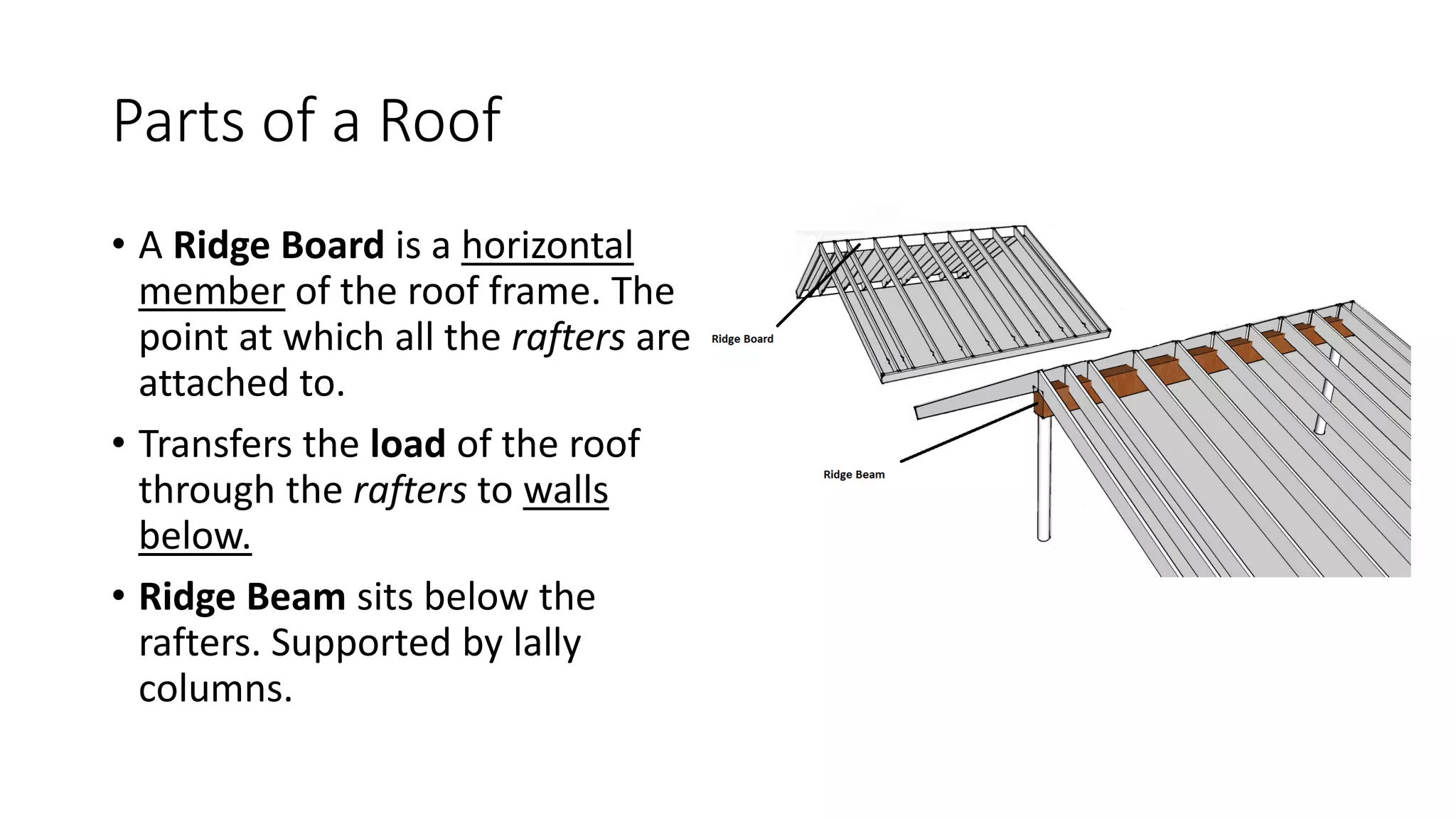
• A Ridge Board is a horizontal
member of the roof frame. The
point at which all the rafters are
attached to.
• Transfers the load of the roof
through the rafters to walls
below.
• Ridge Beam sits below the
rafters. Supported by lally
columns.
Ridge Board v.s Beam
Ridge Board Ridge Beam
Rafters
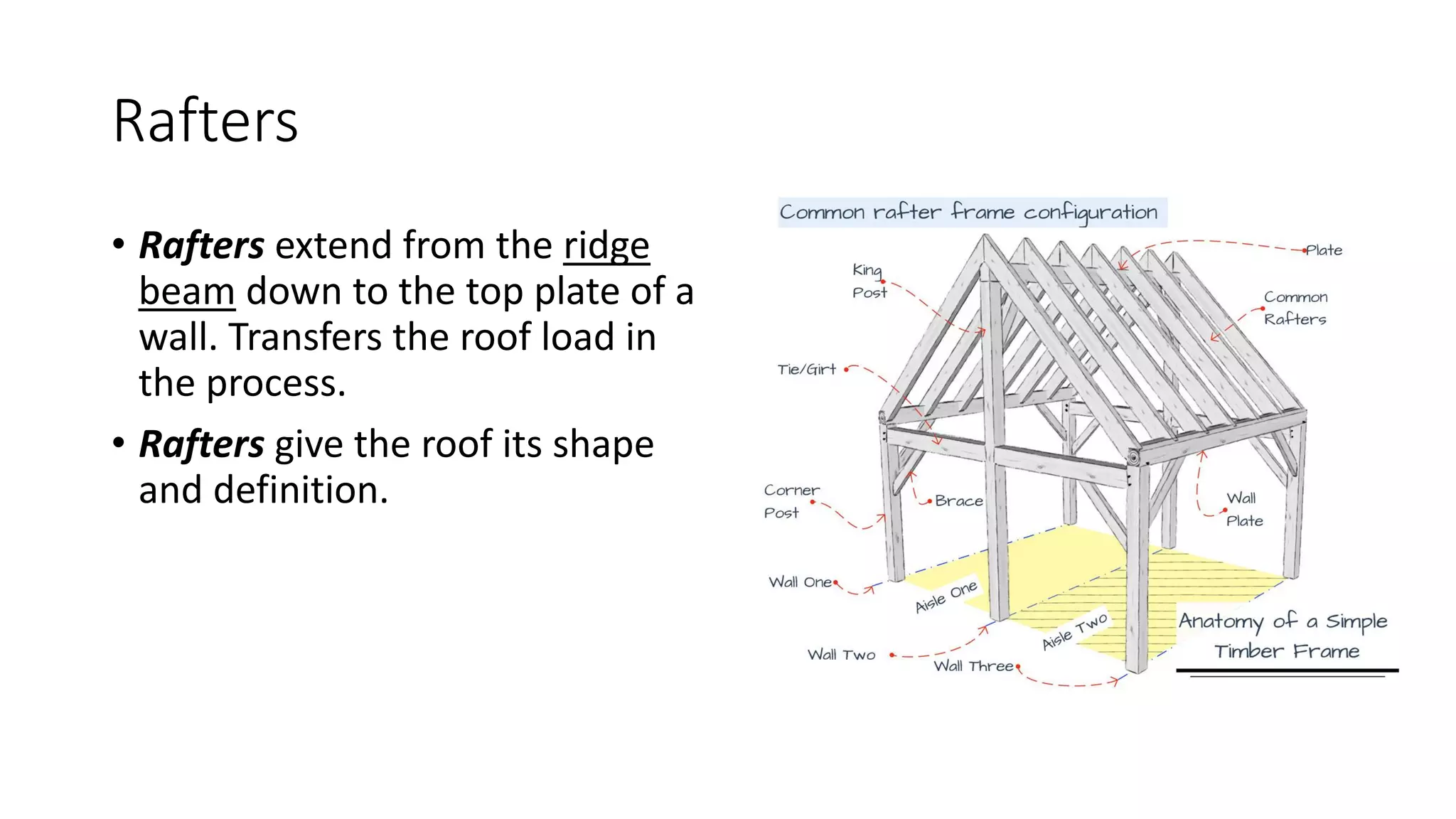
• Rafters extend from the ridge
beam down to the top plate of a
wall. Transfers the roof load in
the process.
• Rafters give the roof its shape
and definition.
Fascia & Soffit
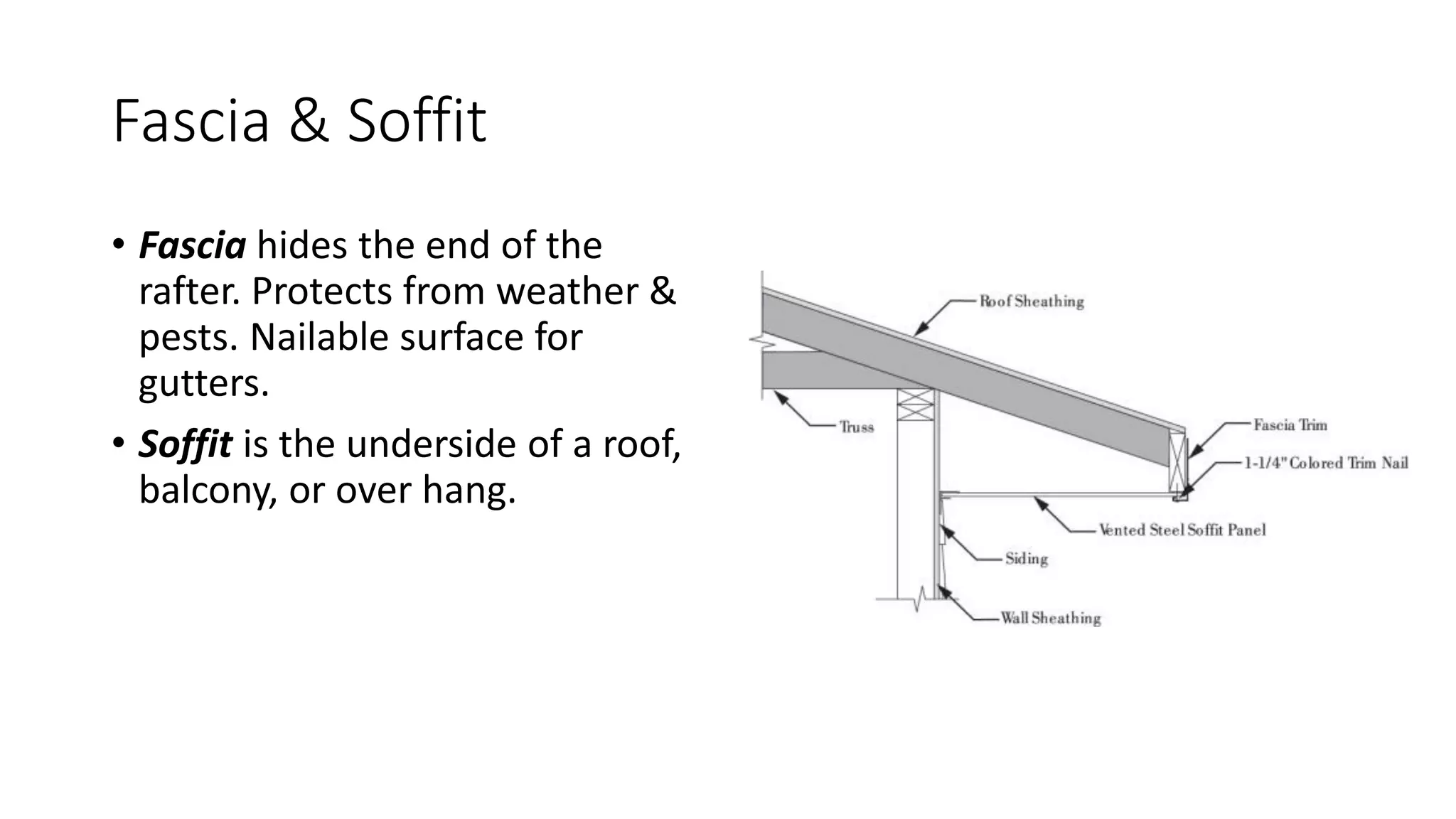
• Fascia hides the end of the
rafter. Protects from weather &
pests. Nailable surface for
gutters.
• Soffit is the underside of a roof,
balcony, or over hang.
Gable Roof
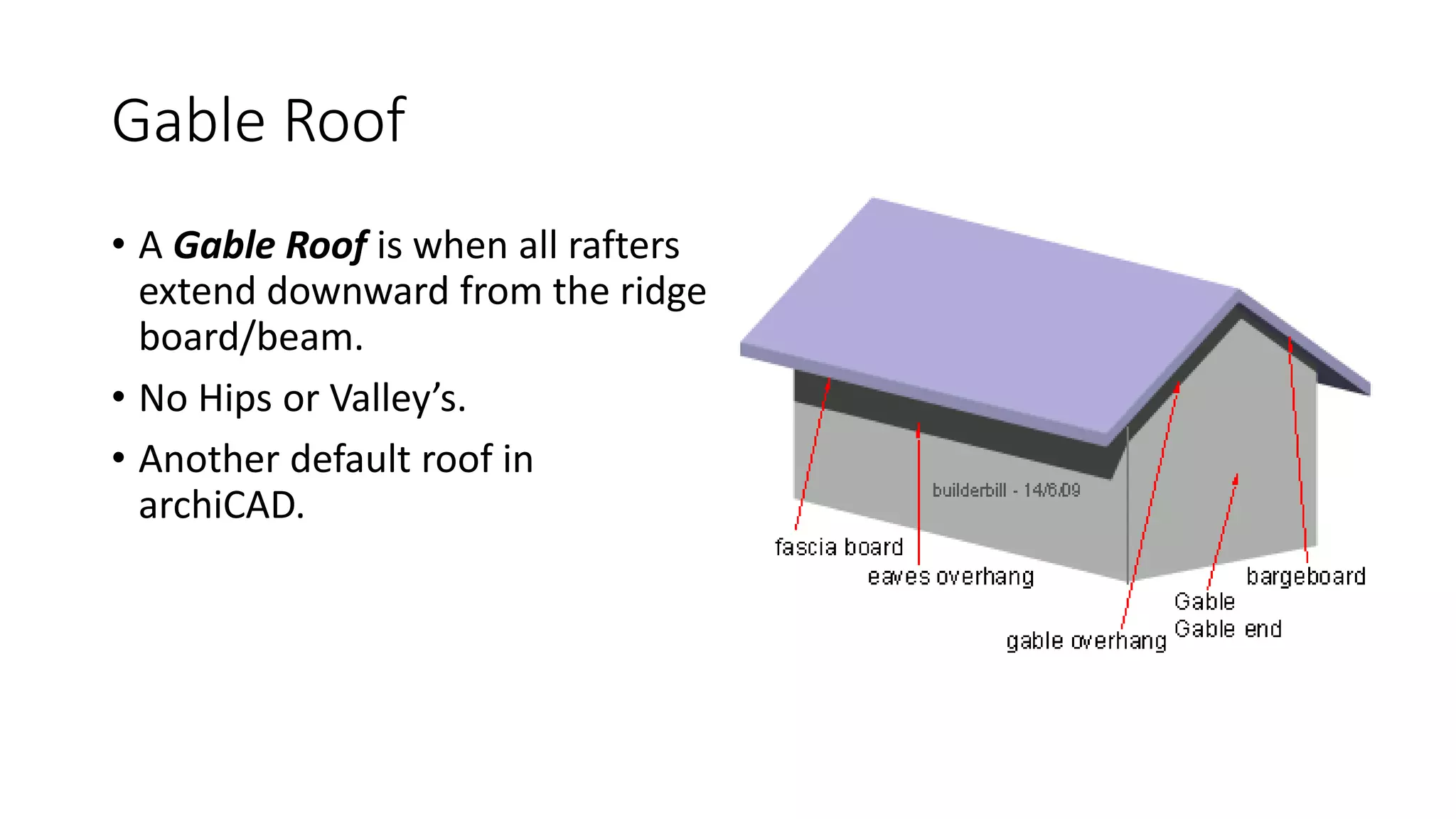
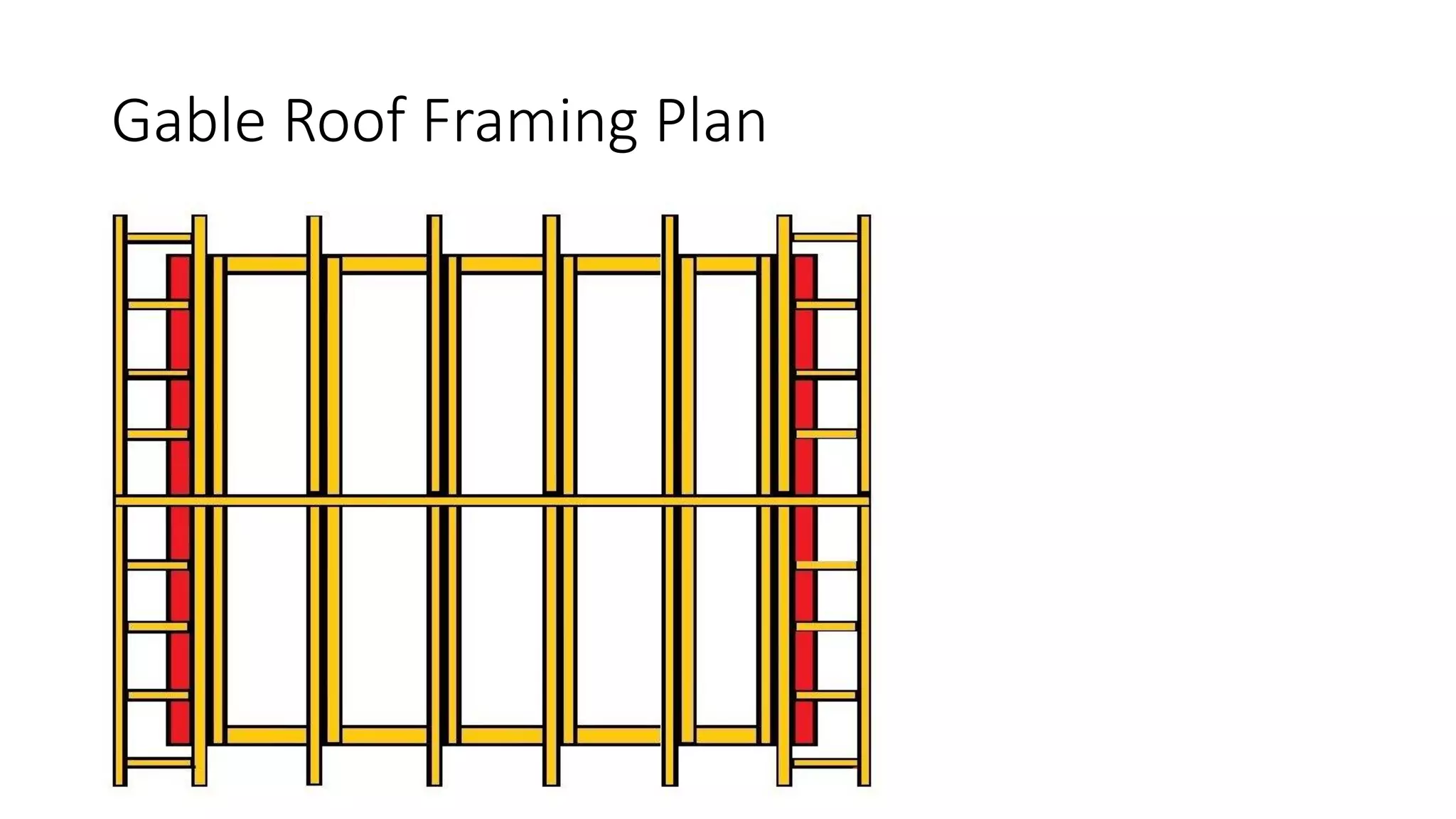
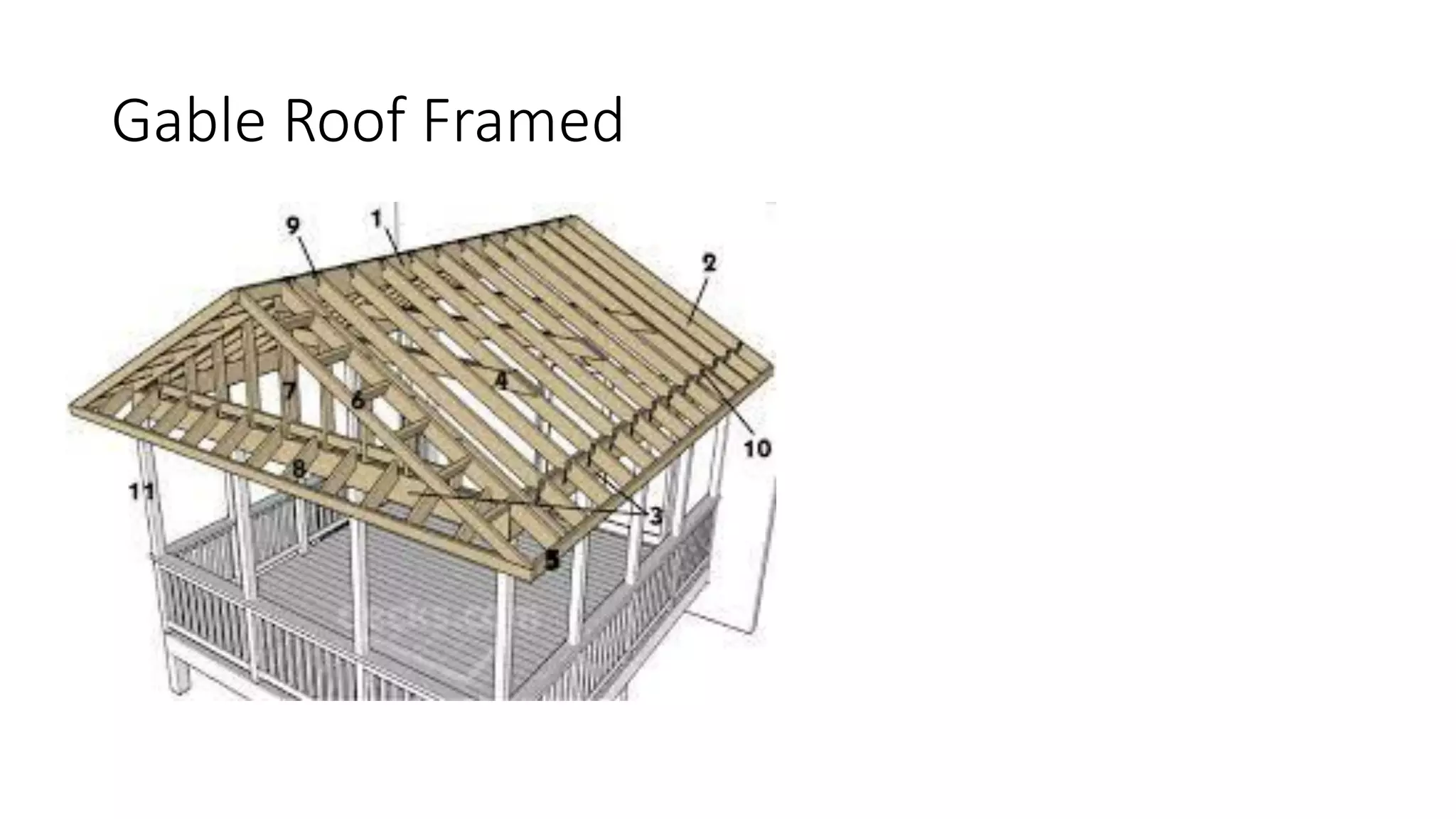
• A Gable Roof is when all rafters
extend downward from the ridge
board/beam.
• No Hips or Valley’s.
• Another default roof in
archiCAD.
Hip Roof
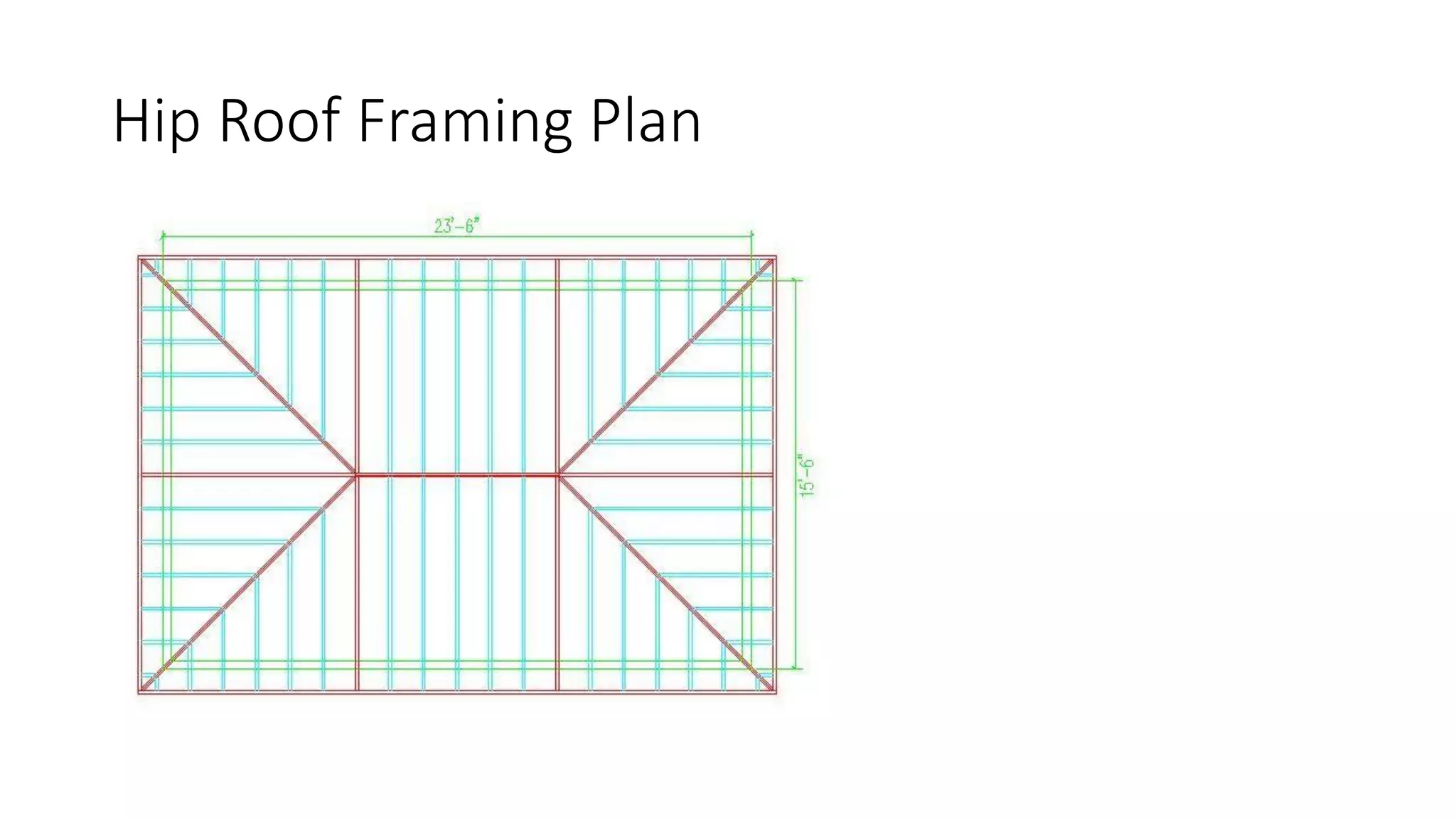
• A Hip is a type of roof where all
sides slope downward to the
walls.
• Default wall in archiCAD.
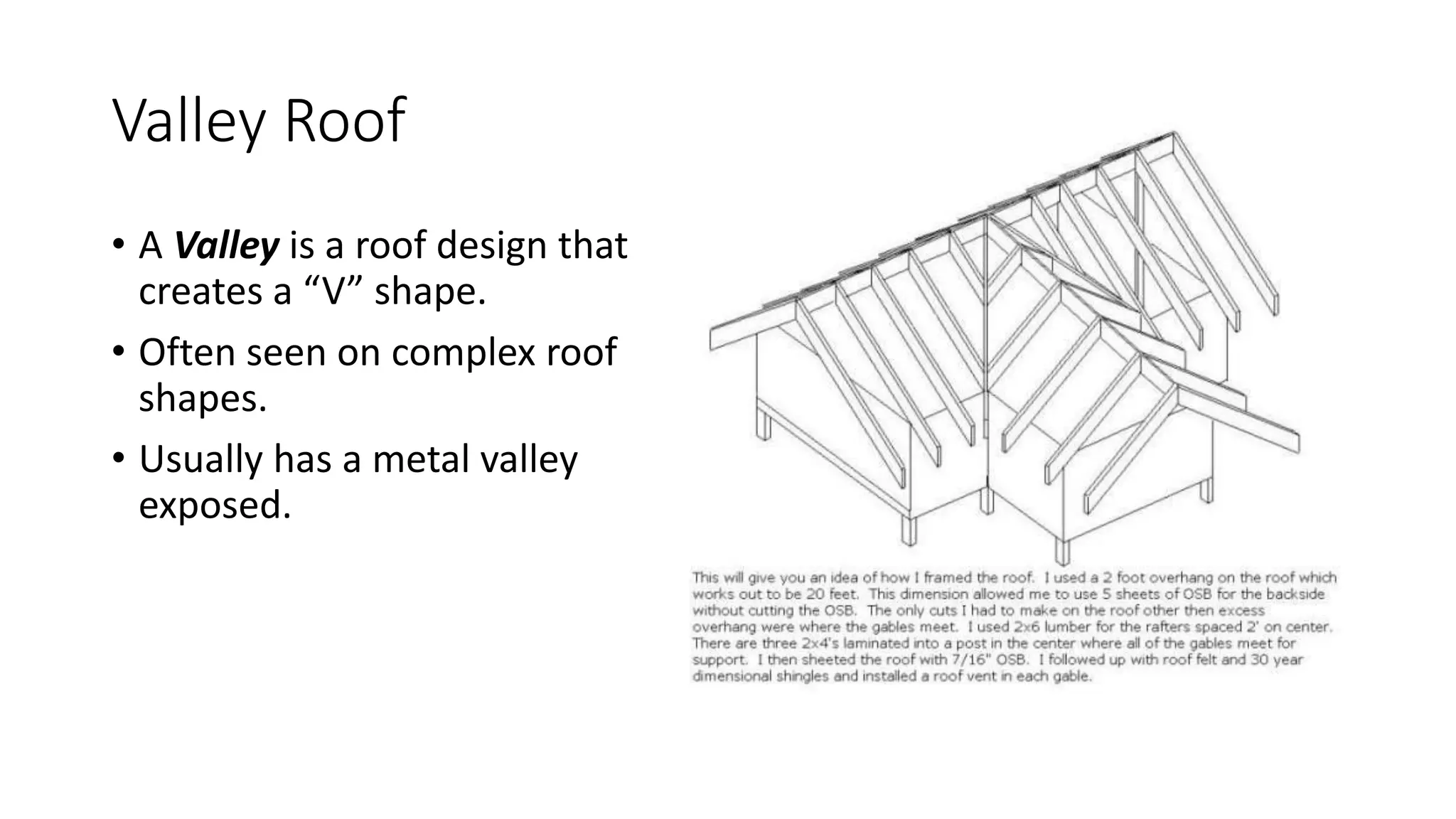
Valley Roof
• A Valley is a roof design that
creates a “V” shape.
• Often seen on complex roof
shapes.
• Usually has a metal valley
exposed.
Dormer
• A Dormer is a roofed structure
that is used to increase the
livable area in a home.
• Used in lofts and spaces where
the roof pitch is steep leaving
little room.
• Often contains a window to
allow natural light.
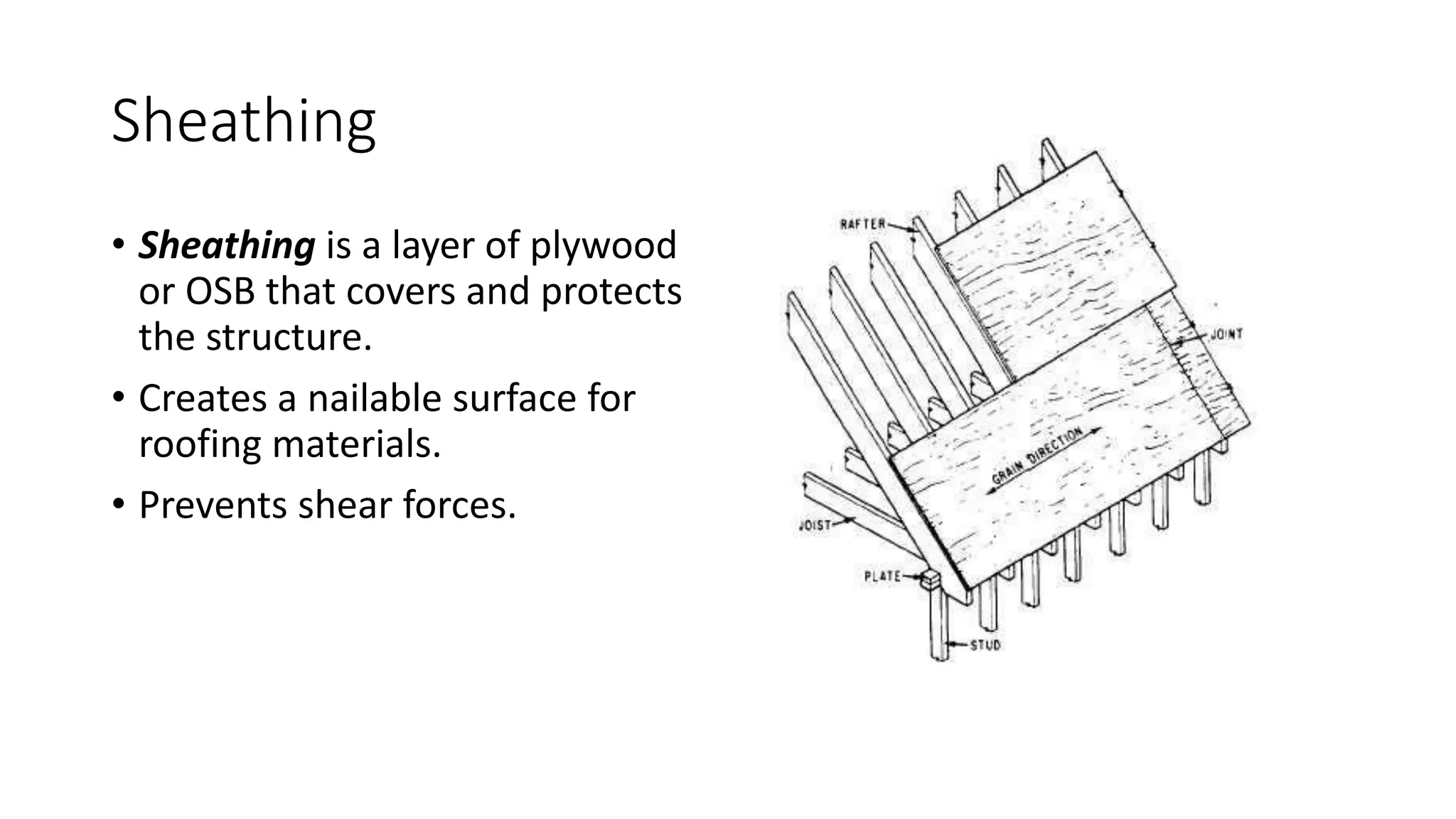
Sheathing
• Sheathing is a layer of plywood
or OSB that covers and protects
the structure.
• Creates a nailable surface for
roofing materials.
• Prevents shear forces.
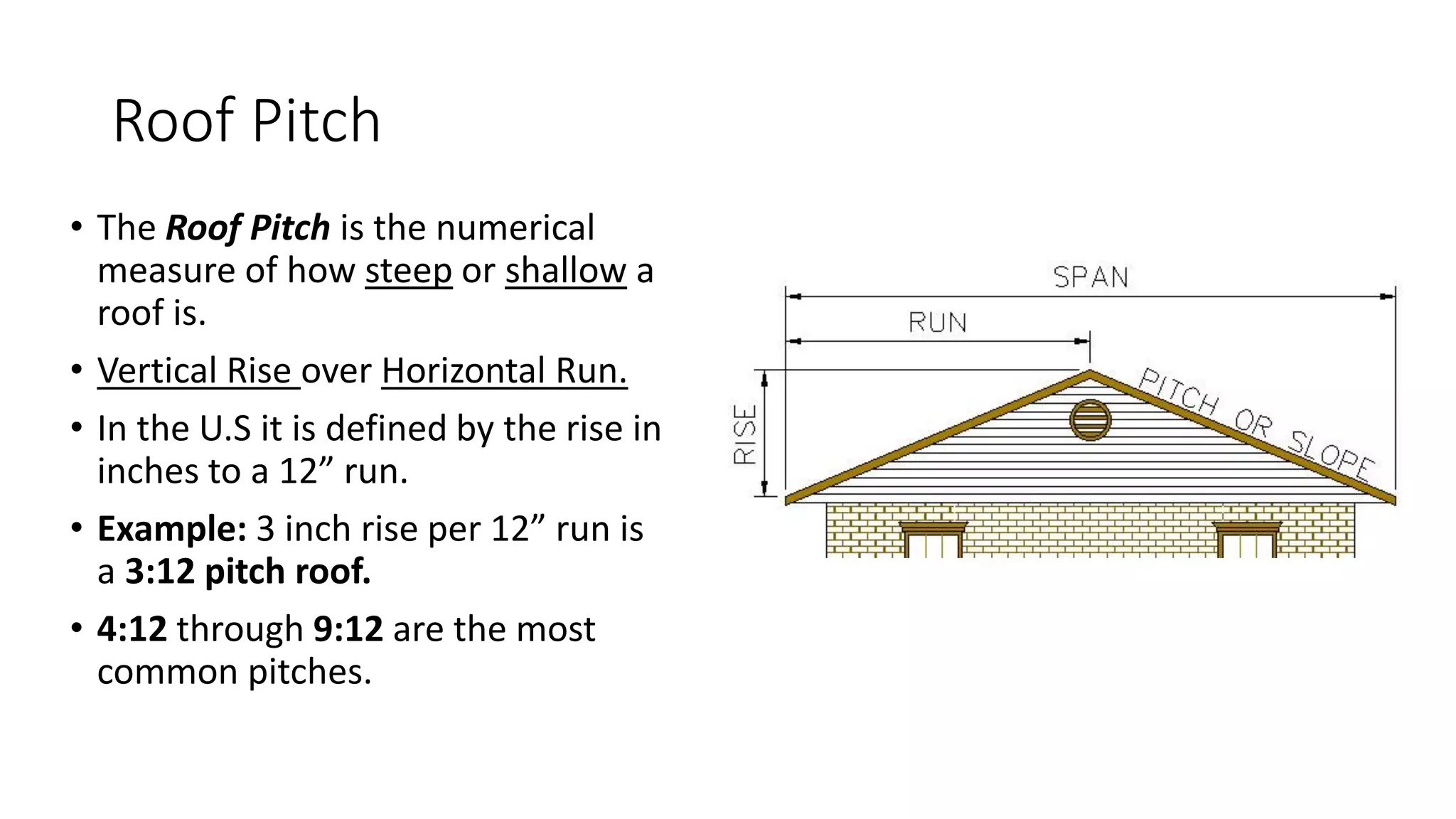
Roof Pitch
• The Roof Pitch is the numerical
measure of how steep or shallow a
roof is.
• Vertical Rise over Horizontal Run.
• In the U.S it is defined by the rise in
inches to a 12” run.
• Example: 3 inch rise per 12” run is
a 3:12 pitch roof.
• 4:12 through 9:12 are the most
common pitches.
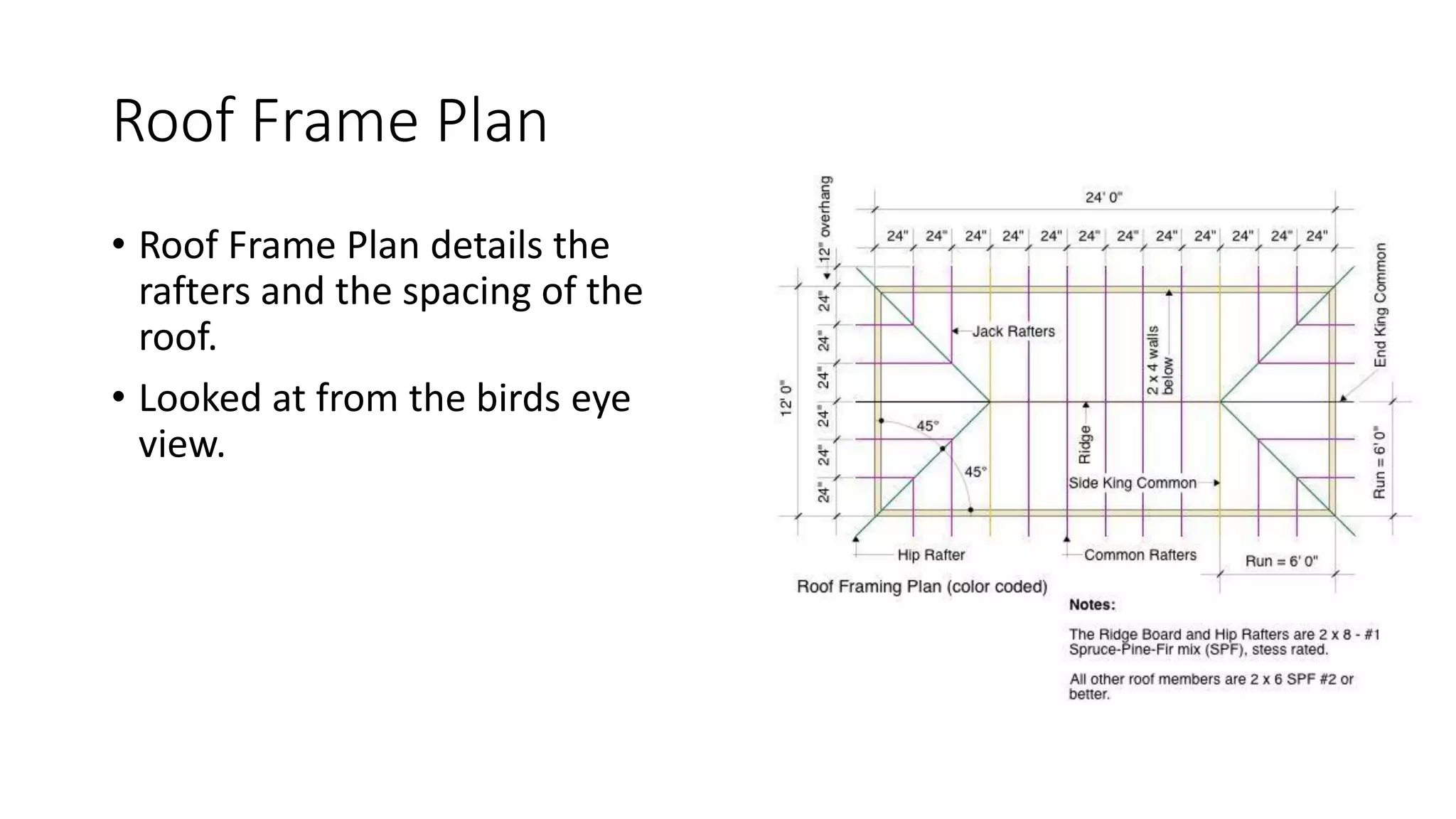
Roof Frame Plan
• Roof Frame Plan details the
rafters and the spacing of the
roof.
• Looked at from the birds eye
view.
Gable Roof Framing Plan
Gable Roof Framed
Hip & Valley Roof
Valley Framed
Hip Roof Framing Plan
Hipped Roof Framed
Different Types of Roofs

Framing a roof

  • 1.
  • 2.
    Objectives • Define RidgeBoard, rafter, hip, valley, sheathing, fascia, soffit, dormer, and pitch. • Label and identify the parts of a roof framing plan.
  • 3.
    Parts of aRoof • A Ridge Board is a horizontal member of the roof frame. The point at which all the rafters are attached to. • Transfers the load of the roof through the rafters to walls below. • Ridge Beam sits below the rafters. Supported by lally columns.
  • 4.
    Ridge Board v.sBeam Ridge Board Ridge Beam
  • 5.
    Rafters • Rafters extendfrom the ridge beam down to the top plate of a wall. Transfers the roof load in the process. • Rafters give the roof its shape and definition.
  • 6.
    Fascia & Soffit •Fascia hides the end of the rafter. Protects from weather & pests. Nailable surface for gutters. • Soffit is the underside of a roof, balcony, or over hang.
  • 7.
    Gable Roof • AGable Roof is when all rafters extend downward from the ridge board/beam. • No Hips or Valley’s. • Another default roof in archiCAD.
  • 8.
    Hip Roof • AHip is a type of roof where all sides slope downward to the walls. • Default wall in archiCAD.
  • 9.
    Valley Roof • AValley is a roof design that creates a “V” shape. • Often seen on complex roof shapes. • Usually has a metal valley exposed.
  • 10.
    Dormer • A Dormeris a roofed structure that is used to increase the livable area in a home. • Used in lofts and spaces where the roof pitch is steep leaving little room. • Often contains a window to allow natural light.
  • 11.
    Sheathing • Sheathing isa layer of plywood or OSB that covers and protects the structure. • Creates a nailable surface for roofing materials. • Prevents shear forces.
  • 12.
    Roof Pitch • TheRoof Pitch is the numerical measure of how steep or shallow a roof is. • Vertical Rise over Horizontal Run. • In the U.S it is defined by the rise in inches to a 12” run. • Example: 3 inch rise per 12” run is a 3:12 pitch roof. • 4:12 through 9:12 are the most common pitches.
  • 13.
    Roof Frame Plan •Roof Frame Plan details the rafters and the spacing of the roof. • Looked at from the birds eye view.
  • 14.
  • 15.
  • 16.
  • 17.
  • 18.
  • 19.
  • 20.