The principal as an effective
communicator: Increasing
parental and community
engagement through the use of
digital communications and
social media
Brian Fox
Northwest Nazarene University
Essential Questions
• How am I ensuring that our school communication
interacts with a comprehensive audience?
• How will I maximize our efficiency?
• How will I build capacity in others?
To begin with . . .
• Research provides clear evidence for the relationship
between student achievement and the engagement of
parents and community members with their local
schools through meaningful involvement of parents,
families, and members of the community (Curtis, 2013;
Epstein, Galindo, & Sheldon, 2011; French, 2014; Hill & Taylor, 2004; Grujanac,
2011; Hoover-Dempsey, Walker, & Sandler, 2005; Jeynes, 2012; O’Donnell &
Kirkner, 2014; Sonnenschein, Stapleton, & Metzger, 2014; Topor, Keane, Shelton, &
Calkins, 2010).
Theoretical Frameworks
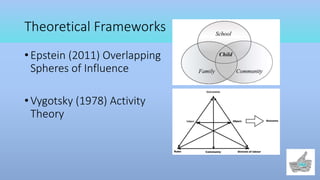
• Epstein (2011) Overlapping
Spheres of Influence
• Vygotsky (1978) Activity
Theory
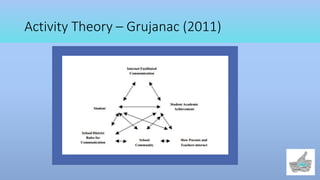
Activity Theory – Grujanac (2011)
Understanding Communications
1. Define “communications”
2. Brainstorm ways you communicate
3. Consider how you build relationships
4. What are your strategies for making connections?
5. How do you build community?
6. What activities or events create culture at your
school?
Why does it matter?
AVID Postsecondary Strategies for Success
Oral and written communication is a key to academic
success and it opens doors to social and professional
opportunities and accolades.
Proficiency and facility with writing and speaking
provides all students with a “place to stand.”(2011, p. 25)
As a leader . . .
• Expected to be able to communicate well
• Articulate building goals and plans for improvement
• Facilitate collaboration and build culture
• Cognitively coach others
• Effectively understand point of view
• Concisely represent student achievement, staff accomplishment,
parent interests, district goals and initiatives
• Part of evaluation
Association of Washington School Principals
Leadership Framework
“Student achievement in a performance-based school is a shared
responsibility involving the student, family, educators and the
community. The principal’s leadership is essential. As leader, the
principal is accountable for the continuous growth of individual students
and increased school performance . . . Pivotal to the success of this shift
is a new type of principal leadership” (AWSP Leadership Framework,
2013, p. 2).
Why care about communications?
• Be in control of our own story
• Represent student achievement with more than test
scores and media accounts
• Our communications reflect upon our students, staff,
and district as a whole
• Communication tools and methods have radically
changed over time
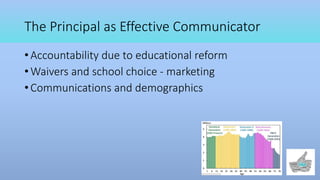
The Principal as Effective Communicator
• Accountability due to educational reform
• Waivers and school choice - marketing
• Communications and demographics
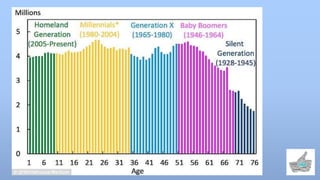
 Bill Strauss and Neil Howe, social historians
Understanding Generations
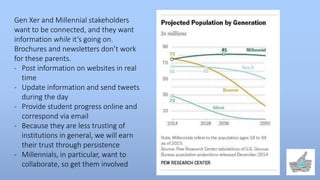
Gen Xer and Millennial stakeholders
want to be connected, and they want
information while it’s going on.
Brochures and newsletters don’t work
for these parents.
- Post information on websites in real
time
- Update information and send tweets
during the day
- Provide student progress online and
correspond via email
- Because they are less trusting of
institutions in general, we will earn
their trust through persistence
- Millennials, in particular, want to
collaborate, so get them involved
Marking the text
Pages 13 – 23
• Circle key terms and
essential words
• Underline author claims,
facts, descriptions,
relationships
• Use post-its as desired
Marking the text
At your tables:
• Share new learnings
• Share new questions
• Make connections:
 Text to self
 Text to text
 Text to world
Social Media Revolution 2015
Essential Questions
• How am I ensuring that our school communication
interacts with a comprehensive audience?
• How will I maximize our efficiency?
• How will I build capacity in others?
As a leader . . .
• What will you do yourself?
• How can others help you?
• What will you delegate?
• Oversee, manage, micromanage

Fox WSU Communications presentation 071315

  • 1.
    The principal asan effective communicator: Increasing parental and community engagement through the use of digital communications and social media Brian Fox Northwest Nazarene University
  • 2.
    Essential Questions • Howam I ensuring that our school communication interacts with a comprehensive audience? • How will I maximize our efficiency? • How will I build capacity in others?
  • 3.
    To begin with. . . • Research provides clear evidence for the relationship between student achievement and the engagement of parents and community members with their local schools through meaningful involvement of parents, families, and members of the community (Curtis, 2013; Epstein, Galindo, & Sheldon, 2011; French, 2014; Hill & Taylor, 2004; Grujanac, 2011; Hoover-Dempsey, Walker, & Sandler, 2005; Jeynes, 2012; O’Donnell & Kirkner, 2014; Sonnenschein, Stapleton, & Metzger, 2014; Topor, Keane, Shelton, & Calkins, 2010).
  • 4.
    Theoretical Frameworks • Epstein(2011) Overlapping Spheres of Influence • Vygotsky (1978) Activity Theory
  • 5.
    Activity Theory –Grujanac (2011)
  • 6.
    Understanding Communications 1. Define“communications” 2. Brainstorm ways you communicate 3. Consider how you build relationships 4. What are your strategies for making connections? 5. How do you build community? 6. What activities or events create culture at your school?
  • 7.
    Why does itmatter? AVID Postsecondary Strategies for Success Oral and written communication is a key to academic success and it opens doors to social and professional opportunities and accolades. Proficiency and facility with writing and speaking provides all students with a “place to stand.”(2011, p. 25)
  • 8.
    As a leader. . . • Expected to be able to communicate well • Articulate building goals and plans for improvement • Facilitate collaboration and build culture • Cognitively coach others • Effectively understand point of view • Concisely represent student achievement, staff accomplishment, parent interests, district goals and initiatives • Part of evaluation
  • 9.
    Association of WashingtonSchool Principals Leadership Framework “Student achievement in a performance-based school is a shared responsibility involving the student, family, educators and the community. The principal’s leadership is essential. As leader, the principal is accountable for the continuous growth of individual students and increased school performance . . . Pivotal to the success of this shift is a new type of principal leadership” (AWSP Leadership Framework, 2013, p. 2).
  • 10.
    Why care aboutcommunications? • Be in control of our own story • Represent student achievement with more than test scores and media accounts • Our communications reflect upon our students, staff, and district as a whole • Communication tools and methods have radically changed over time
  • 11.
    The Principal asEffective Communicator • Accountability due to educational reform • Waivers and school choice - marketing • Communications and demographics
  • 13.
     Bill Straussand Neil Howe, social historians Understanding Generations
  • 14.
    Gen Xer andMillennial stakeholders want to be connected, and they want information while it’s going on. Brochures and newsletters don’t work for these parents. - Post information on websites in real time - Update information and send tweets during the day - Provide student progress online and correspond via email - Because they are less trusting of institutions in general, we will earn their trust through persistence - Millennials, in particular, want to collaborate, so get them involved
  • 15.
    Marking the text Pages13 – 23 • Circle key terms and essential words • Underline author claims, facts, descriptions, relationships • Use post-its as desired
  • 16.
    Marking the text Atyour tables: • Share new learnings • Share new questions • Make connections:  Text to self  Text to text  Text to world
  • 17.
  • 18.
    Essential Questions • Howam I ensuring that our school communication interacts with a comprehensive audience? • How will I maximize our efficiency? • How will I build capacity in others?
  • 19.
    As a leader. . . • What will you do yourself? • How can others help you? • What will you delegate? • Oversee, manage, micromanage