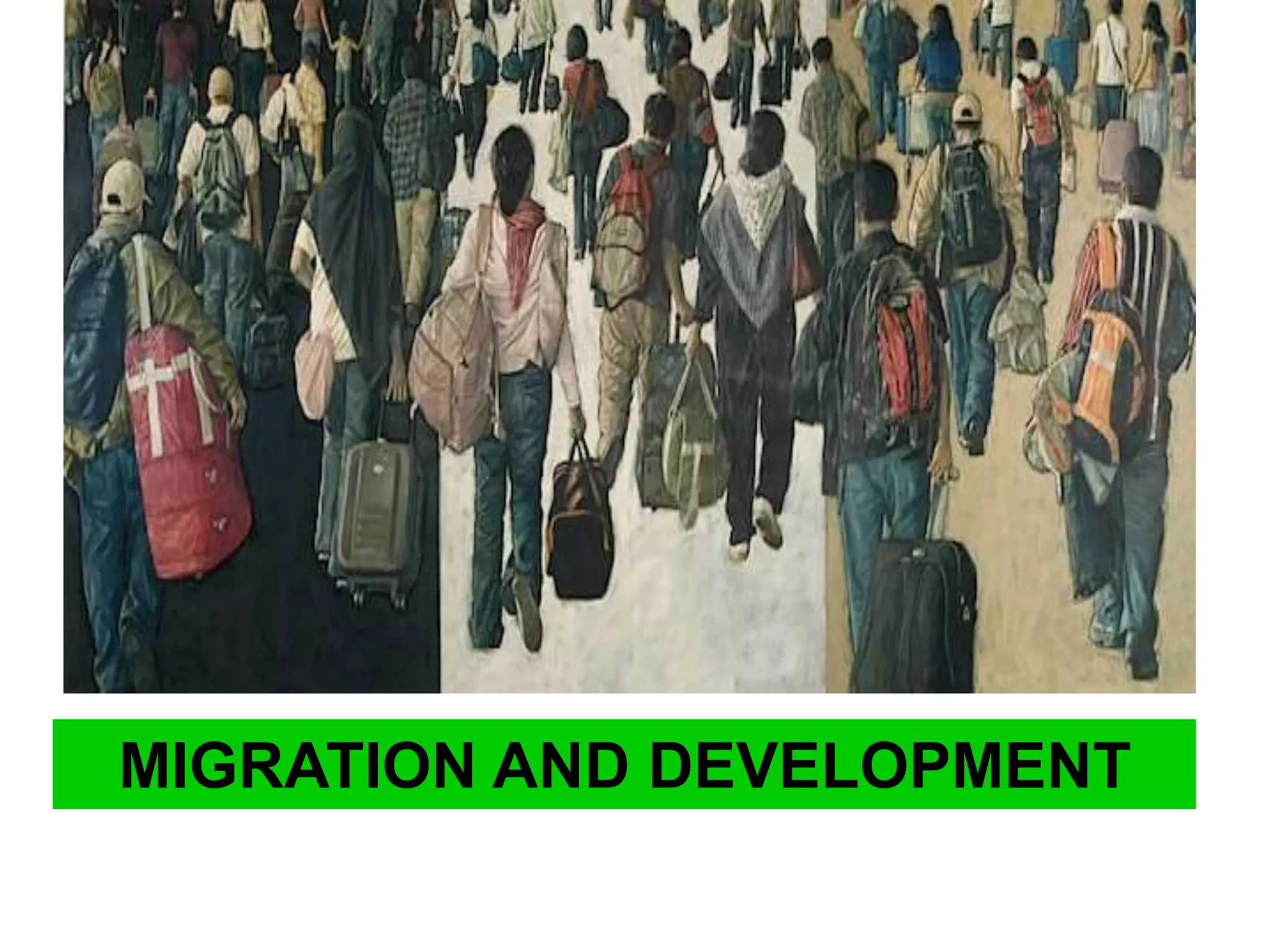


MIGRATION AND DEVELOPMENT
FORUMMigration and DevelopmentAteneo de Davao UniversityLeila Rispens-NoelSenior Advisor, International Network of Alternative Financial Institutions (INAFI International)President, Wimler Foundation
MigrationWhat is Migration?Migration is the movement of people from one place to another.What are the main types of migration?Migration can be permanent, temporary, voluntary or forced. It can be international or internal.3
Push Factors of MigrationLack of jobs and PovertyClimate Change/Environmental problemsLack or under-employment at homeMarket forcesDiscriminationCivil Strife/War/Political  and religious persecution4
Pull Factors of MigrationHigher standards of living/Higher wagesLabor DemandPolitical and/or religious freedomEnjoyment/Greener pasturesEducationBetter medical careSecurityFamily links5
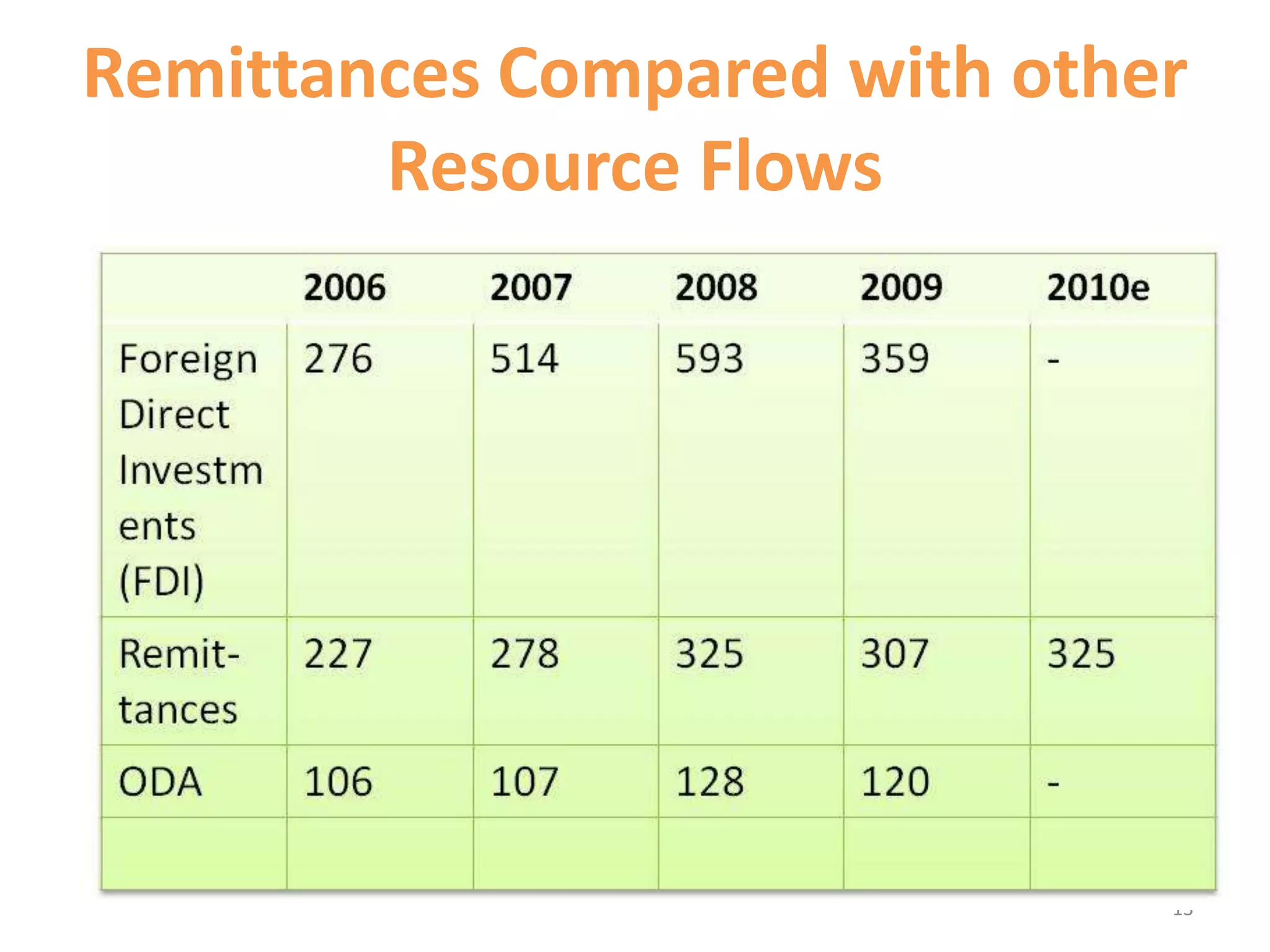
What do we know?Migration can contribute to developmentRemittances are twice more than official development aid, just little behind than foreign direct investments.Migration is unstoppable6
Philippine International MigrationJanuary 19, 20117Global: in 2010, 214 million people work and live outside their countries of origin; nearly three percent of world’s population (IOM)Philippines: estimated 8-10 million overseas Filipinos spread in 193 countries; 10% are irregular; 60% are women
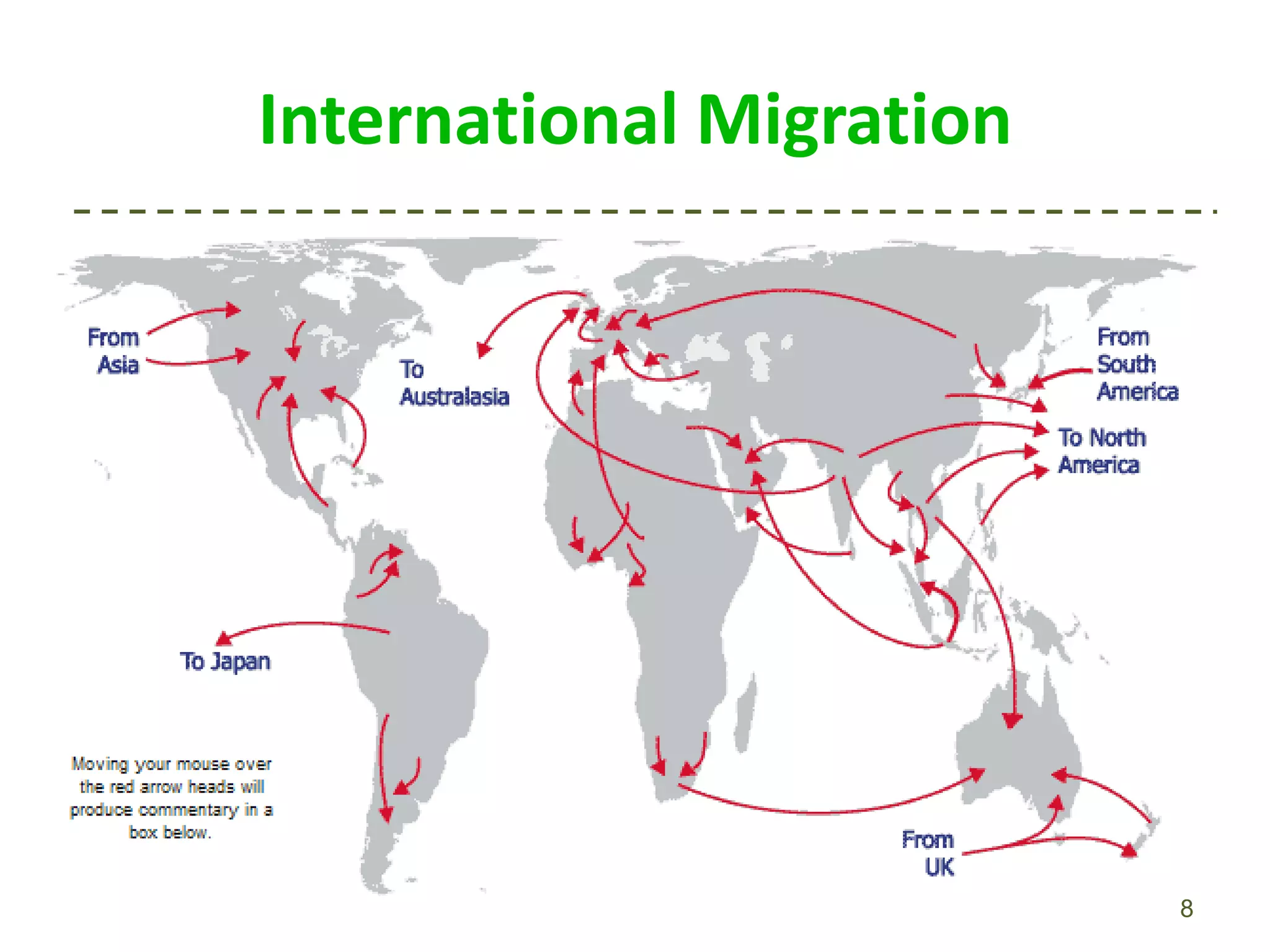
International Migration8
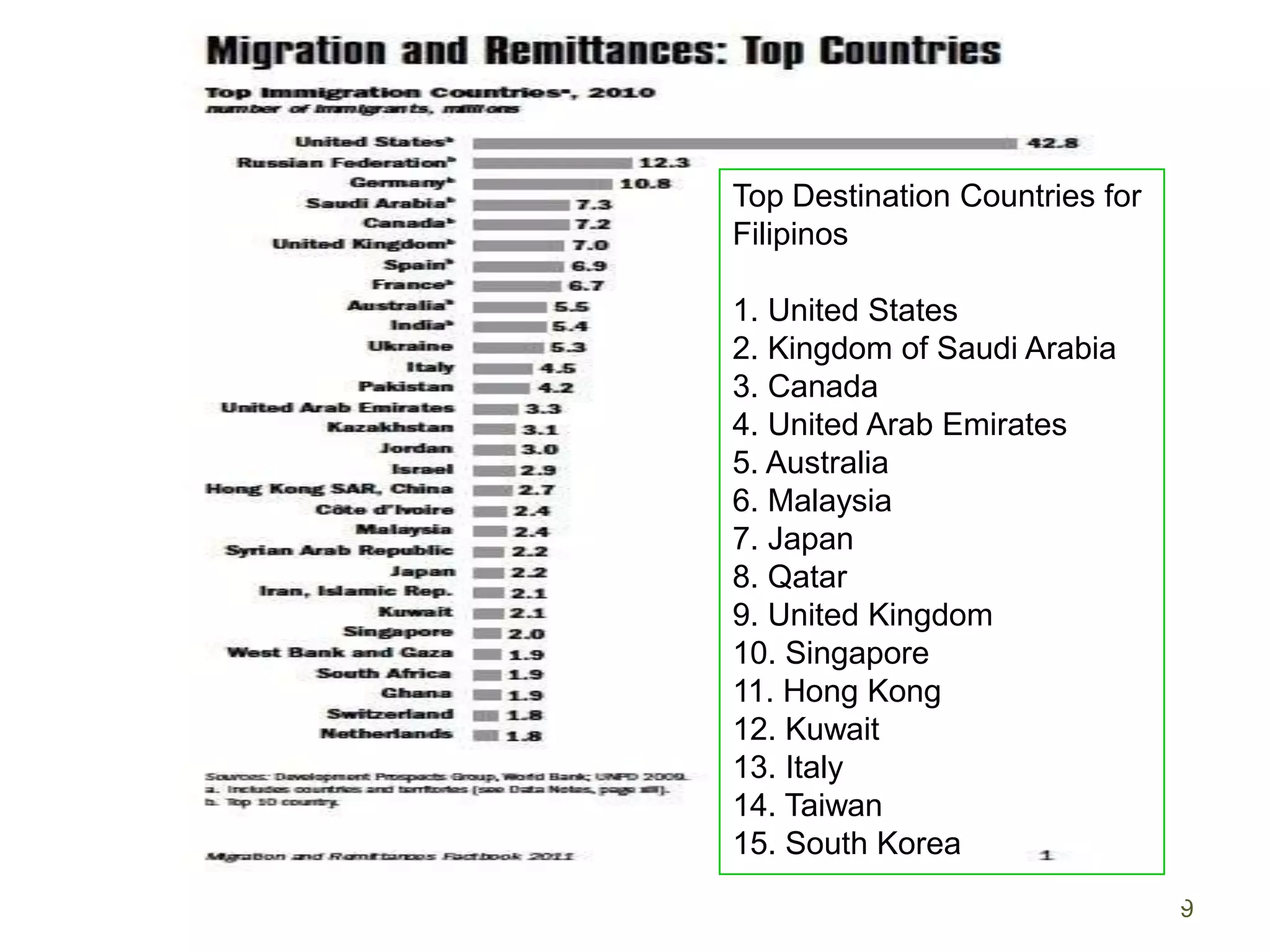
Top Destination Countries for Filipinos1. United States2. Kingdom of Saudi Arabia3. Canada4. United Arab Emirates5. Australia6. Malaysia7. Japan8. Qatar9. United Kingdom10. Singapore11. Hong Kong12. Kuwait13. Italy14. Taiwan15. South Korea9
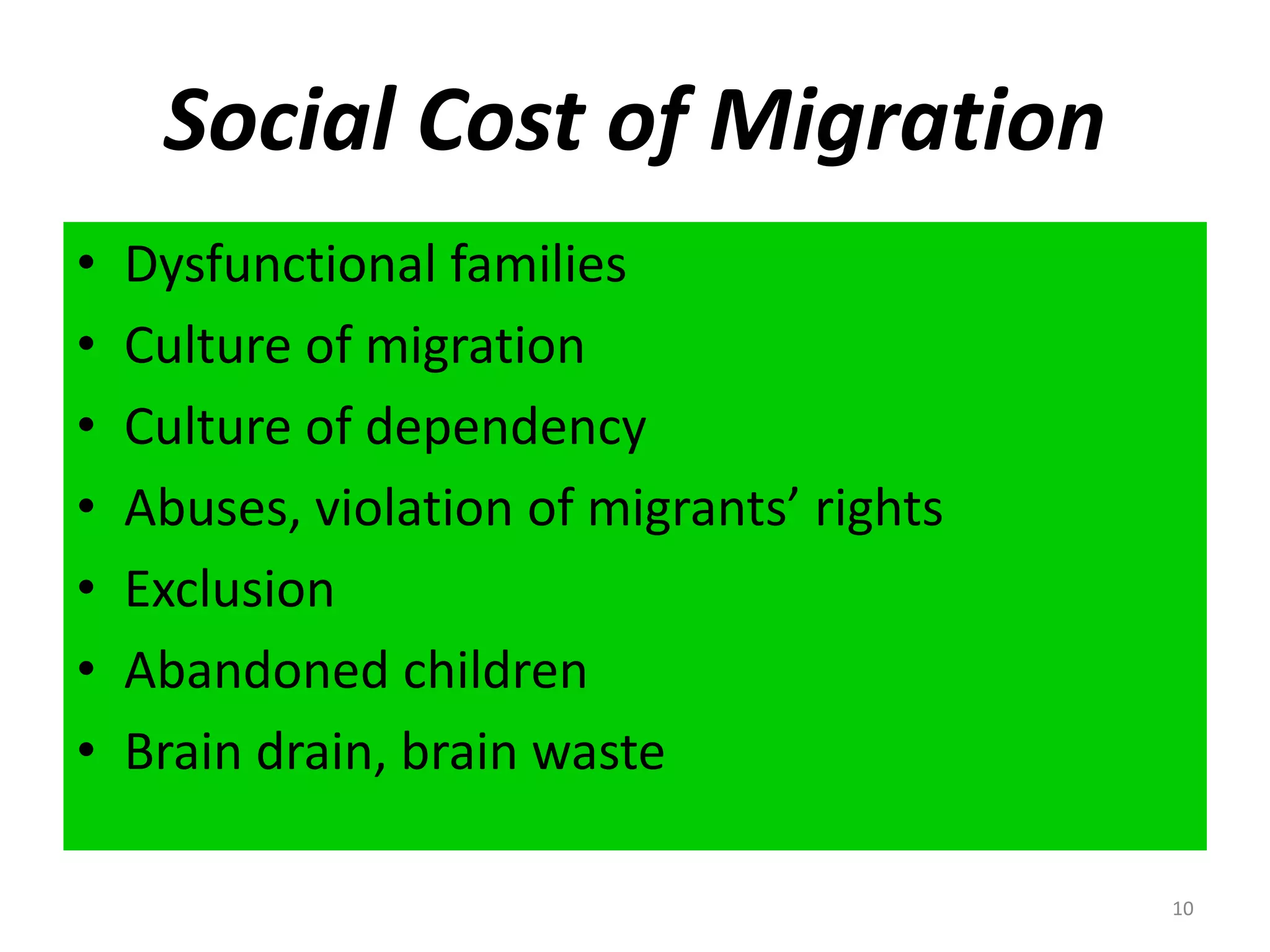
Social Cost of Migration10Dysfunctional familiesCulture of migrationCulture of dependencyAbuses, violation of migrants’ rightsExclusionAbandoned childrenBrain drain, brain waste
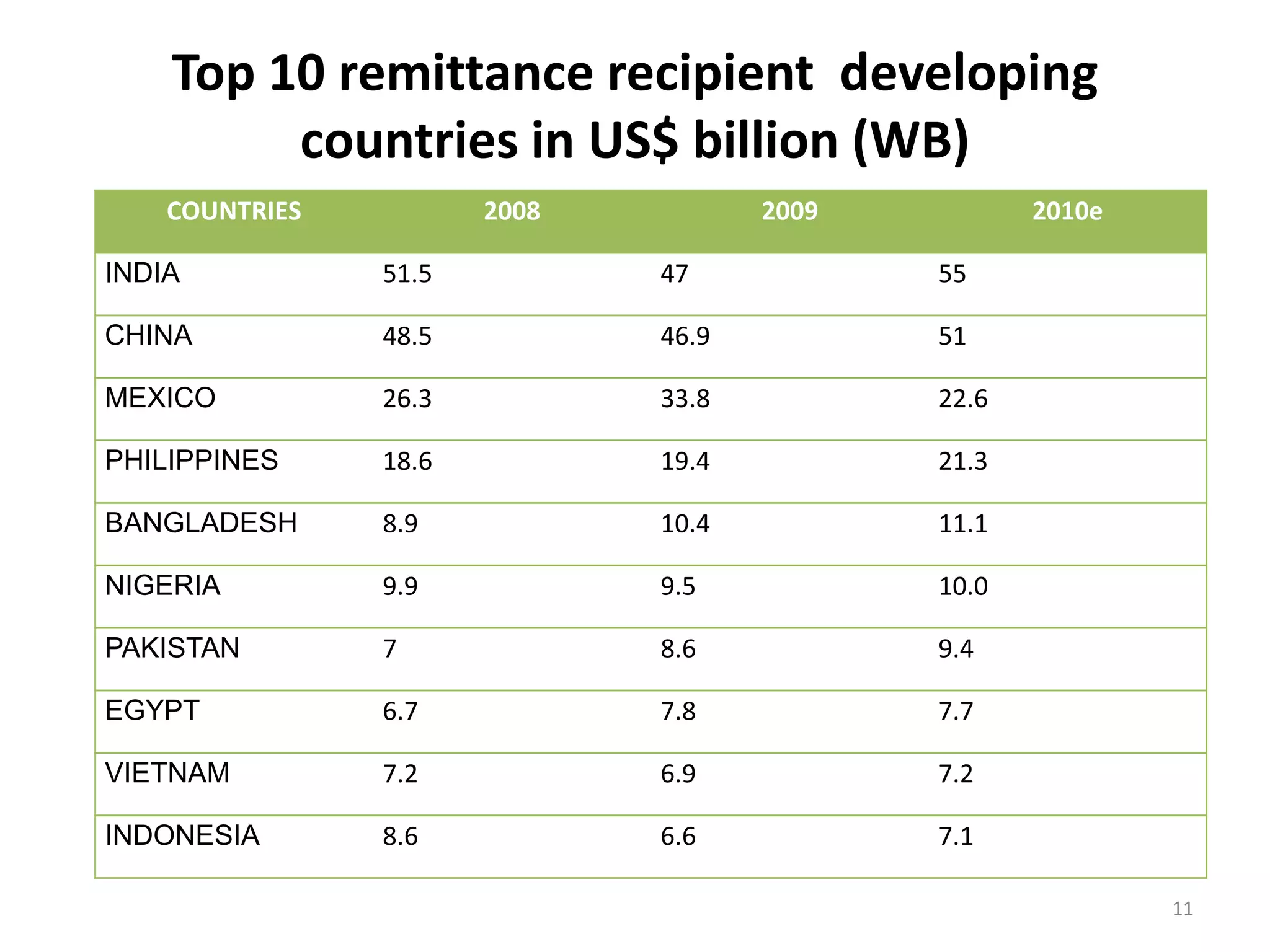
Top 10 remittance recipient  developing countries in US$ billion (WB)11
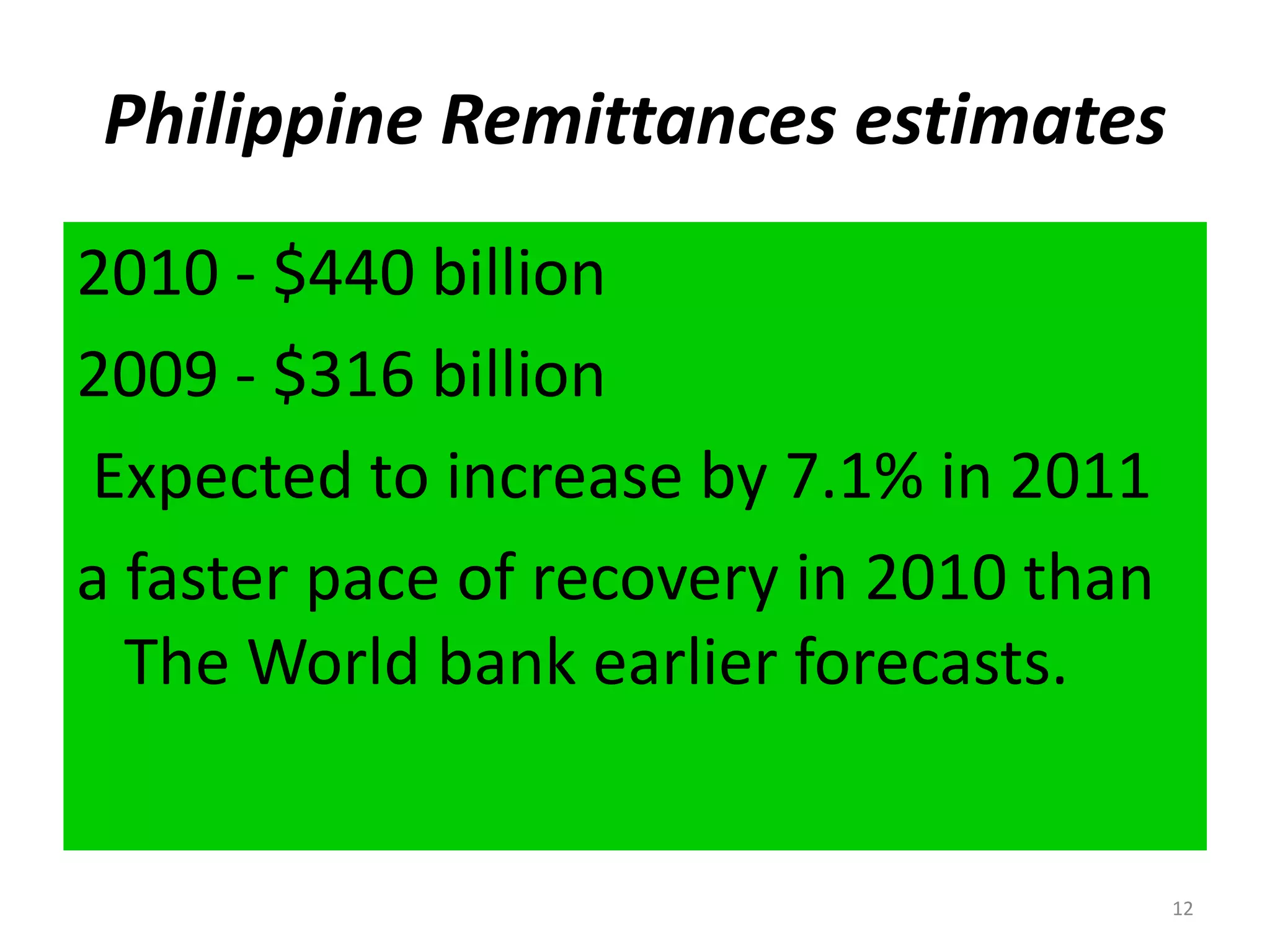
Philippine Remittances estimates 2010 - $440 billion2009 - $316 billion   Expected to increase by 7.1% in 2011a faster pace of recovery in 2010 than The World bank earlier forecasts. 12
Remittances Compared with other Resource Flows13
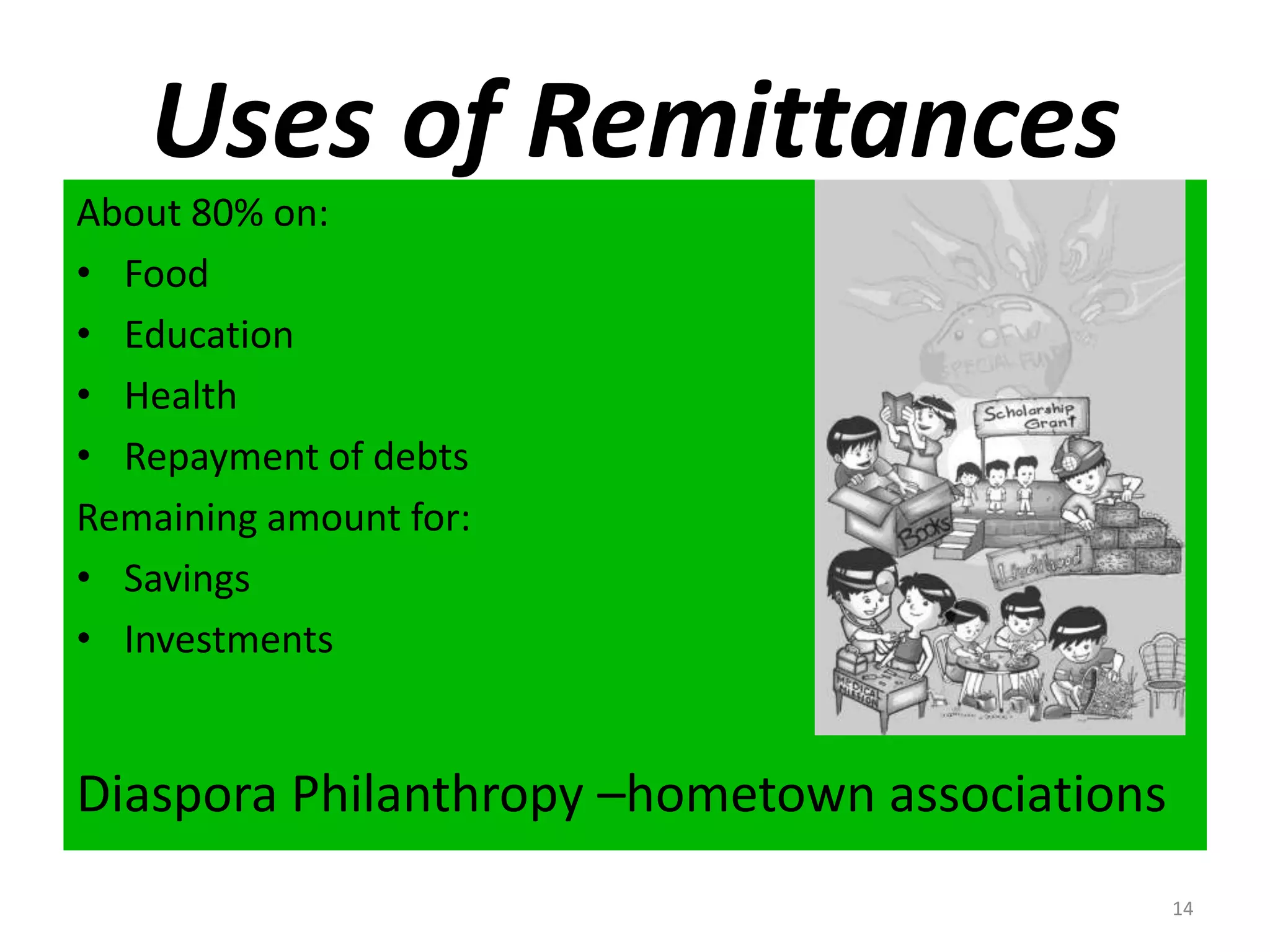
Uses of RemittancesAbout 80% on:FoodEducationHealthRepayment of debtsRemaining amount for:SavingsInvestmentsDiaspora Philanthropy –hometown associations14
Not only RemittancesMigrants also contribute social remittances: skills, knowledge, networks, new ideas (politics) – in some countries (peace building, democratization, good governance)In time of disasterIn Host countries:Economy, culture15
What should we do                                 and who will do it?16GovernmentMigrants and FamiliesDevelopment and international organizationsNGOs, trade unions, Diaspora/Migrant AssociationsAcademesFinancial sectorHost Countries
Recommendations for Academes, Students1. Data and information gathering e.g.  thesis on causes, effects, and social costs of Migration in Mindanao and formulate recommendations based on their findings to be used as basis for government policies to improve situation of migrants and their families both at home and abroad.17
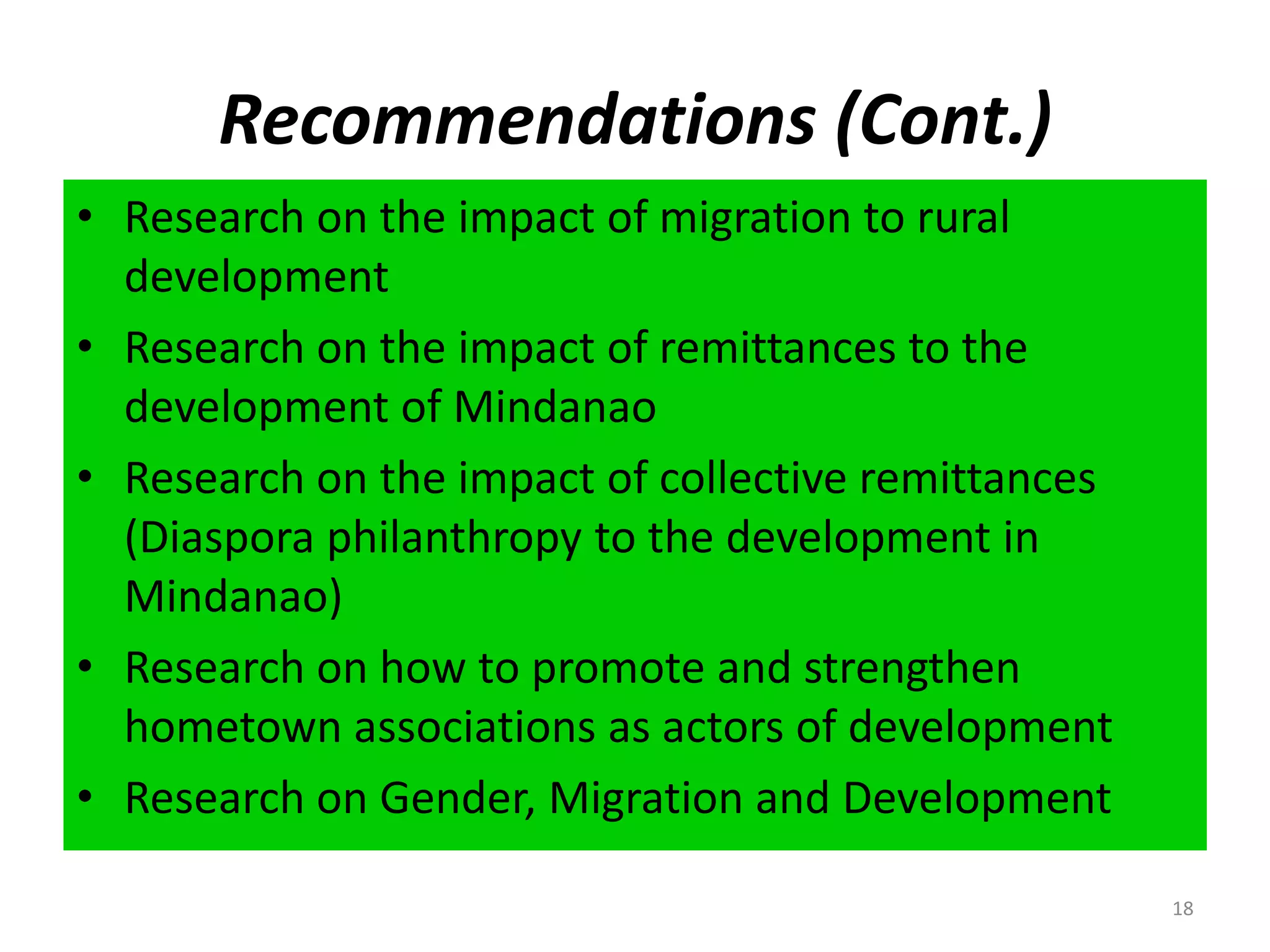
Recommendations (Cont.)Research on the impact of migration to rural developmentResearch on the impact of remittances to the development of MindanaoResearch on the impact of collective remittances (Diaspora philanthropy to the development in Mindanao)Research on how to promote and strengthen hometown associations as actors of developmentResearch on Gender, Migration and Development18
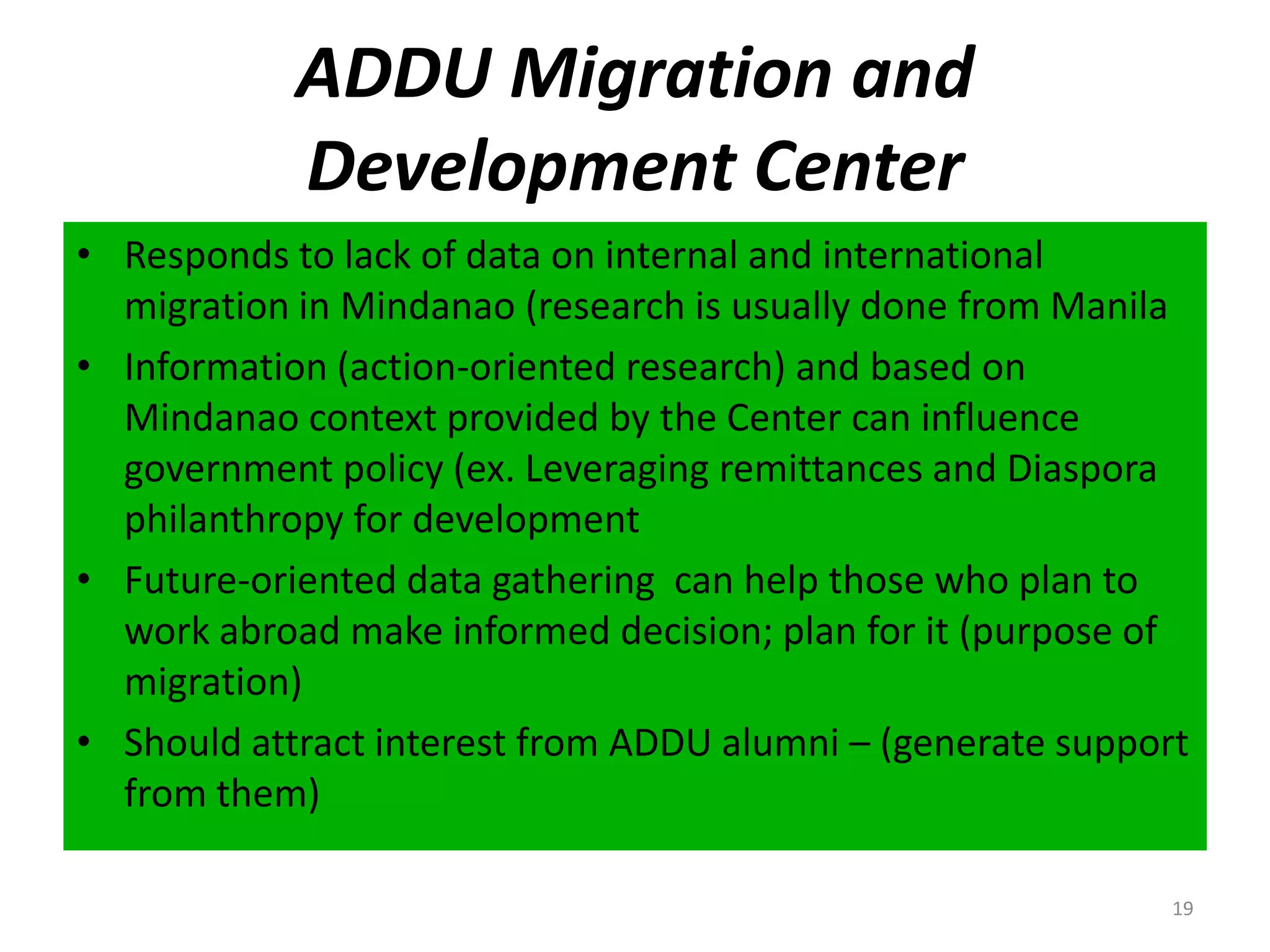
ADDU Migration and Development CenterResponds to lack of data on internal and international migration in Mindanao (research is usually done from ManilaInformation (action-oriented research) and based on Mindanao context provided by the Center can influence government policy (ex. Leveraging remittances and Diaspora philanthropy for developmentFuture-oriented data gathering can help those who plan to work abroad make informed decision; plan for it (purpose of migration)Should attract interest from ADDU alumni – (generate support from them)19
DAGHANG SALAMATwww.inafi.orgwww.wimler.orgleila.rispens-noel@wimler.org20

Forum: Migration and Development

  • 1.
  • 2.
    FORUMMigration and DevelopmentAteneode Davao UniversityLeila Rispens-NoelSenior Advisor, International Network of Alternative Financial Institutions (INAFI International)President, Wimler Foundation
  • 3.
    MigrationWhat is Migration?Migrationis the movement of people from one place to another.What are the main types of migration?Migration can be permanent, temporary, voluntary or forced. It can be international or internal.3
  • 4.
    Push Factors ofMigrationLack of jobs and PovertyClimate Change/Environmental problemsLack or under-employment at homeMarket forcesDiscriminationCivil Strife/War/Political and religious persecution4
  • 5.
    Pull Factors ofMigrationHigher standards of living/Higher wagesLabor DemandPolitical and/or religious freedomEnjoyment/Greener pasturesEducationBetter medical careSecurityFamily links5
  • 6.
    What do weknow?Migration can contribute to developmentRemittances are twice more than official development aid, just little behind than foreign direct investments.Migration is unstoppable6
  • 7.
    Philippine International MigrationJanuary19, 20117Global: in 2010, 214 million people work and live outside their countries of origin; nearly three percent of world’s population (IOM)Philippines: estimated 8-10 million overseas Filipinos spread in 193 countries; 10% are irregular; 60% are women
  • 8.
  • 9.
    Top Destination Countriesfor Filipinos1. United States2. Kingdom of Saudi Arabia3. Canada4. United Arab Emirates5. Australia6. Malaysia7. Japan8. Qatar9. United Kingdom10. Singapore11. Hong Kong12. Kuwait13. Italy14. Taiwan15. South Korea9
  • 10.
    Social Cost ofMigration10Dysfunctional familiesCulture of migrationCulture of dependencyAbuses, violation of migrants’ rightsExclusionAbandoned childrenBrain drain, brain waste
  • 11.
    Top 10 remittancerecipient developing countries in US$ billion (WB)11
  • 12.
    Philippine Remittances estimates2010 - $440 billion2009 - $316 billion Expected to increase by 7.1% in 2011a faster pace of recovery in 2010 than The World bank earlier forecasts. 12
  • 13.
    Remittances Compared withother Resource Flows13
  • 14.
    Uses of RemittancesAbout80% on:FoodEducationHealthRepayment of debtsRemaining amount for:SavingsInvestmentsDiaspora Philanthropy –hometown associations14
  • 15.
    Not only RemittancesMigrantsalso contribute social remittances: skills, knowledge, networks, new ideas (politics) – in some countries (peace building, democratization, good governance)In time of disasterIn Host countries:Economy, culture15
  • 16.
    What should wedo and who will do it?16GovernmentMigrants and FamiliesDevelopment and international organizationsNGOs, trade unions, Diaspora/Migrant AssociationsAcademesFinancial sectorHost Countries
  • 17.
    Recommendations for Academes,Students1. Data and information gathering e.g.  thesis on causes, effects, and social costs of Migration in Mindanao and formulate recommendations based on their findings to be used as basis for government policies to improve situation of migrants and their families both at home and abroad.17
  • 18.
    Recommendations (Cont.)Research onthe impact of migration to rural developmentResearch on the impact of remittances to the development of MindanaoResearch on the impact of collective remittances (Diaspora philanthropy to the development in Mindanao)Research on how to promote and strengthen hometown associations as actors of developmentResearch on Gender, Migration and Development18
  • 19.
    ADDU Migration andDevelopment CenterResponds to lack of data on internal and international migration in Mindanao (research is usually done from ManilaInformation (action-oriented research) and based on Mindanao context provided by the Center can influence government policy (ex. Leveraging remittances and Diaspora philanthropy for developmentFuture-oriented data gathering can help those who plan to work abroad make informed decision; plan for it (purpose of migration)Should attract interest from ADDU alumni – (generate support from them)19
  • 20.