Reveal Thinking
Formative Assessment
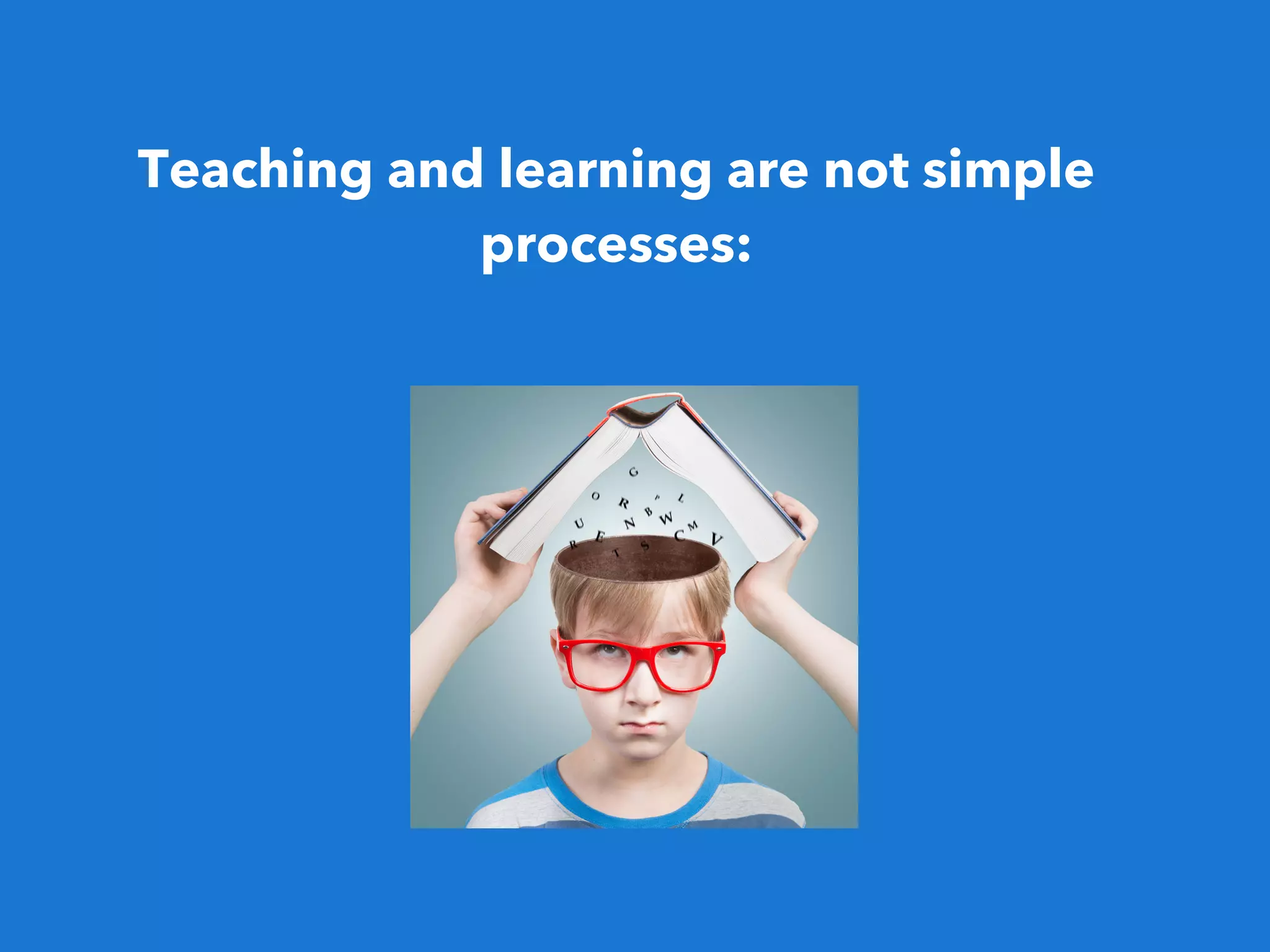
Teaching and learning are not simple
processes:
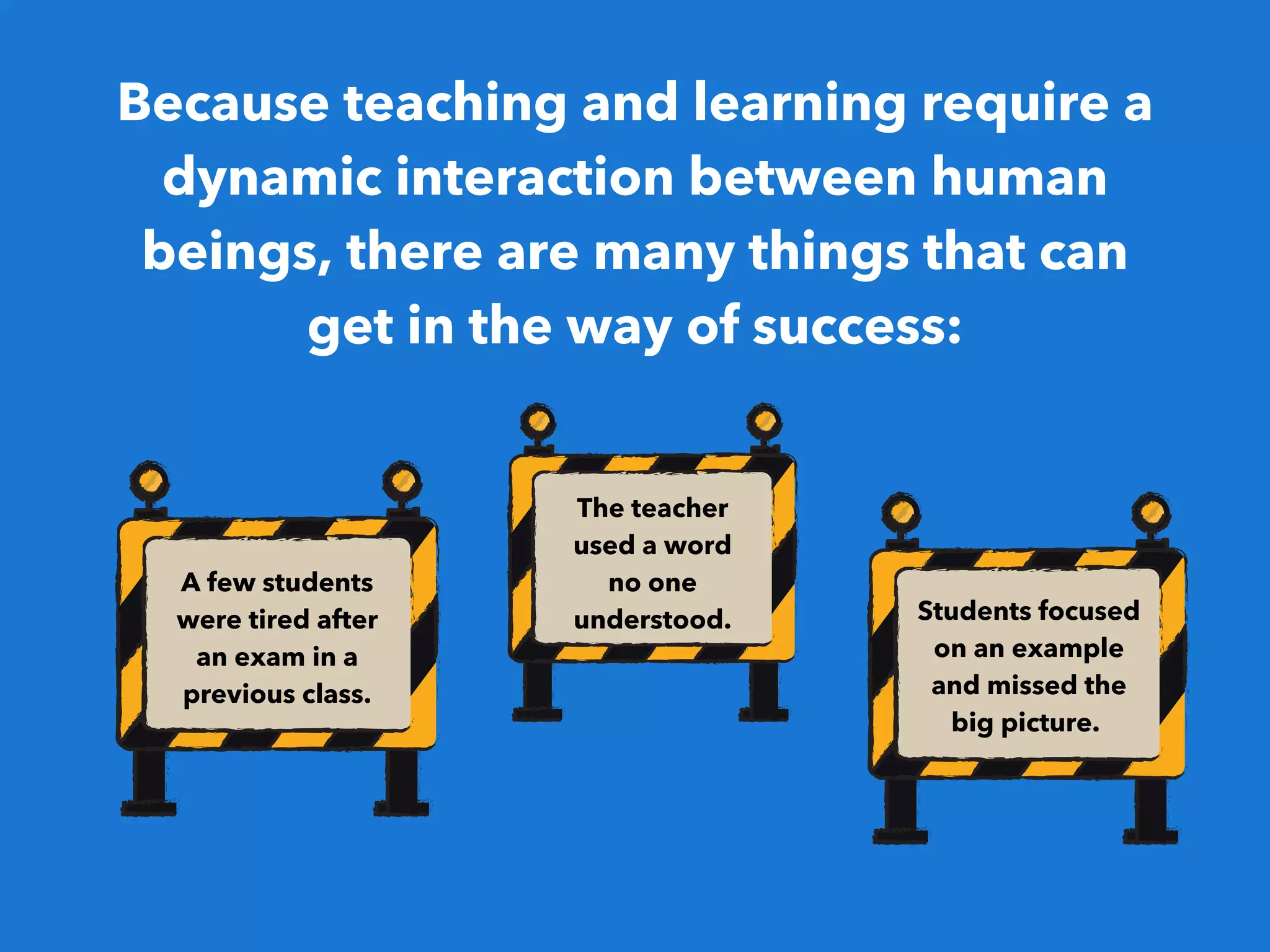
Because teaching and learning require a
dynamic interaction between human
beings, there are many things that can
get in the way of success:
A few students
were tired after
an exam in a
previous class.
The teacher
used a word
no one
understood. Students focused
on an example
and missed the
big picture. 
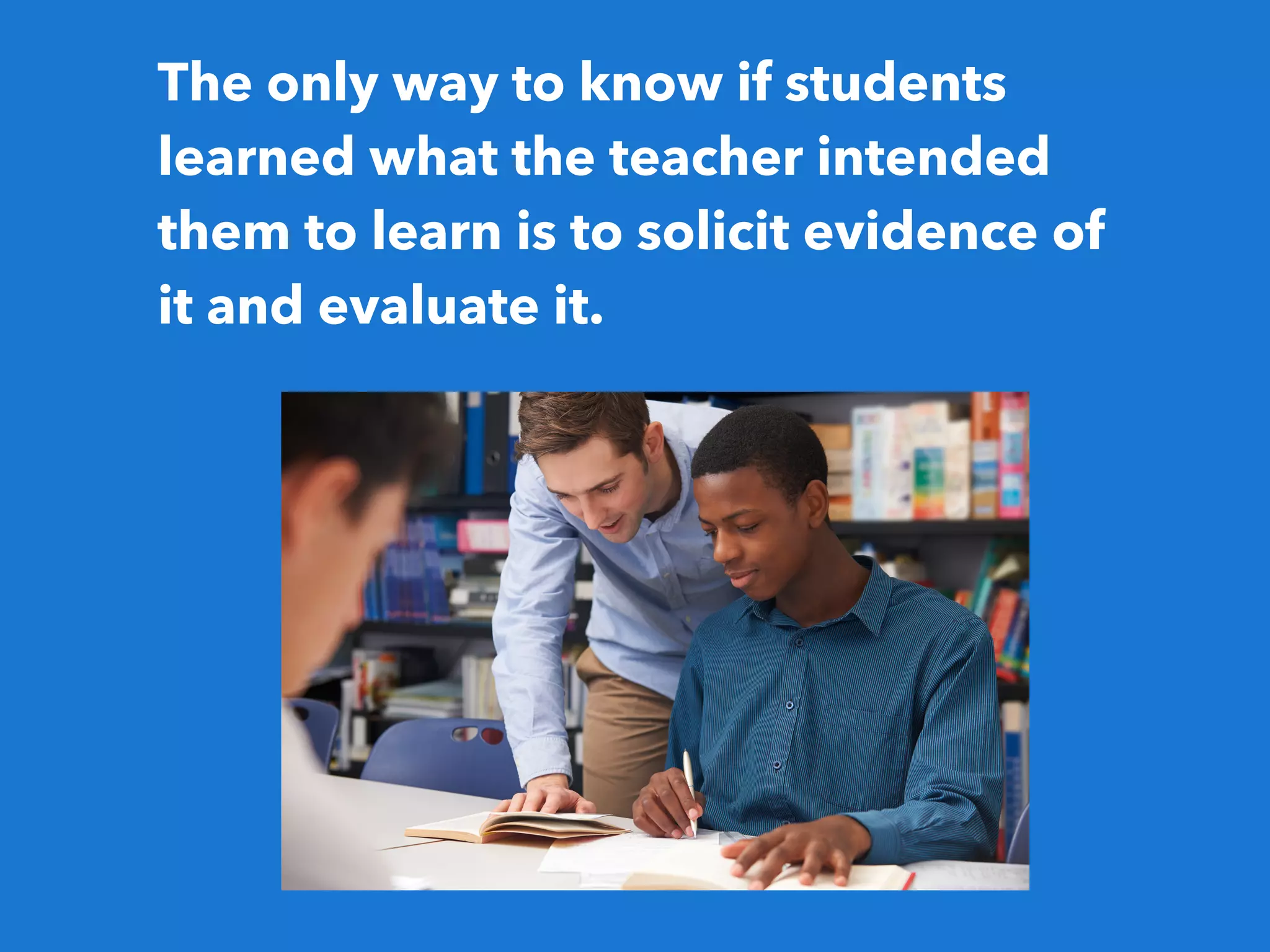
The only way to know if students
learned what the teacher intended
them to learn is to solicit evidence of
it and evaluate it.
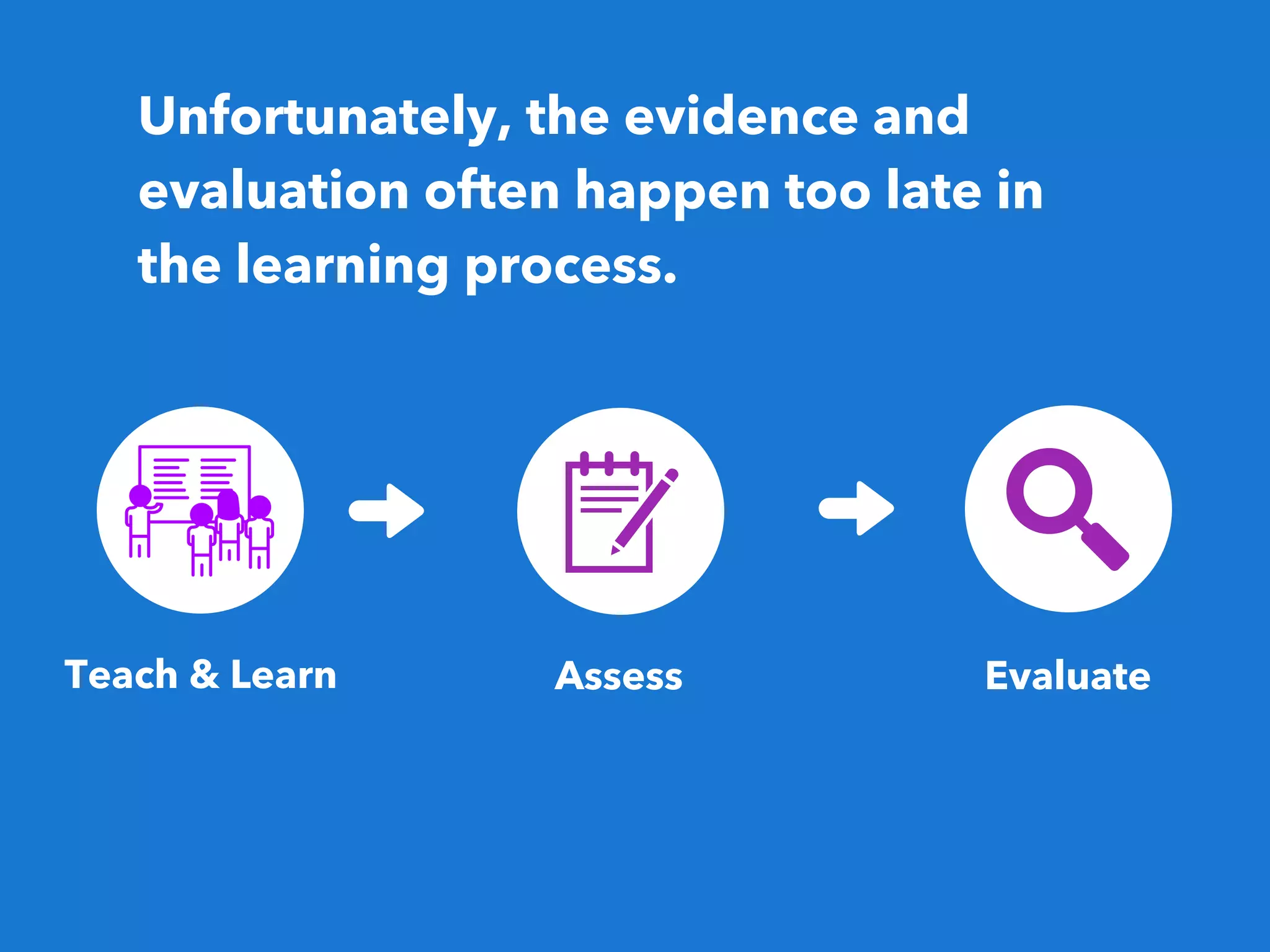
Unfortunately, the evidence and
evaluation often happen too late in
the learning process. 
Teach & Learn Assess Evaluate
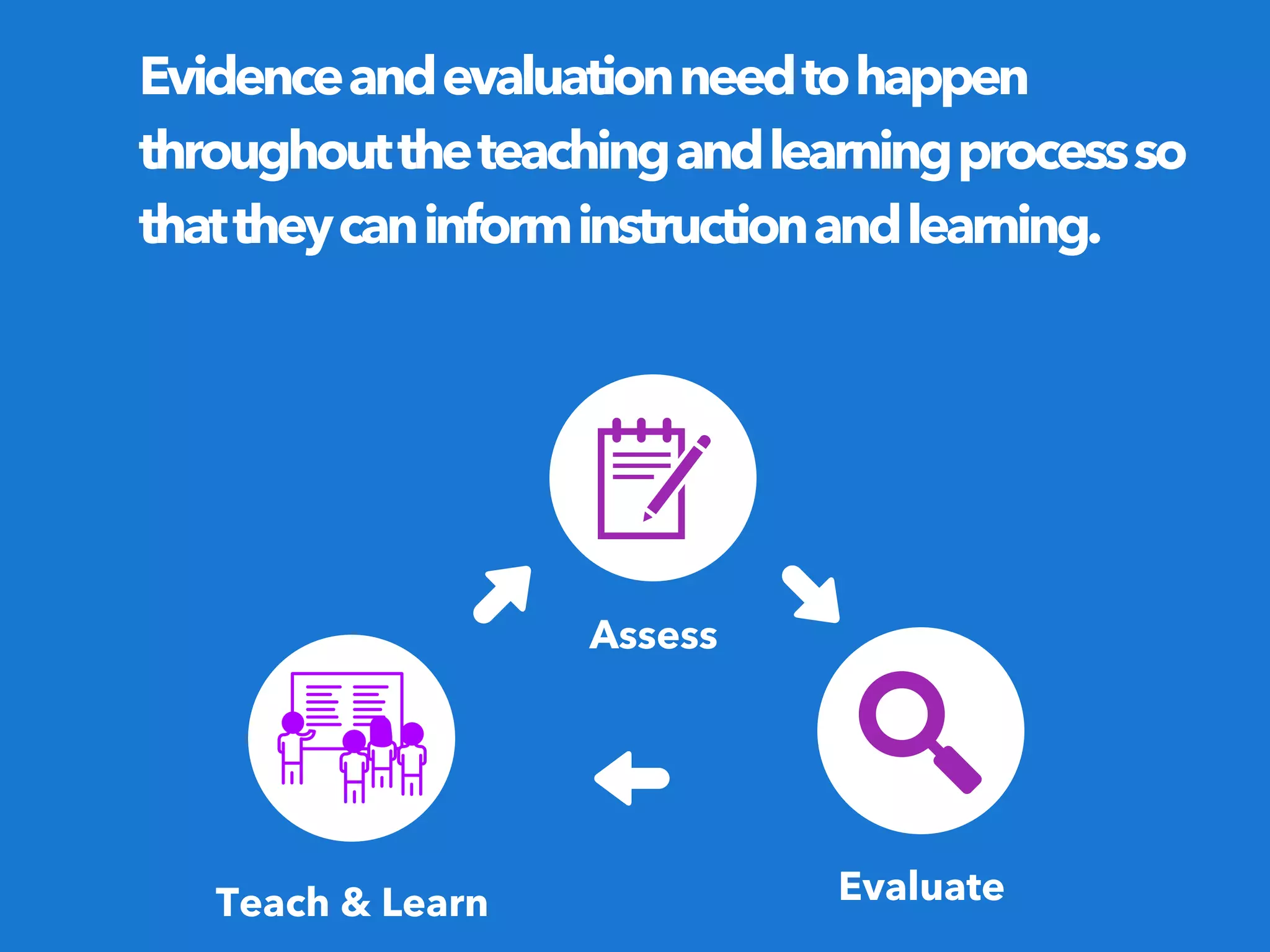
Evidenceandevaluation needtohappen
throughouttheteachingandlearningprocessso
thattheycaninforminstructionandlearning.
Teach & Learn
Assess
Evaluate
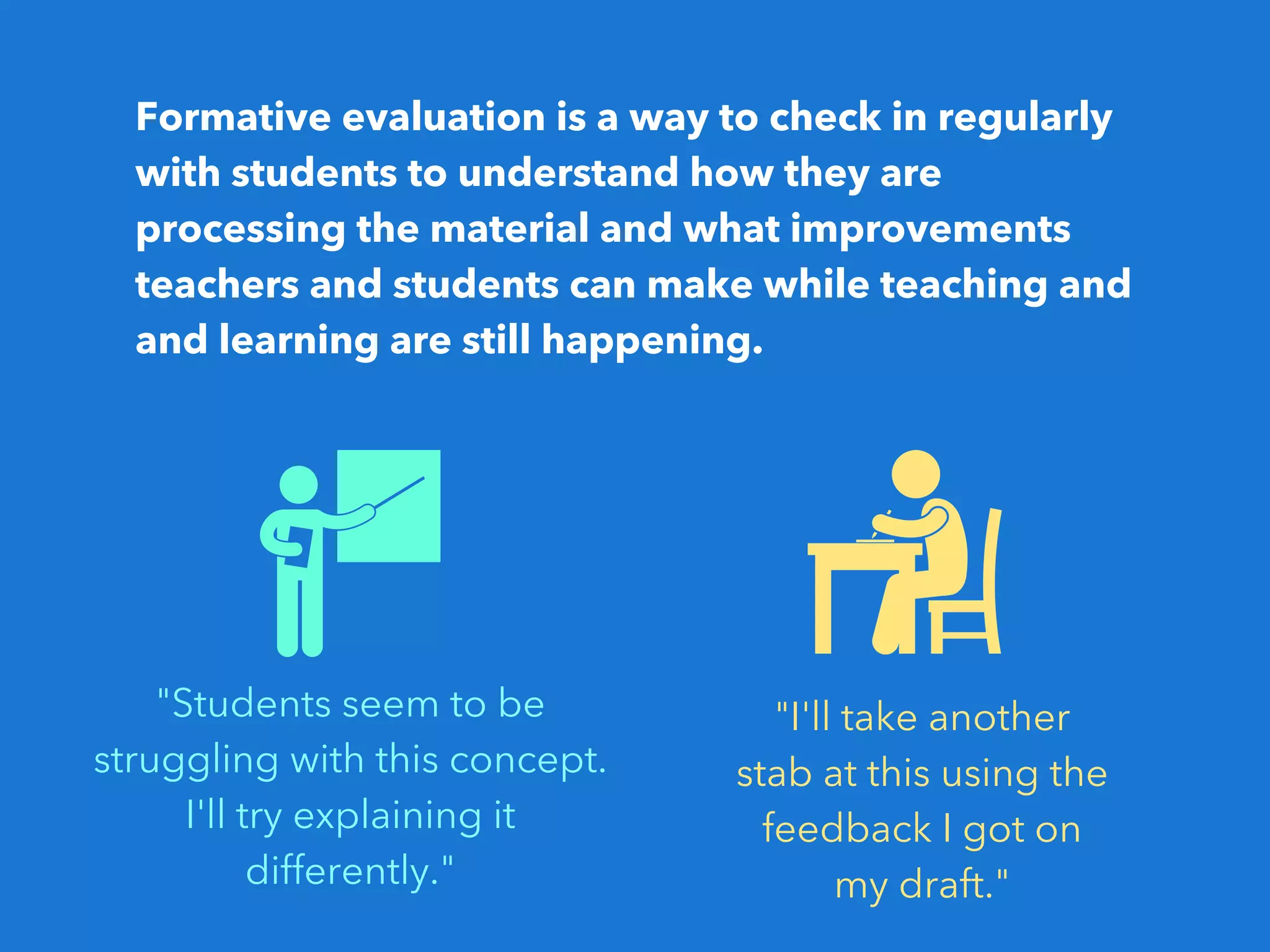
Formative evaluation is a way to check in regularly
with students to understand how they are
processing the material and what improvements
teachers and students can make while teaching and
and learning are still happening.
"Students seem to be
struggling with this concept.
I'll try explaining it
differently."
"I'll take another
stab at this using the
feedback I got on
my draft."
Ways to incorporate
formative assessment
into daily instruction:
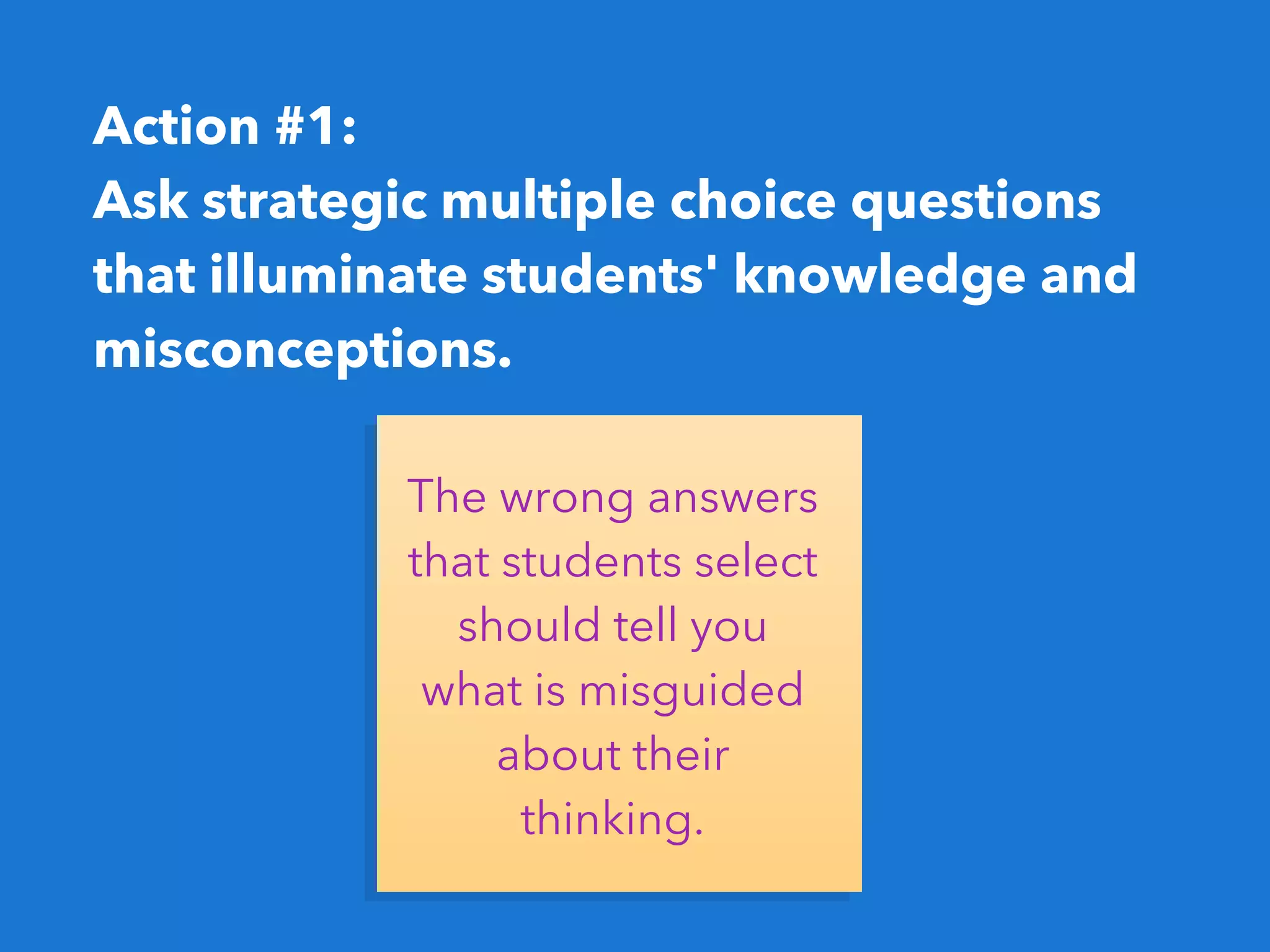
Action #1:
Ask strategic multiple choice questions
that illuminate students' knowledge and
misconceptions. 
The wrong answers
that students select
should tell you
what is misguided
about their
thinking.
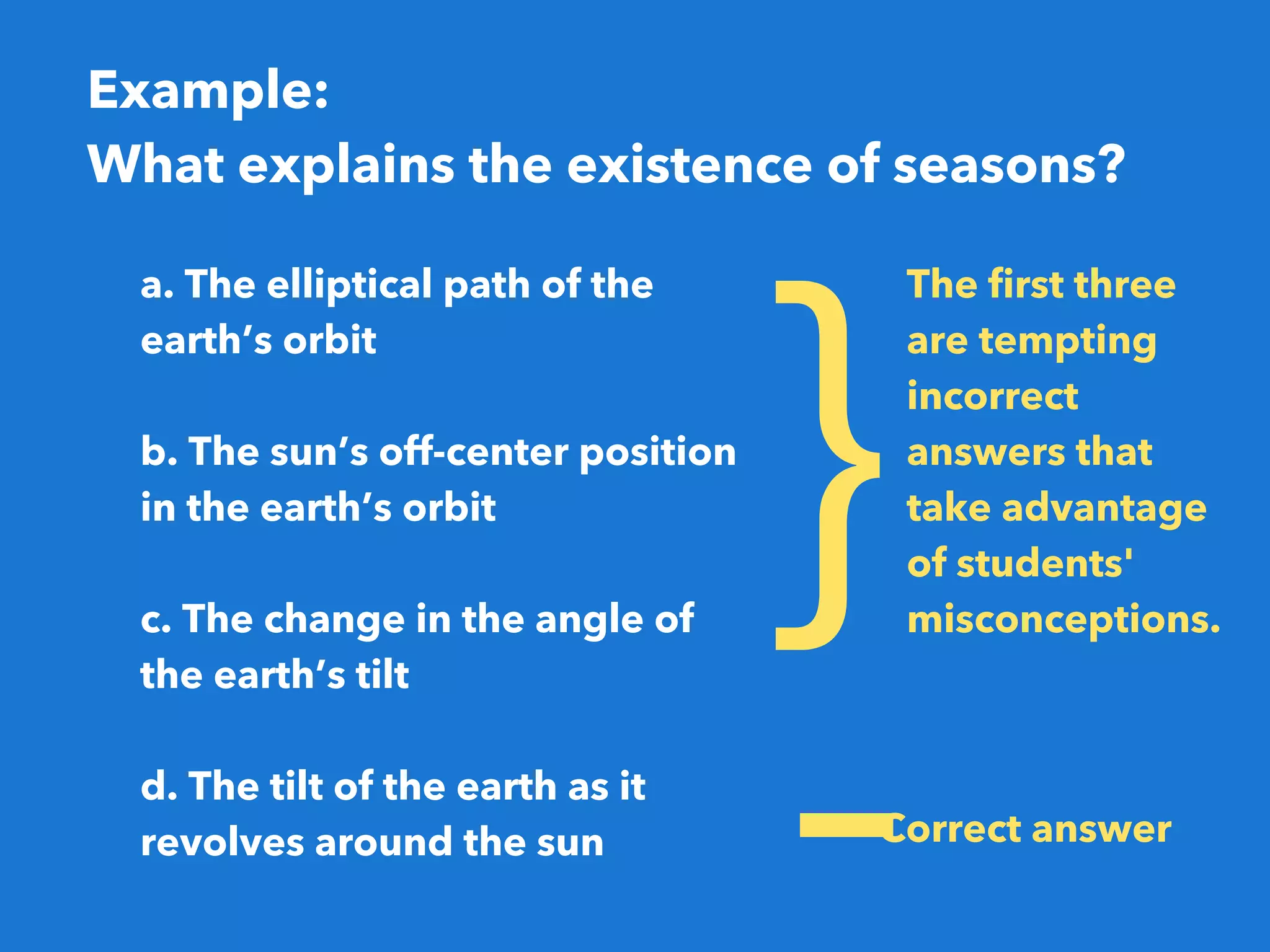
Example: 
What explains the existence of seasons?
}
The first three
are tempting
incorrect
answers that
take advantage
of students'
misconceptions.
Correct answer
-
a. The elliptical path of the
earth’s orbit
b. The sun’s off-center position
in the earth’s orbit
c. The change in the angle of
the earth’s tilt
d. The tilt of the earth as it
revolves around the sun
These questions can be handed out at the end of class in the
form of an exit slip that students turn in before leaving.
"Before you leave today, be sure to
jot down your answer to this question
and hand it in on your way out."
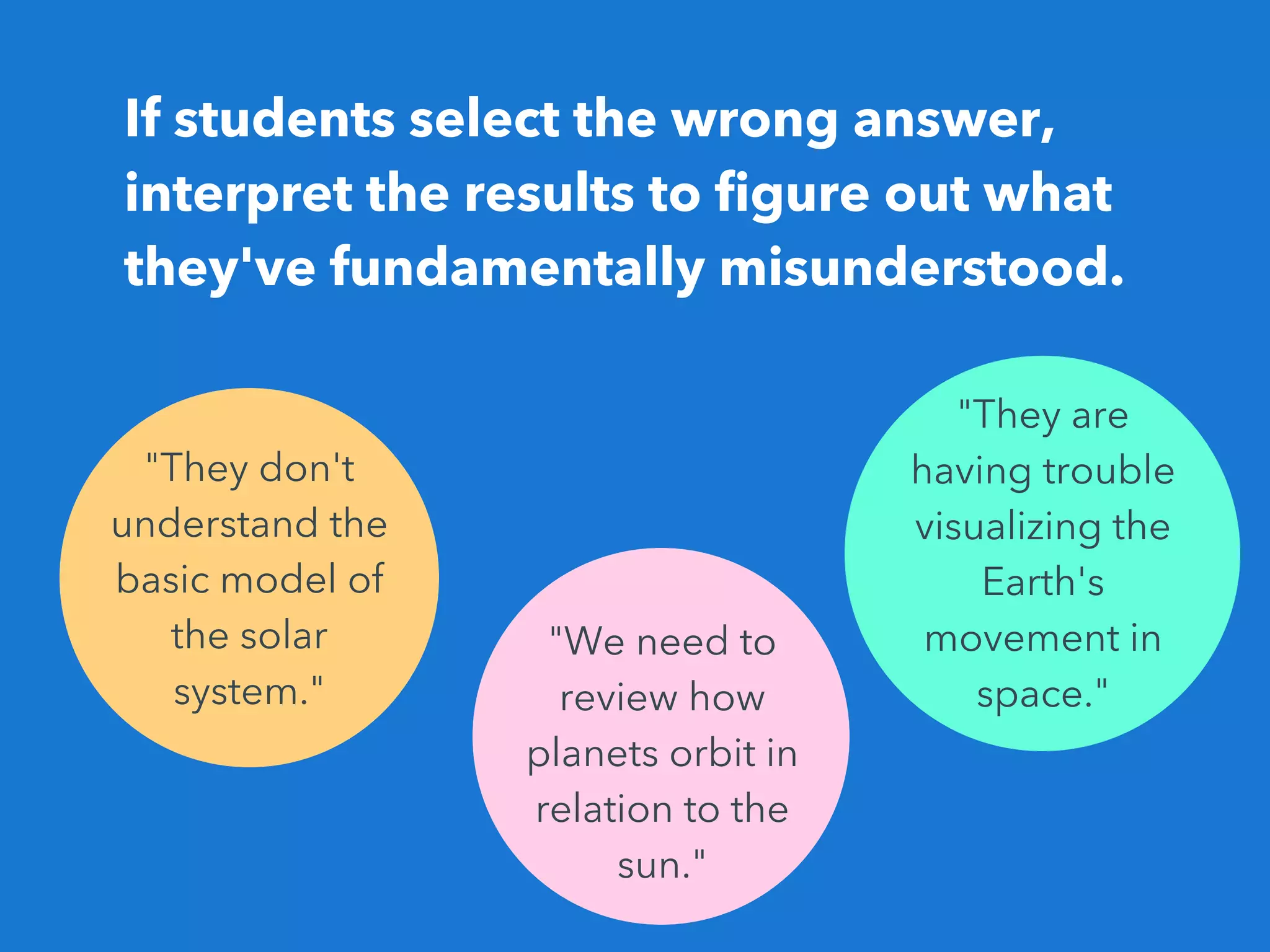
If students select the wrong answer,
interpret the results to figure out what
they've fundamentally misunderstood.
"They don't
understand the
basic model of
the solar
system."
"We need to
review how
planets orbit in
relation to the
sun."
"They are
having trouble
visualizing the
Earth's
movement in
space."
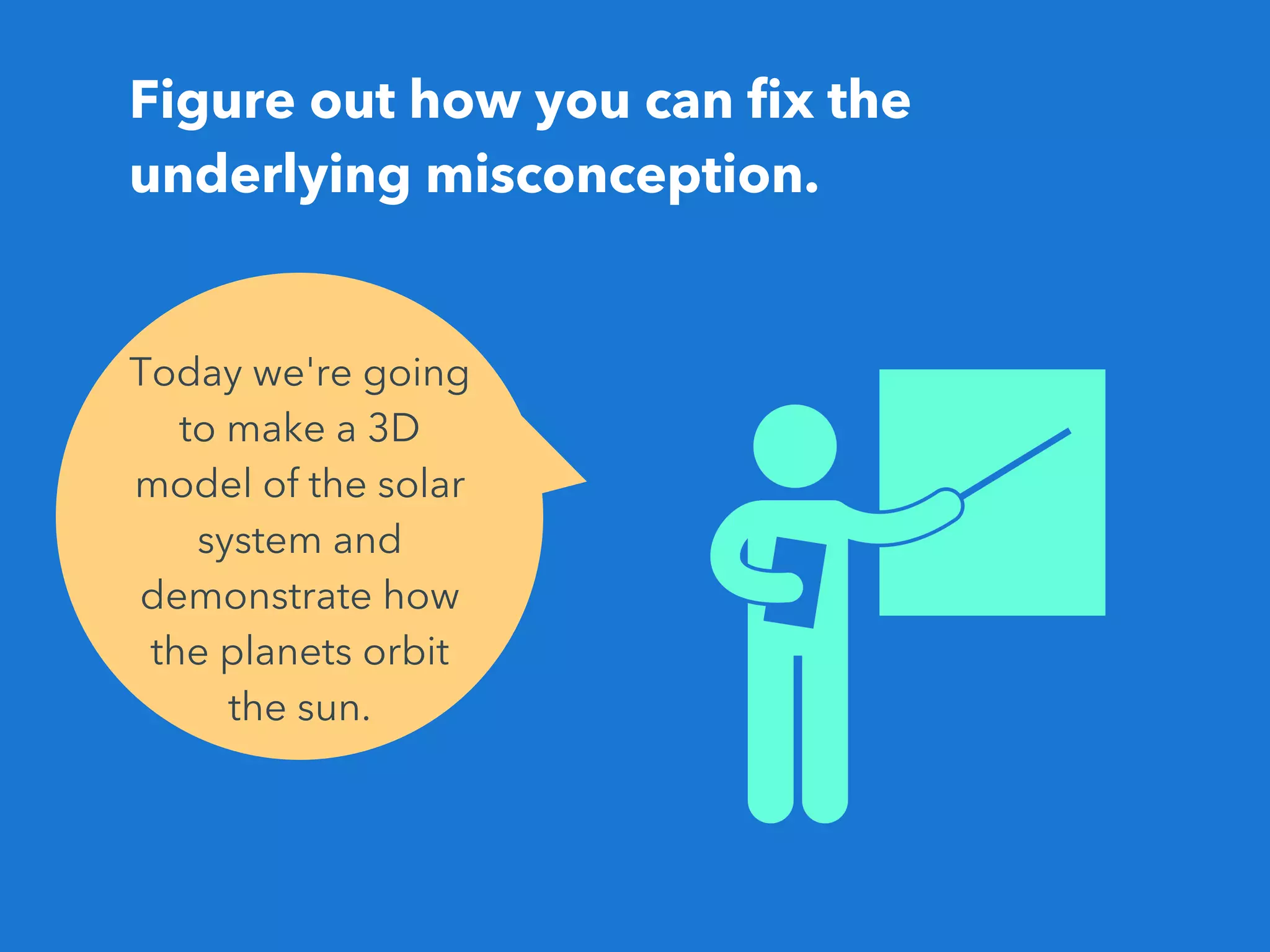
Figure out how you can fix the
underlying misconception.
Today we're going
to make a 3D
model of the solar
system and
demonstrate how
the planets orbit
the sun.
Action #2:
Encourage students to write extensively to
see how they construct knowledge
Reviewing students' annotations or
answers to short-answer questions
reveals the way students construct
knowledge. Teachers figure out if
the material is resonating with their
students based on the quality and
accuracy of the responses. 
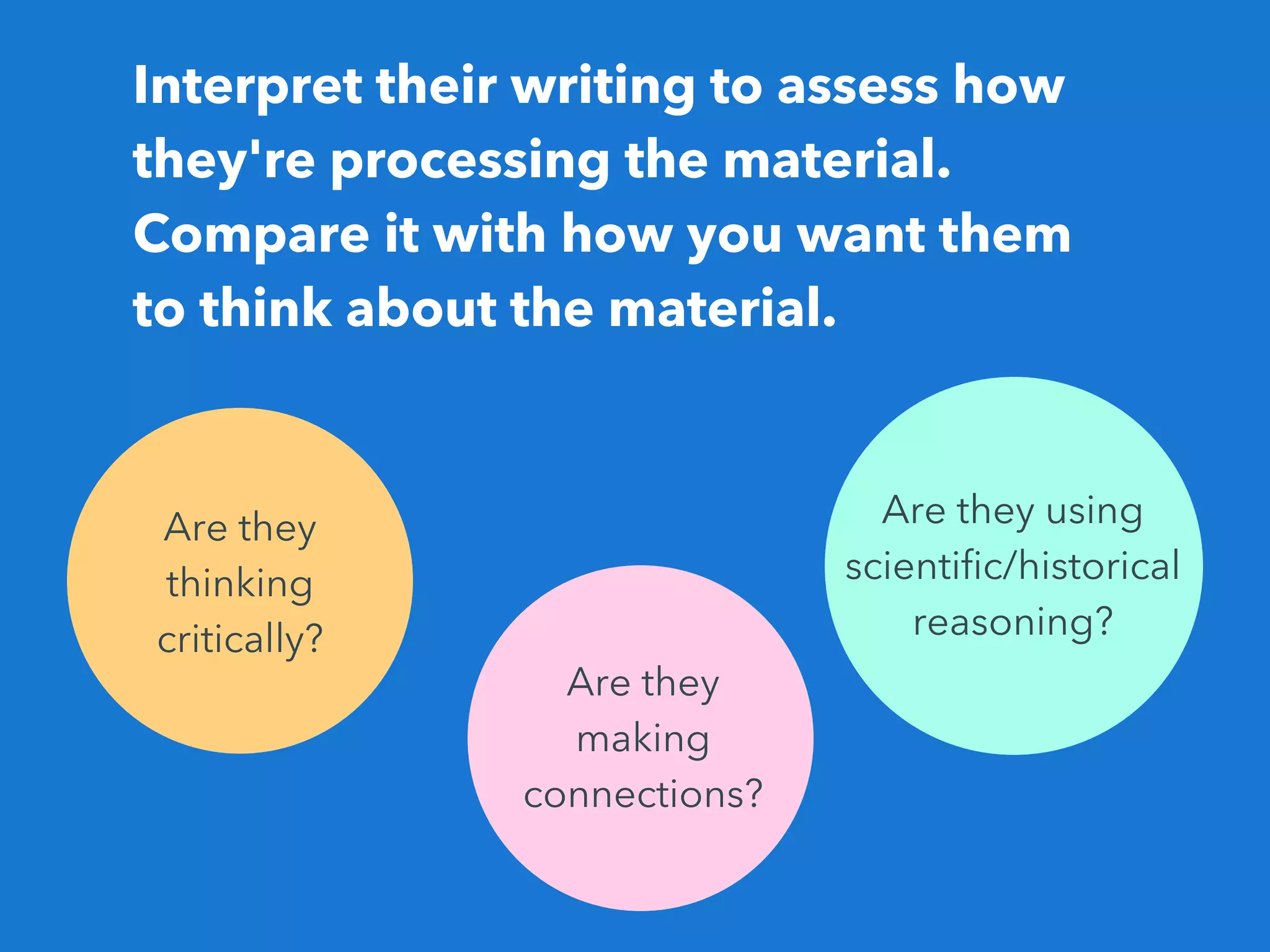
Interpret their writing to assess how
they're processing the material.
Compare it with how you want them
to think about the material.
Are they
thinking
critically?
Are they
making
connections?
Are they using
scientific/historical
reasoning?
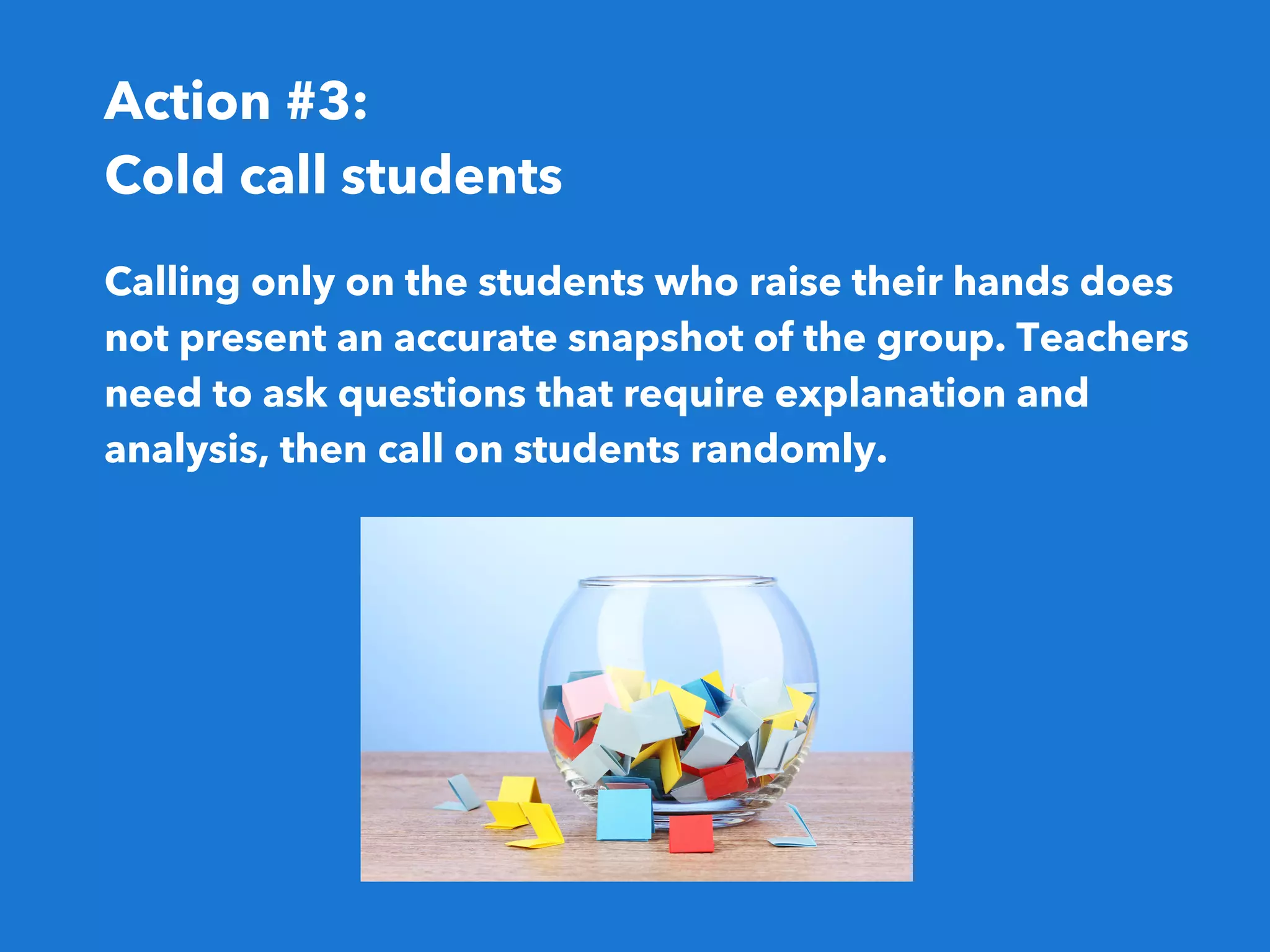
Action #3:
Cold call students
Calling only on the students who raise their hands does
not present an accurate snapshot of the group. Teachers
need to ask questions that require explanation and
analysis, then call on students randomly. 
Cold calling is a way to see how ALL students respond
to questions. It includes the students who never
volunteer, and it reframes discussion to be about
figuring out the answer together rather than seeing
who can get it right.
"I'm not just
looking for the
right answer. I
want to know
how you're
thinking about
this."
"If you're not sure
about the
answer, that's
OK. We'll work
through it."
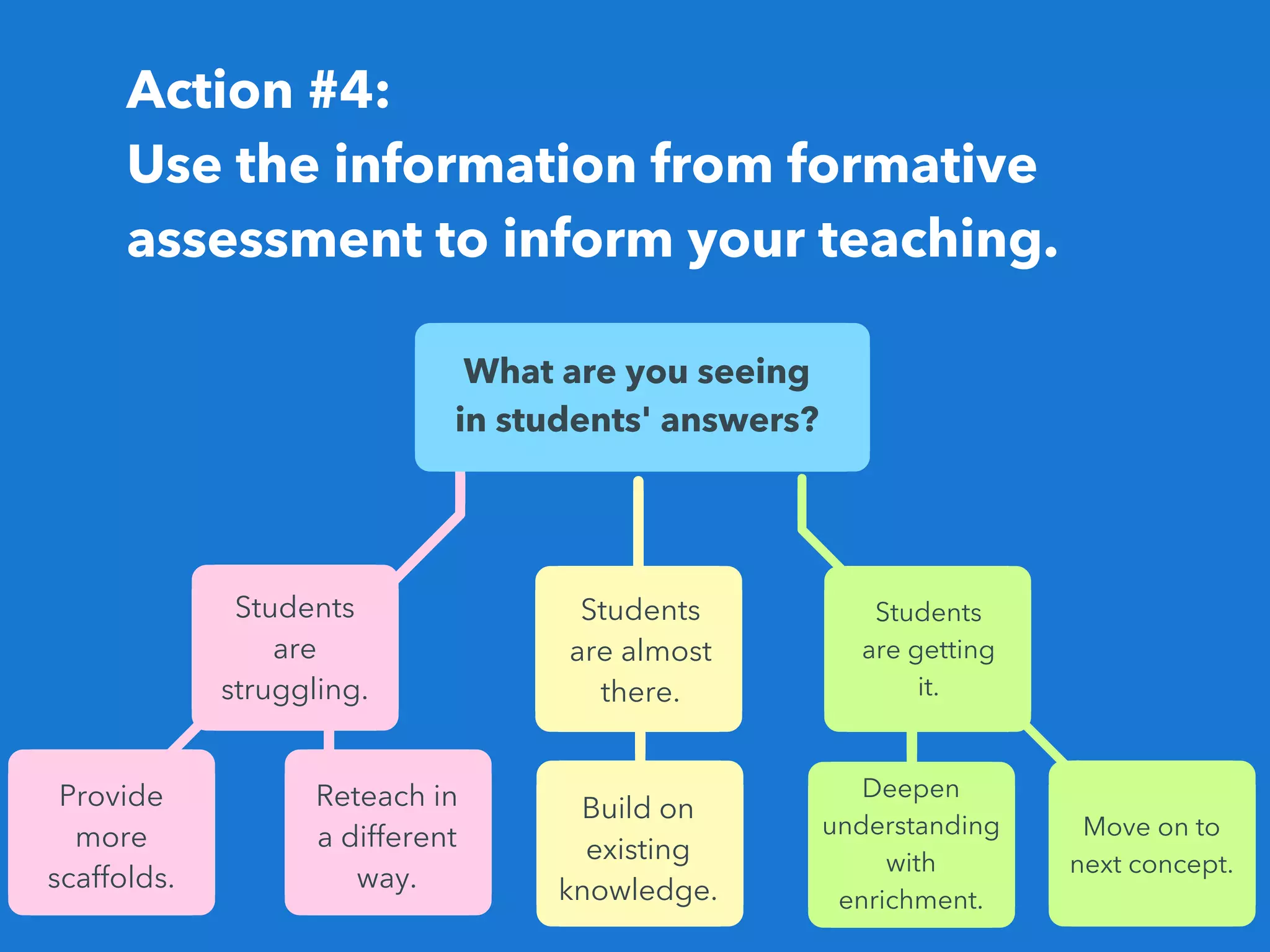
Action #4:
Use the information from formative
assessment to inform your teaching.
What are you seeing
in students' answers?
Students
are almost
there.
Students
are getting
it.
Students
are
struggling.
Provide
more
scaffolds.
Reteach in
a different
way.
Build on
existing
knowledge.
Deepen
understanding
with
enrichment.
Move on to
next concept.
A few caveats about
formative assessment
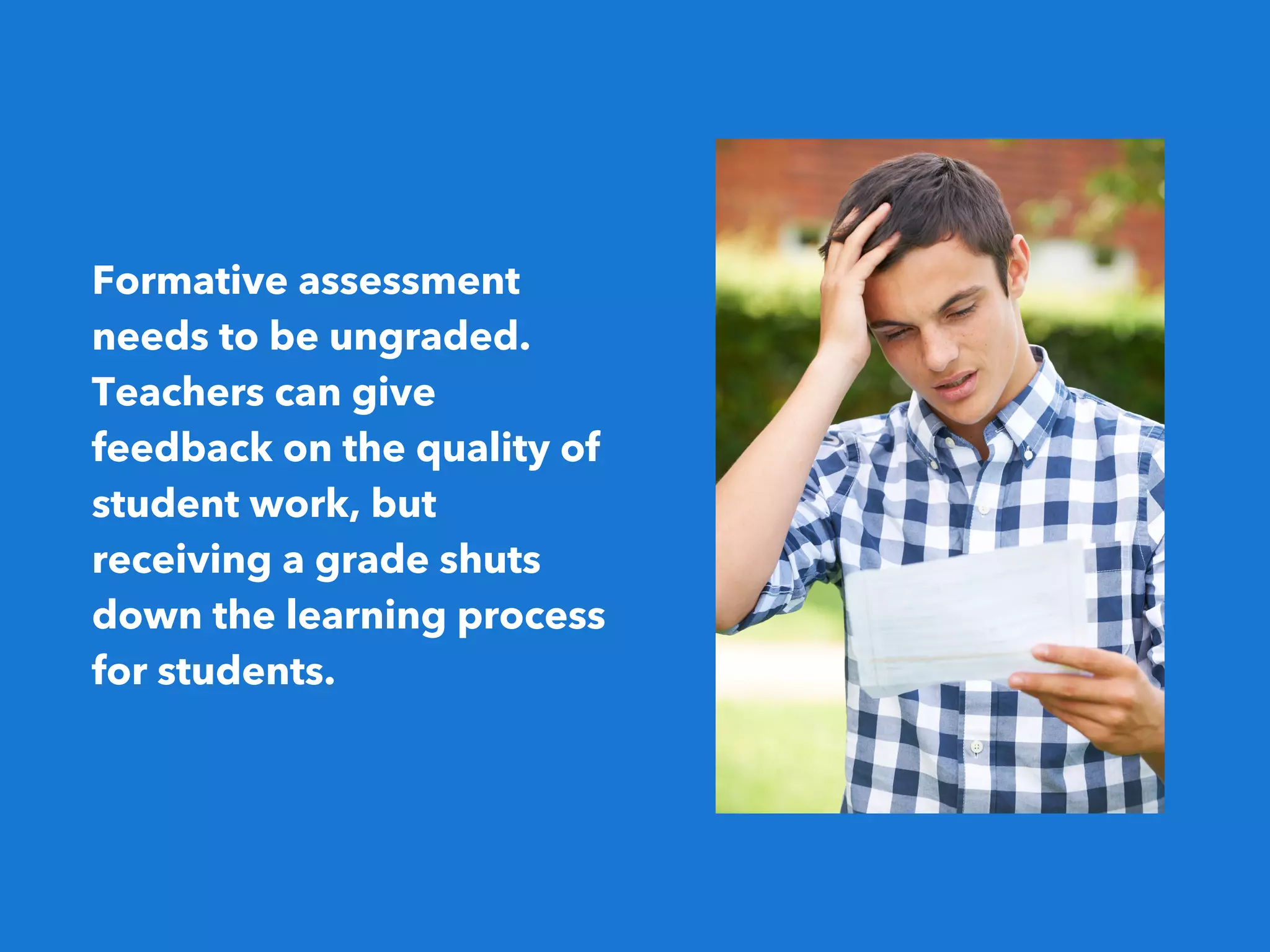
Formative assessment
needs to be ungraded.
Teachers can give
feedback on the quality of
student work, but
receiving a grade shuts
down the learning process
for students.
Formative assessment needs to feed
back into the teaching and learning
cycle. If the assessment fails to inform
the next steps in teaching and learning,
then it has failed in its purpose.
The goal is not to judge performance.
It's to help figure out how to improve.
Formative assessment recognizes the
complexity of teaching and learning; it
ensures that the material is being
communicated and understood effectively.
It's also one of the best ways to improve
instruction because it gives valuable data
about what students did and did not learn.
Missing out on this practice means being in
the dark about students' daily progress.
#deepreading
#formativeassessment

Formative assessment

  • 1.
  • 2.
    Teaching and learningare not simple processes:
  • 3.
    Because teaching andlearning require a dynamic interaction between human beings, there are many things that can get in the way of success: A few students were tired after an exam in a previous class. The teacher used a word no one understood. Students focused on an example and missed the big picture. 
  • 4.
    The only wayto know if students learned what the teacher intended them to learn is to solicit evidence of it and evaluate it.
  • 5.
    Unfortunately, the evidenceand evaluation often happen too late in the learning process.  Teach & Learn Assess Evaluate
  • 6.
  • 7.
    Formative evaluation isa way to check in regularly with students to understand how they are processing the material and what improvements teachers and students can make while teaching and and learning are still happening. "Students seem to be struggling with this concept. I'll try explaining it differently." "I'll take another stab at this using the feedback I got on my draft."
  • 8.
    Ways to incorporate formativeassessment into daily instruction:
  • 9.
    Action #1: Ask strategicmultiple choice questions that illuminate students' knowledge and misconceptions.  The wrong answers that students select should tell you what is misguided about their thinking.
  • 10.
    Example:  What explains theexistence of seasons? } The first three are tempting incorrect answers that take advantage of students' misconceptions. Correct answer - a. The elliptical path of the earth’s orbit b. The sun’s off-center position in the earth’s orbit c. The change in the angle of the earth’s tilt d. The tilt of the earth as it revolves around the sun
  • 11.
    These questions canbe handed out at the end of class in the form of an exit slip that students turn in before leaving. "Before you leave today, be sure to jot down your answer to this question and hand it in on your way out."
  • 12.
    If students selectthe wrong answer, interpret the results to figure out what they've fundamentally misunderstood. "They don't understand the basic model of the solar system." "We need to review how planets orbit in relation to the sun." "They are having trouble visualizing the Earth's movement in space."
  • 13.
    Figure out howyou can fix the underlying misconception. Today we're going to make a 3D model of the solar system and demonstrate how the planets orbit the sun.
  • 14.
    Action #2: Encourage studentsto write extensively to see how they construct knowledge Reviewing students' annotations or answers to short-answer questions reveals the way students construct knowledge. Teachers figure out if the material is resonating with their students based on the quality and accuracy of the responses. 
  • 15.
    Interpret their writingto assess how they're processing the material. Compare it with how you want them to think about the material. Are they thinking critically? Are they making connections? Are they using scientific/historical reasoning?
  • 16.
    Action #3: Cold callstudents Calling only on the students who raise their hands does not present an accurate snapshot of the group. Teachers need to ask questions that require explanation and analysis, then call on students randomly. 
  • 17.
    Cold calling isa way to see how ALL students respond to questions. It includes the students who never volunteer, and it reframes discussion to be about figuring out the answer together rather than seeing who can get it right. "I'm not just looking for the right answer. I want to know how you're thinking about this." "If you're not sure about the answer, that's OK. We'll work through it."
  • 18.
    Action #4: Use theinformation from formative assessment to inform your teaching. What are you seeing in students' answers? Students are almost there. Students are getting it. Students are struggling. Provide more scaffolds. Reteach in a different way. Build on existing knowledge. Deepen understanding with enrichment. Move on to next concept.
  • 19.
    A few caveatsabout formative assessment
  • 20.
    Formative assessment needs tobe ungraded. Teachers can give feedback on the quality of student work, but receiving a grade shuts down the learning process for students.
  • 21.
    Formative assessment needsto feed back into the teaching and learning cycle. If the assessment fails to inform the next steps in teaching and learning, then it has failed in its purpose. The goal is not to judge performance. It's to help figure out how to improve.
  • 22.
    Formative assessment recognizesthe complexity of teaching and learning; it ensures that the material is being communicated and understood effectively. It's also one of the best ways to improve instruction because it gives valuable data about what students did and did not learn. Missing out on this practice means being in the dark about students' daily progress.
  • 23.