Formation of the CCP 1921

               IB HL History
             Learning Objective:
Which developments led to the formation of the
                CCP in 1921?
   To explain the intellectual, and geo-
political trends which led to the creation of
                  the CCP
                 Readings:
              Lynch pgs 44-47
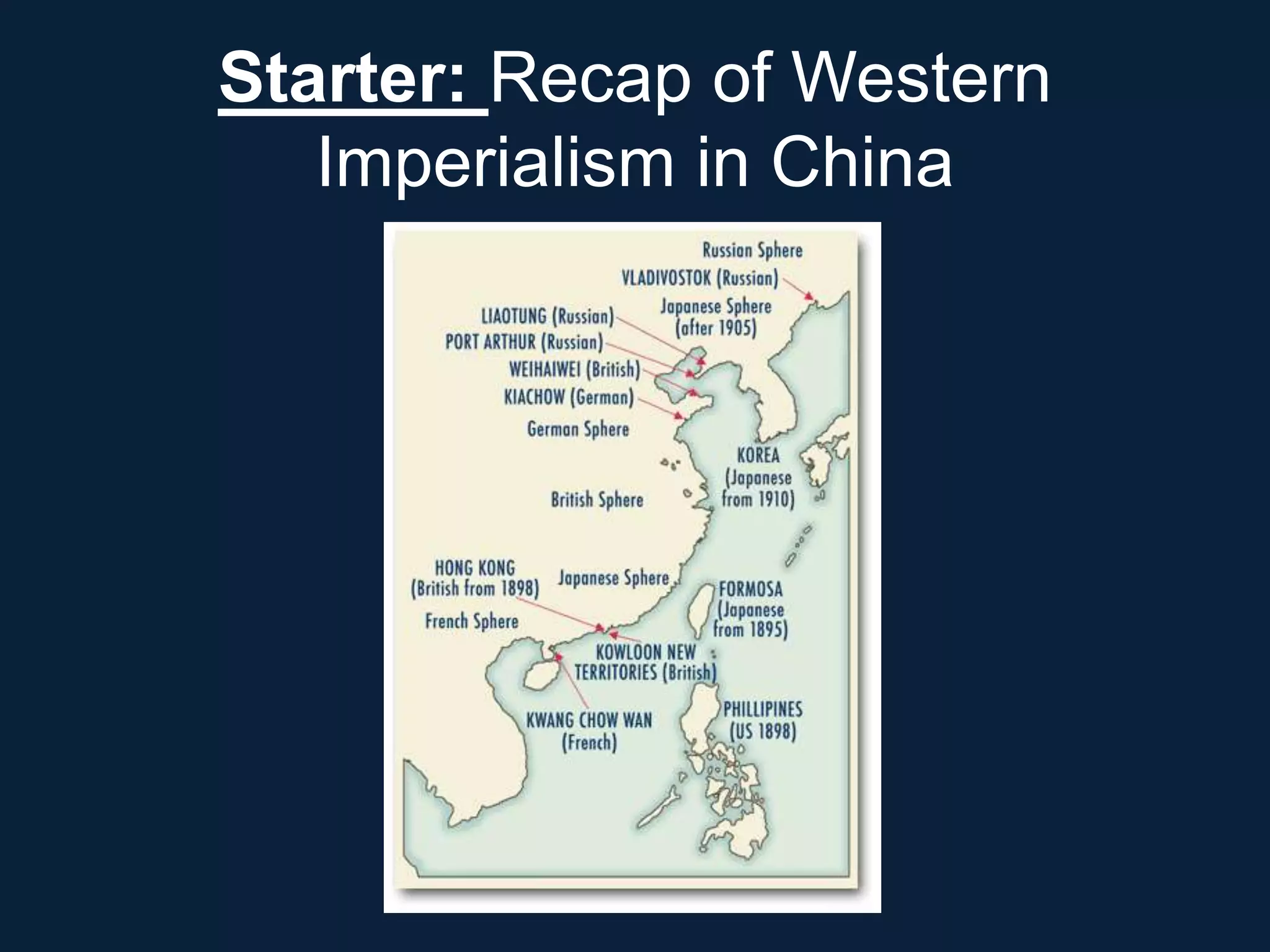
Starter: Recap of Western
   Imperialism in China
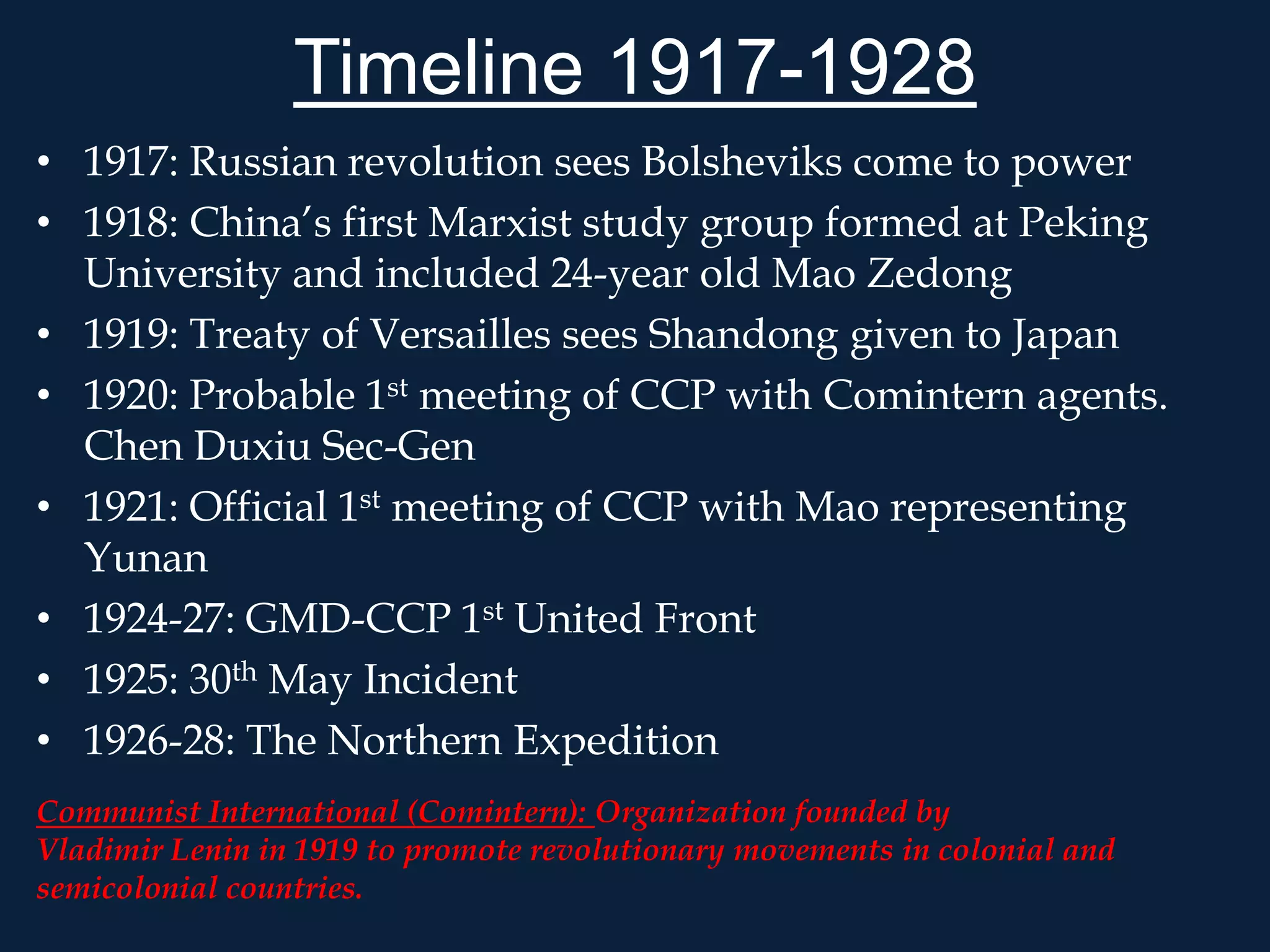
Timeline 1917-1928
• 1917: Russian revolution sees Bolsheviks come to power
• 1918: China’s first Marxist study group formed at Peking
  University and included 24-year old Mao Zedong
• 1919: Treaty of Versailles sees Shandong given to Japan
• 1920: Probable 1st meeting of CCP with Comintern agents.
  Chen Duxiu Sec-Gen
• 1921: Official 1st meeting of CCP with Mao representing
  Yunan
• 1924-27: GMD-CCP 1st United Front
• 1925: 30th May Incident
• 1926-28: The Northern Expedition
Communist International (Comintern): Organization founded by
Vladimir Lenin in 1919 to promote revolutionary movements in colonial and
semicolonial countries.
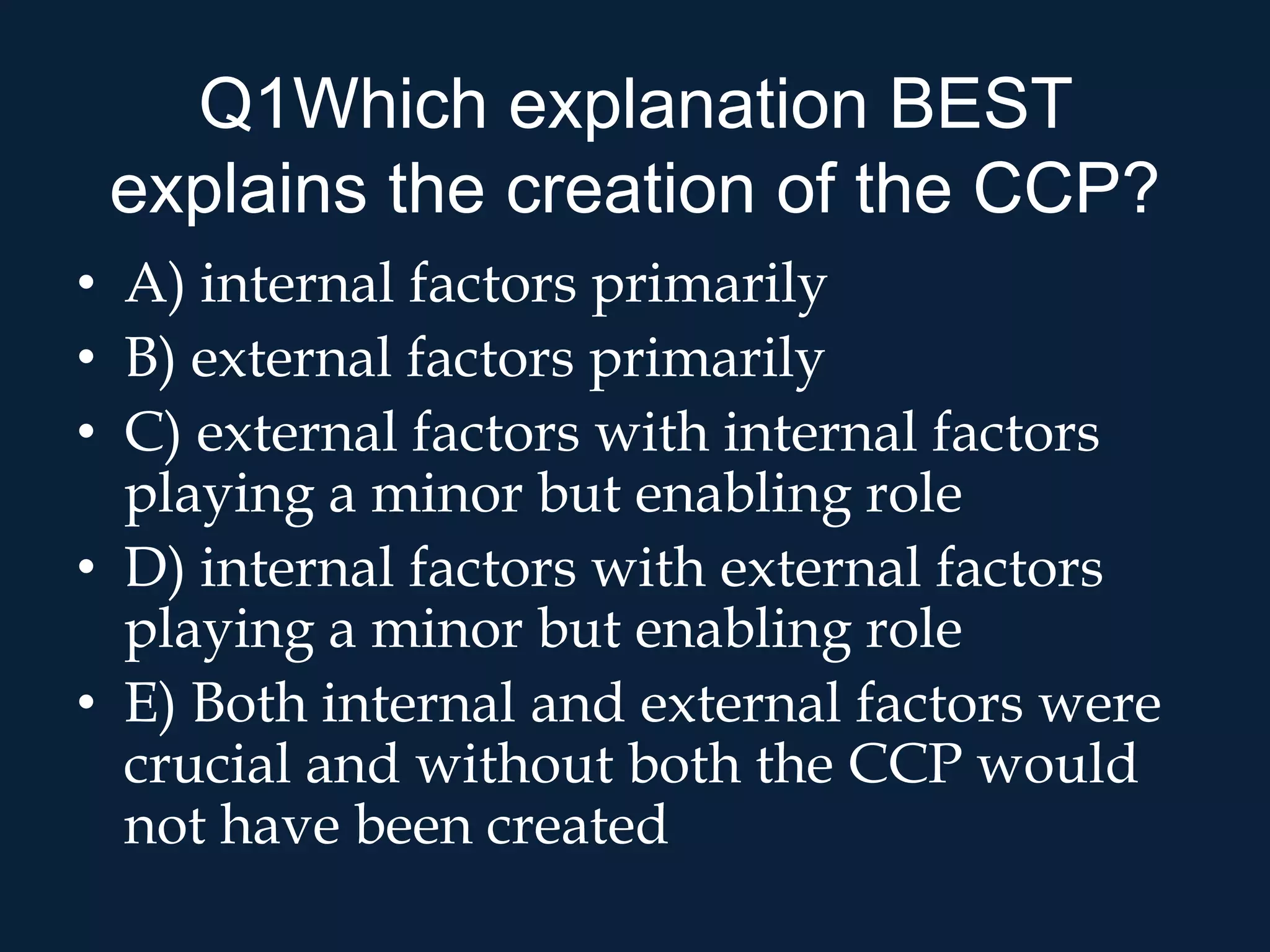
Q1Which explanation BEST
 explains the creation of the CCP?
• A) internal factors primarily
• B) external factors primarily
• C) external factors with internal factors
  playing a minor but enabling role
• D) internal factors with external factors
  playing a minor but enabling role
• E) Both internal and external factors were
  crucial and without both the CCP would
  not have been created
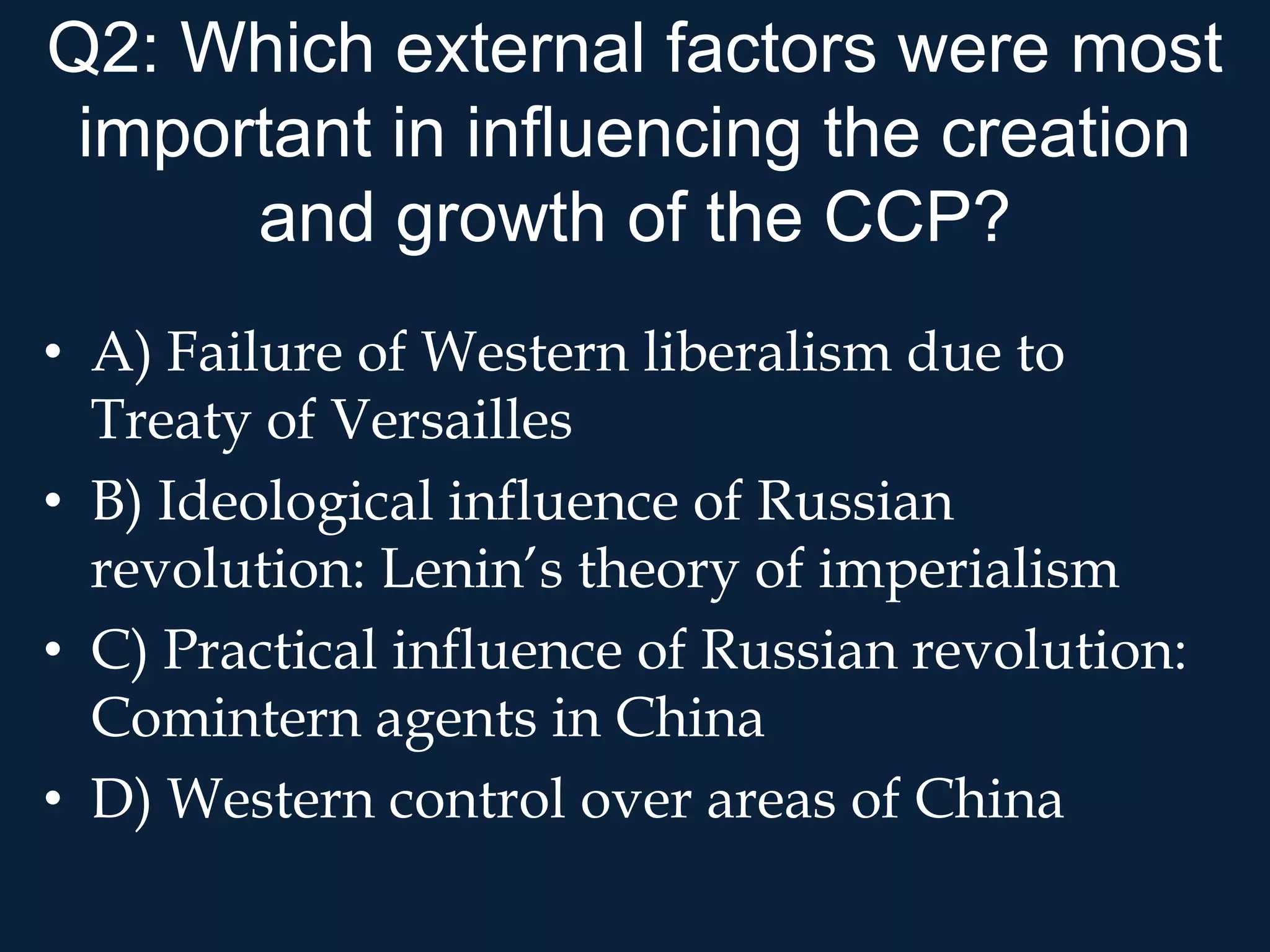
Q2: Which external factors were most
 important in influencing the creation
      and growth of the CCP?
• A) Failure of Western liberalism due to
  Treaty of Versailles
• B) Ideological influence of Russian
  revolution: Lenin’s theory of imperialism
• C) Practical influence of Russian revolution:
  Comintern agents in China
• D) Western control over areas of China
Inspiration from Russia
• Bolshevik revolution popular with Chinese intellectuals
• Bolshevik defeat of foreign interventionist forces seems
  to offer solution to imperialism
• Failure of the 1911 Republic and Treaty of Versailles sees
  a turn away from Western liberalism.
• Communist Russia is a viable alternative and offers the
  promise of leapfrogging the West
• Russian comintern agents sent to China to help create a
  revolutionary movement (GrigorVoitinsky and
  HenkSneevliet/Maring)
• Lenin’s theory of imperialism seems to offer a perfect
  explanation of China’s problems and relations with
  foreign powers making Communism more attractive
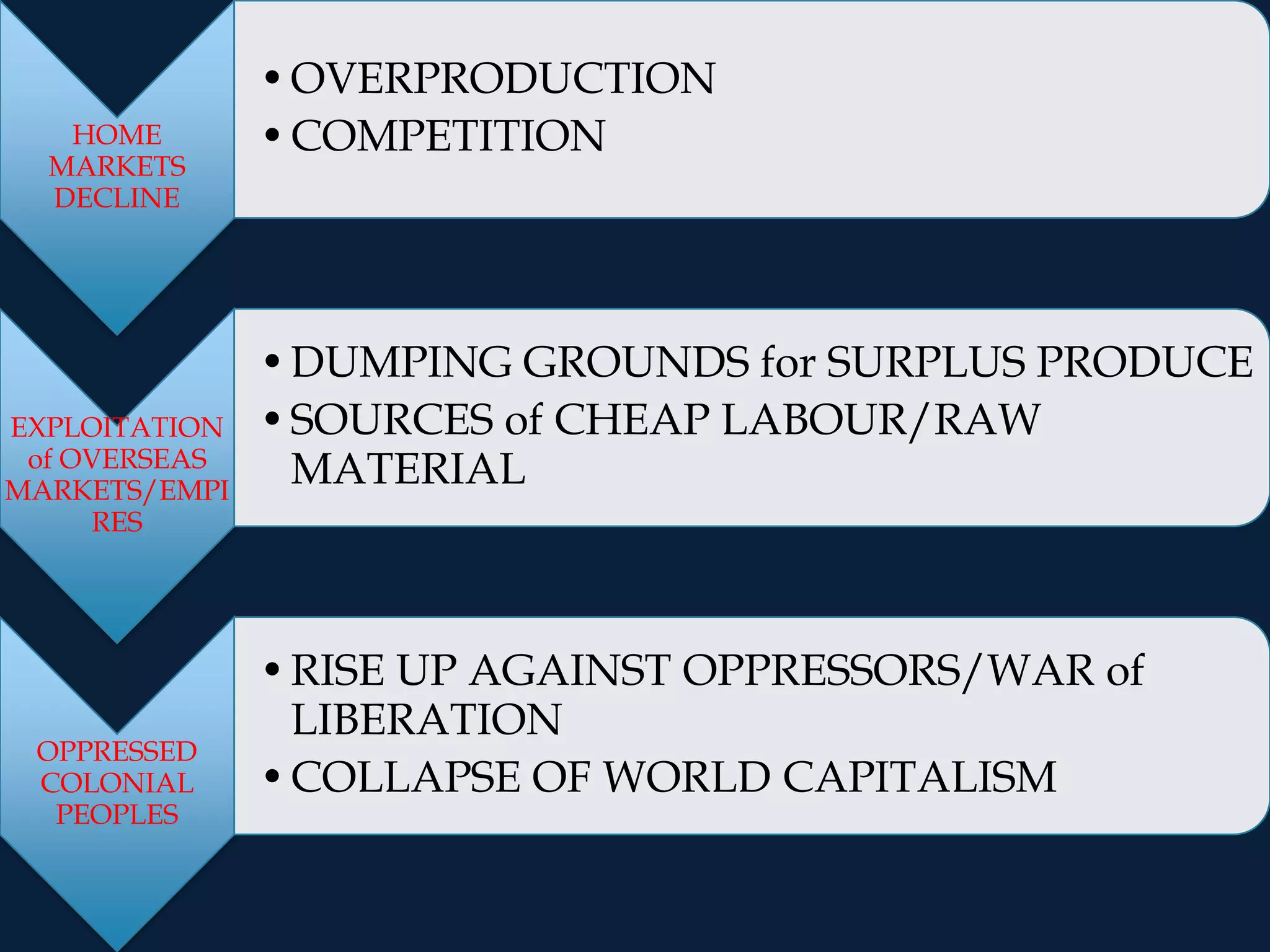
• OVERPRODUCTION
   HOME        • COMPETITION
  MARKETS
  DECLINE


               • DUMPING GROUNDS for SURPLUS PRODUCE
EXPLOITATION   • SOURCES of CHEAP LABOUR/RAW
 of OVERSEAS
MARKETS/EMPI
                 MATERIAL
     RES


               • RISE UP AGAINST OPPRESSORS/WAR of
                 LIBERATION
 OPPRESSED
 COLONIAL      • COLLAPSE OF WORLD CAPITALISM
  PEOPLES
Source A: Joseph Stalin 1918: 1st
  Point: Capitalist imperialism is
    economically exploitative
“The imperialists view the East as the fountain
 of their happiness because it contains an
 unaccountable amount of natural resources
 such as cotton, petroleum, gold, coal, and iron
 ore. In view of its wealth, is the East not the
 imperialists „sweetest fruit‟?”
2nd Point: Exploitation of Human
              Resources
“The imperialists want not only the East‟s natural
  resources but also its „obedient‟ people, the
  „cheap‟ Oriental manpower which they can utilise
  for their own selfish purposes. They wish to
  recruit from these „obedient‟ people enough „boys‟
  to form the so-called „coloured‟ army and to use
  this army to crush their own revolutionary
  workers at home. This is the reason they call their
  Eastern colonies and semi-colonies
  „inexhaustible‟ manpower reserves. “
3rd Point: Role of the Bolsheviks
       in spreading world-wide
              revolution

“The purpose of us Communists is to wake up the
  oppressed Oriental peoples from their 100 years‟
  slumber and to imbue their workers and peasants
  with a revolutionary spirit to conduct an
  uncompromising struggle against the
  imperialists.”
Q3: What potential problem was
 there in applying Communist
      thought to China?
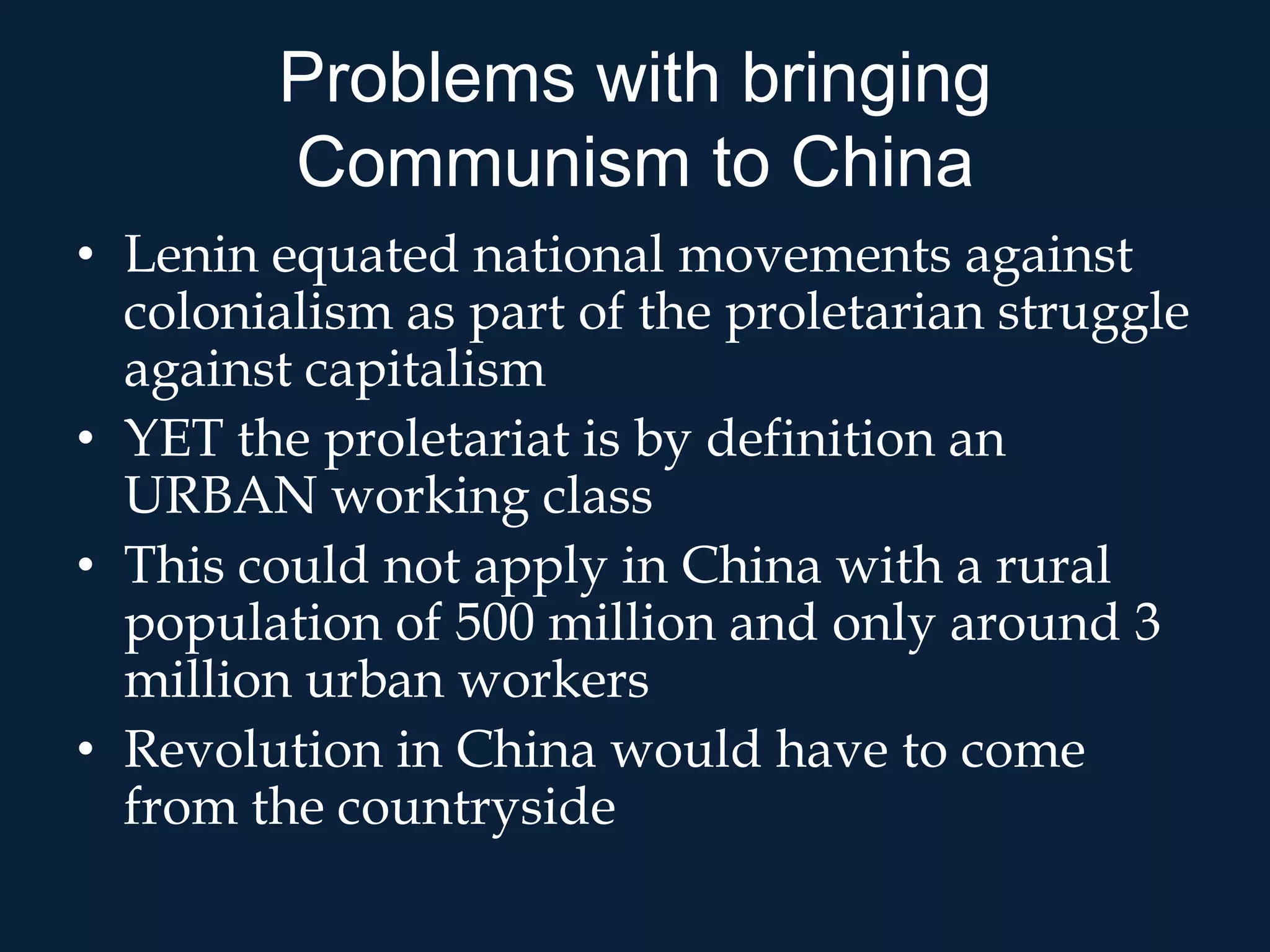
Problems with bringing
        Communism to China
• Lenin equated national movements against
  colonialism as part of the proletarian struggle
  against capitalism
• YET the proletariat is by definition an
  URBAN working class
• This could not apply in China with a rural
  population of 500 million and only around 3
  million urban workers
• Revolution in China would have to come
  from the countryside
TOK LINK
• Karl Popper launched a devastating
  attack on the unscientific nature of
  Communist thought. The basis for
  his criticism was that it could not be
  falsified as when something did not
  fit the theory, the theory was altered
  to ‘explain’ the new theory. Is there
  anything from today’s lesson which
  could be used to support his point?
• How does whether or not a theory
  can be falsified help develop
  knowledge?
HW: Question
• Why were Chinese intellectuals so
  impressed by the Bolshevik revolution?
                    OR
• Outline the developments which led to the
  formation of the CCP in China in 1921?
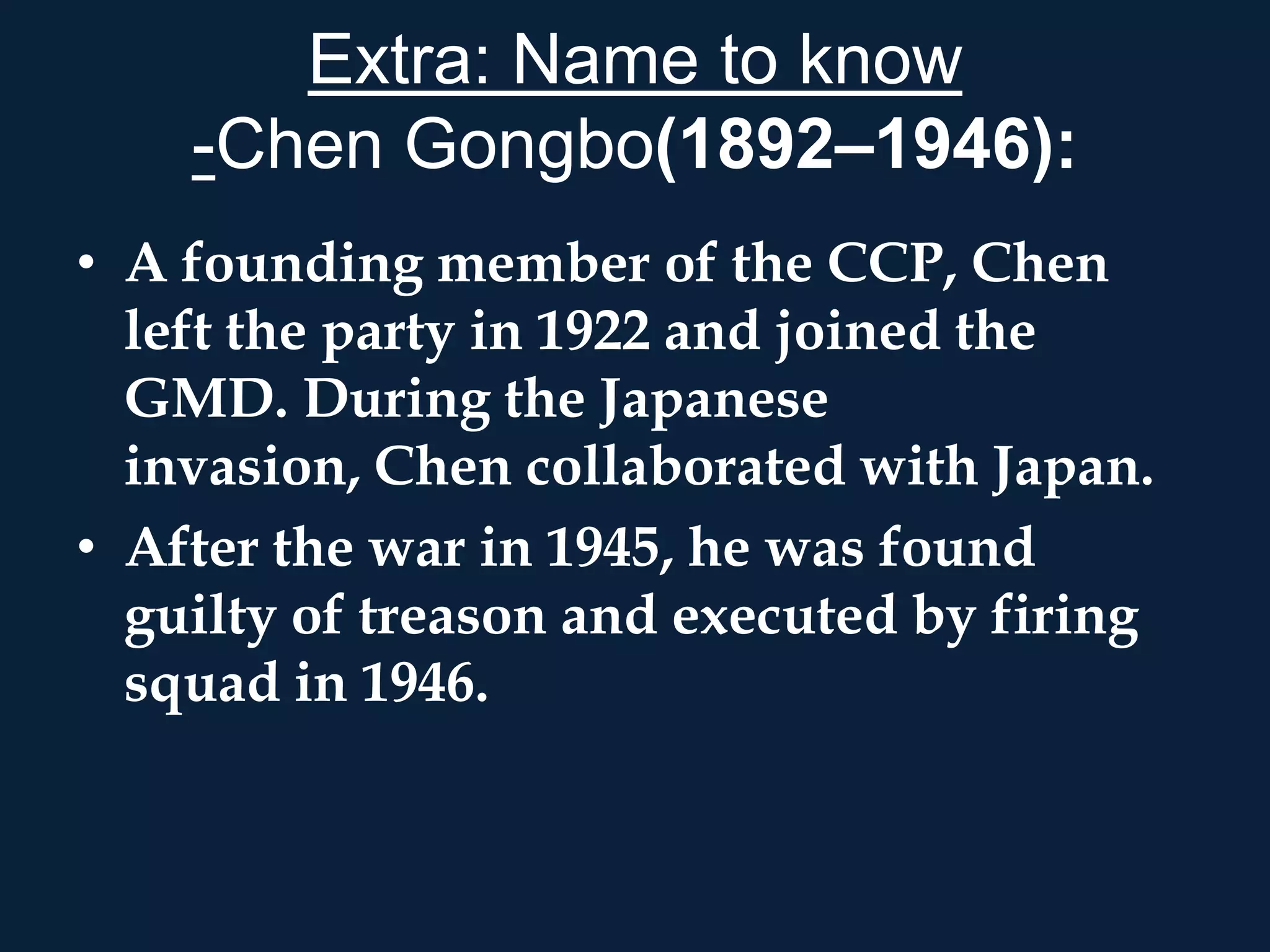
Extra: Name to know
    -Chen Gongbo(1892–1946):
• A founding member of the CCP, Chen
  left the party in 1922 and joined the
  GMD. During the Japanese
  invasion, Chen collaborated with Japan.
• After the war in 1945, he was found
  guilty of treason and executed by firing
  squad in 1946.

Formation of the ccp

  • 1.
    Formation of theCCP 1921 IB HL History Learning Objective: Which developments led to the formation of the CCP in 1921? To explain the intellectual, and geo- political trends which led to the creation of the CCP Readings: Lynch pgs 44-47
  • 2.
    Starter: Recap ofWestern Imperialism in China
  • 3.
    Timeline 1917-1928 • 1917:Russian revolution sees Bolsheviks come to power • 1918: China’s first Marxist study group formed at Peking University and included 24-year old Mao Zedong • 1919: Treaty of Versailles sees Shandong given to Japan • 1920: Probable 1st meeting of CCP with Comintern agents. Chen Duxiu Sec-Gen • 1921: Official 1st meeting of CCP with Mao representing Yunan • 1924-27: GMD-CCP 1st United Front • 1925: 30th May Incident • 1926-28: The Northern Expedition Communist International (Comintern): Organization founded by Vladimir Lenin in 1919 to promote revolutionary movements in colonial and semicolonial countries.
  • 4.
    Q1Which explanation BEST explains the creation of the CCP? • A) internal factors primarily • B) external factors primarily • C) external factors with internal factors playing a minor but enabling role • D) internal factors with external factors playing a minor but enabling role • E) Both internal and external factors were crucial and without both the CCP would not have been created
  • 6.
    Q2: Which externalfactors were most important in influencing the creation and growth of the CCP? • A) Failure of Western liberalism due to Treaty of Versailles • B) Ideological influence of Russian revolution: Lenin’s theory of imperialism • C) Practical influence of Russian revolution: Comintern agents in China • D) Western control over areas of China
  • 7.
    Inspiration from Russia •Bolshevik revolution popular with Chinese intellectuals • Bolshevik defeat of foreign interventionist forces seems to offer solution to imperialism • Failure of the 1911 Republic and Treaty of Versailles sees a turn away from Western liberalism. • Communist Russia is a viable alternative and offers the promise of leapfrogging the West • Russian comintern agents sent to China to help create a revolutionary movement (GrigorVoitinsky and HenkSneevliet/Maring) • Lenin’s theory of imperialism seems to offer a perfect explanation of China’s problems and relations with foreign powers making Communism more attractive
  • 8.
    • OVERPRODUCTION HOME • COMPETITION MARKETS DECLINE • DUMPING GROUNDS for SURPLUS PRODUCE EXPLOITATION • SOURCES of CHEAP LABOUR/RAW of OVERSEAS MARKETS/EMPI MATERIAL RES • RISE UP AGAINST OPPRESSORS/WAR of LIBERATION OPPRESSED COLONIAL • COLLAPSE OF WORLD CAPITALISM PEOPLES
  • 9.
    Source A: JosephStalin 1918: 1st Point: Capitalist imperialism is economically exploitative “The imperialists view the East as the fountain of their happiness because it contains an unaccountable amount of natural resources such as cotton, petroleum, gold, coal, and iron ore. In view of its wealth, is the East not the imperialists „sweetest fruit‟?”
  • 10.
    2nd Point: Exploitationof Human Resources “The imperialists want not only the East‟s natural resources but also its „obedient‟ people, the „cheap‟ Oriental manpower which they can utilise for their own selfish purposes. They wish to recruit from these „obedient‟ people enough „boys‟ to form the so-called „coloured‟ army and to use this army to crush their own revolutionary workers at home. This is the reason they call their Eastern colonies and semi-colonies „inexhaustible‟ manpower reserves. “
  • 11.
    3rd Point: Roleof the Bolsheviks in spreading world-wide revolution “The purpose of us Communists is to wake up the oppressed Oriental peoples from their 100 years‟ slumber and to imbue their workers and peasants with a revolutionary spirit to conduct an uncompromising struggle against the imperialists.”
  • 12.
    Q3: What potentialproblem was there in applying Communist thought to China?
  • 13.
    Problems with bringing Communism to China • Lenin equated national movements against colonialism as part of the proletarian struggle against capitalism • YET the proletariat is by definition an URBAN working class • This could not apply in China with a rural population of 500 million and only around 3 million urban workers • Revolution in China would have to come from the countryside
  • 14.
    TOK LINK • KarlPopper launched a devastating attack on the unscientific nature of Communist thought. The basis for his criticism was that it could not be falsified as when something did not fit the theory, the theory was altered to ‘explain’ the new theory. Is there anything from today’s lesson which could be used to support his point? • How does whether or not a theory can be falsified help develop knowledge?
  • 15.
    HW: Question • Whywere Chinese intellectuals so impressed by the Bolshevik revolution? OR • Outline the developments which led to the formation of the CCP in China in 1921?
  • 16.
    Extra: Name toknow -Chen Gongbo(1892–1946): • A founding member of the CCP, Chen left the party in 1922 and joined the GMD. During the Japanese invasion, Chen collaborated with Japan. • After the war in 1945, he was found guilty of treason and executed by firing squad in 1946.

Editor's Notes

  • #9 Lenin’s Theory of Imperialism/Dialectical Process
  • #10 From when he was Bolshevik Commissar for Nationalities