Formal and Informal Language in Emails
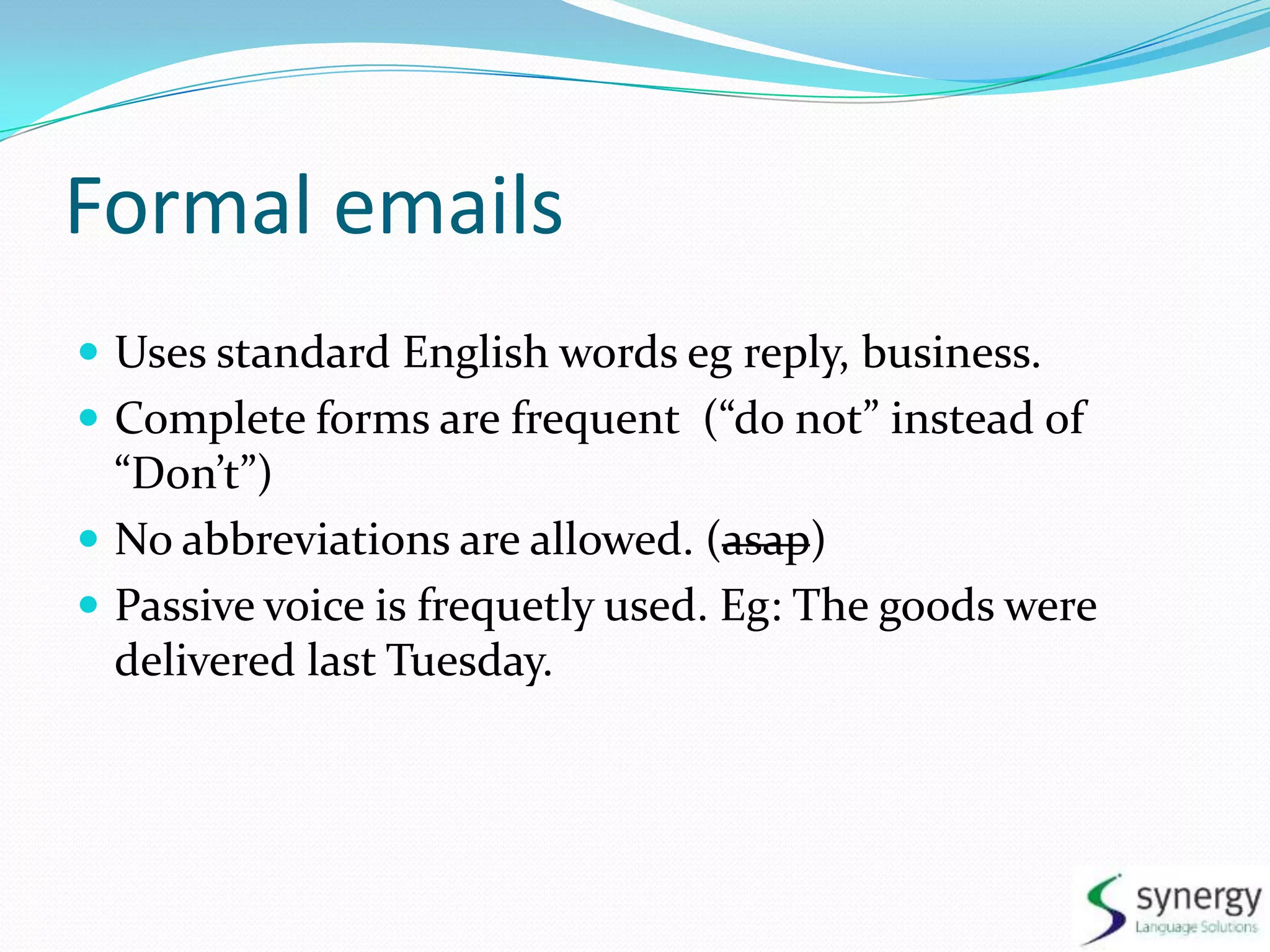
Formal emailsUses standardEnglishwordsegreply, business.Complete forms are frequent  (“do not” instead of “Don’t”)No abbreviations are allowed. (asap)Passivevoiceisfrequetlyused. Eg: The goodsweredeliveredlastTuesday.
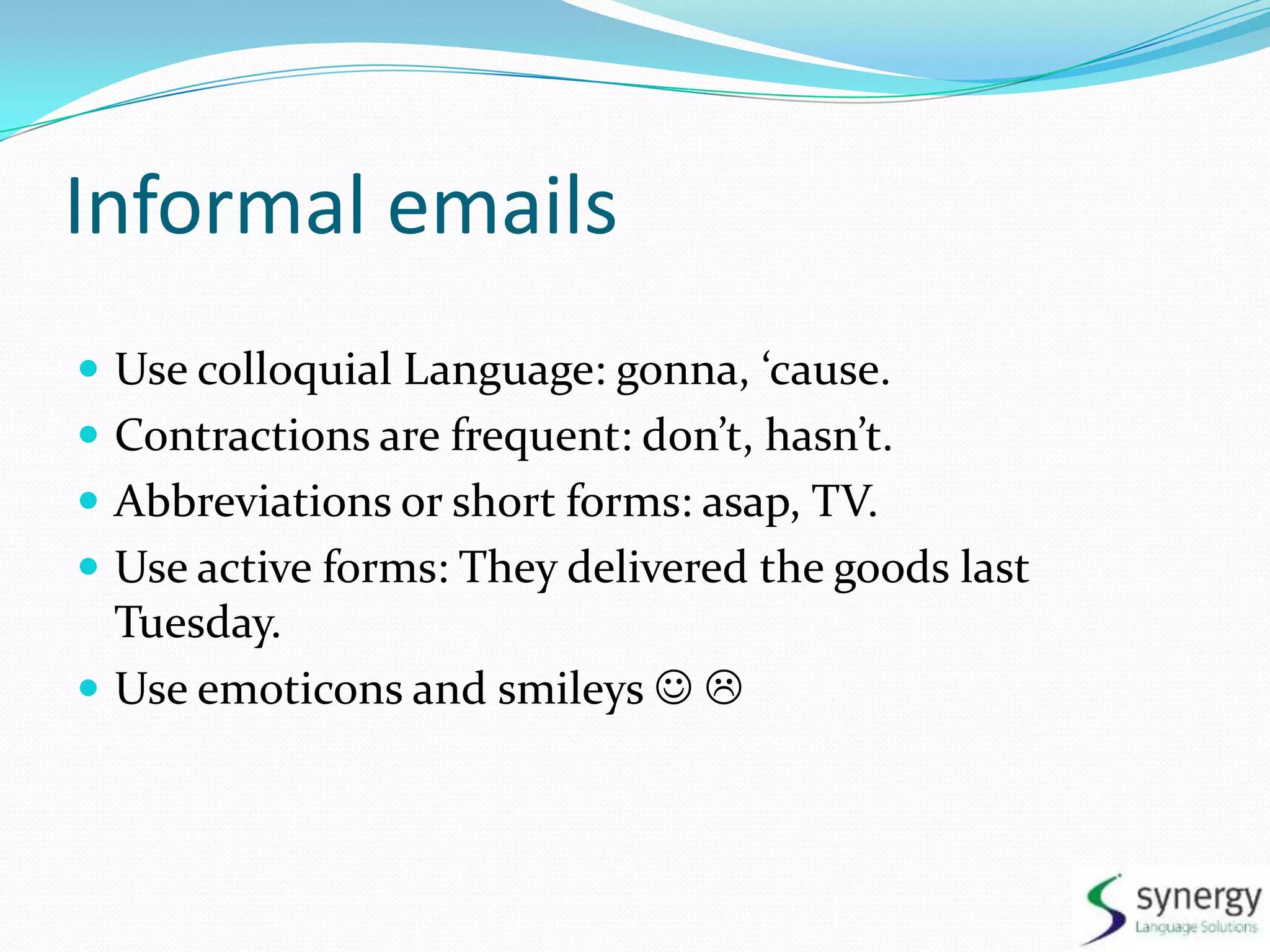
Informal emailsUse colloquialLanguage: gonna, ‘cause.Contractions are frequent: don’t, hasn’t.Abbreviationsor short forms: asap, TV.Use active forms: TheydeliveredthegoodslastTuesday.Use emoticons and smileys 
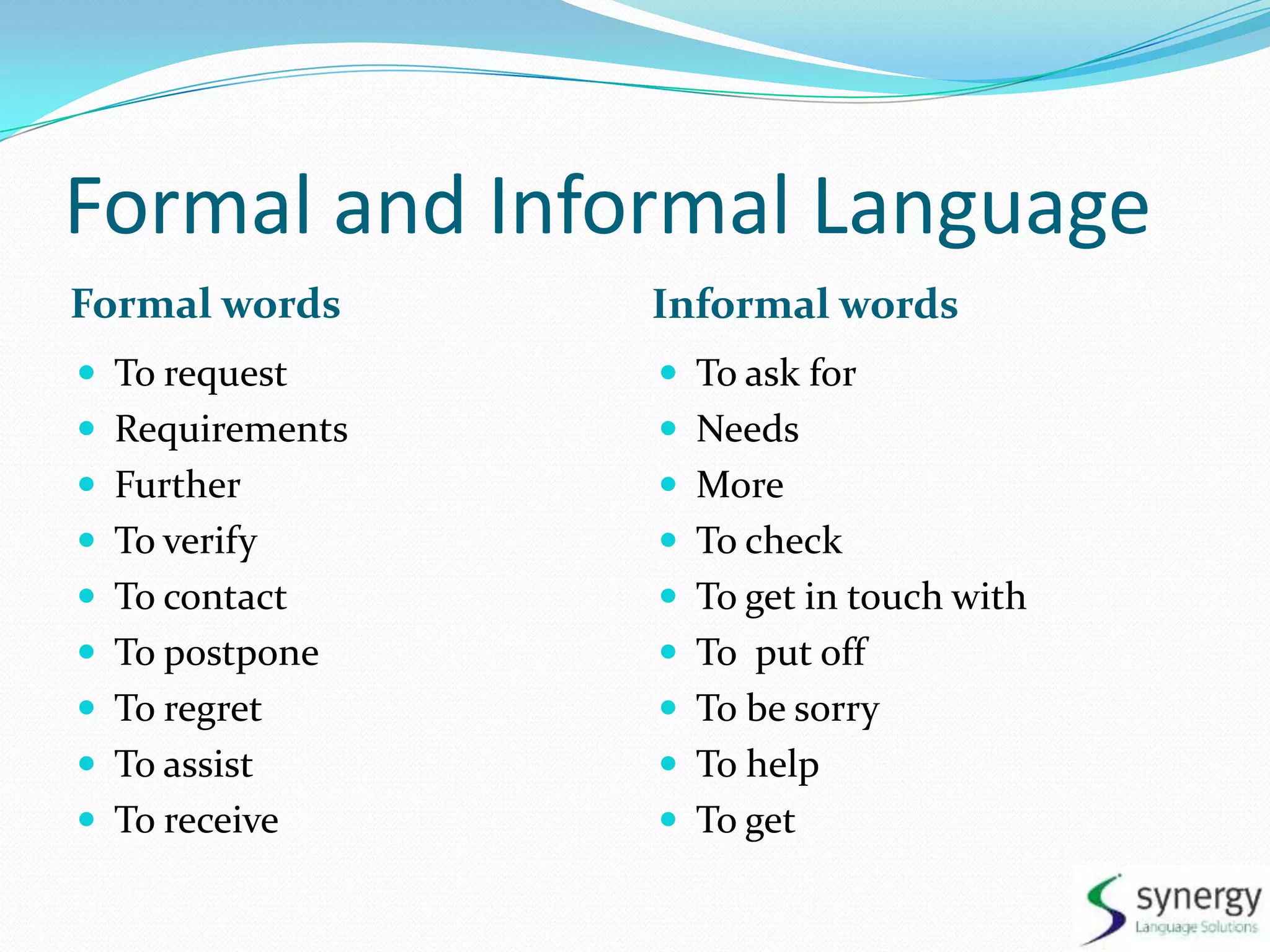
Formal and Informal LanguageFormal wordsInformal wordsTorequestRequirementsFurtherToverifyTocontactTopostponeToregretToassistToreceiveToaskforNeedsMore TocheckToget in touchwithToput offTobesorryTohelpToget

Formal and Informal Language in Emails

  • 1.
    Formal and InformalLanguage in Emails
  • 2.
    Formal emailsUses standardEnglishwordsegreply,business.Complete forms are frequent (“do not” instead of “Don’t”)No abbreviations are allowed. (asap)Passivevoiceisfrequetlyused. Eg: The goodsweredeliveredlastTuesday.
  • 3.
    Informal emailsUse colloquialLanguage:gonna, ‘cause.Contractions are frequent: don’t, hasn’t.Abbreviationsor short forms: asap, TV.Use active forms: TheydeliveredthegoodslastTuesday.Use emoticons and smileys 
  • 4.
    Formal and InformalLanguageFormal wordsInformal wordsTorequestRequirementsFurtherToverifyTocontactTopostponeToregretToassistToreceiveToaskforNeedsMore TocheckToget in touchwithToput offTobesorryTohelpToget