Forging : A
Traditional forms of
Metalworking
Developed by Kisco Team
www.kiscosteel.com
Forging
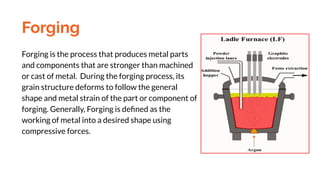
Forging is the process that produces metal parts
and components that are stronger than machined
or cast of metal. During the forging process, its
grain structure deforms to follow the general
shape and metal strain of the part or component of
forging. Generally, Forging is defined as the
working of metal into a desired shape using
compressive forces.
Forging Steps
To forge the metal scrap the following steps should follow.
➔ Heating
➔ Preforming
➔ Finish Forging
➔ Cooling
➔ Finishing
Heating
Pre-forged metal material is called
“ingots” which come in a different of
shapes and sizes depending on the part
to be produced. These ingots are heated
to be melt state where the metal still
retains its desire shape but can be
altered easily with force.
Pre-forming
Forging is the process that produces
metal parts and components that are
stronger than machined or cast of
metal. During the forging process, its
grain structure deforms to follow the
general shape and metal strain of the
part or component of forging.
Generally, Forging is defined as the
working of metal into a desired shape
using compressive forces.
Finish Forging
Simply being forged items may
only need one press, but more
complicated items may require
multiple strokes at different
pressures or even different dies
to give the final shape and size of
product.
COOLING
The cooling of that metal, forgers
can increase the strength of the
final product by deforming and
optimizing the grain flow within
that metal. The metal cools and
hardens rapidly causing it to be
stronger than the metal in the
dies and harming process.
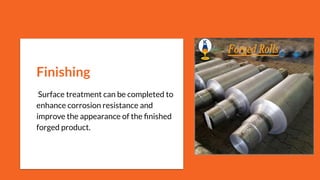
Finishing
Surface treatment can be completed to
enhance corrosion resistance and
improve the appearance of the finished
forged product.

Forging process

  • 1.
    Forging : A Traditionalforms of Metalworking Developed by Kisco Team www.kiscosteel.com
  • 2.
    Forging Forging is theprocess that produces metal parts and components that are stronger than machined or cast of metal. During the forging process, its grain structure deforms to follow the general shape and metal strain of the part or component of forging. Generally, Forging is defined as the working of metal into a desired shape using compressive forces.
  • 3.
    Forging Steps To forgethe metal scrap the following steps should follow. ➔ Heating ➔ Preforming ➔ Finish Forging ➔ Cooling ➔ Finishing
  • 4.
    Heating Pre-forged metal materialis called “ingots” which come in a different of shapes and sizes depending on the part to be produced. These ingots are heated to be melt state where the metal still retains its desire shape but can be altered easily with force.
  • 5.
    Pre-forming Forging is theprocess that produces metal parts and components that are stronger than machined or cast of metal. During the forging process, its grain structure deforms to follow the general shape and metal strain of the part or component of forging. Generally, Forging is defined as the working of metal into a desired shape using compressive forces.
  • 6.
    Finish Forging Simply beingforged items may only need one press, but more complicated items may require multiple strokes at different pressures or even different dies to give the final shape and size of product.
  • 7.
    COOLING The cooling ofthat metal, forgers can increase the strength of the final product by deforming and optimizing the grain flow within that metal. The metal cools and hardens rapidly causing it to be stronger than the metal in the dies and harming process.
  • 8.
    Finishing Surface treatment canbe completed to enhance corrosion resistance and improve the appearance of the finished forged product.