forensic report means a report prepared in the course of
an investigation into an alleged offence by a person with
specialized knowledge or training, setting out the results
of a forensic examination in the form of facts or opinions
or a combination of both e.g. an autopsy report.
A forensic report, unlike a clinical report, is written for
the benefit of the court and is typically about the subject
rather than for the subject. As the primary work product
of forensic evaluations, forensic reports usually influence
the court’s decision. Because of their importance, they
require more care than an average report.’’
HOW TO WRITE A FORENSIC
REPORT?
Gather all relevant details, both about the subject of your report
and about the events leading up to the conclusion of your
investigation. Identify all legal representatives and all sources
from whom you gathered relevant forensic evidence. Most
importantly, be prepared to note the scientific basis upon which
you are qualified to give the report.
Begin writing the report, identifying the parties involved, including
names, dates of birth and genders; specific dates; locations;
alleged offenses; and the causative chain of events. Accurately
describe all details of what allegedly transpired.
->In Criminal and civil investigations.
->The forensic science acts as an aid to guide the investigator or jury to reach to a
conclusion.
->To provides decision-makers with facts needed to decide the matter and to ensure a
successful investigation.
->To link the evidences with the crime and the criminal (or suspect).
->To prove or disprove the fact in issue.
->To exonerate the innocent from the case.
FORMAT OF A FORENSIC REPORT
Introduction (evaluation questions: records
reviewed).
History (past history of the forensic incident and
its aftermath; family history).
Mental status (including psychological/chemical
dependency testing).
clinical diagnostic impressions (in Diagnostic
and statistical manual of mental disorders, fourth
Edition, or DSM-IV-
format).
Conclusion.
IDENTIFY THE DATAAND EVENTS​
Gather all relevant details, both about the subject of your
report and about the events leading up to the conclusion of
your investigation.
Identify all legal representatives and all sources from
whom you gathered relevant forensic evidence.
Most importantly, be prepared to note the scientific basis
upon which you are qualified to give the report.
Begin writing the report, identifying the parties involved,
including names, dates of birth, and genders;
Specific dates; location; alleged offenses; and the
causative chain of events.
Accurately describe all details of the evidence.
Structure of Psychological
Evaluation
In the case of a psychological opinion – which should be provided by a licensed clinician –
the clinician should be prepared to give her clinical impressions. Clinicians should be able
to describe their opinion of the defendant, inferring the condition of his mental or
cognitive state, and document their conclusion.
At a bare minimum, such a report should include:
Description of defendant’s psychological disposition based on the clinician’s professional
observation. Include any personal interviews with defendant and documents reviewed.
Contact defendant’s attorneys to help assess the defendant's perceptions before, during
and after the alleged incident.
Provide relevant information about the defendant's psychiatric/psychological history,
including relevant details about any substance abuse or involvement with the criminal
justice system.
CONCLUSION AND DEPOSITION
A forensic report is incomplete without conclusions and
recommendations.
The clinician’s previous data must support the
conclusions.
In the recommendation, the clinician should include all
opinions concerning mental competency.
After the court reaches a disposition in the defendant’s
case,
Document the outcome of the case whenever possible.
If the information that would lead to a different
recommendation becomes available after the completion of
your report, submit an addendum explaining the reason for
the change.
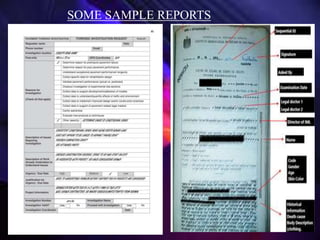
SOME SAMPLE REPORTS
THANK YOU

forensic report.pptx

  • 2.
    forensic report meansa report prepared in the course of an investigation into an alleged offence by a person with specialized knowledge or training, setting out the results of a forensic examination in the form of facts or opinions or a combination of both e.g. an autopsy report. A forensic report, unlike a clinical report, is written for the benefit of the court and is typically about the subject rather than for the subject. As the primary work product of forensic evaluations, forensic reports usually influence the court’s decision. Because of their importance, they require more care than an average report.’’
  • 3.
    HOW TO WRITEA FORENSIC REPORT? Gather all relevant details, both about the subject of your report and about the events leading up to the conclusion of your investigation. Identify all legal representatives and all sources from whom you gathered relevant forensic evidence. Most importantly, be prepared to note the scientific basis upon which you are qualified to give the report. Begin writing the report, identifying the parties involved, including names, dates of birth and genders; specific dates; locations; alleged offenses; and the causative chain of events. Accurately describe all details of what allegedly transpired. ->In Criminal and civil investigations. ->The forensic science acts as an aid to guide the investigator or jury to reach to a conclusion. ->To provides decision-makers with facts needed to decide the matter and to ensure a successful investigation. ->To link the evidences with the crime and the criminal (or suspect). ->To prove or disprove the fact in issue. ->To exonerate the innocent from the case.
  • 4.
    FORMAT OF AFORENSIC REPORT Introduction (evaluation questions: records reviewed). History (past history of the forensic incident and its aftermath; family history). Mental status (including psychological/chemical dependency testing). clinical diagnostic impressions (in Diagnostic and statistical manual of mental disorders, fourth Edition, or DSM-IV- format). Conclusion.
  • 5.
    IDENTIFY THE DATAANDEVENTS​ Gather all relevant details, both about the subject of your report and about the events leading up to the conclusion of your investigation. Identify all legal representatives and all sources from whom you gathered relevant forensic evidence. Most importantly, be prepared to note the scientific basis upon which you are qualified to give the report. Begin writing the report, identifying the parties involved, including names, dates of birth, and genders; Specific dates; location; alleged offenses; and the causative chain of events. Accurately describe all details of the evidence.
  • 6.
    Structure of Psychological Evaluation Inthe case of a psychological opinion – which should be provided by a licensed clinician – the clinician should be prepared to give her clinical impressions. Clinicians should be able to describe their opinion of the defendant, inferring the condition of his mental or cognitive state, and document their conclusion. At a bare minimum, such a report should include: Description of defendant’s psychological disposition based on the clinician’s professional observation. Include any personal interviews with defendant and documents reviewed. Contact defendant’s attorneys to help assess the defendant's perceptions before, during and after the alleged incident. Provide relevant information about the defendant's psychiatric/psychological history, including relevant details about any substance abuse or involvement with the criminal justice system.
  • 7.
    CONCLUSION AND DEPOSITION Aforensic report is incomplete without conclusions and recommendations. The clinician’s previous data must support the conclusions. In the recommendation, the clinician should include all opinions concerning mental competency. After the court reaches a disposition in the defendant’s case, Document the outcome of the case whenever possible. If the information that would lead to a different recommendation becomes available after the completion of your report, submit an addendum explaining the reason for the change.
  • 8.
  • 9.