Foreign Exchange 
Market 
GROUP 10: 
ฤINH THI HUONG 
LE THI TRANG 
NGO THI THUY 
TRAN THI HUONG GIANG 
DO THI THANH THAO
CONTENT: 
What is the FX market? 
Exchange rate 
Role of the bank in FX
What is the Forex Market? 
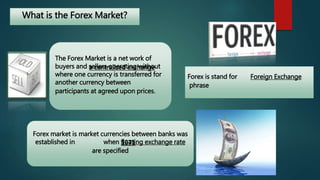
The Forex Market is a net work of 
buyers and sellers operating without 
where one currency is transferred for 
another currency between 
participants at agreed upon prices. 
Forex is stand for 
phrase 
a centralized exchange 
Forex market is market currencies between banks was 
established in when floating exchange rate 
are specified 
Foreign Exchange 
1971
What is the Forex Market? 
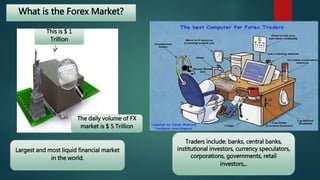
Traders include: banks, central banks, 
institutional investors, currency speculators, 
corporations, governments, retail 
investors,.. 
This is $ 1 
Trillion 
The daily volume of FX 
market is $ 5 Trillion 
Largest and most liquid financial market 
in the world.
What is the Forex Market? 
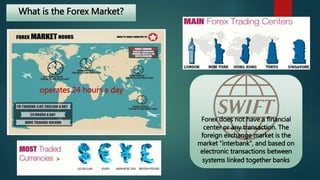
Forex does not have a financial 
center or any transaction. The 
foreign exchange market is the 
market "interbank", and based on 
electronic transactions between 
systems linked together banks 
operates 24 hours a day
What is the Forex Market? 
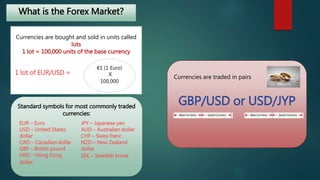
Currencies are bought and sold in units called 
lots 
1 lot = 100,000 units of the base currency 
1 lot of EUR/USD = 
โ‚ฌ1 (1 Euro) 
X 
100,000 
Standard symbols for most commonly traded 
currencies: 
EUR โ€“ Euro 
USD โ€“ United States 
dollar 
CAD โ€“ Canadian dollar 
GBP โ€“ British pound 
HKD โ€“ Hong Kong 
dollar 
JPY โ€“ Japanese yen 
AUD โ€“ Australian dollar 
CHF โ€“ Swiss franc 
NZD โ€“ New Zealand 
dollar 
SEK โ€“ Swedish krona 
Currencies are traded in pairs 
GBP/USD or USD/JYP
Exchange Rate 
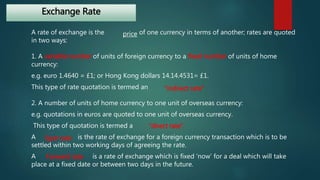
A rate of exchange is the price 
of one currency in terms of another; rates are quoted 
in two ways: 
1. A variable number of units of foreign currency to a fixed number of units of home 
currency: 
e.g. euro 1.4640 = ยฃ1; or Hong Kong dollars 14.14.4531= ยฃ1. 
This type of rate quotation is termed an 
โ€œindirect rateโ€ 
2. A number of units of home currency to one unit of overseas currency: 
e.g. quotations in euros are quoted to one unit of overseas currency. 
This type of quotation is termed a 
โ€œdirect rateโ€. 
A Spot rate 
is the rate of exchange for a foreign currency transaction which is to be 
settled within two working days of agreeing the rate. 
A Forward rate 
is a rate of exchange which is fixed โ€˜nowโ€™ for a deal which will take 
place at a fixed date or between two days in the future.
Exchange Rate 
FIXED EXCHANGE 
RATE 
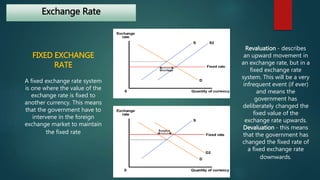
A fixed exchange rate system 
is one where the value of the 
exchange rate is fixed to 
another currency. This means 
that the government have to 
intervene in the foreign 
exchange market to maintain 
the fixed rate 
Revaluation - describes 
an upward movement in 
an exchange rate, but in a 
fixed exchange rate 
system. This will be a very 
infrequent event (if ever) 
and means the 
government has 
deliberately changed the 
fixed value of the 
exchange rate upwards. 
Devaluation - this means 
that the government has 
changed the fixed rate of 
a fixed exchange rate 
downwards.
Exchange Rate 
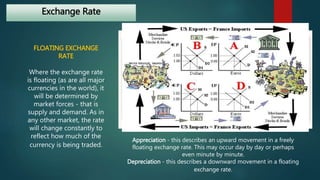
FLOATING EXCHANGE 
RATE 
Where the exchange rate 
is floating (as are all major 
currencies in the world), it 
will be determined by 
market forces - that is 
supply and demand. As in 
any other market, the rate 
will change constantly to 
reflect how much of the 
currency is being traded. 
Appreciation - this describes an upward movement in a freely 
floating exchange rate. This may occur day by day or perhaps 
even minute by minute. 
Depreciation - this describes a downward movement in a floating 
exchange rate.
Exchange Rate 
Speculation 
Balance of 
payment 
Exchange 
rate Policy 
Monetary 
Supply 
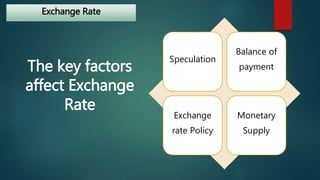
The key factors 
affect Exchange 
Rate
Exchange Rate 
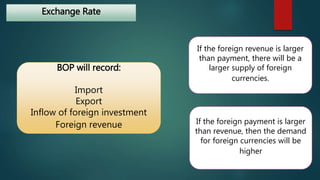
BOP will record: 
Import 
Export 
Inflow of foreign investment 
Foreign revenue 
If the foreign revenue is larger 
than payment, there will be a 
larger supply of foreign 
currencies. 
If the foreign payment is larger 
than revenue, then the demand 
for foreign currencies will be 
higher
Exchange Rate 
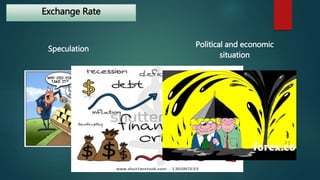
Speculation 
Political and economic 
situation
Exchange Rate 
Money supply 
DEFINITION 
HOW IT WOULD AFFECT ON 
FOREIGN EXCHANGE RATE
Definition 
๏ต the money supply is commonly defined to 
be a group of safe assets that households 
and businesses can use to make payments 
or to hold as short-term investments. 
๏ต It is known as a floating exchange rate 
since it floats according to supply and 
demand. Fluctuation in exchange rates are 
caused by an excess of supply over 
demand, vice versa. 
๏ต Also called money stock
How it can effect 
๏ตA country's exchange rate is typically 
affected by the supply and demand for that 
country's currency in international 
exchange markets. 
๏ต If demand exceeds supply, then the value 
of the currency will go up. If however, the 
supply of the currency exceeds demand, 
then its value will go down.
Exchange rate policy 
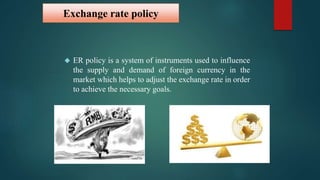
๏ต ER policy is a system of instruments used to influence 
the supply and demand of foreign currency in the 
market which helps to adjust the exchange rate in order 
to achieve the necessary goals.
The instrument of exchange rate policy 
๏ตDiscount rate method: 
This method is often used to adjust the 
exchange rate on the market. With this 
method, when the exchange rate reaches 
an alarming rate, the central bank must 
intervene raise interest rates discount. 
Due to the discount rate rise, therefore 
discount interest rates in the market 
have also increased. As a result, short-term 
loans on the world market will be 
put on to higher interest.
The instrument of exchange rate policy 
๏ต The operations of the 
foreign exchange market: 
Through the buying and selling 
of foreign currency exchange 
rate adjustment is one of the 
most important measures of the 
state to maintain stable 
purchasing power of national 
currencies. This measure is a 
direct impact on the exchange 
rate.
The instrument of exchange rate policy 
๏ต Reserves to stabilize the exchange: 
Funds to establish reserves to stabilize the exchange usually 
consists of treasury bonds issued in the national money. As in many 
foreign currencies, then use the funds to buy in order to limit the 
level of depreciation of the exchange Conversely, in the case of 
foreign loans to run the exchange stabilization fund launched sold 
foreign currency to continue purchase of bonds issued to prevent 
exchange rose
The instrument of exchange rate policy 
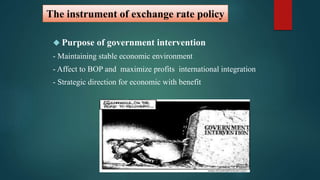
๏ต Purpose of government intervention 
- Maintaining stable economic environment 
- Affect to BOP and maximize profits international integration 
- Strategic direction for economic with benefit
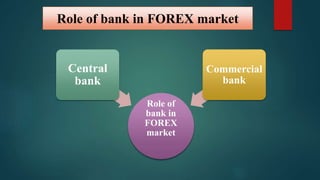
Role of bank in FOREX market 
Role of 
bank in 
FOREX 
market 
Central 
bank 
Commercial 
bank
Role of bank in FOREX market 
Central bank 
โ€ข As custodians of the monetary system - and the 
owner's bank reserves national foreign exchange 
โ€ข The central bank has regularly intervened in the 
foreign exchange market with two status: 
- Central banks conduct foreign exchange 
operations to balance the its customers 
- Monitoring of market activity within the 
framework of law provisions with the intervention
Role of bank in FOREX market 
Commercial bank 
โ€ข Trading on behalf of clients or on behalf of 
itself. 
โ€ข Bank foreign exchange transactions 
conducted with two goals: 
โ€ข + Trading business for yourself 
โ€ข + Provides services for customers
Thank you 
for listening

Foreign exchange market

  • 1.
    Foreign Exchange Market GROUP 10: ฤINH THI HUONG LE THI TRANG NGO THI THUY TRAN THI HUONG GIANG DO THI THANH THAO
  • 2.
    CONTENT: What isthe FX market? Exchange rate Role of the bank in FX
  • 3.
    What is theForex Market? The Forex Market is a net work of buyers and sellers operating without where one currency is transferred for another currency between participants at agreed upon prices. Forex is stand for phrase a centralized exchange Forex market is market currencies between banks was established in when floating exchange rate are specified Foreign Exchange 1971
  • 4.
    What is theForex Market? Traders include: banks, central banks, institutional investors, currency speculators, corporations, governments, retail investors,.. This is $ 1 Trillion The daily volume of FX market is $ 5 Trillion Largest and most liquid financial market in the world.
  • 5.
    What is theForex Market? Forex does not have a financial center or any transaction. The foreign exchange market is the market "interbank", and based on electronic transactions between systems linked together banks operates 24 hours a day
  • 6.
    What is theForex Market? Currencies are bought and sold in units called lots 1 lot = 100,000 units of the base currency 1 lot of EUR/USD = โ‚ฌ1 (1 Euro) X 100,000 Standard symbols for most commonly traded currencies: EUR โ€“ Euro USD โ€“ United States dollar CAD โ€“ Canadian dollar GBP โ€“ British pound HKD โ€“ Hong Kong dollar JPY โ€“ Japanese yen AUD โ€“ Australian dollar CHF โ€“ Swiss franc NZD โ€“ New Zealand dollar SEK โ€“ Swedish krona Currencies are traded in pairs GBP/USD or USD/JYP
  • 7.
    Exchange Rate Arate of exchange is the price of one currency in terms of another; rates are quoted in two ways: 1. A variable number of units of foreign currency to a fixed number of units of home currency: e.g. euro 1.4640 = ยฃ1; or Hong Kong dollars 14.14.4531= ยฃ1. This type of rate quotation is termed an โ€œindirect rateโ€ 2. A number of units of home currency to one unit of overseas currency: e.g. quotations in euros are quoted to one unit of overseas currency. This type of quotation is termed a โ€œdirect rateโ€. A Spot rate is the rate of exchange for a foreign currency transaction which is to be settled within two working days of agreeing the rate. A Forward rate is a rate of exchange which is fixed โ€˜nowโ€™ for a deal which will take place at a fixed date or between two days in the future.
  • 8.
    Exchange Rate FIXEDEXCHANGE RATE A fixed exchange rate system is one where the value of the exchange rate is fixed to another currency. This means that the government have to intervene in the foreign exchange market to maintain the fixed rate Revaluation - describes an upward movement in an exchange rate, but in a fixed exchange rate system. This will be a very infrequent event (if ever) and means the government has deliberately changed the fixed value of the exchange rate upwards. Devaluation - this means that the government has changed the fixed rate of a fixed exchange rate downwards.
  • 9.
    Exchange Rate FLOATINGEXCHANGE RATE Where the exchange rate is floating (as are all major currencies in the world), it will be determined by market forces - that is supply and demand. As in any other market, the rate will change constantly to reflect how much of the currency is being traded. Appreciation - this describes an upward movement in a freely floating exchange rate. This may occur day by day or perhaps even minute by minute. Depreciation - this describes a downward movement in a floating exchange rate.
  • 10.
    Exchange Rate Speculation Balance of payment Exchange rate Policy Monetary Supply The key factors affect Exchange Rate
  • 11.
    Exchange Rate BOPwill record: Import Export Inflow of foreign investment Foreign revenue If the foreign revenue is larger than payment, there will be a larger supply of foreign currencies. If the foreign payment is larger than revenue, then the demand for foreign currencies will be higher
  • 12.
    Exchange Rate Speculation Political and economic situation
  • 13.
    Exchange Rate Moneysupply DEFINITION HOW IT WOULD AFFECT ON FOREIGN EXCHANGE RATE
  • 14.
    Definition ๏ต themoney supply is commonly defined to be a group of safe assets that households and businesses can use to make payments or to hold as short-term investments. ๏ต It is known as a floating exchange rate since it floats according to supply and demand. Fluctuation in exchange rates are caused by an excess of supply over demand, vice versa. ๏ต Also called money stock
  • 15.
    How it caneffect ๏ตA country's exchange rate is typically affected by the supply and demand for that country's currency in international exchange markets. ๏ต If demand exceeds supply, then the value of the currency will go up. If however, the supply of the currency exceeds demand, then its value will go down.
  • 16.
    Exchange rate policy ๏ต ER policy is a system of instruments used to influence the supply and demand of foreign currency in the market which helps to adjust the exchange rate in order to achieve the necessary goals.
  • 17.
    The instrument ofexchange rate policy ๏ตDiscount rate method: This method is often used to adjust the exchange rate on the market. With this method, when the exchange rate reaches an alarming rate, the central bank must intervene raise interest rates discount. Due to the discount rate rise, therefore discount interest rates in the market have also increased. As a result, short-term loans on the world market will be put on to higher interest.
  • 18.
    The instrument ofexchange rate policy ๏ต The operations of the foreign exchange market: Through the buying and selling of foreign currency exchange rate adjustment is one of the most important measures of the state to maintain stable purchasing power of national currencies. This measure is a direct impact on the exchange rate.
  • 19.
    The instrument ofexchange rate policy ๏ต Reserves to stabilize the exchange: Funds to establish reserves to stabilize the exchange usually consists of treasury bonds issued in the national money. As in many foreign currencies, then use the funds to buy in order to limit the level of depreciation of the exchange Conversely, in the case of foreign loans to run the exchange stabilization fund launched sold foreign currency to continue purchase of bonds issued to prevent exchange rose
  • 20.
    The instrument ofexchange rate policy ๏ต Purpose of government intervention - Maintaining stable economic environment - Affect to BOP and maximize profits international integration - Strategic direction for economic with benefit
  • 21.
    Role of bankin FOREX market Role of bank in FOREX market Central bank Commercial bank
  • 22.
    Role of bankin FOREX market Central bank โ€ข As custodians of the monetary system - and the owner's bank reserves national foreign exchange โ€ข The central bank has regularly intervened in the foreign exchange market with two status: - Central banks conduct foreign exchange operations to balance the its customers - Monitoring of market activity within the framework of law provisions with the intervention
  • 23.
    Role of bankin FOREX market Commercial bank โ€ข Trading on behalf of clients or on behalf of itself. โ€ข Bank foreign exchange transactions conducted with two goals: โ€ข + Trading business for yourself โ€ข + Provides services for customers
  • 25.
    Thank you forlistening

Editor's Notes

  • #8ย It is the market rate on the day the rate is agreed; it should be noted that the spot rate of exchange can fluctuate quite dramatically from day to day and therefore for continuing trade it is not a basis upon which to work. A Fixed Forward contract is where the future date at which the transaction will take place is fixed. An Option Forward contract is where the time at which the transaction will take place is any time within a specified period.
  • #9ย In Figure 1 below, the equilibrium is above the fixed rate. There is a shortage of the national currency at the fixed rate. This would normally force the equilibrium exchange rate upwards, but the rate is fixed and so cannot be allowed to move. To keep the exchange rate at the fixed rate the government will need to intervene. They will need to sell their own currency from their foreign exchange reserves and buy overseas currencies instead. This has the effect of shifting the supply curve to S2 and as a result, their foreign currency holdings will rise. In Figure 2, the opposite is true - the equilibrium rate is below the fixed rate. This means that there is a surplus of the national currency. The government will need to buy this surplus if they are to prevent the currency from falling - in other words keep it at the fixed rate. When they buy the currency they will be selling from their foreign currency reserves and so these will fall, but the demand for domestic currency will rise.
  • #10ย If the supply of a currency exceeds the demand for it, its value will fall in the foreign exchange market.ย  On the other hand, if the demand for a currency exceeds its supply, then its value will rise.ย  An increase in the supply of one currency is simultaneously an increase in demand for the other. When people in Europe supply euros to demand dollars in order to purchase U.S. products, the exchange value of the euro depreciates and the dollar appreciates, all other things held constant.
  • #12ย When all these transactions are consolidated into a table of international balance of payments, this would become the countryโ€™s foreign exchange balance of payments
  • #14ย When all these transactions are consolidated into a table of international balance of payments, this would become the countryโ€™s foreign exchange balance of payments
  • #15ย It is the market rate on the day the rate is agreed; it should be noted that the spot rate of exchange can fluctuate quite dramatically from day to day and therefore for continuing trade it is not a basis upon which to work. A Fixed Forward contract is where the future date at which the transaction will take place is fixed. An Option Forward contract is where the time at which the transaction will take place is any time within a specified period.
  • #16ย It is the market rate on the day the rate is agreed; it should be noted that the spot rate of exchange can fluctuate quite dramatically from day to day and therefore for continuing trade it is not a basis upon which to work. A Fixed Forward contract is where the future date at which the transaction will take place is fixed. An Option Forward contract is where the time at which the transaction will take place is any time within a specified period.