Food Hygiene
Hazards
Physical Contamination
• Dirt and dust
• Fragments of shell/bone
• Fingernail
• Parts of machinery
• Broken glass
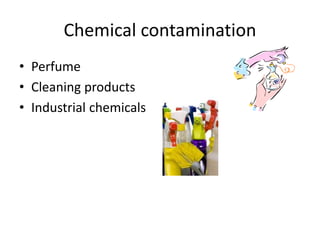
Chemical contamination
• Perfume
• Cleaning products
• Industrial chemicals
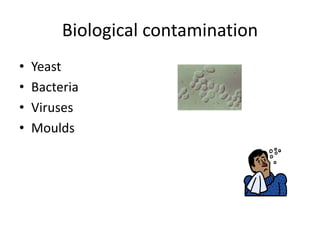
Biological contamination
• Yeast
• Bacteria
• Viruses
• Moulds
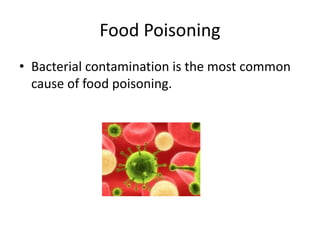
Food Poisoning
• Bacterial contamination is the most common
cause of food poisoning.
Food poisoning
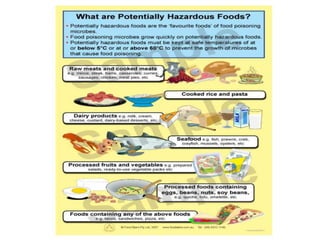
• Certain types of food are more likely to cause
food poisoning than others – High risk foods
• These are ready to eats foods such as:
• Rice
• Soft cheese
• Meat and poultry
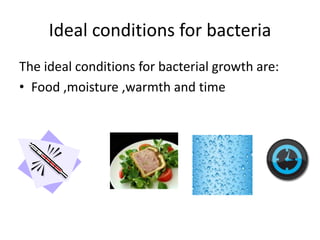
Ideal conditions for bacteria
The ideal conditions for bacterial growth are:
• Food ,moisture ,warmth and time
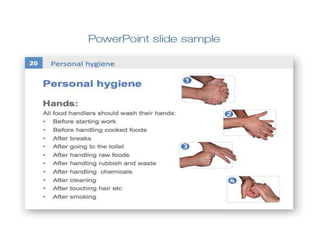
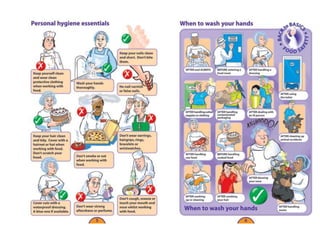
Your Hands!
• Wash your hands regularly and properly to
prevent cross contamination.
• Before entering a food prep area
• Between handling raw and high risk food
• After taking a break
• After going to the toilet
• After blowing your nose
• After carrying out cleaning jobs
• After handling waste.
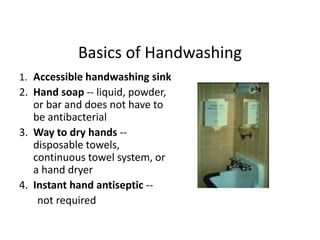
Basics of Handwashing
1. Accessible handwashing sink
2. Hand soap -- liquid, powder,
or bar and does not have to
be antibacterial
3. Way to dry hands --
disposable towels,
continuous towel system, or
a hand dryer
4. Instant hand antiseptic --
not required
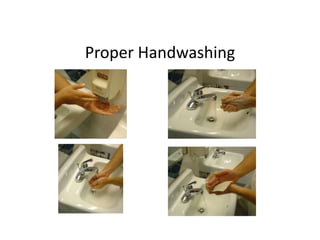
Proper Handwashing
Cross contamination
• Contamination can occur at any time in food
preparation or service.
• Cross contamination occurs when bacteria are
spread from one food to another.
Examples:
• From hands to boards and onto food
• From cloths to equipment and onto food
• From foods dripping onto each other
Cross contamination
• Cloths are a major source of cross
contamination in food areas
• Use disposable cloths/paper roll for cleaning
tasks
• Keep raw and ready to eat foods apart where
possible store separately
• Pests must be controlled as they can
contaminate food, spread disease and damage
premises.
• Keep all foods covered at all times
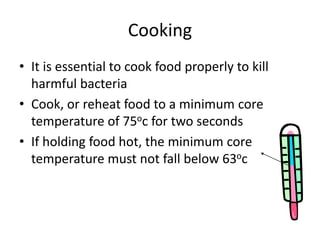
Cooking
• It is essential to cook food properly to kill
harmful bacteria
• Cook, or reheat food to a minimum core
temperature of 75oc for two seconds
• If holding food hot, the minimum core
temperature must not fall below 63oc
Chilling
• High risk foods or foods with a use by date need
to be kept chilled.
• It is recommended to keep cold food at 5oc or
below
• Chill hot food to 5oc or below as quickly as
possible
• Frozen food should be stored at -18oc or colder
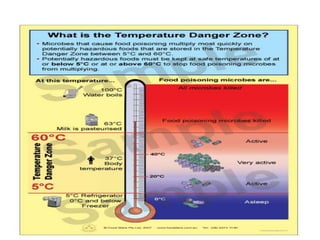
• Keep food out of the ‘danger zone’ (5oc to 63oc)
• Defrost food in the fridge and ensure that the
product is fully defrosted before cooking

Food-Hygiene

  • 1.
  • 2.
    Hazards Physical Contamination • Dirtand dust • Fragments of shell/bone • Fingernail • Parts of machinery • Broken glass
  • 3.
    Chemical contamination • Perfume •Cleaning products • Industrial chemicals
  • 4.
    Biological contamination • Yeast •Bacteria • Viruses • Moulds
  • 5.
    Food Poisoning • Bacterialcontamination is the most common cause of food poisoning.
  • 6.
    Food poisoning • Certaintypes of food are more likely to cause food poisoning than others – High risk foods • These are ready to eats foods such as: • Rice • Soft cheese • Meat and poultry
  • 7.
    Ideal conditions forbacteria The ideal conditions for bacterial growth are: • Food ,moisture ,warmth and time
  • 8.
    Your Hands! • Washyour hands regularly and properly to prevent cross contamination. • Before entering a food prep area • Between handling raw and high risk food • After taking a break • After going to the toilet • After blowing your nose • After carrying out cleaning jobs • After handling waste.
  • 9.
    Basics of Handwashing 1.Accessible handwashing sink 2. Hand soap -- liquid, powder, or bar and does not have to be antibacterial 3. Way to dry hands -- disposable towels, continuous towel system, or a hand dryer 4. Instant hand antiseptic -- not required
  • 10.
  • 13.
    Cross contamination • Contaminationcan occur at any time in food preparation or service. • Cross contamination occurs when bacteria are spread from one food to another. Examples: • From hands to boards and onto food • From cloths to equipment and onto food • From foods dripping onto each other
  • 14.
    Cross contamination • Clothsare a major source of cross contamination in food areas • Use disposable cloths/paper roll for cleaning tasks • Keep raw and ready to eat foods apart where possible store separately • Pests must be controlled as they can contaminate food, spread disease and damage premises. • Keep all foods covered at all times
  • 15.
    Cooking • It isessential to cook food properly to kill harmful bacteria • Cook, or reheat food to a minimum core temperature of 75oc for two seconds • If holding food hot, the minimum core temperature must not fall below 63oc
  • 18.
    Chilling • High riskfoods or foods with a use by date need to be kept chilled. • It is recommended to keep cold food at 5oc or below • Chill hot food to 5oc or below as quickly as possible • Frozen food should be stored at -18oc or colder • Keep food out of the ‘danger zone’ (5oc to 63oc) • Defrost food in the fridge and ensure that the product is fully defrosted before cooking