Legislation
 Food Act 1998
 Food Regulations 1999
The aim of this legislation is to ensure that food products, local as well as
imported, offered for sale are safe for public consumption.
Legislation
Food Act 1998 Section 16(3):
Any person who imports, prepares, supplies, distributes or sells any food which –
(a) is poisonous, harmful or injurious to health;
(b) contains any foreign matter;
(c) is unfit for human consumption;
(d) is the product of a diseased animal or an animal which has died otherwise than by slaughter;
(e) is the product of a decomposed vegetable or vegetable substance; or
(f) is adulterated,
shall commit an offence.
Food Act 1998 Section 17:
Penalty
Any person who commits an offence under this Act or any regulations made under this Act shall, on
conviction be liable to a fine of not less than 2,000 rupees and to imprisonment for a term not
exceeding 2 years.
Costs associated with food poisoning
Food business
 Bad reputation
 Loss of revenue
 Business closure
 Legal action and penalties
Consumer/economy
 Productivity loss
 Work absenteeism
 Medical expenses
 Hardship and suffering
 Permanent disability
 Death
Hazards that can contaminate food
Food can be contaminated by the following three main hazard types:
 Physical hazards (foreign objects) – metal, wood, glass, plastic, etc.
 Chemical hazards – bleach, caustic soda, detergents, pesticides, etc.
 Microbiological – bacteria, viruses, moulds and parasites.
Food that is contaminated with any of these hazards is unsafe and unsuitable to
eat.
Bacterial food poisoning
Bacteria are single-celled living micro-organisms. The most common form of food
poisoning is bacterial food poisoning. To survive and multiply, bacteria need:
 Water
 Food
 Correct temperatures
 Time
 Most, but not all, need oxygen
Under these conditions, bacteria will multiply by dividing in two every 10-20
minutes. After 6 hours, 1 bacterium can multiply into 262,144 bacteria, more
than enough to cause food poisoning.
How does bacteria enter a food
premises
Food poisoning bacteria come from five main sources:
 Food handlers (especially their hands).
 Raw foods, such as meat, poultry, shellfish and
vegetables.
 Pests and animals.
 Air and dust.
 Dirt and food waste.
Potentially hazardous foods
Potentially hazardous foods support the growth of
bacteria. They need to be kept at temperatures
either below 5°C or above 60°C to prevent the
growth of any food poisoning bacteria that may be
present in the food.
Examples of potentially hazardous foods include
meat, poultry, seafood, eggs, dairy foods, gravies
and cooked rice.
Causes of food poisoning
Food at incorrect temperatures
Under ideal conditions, bacteria multiply rapidly between 5°C and 60°C (the
danger zone for food).
 Below 5°C, bacteria multiply slower.
 At freezing temperatures, bacteria stop multiplying and become dormant.
Freezing does not kill bacteria.
 Most bacteria are killed at temperatures above 60°C.
Causes of food poisoning
Cross-contamination
 Cross-contamination occurs when food becomes contaminated with bacteria
from another source.
 Bacteria can be transported by hands, utensils, surfaces, equipment, tea
towels, raw food and pests.
 Common examples of cross contamination include unclean hands; dirty
knives; utensils; equipment and food contact surfaces (e.g. chopping boards);
blood dripping from raw foods; storing raw food with cooked foods; storing
food uncovered; and using dirty cleaning cloths and tea towels.
Causes of food poisoning
Poor personal hygiene
Examples of poor personal hygiene include:
 Dirty hands and clothing.
 Uncovered cuts and wounds.
 Long dirty fingernails.
 Excess jewellery on hands and wrists.
 Coughing and sneezing over food.
 Handling food while ill.
 Not washing hands after going to the toilet.
March 2022
Causes of food poisoning
Unclean food premises
Dirty kitchens increase the risk of cross-contamination from pests and
particles of food, grease and dirt.
Poor pest control
Common pests found in food premises include:
 rats and mice
 flies
 cockroaches.
These pests can carry food poisoning bacteria and may also cause physical
contamination of food with their droppings, eggs, fur and dead bodies.
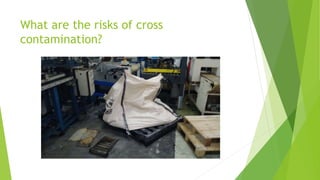
What are the risks of cross
contamination?
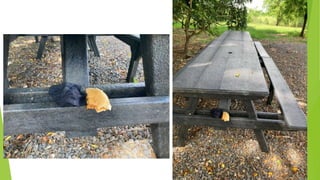
What are the risks of poor pest control?
March 2022
Prepared & Presentend by: Raksha Sarjua - Ops & Quality Executive
March 2022
Prepared & Presentend by: Raksha Sarjua - Ops & Quality Executive
Prevention of food poisoning
Temperature control
Minimise the time that potentially hazardous foods spend in the danger zone.
Always remember to keep:
 cold food cold at 5°C or colder
 hot food hot at 60°C or hotter.
All food businesses are required to obtain and use a probe thermometer,
accurate to +/-1°C to monitor the temperature of potentially hazardous foods.
Prevention of food poisoning
Avoid cross-contamination
 Keep food covered until use.
 Practise correct personal hygiene.
 Separate raw and cooked, and old and new food at all times.
 Use separate equipment and utensils when preparing raw meats, poultry and seafood.
 Clean and sanitise all equipment, utensils and food contact surfaces.
 Store chemicals separate to food.
Prevention of food poisoning
Personal hygiene
 Clean hands and clothing.
 Minimise jewellery on hands and
wrists.
 Tie-back or cover hair.
 Clean and short fingernails.
 Avoid unnecessary contact with food.
 Cover all cuts and sores with a
brightly coloured waterproof
dressing.
 Do not eat over food or food surfaces.
 Do not prepare food when you are ill.
 Avoid touching your face and hair.
 Do not cough or sneeze over food.
 Do not taste food with your fingers or
“double dip” with a spoon.
 If wearing gloves, change frequently.
Prevention of food poisoning
When should you wash your hands?
 Before commencing or resuming work.
 After using the toilet.
 After smoking.
 After handling rubbish.
 After using a handkerchief or tissue.
 After touching your hair or face.
 Before and after handling raw food.
 Before handling cooked food.
 After any cleaning task.
Prevention of food poisoning
Hand washing facilities
 Must be accessible to all food handlers.
 To be used only for the washing of hands.
 Provide soap and warm potable water.
 Provide disposable towels for drying hands.
 Provide a bin for the disposable towels.
Prevention of food poisoning
Cleaning
 Essential for the safe operation of any food business.
 Must be continuous and ongoing.
 Thoroughly clean and sanitise all food surfaces, equipment and utensils with hot water
and detergent and chemicals (sanitisers). Remember that most detergents do not kill
bacteria, but hot water and sanitisers do!
 Implement a cleaning schedule to ensure that cleaning is conducted on a regular basis
(including hard to reach places).
Prevention of food poisoning
Pest Control
 Keep them out – seal the food premises.
 Starve them out – keep food premises clean.
 Throw them out – conduct regular pest inspections or services.
 Don’t give them a home - remove all unnecessary equipment and
items.
 Report all pest sightings or evidence of pest activity to your
supervisor.
March 2022
Prevention of food poisoning
Waste management
 Place waste in plastic lined bins.
 Remove all waste from the premises as required.
 Empty and clean waste bins regularly.
 Ensure all external bins are covered.
 Protect external waste bin area from pests and birds.
Be a proactive food handler!
 Report or prevent all suspected breaches of food safety.
 Report all evidence of pest activity.
 Implement a cleaning schedule.
 Be aware food hazards are everywhere! Don’t give them
any opportunity to contaminate food.
 Always remember - prevention is better than cure.
FOOD SAFETY
STARTS WITH
YOU!
Questions & answers

Basic Food Hygiene & Safety Training.pptx

  • 2.
    Legislation  Food Act1998  Food Regulations 1999 The aim of this legislation is to ensure that food products, local as well as imported, offered for sale are safe for public consumption.
  • 3.
    Legislation Food Act 1998Section 16(3): Any person who imports, prepares, supplies, distributes or sells any food which – (a) is poisonous, harmful or injurious to health; (b) contains any foreign matter; (c) is unfit for human consumption; (d) is the product of a diseased animal or an animal which has died otherwise than by slaughter; (e) is the product of a decomposed vegetable or vegetable substance; or (f) is adulterated, shall commit an offence. Food Act 1998 Section 17: Penalty Any person who commits an offence under this Act or any regulations made under this Act shall, on conviction be liable to a fine of not less than 2,000 rupees and to imprisonment for a term not exceeding 2 years.
  • 4.
    Costs associated withfood poisoning Food business  Bad reputation  Loss of revenue  Business closure  Legal action and penalties Consumer/economy  Productivity loss  Work absenteeism  Medical expenses  Hardship and suffering  Permanent disability  Death
  • 5.
    Hazards that cancontaminate food Food can be contaminated by the following three main hazard types:  Physical hazards (foreign objects) – metal, wood, glass, plastic, etc.  Chemical hazards – bleach, caustic soda, detergents, pesticides, etc.  Microbiological – bacteria, viruses, moulds and parasites. Food that is contaminated with any of these hazards is unsafe and unsuitable to eat.
  • 6.
    Bacterial food poisoning Bacteriaare single-celled living micro-organisms. The most common form of food poisoning is bacterial food poisoning. To survive and multiply, bacteria need:  Water  Food  Correct temperatures  Time  Most, but not all, need oxygen Under these conditions, bacteria will multiply by dividing in two every 10-20 minutes. After 6 hours, 1 bacterium can multiply into 262,144 bacteria, more than enough to cause food poisoning.
  • 7.
    How does bacteriaenter a food premises Food poisoning bacteria come from five main sources:  Food handlers (especially their hands).  Raw foods, such as meat, poultry, shellfish and vegetables.  Pests and animals.  Air and dust.  Dirt and food waste.
  • 8.
    Potentially hazardous foods Potentiallyhazardous foods support the growth of bacteria. They need to be kept at temperatures either below 5°C or above 60°C to prevent the growth of any food poisoning bacteria that may be present in the food. Examples of potentially hazardous foods include meat, poultry, seafood, eggs, dairy foods, gravies and cooked rice.
  • 9.
    Causes of foodpoisoning Food at incorrect temperatures Under ideal conditions, bacteria multiply rapidly between 5°C and 60°C (the danger zone for food).  Below 5°C, bacteria multiply slower.  At freezing temperatures, bacteria stop multiplying and become dormant. Freezing does not kill bacteria.  Most bacteria are killed at temperatures above 60°C.
  • 10.
    Causes of foodpoisoning Cross-contamination  Cross-contamination occurs when food becomes contaminated with bacteria from another source.  Bacteria can be transported by hands, utensils, surfaces, equipment, tea towels, raw food and pests.  Common examples of cross contamination include unclean hands; dirty knives; utensils; equipment and food contact surfaces (e.g. chopping boards); blood dripping from raw foods; storing raw food with cooked foods; storing food uncovered; and using dirty cleaning cloths and tea towels.
  • 11.
    Causes of foodpoisoning Poor personal hygiene Examples of poor personal hygiene include:  Dirty hands and clothing.  Uncovered cuts and wounds.  Long dirty fingernails.  Excess jewellery on hands and wrists.  Coughing and sneezing over food.  Handling food while ill.  Not washing hands after going to the toilet.
  • 12.
  • 13.
    Causes of foodpoisoning Unclean food premises Dirty kitchens increase the risk of cross-contamination from pests and particles of food, grease and dirt. Poor pest control Common pests found in food premises include:  rats and mice  flies  cockroaches. These pests can carry food poisoning bacteria and may also cause physical contamination of food with their droppings, eggs, fur and dead bodies.
  • 14.
    What are therisks of cross contamination?
  • 15.
    What are therisks of poor pest control? March 2022 Prepared & Presentend by: Raksha Sarjua - Ops & Quality Executive
  • 16.
    March 2022 Prepared &Presentend by: Raksha Sarjua - Ops & Quality Executive
  • 17.
    Prevention of foodpoisoning Temperature control Minimise the time that potentially hazardous foods spend in the danger zone. Always remember to keep:  cold food cold at 5°C or colder  hot food hot at 60°C or hotter. All food businesses are required to obtain and use a probe thermometer, accurate to +/-1°C to monitor the temperature of potentially hazardous foods.
  • 18.
    Prevention of foodpoisoning Avoid cross-contamination  Keep food covered until use.  Practise correct personal hygiene.  Separate raw and cooked, and old and new food at all times.  Use separate equipment and utensils when preparing raw meats, poultry and seafood.  Clean and sanitise all equipment, utensils and food contact surfaces.  Store chemicals separate to food.
  • 19.
    Prevention of foodpoisoning Personal hygiene  Clean hands and clothing.  Minimise jewellery on hands and wrists.  Tie-back or cover hair.  Clean and short fingernails.  Avoid unnecessary contact with food.  Cover all cuts and sores with a brightly coloured waterproof dressing.  Do not eat over food or food surfaces.  Do not prepare food when you are ill.  Avoid touching your face and hair.  Do not cough or sneeze over food.  Do not taste food with your fingers or “double dip” with a spoon.  If wearing gloves, change frequently.
  • 20.
    Prevention of foodpoisoning When should you wash your hands?  Before commencing or resuming work.  After using the toilet.  After smoking.  After handling rubbish.  After using a handkerchief or tissue.  After touching your hair or face.  Before and after handling raw food.  Before handling cooked food.  After any cleaning task.
  • 21.
    Prevention of foodpoisoning Hand washing facilities  Must be accessible to all food handlers.  To be used only for the washing of hands.  Provide soap and warm potable water.  Provide disposable towels for drying hands.  Provide a bin for the disposable towels.
  • 22.
    Prevention of foodpoisoning Cleaning  Essential for the safe operation of any food business.  Must be continuous and ongoing.  Thoroughly clean and sanitise all food surfaces, equipment and utensils with hot water and detergent and chemicals (sanitisers). Remember that most detergents do not kill bacteria, but hot water and sanitisers do!  Implement a cleaning schedule to ensure that cleaning is conducted on a regular basis (including hard to reach places).
  • 23.
    Prevention of foodpoisoning Pest Control  Keep them out – seal the food premises.  Starve them out – keep food premises clean.  Throw them out – conduct regular pest inspections or services.  Don’t give them a home - remove all unnecessary equipment and items.  Report all pest sightings or evidence of pest activity to your supervisor.
  • 24.
  • 25.
    Prevention of foodpoisoning Waste management  Place waste in plastic lined bins.  Remove all waste from the premises as required.  Empty and clean waste bins regularly.  Ensure all external bins are covered.  Protect external waste bin area from pests and birds.
  • 26.
    Be a proactivefood handler!  Report or prevent all suspected breaches of food safety.  Report all evidence of pest activity.  Implement a cleaning schedule.  Be aware food hazards are everywhere! Don’t give them any opportunity to contaminate food.  Always remember - prevention is better than cure.
  • 27.
  • 28.