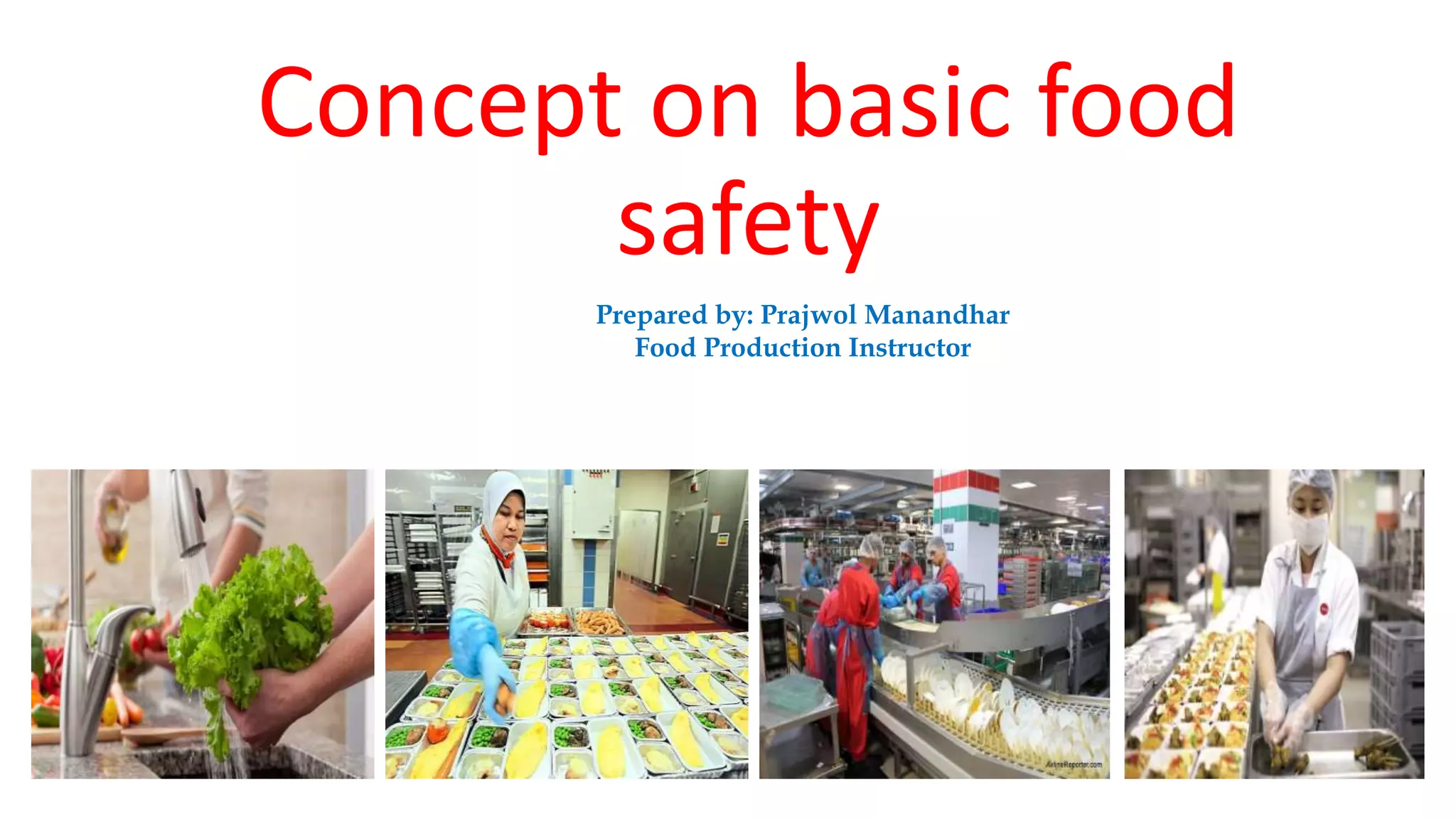

Concept on basic food
safety
Prepared by: Prajwol Manandhar
Food Production Instructor
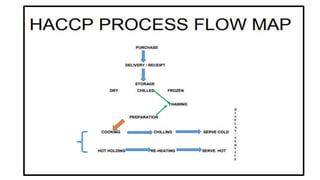
*It is a written plan or rules
that defines the procedures for
maintaining control of affected
food at the critical control
points of food preparation or
processing.
*It is a plan stating how food is
to be handled so consumers do
not get sick
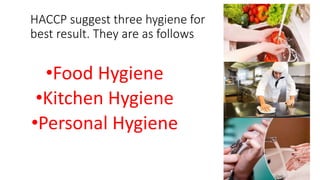
HACCP suggest three hygiene for
best result. They are as follows
•Food Hygiene
•Kitchen Hygiene
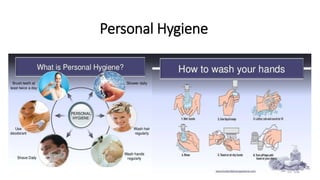
•Personal Hygiene
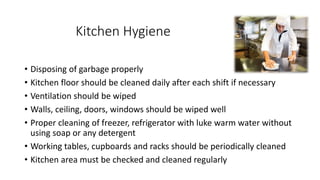
Kitchen Hygiene
• Disposing of garbage properly
• Kitchen floor should be cleaned daily after each shift if necessary
• Ventilation should be wiped
• Walls, ceiling, doors, windows should be wiped well
• Proper cleaning of freezer, refrigerator with luke warm water without
using soap or any detergent
• Working tables, cupboards and racks should be periodically cleaned
• Kitchen area must be checked and cleaned regularly
Personal Hygiene
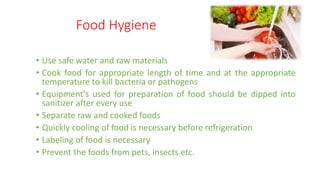
Food Hygiene
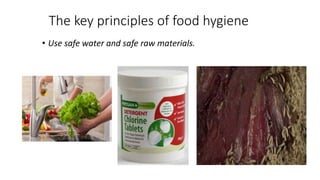
• Use safe water and raw materials
• Cook food for appropriate length of time and at the appropriate
temperature to kill bacteria or pathogens
• Equipment's used for preparation of food should be dipped into
sanitizer after every use
• Separate raw and cooked foods
• Quickly cooling of food is necessary before refrigeration
• Labeling of food is necessary
• Prevent the foods from pets, insects etc.
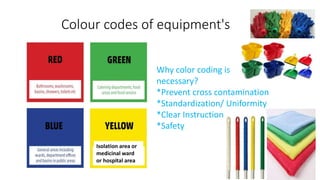
Colour codes of equipment's
Isolation area or
medicinal ward
or hospital area
Why color coding is
necessary?
*Prevent cross contamination
*Standardization/ Uniformity
*Clear Instruction
*Safety
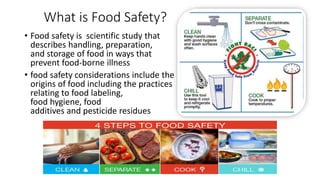
What is Food Safety?
• Food safety is scientific study that
describes handling, preparation,
and storage of food in ways that
prevent food-borne illness
• food safety considerations include the
origins of food including the practices
relating to food labeling,
food hygiene, food
additives and pesticide residues
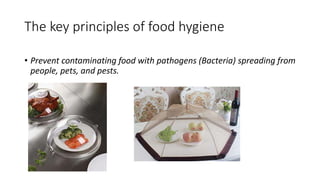
The key principles of food hygiene
• Prevent contaminating food with pathogens (Bacteria) spreading from
people, pets, and pests.
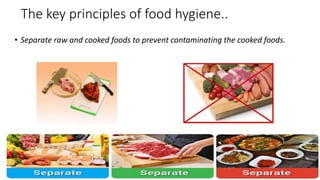
The key principles of food hygiene..
• Separate raw and cooked foods to prevent contaminating the cooked foods.
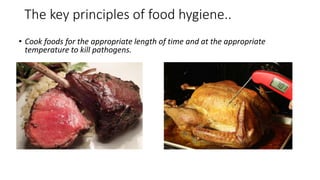
The key principles of food hygiene..
• Cook foods for the appropriate length of time and at the appropriate
temperature to kill pathogens.
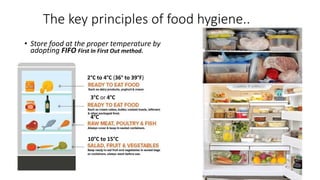
The key principles of food hygiene..
• Store food at the proper temperature by
adopting FIFO First In First Out method.
2°C to 4°C (36° to 39°F)
3°C or 4°C
4°C
10°C to 15°C
The key principles of food hygiene
• Use safe water and safe raw materials.
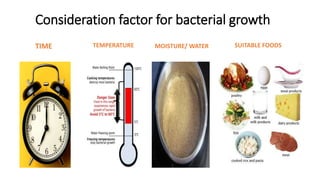
Consideration factor for bacterial growth
TIME TEMPERATURE MOISTURE/ WATER SUITABLE FOODS
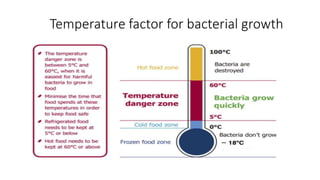
Temperature factor for bacterial growth
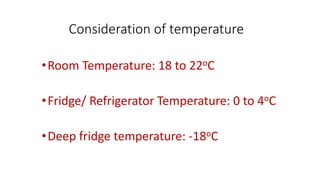
Consideration of temperature
•Room Temperature: 18 to 22oC
•Fridge/ Refrigerator Temperature: 0 to 4oC
•Deep fridge temperature: -18oC
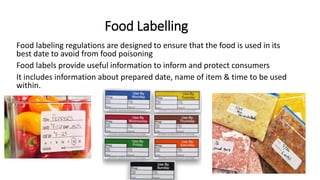
Food Labelling
Food labeling regulations are designed to ensure that the food is used in its
best date to avoid from food poisoning
Food labels provide useful information to inform and protect consumers
It includes information about prepared date, name of item & time to be used
within.
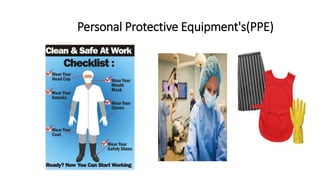
Personal Protective Equipment's(PPE)
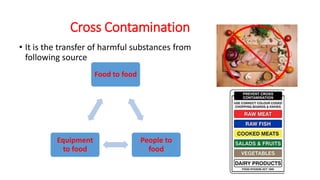
Cross Contamination
• It is the transfer of harmful substances from
following source
Food to food
People to
food
Equipment
to food
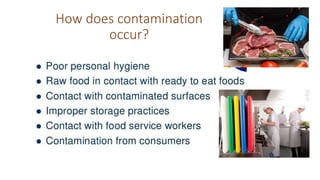
How does contamination
occur?
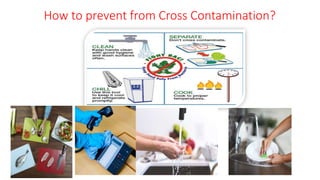
How to prevent from Cross Contamination?
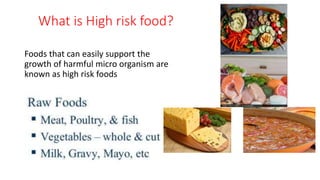
What is High risk food?
Foods that can easily support the
growth of harmful micro organism are
known as high risk foods
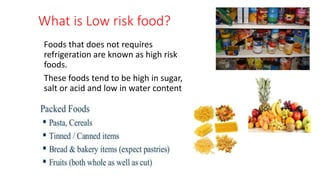
What is Low risk food?
Foods that does not requires
refrigeration are known as high risk
foods.
These foods tend to be high in sugar,
salt or acid and low in water content
Types of bacteria
A. Salmonella- It is found in raw meat, eggs and
poultry
B. Noro virus- It is found in shell fish
C. Listeria- It is found in Raw milk and raw milk
based products
D. Fungus- It is found in moist foods like sauce,
gravies
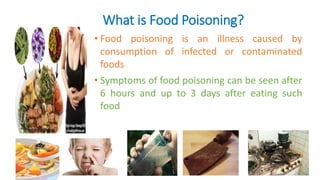
What is Food Poisoning?
• Food poisoning is an illness caused by
consumption of infected or contaminated
foods
• Symptoms of food poisoning can be seen after
6 hours and up to 3 days after eating such
food
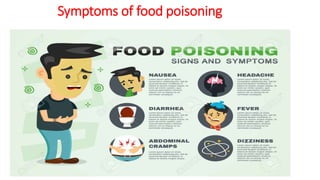
Symptoms of food poisoning
Preventive measures for food poisoning
• Attention to personal hygiene
• Correct storage of food stuffs at right temperature
• Correct re heating of food
• Quick cooling of food before refrigeration
• Hygienic wash up procedure
• Educating staff about causes of food poisoning
Grooming standard

Basic food safety for flight catering

  • 1.
    Concept on basicfood safety Prepared by: Prajwol Manandhar Food Production Instructor
  • 2.
    *It is awritten plan or rules that defines the procedures for maintaining control of affected food at the critical control points of food preparation or processing. *It is a plan stating how food is to be handled so consumers do not get sick
  • 3.
    HACCP suggest threehygiene for best result. They are as follows •Food Hygiene •Kitchen Hygiene •Personal Hygiene
  • 4.
    Kitchen Hygiene • Disposingof garbage properly • Kitchen floor should be cleaned daily after each shift if necessary • Ventilation should be wiped • Walls, ceiling, doors, windows should be wiped well • Proper cleaning of freezer, refrigerator with luke warm water without using soap or any detergent • Working tables, cupboards and racks should be periodically cleaned • Kitchen area must be checked and cleaned regularly
  • 5.
  • 6.
    Food Hygiene • Usesafe water and raw materials • Cook food for appropriate length of time and at the appropriate temperature to kill bacteria or pathogens • Equipment's used for preparation of food should be dipped into sanitizer after every use • Separate raw and cooked foods • Quickly cooling of food is necessary before refrigeration • Labeling of food is necessary • Prevent the foods from pets, insects etc.
  • 23.
    Colour codes ofequipment's Isolation area or medicinal ward or hospital area Why color coding is necessary? *Prevent cross contamination *Standardization/ Uniformity *Clear Instruction *Safety
  • 24.
    What is FoodSafety? • Food safety is scientific study that describes handling, preparation, and storage of food in ways that prevent food-borne illness • food safety considerations include the origins of food including the practices relating to food labeling, food hygiene, food additives and pesticide residues
  • 25.
    The key principlesof food hygiene • Prevent contaminating food with pathogens (Bacteria) spreading from people, pets, and pests.
  • 26.
    The key principlesof food hygiene.. • Separate raw and cooked foods to prevent contaminating the cooked foods.
  • 27.
    The key principlesof food hygiene.. • Cook foods for the appropriate length of time and at the appropriate temperature to kill pathogens.
  • 28.
    The key principlesof food hygiene.. • Store food at the proper temperature by adopting FIFO First In First Out method. 2°C to 4°C (36° to 39°F) 3°C or 4°C 4°C 10°C to 15°C
  • 29.
    The key principlesof food hygiene • Use safe water and safe raw materials.
  • 30.
    Consideration factor forbacterial growth TIME TEMPERATURE MOISTURE/ WATER SUITABLE FOODS
  • 31.
    Temperature factor forbacterial growth
  • 32.
    Consideration of temperature •RoomTemperature: 18 to 22oC •Fridge/ Refrigerator Temperature: 0 to 4oC •Deep fridge temperature: -18oC
  • 33.
    Food Labelling Food labelingregulations are designed to ensure that the food is used in its best date to avoid from food poisoning Food labels provide useful information to inform and protect consumers It includes information about prepared date, name of item & time to be used within.
  • 34.
  • 35.
    Cross Contamination • Itis the transfer of harmful substances from following source Food to food People to food Equipment to food
  • 36.
  • 37.
    How to preventfrom Cross Contamination?
  • 38.
    What is Highrisk food? Foods that can easily support the growth of harmful micro organism are known as high risk foods
  • 39.
    What is Lowrisk food? Foods that does not requires refrigeration are known as high risk foods. These foods tend to be high in sugar, salt or acid and low in water content
  • 40.
    Types of bacteria A.Salmonella- It is found in raw meat, eggs and poultry B. Noro virus- It is found in shell fish C. Listeria- It is found in Raw milk and raw milk based products D. Fungus- It is found in moist foods like sauce, gravies
  • 41.
    What is FoodPoisoning? • Food poisoning is an illness caused by consumption of infected or contaminated foods • Symptoms of food poisoning can be seen after 6 hours and up to 3 days after eating such food
  • 42.
  • 43.
    Preventive measures forfood poisoning • Attention to personal hygiene • Correct storage of food stuffs at right temperature • Correct re heating of food • Quick cooling of food before refrigeration • Hygienic wash up procedure • Educating staff about causes of food poisoning
  • 44.