Food Industry
        Retail
Pam Grey, Hugo Jurado
Connie Kwan, Rick Wells
 Yetunde Schuhmann
Agenda
1. Trends

2. Impacts

3. Why Go Green

4. Frameworks

5. Recommendations
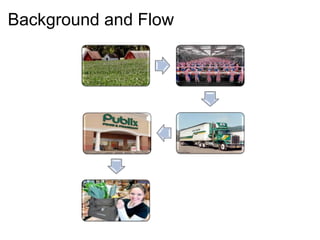
Background and Flow
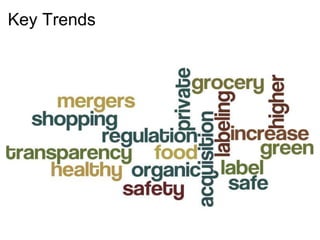
Key Trends
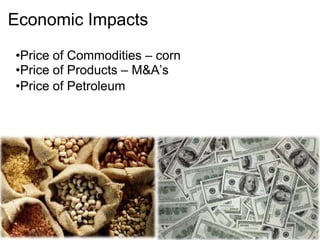
Economic Impacts
•Price of Commodities – corn
•Price of Products – M&A’s
•Price of Petroleum
Social Impacts

•Fair Trade
•Local Economic Conditions
•Human Rights Issues
      (child labor, safety)
•Social Philanthropy
•Health & Nutrition
•Supplier Diversity
Environmental Impacts
Farming
  –Use of pesticides

Packaging
  – Resource demand
  – Waste generation
  – Energy consumption

Transportation
  – Food miles
  – Fossil fuel consumption
  – GHG emissions

Water Shortages
Why Employ Sustainable Practices?


           •1. Customer Demand

           • 2. Stay Competitive

           • 3. Financial Benefits
1. Customer Demand

Of Four Key Consumer Trends
    -Three are sustainability related:
  1. Simplicity
                  2. Sustainability
                  3. Value
                  4. Communication & transparency
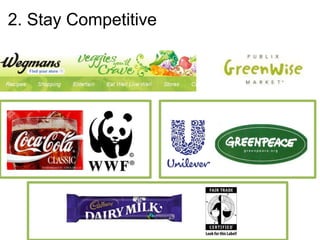
2. Stay Competitive
3. Financial Benefit

Energy Efficiency
  –Building - reduce 3-10% = $8000 per year
  –Transport - one mpg gain = $7000 per year

Recycling
  – FMI members- $50 million in revenue

Shift in Supply Chain
  –Less packaging

Employee Engagement
Industry Framework?
No Industry Wide Common Framework

The Basics
-Low hanging fruit

Opportunity
-Several areas

Dollars
     -Sustainability is a presented as a
     business decision

Trend
-Members Sharing within the Industry
Guidelines and Best Practices
Interview with Food Marketing Institute
  - “Overcomplicated” for the average grocer
  - Carbon Footprint Calculator
  - Common KPI's are a challenge to find

Groups and Associations in the Space
  - Grocers association
  - Global packaging project


Best Practices
  - Wegmanns
  - Publix
  - Safeway
Predictions & Recommendations
    Where is the Industry Heading
    High food prices
          Sustainability

    Greatest Opportunities Today
    Increased efficiency and productivity
          Customer loyalty
          Employee relations

    Recommendations
    FMI framework
          Best practices of innovators in the industry
References
•http://www.safeway.com/CMS/includes/docs/2009%20CSR%20Report.pdf

• http://www.gmaonline.org/downloads/wygwam/sustainability-balancing.pdf

•Institute, F. M. (n.d.). FMI Sustainability Starter Kit. Retrieved February 26, 2011, from
FMI.org: http://www.fmi.org/docs/sustainability/sust_exec_summary_toolkit.pdf

•Institute, F. M. (n.d.). Perserving the Planet Through Programs that make Business Sense.
Retrieved February 25, 2011, from FMI.org:
http://www.fmi.org/docs/sustainability/Sustainability_Initiative.pdf
•Shea, R. (2011, January). 2011 Supermarket Trends: Good for Food Manufacturers and
Retailers, Tough for Consumers - Seeking Alpha. Retrieved February 3, 2011, from
http://seekingalpha.com/article/247930-2011-supermarket-trends-good-for-food-
manufacturers-and-retailers-tough-for-consumers
•Analyst Study on Safeway Inc. and Whole Foods Market Inc. - Grocery Stores Increasing
Healthy Eating Options as Customers Battle With New Year's Resolutions - Barrons.com.
(n.d.). . Retrieved March 17, 2011, from http://online.barrons.com/article/PR-CO-20110208-
906581.html

Sustainability Assessment - Retail Food industry

  • 1.
    Food Industry Retail Pam Grey, Hugo Jurado Connie Kwan, Rick Wells Yetunde Schuhmann
  • 2.
    Agenda 1. Trends 2. Impacts 3.Why Go Green 4. Frameworks 5. Recommendations
  • 3.
  • 4.
  • 5.
    Economic Impacts •Price ofCommodities – corn •Price of Products – M&A’s •Price of Petroleum
  • 6.
    Social Impacts •Fair Trade •LocalEconomic Conditions •Human Rights Issues (child labor, safety) •Social Philanthropy •Health & Nutrition •Supplier Diversity
  • 7.
    Environmental Impacts Farming –Use of pesticides Packaging – Resource demand – Waste generation – Energy consumption Transportation – Food miles – Fossil fuel consumption – GHG emissions Water Shortages
  • 8.
    Why Employ SustainablePractices? •1. Customer Demand • 2. Stay Competitive • 3. Financial Benefits
  • 9.
    1. Customer Demand OfFour Key Consumer Trends -Three are sustainability related: 1. Simplicity 2. Sustainability 3. Value 4. Communication & transparency
  • 10.
  • 11.
    3. Financial Benefit EnergyEfficiency –Building - reduce 3-10% = $8000 per year –Transport - one mpg gain = $7000 per year Recycling – FMI members- $50 million in revenue Shift in Supply Chain –Less packaging Employee Engagement
  • 12.
    Industry Framework? No IndustryWide Common Framework The Basics -Low hanging fruit Opportunity -Several areas Dollars -Sustainability is a presented as a business decision Trend -Members Sharing within the Industry
  • 13.
    Guidelines and BestPractices Interview with Food Marketing Institute - “Overcomplicated” for the average grocer - Carbon Footprint Calculator - Common KPI's are a challenge to find Groups and Associations in the Space - Grocers association - Global packaging project Best Practices - Wegmanns - Publix - Safeway
  • 14.
    Predictions & Recommendations Where is the Industry Heading High food prices Sustainability Greatest Opportunities Today Increased efficiency and productivity Customer loyalty Employee relations Recommendations FMI framework Best practices of innovators in the industry
  • 15.
    References •http://www.safeway.com/CMS/includes/docs/2009%20CSR%20Report.pdf • http://www.gmaonline.org/downloads/wygwam/sustainability-balancing.pdf •Institute, F.M. (n.d.). FMI Sustainability Starter Kit. Retrieved February 26, 2011, from FMI.org: http://www.fmi.org/docs/sustainability/sust_exec_summary_toolkit.pdf •Institute, F. M. (n.d.). Perserving the Planet Through Programs that make Business Sense. Retrieved February 25, 2011, from FMI.org: http://www.fmi.org/docs/sustainability/Sustainability_Initiative.pdf •Shea, R. (2011, January). 2011 Supermarket Trends: Good for Food Manufacturers and Retailers, Tough for Consumers - Seeking Alpha. Retrieved February 3, 2011, from http://seekingalpha.com/article/247930-2011-supermarket-trends-good-for-food- manufacturers-and-retailers-tough-for-consumers •Analyst Study on Safeway Inc. and Whole Foods Market Inc. - Grocery Stores Increasing Healthy Eating Options as Customers Battle With New Year's Resolutions - Barrons.com. (n.d.). . Retrieved March 17, 2011, from http://online.barrons.com/article/PR-CO-20110208- 906581.html

Editor's Notes

  • #2 Good morning, my name is pam grey and my teammates are Our topic is the food industry – specifically the demand side of foodsome of the companies we focused on Safeway, wegmans and publix
  • #3 We will share our research with youI will take you through the Key TrendsHugo will walk us through how this industry is affected by economic, social and environmental impacts and some solutionsConnie will show us Why the industry needs to move in the direction of sustainabilityRick will talk about What type of frameworks can be used to facilitate sustainability in this industry And Yetunde will close it out with our team’s predictions and recommendations
  • #4 Approximately 1.6 trillion dollars is spend on food in the US each year – this industry touches almost every American. This is how we hunt and gather for ourselves and our families. We spend about 12% of our income on food. Add process flow – instead of trading post and general store.
  • #5 Some of the key trends that stood out for usPrice Increases of food commodities this coupled with the rising oil prices has a significant cost impact on food and margins – hugo will talk more about this laterTransparency/food safety – consumers are demanding to know more about their food supply chain – remember when 550 million eggs were recalled or ecoli scare in packaged spinach. Consumers are wanting more regulation around food safety and more transparencyFood manufacturers are developing products that are deemed healthier– beverage manufacturers are putting vitamins in our water and bread companies are adding fiber to our English muffins. Bacardi’s rum flavor with aloe in it.Going “green” – this is evident by larger and more predominant organics sections fresh foods and dry goods. According to a deliot study The Grocery format had the highest number of green product purchasers, so this is where the retailer are trending - There is also a shift toward Private label and value shopping – trader joes is a good example of successful private label.Mergers and acquisition to increase – big companies like pepsico and nestle can only grow by purchasing smaller ones and taking over their market share
  • #14 KPI’s and metrics are simply too complicated for the average grocer.FMI is helping their members move forward by offering several “guidelines” – they even have a carbon footprint calculatior for their members on their websiteA few but not a multitude of assitance in the space helping to provide frameworks for grocersAccording to Jeanne at FMI – 2 examples of industry leaders are wegmans an publix. I also wanted to point out that safeway cares about you 
  • #15 PredictionsBased upon the industry trends, the food industry is heading towards higher prices for food while simultaneously the industry is attempting to become more sustainable in areas such as food safety, transparency, and healthier consumer products. However, if it has not been clear up to this point from colleagues slides, the food industry is an inherently wasteful industry with impacts ranging from social to economic to environmental. Companies in the food industry are beginning to understand that the less waste they accumulate the more money the industry will save in the future. In addition, from a demand side perspective the customers want this. The greatest opportunities in the various areas we listed are in increased efficiency and productivity especially with regards to transportation and packaging, employee relations from a holistic perspective, and building customer loyalty, specifically as it pertains to educating the consumer about sustainability and food.Our recommendations:In order for the industry to capitalize on these “greatest opportunities” for growth companies need to use FMI and its framework as a model for the industry in terms of guidelines and best practices both internationally and domestically. Also we believe companies should look to such innovator leaders as Wegmans, Safeway, and Publix as case studies for implementing best practices in a food industry retail environment that will lead to a more sustainable industry.