MFS Conference, New Delhi - India 6 June, 2011
Agenda:  Introduction to GMV and MFS Performances in processing technology and products  Ambitions with market led approach Innovations in cooperation, research and education Conclusion
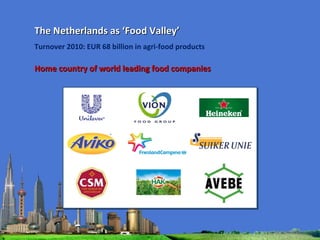
The Netherlands as ‘Food Valley’ Turnover 2010: EUR 68 billion in agri-food products Home country of world leading food companies
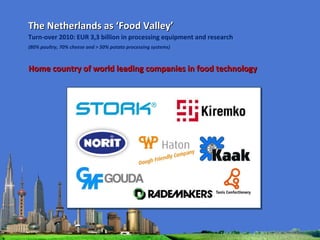
The Netherlands as ‘Food Valley’ Turn-over 2010: EUR 3,3 billion in processing equipment and research (80% poultry, 70% cheese and > 50% potato processing systems) Home country of world leading companies in food technology
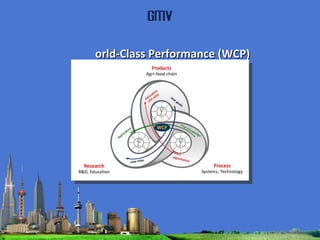
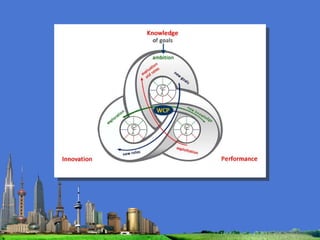
World-Class Performance (WCP)
Positioning:  Center of excellence “Food & Flower” Food & Nutrition Delta - Food Valley – EUKP7 – Genomics – 9 Dutch Topics Research: Food & Nutrition Delta Safety - Nutrition & Health - Sensory Science and Structure – Behavior Education: Platform AcedeMI - IO / SVML  (Social) Innovation - ICT – Know-how sharing World-class performance initiatives:
Road to Success: Ambition Innovation Performance
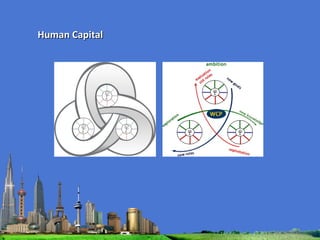
Human Capital
 
Quantity and Quality Nutrition value and medicinal functions Poverty elimination and crop rotation Energy security and sustainability Natural disaster relief Legalization & control Food Safety and Security
Huge area, low yields Breeding and extension of new varieties Seeds supply systems and certification Chain quality control and management Logistics  Supply chain management Added value creation Constrains in India (and other BRICS – countries)
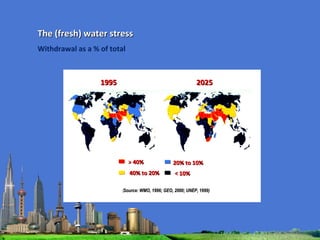
The (fresh) water stress Withdrawal as a % of total  > 40% 40% to 20% 20% to 10% < 10% 1995 2025 ( Source: WMO, 1996; GEO, 2000; UNEP, 1999)
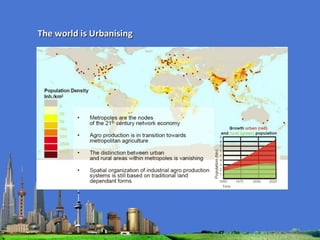
The world is Urbanising
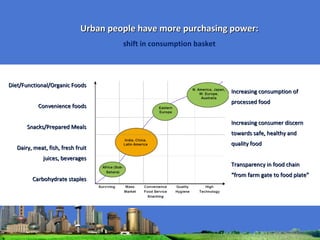
Urban people have more purchasing power: shift in consumption basket Diet/Functional/Organic Foods Convenience foods Snacks/Prepared Meals Dairy, meat, fish, fresh fruit juices, beverages Carbohydrate staples Increasing consumption of processed food Increasing consumer discern towards safe, healthy and quality food Transparency in food chain “from farm gate to food plate”
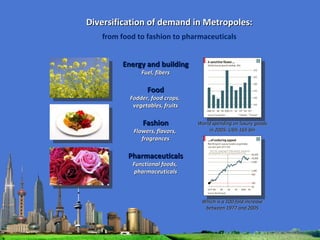
Diversification of demand in Metropoles: from food to fashion to pharmaceuticals Energy and building Fuel, fibers Food Fodder, food crops,  vegetables, fruits Fashion Flowers, flavors,  fragrances Pharmaceuticals Functional foods,  pharmaceuticals World spending on luxury goods in 2005: US% 165 bln Which is a 100-fold increase between 1977 and 2005
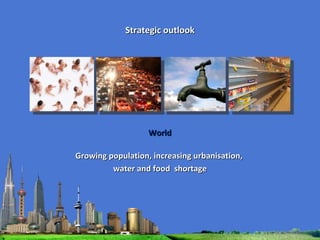
Strategic outlook World Growing population, increasing urbanisation,  water and food  shortage
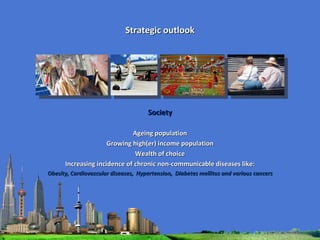
Society Ageing population Growing high(er) income population Wealth of choice Increasing incidence of chronic non-communicable diseases like: Obesity, Cardiovascular diseases,  Hypertension,  Diabetes mellitus and various cancers Strategic outlook
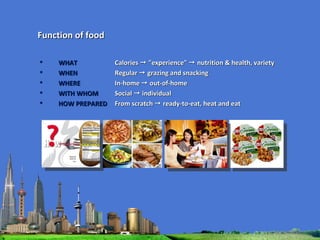
WHAT  Calories    &quot;experience&quot;    nutrition & health, variety WHEN Regular    grazing and snacking WHERE In-home    out-of-home WITH WHOM Social    individual HOW PREPARED From scratch    ready-to-eat, heat and eat Function of food
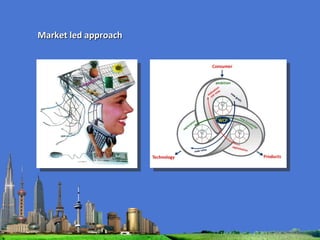
Market led approach
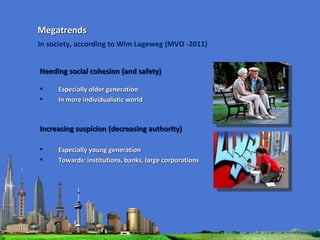
Needing social cohesion (and safety) Especially older generation In more individualistic world Increasing suspicion (decreasing authority) Especially young generation Towards: institutions, banks, large corporations In society, according to Wim Lageweg (MVO -2011) Megatrends
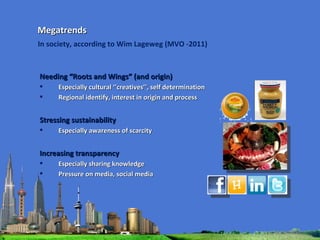
Needing “Roots and Wings” (and origin) Especially cultural ‘’creatives’’, self determination Regional identify, interest in origin and process Stressing sustainability Especially awareness of scarcity Increasing transparency Especially sharing knowledge Pressure on media, social media Megatrends In society, according to Wim Lageweg (MVO -2011)
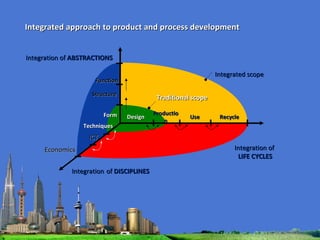
Integrated approach to product and process development Function Structure Form Integration of LIFE CYCLES Integrated scope Techniques ICT Production Design Use Traditional scope Integration   of  DISCIPLINES Integration of  ABSTRACTIONS Recycle Economics
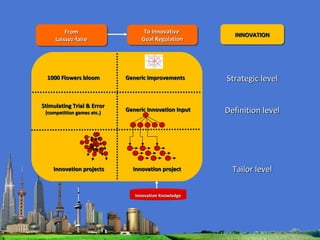
Innovation projects Innovation project Generic Innovation Input Generic Improvements Stimulating Trial & Error (competition games etc.) 1000 Flowers bloom From Laissez-faire To Innovative  Goal Regulation INNOVATION Strategic level Definition level Tailor level Innovation Knowledge
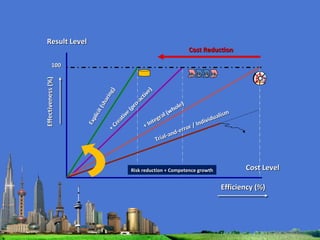
Effectiveness (%) Efficiency (%) 100 Trial-and-error / Individualism + Integral (whole) Explicit (sharing) Risk reduction + Competence growth + Creative (pro-active) Cost Level Result Level Cost Reduction
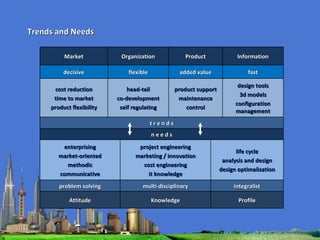
Trends and Needs Market Organization Product Information decisive flexible added value fast cost reduction time to market product flexibility head-tail co-development self regulating product support maintenance control design tools 3d models configuration management t r e n d s n e e d s enterprising market-oriented methodic communicative project engineering marketing / innovation cost engineering it knowledge life cycle analysis and design design optimalization problem solving multi-disciplinary integralist Attitude Knowledge Profile
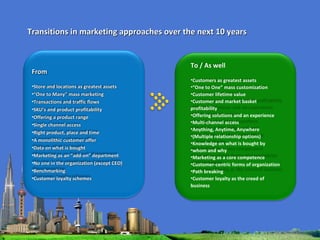
Transitions in marketing approaches over the next 10 years From Store  and l ocations as greatest assets “ One to Many” mass marketing Transactions and traffic flows SKU’s and product profitability Offering a product range Single channel access Right product, place  and  time A monolithic customer offer Data on what is bought Marketing as an “add-on” department No one in the organization (except CEO)  Benchmarking Customer loyalty schemes To / As well Customers as greatest assets “ One  to  One ” mass customization Customer lifetime value Customer and market basket profitability Offering solutions and an experience Multi-channel access Anything, Anytime, Anywhere (Multiple relationship options) Knowledge on what is bought by  whom and why Marketing as a core competence Customer-centric forms of organization Path breaking Customer loyalty as the creed of business
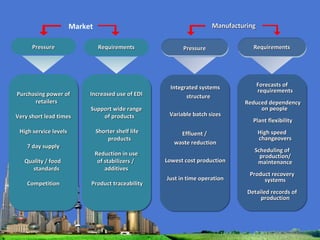
Requirements Purchasing power of retailers Very short lead times High service levels 7 day supply Quality / food  standards Competition Pressure Increased use of EDI Support wide range  of products Shorter shelf life products Reduction in use  of stabilizers /  additives Product traceability Market Requirements Integrated systems structure Variable batch sizes Effluent /  waste reduction Lowest cost production Just in time operation Pressure Forecasts of requirements Reduced dependency on people  Plant flexibility High speed changeovers Scheduling of production/ maintenance Product recovery systems Detailed records of production Manufacturing
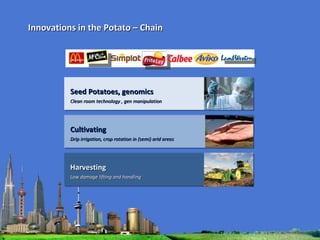
Innovations in the Potato – Chain Harvesting Low damage lifting and handling Seed Potatoes, genomics Clean room technology , gen manipulation Cultivating Drip irrigation, crop rotation in (semi) arid areas
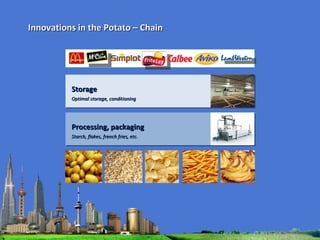
Innovations in the Potato – Chain Storage  Optimal storage, conditioning Processing, packaging Starch, flakes, french fries, etc.
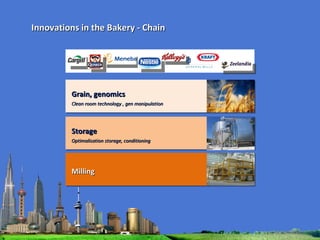
Innovations in the Bakery - Chain Storage Optimalisation storage, conditioning Grain, genomics Clean room technology , gen manipulation Milling
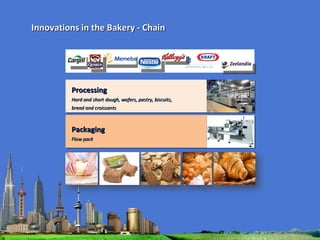
Innovations in the Bakery - Chain Processing Hard and short dough, wafers, pastry, biscuits,  bread and croissants Packaging Flow pack
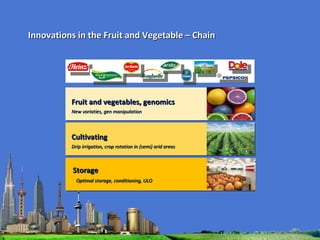
Innovations in the Fruit and Vegetable – Chain Cultivating Drip irrigation, crop rotation in (semi) arid areas Fruit and vegetables, genomics New variaties, gen manipulation Storage  Optimal storage, conditioning, ULO
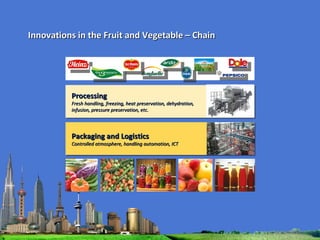
Innovations in the Fruit and Vegetable – Chain Processing  Fresh handling, freezing, heat preservation, dehydration, infusion, pressure preservation, etc.  Packaging and Logistics Controlled atmosphere, handling automation, ICT
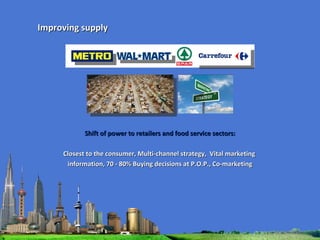
Shift of power to retailers and food service sectors: Closest to the consumer, Multi-channel strategy,  Vital marketing  information, 70 - 80% Buying decisions at P.O.P., Co-marketing Improving supply
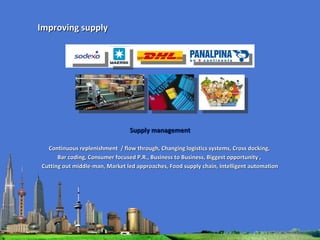
Supply management Continuous replenishment  / flow through, Changing logistics systems, Cross docking,  Bar coding, Consumer focused P.R., Business to Business, Biggest opportunity ,  Cutting out middle-man, Market led approaches, Food supply chain, Intelligent automation Improving supply
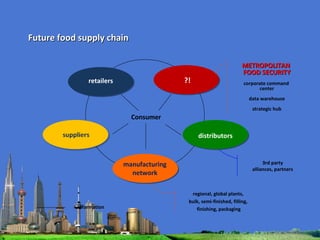
Consumer 3rd party alliances, partners distributors METROPOLITAN  FOOD SECURITY corporate command  center data warehouse strategic hub ?! regional, global plants,  bulk, semi-finished, filling,  finishing, packaging retailers manufacturing network Future food supply chain = information
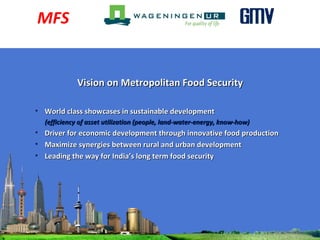
World class showcases in sustainable development  (efficiency of asset utilization (people, land-water-energy, know-how) Driver for economic development through innovative food production Maximize synergies between rural and urban development  Leading the way for India’s long term food security Vision on Metropolitan Food Security MFS
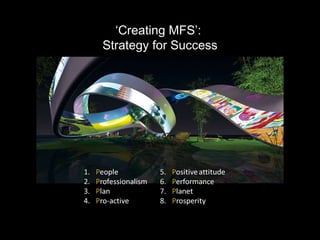
‘ Creating MFS’:  Strategy for Success
 

Mfs June 2011

  • 1.
    MFS Conference, NewDelhi - India 6 June, 2011
  • 2.
    Agenda: Introductionto GMV and MFS Performances in processing technology and products Ambitions with market led approach Innovations in cooperation, research and education Conclusion
  • 3.
    The Netherlands as‘Food Valley’ Turnover 2010: EUR 68 billion in agri-food products Home country of world leading food companies
  • 4.
    The Netherlands as‘Food Valley’ Turn-over 2010: EUR 3,3 billion in processing equipment and research (80% poultry, 70% cheese and > 50% potato processing systems) Home country of world leading companies in food technology
  • 5.
  • 6.
    Positioning: Centerof excellence “Food & Flower” Food & Nutrition Delta - Food Valley – EUKP7 – Genomics – 9 Dutch Topics Research: Food & Nutrition Delta Safety - Nutrition & Health - Sensory Science and Structure – Behavior Education: Platform AcedeMI - IO / SVML (Social) Innovation - ICT – Know-how sharing World-class performance initiatives:
  • 7.
    Road to Success:Ambition Innovation Performance
  • 8.
  • 9.
  • 10.
    Quantity and QualityNutrition value and medicinal functions Poverty elimination and crop rotation Energy security and sustainability Natural disaster relief Legalization & control Food Safety and Security
  • 11.
    Huge area, lowyields Breeding and extension of new varieties Seeds supply systems and certification Chain quality control and management Logistics Supply chain management Added value creation Constrains in India (and other BRICS – countries)
  • 12.
    The (fresh) waterstress Withdrawal as a % of total > 40% 40% to 20% 20% to 10% < 10% 1995 2025 ( Source: WMO, 1996; GEO, 2000; UNEP, 1999)
  • 13.
    The world isUrbanising
  • 14.
    Urban people havemore purchasing power: shift in consumption basket Diet/Functional/Organic Foods Convenience foods Snacks/Prepared Meals Dairy, meat, fish, fresh fruit juices, beverages Carbohydrate staples Increasing consumption of processed food Increasing consumer discern towards safe, healthy and quality food Transparency in food chain “from farm gate to food plate”
  • 15.
    Diversification of demandin Metropoles: from food to fashion to pharmaceuticals Energy and building Fuel, fibers Food Fodder, food crops, vegetables, fruits Fashion Flowers, flavors, fragrances Pharmaceuticals Functional foods, pharmaceuticals World spending on luxury goods in 2005: US% 165 bln Which is a 100-fold increase between 1977 and 2005
  • 16.
    Strategic outlook WorldGrowing population, increasing urbanisation, water and food shortage
  • 17.
    Society Ageing populationGrowing high(er) income population Wealth of choice Increasing incidence of chronic non-communicable diseases like: Obesity, Cardiovascular diseases, Hypertension, Diabetes mellitus and various cancers Strategic outlook
  • 18.
    WHAT Calories  &quot;experience&quot;  nutrition & health, variety WHEN Regular  grazing and snacking WHERE In-home  out-of-home WITH WHOM Social  individual HOW PREPARED From scratch  ready-to-eat, heat and eat Function of food
  • 19.
  • 20.
    Needing social cohesion(and safety) Especially older generation In more individualistic world Increasing suspicion (decreasing authority) Especially young generation Towards: institutions, banks, large corporations In society, according to Wim Lageweg (MVO -2011) Megatrends
  • 21.
    Needing “Roots andWings” (and origin) Especially cultural ‘’creatives’’, self determination Regional identify, interest in origin and process Stressing sustainability Especially awareness of scarcity Increasing transparency Especially sharing knowledge Pressure on media, social media Megatrends In society, according to Wim Lageweg (MVO -2011)
  • 22.
    Integrated approach toproduct and process development Function Structure Form Integration of LIFE CYCLES Integrated scope Techniques ICT Production Design Use Traditional scope Integration of DISCIPLINES Integration of ABSTRACTIONS Recycle Economics
  • 23.
    Innovation projects Innovationproject Generic Innovation Input Generic Improvements Stimulating Trial & Error (competition games etc.) 1000 Flowers bloom From Laissez-faire To Innovative Goal Regulation INNOVATION Strategic level Definition level Tailor level Innovation Knowledge
  • 24.
    Effectiveness (%) Efficiency(%) 100 Trial-and-error / Individualism + Integral (whole) Explicit (sharing) Risk reduction + Competence growth + Creative (pro-active) Cost Level Result Level Cost Reduction
  • 25.
    Trends and NeedsMarket Organization Product Information decisive flexible added value fast cost reduction time to market product flexibility head-tail co-development self regulating product support maintenance control design tools 3d models configuration management t r e n d s n e e d s enterprising market-oriented methodic communicative project engineering marketing / innovation cost engineering it knowledge life cycle analysis and design design optimalization problem solving multi-disciplinary integralist Attitude Knowledge Profile
  • 26.
    Transitions in marketingapproaches over the next 10 years From Store and l ocations as greatest assets “ One to Many” mass marketing Transactions and traffic flows SKU’s and product profitability Offering a product range Single channel access Right product, place and time A monolithic customer offer Data on what is bought Marketing as an “add-on” department No one in the organization (except CEO) Benchmarking Customer loyalty schemes To / As well Customers as greatest assets “ One to One ” mass customization Customer lifetime value Customer and market basket profitability Offering solutions and an experience Multi-channel access Anything, Anytime, Anywhere (Multiple relationship options) Knowledge on what is bought by whom and why Marketing as a core competence Customer-centric forms of organization Path breaking Customer loyalty as the creed of business
  • 27.
    Requirements Purchasing powerof retailers Very short lead times High service levels 7 day supply Quality / food standards Competition Pressure Increased use of EDI Support wide range of products Shorter shelf life products Reduction in use of stabilizers / additives Product traceability Market Requirements Integrated systems structure Variable batch sizes Effluent / waste reduction Lowest cost production Just in time operation Pressure Forecasts of requirements Reduced dependency on people Plant flexibility High speed changeovers Scheduling of production/ maintenance Product recovery systems Detailed records of production Manufacturing
  • 28.
    Innovations in thePotato – Chain Harvesting Low damage lifting and handling Seed Potatoes, genomics Clean room technology , gen manipulation Cultivating Drip irrigation, crop rotation in (semi) arid areas
  • 29.
    Innovations in thePotato – Chain Storage Optimal storage, conditioning Processing, packaging Starch, flakes, french fries, etc.
  • 30.
    Innovations in theBakery - Chain Storage Optimalisation storage, conditioning Grain, genomics Clean room technology , gen manipulation Milling
  • 31.
    Innovations in theBakery - Chain Processing Hard and short dough, wafers, pastry, biscuits, bread and croissants Packaging Flow pack
  • 32.
    Innovations in theFruit and Vegetable – Chain Cultivating Drip irrigation, crop rotation in (semi) arid areas Fruit and vegetables, genomics New variaties, gen manipulation Storage Optimal storage, conditioning, ULO
  • 33.
    Innovations in theFruit and Vegetable – Chain Processing Fresh handling, freezing, heat preservation, dehydration, infusion, pressure preservation, etc. Packaging and Logistics Controlled atmosphere, handling automation, ICT
  • 34.
    Shift of powerto retailers and food service sectors: Closest to the consumer, Multi-channel strategy, Vital marketing information, 70 - 80% Buying decisions at P.O.P., Co-marketing Improving supply
  • 35.
    Supply management Continuousreplenishment / flow through, Changing logistics systems, Cross docking, Bar coding, Consumer focused P.R., Business to Business, Biggest opportunity , Cutting out middle-man, Market led approaches, Food supply chain, Intelligent automation Improving supply
  • 36.
    Consumer 3rd partyalliances, partners distributors METROPOLITAN FOOD SECURITY corporate command center data warehouse strategic hub ?! regional, global plants, bulk, semi-finished, filling, finishing, packaging retailers manufacturing network Future food supply chain = information
  • 37.
    World class showcasesin sustainable development (efficiency of asset utilization (people, land-water-energy, know-how) Driver for economic development through innovative food production Maximize synergies between rural and urban development Leading the way for India’s long term food security Vision on Metropolitan Food Security MFS
  • 38.
    ‘ Creating MFS’: Strategy for Success
  • 39.