©Learning ZoneXpress
1
by Jane Norman, CFCS
©Learning ZoneXpress
2
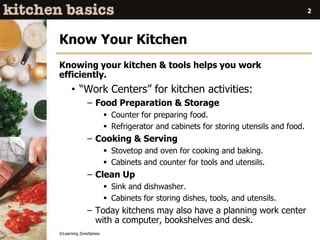
Know Your Kitchen
Knowing your kitchen & tools helps you work
efficiently.
• “Work Centers” for kitchen activities:
– Food Preparation & Storage
 Counter for preparing food.
 Refrigerator and cabinets for storing utensils and food.
– Cooking & Serving
 Stovetop and oven for cooking and baking.
 Cabinets and counter for tools and utensils.
– Clean Up
 Sink and dishwasher.
 Cabinets for storing dishes, tools, and utensils.
– Today kitchens may also have a planning work center
with a computer, bookshelves and desk.
©Learning ZoneXpress
3
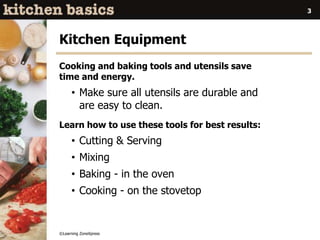
Kitchen Equipment
Cooking and baking tools and utensils save
time and energy.
• Make sure all utensils are durable and
are easy to clean.
Learn how to use these tools for best results:
• Cutting & Serving
• Mixing
• Baking - in the oven
• Cooking - on the stovetop
©Learning ZoneXpress
4
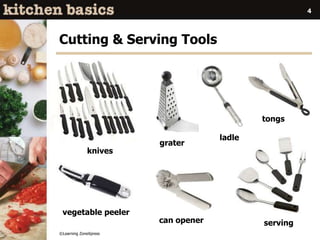
Cutting & Serving Tools
knives
grater
tongs
servingcan opener
ladle
vegetable peeler
©Learning ZoneXpress
5
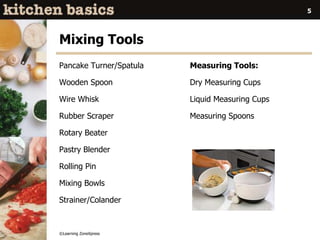
Mixing Tools
Pancake Turner/Spatula
Wooden Spoon
Wire Whisk
Rubber Scraper
Rotary Beater
Pastry Blender
Rolling Pin
Mixing Bowls
Strainer/Colander
Measuring Tools:
Dry Measuring Cups
Liquid Measuring Cups
Measuring Spoons
©Learning ZoneXpress
6
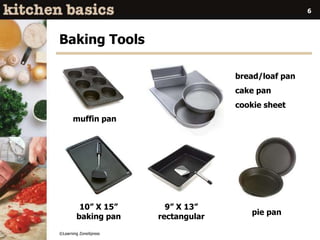
Baking Tools
muffin pan
9” X 13”
rectangular
10” X 15”
baking pan
bread/loaf pan
cake pan
cookie sheet
pie pan
©Learning ZoneXpress
7
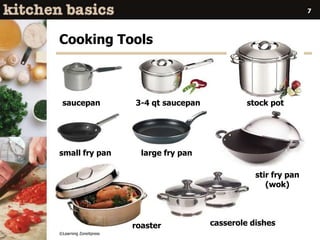
Cooking Tools
saucepan stock pot
small fry pan
stir fry pan
(wok)
large fry pan
casserole dishesroaster
3-4 qt saucepan
©Learning ZoneXpress
8
Know How To Follow A Recipe
It is important to know some basic cooking terms
and how to measure ingredients accurately when
preparing foods.
Most recipes list ingredients and directions in the order
that they occur. Follow the recipe step-by-step.
To Get Good Results From a Recipe:
• Read the recipe carefully.
• Get all utensils, tools and ingredients ready.
• Measure accurately.
• Mix as directed.
• Bake or cook the required time.
©Learning ZoneXpress
9
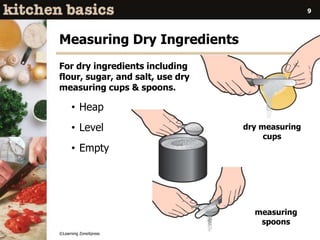
Measuring Dry Ingredients
For dry ingredients including
flour, sugar, and salt, use dry
measuring cups & spoons.
• Heap
• Level
• Empty
dry measuring
cups
measuring
spoons
©Learning ZoneXpress
10
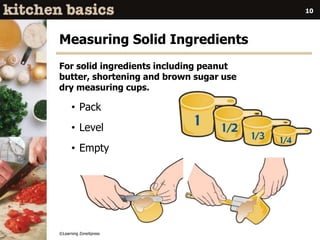
Measuring Solid Ingredients
For solid ingredients including peanut
butter, shortening and brown sugar use
dry measuring cups.
• Pack
• Level
• Empty
©Learning ZoneXpress
11
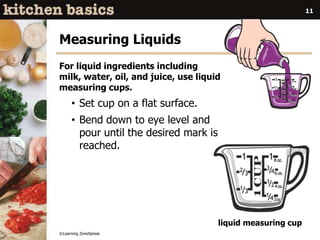
Measuring Liquids
For liquid ingredients including
milk, water, oil, and juice, use liquid
measuring cups.
• Set cup on a flat surface.
• Bend down to eye level and
pour until the desired mark is
reached.
liquid measuring cup
©Learning ZoneXpress
12
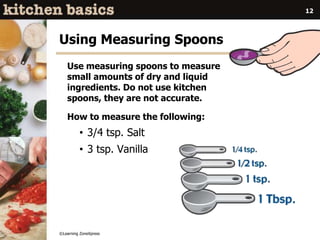
Using Measuring Spoons
Use measuring spoons to measure
small amounts of dry and liquid
ingredients. Do not use kitchen
spoons, they are not accurate.
How to measure the following:
• 3/4 tsp. Salt
• 3 tsp. Vanilla
©Learning ZoneXpress
13
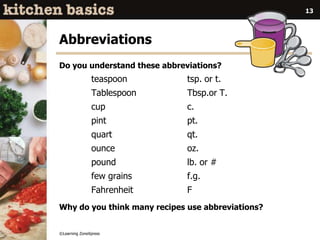
Abbreviations
Do you understand these abbreviations?
teaspoon tsp. or t.
Tablespoon Tbsp.or T.
cup c.
pint pt.
quart qt.
ounce oz.
pound lb. or #
few grains f.g.
Fahrenheit F
Why do you think many recipes use abbreviations?
©Learning ZoneXpress
14
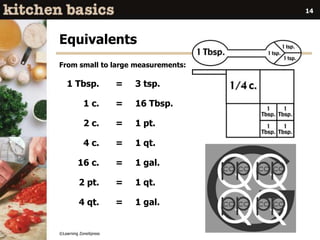
Equivalents
From small to large measurements:
1 Tbsp. = 3 tsp.
1 c. = 16 Tbsp.
2 c. = 1 pt.
4 c. = 1 qt.
16 c. = 1 gal.
2 pt. = 1 qt.
4 qt. = 1 gal.
©Learning ZoneXpress
15
Cooking Terms
Recipes use a variety of terms to describe exactly how
to handle ingredients.
• If a recipe states, “pare an apple, then slice and
dice it.” What do you do?
• Review the following cooking terms and see
how many you know.
©Learning ZoneXpress
16
Cooking Terms
Just a few of hundreds of terms:
Cutting & Peeling:
Core Cube Chop
Pare Dice Slice
Peel Mince
Mixing:
Beat Fold Combine
Blend Stir Strain
Cream Whip Cut in
©Learning ZoneXpress
17
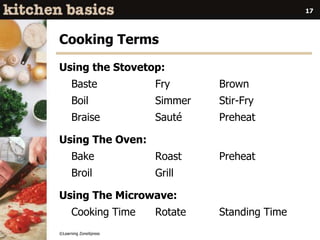
Cooking Terms
Using the Stovetop:
Baste Fry Brown
Boil Simmer Stir-Fry
Braise Sauté Preheat
Using The Oven:
Bake Roast Preheat
Broil Grill
Using The Microwave:
Cooking Time Rotate Standing Time
©Learning ZoneXpress
18
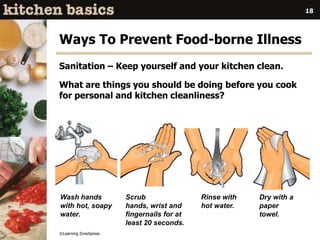
Wash hands
with hot, soapy
water.
Scrub
hands, wrist and
fingernails for at
least 20 seconds.
Rinse with
hot water.
Dry with a
paper
towel.
Ways To Prevent Food-borne Illness
Sanitation – Keep yourself and your kitchen clean.
What are things you should be doing before you cook
for personal and kitchen cleanliness?
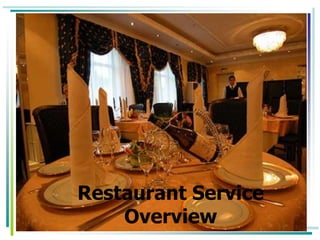
Restaurant Service
Overview
What is the role of a Restaurant?
• Prepare and Serve Good Food & Drinks
• Provide Friendly Service
• Create Good Atmosphere
• Health and Safety
• Honesty
• Good Value for Money
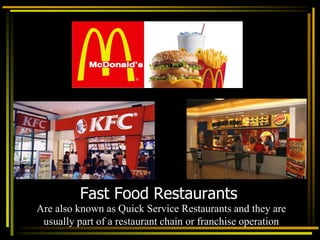
Fast Food Restaurants
Are also known as Quick Service Restaurants and they are
usually part of a restaurant chain or franchise operation
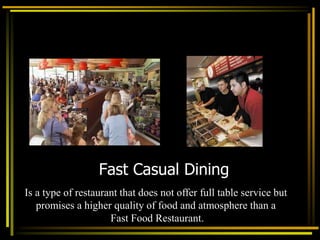
Fast Casual Dining
Is a type of restaurant that does not offer full table service but
promises a higher quality of food and atmosphere than a
Fast Food Restaurant.
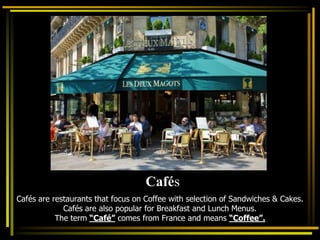
Cafés are restaurants that focus on Coffee with selection of Sandwiches & Cakes.
Cafés are also popular for Breakfast and Lunch Menus.
The term “Café” comes from France and means “Coffee”.
Cafés
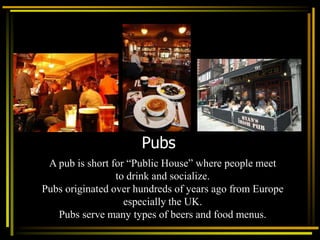
Pubs
A pub is short for “Public House” where people meet
to drink and socialize.
Pubs originated over hundreds of years ago from Europe
especially the UK.
Pubs serve many types of beers and food menus.
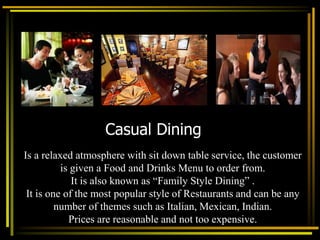
Casual Dining
Is a relaxed atmosphere with sit down table service, the customer
is given a Food and Drinks Menu to order from.
It is also known as “Family Style Dining” .
It is one of the most popular style of Restaurants and can be any
number of themes such as Italian, Mexican, Indian.
Prices are reasonable and not too expensive.
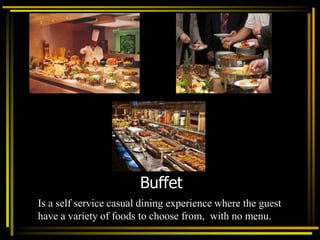
Buffet
Is a self service casual dining experience where the guest
have a variety of foods to choose from, with no menu.
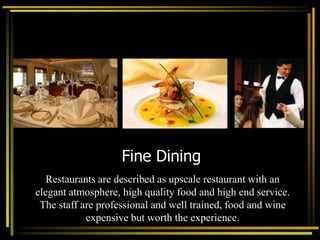
Fine Dining
Restaurants are described as upscale restaurant with an
elegant atmosphere, high quality food and high end service.
The staff are professional and well trained, food and wine
expensive but worth the experience.
©Learning ZoneXpress
28
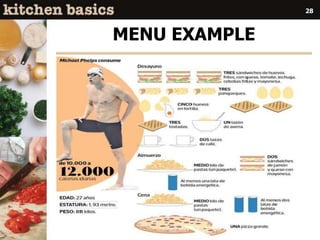
MENU EXAMPLE
©Learning ZoneXpress
29
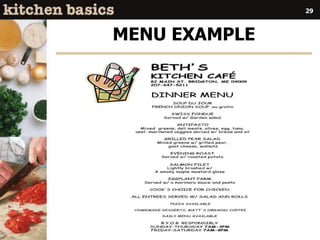
MENU EXAMPLE

Food

  • 1.
  • 2.
    ©Learning ZoneXpress 2 Know YourKitchen Knowing your kitchen & tools helps you work efficiently. • “Work Centers” for kitchen activities: – Food Preparation & Storage  Counter for preparing food.  Refrigerator and cabinets for storing utensils and food. – Cooking & Serving  Stovetop and oven for cooking and baking.  Cabinets and counter for tools and utensils. – Clean Up  Sink and dishwasher.  Cabinets for storing dishes, tools, and utensils. – Today kitchens may also have a planning work center with a computer, bookshelves and desk.
  • 3.
    ©Learning ZoneXpress 3 Kitchen Equipment Cookingand baking tools and utensils save time and energy. • Make sure all utensils are durable and are easy to clean. Learn how to use these tools for best results: • Cutting & Serving • Mixing • Baking - in the oven • Cooking - on the stovetop
  • 4.
    ©Learning ZoneXpress 4 Cutting &Serving Tools knives grater tongs servingcan opener ladle vegetable peeler
  • 5.
    ©Learning ZoneXpress 5 Mixing Tools PancakeTurner/Spatula Wooden Spoon Wire Whisk Rubber Scraper Rotary Beater Pastry Blender Rolling Pin Mixing Bowls Strainer/Colander Measuring Tools: Dry Measuring Cups Liquid Measuring Cups Measuring Spoons
  • 6.
    ©Learning ZoneXpress 6 Baking Tools muffinpan 9” X 13” rectangular 10” X 15” baking pan bread/loaf pan cake pan cookie sheet pie pan
  • 7.
    ©Learning ZoneXpress 7 Cooking Tools saucepanstock pot small fry pan stir fry pan (wok) large fry pan casserole dishesroaster 3-4 qt saucepan
  • 8.
    ©Learning ZoneXpress 8 Know HowTo Follow A Recipe It is important to know some basic cooking terms and how to measure ingredients accurately when preparing foods. Most recipes list ingredients and directions in the order that they occur. Follow the recipe step-by-step. To Get Good Results From a Recipe: • Read the recipe carefully. • Get all utensils, tools and ingredients ready. • Measure accurately. • Mix as directed. • Bake or cook the required time.
  • 9.
    ©Learning ZoneXpress 9 Measuring DryIngredients For dry ingredients including flour, sugar, and salt, use dry measuring cups & spoons. • Heap • Level • Empty dry measuring cups measuring spoons
  • 10.
    ©Learning ZoneXpress 10 Measuring SolidIngredients For solid ingredients including peanut butter, shortening and brown sugar use dry measuring cups. • Pack • Level • Empty
  • 11.
    ©Learning ZoneXpress 11 Measuring Liquids Forliquid ingredients including milk, water, oil, and juice, use liquid measuring cups. • Set cup on a flat surface. • Bend down to eye level and pour until the desired mark is reached. liquid measuring cup
  • 12.
    ©Learning ZoneXpress 12 Using MeasuringSpoons Use measuring spoons to measure small amounts of dry and liquid ingredients. Do not use kitchen spoons, they are not accurate. How to measure the following: • 3/4 tsp. Salt • 3 tsp. Vanilla
  • 13.
    ©Learning ZoneXpress 13 Abbreviations Do youunderstand these abbreviations? teaspoon tsp. or t. Tablespoon Tbsp.or T. cup c. pint pt. quart qt. ounce oz. pound lb. or # few grains f.g. Fahrenheit F Why do you think many recipes use abbreviations?
  • 14.
    ©Learning ZoneXpress 14 Equivalents From smallto large measurements: 1 Tbsp. = 3 tsp. 1 c. = 16 Tbsp. 2 c. = 1 pt. 4 c. = 1 qt. 16 c. = 1 gal. 2 pt. = 1 qt. 4 qt. = 1 gal.
  • 15.
    ©Learning ZoneXpress 15 Cooking Terms Recipesuse a variety of terms to describe exactly how to handle ingredients. • If a recipe states, “pare an apple, then slice and dice it.” What do you do? • Review the following cooking terms and see how many you know.
  • 16.
    ©Learning ZoneXpress 16 Cooking Terms Justa few of hundreds of terms: Cutting & Peeling: Core Cube Chop Pare Dice Slice Peel Mince Mixing: Beat Fold Combine Blend Stir Strain Cream Whip Cut in
  • 17.
    ©Learning ZoneXpress 17 Cooking Terms Usingthe Stovetop: Baste Fry Brown Boil Simmer Stir-Fry Braise Sauté Preheat Using The Oven: Bake Roast Preheat Broil Grill Using The Microwave: Cooking Time Rotate Standing Time
  • 18.
    ©Learning ZoneXpress 18 Wash hands withhot, soapy water. Scrub hands, wrist and fingernails for at least 20 seconds. Rinse with hot water. Dry with a paper towel. Ways To Prevent Food-borne Illness Sanitation – Keep yourself and your kitchen clean. What are things you should be doing before you cook for personal and kitchen cleanliness?
  • 19.
  • 20.
    What is therole of a Restaurant? • Prepare and Serve Good Food & Drinks • Provide Friendly Service • Create Good Atmosphere • Health and Safety • Honesty • Good Value for Money
  • 21.
    Fast Food Restaurants Arealso known as Quick Service Restaurants and they are usually part of a restaurant chain or franchise operation
  • 22.
    Fast Casual Dining Isa type of restaurant that does not offer full table service but promises a higher quality of food and atmosphere than a Fast Food Restaurant.
  • 23.
    Cafés are restaurantsthat focus on Coffee with selection of Sandwiches & Cakes. Cafés are also popular for Breakfast and Lunch Menus. The term “Café” comes from France and means “Coffee”. Cafés
  • 24.
    Pubs A pub isshort for “Public House” where people meet to drink and socialize. Pubs originated over hundreds of years ago from Europe especially the UK. Pubs serve many types of beers and food menus.
  • 25.
    Casual Dining Is arelaxed atmosphere with sit down table service, the customer is given a Food and Drinks Menu to order from. It is also known as “Family Style Dining” . It is one of the most popular style of Restaurants and can be any number of themes such as Italian, Mexican, Indian. Prices are reasonable and not too expensive.
  • 26.
    Buffet Is a selfservice casual dining experience where the guest have a variety of foods to choose from, with no menu.
  • 27.
    Fine Dining Restaurants aredescribed as upscale restaurant with an elegant atmosphere, high quality food and high end service. The staff are professional and well trained, food and wine expensive but worth the experience.
  • 28.
  • 29.