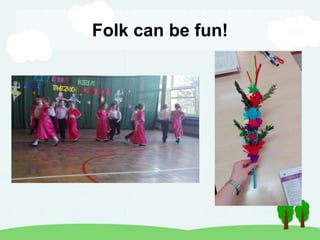
This document discusses the importance of incorporating folklore into early education. It argues that folklore is an intrinsic part of culture that reflects the moral values of a society. Teaching folklore in schools can provide an effective form of moral education without religious elements. Exposing young children to folklore through songs, stories, dances, crafts, and traditions can help develop their creativity and prepare them for life. Folklore education is most impactful when it involves active participation by the children in exploring and experiencing different folklore forms in a fun and engaging way.