FOG COMPUTING
CONTENTS
Abstract
Existing System
Disadvantages
Proposed System
Architecture
Conclusion
Future scope
ABSTRACT
Fog computing is not a replacement of cloud it is just extends
the cloud computing by providing security in the cloud
environment.
Cloud computing promises to significantly change the way of
use computers and store our personal and business information
can arises new data security challenges. Encryption
mechanisms not protect the data in the cloud from unauthorized
access.
 We proposed a different approach for securing data in the cloud
using offensive decoy technology. We monitor data access in
the cloud and detect abnormal data access patterns.
EXISTING SYSTEM
 In Existing data protection mechanisms such as encryption was
failed in securing the data from the attacker. It does not verify
whether the user was authorized or not.
 Cloud computing security does not focus on ways of secure the
data from unauthorized access.
In 2009 we have our own confidential documents in the cloud.
This file does not have much security. so, hacker gains access
the documents. Twitter incident is one example of a data theft
attack in the Cloud.
DISADVANTAGES
No body is identified when the attack is happen.
It is complex to detect which user is attack.
We can not detect which file was hacking.
PROPOSED SYSTEM
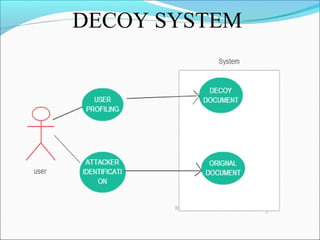
We proposed a completely new technique to secure user’s
data in cloud using user behavior and Decay information
technology called as fog computing.
 In this technique when the unauthorized person try to access
the data of the real user the system generates the fake
documents in such a way that the unauthorized person was
also not able to identify the data is fake or real
USER BEHAVIOR PROFILING
Admin monitor data access in the cloud and notice
abnormal data access patterns User profiling will a well
known Technique that can be applied here to check
how, when, and how much a client access their data in
the Cloud.
 This method of behavior based security will regularly
used in scheme uncovering applications.
DECOY SYSTEM
We suggest a different approach for securing data in
the cloud using nasty decoy technology.
 We monitor data access in the cloud and sense
irregular data access patterns.
We use this technology to begin disinformation
attacks against malicious insiders, preventing them
from distinguishing the valid aware customer data
from bogus useless.
DECOY SYSTEM
DECOY SYSTEM ADVANTAGES
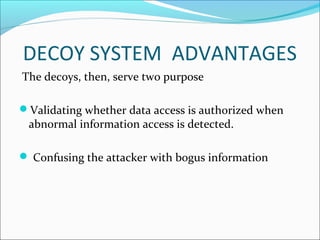
The decoys, then, serve two purpose
Validating whether data access is authorized when
abnormal information access is detected.
 Confusing the attacker with bogus information
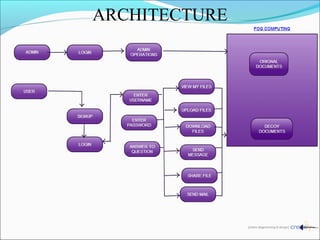
ARCHITECTURE
CONCLUSION
The system was developed only with email provision
but we have also implemented the SMS technique. In
Fog Computing we presenting a new approach for
solving the problem of insider data theft attacks in a
cloud using dynamically generated decoy files and also
saving storage required for maintaining decoy files in
the cloud. So by using decoy technique in Fog can
minimize insider attacks in cloud..
FUTURE SCOPE
In our future work, this security system as we have
explained is applicable only for single cloud ownership
system. If the cloud owner has a more than one clouds to
operate then our security system will not be applicable for
providing security, therefore in the future enhancement
we can enhance our existing application to manage a
cloud environment which has more than one cloud
architecture.
 Cloud computing is the future for organizations.
Fog computing provide security to data in cloud ppt

Fog computing provide security to data in cloud ppt

  • 1.
  • 2.
  • 3.
    ABSTRACT Fog computing isnot a replacement of cloud it is just extends the cloud computing by providing security in the cloud environment. Cloud computing promises to significantly change the way of use computers and store our personal and business information can arises new data security challenges. Encryption mechanisms not protect the data in the cloud from unauthorized access.  We proposed a different approach for securing data in the cloud using offensive decoy technology. We monitor data access in the cloud and detect abnormal data access patterns.
  • 4.
    EXISTING SYSTEM  InExisting data protection mechanisms such as encryption was failed in securing the data from the attacker. It does not verify whether the user was authorized or not.  Cloud computing security does not focus on ways of secure the data from unauthorized access. In 2009 we have our own confidential documents in the cloud. This file does not have much security. so, hacker gains access the documents. Twitter incident is one example of a data theft attack in the Cloud.
  • 5.
    DISADVANTAGES No body isidentified when the attack is happen. It is complex to detect which user is attack. We can not detect which file was hacking.
  • 6.
    PROPOSED SYSTEM We proposeda completely new technique to secure user’s data in cloud using user behavior and Decay information technology called as fog computing.  In this technique when the unauthorized person try to access the data of the real user the system generates the fake documents in such a way that the unauthorized person was also not able to identify the data is fake or real
  • 7.
    USER BEHAVIOR PROFILING Adminmonitor data access in the cloud and notice abnormal data access patterns User profiling will a well known Technique that can be applied here to check how, when, and how much a client access their data in the Cloud.  This method of behavior based security will regularly used in scheme uncovering applications.
  • 8.
    DECOY SYSTEM We suggesta different approach for securing data in the cloud using nasty decoy technology.  We monitor data access in the cloud and sense irregular data access patterns. We use this technology to begin disinformation attacks against malicious insiders, preventing them from distinguishing the valid aware customer data from bogus useless.
  • 9.
  • 10.
    DECOY SYSTEM ADVANTAGES Thedecoys, then, serve two purpose Validating whether data access is authorized when abnormal information access is detected.  Confusing the attacker with bogus information
  • 11.
  • 12.
    CONCLUSION The system wasdeveloped only with email provision but we have also implemented the SMS technique. In Fog Computing we presenting a new approach for solving the problem of insider data theft attacks in a cloud using dynamically generated decoy files and also saving storage required for maintaining decoy files in the cloud. So by using decoy technique in Fog can minimize insider attacks in cloud..
  • 13.
    FUTURE SCOPE In ourfuture work, this security system as we have explained is applicable only for single cloud ownership system. If the cloud owner has a more than one clouds to operate then our security system will not be applicable for providing security, therefore in the future enhancement we can enhance our existing application to manage a cloud environment which has more than one cloud architecture.  Cloud computing is the future for organizations.