FLUID ,ELECTROLYTES ,ACID AND BASE
BALANCE AND IMBALANCE
ANISA KHADIM
BScN 2ND PROF
OBJECTIVES
At the end of the topic , learners will be able to learn:
 Fluid and acid-base disturbances
 Cause of Fluid and acid-base disturbances
 Pathophysiology of Fluid and acid-base disturbance
 Manifestations of Fluid and acid-base disturbances
 Diagnostic evaluation
 Management of Fluid and acid-base disturbances
 Nursing interventions of Fluid and acid-base disturbances
FLUID VOLUME DISTURBANCES
 Fluid volume deficit (Hypovolemia)
 Dehydration
 Fluid volume excess (Hypervolemia)
FLUID VOLUME DEFICIT
Fluid volume deficit (FVD) occurs when loss of extracellular fluid volume exceeds the
intake of fluid. It occurs when water and electrolytes are lost in the same proportion
as they exist in normal body fluids, so that the ratio of serum electrolytes to water
remains the same.
CAUSES
Causes and etiological factors that can contribute to Hypovolemia are:
 Abnormal losses through the skin, GI tract, or kidneys.
 Decrease in intake of fluid (e.g., inability to intake fluid due to oral trauma)
 Bleeding
 Movement of fluid into third space.
 Diarrhea
 Diuresis
 Abnormal drainage
 Increased metabolic rate (e.g., fever, infection)
PATHOPHYSIOLOGY
Due to etiological factors
Decreased ECF
Decreased blood volume
Venous return decrease
Increased cardiac contractility (compensatory mechanism)
Compensation Non compensated
Increased cardiac output Decreased cardiac output
venous return increase Hypovolemia (if not managed)
Hypovolemic shock
CLINICAL MANIFESTATIONS
 Acute weight loss Decreased skin turgor
 Oliguria Concentrated urine
 Postural Hypotension A weak, rapid heart rate
 Flattened neck veins Increased temperature
 Decreased central venous pressure Cool, clammy skin
 Increased thirst Anorexia
 Nausea Lassitude (lack of energy)
 Muscle weakness
DIAGNOSTIC EVALUATION
• History of patient ( to know the cause )
• Physical assessment findings ( skin turgor , mucous membranes, eyes)
• Complete blood count ( specially Hematocrit )
• Serum electrolytes ( Na, K, Cl)
• Renal function tests ( urea ,creatinine, eGFR)
• Complete urine examination
MANAGEMENT
For mild to moderate FVD:
• Oral fluids are encouraged
• Electrolytes are replaced via oral fluids
• Dietary intake (containing sodium ,potassium)
For severe FVD:
• Fluid resuscitation
• Isotonic solution ( 0.9% N/S , Lactated Ringer )
• When patient gets normotensive (hypotonic solution 0.45% N/S)
NURSING CARE MANAGEMENT
• Monitor and document vital signs, especially BP and HR
• Assess and oral mucous membranes for signs of dehydration
• Monitor BP for orthostatic changes
• Assess alteration in mentation/sensorium (confusion, agitation, slowed responses)
• Assess color and amount of urine. Report urine output less than 30 ml/hr for two (2)
consecutive hours
• Monitor and document temperature
CONTD….
• Monitor fluid status in relation to dietary intake
• Note the presence of nausea, vomiting, and fever
• Auscultate and document heart sounds; note rate, rhythm, or other abnormal
findings
• Auscultate and document heart sounds; note rate, rhythm, or other abnormal
findings
• Ascertain whether the patient has any related heart problem before initiating
parenteral therapy
• Weigh daily with the same scale, and preferably at the same time of day
HYPERVOLEMIA
Fluid volume excess (FVE) refers to an isotonic expansion of the ECF caused by the
abnormal retention of water and sodium in approximately the same proportions in
which they normally exist in the ECF.
It is always secondary to an increase in the total body sodium content, which, in turn,
leads to an increase in total body water
CAUSES
• Compromised regulatory mechanisms
• Decreased cardiac output; chronic or acute heart disease
• Excessive fluid intake
• Excessive sodium intake
• Head injury
• Hormonal disturbances
• Liver disease
• Low protein intake
• Malnutrition
• Renal insufficiency
• Severe stress
• Steroid therapy (increased appetite)
CLINICAL MANIFESTATIONS
 Tachycardia
 Increased blood pressure, pulse pressure, and central venous pressure
 Increased weight
 Increased urine output
 Shortness of breath and wheezing
 Edema
 Distended neck vein
 Crackles
DIAGNOSTIC EVALUATION
 Physical examination (skin, edema, lung sounds)
 Complete blood count ( specially Hematocrit )
 Serum electrolytes ( Na, K, Cl)
 Serum albumin
 Renal function tests ( urea ,creatinine, eGFR)
 Complete urine examination
MANAGEMENT
 Treatment is focused on cause of FVE.
 FVE caused by excessive sodium intake is managed by sodium restricted fluids and
foods
 Diuretic therapy (when not managed by oral restriction of sodium)
 Fluid restriction
 Paracentesis (removal of fluid from abdominal cavity via syringe or catheter)
 If not managed by either of the factors ,dialysis is the option of choice
NURSING CARE MANAGEMENT
 Assess for potential causes of excess fluid volume
 Monitor intake and output
 Monitor vital signs
 Monitor lung sounds
 Assess for edema and weight gain
 Palpate pulses
 Monitor lab values
 Enforce fluid restrictions and educate on the importance
 Administer diuretics as ordered
 Provide mouth care
 Assist with procedures such as paracentesis or dialysis
 Reposition and provide skin care.
DEHYDRATION
A condition that occurs when the body loses too much water and other fluids that it
needs to work normally
CAUSES
 Not drinking enough fluid to replace what we lose
 Climate change
 Fever
CLINICAL MANIFESTATIONS
Some of the early warning signs of dehydration include:
 Feeling thirsty and lightheaded
 Dry mouth
 Tiredness
 Dark colored, strong-smelling urine
 Passing urine less often than usual
A baby may be dehydrated if they:
 Have a sunken soft spot (fontanelle) on their head
 Have few or no tears when they cry
 Have fewer wet nappies
 Drowsy
DIAGNOSTIC TESTS
 Skin assessment
 Blood tests
 Urinalysis
Management
 Oral rehydration (mild to moderate)
 I/V fluid resuscitation
ACID-BASE IMBALANCES
 Metabolic Acidosis
 Metabolic Alkalosis
 Respiratory Acidosis
 Respiratory Alkalosis
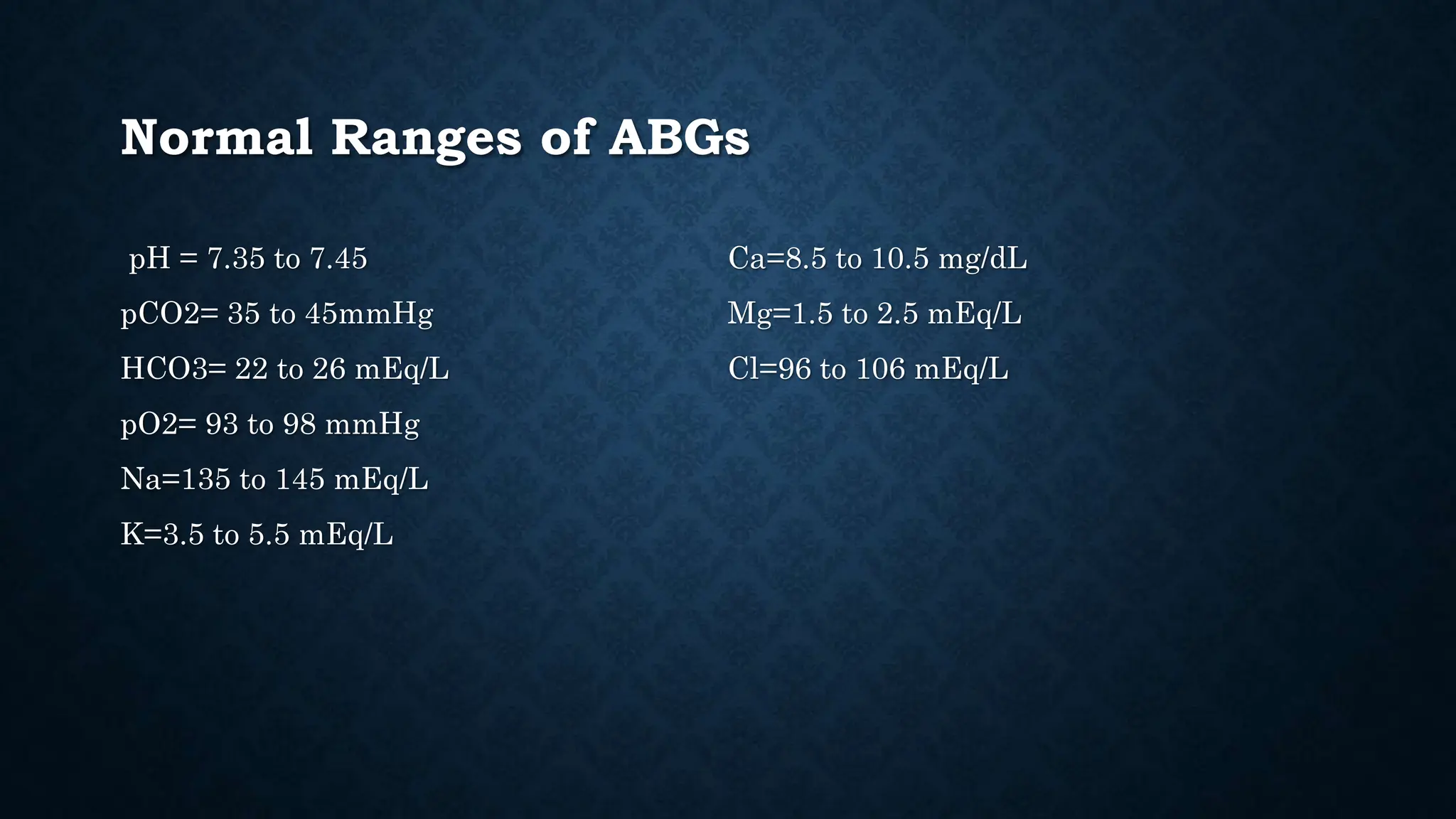
Normal Ranges of ABGs
pH = 7.35 to 7.45
pCO2= 35 to 45mmHg
HCO3= 22 to 26 mEq/L
pO2= 93 to 98 mmHg
Na=135 to 145 mEq/L
K=3.5 to 5.5 mEq/L
Ca=8.5 to 10.5 mg/dL
Mg=1.5 to 2.5 mEq/L
Cl=96 to 106 mEq/L
METABOLIC ACIDOSIS
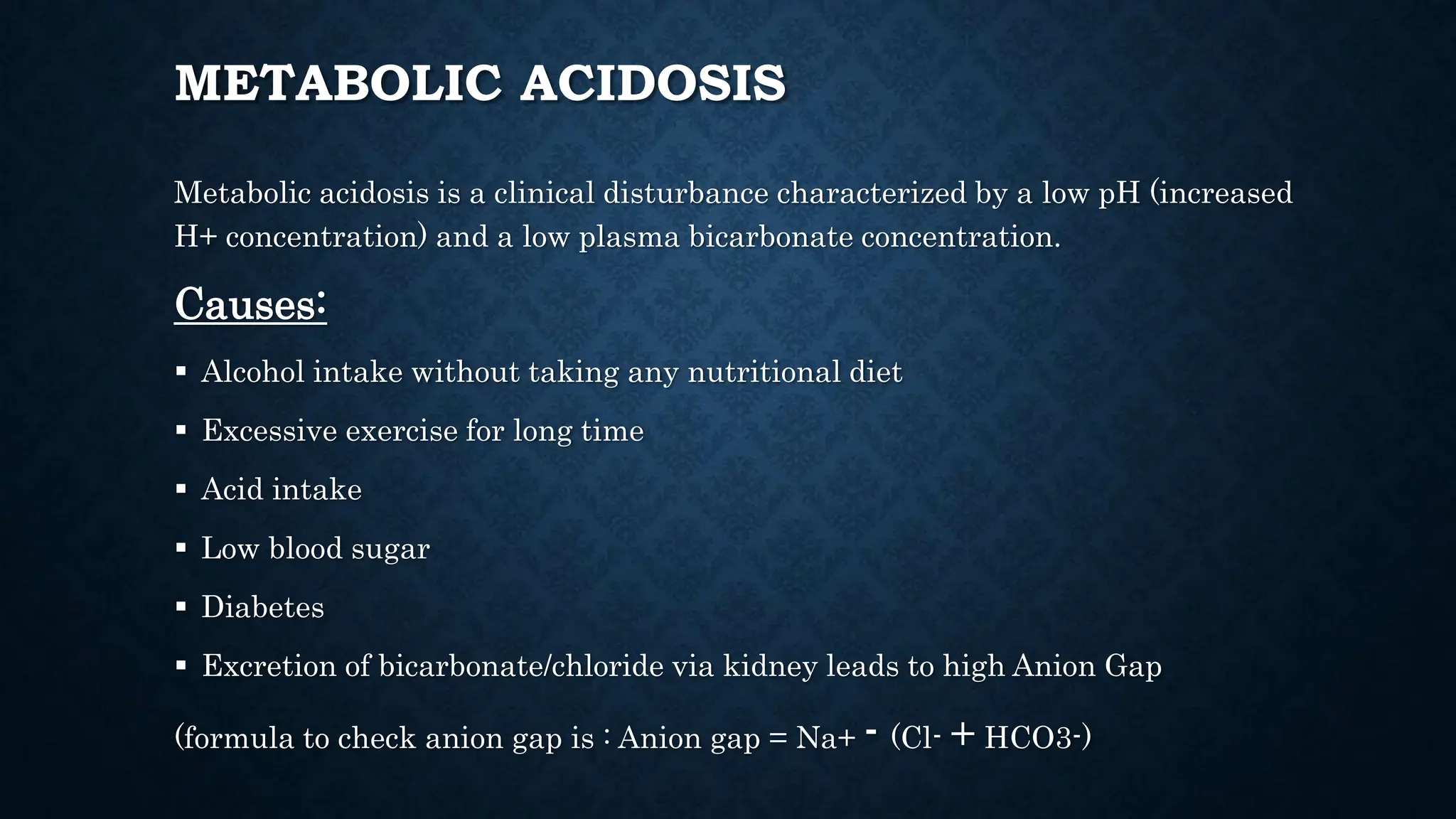
Metabolic acidosis is a clinical disturbance characterized by a low pH (increased
H+ concentration) and a low plasma bicarbonate concentration.
Causes:
 Alcohol intake without taking any nutritional diet
 Excessive exercise for long time
 Acid intake
 Low blood sugar
 Diabetes
 Excretion of bicarbonate/chloride via kidney leads to high Anion Gap
(formula to check anion gap is : Anion gap = Na+ - (Cl- + HCO3-)
CLINICAL MANIFESTATIONS
 Headache
 Drowsiness
 Increased respiratory rate and depth (hyperventilation)
 Nausea and vomiting
 Decreased blood pressure
 Cold and clammy skin
 Dysrhythmias
 Shock
DIAGNOSTIC EVALUATION
 Arterial or venous blood gas (pH < 7.35 ,HCO3 < 22)
 Basic metabolic panel (a group of blood tests that measure your sodium and
potassium levels, kidney function, and other chemicals and functions)
 Lactic acid test
 ECG
MANAGEMENT
 Treatment is directed at correcting the metabolic defect
 If the problem results from excessive intake of chloride, treatment is aimed at
eliminating the source of the chloride
 Bicarbonate is administered if the pH is less than 7.1 and the bicarbonate level is
less than 10
 May need dialysis
COMPLICATIONS
 Coma
 Arrhythmias
 Cardiac arrest
NURSING INTERVENTIONS
 Keep sodium bicarbonate ampules handy for emergency administration
 Monitor vital signs, laboratory results and level of consciousness frequently
 Record intake and output accurately to monitor renal function
 For management of vomiting (common to metabolic acidosis), position the patient to
prevent aspiration
 Prepare for possible seizures and administer appropriate precautions
 Provide good oral hygiene after incidences of vomiting. Use sodium bicarbonate
washes to neutralize acid in the patient’s mouth
METABOLIC ALKALOSIS
Metabolic alkalosis is a clinical disturbance characterized by a high pH (decreased H+
concentration) and a high plasma bicarbonate concentration
Causes :
 Diuresis
 Vomiting
 Excessive gastric suction
 Hyperaldosteronism (retention of Na and excretion of hydrogen and potassium)
CLINICAL MANIFESTATION
 Muscle twitching
 Muscle cramps
 Muscle spasms
 Fatigue
 Hypoventilation (shallow respiration)
 Tremor
 Tingling and numbness
 Abnormal heart rhythm (arrhythmia)
 Seizures
 Coma
DIAGNOSTIC TESTS
 Physical exam to evaluate symptoms
 Blood tests to measure blood gases, acid-base balance and electrolyte levels
 Electrocardiogram (ECG) to check for arrhythmia
 Urinalysis that may help find the cause of the metabolic alkalosis
MANAGEMENT
 Chloride must be supplied for the kidney to absorb sodium with chloride
 Restoring normal fluid volume by administering sodium chloride fluids
 Potassium is administered as KCl to replace both K+ and Cl− losses
 Carbonic anhydrase inhibitors are useful in treating metabolic alkalosis in patients
who cannot tolerate rapid volume expansion (causes an accumulation of carbonic
acid which dissociates to form hydrogen ion and bicarbonate ion)
NURSING INTERVENTIONS
 Monitor respiratory rate, rhythm, and depth
 Monitor heart rate and rhythm
 Provide seizures and safety precautions (side rails up, bed in lowest position, protect
airway)
 Encourage intake of foods and fluids high in potassium and possibly calcium
 Monitor laboratory studies as indicated: ABGs/pH, serum electrolytes (especially
potassium)
 Instruct patient to avoid use of excessive amounts of sodium bicarbonate
 Prepare patient for and assist with dialysis as needed
CONTD…
 Instruct patient to avoid use of excessive amounts of sodium bicarbonate
 Assess level of consciousness and , strength, tone, movement; note presence of
Chvostek’s or Trousseau’s signs.
 Prepare patient for and assist with
dialysis as needed.
RESPIRATORY ACIDOSIS
Respiratory acidosis is a condition that occurs when the lungs cannot remove all of the
carbon dioxide the body produces.
Causes:
 Airway disease, such as asthma and COPD
 Diseases of the lung tissue, such as pulmonary fibrosis
 Diseases affecting the nerves and muscles
 Medicines that suppress breathing, such as narcotics (opioids), and "downers," such
as benzodiazepines, often when combined with alcohol
 Severe obesity, which restricts how much the lungs can expand
CLINICAL MANIFESTATIONS
 Breathlessness
 Headache
 Wheezing
 Anxiety
 Blurred vision
 Confusion
 Restlessness
 Lethargy
 Blue tint in the hands and feet
 Delirium
DIAGNOSTIC TESTS
 ABGs (pH < 7.35, PaCO2 > 45)
 S/electrolytes
 X ray (to find underlying disease)
 ECG
MEDICAL MANAGEMENT
 Bronchodilators
 Antibiotics, to treat infection
 Diuretics, to reduce excess fluid buildup in the heart and lung
 Corticosteroids, to reduce inflammation
 Mechanical ventilation, to assist breathing in people with severe respiratory acidosis
NURSE’S ROLE
Remain alert for critical changes in patient’s respiratory, CNS and cardiovascular
functions
 Maintain adequate hydration (to keep mucous membrane moist & to spit out
secretions)
 Maintain patent airway and provide humidification if acidosis requires mechanical
ventilation
 Perform tracheal suctioning frequently and vigorous chest physiotherapy, if ordered.
 Institute safety measures and assist patient with positioning.
 Continuously monitor arterial blood gases.
RESPIRATORY ALKALOSIS
Respiratory alkalosis occurs when the levels of carbon dioxide and oxygen in the blood
aren’t balanced
Causes:
 Anxiety
 Hypoxemia
 The early phase of salicylate intoxication
 Gram-negative bacteremia
 Inappropriate ventilator settings
CLINICAL MANIFESTATIONS
 Lightheadedness due to vasoconstriction
 Decreased cerebral blood flow
 Inability to concentrate
 Numbness
 Tingling from decreased calcium ionization (increase in pH leads to protein binding
with calcium)
 Tinnitus
 At times loss of consciousness
DIAGNOSTIC TESTS
 ABGs
 S/Electrolytes
 ECG
Medical management:
Treatment depends on the underlying cause of respiratory alkalosis.
If the cause is anxiety, the patient is instructed to breathe more slowly to allow CO2 to
accumulate or to breathe into a closed system
A sedative may be required to relieve hyperventilation in very anxious patients
ELECTROLYTE IMBALANCES
 Hyponatremia
 Hypernatremia
 Hypokalemia
 Hyperkalemia
 Hypocalcemia
 Hypercalcemia
HYPONATREMIA
Hyponatremia occurs when the concentration of sodium in blood is abnormally low
Causes:
 Vomiting
 Drinking a lot of water
 Some medications
 Kidney problems
 SIADH
CLINICAL MANIFESTATION
 Decrease skin turgor
 Dry mucus membrane
 Headache (cell swelling causes vessels to compress)
 Confusion
 Postural hypotension
 Loss of energy, drowsiness and fatigue
 Restlessness and irritability
 Muscle weakness, spasms or cramps (The body’s ability to send signals is
interrupted so the brain overcompensates and sends too many electrical impulses
lead to cramps)
 Seizure
MANAGEMENT
 Symptomatic treatment for headaches, seizures
 Increase oral intake
 I/V fluids ( 0.9% N/S for slow increase in sodium level)
NURSING MANAGEMENT
 Monitor vital signs and note respiratory rate and depth to identify pulmonary
edema
 Strictly maintain fluid intake and output of patient hourly
 Monitor and observe skin turgor to identify dehydration
 Ensure high sodium-containing food such as milk, meat
 Observe for neuromuscular changes
 Provide safety measures to prevent from fall
 Monitor oral mucosa and manage accordingly
HYPERNATREMIA
Hypernatremia is the medical term used to describe having too much sodium in the
blood
Causes:
 Fluid deprivation (in unconscious patients)
 Excessive oral intake of sodium
 Deficiency of ADH
 Watery diarrhea
 Poorly controlled DM
 Burn
CLINICAL MANIFESTATION
 Increased thirst
 Lethargy/Fatigue
 Muscle twitching and spasms
 Seizures
 Postural hypotension ( due to fluid shift)
 Increased muscle tone
 Increase deep tendon reflexes
MANAGEMENT
 Low sodium diet
 Replacement of water
 0.3% N/S or isotonic non-saline solution (e.g. 5%D/W)
Nursing interventions:
 Monitor intake/output
 Encourage patient to drink water
 Restrict dietary sodium
 Maintain fluid balance with IV isotonic fluid
 Observe for signs of altered mentation, muscle cramps or twitching
 Check deep tendon reflexes (for hyper-reflexia)
HYPOKALEMIA
Hypokalemia (below-normal serum potassium concentration) usually indicates an
actual deficit in total potassium stores.
Causes:
 Low dietary potassium intake
 Vomiting
 Diarrhea/Laxative use
 Gastric suctioning
 Intestinal suctioning
 Alteration in acid-base balance
 Hyperaldosteronism
 Diuretics
CLINICAL MANIFESTATION
 Fatigue
 Anorexia
 Muscle weakness
 Leg cramps
 Decreased bowel motility leads to constipation
 Paresthesia (numbness and tingling)
 Dysrhythmias
 Polyuria & Polydipsia
DIAGNOSTIC EVALUATION
 S/Electrolytes (shows decreased potassium level)
 Urinalysis (show increased potassium)
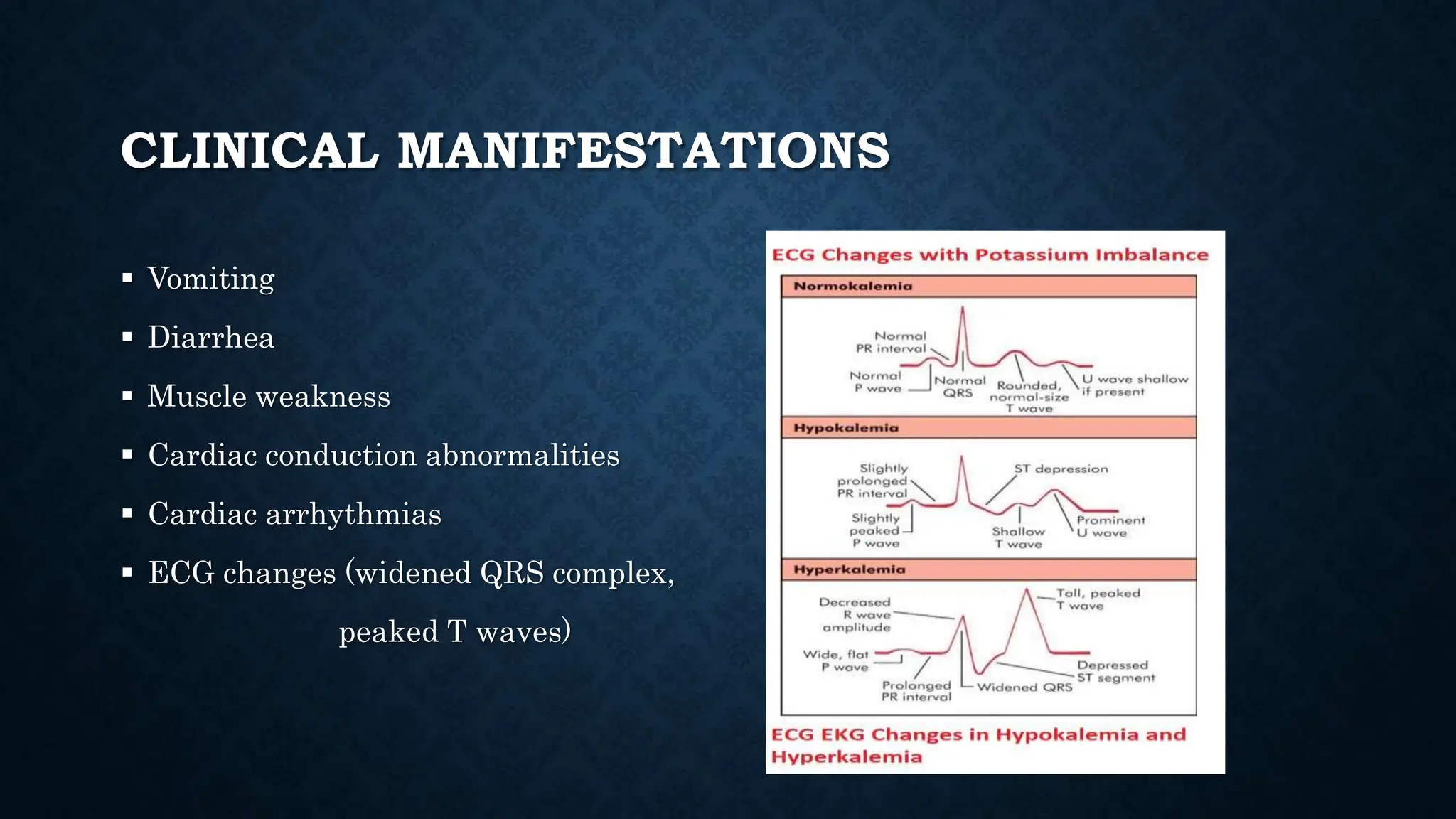
 ECG (Flat T waves/inverted T waves,
ST depression, presence of U waves)
Management:
 Oral replacement therapy
 Switch diuretics
 IV potassium
NURSING INTERVENTION
 Check vital signs especially heart rate
 Monitor changes in ECG
 Monitor blood potassium levels
 Check renal function
 Review the patient’s current medications
 Include potassium in the diet
 Monitor strict intake and output
 Strictly monitor for any change in heart rate if patient in on IV replacement of
potassium
 IV puncture site care
HYPERKALEMIA
Hyperkalemia is the medical term that describes a potassium level in your blood that's
higher than normal
Causes:
 High intake of potassium
 Kidney disease
 Medications (e.g. potassium sparing diuretics)
CLINICAL MANIFESTATIONS
 Vomiting
 Diarrhea
 Muscle weakness
 Cardiac conduction abnormalities
 Cardiac arrhythmias
 ECG changes (widened QRS complex,
peaked T waves)
DIAGNOSTIC TESTS
 S/Electrolytes
 ECG
 ABGs (for metabolic acidosis)
Management:
 Restrict oral intake
 Switch diuretics
 IV calcium gluconate (for stabilizing resting membrane potential, Infusion of
calcium does not reduce the serum potassium concentration)
 IV infusion of NaHCO3 (to reduce acidosis)
NURSING INTERVENTION
 Monitor intake/output
 Check serum potassium levels
 Follow ECG closely to look for peaked T waves
 Educate patient on hyperkalemia
 Administer diuretics as ordered
 Administer insulin to lower potassium as ordered (insulin causes intracellular
potassium shift)
 Check blood glucose when administering insulin
 Educate the patient on a low potassium diet
 Encourage the patient to follow closely with the clinician
HYPOCALCEMIA
Hypocalcemia is: ‘’lower-than-normal serum concentration of calcium.’’
Causes:
 Hypoparathyroidism
 Diet low in calcium
 Loop diuretics
 Osteoporosis
CLINICAL MANIFESTATIONS
 Tetany (involuntary muscle contractions and overly stimulated peripheral nerves)
 Tingling sensation in fingers
 Chvostek’s sign and Trousseau’s sign positive
 Changes in ECG
 Seizures
 Altered mental status may occur
DIAGNOSTIC TEST
 S/calcium
 ECG (shows prolonged QT interval)
Management:
 Oral intake of calcium (e.g. milk, green leafy vegs)
 IV administration of calcium gluconate in dilution
 Vitamin D therapy
NURSING INTERVENTIONS
 Safety (prevent falls because patient is at risk for bone fractures, seizures
precautions)
 Monitor airway
 Encourage diet high in calcium
 Administer IV calcium as ordered
 Administer oral calcium and vitamin D supplements
 Keep an eye on ECG changes
 Assessment of Musculo-skeletal system
HYPERCALCEMIA
Hypercalcemia is: ‘’excess of calcium in the plasma’’
Causes:
 Hyperparathyroidism
 Malignancy
 Immobilization (very rare)
 Thiazide diuretics (increase the action of PTH on kidneys)
CLINICAL MANIFESTATIONS
 Muscle weakness
 In-coordination
 Anorexia
 Constipation
 Abdominal pain
 Slurred speech
 Lethargy
 Excessive urination (due to disturbed renal tubular function)
DIAGNOSTIC TESTS
 S/calcium
 iPTH level
 ECG
 X Ray (osteoporosis)
Management:
 Restrict dietary/supplemental calcium
 Calcitonin can be given
 Treating the cause
 Chemotherapy for malignancy
 Parathyroidectomy
NURSING INTERVENTIONS
 Keep patient hydrated (decrease chance of renal stone formation)
 Keep patient safe from falls or injury
 Monitor cardiac, GI, renal, neuro-muscular status
 Assess for complaints of flank or abdominal pain & strain urine to look for stone
formation
 Decrease calcium rich foods and intake of calcium-preserving drugs like thiazides,
supplements, Vitamin D
THANK
YOU !!!

Fluid ,Electrolyte ,Acid and Base Imbalances.pptx

  • 1.
    FLUID ,ELECTROLYTES ,ACIDAND BASE BALANCE AND IMBALANCE ANISA KHADIM BScN 2ND PROF
  • 2.
    OBJECTIVES At the endof the topic , learners will be able to learn:  Fluid and acid-base disturbances  Cause of Fluid and acid-base disturbances  Pathophysiology of Fluid and acid-base disturbance  Manifestations of Fluid and acid-base disturbances  Diagnostic evaluation  Management of Fluid and acid-base disturbances  Nursing interventions of Fluid and acid-base disturbances
  • 3.
    FLUID VOLUME DISTURBANCES Fluid volume deficit (Hypovolemia)  Dehydration  Fluid volume excess (Hypervolemia)
  • 4.
    FLUID VOLUME DEFICIT Fluidvolume deficit (FVD) occurs when loss of extracellular fluid volume exceeds the intake of fluid. It occurs when water and electrolytes are lost in the same proportion as they exist in normal body fluids, so that the ratio of serum electrolytes to water remains the same.
  • 5.
    CAUSES Causes and etiologicalfactors that can contribute to Hypovolemia are:  Abnormal losses through the skin, GI tract, or kidneys.  Decrease in intake of fluid (e.g., inability to intake fluid due to oral trauma)  Bleeding  Movement of fluid into third space.  Diarrhea  Diuresis  Abnormal drainage  Increased metabolic rate (e.g., fever, infection)
  • 6.
    PATHOPHYSIOLOGY Due to etiologicalfactors Decreased ECF Decreased blood volume Venous return decrease Increased cardiac contractility (compensatory mechanism) Compensation Non compensated Increased cardiac output Decreased cardiac output venous return increase Hypovolemia (if not managed) Hypovolemic shock
  • 7.
    CLINICAL MANIFESTATIONS  Acuteweight loss Decreased skin turgor  Oliguria Concentrated urine  Postural Hypotension A weak, rapid heart rate  Flattened neck veins Increased temperature  Decreased central venous pressure Cool, clammy skin  Increased thirst Anorexia  Nausea Lassitude (lack of energy)  Muscle weakness
  • 8.
    DIAGNOSTIC EVALUATION • Historyof patient ( to know the cause ) • Physical assessment findings ( skin turgor , mucous membranes, eyes) • Complete blood count ( specially Hematocrit ) • Serum electrolytes ( Na, K, Cl) • Renal function tests ( urea ,creatinine, eGFR) • Complete urine examination
  • 9.
    MANAGEMENT For mild tomoderate FVD: • Oral fluids are encouraged • Electrolytes are replaced via oral fluids • Dietary intake (containing sodium ,potassium) For severe FVD: • Fluid resuscitation • Isotonic solution ( 0.9% N/S , Lactated Ringer ) • When patient gets normotensive (hypotonic solution 0.45% N/S)
  • 10.
    NURSING CARE MANAGEMENT •Monitor and document vital signs, especially BP and HR • Assess and oral mucous membranes for signs of dehydration • Monitor BP for orthostatic changes • Assess alteration in mentation/sensorium (confusion, agitation, slowed responses) • Assess color and amount of urine. Report urine output less than 30 ml/hr for two (2) consecutive hours • Monitor and document temperature
  • 11.
    CONTD…. • Monitor fluidstatus in relation to dietary intake • Note the presence of nausea, vomiting, and fever • Auscultate and document heart sounds; note rate, rhythm, or other abnormal findings • Auscultate and document heart sounds; note rate, rhythm, or other abnormal findings • Ascertain whether the patient has any related heart problem before initiating parenteral therapy • Weigh daily with the same scale, and preferably at the same time of day
  • 12.
    HYPERVOLEMIA Fluid volume excess(FVE) refers to an isotonic expansion of the ECF caused by the abnormal retention of water and sodium in approximately the same proportions in which they normally exist in the ECF. It is always secondary to an increase in the total body sodium content, which, in turn, leads to an increase in total body water
  • 13.
    CAUSES • Compromised regulatorymechanisms • Decreased cardiac output; chronic or acute heart disease • Excessive fluid intake • Excessive sodium intake • Head injury • Hormonal disturbances • Liver disease • Low protein intake • Malnutrition • Renal insufficiency • Severe stress • Steroid therapy (increased appetite)
  • 14.
    CLINICAL MANIFESTATIONS  Tachycardia Increased blood pressure, pulse pressure, and central venous pressure  Increased weight  Increased urine output  Shortness of breath and wheezing  Edema  Distended neck vein  Crackles
  • 15.
    DIAGNOSTIC EVALUATION  Physicalexamination (skin, edema, lung sounds)  Complete blood count ( specially Hematocrit )  Serum electrolytes ( Na, K, Cl)  Serum albumin  Renal function tests ( urea ,creatinine, eGFR)  Complete urine examination
  • 16.
    MANAGEMENT  Treatment isfocused on cause of FVE.  FVE caused by excessive sodium intake is managed by sodium restricted fluids and foods  Diuretic therapy (when not managed by oral restriction of sodium)  Fluid restriction  Paracentesis (removal of fluid from abdominal cavity via syringe or catheter)  If not managed by either of the factors ,dialysis is the option of choice
  • 17.
    NURSING CARE MANAGEMENT Assess for potential causes of excess fluid volume  Monitor intake and output  Monitor vital signs  Monitor lung sounds  Assess for edema and weight gain  Palpate pulses  Monitor lab values  Enforce fluid restrictions and educate on the importance  Administer diuretics as ordered  Provide mouth care  Assist with procedures such as paracentesis or dialysis  Reposition and provide skin care.
  • 18.
    DEHYDRATION A condition thatoccurs when the body loses too much water and other fluids that it needs to work normally CAUSES  Not drinking enough fluid to replace what we lose  Climate change  Fever
  • 19.
    CLINICAL MANIFESTATIONS Some ofthe early warning signs of dehydration include:  Feeling thirsty and lightheaded  Dry mouth  Tiredness  Dark colored, strong-smelling urine  Passing urine less often than usual A baby may be dehydrated if they:  Have a sunken soft spot (fontanelle) on their head  Have few or no tears when they cry  Have fewer wet nappies  Drowsy
  • 20.
    DIAGNOSTIC TESTS  Skinassessment  Blood tests  Urinalysis Management  Oral rehydration (mild to moderate)  I/V fluid resuscitation
  • 21.
    ACID-BASE IMBALANCES  MetabolicAcidosis  Metabolic Alkalosis  Respiratory Acidosis  Respiratory Alkalosis
  • 22.
    Normal Ranges ofABGs pH = 7.35 to 7.45 pCO2= 35 to 45mmHg HCO3= 22 to 26 mEq/L pO2= 93 to 98 mmHg Na=135 to 145 mEq/L K=3.5 to 5.5 mEq/L Ca=8.5 to 10.5 mg/dL Mg=1.5 to 2.5 mEq/L Cl=96 to 106 mEq/L
  • 23.
    METABOLIC ACIDOSIS Metabolic acidosisis a clinical disturbance characterized by a low pH (increased H+ concentration) and a low plasma bicarbonate concentration. Causes:  Alcohol intake without taking any nutritional diet  Excessive exercise for long time  Acid intake  Low blood sugar  Diabetes  Excretion of bicarbonate/chloride via kidney leads to high Anion Gap (formula to check anion gap is : Anion gap = Na+ - (Cl- + HCO3-)
  • 24.
    CLINICAL MANIFESTATIONS  Headache Drowsiness  Increased respiratory rate and depth (hyperventilation)  Nausea and vomiting  Decreased blood pressure  Cold and clammy skin  Dysrhythmias  Shock
  • 25.
    DIAGNOSTIC EVALUATION  Arterialor venous blood gas (pH < 7.35 ,HCO3 < 22)  Basic metabolic panel (a group of blood tests that measure your sodium and potassium levels, kidney function, and other chemicals and functions)  Lactic acid test  ECG
  • 26.
    MANAGEMENT  Treatment isdirected at correcting the metabolic defect  If the problem results from excessive intake of chloride, treatment is aimed at eliminating the source of the chloride  Bicarbonate is administered if the pH is less than 7.1 and the bicarbonate level is less than 10  May need dialysis
  • 27.
  • 28.
    NURSING INTERVENTIONS  Keepsodium bicarbonate ampules handy for emergency administration  Monitor vital signs, laboratory results and level of consciousness frequently  Record intake and output accurately to monitor renal function  For management of vomiting (common to metabolic acidosis), position the patient to prevent aspiration  Prepare for possible seizures and administer appropriate precautions  Provide good oral hygiene after incidences of vomiting. Use sodium bicarbonate washes to neutralize acid in the patient’s mouth
  • 29.
    METABOLIC ALKALOSIS Metabolic alkalosisis a clinical disturbance characterized by a high pH (decreased H+ concentration) and a high plasma bicarbonate concentration Causes :  Diuresis  Vomiting  Excessive gastric suction  Hyperaldosteronism (retention of Na and excretion of hydrogen and potassium)
  • 30.
    CLINICAL MANIFESTATION  Muscletwitching  Muscle cramps  Muscle spasms  Fatigue  Hypoventilation (shallow respiration)  Tremor  Tingling and numbness  Abnormal heart rhythm (arrhythmia)  Seizures  Coma
  • 31.
    DIAGNOSTIC TESTS  Physicalexam to evaluate symptoms  Blood tests to measure blood gases, acid-base balance and electrolyte levels  Electrocardiogram (ECG) to check for arrhythmia  Urinalysis that may help find the cause of the metabolic alkalosis
  • 32.
    MANAGEMENT  Chloride mustbe supplied for the kidney to absorb sodium with chloride  Restoring normal fluid volume by administering sodium chloride fluids  Potassium is administered as KCl to replace both K+ and Cl− losses  Carbonic anhydrase inhibitors are useful in treating metabolic alkalosis in patients who cannot tolerate rapid volume expansion (causes an accumulation of carbonic acid which dissociates to form hydrogen ion and bicarbonate ion)
  • 33.
    NURSING INTERVENTIONS  Monitorrespiratory rate, rhythm, and depth  Monitor heart rate and rhythm  Provide seizures and safety precautions (side rails up, bed in lowest position, protect airway)  Encourage intake of foods and fluids high in potassium and possibly calcium  Monitor laboratory studies as indicated: ABGs/pH, serum electrolytes (especially potassium)  Instruct patient to avoid use of excessive amounts of sodium bicarbonate  Prepare patient for and assist with dialysis as needed
  • 34.
    CONTD…  Instruct patientto avoid use of excessive amounts of sodium bicarbonate  Assess level of consciousness and , strength, tone, movement; note presence of Chvostek’s or Trousseau’s signs.  Prepare patient for and assist with dialysis as needed.
  • 35.
    RESPIRATORY ACIDOSIS Respiratory acidosisis a condition that occurs when the lungs cannot remove all of the carbon dioxide the body produces. Causes:  Airway disease, such as asthma and COPD  Diseases of the lung tissue, such as pulmonary fibrosis  Diseases affecting the nerves and muscles  Medicines that suppress breathing, such as narcotics (opioids), and "downers," such as benzodiazepines, often when combined with alcohol  Severe obesity, which restricts how much the lungs can expand
  • 36.
    CLINICAL MANIFESTATIONS  Breathlessness Headache  Wheezing  Anxiety  Blurred vision  Confusion  Restlessness  Lethargy  Blue tint in the hands and feet  Delirium
  • 37.
    DIAGNOSTIC TESTS  ABGs(pH < 7.35, PaCO2 > 45)  S/electrolytes  X ray (to find underlying disease)  ECG
  • 38.
    MEDICAL MANAGEMENT  Bronchodilators Antibiotics, to treat infection  Diuretics, to reduce excess fluid buildup in the heart and lung  Corticosteroids, to reduce inflammation  Mechanical ventilation, to assist breathing in people with severe respiratory acidosis
  • 39.
    NURSE’S ROLE Remain alertfor critical changes in patient’s respiratory, CNS and cardiovascular functions  Maintain adequate hydration (to keep mucous membrane moist & to spit out secretions)  Maintain patent airway and provide humidification if acidosis requires mechanical ventilation  Perform tracheal suctioning frequently and vigorous chest physiotherapy, if ordered.  Institute safety measures and assist patient with positioning.  Continuously monitor arterial blood gases.
  • 40.
    RESPIRATORY ALKALOSIS Respiratory alkalosisoccurs when the levels of carbon dioxide and oxygen in the blood aren’t balanced Causes:  Anxiety  Hypoxemia  The early phase of salicylate intoxication  Gram-negative bacteremia  Inappropriate ventilator settings
  • 41.
    CLINICAL MANIFESTATIONS  Lightheadednessdue to vasoconstriction  Decreased cerebral blood flow  Inability to concentrate  Numbness  Tingling from decreased calcium ionization (increase in pH leads to protein binding with calcium)  Tinnitus  At times loss of consciousness
  • 42.
    DIAGNOSTIC TESTS  ABGs S/Electrolytes  ECG Medical management: Treatment depends on the underlying cause of respiratory alkalosis. If the cause is anxiety, the patient is instructed to breathe more slowly to allow CO2 to accumulate or to breathe into a closed system A sedative may be required to relieve hyperventilation in very anxious patients
  • 44.
    ELECTROLYTE IMBALANCES  Hyponatremia Hypernatremia  Hypokalemia  Hyperkalemia  Hypocalcemia  Hypercalcemia
  • 45.
    HYPONATREMIA Hyponatremia occurs whenthe concentration of sodium in blood is abnormally low Causes:  Vomiting  Drinking a lot of water  Some medications  Kidney problems  SIADH
  • 46.
    CLINICAL MANIFESTATION  Decreaseskin turgor  Dry mucus membrane  Headache (cell swelling causes vessels to compress)  Confusion  Postural hypotension  Loss of energy, drowsiness and fatigue  Restlessness and irritability  Muscle weakness, spasms or cramps (The body’s ability to send signals is interrupted so the brain overcompensates and sends too many electrical impulses lead to cramps)  Seizure
  • 47.
    MANAGEMENT  Symptomatic treatmentfor headaches, seizures  Increase oral intake  I/V fluids ( 0.9% N/S for slow increase in sodium level) NURSING MANAGEMENT  Monitor vital signs and note respiratory rate and depth to identify pulmonary edema  Strictly maintain fluid intake and output of patient hourly  Monitor and observe skin turgor to identify dehydration  Ensure high sodium-containing food such as milk, meat  Observe for neuromuscular changes  Provide safety measures to prevent from fall  Monitor oral mucosa and manage accordingly
  • 48.
    HYPERNATREMIA Hypernatremia is themedical term used to describe having too much sodium in the blood Causes:  Fluid deprivation (in unconscious patients)  Excessive oral intake of sodium  Deficiency of ADH  Watery diarrhea  Poorly controlled DM  Burn
  • 49.
    CLINICAL MANIFESTATION  Increasedthirst  Lethargy/Fatigue  Muscle twitching and spasms  Seizures  Postural hypotension ( due to fluid shift)  Increased muscle tone  Increase deep tendon reflexes
  • 50.
    MANAGEMENT  Low sodiumdiet  Replacement of water  0.3% N/S or isotonic non-saline solution (e.g. 5%D/W) Nursing interventions:  Monitor intake/output  Encourage patient to drink water  Restrict dietary sodium  Maintain fluid balance with IV isotonic fluid  Observe for signs of altered mentation, muscle cramps or twitching  Check deep tendon reflexes (for hyper-reflexia)
  • 51.
    HYPOKALEMIA Hypokalemia (below-normal serumpotassium concentration) usually indicates an actual deficit in total potassium stores. Causes:  Low dietary potassium intake  Vomiting  Diarrhea/Laxative use  Gastric suctioning  Intestinal suctioning  Alteration in acid-base balance  Hyperaldosteronism  Diuretics
  • 52.
    CLINICAL MANIFESTATION  Fatigue Anorexia  Muscle weakness  Leg cramps  Decreased bowel motility leads to constipation  Paresthesia (numbness and tingling)  Dysrhythmias  Polyuria & Polydipsia
  • 53.
    DIAGNOSTIC EVALUATION  S/Electrolytes(shows decreased potassium level)  Urinalysis (show increased potassium)  ECG (Flat T waves/inverted T waves, ST depression, presence of U waves) Management:  Oral replacement therapy  Switch diuretics  IV potassium
  • 54.
    NURSING INTERVENTION  Checkvital signs especially heart rate  Monitor changes in ECG  Monitor blood potassium levels  Check renal function  Review the patient’s current medications  Include potassium in the diet  Monitor strict intake and output  Strictly monitor for any change in heart rate if patient in on IV replacement of potassium  IV puncture site care
  • 55.
    HYPERKALEMIA Hyperkalemia is themedical term that describes a potassium level in your blood that's higher than normal Causes:  High intake of potassium  Kidney disease  Medications (e.g. potassium sparing diuretics)
  • 56.
    CLINICAL MANIFESTATIONS  Vomiting Diarrhea  Muscle weakness  Cardiac conduction abnormalities  Cardiac arrhythmias  ECG changes (widened QRS complex, peaked T waves)
  • 57.
    DIAGNOSTIC TESTS  S/Electrolytes ECG  ABGs (for metabolic acidosis) Management:  Restrict oral intake  Switch diuretics  IV calcium gluconate (for stabilizing resting membrane potential, Infusion of calcium does not reduce the serum potassium concentration)  IV infusion of NaHCO3 (to reduce acidosis)
  • 58.
    NURSING INTERVENTION  Monitorintake/output  Check serum potassium levels  Follow ECG closely to look for peaked T waves  Educate patient on hyperkalemia  Administer diuretics as ordered  Administer insulin to lower potassium as ordered (insulin causes intracellular potassium shift)  Check blood glucose when administering insulin  Educate the patient on a low potassium diet  Encourage the patient to follow closely with the clinician
  • 59.
    HYPOCALCEMIA Hypocalcemia is: ‘’lower-than-normalserum concentration of calcium.’’ Causes:  Hypoparathyroidism  Diet low in calcium  Loop diuretics  Osteoporosis
  • 60.
    CLINICAL MANIFESTATIONS  Tetany(involuntary muscle contractions and overly stimulated peripheral nerves)  Tingling sensation in fingers  Chvostek’s sign and Trousseau’s sign positive  Changes in ECG  Seizures  Altered mental status may occur
  • 61.
    DIAGNOSTIC TEST  S/calcium ECG (shows prolonged QT interval) Management:  Oral intake of calcium (e.g. milk, green leafy vegs)  IV administration of calcium gluconate in dilution  Vitamin D therapy
  • 62.
    NURSING INTERVENTIONS  Safety(prevent falls because patient is at risk for bone fractures, seizures precautions)  Monitor airway  Encourage diet high in calcium  Administer IV calcium as ordered  Administer oral calcium and vitamin D supplements  Keep an eye on ECG changes  Assessment of Musculo-skeletal system
  • 63.
    HYPERCALCEMIA Hypercalcemia is: ‘’excessof calcium in the plasma’’ Causes:  Hyperparathyroidism  Malignancy  Immobilization (very rare)  Thiazide diuretics (increase the action of PTH on kidneys)
  • 64.
    CLINICAL MANIFESTATIONS  Muscleweakness  In-coordination  Anorexia  Constipation  Abdominal pain  Slurred speech  Lethargy  Excessive urination (due to disturbed renal tubular function)
  • 65.
    DIAGNOSTIC TESTS  S/calcium iPTH level  ECG  X Ray (osteoporosis) Management:  Restrict dietary/supplemental calcium  Calcitonin can be given  Treating the cause  Chemotherapy for malignancy  Parathyroidectomy
  • 66.
    NURSING INTERVENTIONS  Keeppatient hydrated (decrease chance of renal stone formation)  Keep patient safe from falls or injury  Monitor cardiac, GI, renal, neuro-muscular status  Assess for complaints of flank or abdominal pain & strain urine to look for stone formation  Decrease calcium rich foods and intake of calcium-preserving drugs like thiazides, supplements, Vitamin D
  • 67.