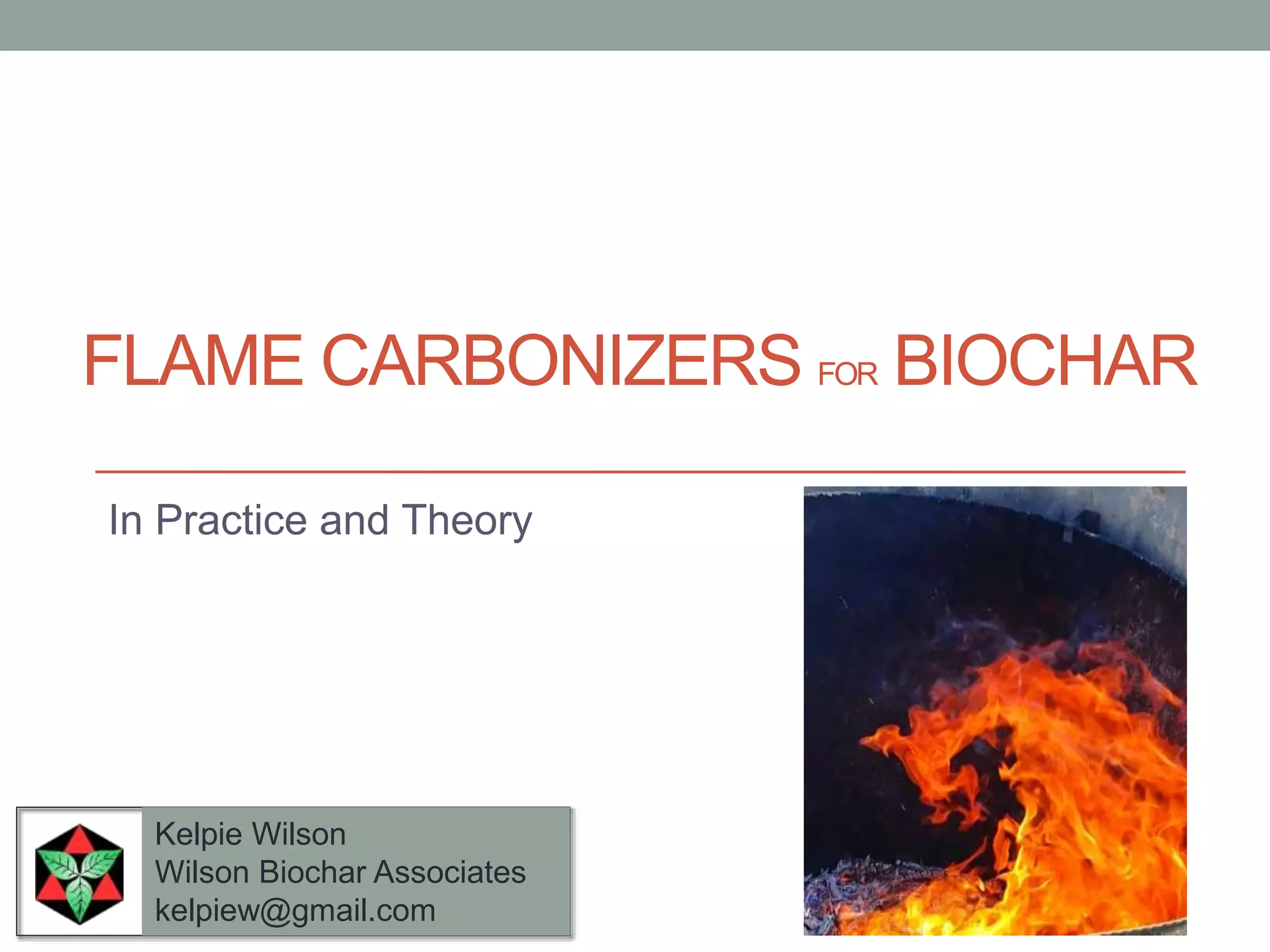
FLAME CARBONIZERS FOR BIOCHAR
Kelpie Wilson
Wilson Biochar Associates
kelpiew@gmail.com
In Practice and Theory
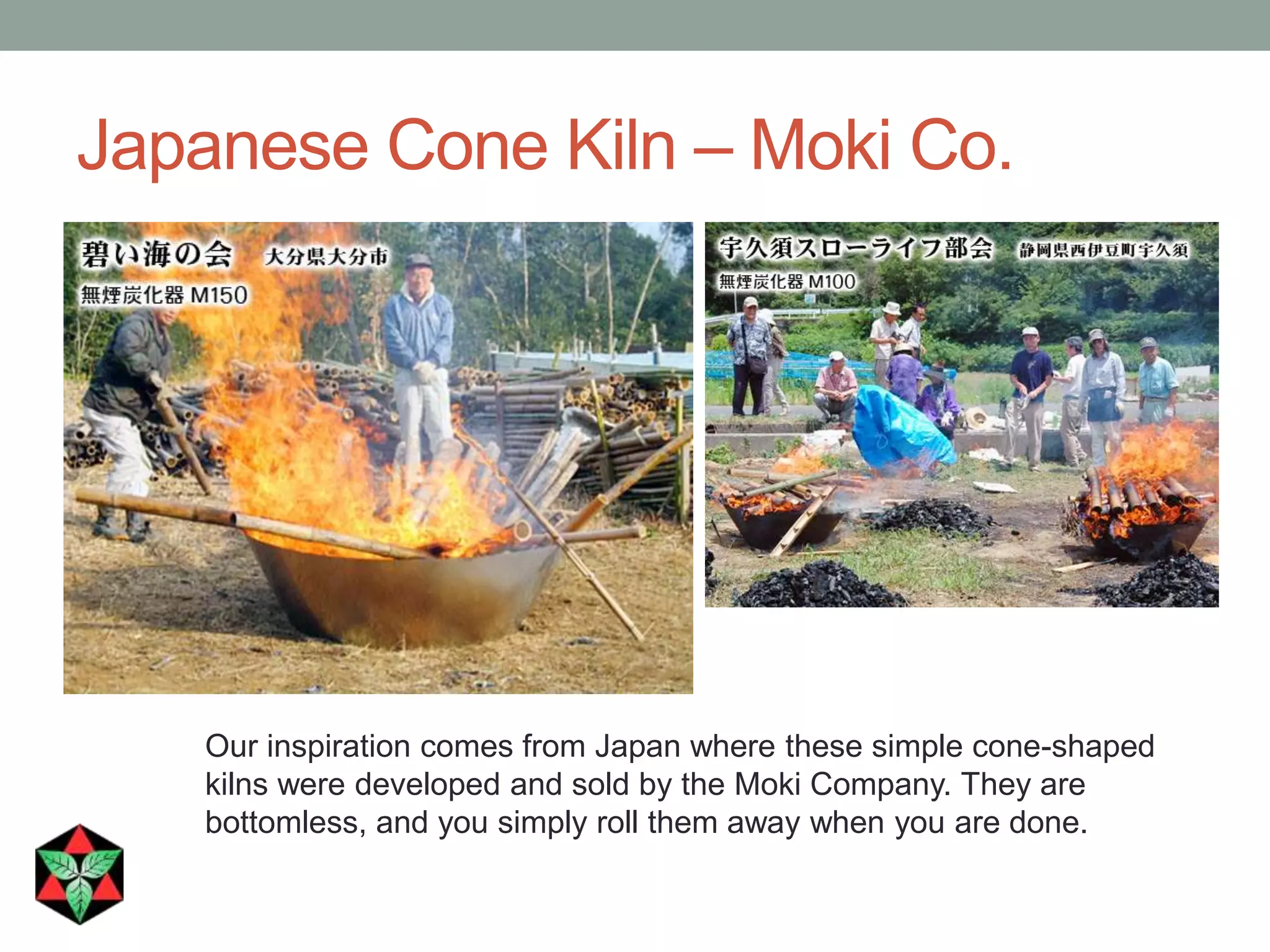
Japanese Cone Kiln – Moki Co.
Our inspiration comes from Japan where these simple cone-shaped
kilns were developed and sold by the Moki Company. They are
bottomless, and you simply roll them away when you are done.
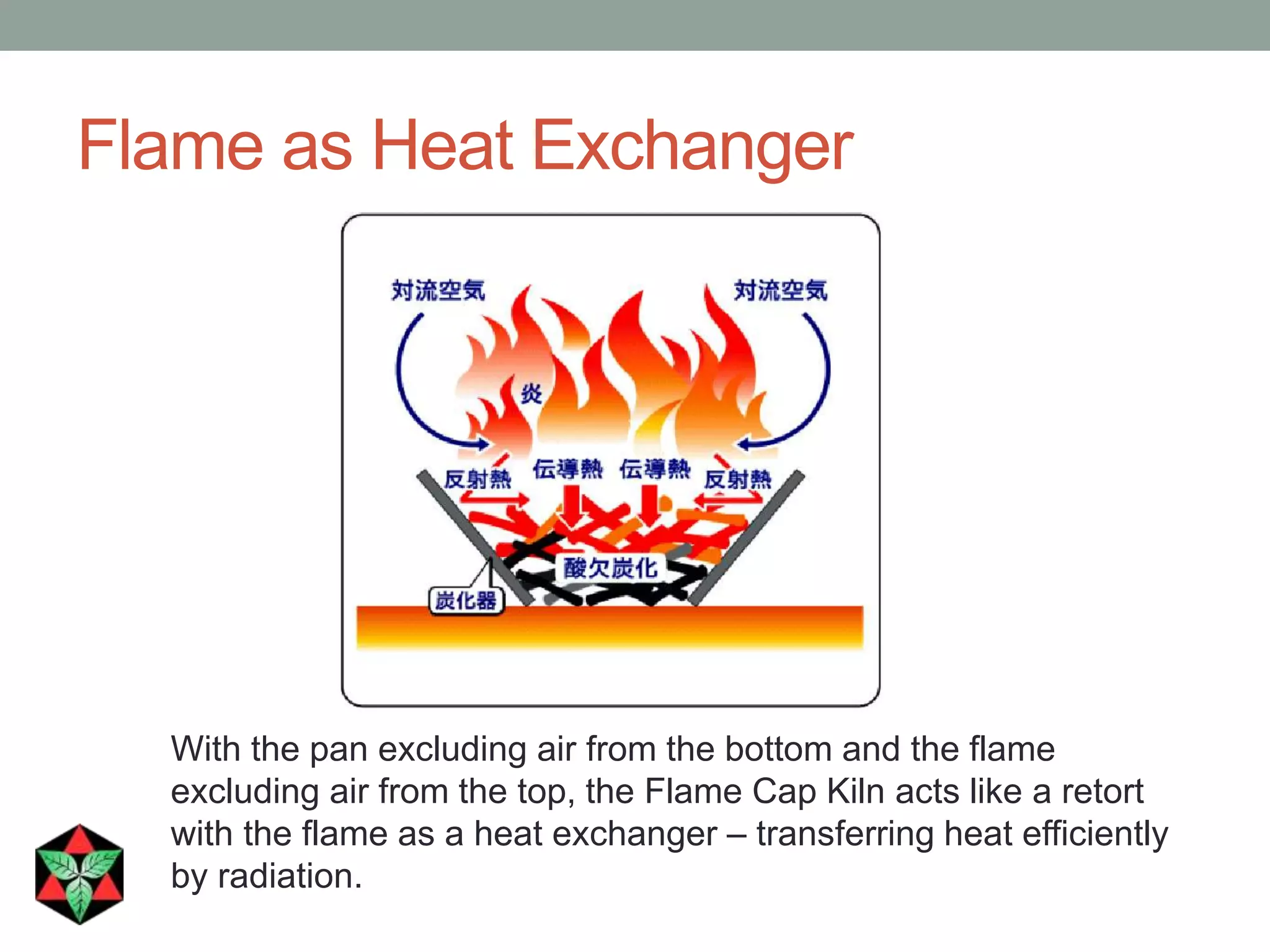
Flame as Heat Exchanger
With the pan excluding air from the bottom and the flame
excluding air from the top, the Flame Cap Kiln acts like a retort
with the flame as a heat exchanger – transferring heat efficiently
by radiation.
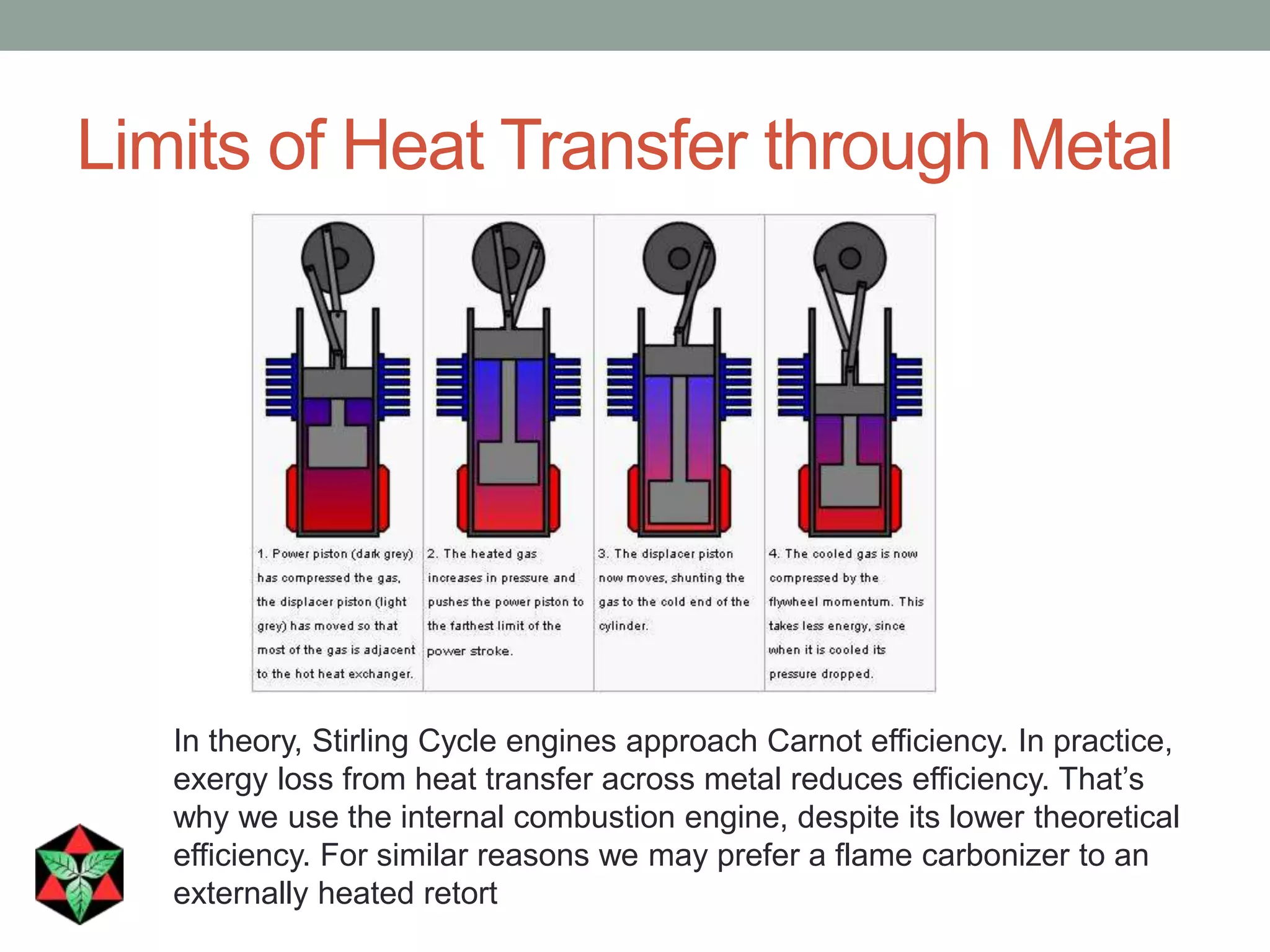
Limits of Heat Transfer through Metal
In theory, Stirling Cycle engines approach Carnot efficiency. In practice,
exergy loss from heat transfer across metal reduces efficiency. That’s
why we use the internal combustion engine, despite its lower theoretical
efficiency. For similar reasons we may prefer a flame carbonizer to an
externally heated retort
Basic Flame Types
• Flames can be divided into categories:
• Pre-mixed vs Diffusion
• Laminar vs Turbulent
• Concurrent flow (axial) vs Counter-current flow or Cross-current flow
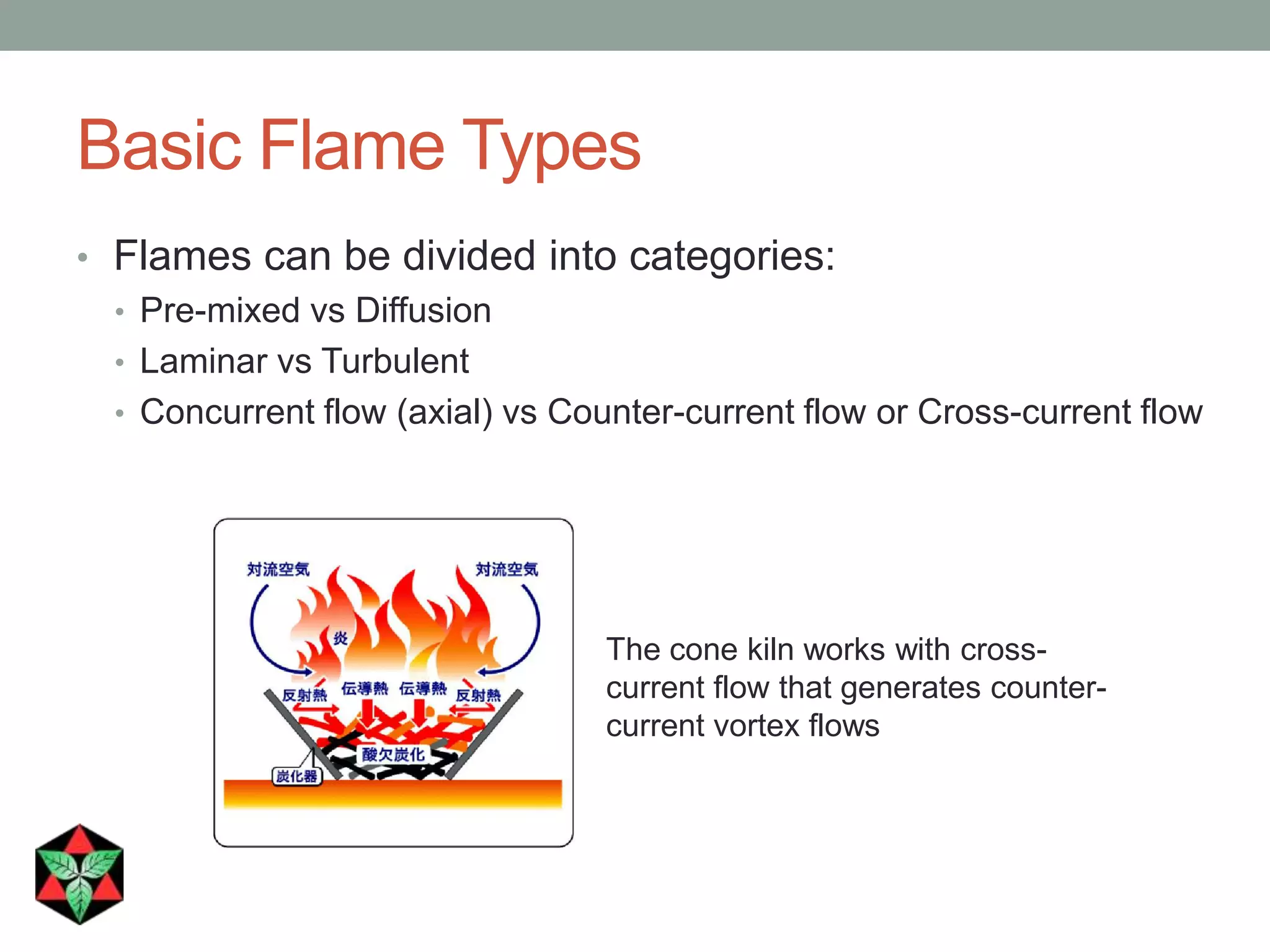
The cone kiln works with cross-
current flow that generates counter-
current vortex flows
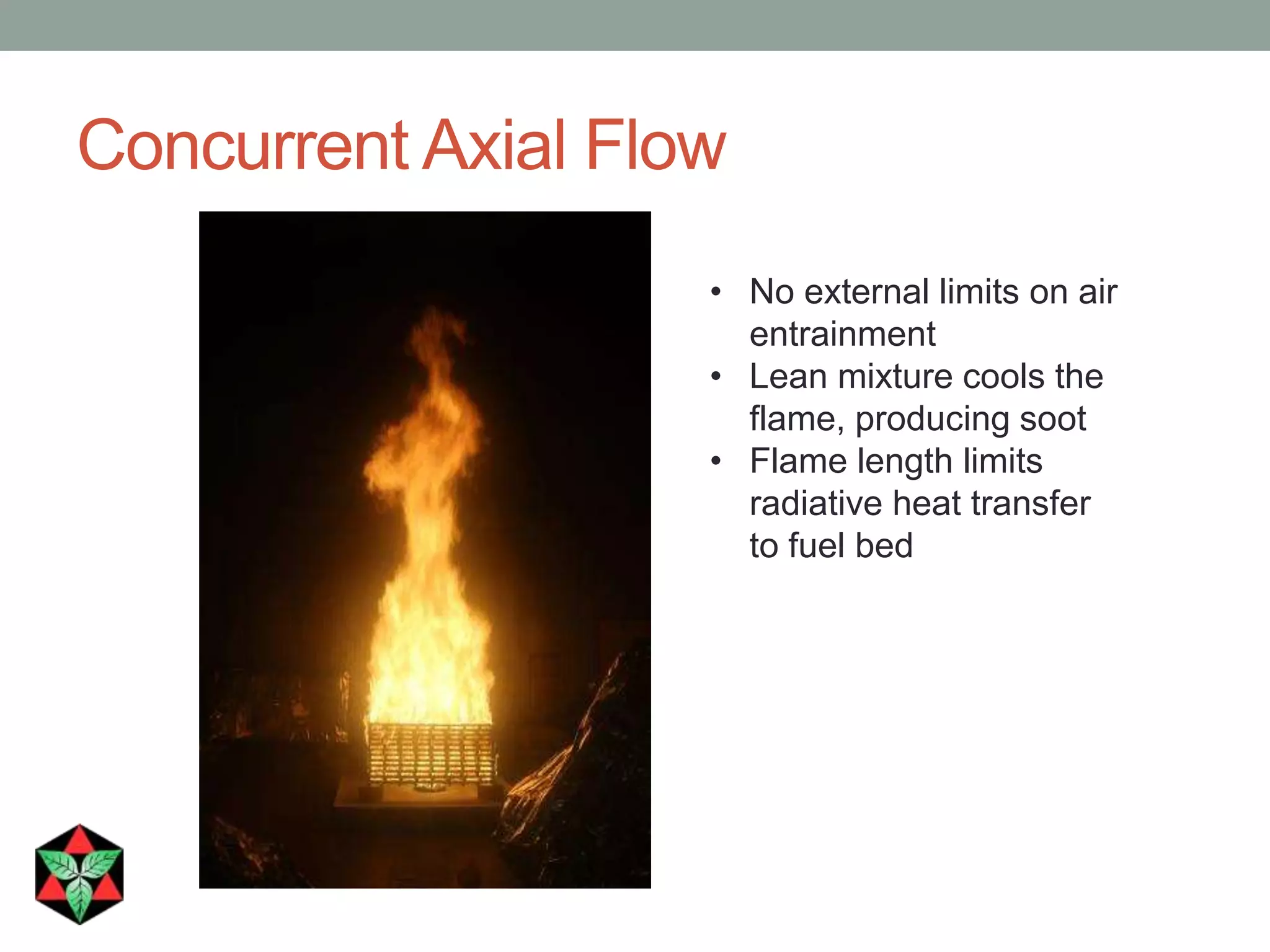
Concurrent Axial Flow
• No external limits on air
entrainment
• Lean mixture cools the
flame, producing soot
• Flame length limits
radiative heat transfer
to fuel bed
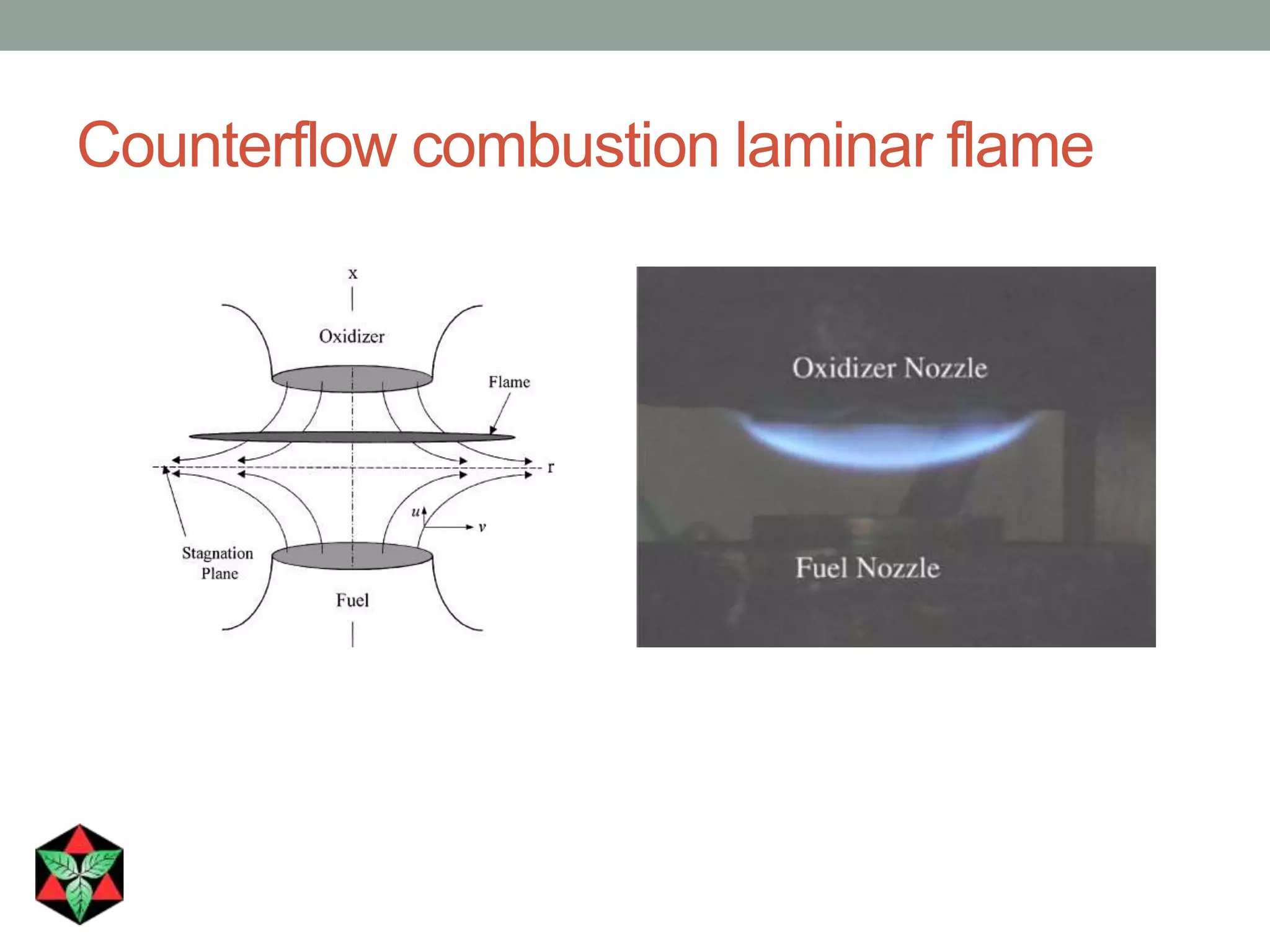
Counterflow combustion laminar flame
For Best Heat Transfer:
Shorten the Flame Length
• Flame length is a function of mass flow rate and fuel bed
diameter
• Open sided piles entrain more air than enclosed piles –
giving higher air mass flow rate and higher flame length
• High flow rate flames cool faster and radiate less heat to
the fuel bed
• Piles enclosed by a surrounding cylinder have shorter,
more turbulent flames due to less entrained air
Buoyant diffusion flames: Some measurements of air entrainment, heat transfer and flame
merging. Thomas, et al. Fire Research Note. 1964
Flame Carbonizer Flame Types
• TLUDs* and Ricks
• Con-current Axial Flow
• Flame Kilns
• Shallow Kilns
• Cross-current vortex generation
• Deep Kilns
• Passive Counter-current flow
• Air Burners
• Active Counter-current flow
• *TLUD: Top-Lit Up-Draft gasifier
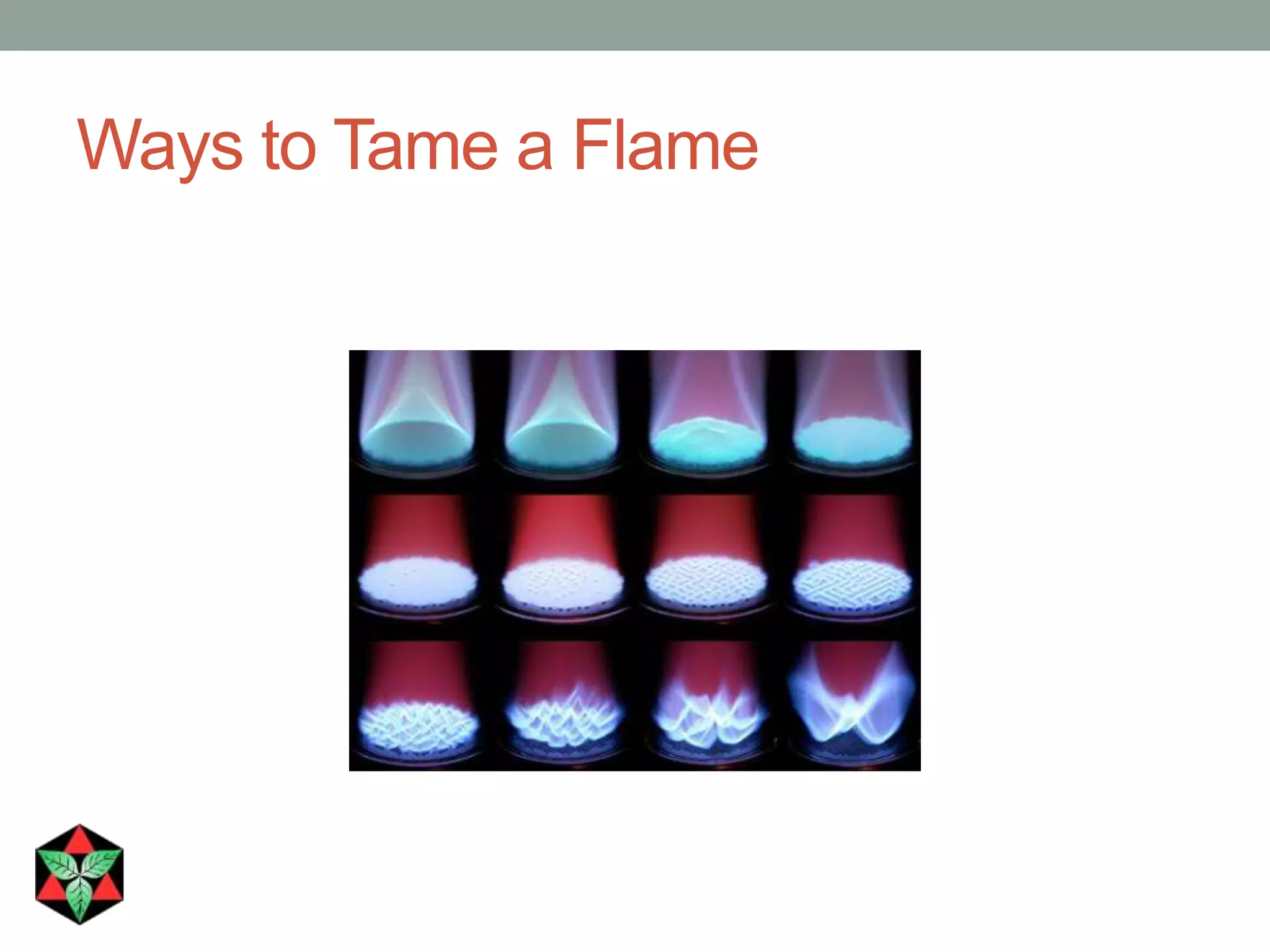
Ways to Tame a Flame
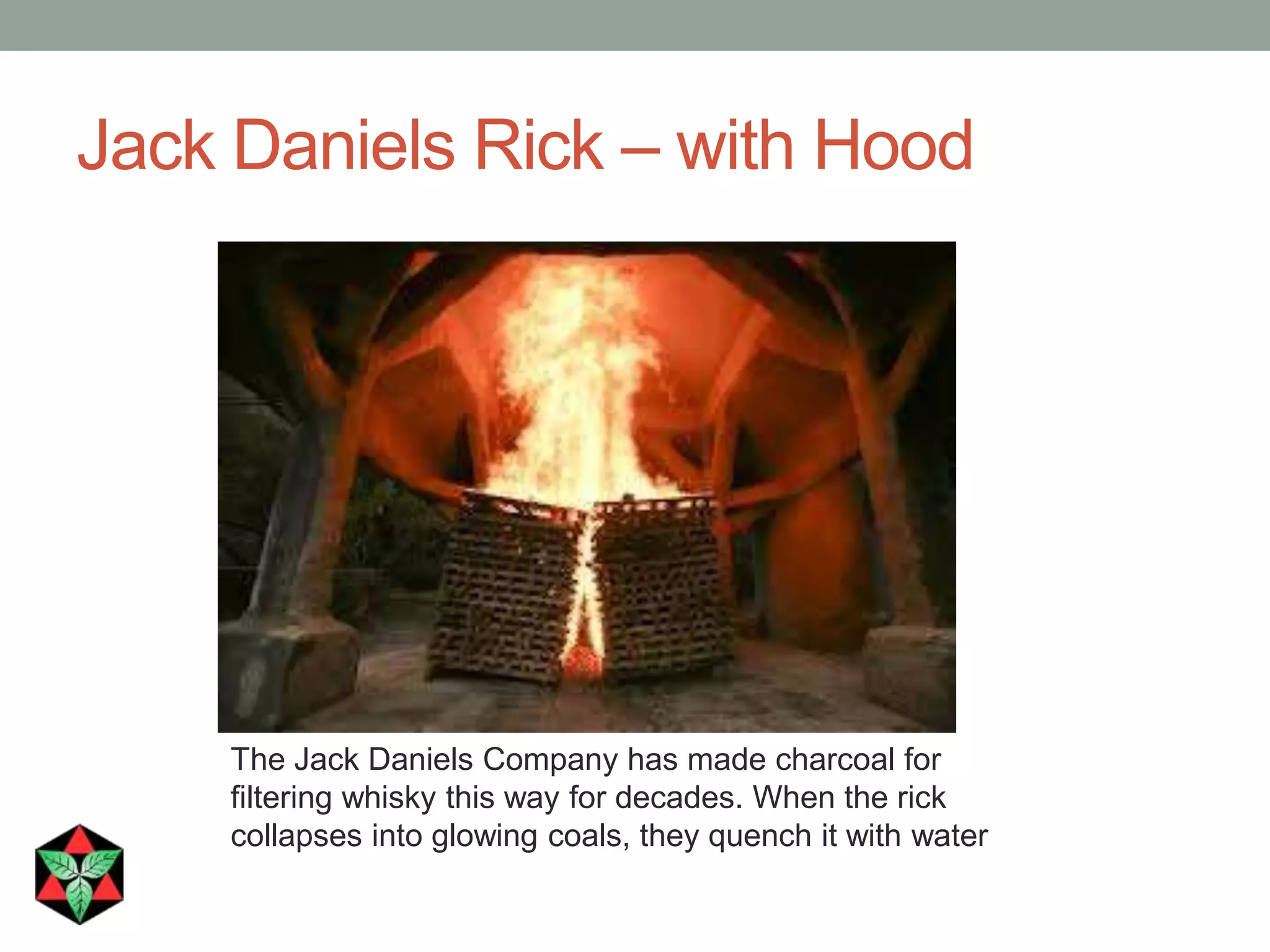
Jack Daniels Rick – with Hood
The Jack Daniels Company has made charcoal for
filtering whisky this way for decades. When the rick
collapses into glowing coals, they quench it with water
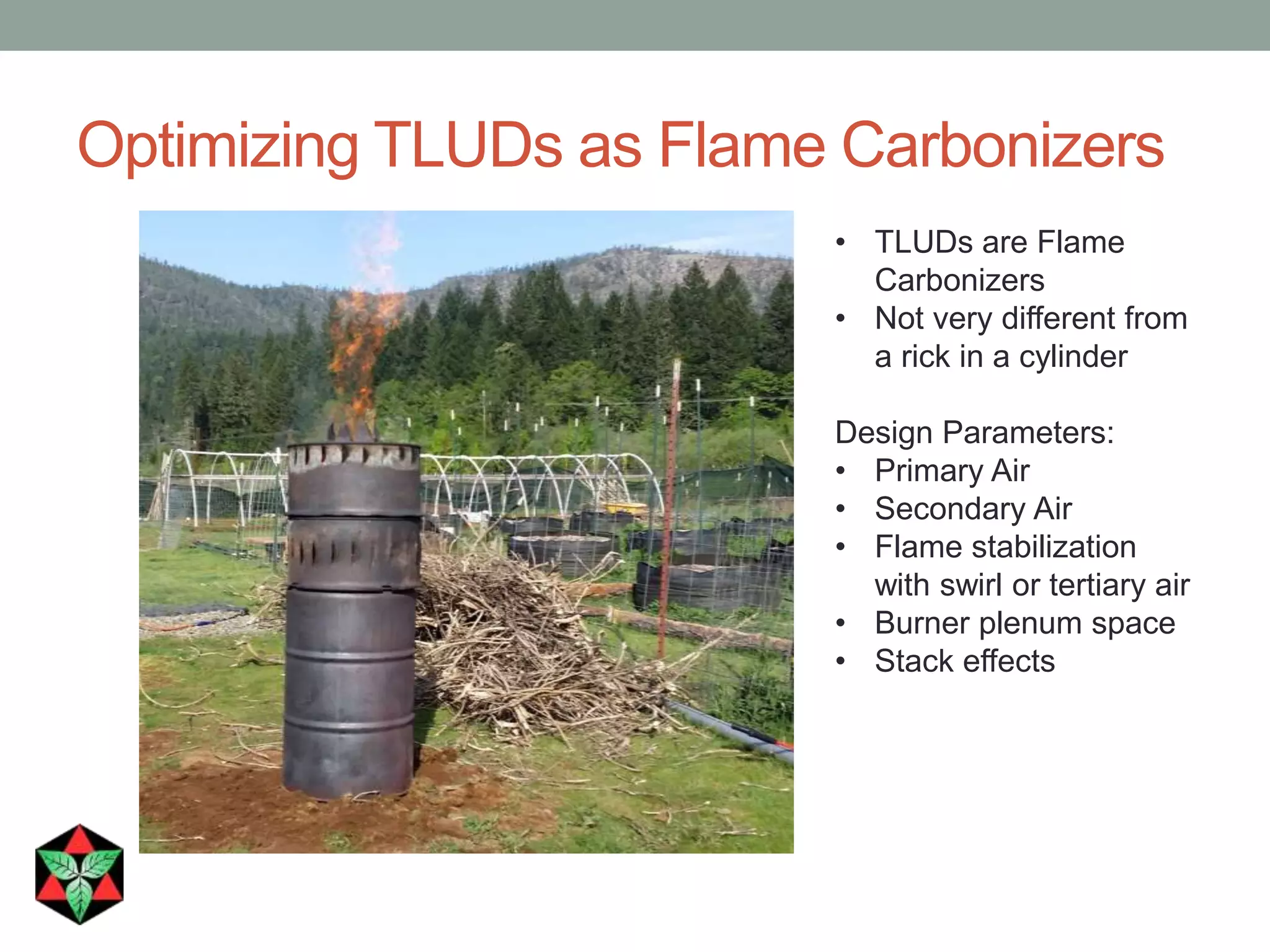
Optimizing TLUDs as Flame Carbonizers
• TLUDs are Flame
Carbonizers
• Not very different from
a rick in a cylinder
Design Parameters:
• Primary Air
• Secondary Air
• Flame stabilization
with swirl or tertiary air
• Burner plenum space
• Stack effects
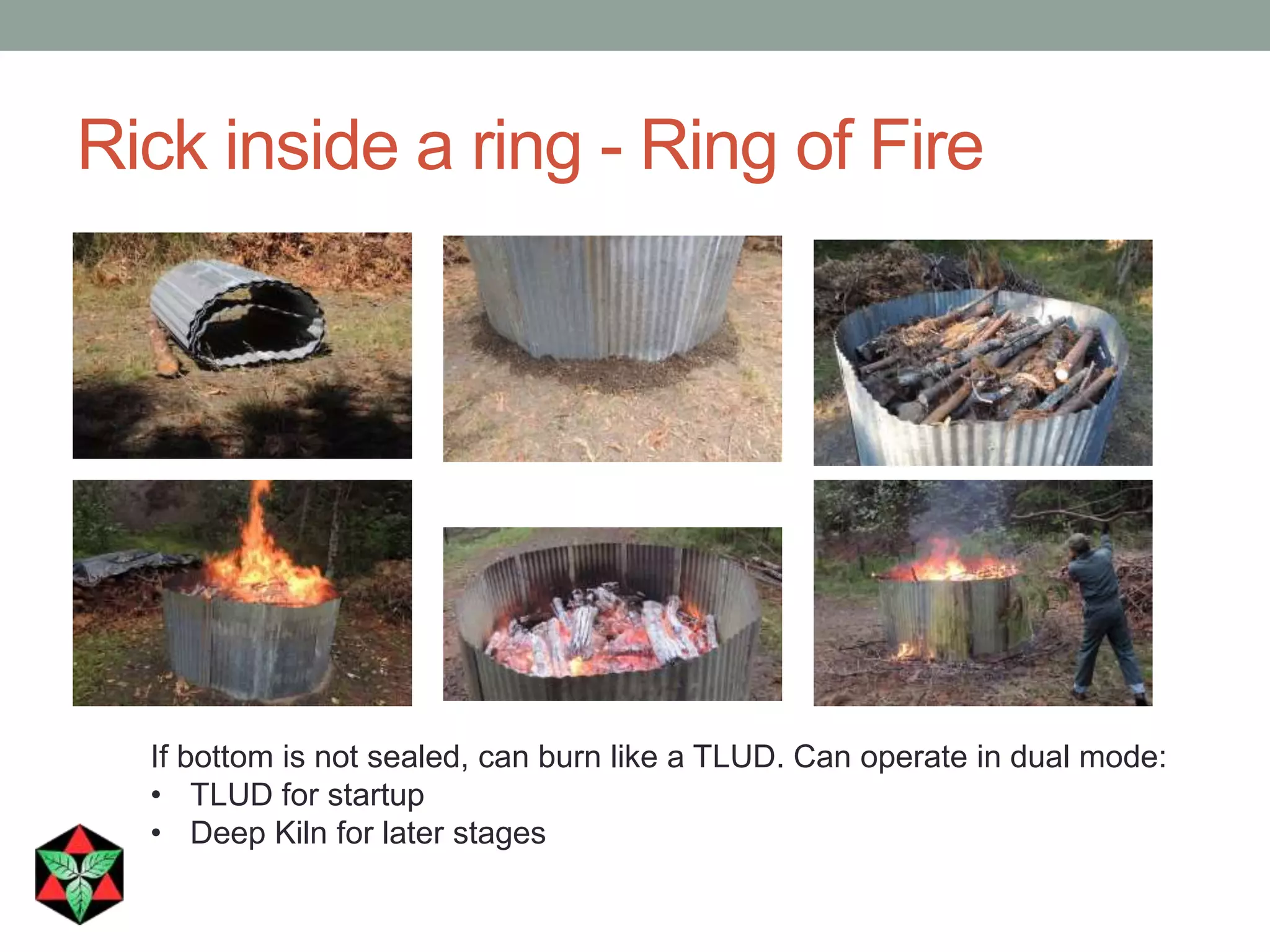
Rick inside a ring - Ring of Fire
If bottom is not sealed, can burn like a TLUD. Can operate in dual mode:
• TLUD for startup
• Deep Kiln for later stages
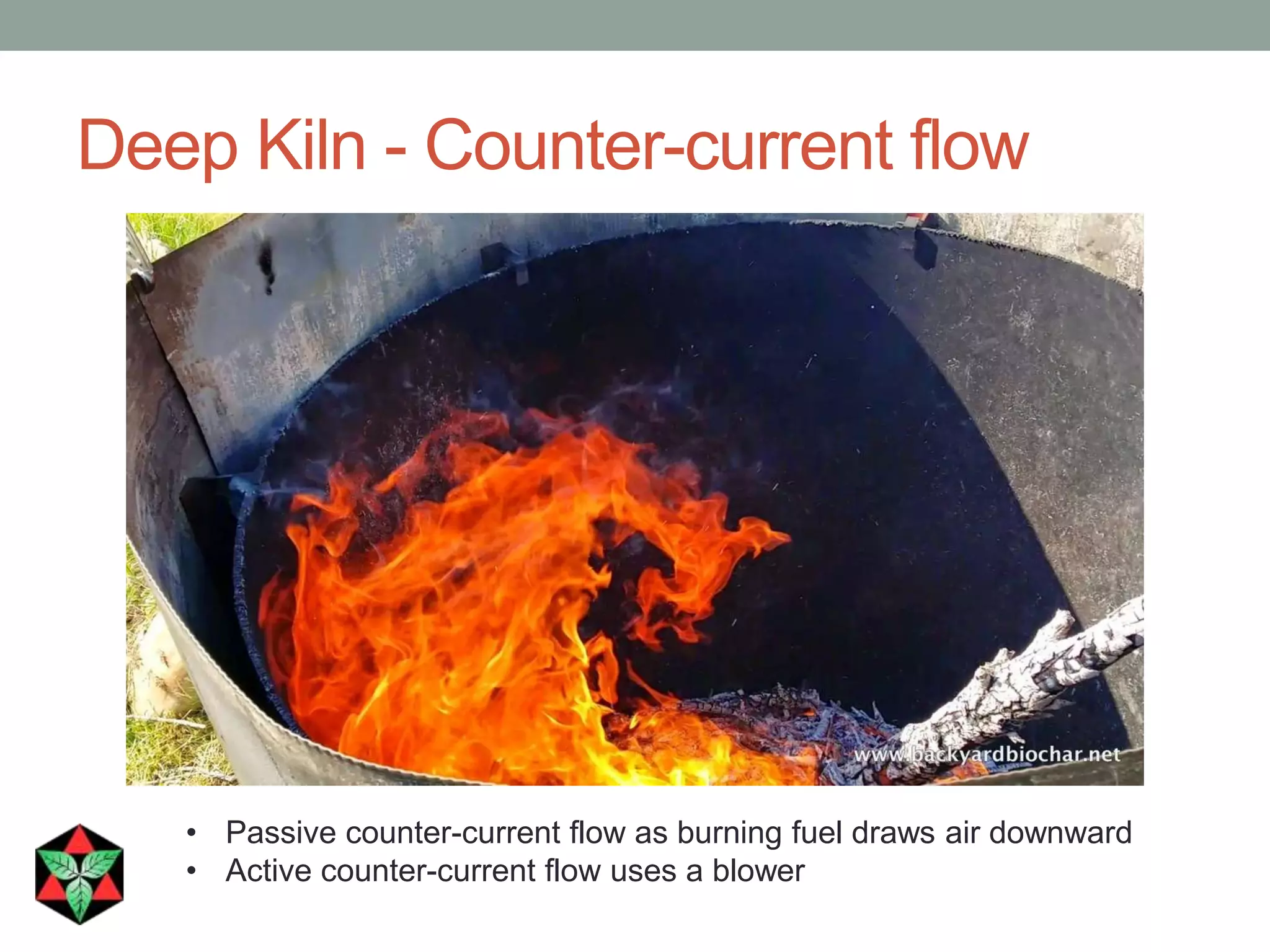
Deep Kiln - Counter-current flow
• Passive counter-current flow as burning fuel draws air downward
• Active counter-current flow uses a blower
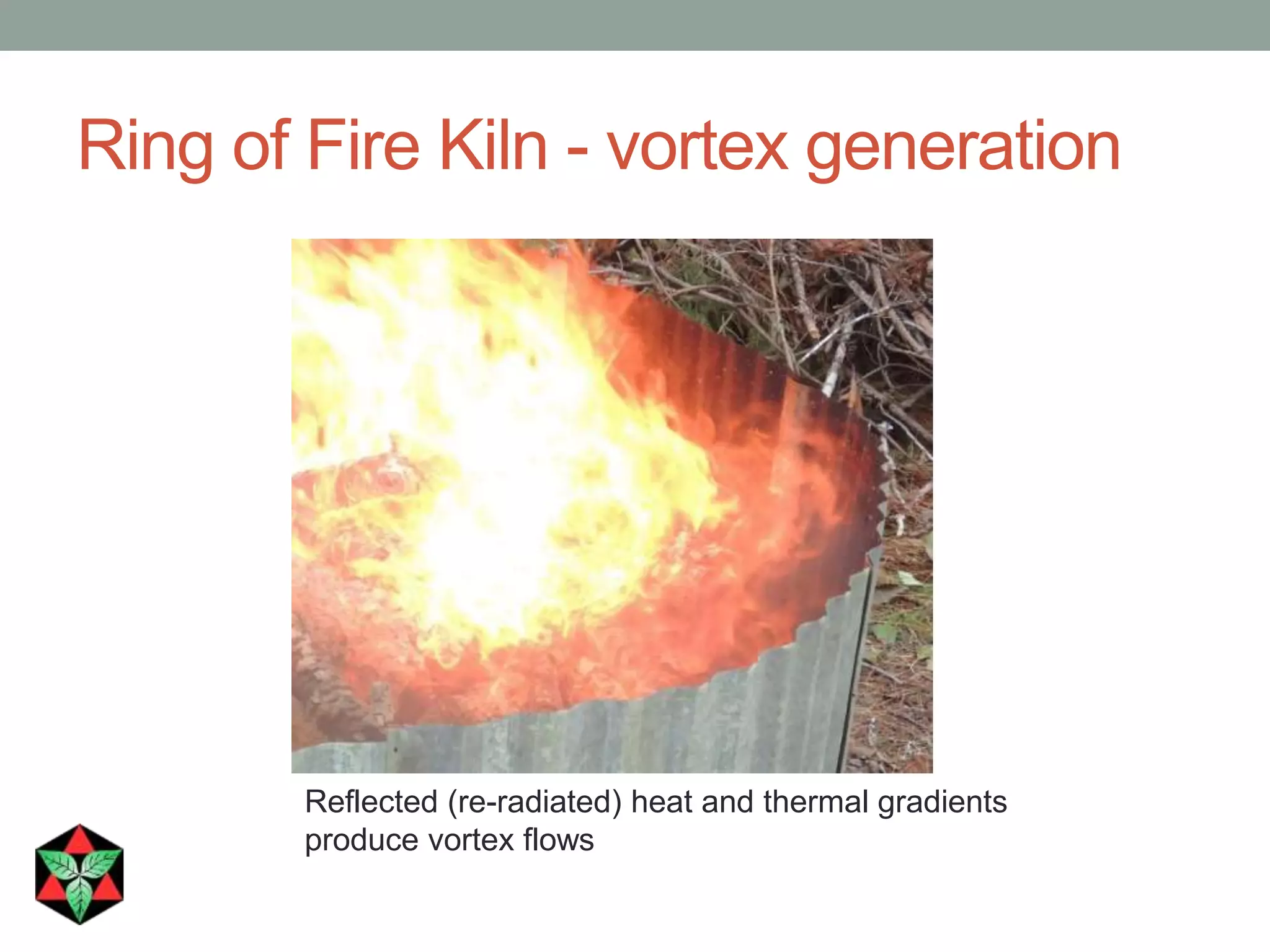
Ring of Fire Kiln - vortex generation
Reflected (re-radiated) heat and thermal gradients
produce vortex flows
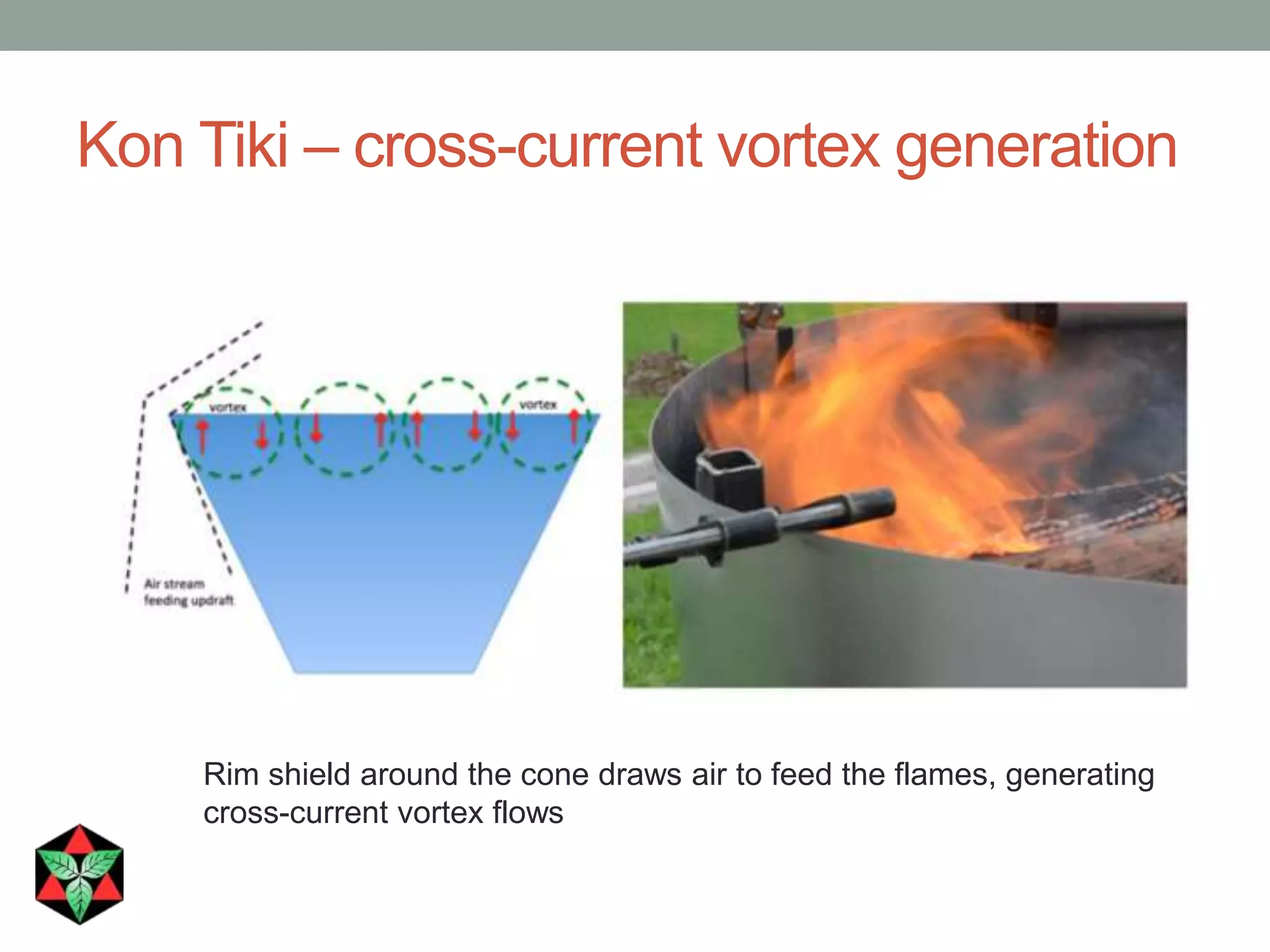
Kon Tiki – cross-current vortex generation
Rim shield around the cone draws air to feed the flames, generating
cross-current vortex flows
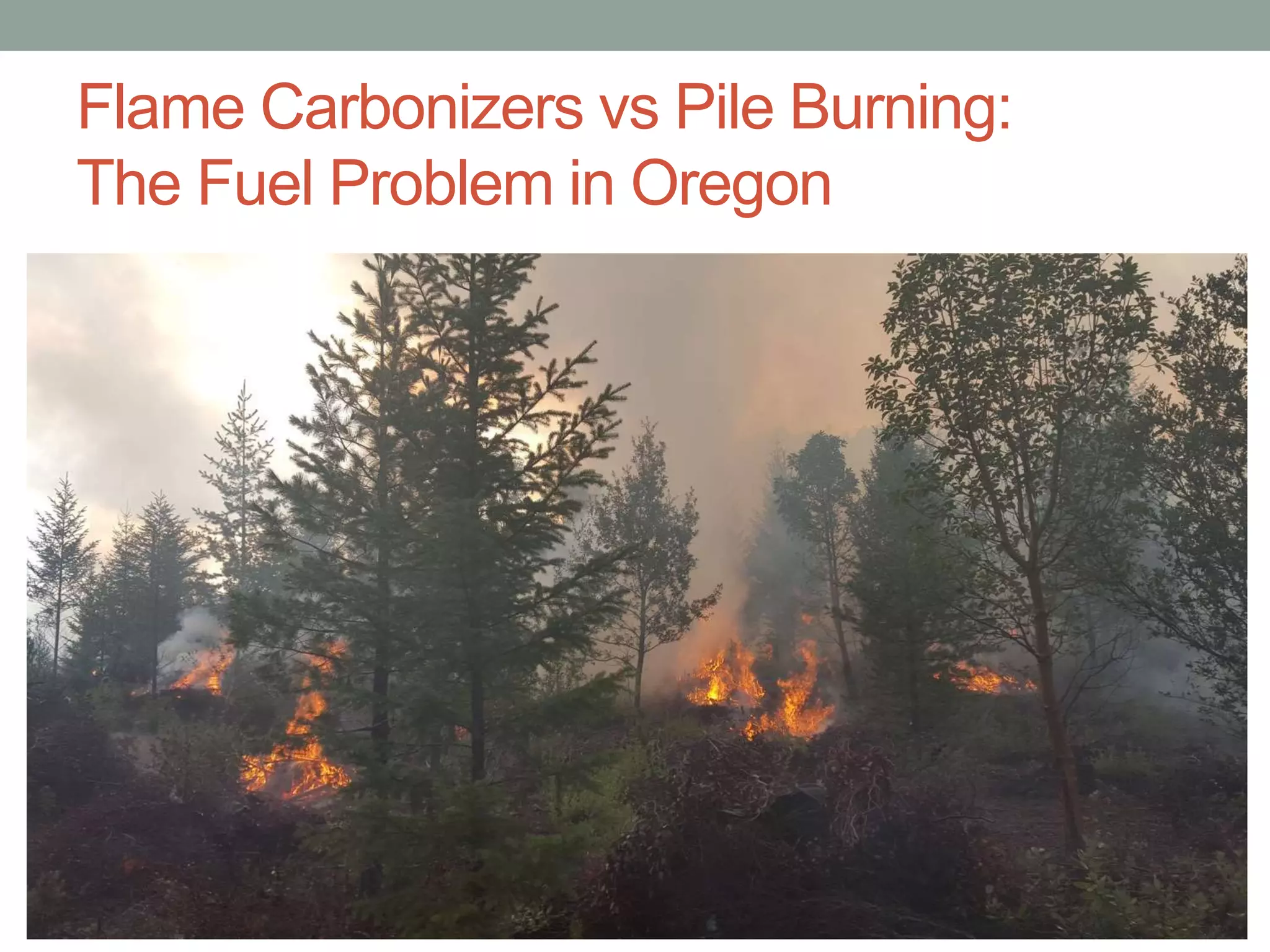
Flame Carbonizers vs Pile Burning:
The Fuel Problem in Oregon
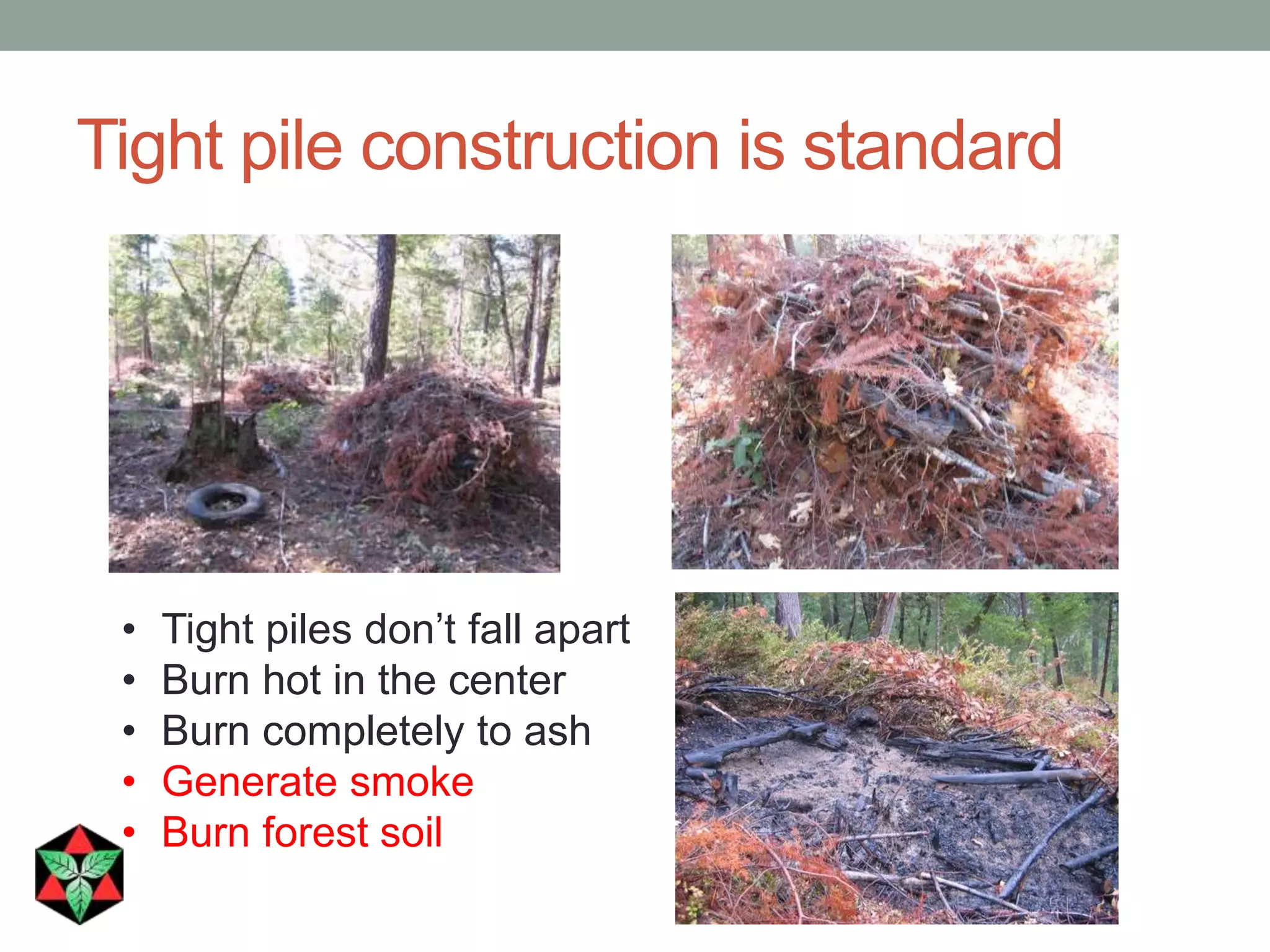
Tight pile construction is standard
• Tight piles don’t fall apart
• Burn hot in the center
• Burn completely to ash
• Generate smoke
• Burn forest soil
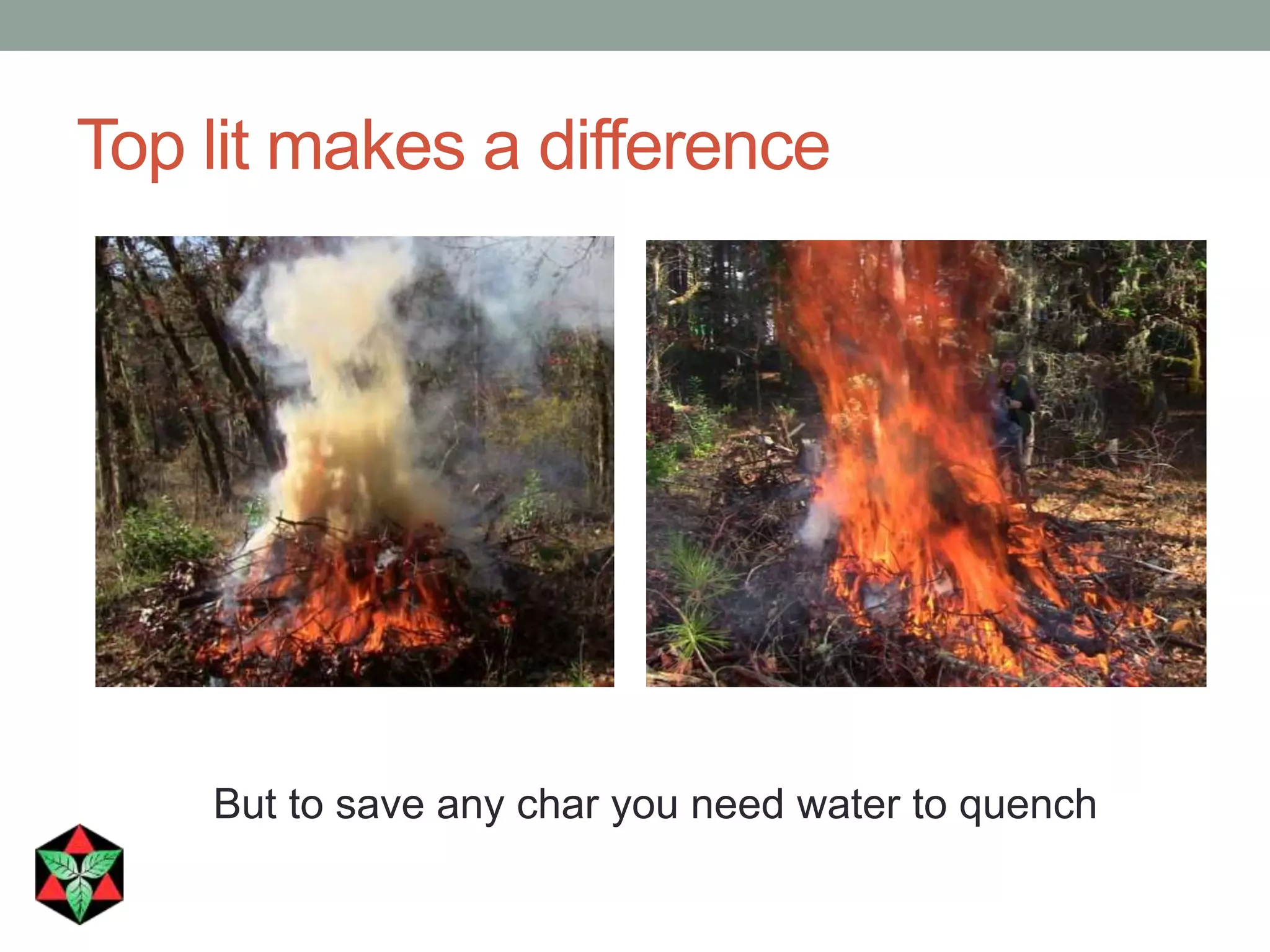
Top lit makes a difference
But to save any char you need water to quench
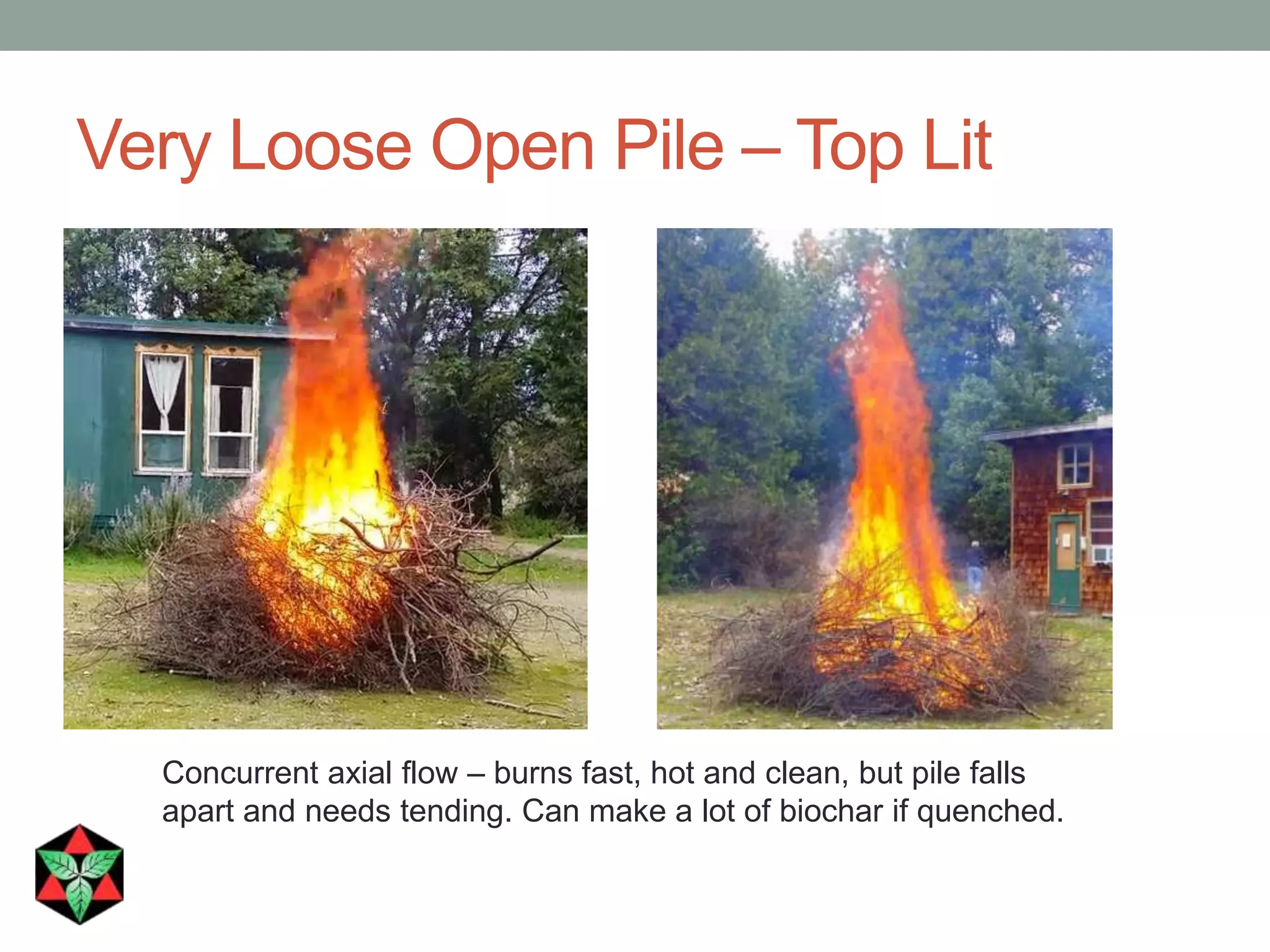
Very Loose Open Pile – Top Lit
Concurrent axial flow – burns fast, hot and clean, but pile falls
apart and needs tending. Can make a lot of biochar if quenched.
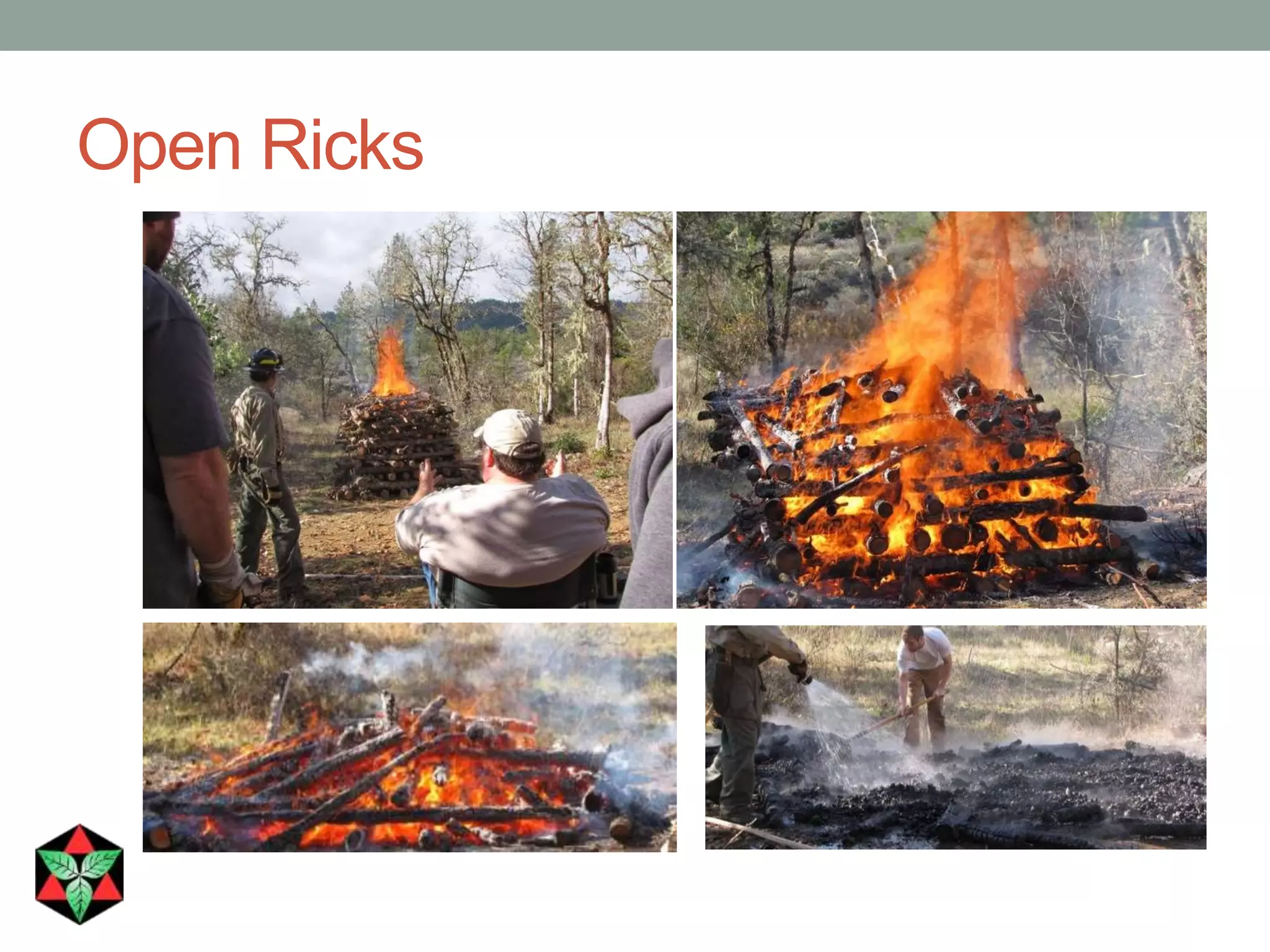
Open Ricks
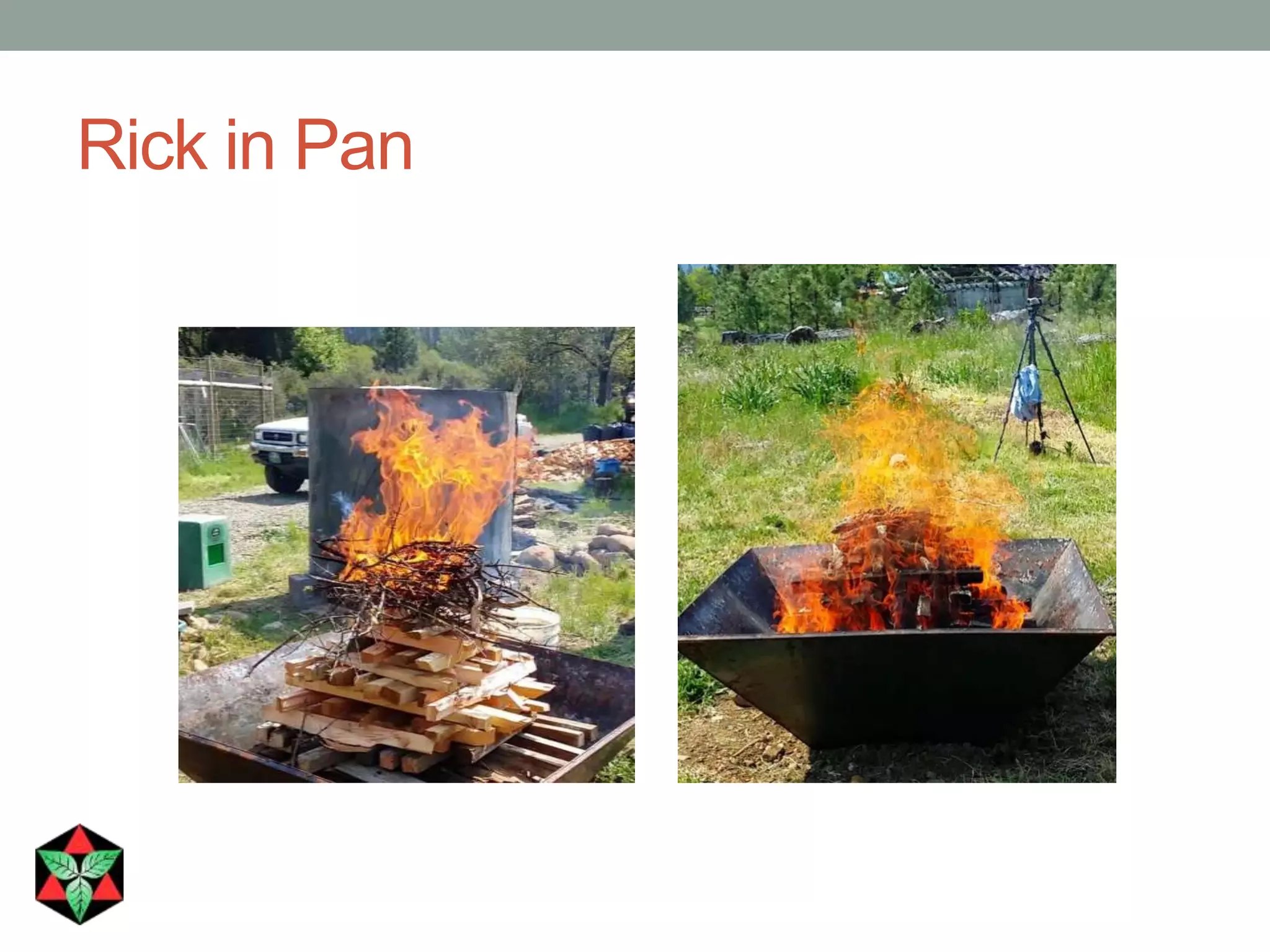
Rick in Pan
Design Parameters for Oregon Kiln
• Sized for feedstock
• Logs 4 to 5 feet long
• Up to 6” diameter
• Log rick fits better in pyramid shape than cone
• Portable but Durable
• Less than 200 lbs
• 14 gauge steel
• Ergonomic for loading
• Only 2 feet high
• Economical
• Pyramid shape cheaper to fabricate than cone
• $600 for Kiln – 5’ top base, 4’ bottom base, 2’ high
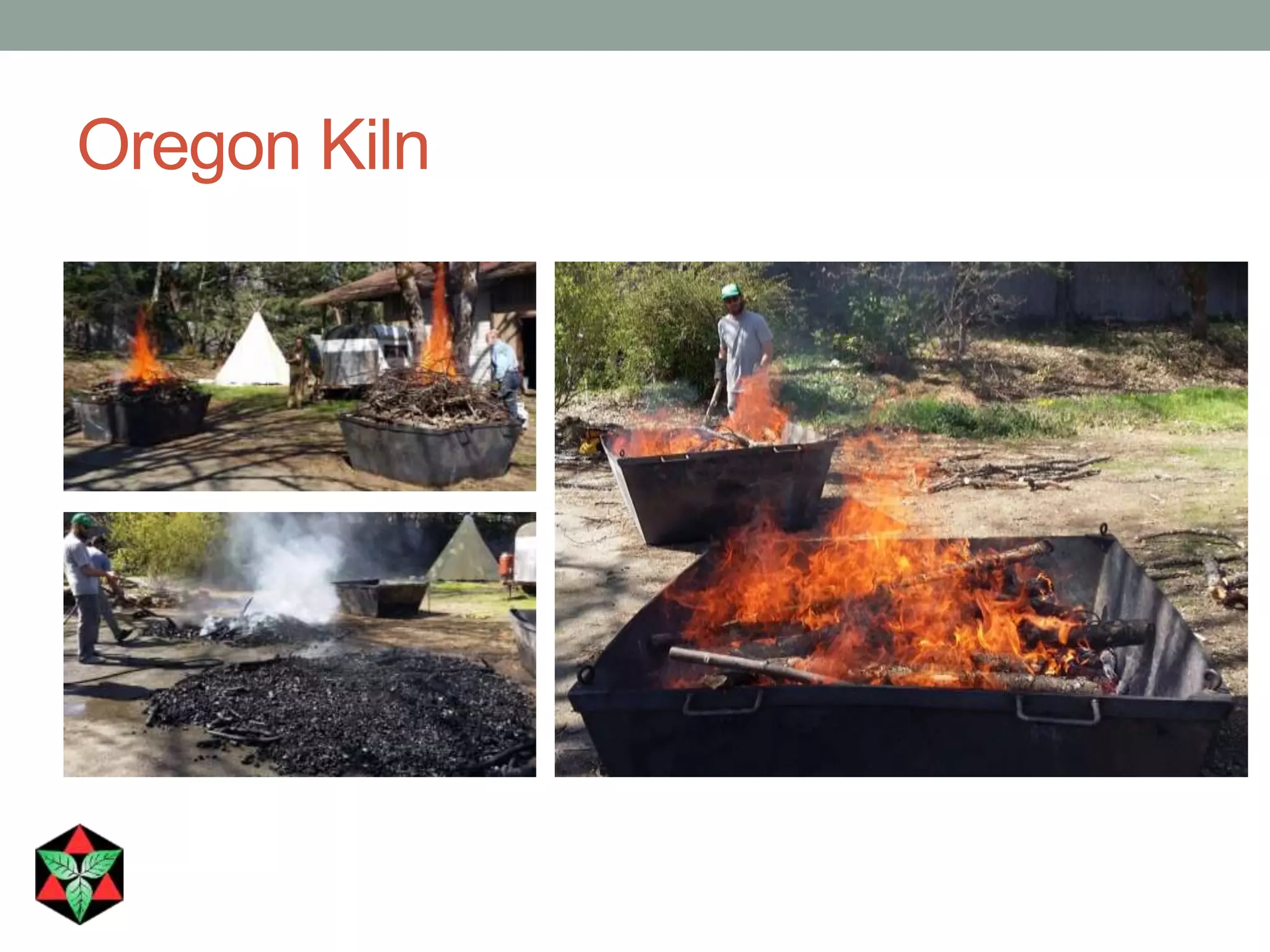
Oregon Kiln
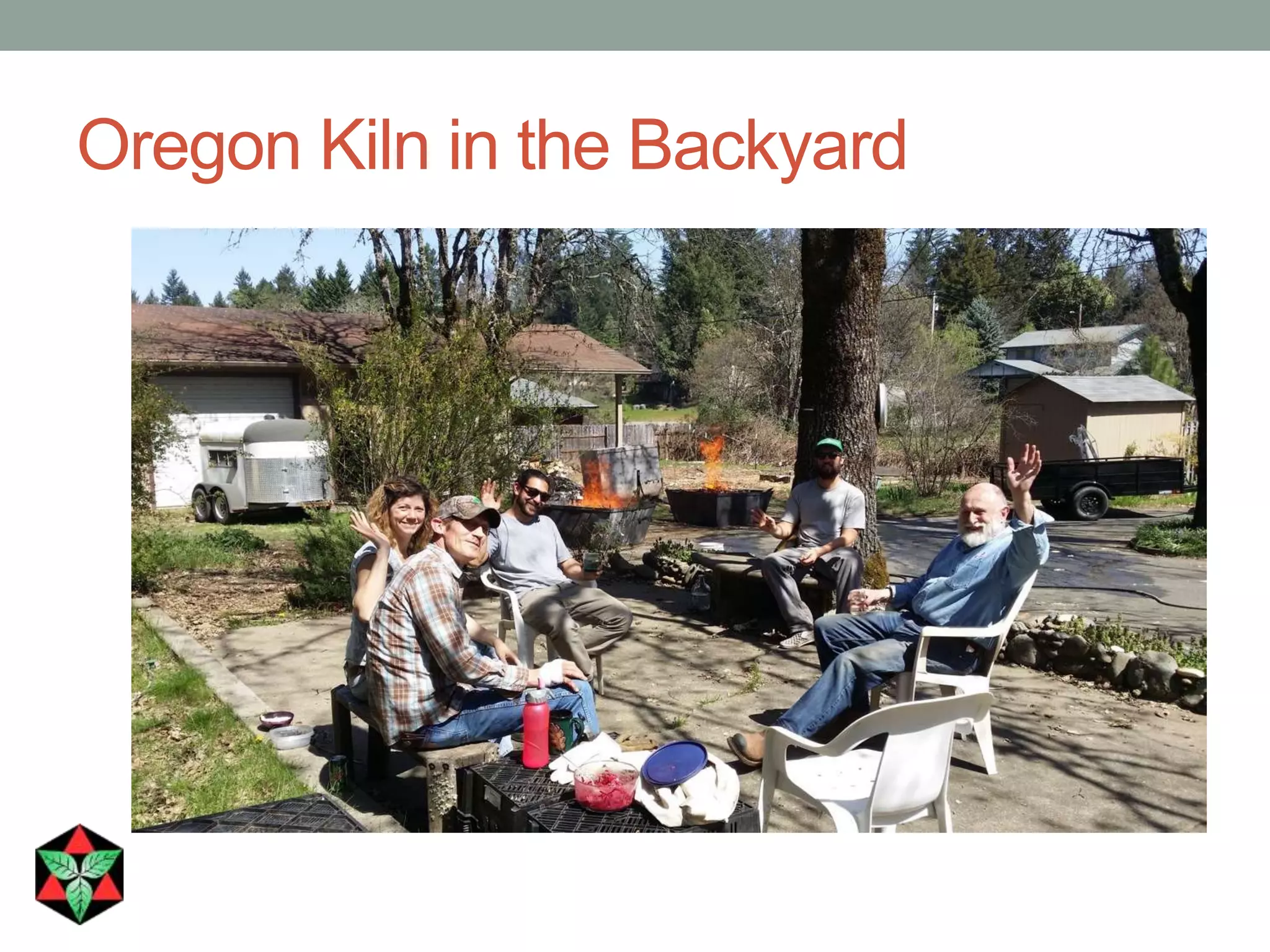
Oregon Kiln in the Backyard
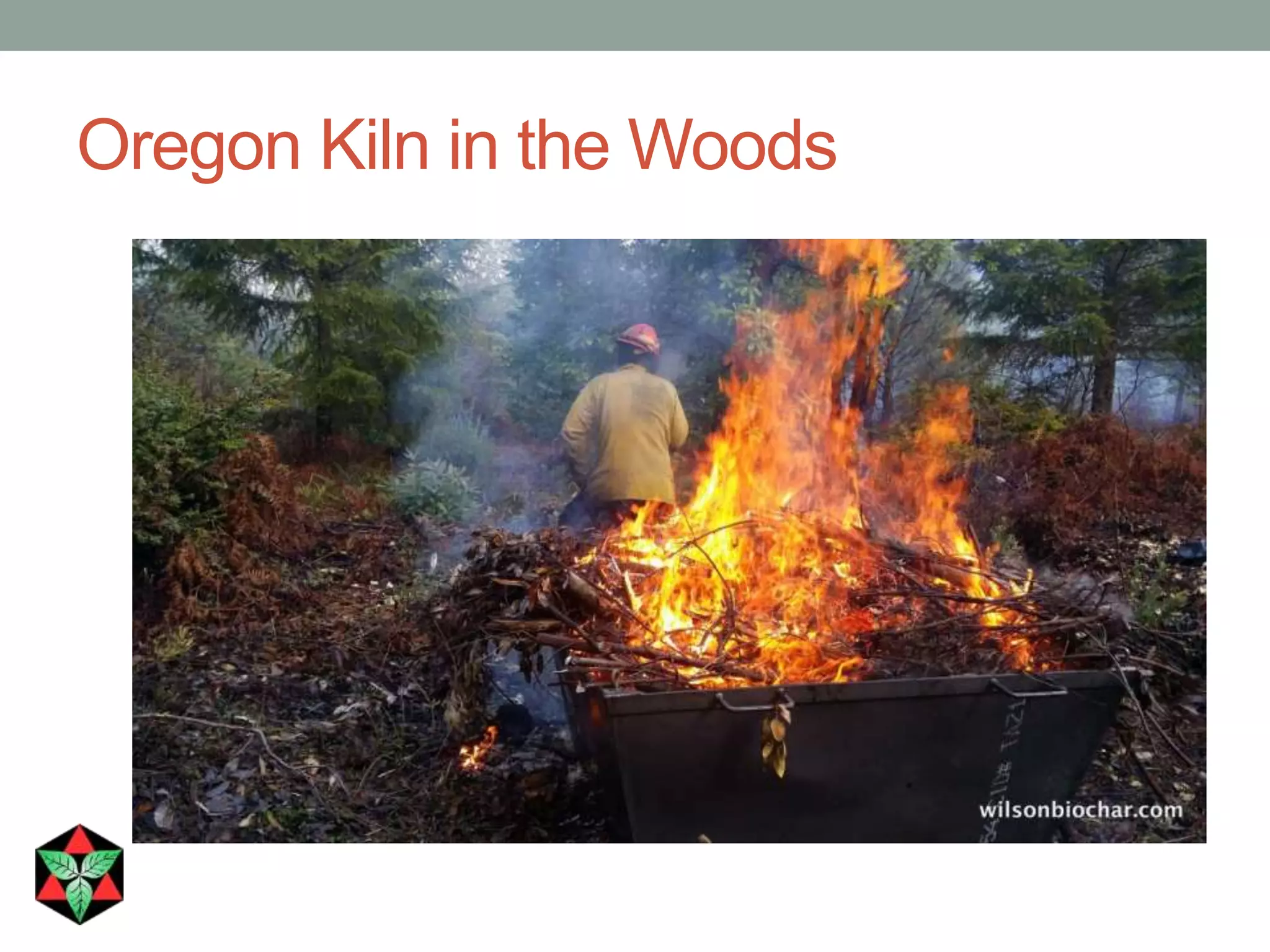
Oregon Kiln in the Woods
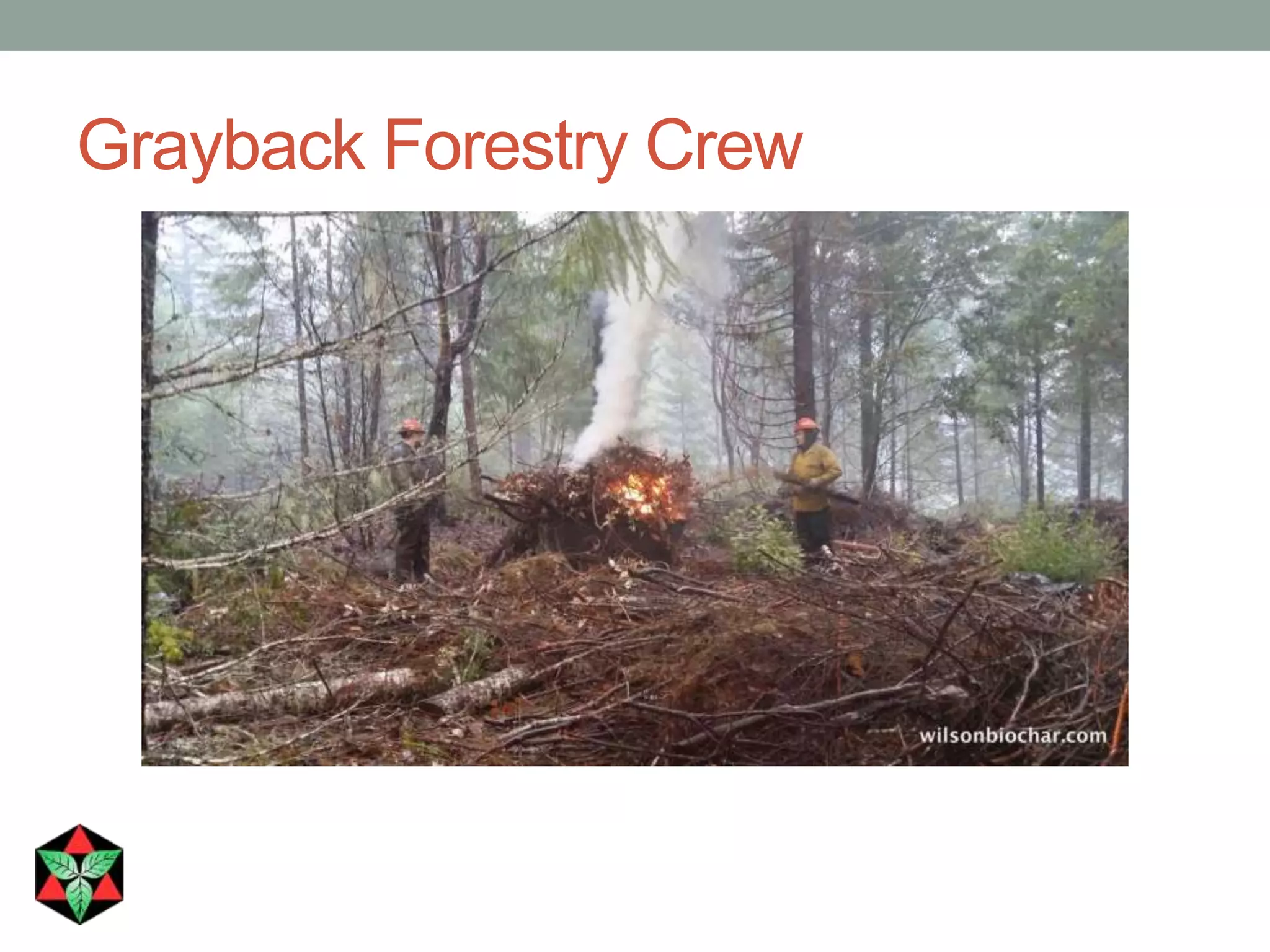
Grayback Forestry Crew
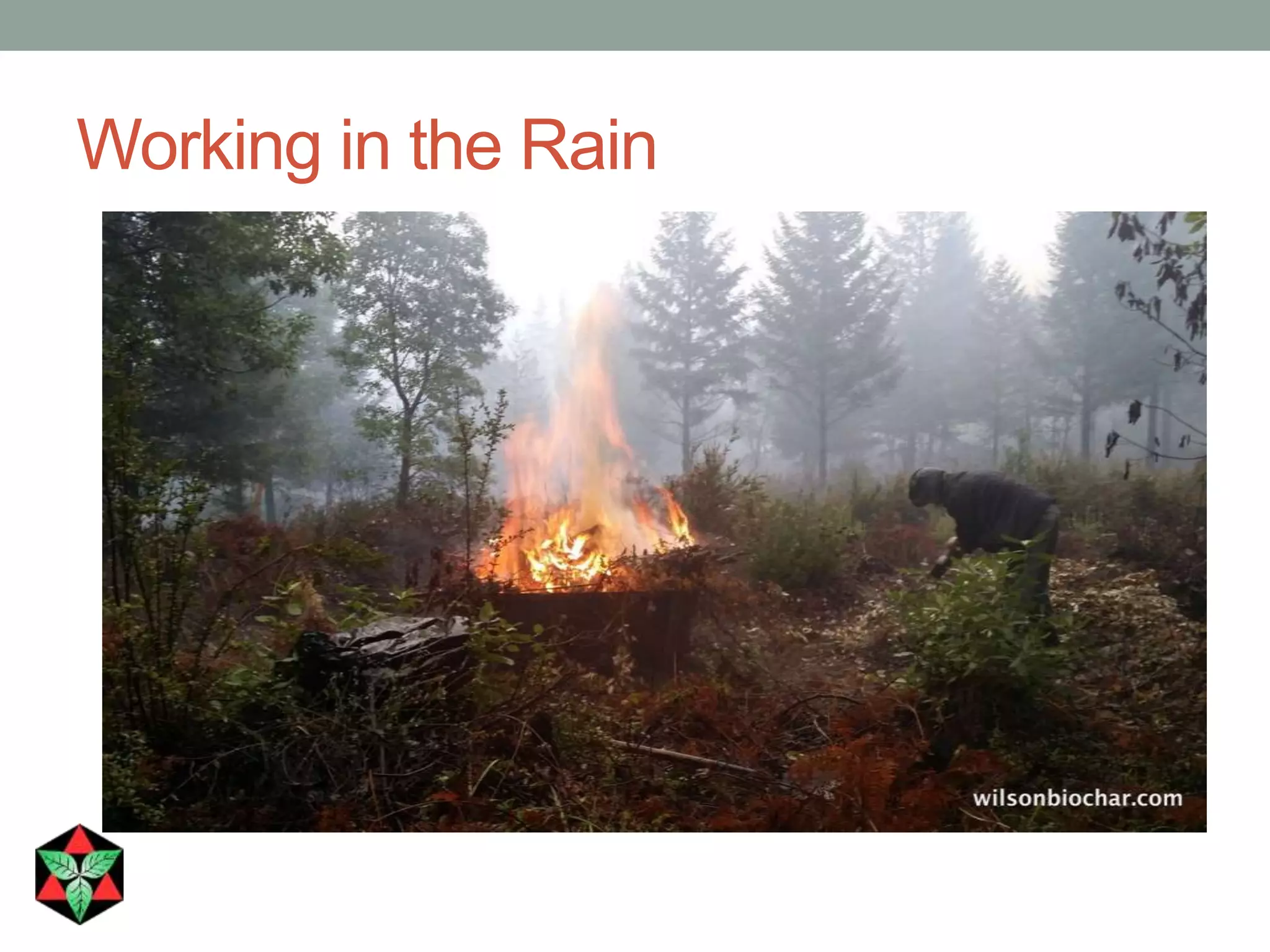
Working in the Rain
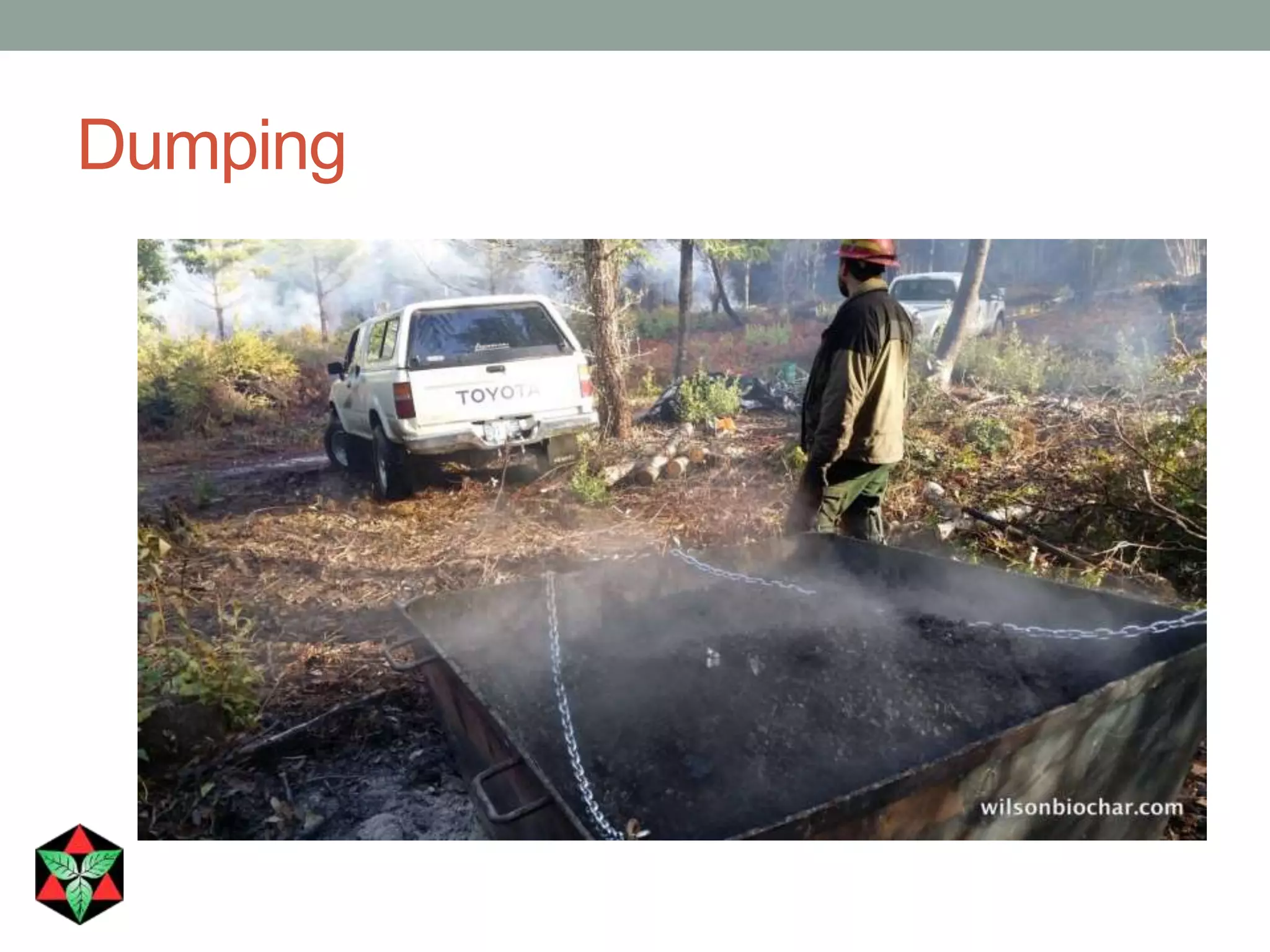
Dumping
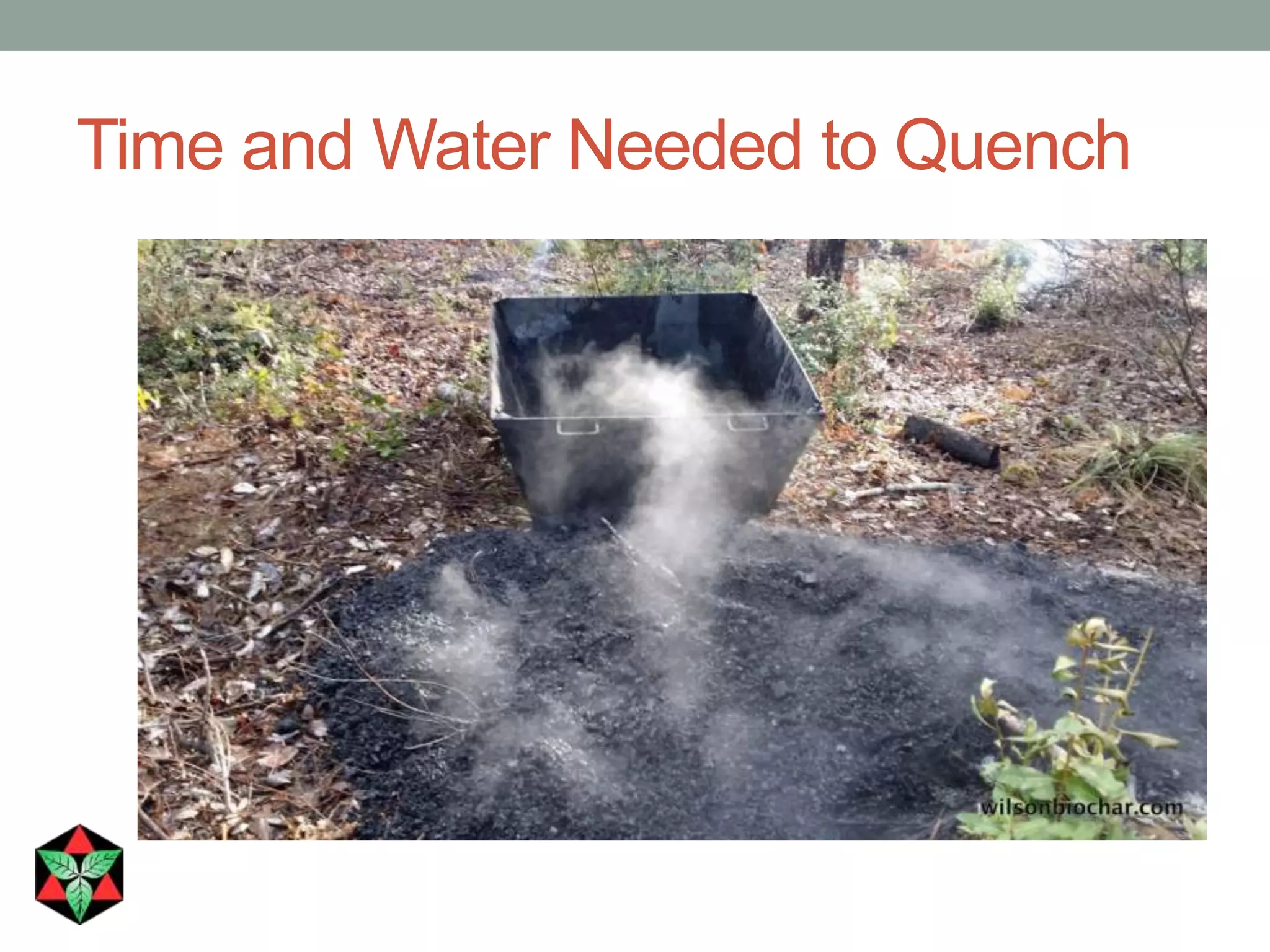
Time and Water Needed to Quench
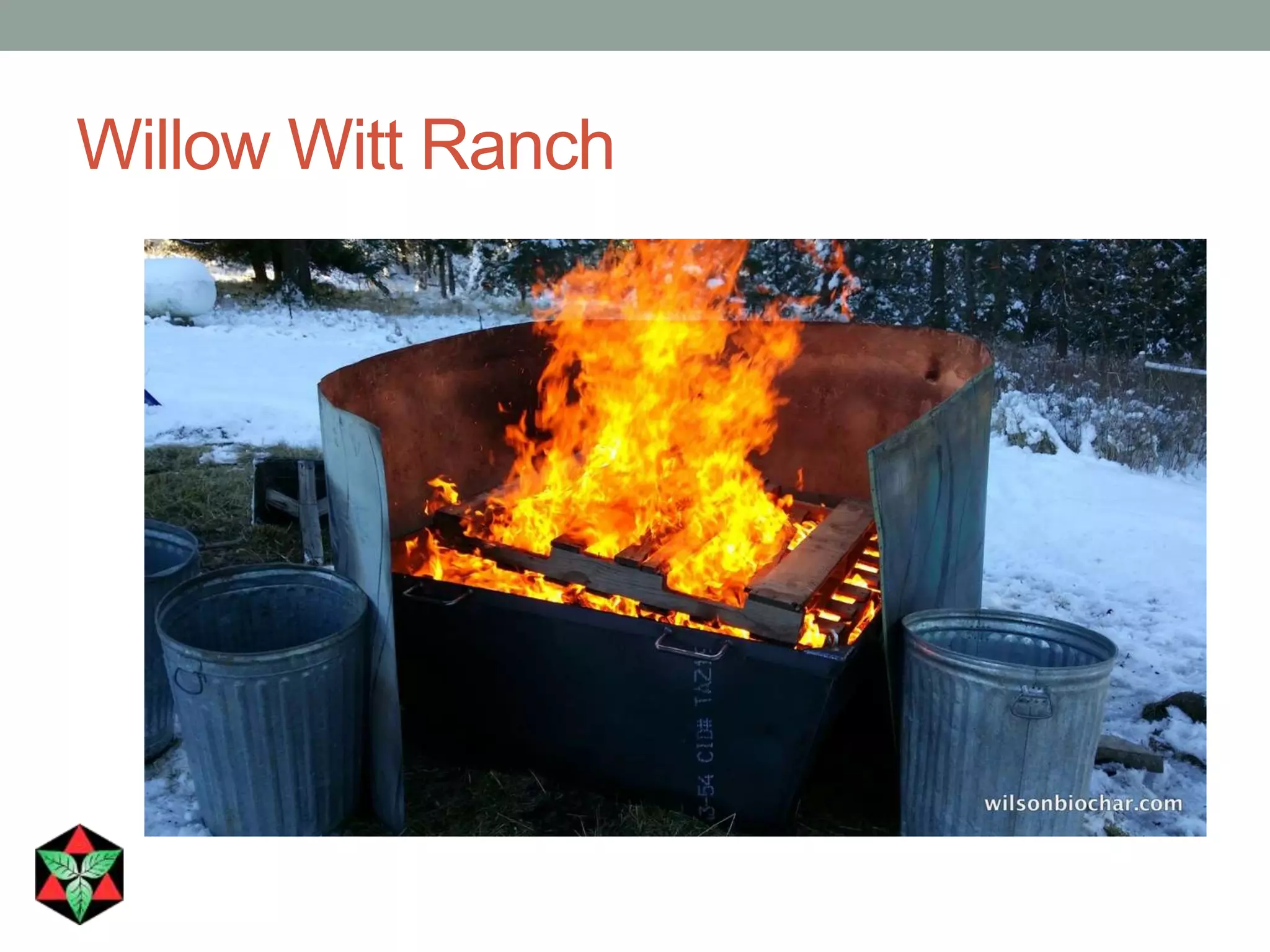
Willow Witt Ranch
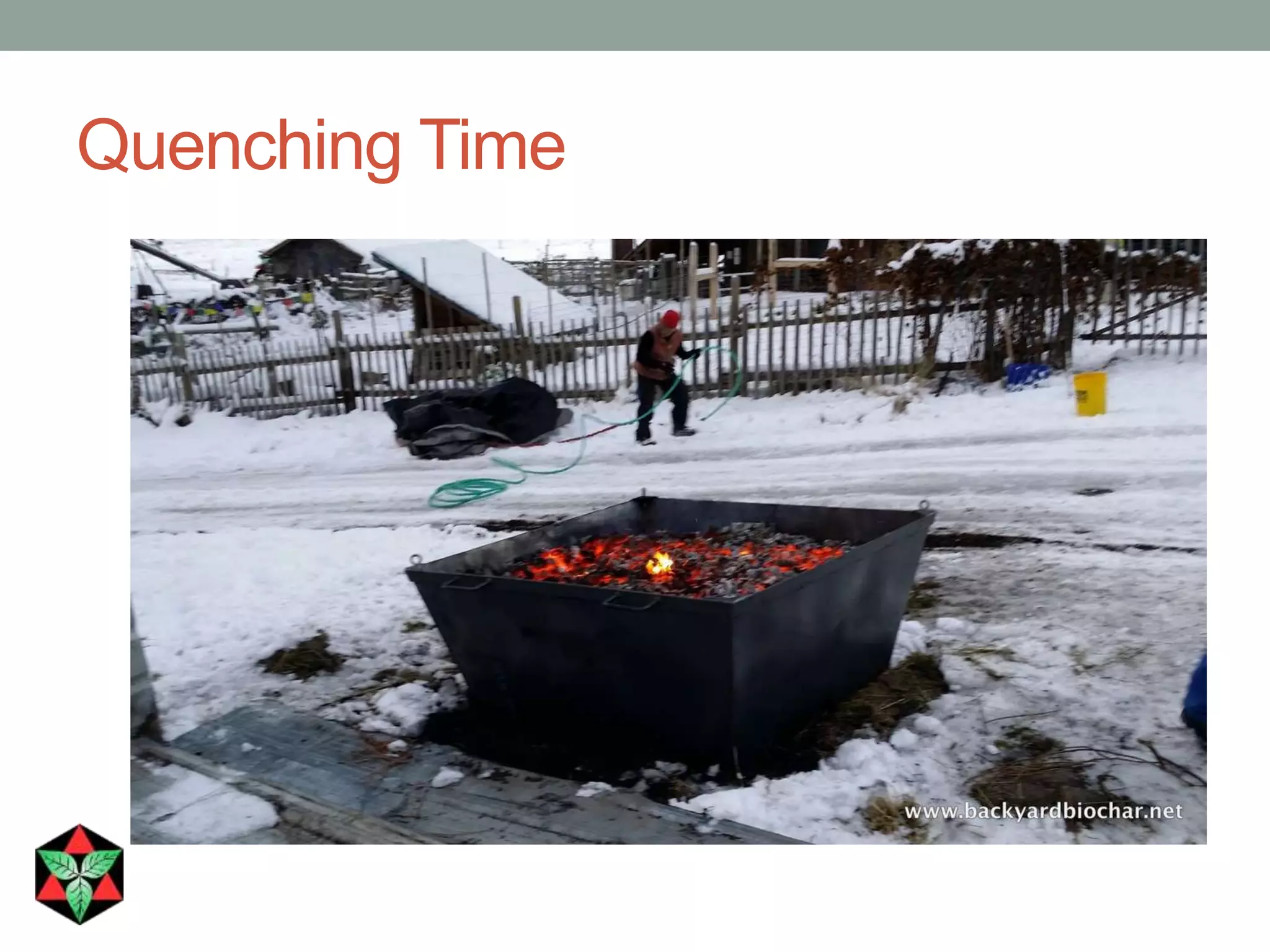
Quenching Time
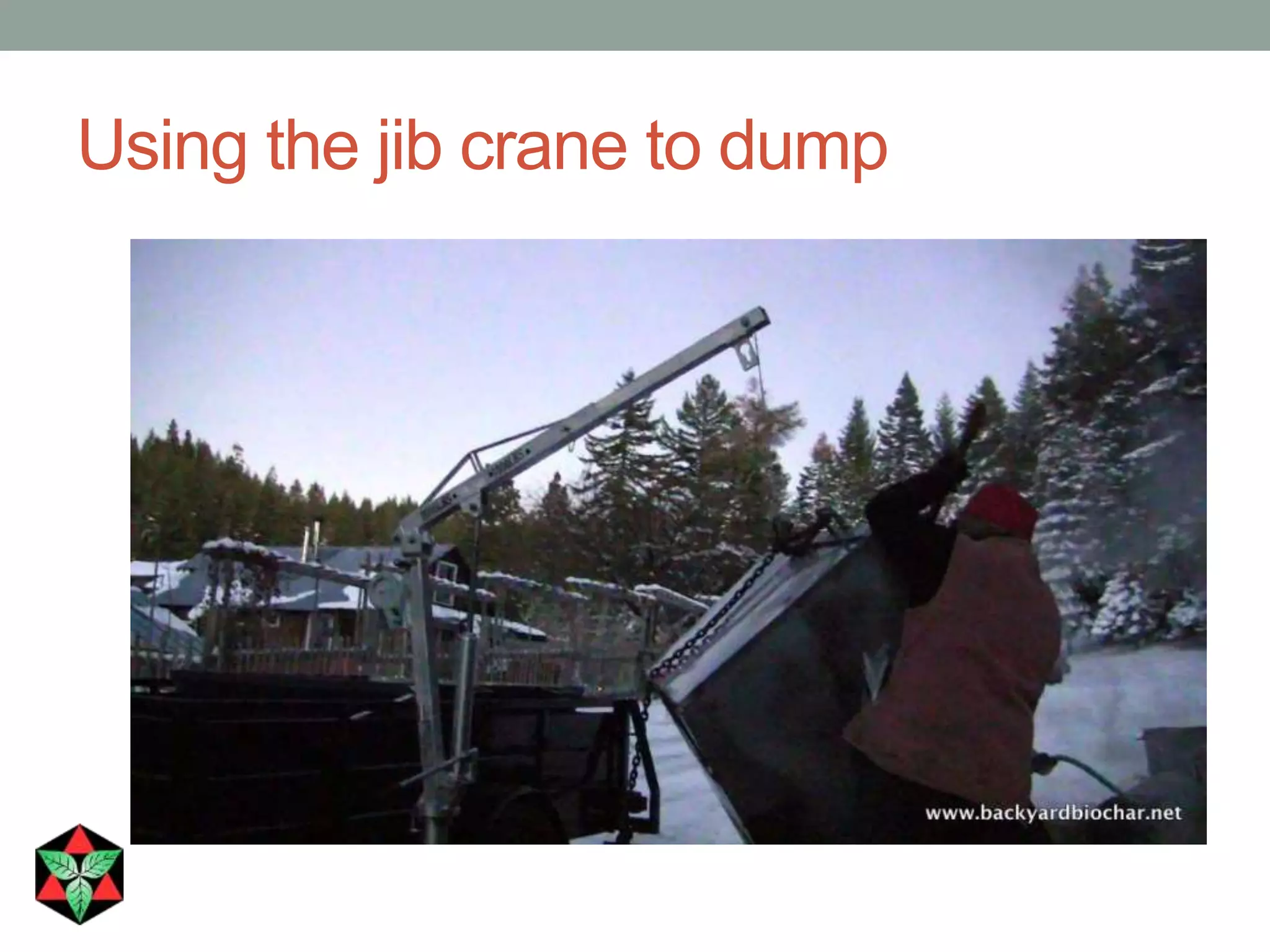
Using the jib crane to dump
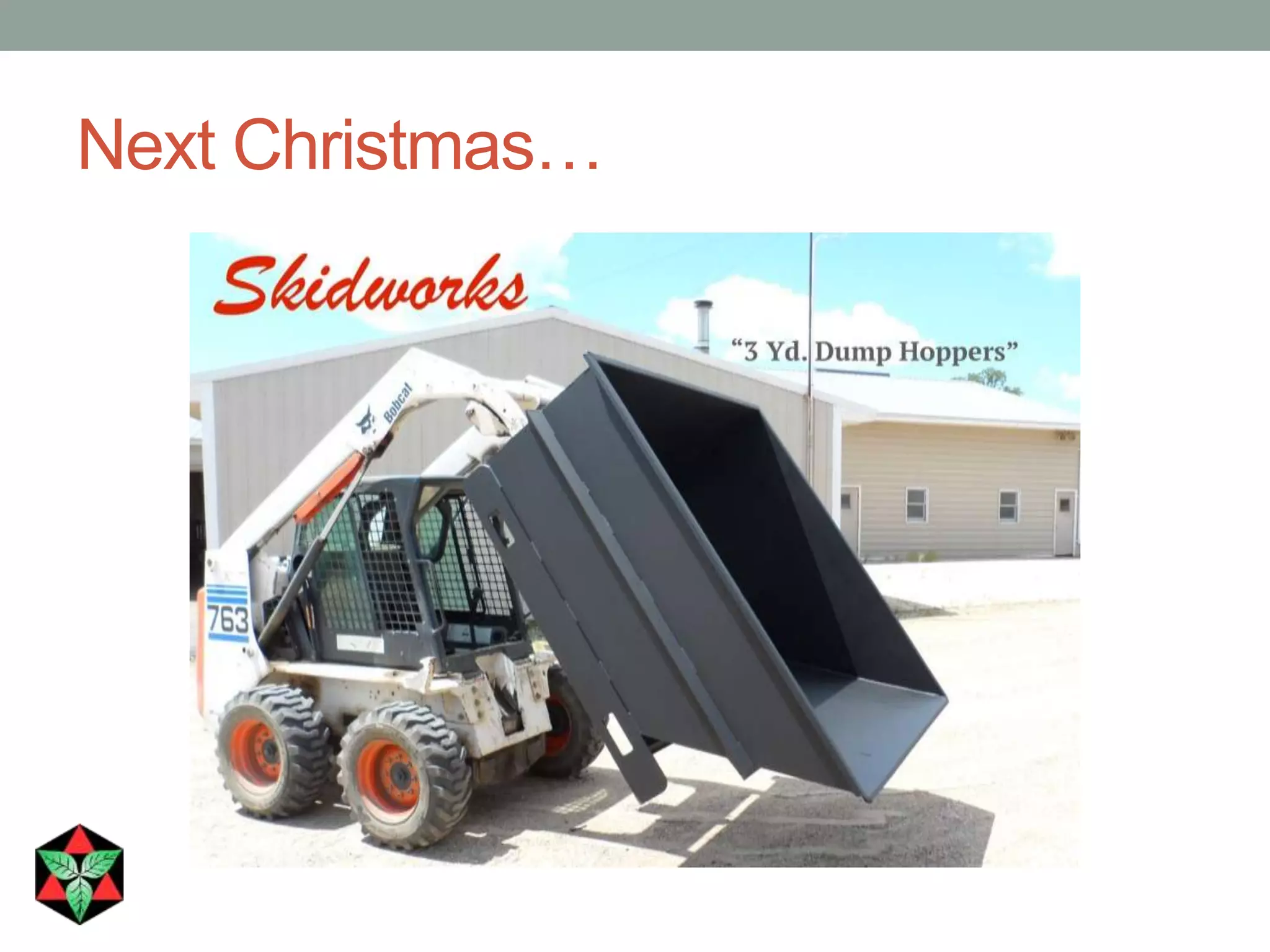
Next Christmas…
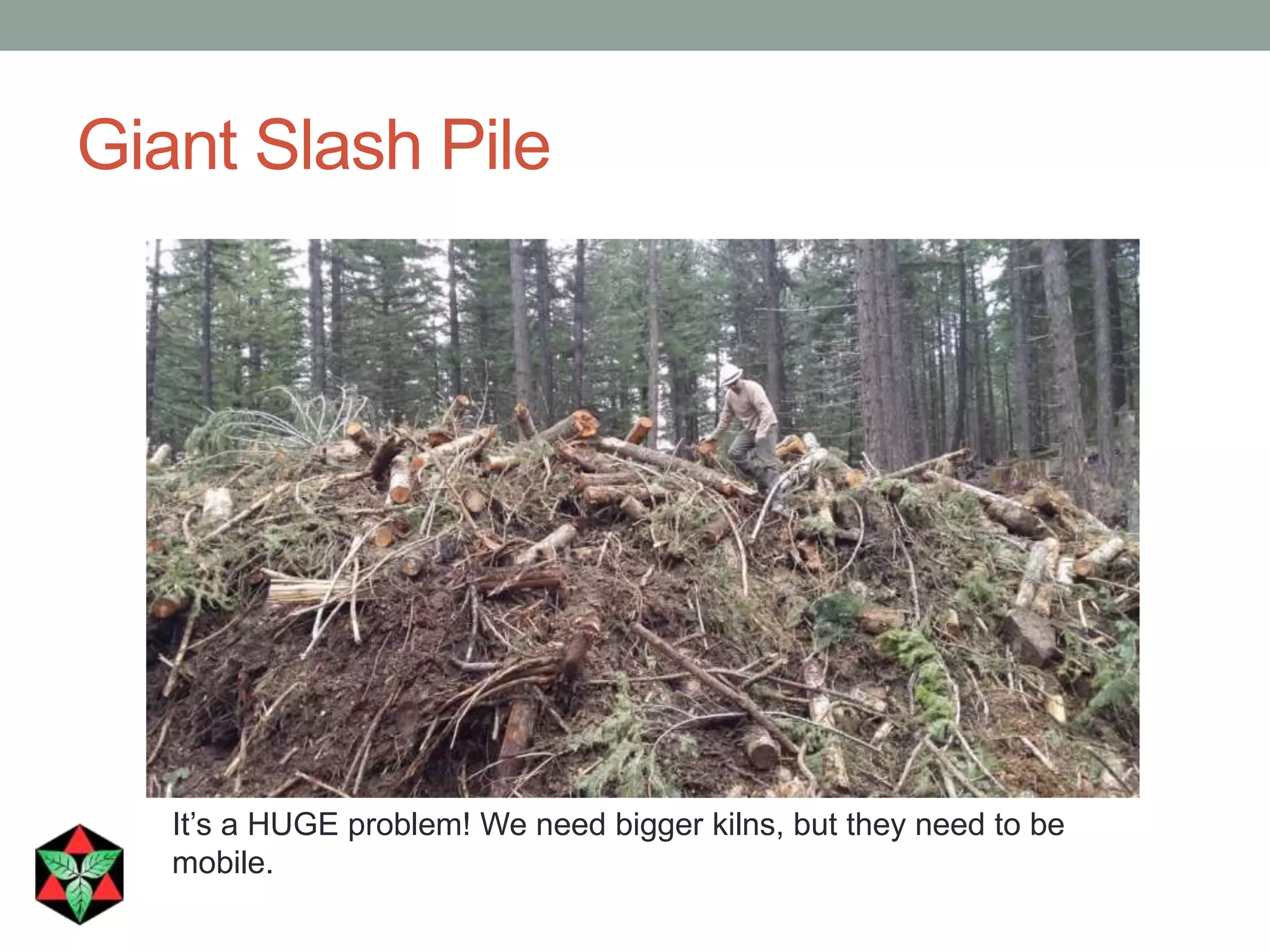
Giant Slash Pile
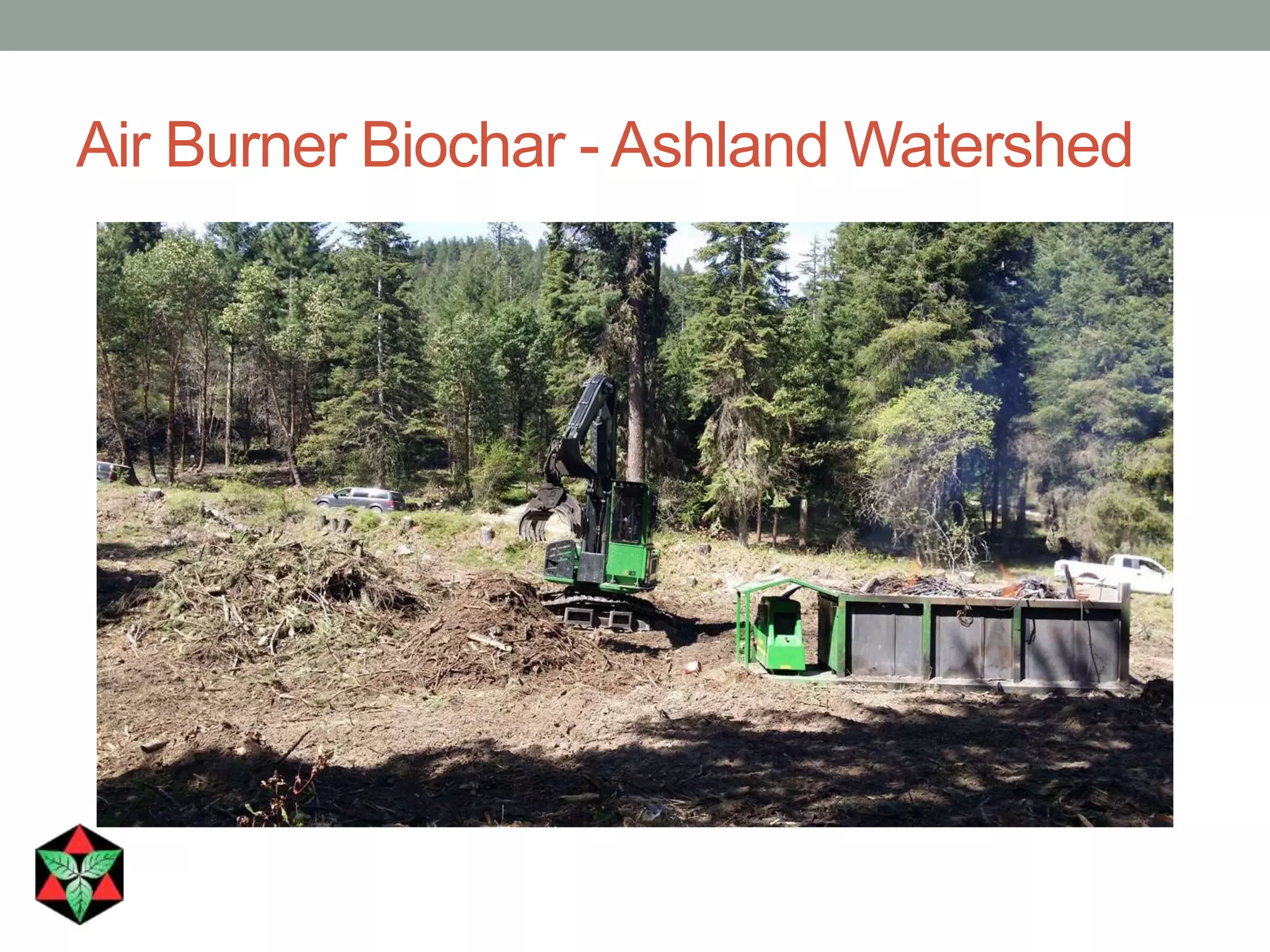
It’s a HUGE problem! We need bigger kilns, but they need to be
mobile.
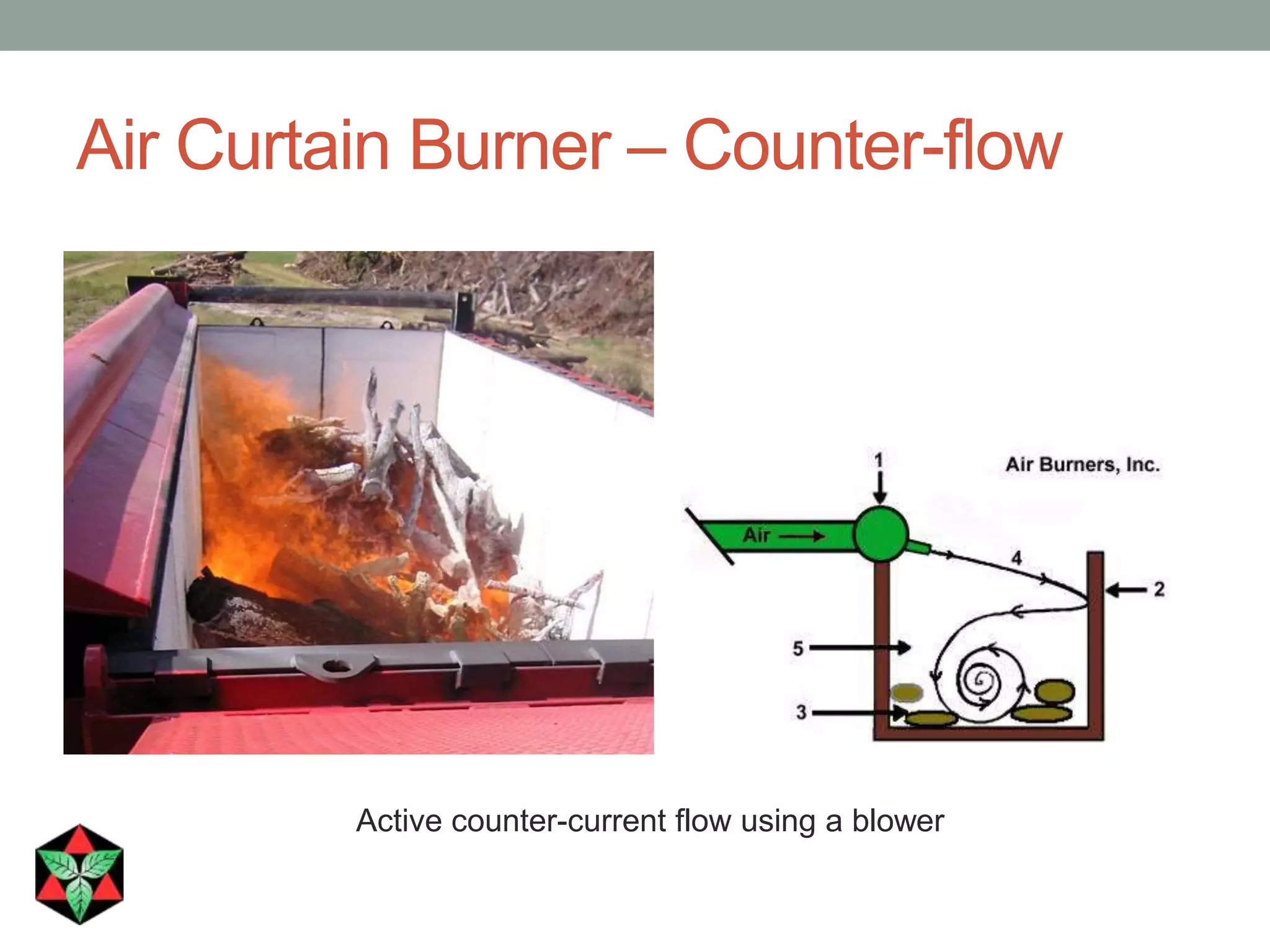
Air Curtain Burner – Counter-flow
Active counter-current flow using a blower
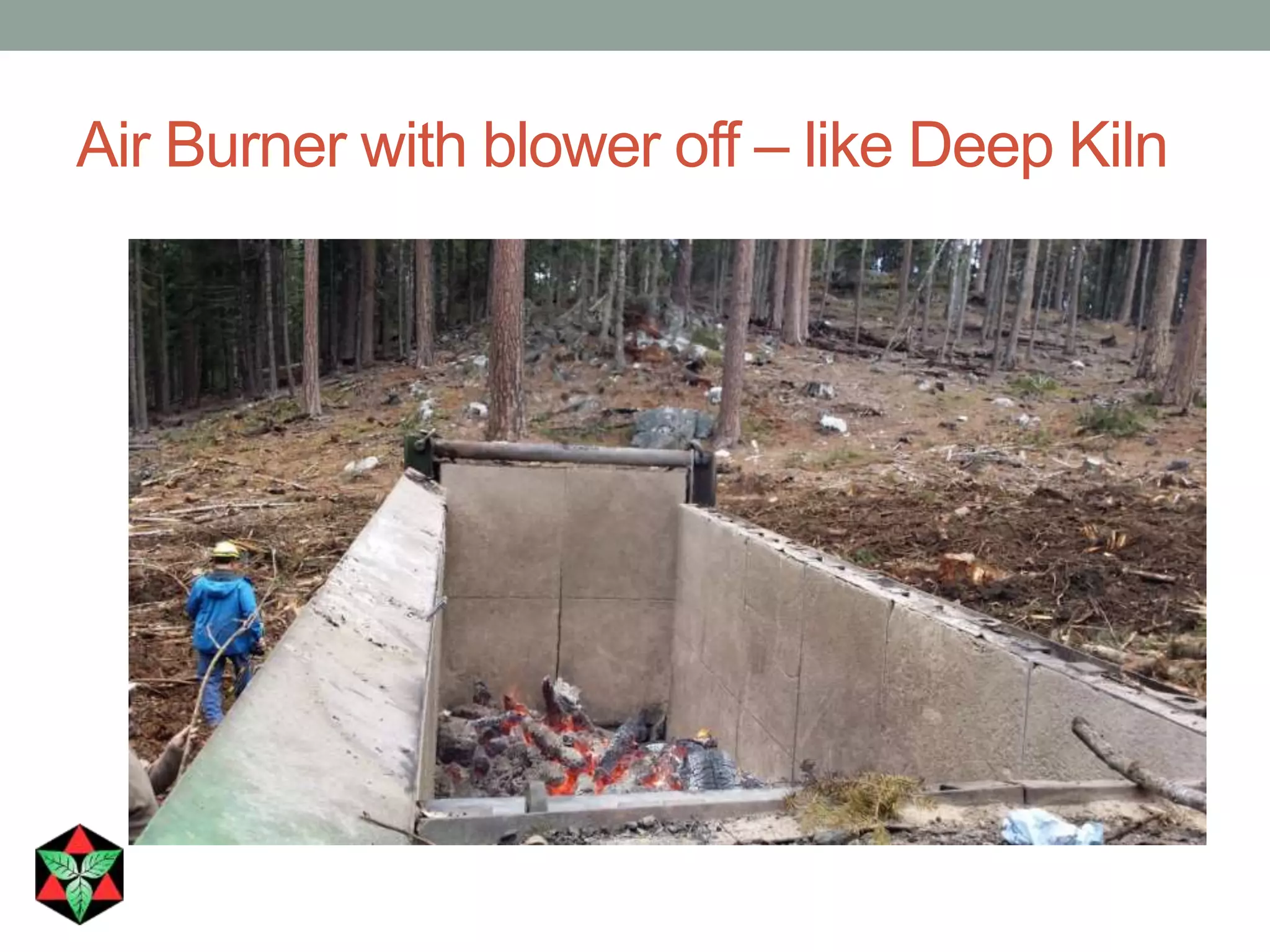
Air Burner with blower off – like Deep Kiln
Air Burner Biochar - Ashland Watershed
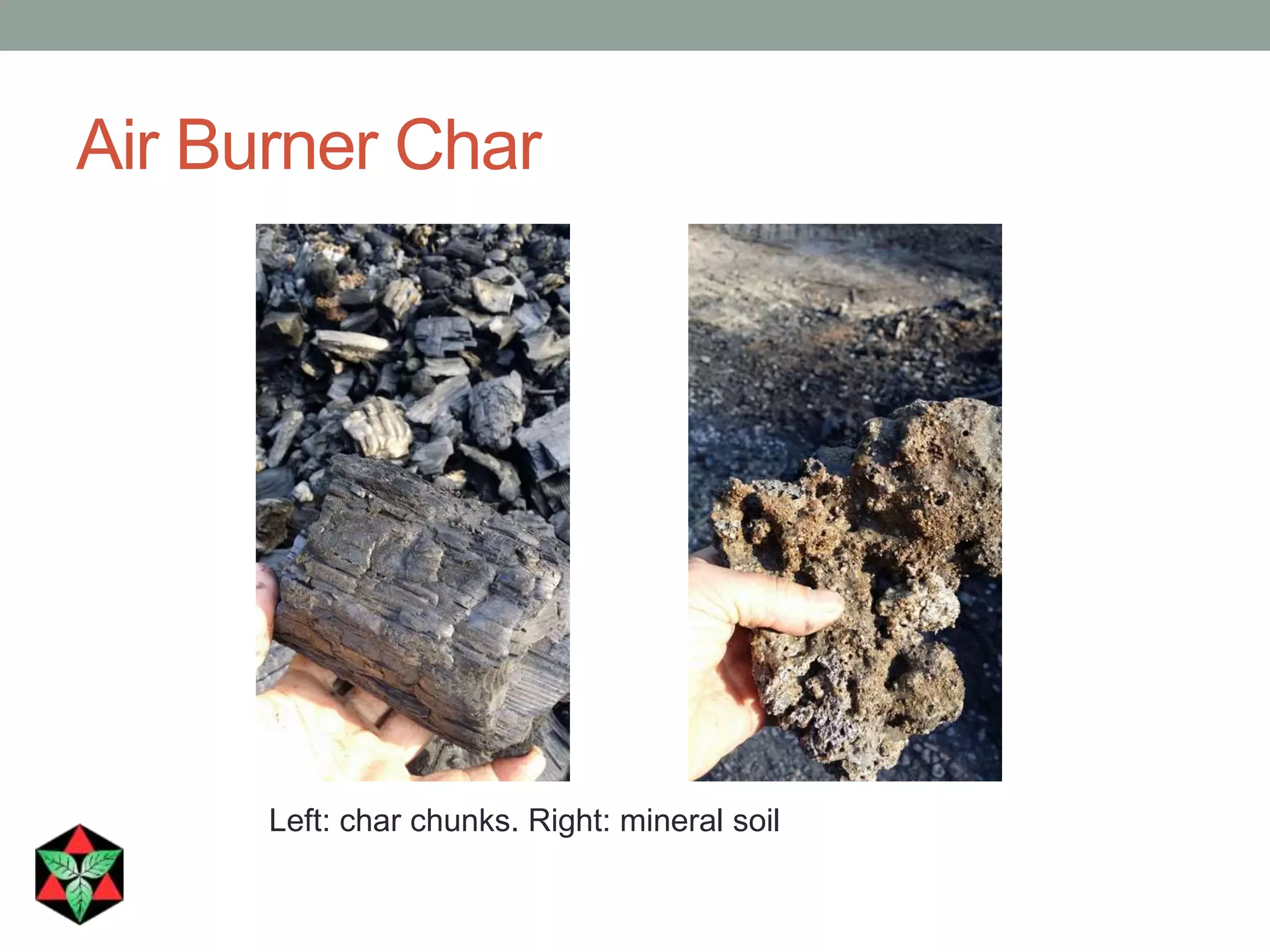
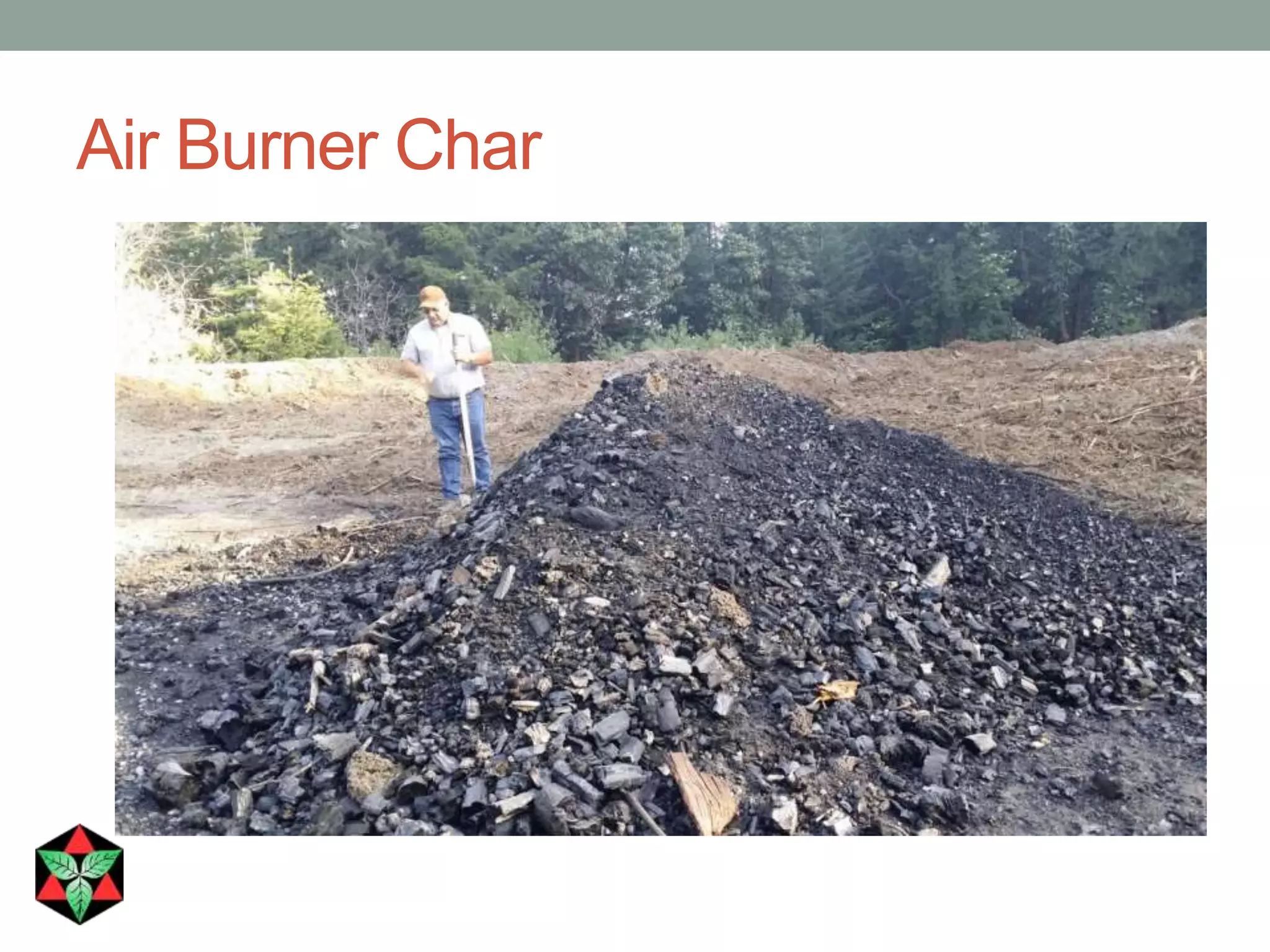
Air Burner Char
Air Burner Char
Left: char chunks. Right: mineral soil
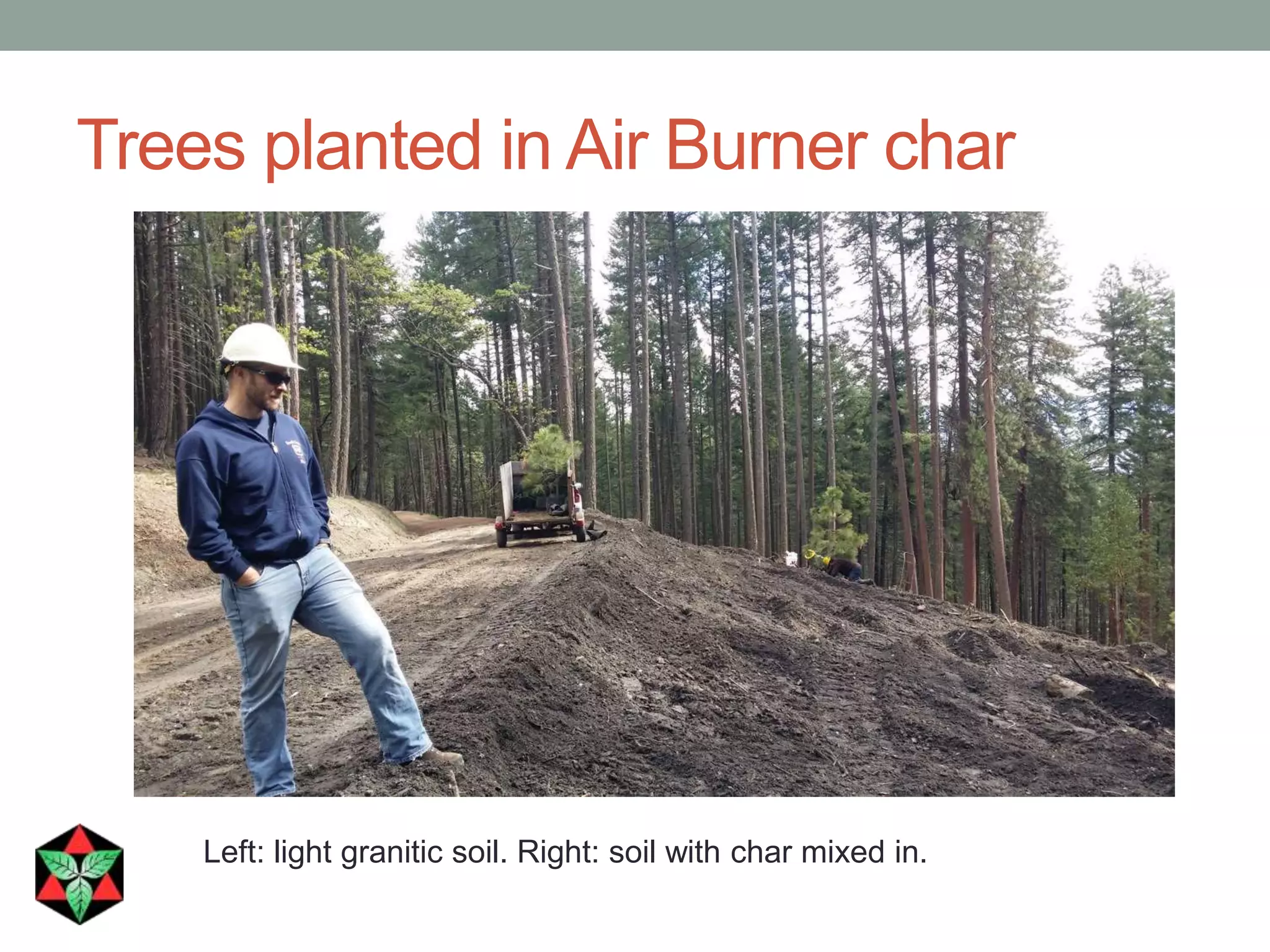
Trees planted in Air Burner char
Left: light granitic soil. Right: soil with char mixed in.
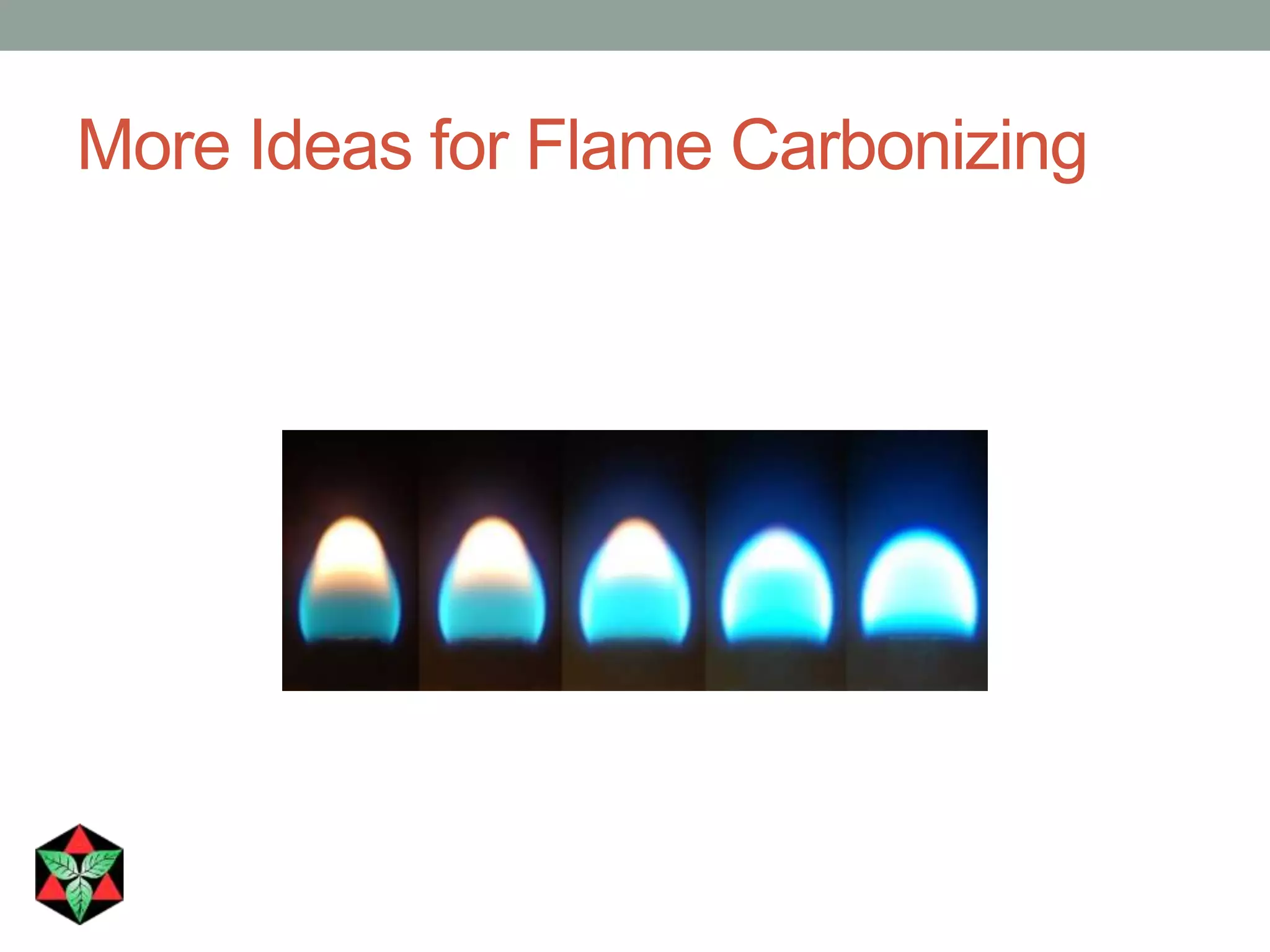
More Ideas for Flame Carbonizing
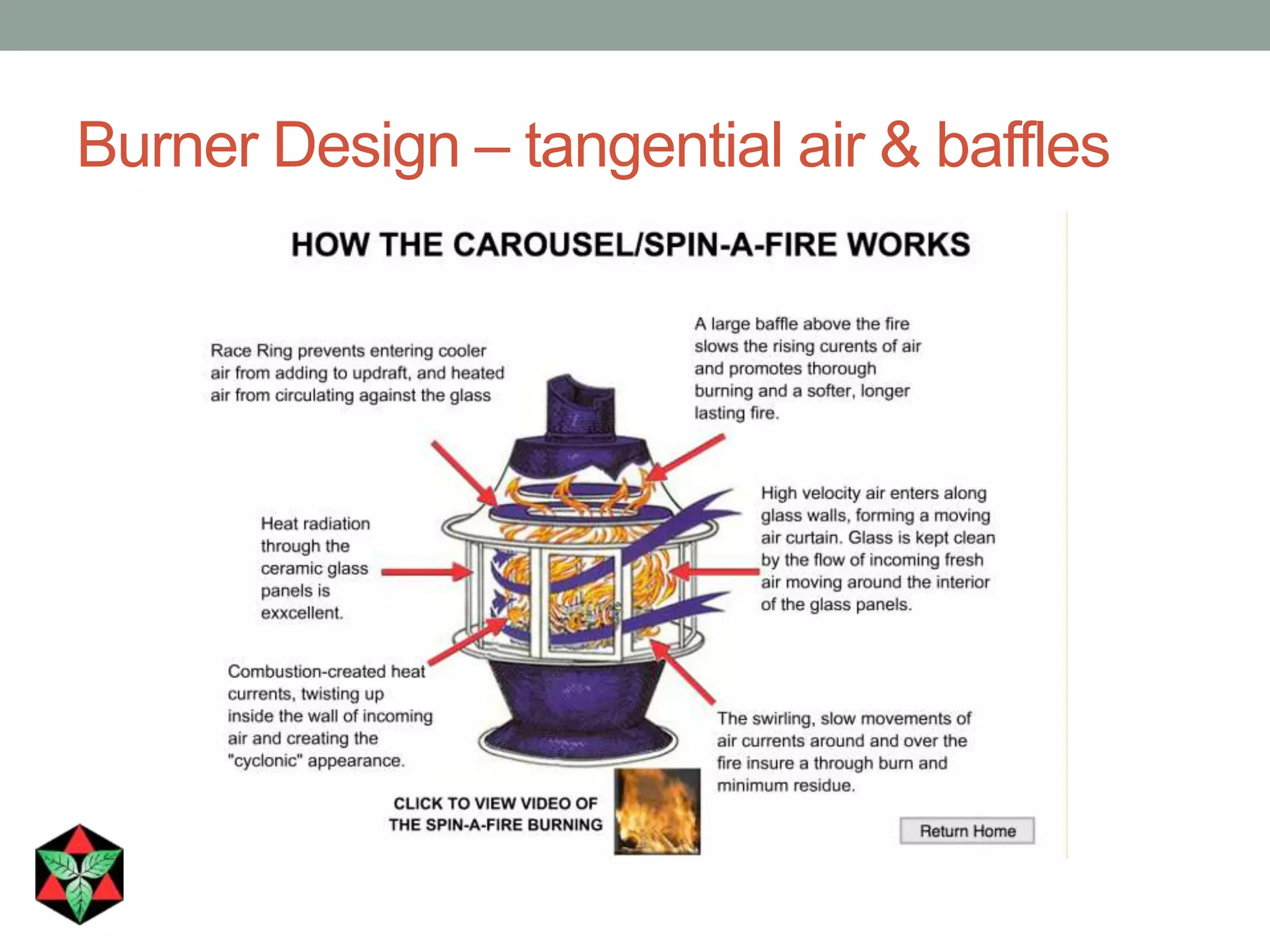
Burner Design – tangential air & baffles
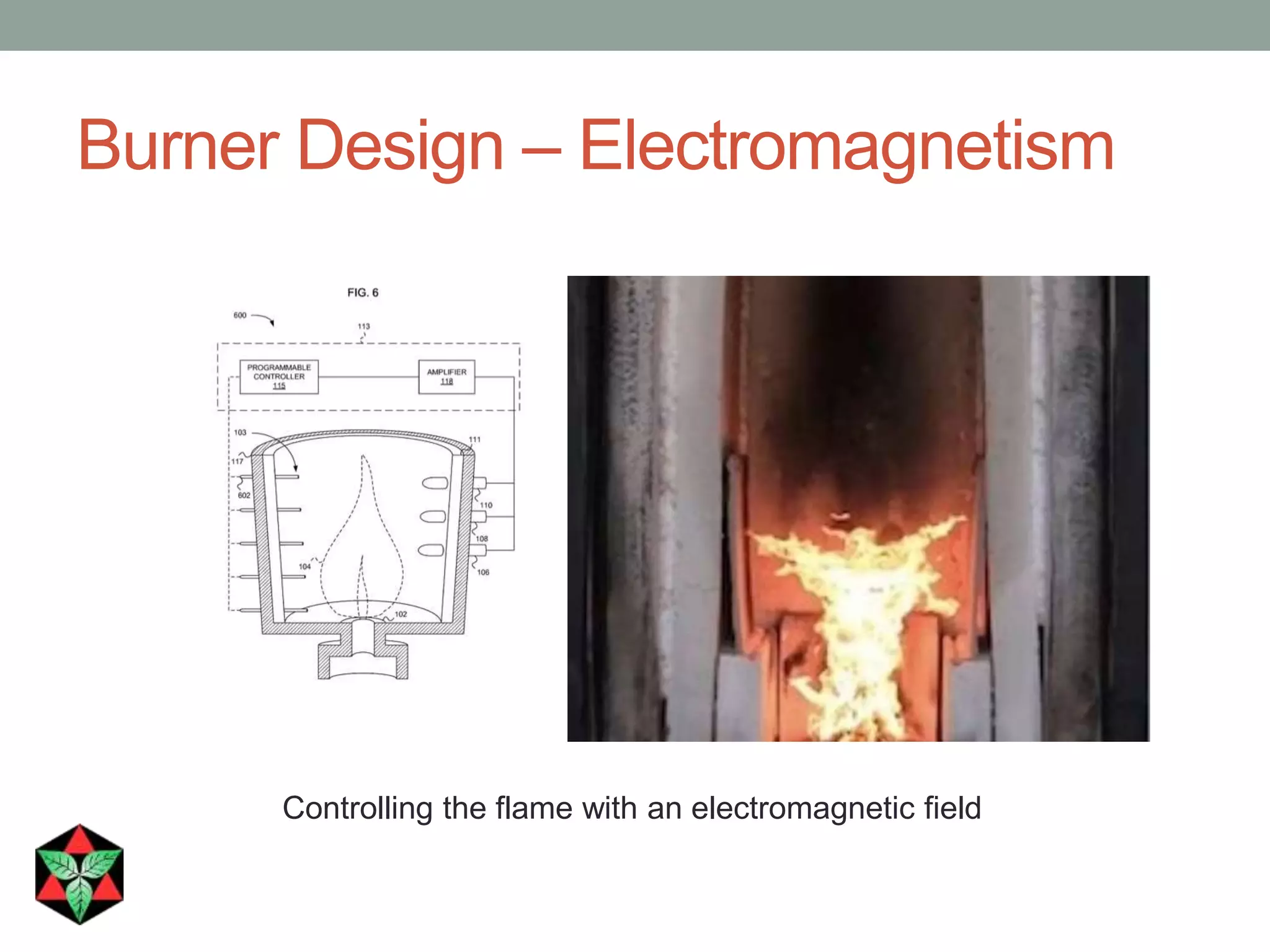
Burner Design – Electromagnetism
Controlling the flame with an electromagnetic field
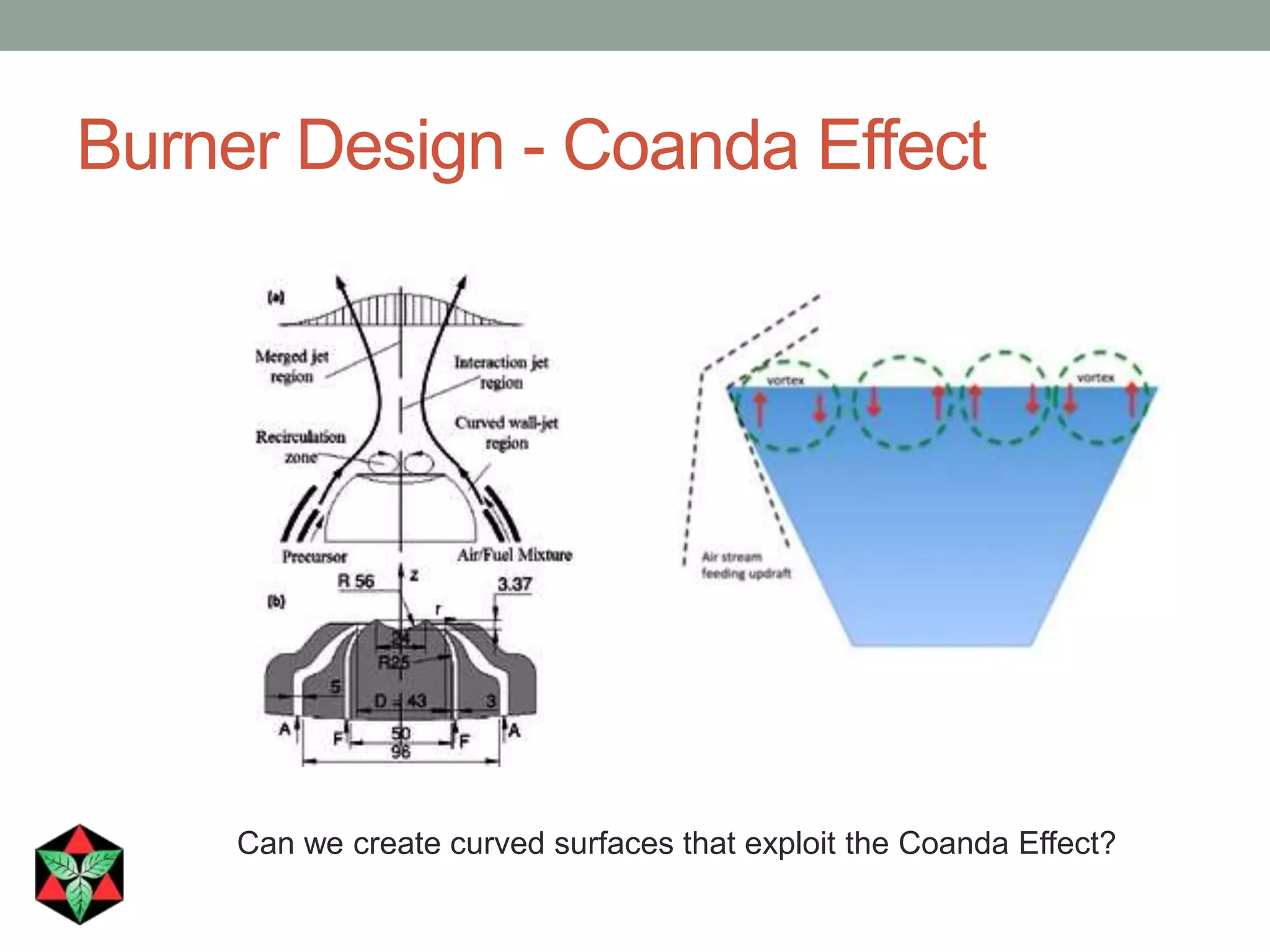
Burner Design - Coanda Effect
Can we create curved surfaces that exploit the Coanda Effect?
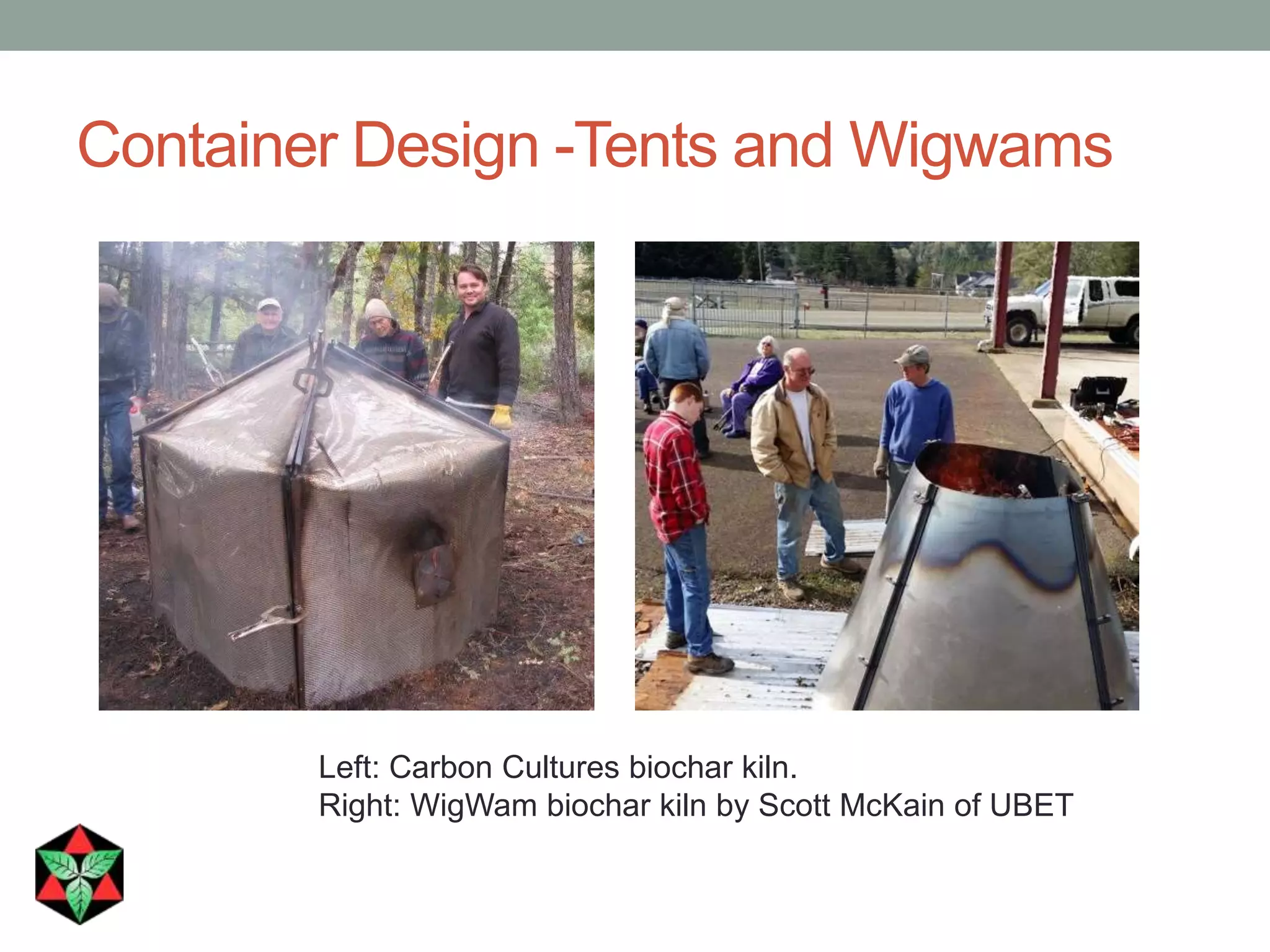
Container Design -Tents and Wigwams
Left: Carbon Cultures biochar kiln.
Right: WigWam biochar kiln by Scott McKain of UBET
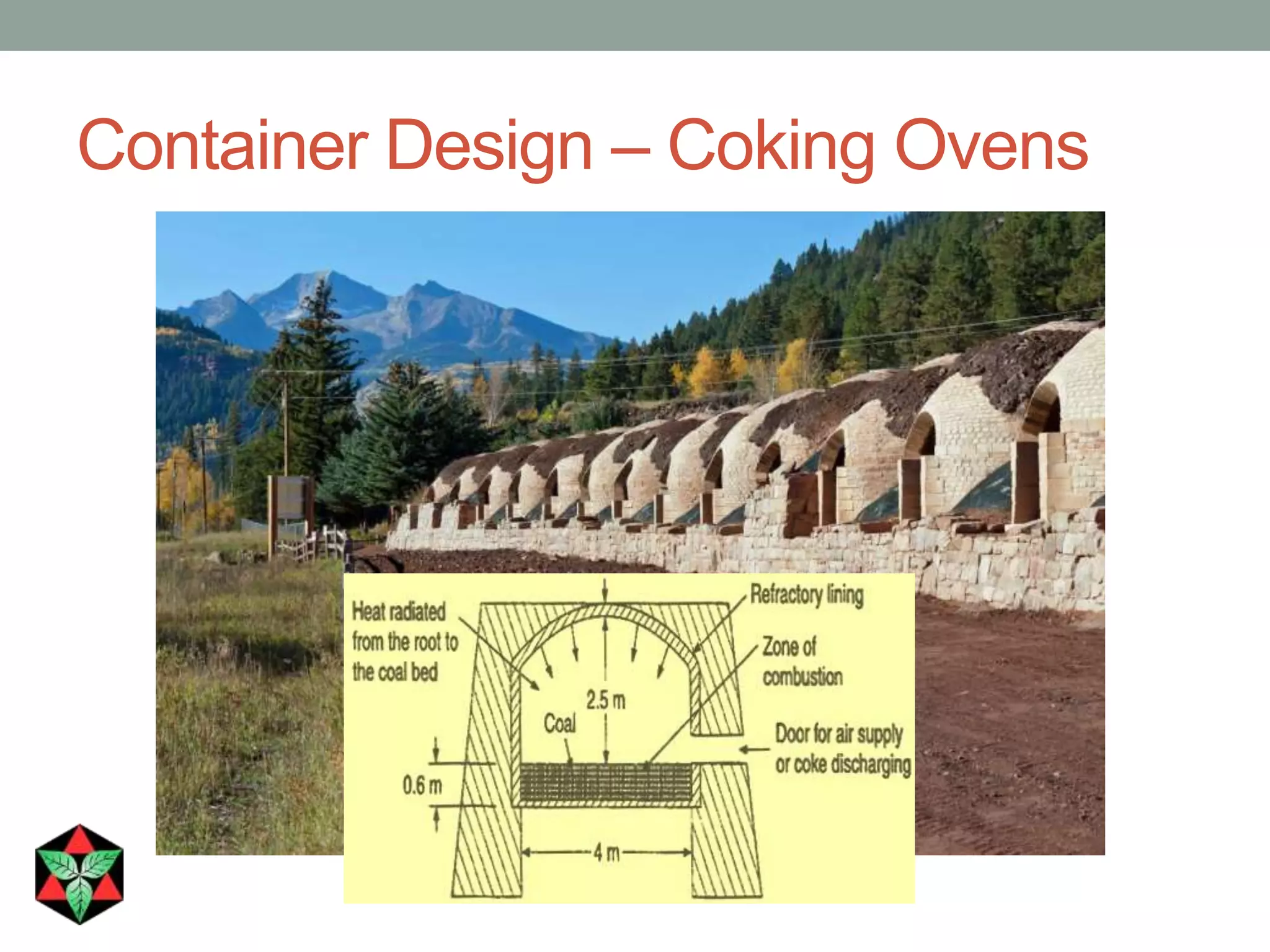
Container Design – Coking Ovens
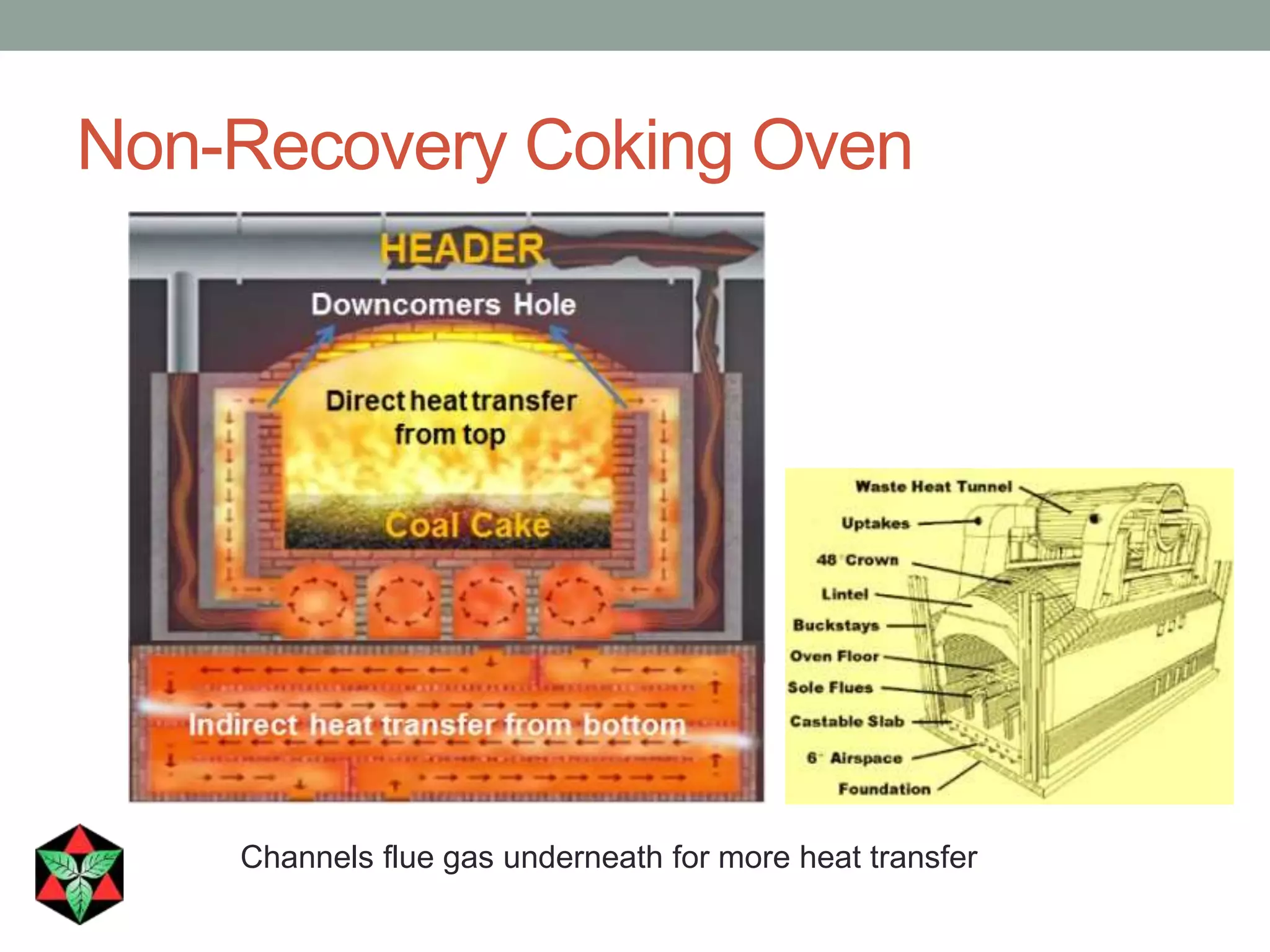
Non-Recovery Coking Oven
Channels flue gas underneath for more heat transfer
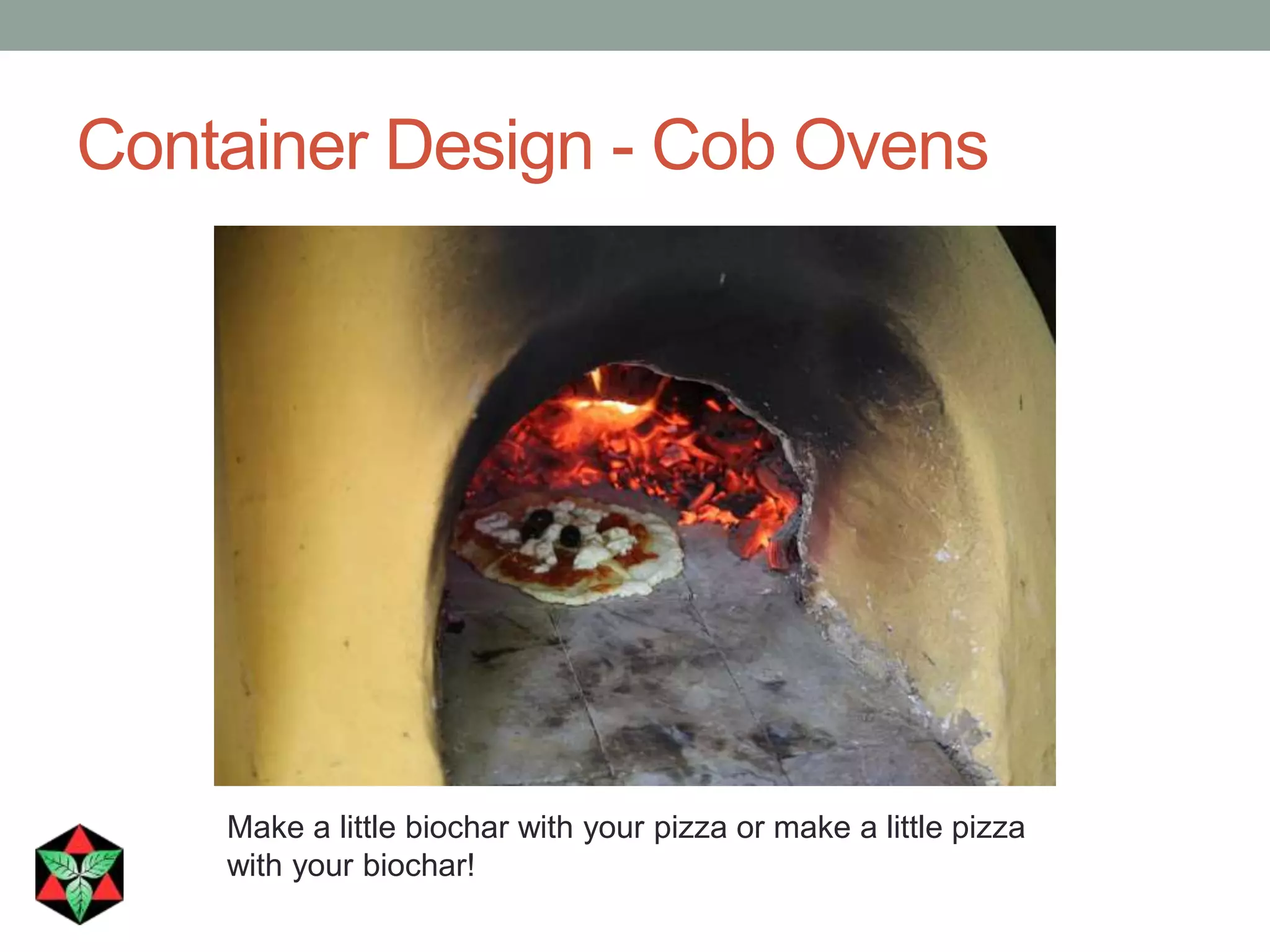
Container Design - Cob Ovens
Make a little biochar with your pizza or make a little pizza
with your biochar!
Wilson Biochar
Associates
Wilson Biochar Associates specializes
in biochar technology and market
development. We provide strategic
advice and services to businesses and
organizations.
• Technology Assessment
• Research and Analysis
• Project Development
Kelpie Wilson
Wilson Biochar Associates
Home office: 541-592-3083
Mobile: 541-218-9890
kelpiew@gmail.com
www.wilsonbiochar.com
Wilson, K. & Perkins, C. (1987). Approximating
the Ideal Stirling Cycle Through Discontinuous
Motion of the Displacer Piston. Senior Project
Report and Second Prize Winner, ASME Power
Division, Student Paper Competition.
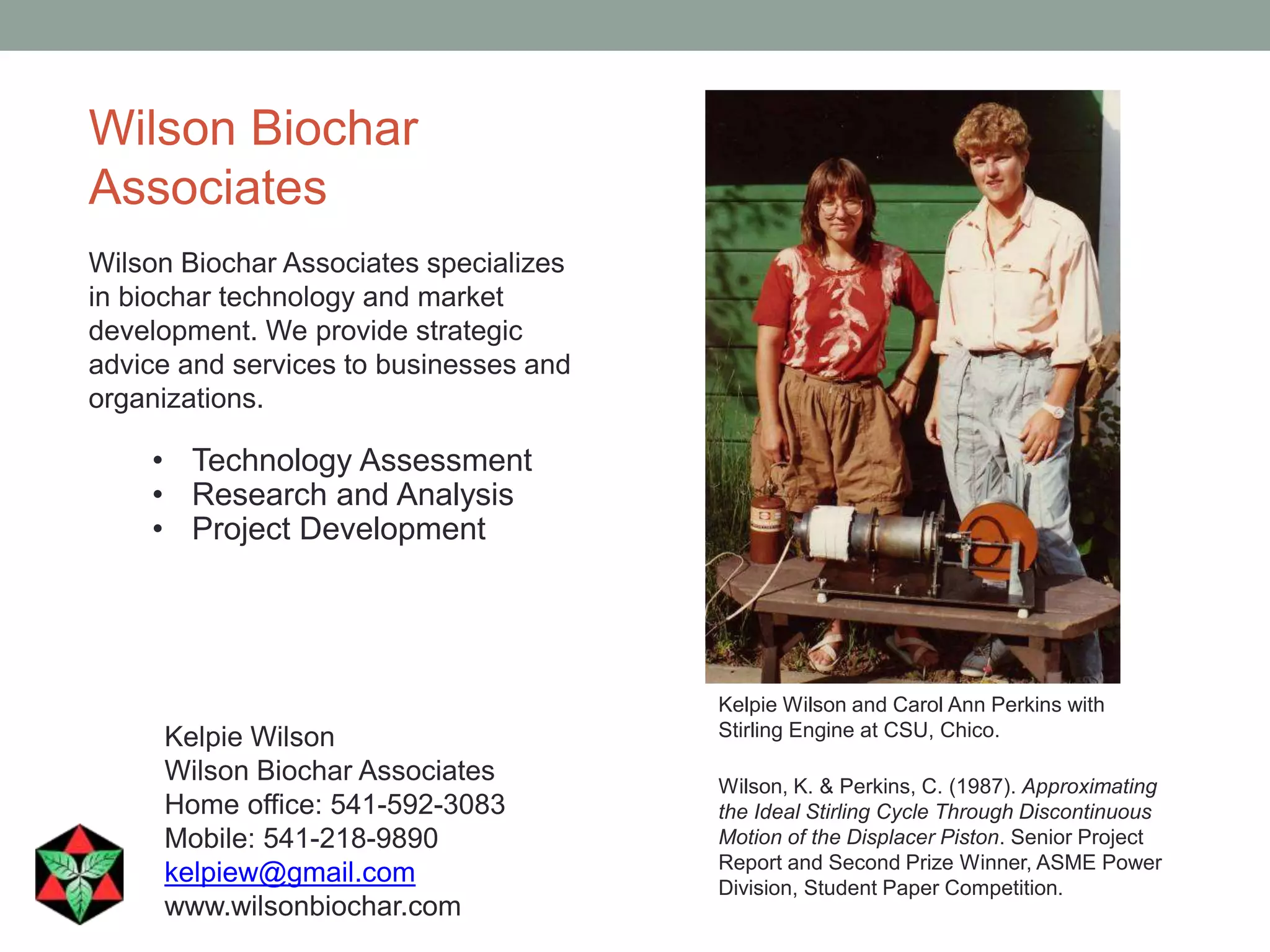
Kelpie Wilson and Carol Ann Perkins with
Stirling Engine at CSU, Chico.

Flame Carbonizers for Biochar In Practice and Theory

  • 1.
    FLAME CARBONIZERS FORBIOCHAR Kelpie Wilson Wilson Biochar Associates kelpiew@gmail.com In Practice and Theory
  • 2.
    Japanese Cone Kiln– Moki Co. Our inspiration comes from Japan where these simple cone-shaped kilns were developed and sold by the Moki Company. They are bottomless, and you simply roll them away when you are done.
  • 3.
    Flame as HeatExchanger With the pan excluding air from the bottom and the flame excluding air from the top, the Flame Cap Kiln acts like a retort with the flame as a heat exchanger – transferring heat efficiently by radiation.
  • 4.
    Limits of HeatTransfer through Metal In theory, Stirling Cycle engines approach Carnot efficiency. In practice, exergy loss from heat transfer across metal reduces efficiency. That’s why we use the internal combustion engine, despite its lower theoretical efficiency. For similar reasons we may prefer a flame carbonizer to an externally heated retort
  • 5.
    Basic Flame Types •Flames can be divided into categories: • Pre-mixed vs Diffusion • Laminar vs Turbulent • Concurrent flow (axial) vs Counter-current flow or Cross-current flow The cone kiln works with cross- current flow that generates counter- current vortex flows
  • 6.
    Concurrent Axial Flow •No external limits on air entrainment • Lean mixture cools the flame, producing soot • Flame length limits radiative heat transfer to fuel bed
  • 7.
  • 8.
    For Best HeatTransfer: Shorten the Flame Length • Flame length is a function of mass flow rate and fuel bed diameter • Open sided piles entrain more air than enclosed piles – giving higher air mass flow rate and higher flame length • High flow rate flames cool faster and radiate less heat to the fuel bed • Piles enclosed by a surrounding cylinder have shorter, more turbulent flames due to less entrained air Buoyant diffusion flames: Some measurements of air entrainment, heat transfer and flame merging. Thomas, et al. Fire Research Note. 1964
  • 9.
    Flame Carbonizer FlameTypes • TLUDs* and Ricks • Con-current Axial Flow • Flame Kilns • Shallow Kilns • Cross-current vortex generation • Deep Kilns • Passive Counter-current flow • Air Burners • Active Counter-current flow • *TLUD: Top-Lit Up-Draft gasifier
  • 10.
    Ways to Tamea Flame
  • 11.
    Jack Daniels Rick– with Hood The Jack Daniels Company has made charcoal for filtering whisky this way for decades. When the rick collapses into glowing coals, they quench it with water
  • 12.
    Optimizing TLUDs asFlame Carbonizers • TLUDs are Flame Carbonizers • Not very different from a rick in a cylinder Design Parameters: • Primary Air • Secondary Air • Flame stabilization with swirl or tertiary air • Burner plenum space • Stack effects
  • 13.
    Rick inside aring - Ring of Fire If bottom is not sealed, can burn like a TLUD. Can operate in dual mode: • TLUD for startup • Deep Kiln for later stages
  • 14.
    Deep Kiln -Counter-current flow • Passive counter-current flow as burning fuel draws air downward • Active counter-current flow uses a blower
  • 15.
    Ring of FireKiln - vortex generation Reflected (re-radiated) heat and thermal gradients produce vortex flows
  • 16.
    Kon Tiki –cross-current vortex generation Rim shield around the cone draws air to feed the flames, generating cross-current vortex flows
  • 17.
    Flame Carbonizers vsPile Burning: The Fuel Problem in Oregon
  • 18.
    Tight pile constructionis standard • Tight piles don’t fall apart • Burn hot in the center • Burn completely to ash • Generate smoke • Burn forest soil
  • 19.
    Top lit makesa difference But to save any char you need water to quench
  • 20.
    Very Loose OpenPile – Top Lit Concurrent axial flow – burns fast, hot and clean, but pile falls apart and needs tending. Can make a lot of biochar if quenched.
  • 21.
  • 22.
  • 23.
    Design Parameters forOregon Kiln • Sized for feedstock • Logs 4 to 5 feet long • Up to 6” diameter • Log rick fits better in pyramid shape than cone • Portable but Durable • Less than 200 lbs • 14 gauge steel • Ergonomic for loading • Only 2 feet high • Economical • Pyramid shape cheaper to fabricate than cone • $600 for Kiln – 5’ top base, 4’ bottom base, 2’ high
  • 24.
  • 25.
    Oregon Kiln inthe Backyard
  • 26.
    Oregon Kiln inthe Woods
  • 27.
  • 28.
  • 29.
  • 30.
    Time and WaterNeeded to Quench
  • 31.
  • 32.
  • 33.
    Using the jibcrane to dump
  • 34.
  • 35.
    Giant Slash Pile It’sa HUGE problem! We need bigger kilns, but they need to be mobile.
  • 36.
    Air Curtain Burner– Counter-flow Active counter-current flow using a blower
  • 37.
    Air Burner withblower off – like Deep Kiln
  • 38.
    Air Burner Biochar- Ashland Watershed
  • 39.
  • 40.
    Air Burner Char Left:char chunks. Right: mineral soil
  • 41.
    Trees planted inAir Burner char Left: light granitic soil. Right: soil with char mixed in.
  • 42.
    More Ideas forFlame Carbonizing
  • 43.
    Burner Design –tangential air & baffles
  • 44.
    Burner Design –Electromagnetism Controlling the flame with an electromagnetic field
  • 45.
    Burner Design -Coanda Effect Can we create curved surfaces that exploit the Coanda Effect?
  • 46.
    Container Design -Tentsand Wigwams Left: Carbon Cultures biochar kiln. Right: WigWam biochar kiln by Scott McKain of UBET
  • 47.
  • 48.
    Non-Recovery Coking Oven Channelsflue gas underneath for more heat transfer
  • 49.
    Container Design -Cob Ovens Make a little biochar with your pizza or make a little pizza with your biochar!
  • 50.
    Wilson Biochar Associates Wilson BiocharAssociates specializes in biochar technology and market development. We provide strategic advice and services to businesses and organizations. • Technology Assessment • Research and Analysis • Project Development Kelpie Wilson Wilson Biochar Associates Home office: 541-592-3083 Mobile: 541-218-9890 kelpiew@gmail.com www.wilsonbiochar.com Wilson, K. & Perkins, C. (1987). Approximating the Ideal Stirling Cycle Through Discontinuous Motion of the Displacer Piston. Senior Project Report and Second Prize Winner, ASME Power Division, Student Paper Competition. Kelpie Wilson and Carol Ann Perkins with Stirling Engine at CSU, Chico.