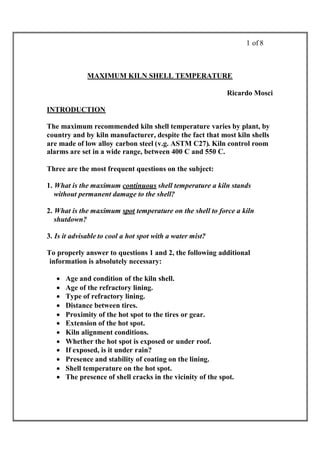
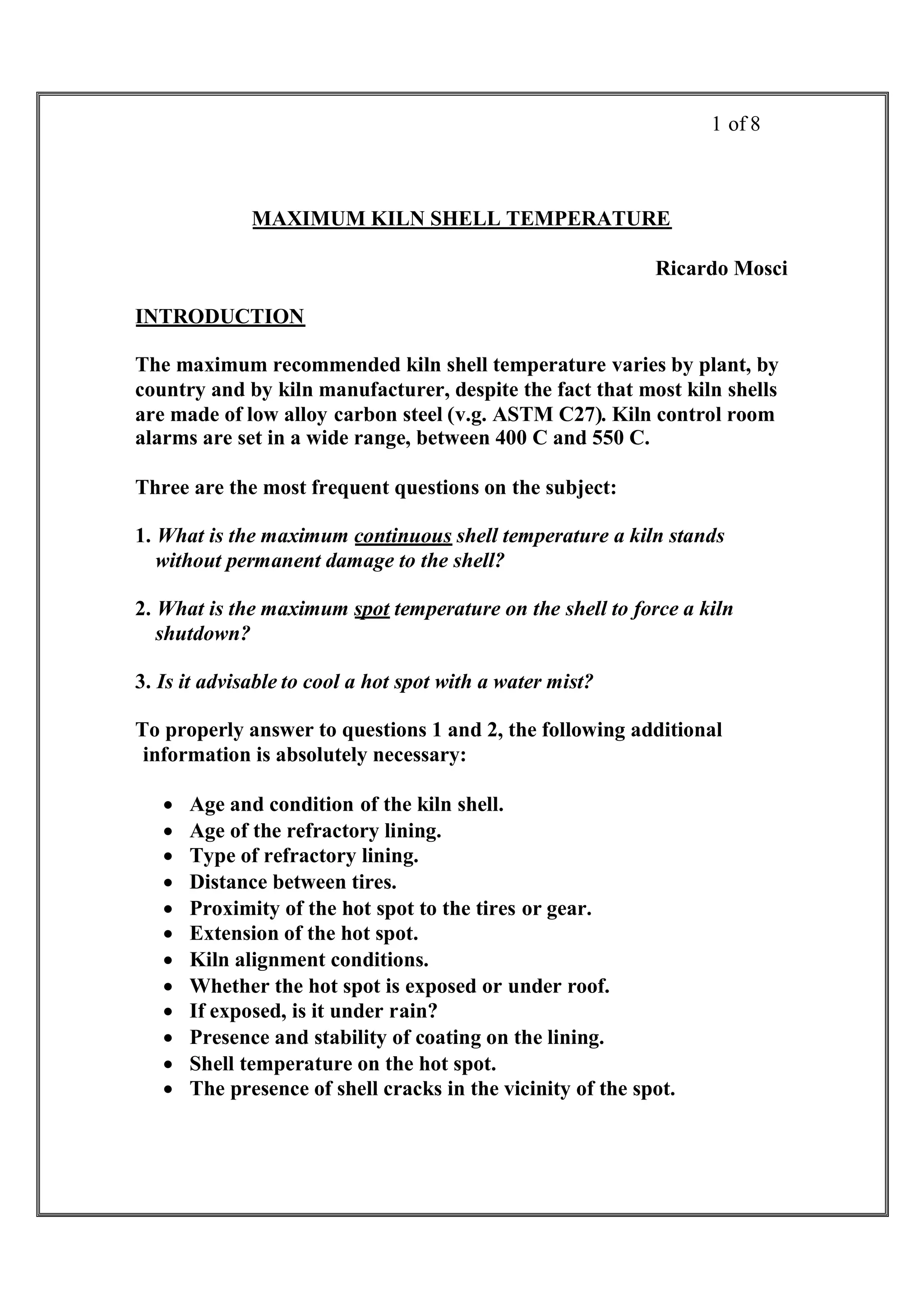
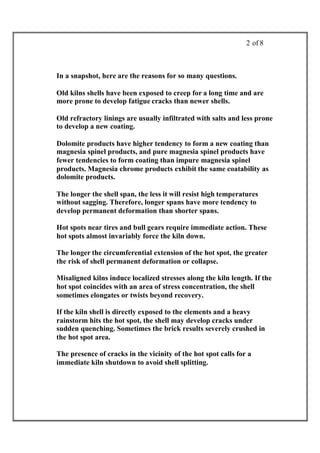
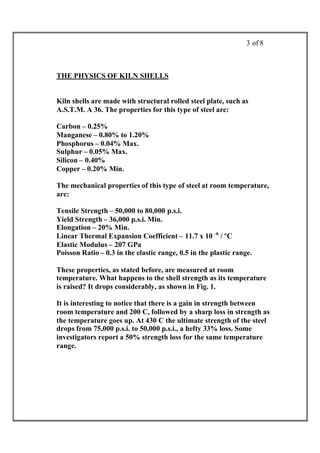
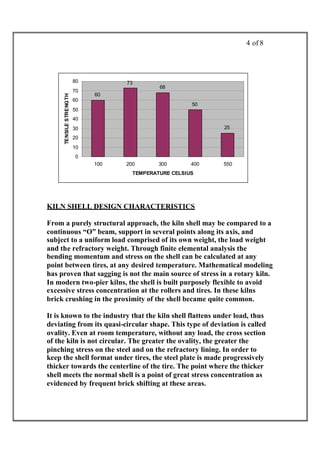
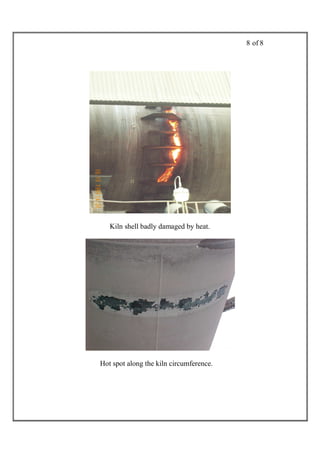
1. The maximum recommended kiln shell temperature varies significantly based on factors like the age of the kiln shell and refractory lining, thickness of the shell, distance between tires, and location of hot spots.
2. Hot spots indicate abnormally high temperatures under 600°C, while red spots that are visible at night always require action as they pose a greater risk of damage.
3. A red spot can generate significant stresses on the kiln shell due to the confined expansion, with a temperature difference of just 200°C potentially exceeding the steel's creep limit and nearing its ultimate strength.