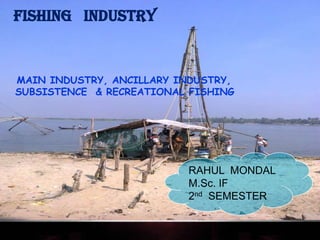
FISHING INDUSTRY


MAIN INDUSTRY, ANCILLARY INDUSTRY,
SUBSISTENCE & RECREATIONAL FISHING


                          RAHUL MONDAL
                          M.Sc. IF
                          2nd SEMESTER
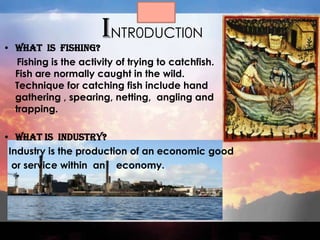
• WHAT IS FISHING?
                       INTR0DUCTI0N
   Fishing is the activity of trying to catchfish.
  Fish are normally caught in the wild.
  Technique for catching fish include hand
  gathering , spearing, netting, angling and
  trapping.

• WHAT IS INDUSTRY?
 Industry is the production of an economic good
  or service within an economy.
• All the industries coming under fishery termed as the FISHING
  INDUSTRIES. It start up with catching raw material till its final
  processing &marketting. It organised under Private, Corporate & CO-
  Oparative sector
• At present the FISHING INDUSTRY of the country incudes the Main
  industry of
         catching
         Processing
         Transportation
         Distribution
         Marketting
• Ancillary industries such as
         Fishing vessel construction
         Engines
         Fishing gear & fishing vessel component
         Refrigeration & cold storage
• The industries is cooperative plan of producers,consumers
  regulaters DIVIDED IN TWO WAYS—
             BASED ON NATURE ON SPECIFICATION
             BASED ON THE PURPOSE


FISHERIES SECTOR

            Here are 3 principle industry sectors.
 the commercial sector
 the traditional sector
 the recreational sector
MAIN INDUSTRY
• Directly connected to industry
• involves the catching of raw material and till reaching the consumer
  hand
• Involve catching of raw material
• Majorly controlled by private or government sector also
        Traditional fishing industry
        Small partnership or limited companies
        Large business houses
• Involves capital investment-from a few hundred to huge amount of
  capita
• Operation and management, defers from simple to integrated fishing
  industries
• Traditional sector still in unorganised state
Main Industries are comprise 3 more sector

A. PRIMARY INDUSTRY
B. SECONDARY INDUSTRY
C. TERTIARY INDUSTRY


                             PRIMARY SECTOR
It involves the Production of raw material<fish> from water body.
Raw materials are available by two methods.
It includes CULTURE FISHERIES & CAPTURE FISHERIES
CULTURE FISHERIES: Fishing and fish
culture are popular parts of the cultural
tradition for many people. It mainly
concentrated on freshwater, brackish
water and mariculture. species culrured
includes shell fishes,finfishes and
mollusca.
 RESERVOIRS-3.15 million ha
 PONDS AND TANKS-2.36 million ha
CAPTURE FISHERIES : fishing from aquatic resources like
marine, riverine, and estuarine system.
RIVERS AND CANALS-0.19 million km
BRACKISH WATER-1.24million ha
India's marine capture fish production ,increased from
520,000 tonnes in 1950 to 3.15 million tonnes in 2007.
SECONDARY SECTOR


the secondary sector includes the handling of fish, it also include
processing industry, pre-processing industry .etc. Various processing
technologies are utilized by different plants.
                      Fish processing is the processing of fish delivered by
commercial fisheries and fish farms. Fish processing can be subdivided in
2 catagories: fish handling & fish products manufacturing.
                               fish products
                                 Fish meal
                                  Fish glue
                                Canned fish
                                 Frozen fish
 Export of fish and fishery product :
                   15,700tonnes(Rs3.92crore) in 1961-62
                 5.41 lakh tonnes(Rs7.621crore) in 2007-08
tertiARY SECTOR

It involves transportational distribution of products and marketing.
Tertiary industry is consumer ending sector, it also includes all activities.
After the fish is caught and processed. Transportational involves 2 forms-
LIVE(ornamental fishes), PROCESSED FISH.

o PROCESSED FISH


                             oORNAMENTAL               oFISH MARKETTING
                             FISH
ANCILLARY INDUSTRY
• This industry is a supportive industry of main industry.
• It provides all background support to the main industry.
• It includes industries like—
       Boat building yards
       Repairing and servicing facilities
       Gear manufacturing industry
       Marine diesel engine manufacturing industry
       Icemaking industry
BASED ON THE PURPOSE
 Depending upon the nature of income and purpose , it is divided into 3-
                          Subsistence fisheries
                           Commercial fisheries
                          Recreational fisheries


SUBSISTENCE FISHERIES
• Includes all the activities involved in supporting livelihood of the
  fisherman
• The effort is extended to such a level which is just enough to ensure
  nutritional security and some degree of financial support too
• This include mainly capture practices(no investment involved)
• Culture practices are very minimum and include casual rearing in
  backyard pond etc
• Income is characterized to support the fishermen


COMMERCIAL FISHERIES
• It includes activities which generates a lot of profit
• Contribute largely to national economy by providing valuable exports
                          Rs. 12901 crores<2011>
• Ensuring nutritional security to the country as a whole
• The income is characterised with planned trading and marketing
  policies
• Top producing countries are in order CHINA, PERU, JAPAN
RECREATIONAL FISHERIES
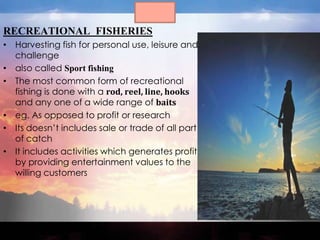
• Harvesting fish for personal use, leisure and
  challenge
• also called Sport fishing
• The most common form of recreational
  fishing is done with a rod, reel, line, hooks
  and any one of a wide range of baits
• eg. As opposed to profit or research
• Its doesn’t includes sale or trade of all part
  of catch
• It includes activities which generates profit
  by providing entertainment values to the
  willing customers
Fishing industry

Fishing industry

  • 1.
    FISHING INDUSTRY MAIN INDUSTRY,ANCILLARY INDUSTRY, SUBSISTENCE & RECREATIONAL FISHING RAHUL MONDAL M.Sc. IF 2nd SEMESTER
  • 2.
    • WHAT ISFISHING? INTR0DUCTI0N Fishing is the activity of trying to catchfish. Fish are normally caught in the wild. Technique for catching fish include hand gathering , spearing, netting, angling and trapping. • WHAT IS INDUSTRY? Industry is the production of an economic good or service within an economy.
  • 3.
    • All theindustries coming under fishery termed as the FISHING INDUSTRIES. It start up with catching raw material till its final processing &marketting. It organised under Private, Corporate & CO- Oparative sector • At present the FISHING INDUSTRY of the country incudes the Main industry of  catching  Processing  Transportation  Distribution  Marketting • Ancillary industries such as  Fishing vessel construction  Engines  Fishing gear & fishing vessel component  Refrigeration & cold storage
  • 4.
    • The industriesis cooperative plan of producers,consumers regulaters DIVIDED IN TWO WAYS—  BASED ON NATURE ON SPECIFICATION  BASED ON THE PURPOSE FISHERIES SECTOR Here are 3 principle industry sectors.  the commercial sector  the traditional sector  the recreational sector
  • 5.
    MAIN INDUSTRY • Directlyconnected to industry • involves the catching of raw material and till reaching the consumer hand • Involve catching of raw material • Majorly controlled by private or government sector also  Traditional fishing industry  Small partnership or limited companies  Large business houses • Involves capital investment-from a few hundred to huge amount of capita • Operation and management, defers from simple to integrated fishing industries • Traditional sector still in unorganised state
  • 6.
    Main Industries arecomprise 3 more sector A. PRIMARY INDUSTRY B. SECONDARY INDUSTRY C. TERTIARY INDUSTRY PRIMARY SECTOR It involves the Production of raw material<fish> from water body. Raw materials are available by two methods. It includes CULTURE FISHERIES & CAPTURE FISHERIES
  • 7.
    CULTURE FISHERIES: Fishingand fish culture are popular parts of the cultural tradition for many people. It mainly concentrated on freshwater, brackish water and mariculture. species culrured includes shell fishes,finfishes and mollusca.  RESERVOIRS-3.15 million ha  PONDS AND TANKS-2.36 million ha CAPTURE FISHERIES : fishing from aquatic resources like marine, riverine, and estuarine system. RIVERS AND CANALS-0.19 million km BRACKISH WATER-1.24million ha India's marine capture fish production ,increased from 520,000 tonnes in 1950 to 3.15 million tonnes in 2007.
  • 8.
    SECONDARY SECTOR the secondarysector includes the handling of fish, it also include processing industry, pre-processing industry .etc. Various processing technologies are utilized by different plants. Fish processing is the processing of fish delivered by commercial fisheries and fish farms. Fish processing can be subdivided in 2 catagories: fish handling & fish products manufacturing.  fish products  Fish meal  Fish glue  Canned fish  Frozen fish  Export of fish and fishery product : 15,700tonnes(Rs3.92crore) in 1961-62 5.41 lakh tonnes(Rs7.621crore) in 2007-08
  • 9.
    tertiARY SECTOR It involvestransportational distribution of products and marketing. Tertiary industry is consumer ending sector, it also includes all activities. After the fish is caught and processed. Transportational involves 2 forms- LIVE(ornamental fishes), PROCESSED FISH. o PROCESSED FISH oORNAMENTAL oFISH MARKETTING FISH
  • 10.
    ANCILLARY INDUSTRY • Thisindustry is a supportive industry of main industry. • It provides all background support to the main industry. • It includes industries like—  Boat building yards  Repairing and servicing facilities  Gear manufacturing industry  Marine diesel engine manufacturing industry  Icemaking industry
  • 11.
    BASED ON THEPURPOSE Depending upon the nature of income and purpose , it is divided into 3-  Subsistence fisheries  Commercial fisheries  Recreational fisheries SUBSISTENCE FISHERIES • Includes all the activities involved in supporting livelihood of the fisherman • The effort is extended to such a level which is just enough to ensure nutritional security and some degree of financial support too • This include mainly capture practices(no investment involved)
  • 12.
    • Culture practicesare very minimum and include casual rearing in backyard pond etc • Income is characterized to support the fishermen COMMERCIAL FISHERIES • It includes activities which generates a lot of profit • Contribute largely to national economy by providing valuable exports  Rs. 12901 crores<2011> • Ensuring nutritional security to the country as a whole • The income is characterised with planned trading and marketing policies • Top producing countries are in order CHINA, PERU, JAPAN
  • 13.
    RECREATIONAL FISHERIES • Harvestingfish for personal use, leisure and challenge • also called Sport fishing • The most common form of recreational fishing is done with a rod, reel, line, hooks and any one of a wide range of baits • eg. As opposed to profit or research • Its doesn’t includes sale or trade of all part of catch • It includes activities which generates profit by providing entertainment values to the willing customers