The document discusses various fish preservation techniques, including chilling, freezing, canning, smoking, salting, fermenting, drying, and chemical preservation, each essential for extending shelf life and ensuring quality. It highlights the importance of food safety and sustainable practices in fish preservation and notes that factors like temperature and packaging significantly affect preservation effectiveness. The conclusion emphasizes the necessity of adhering to proper standards and utilizing multiple techniques for optimal fish preservation.
1
Introduction to FishPreservation Techniques
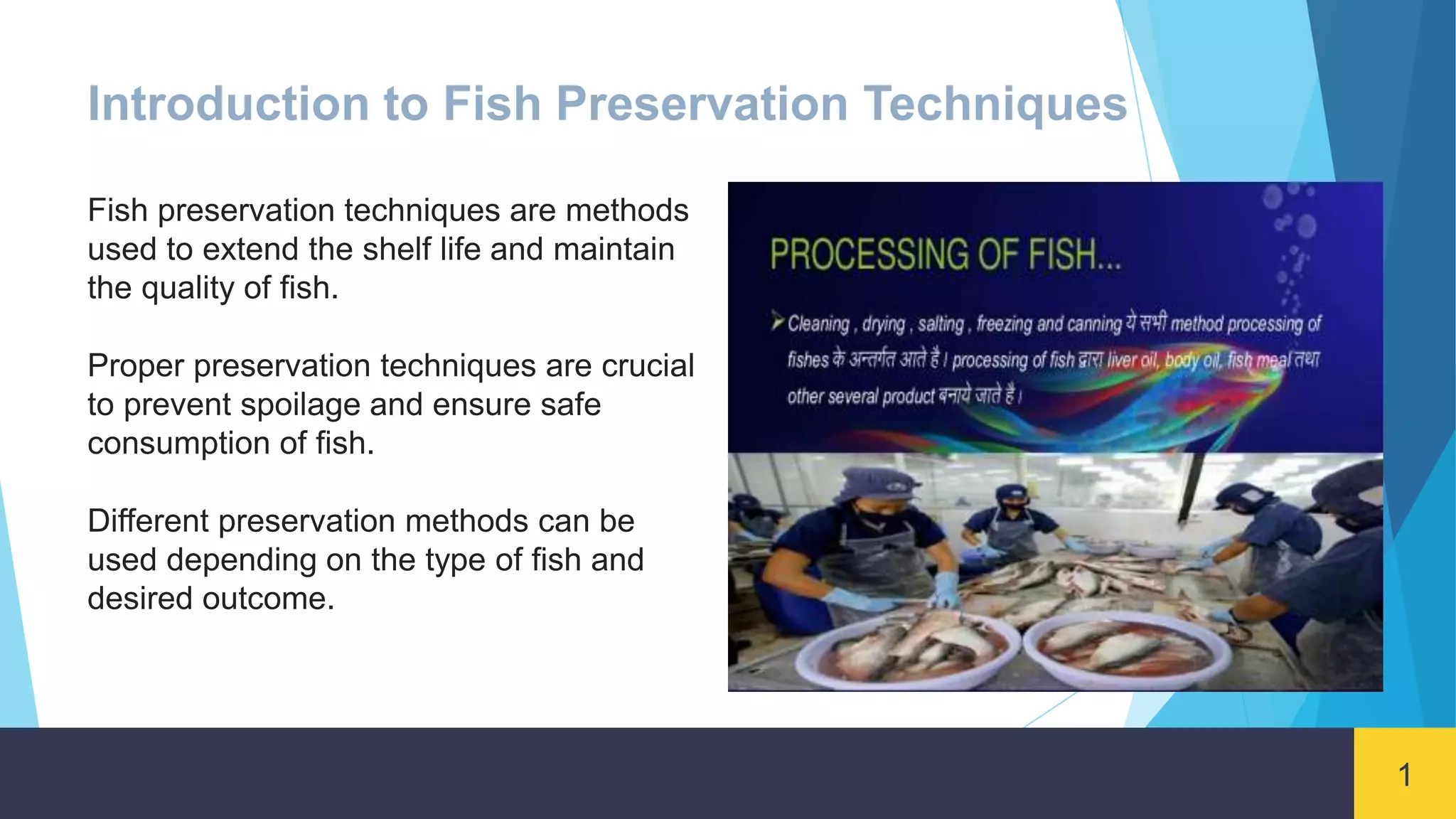
Fish preservation techniques are methods
used to extend the shelf life and maintain
the quality of fish.
Proper preservation techniques are crucial
to prevent spoilage and ensure safe
consumption of fish.
Different preservation methods can be
used depending on the type of fish and
desired outcome.
3.
2
Chilling and Refrigeration
Chillingfish immediately after catch slows
down bacterial growth, preserving
freshness.
Refrigeration at temperatures between 0 to
4 degrees Celsius helps maintain fish
quality for a shorter period.
Proper packaging and storage conditions
are essential for effective chilling and
refrigeration.
4.
3
Freezing
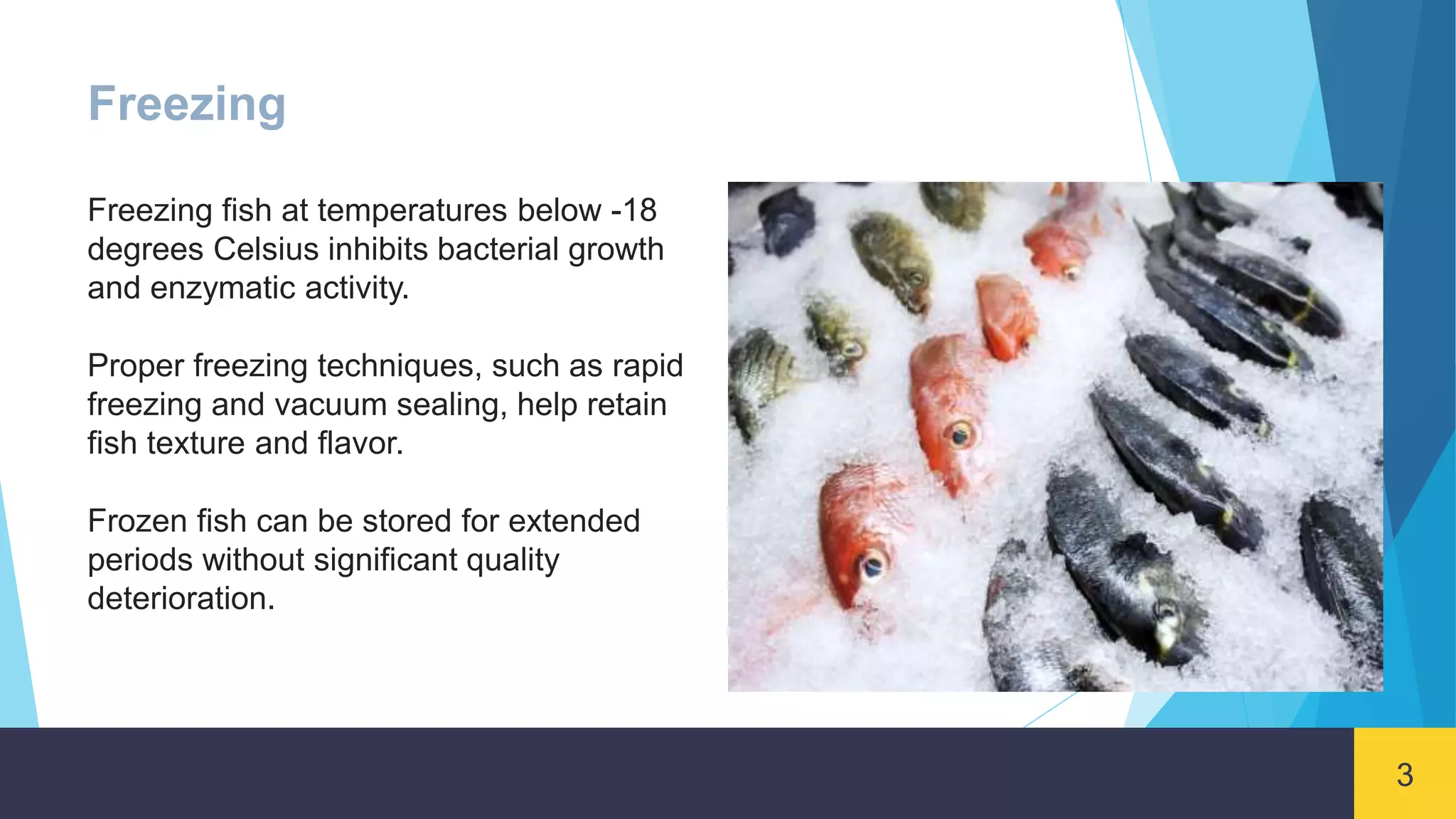
Freezing fish attemperatures below -18
degrees Celsius inhibits bacterial growth
and enzymatic activity.
Proper freezing techniques, such as rapid
freezing and vacuum sealing, help retain
fish texture and flavor.
Frozen fish can be stored for extended
periods without significant quality
deterioration.
5.
4
Canning
Canning fish involvesheat processing fish
in cans to kill bacteria and extend shelf life.
Proper canning techniques ensure the
preservation of fish by creating a vacuum
seal.
Canned fish can be stored for an extended
period and is convenient for transportation.
6.
5
Smoking
Smoking fish involvesexposing fish to
smoke from burning wood or other sources.
Smoking helps in drying and preserving fish
by inhibiting bacterial growth and
enhancing flavor.
Cold smoking and hot smoking are two
common methods used for fish
preservation.
7.
6
Salting
Salting fish involvesapplying salt to fish to
dehydrate and inhibit bacterial growth.
Dry salting and wet salting are two methods
used for fish preservation.
Salted fish can be stored at room
temperature for an extended period.
8.
7
Fermenting
Fermenting fish involvesnatural
fermentation processes that preserve fish
through lactic acid production.
Fermentation enhances fish flavor, texture,
and shelf life.
Fermented fish products are popular in
certain cultures, such as fish sauce and
pickled herring.
9.
8
Drying
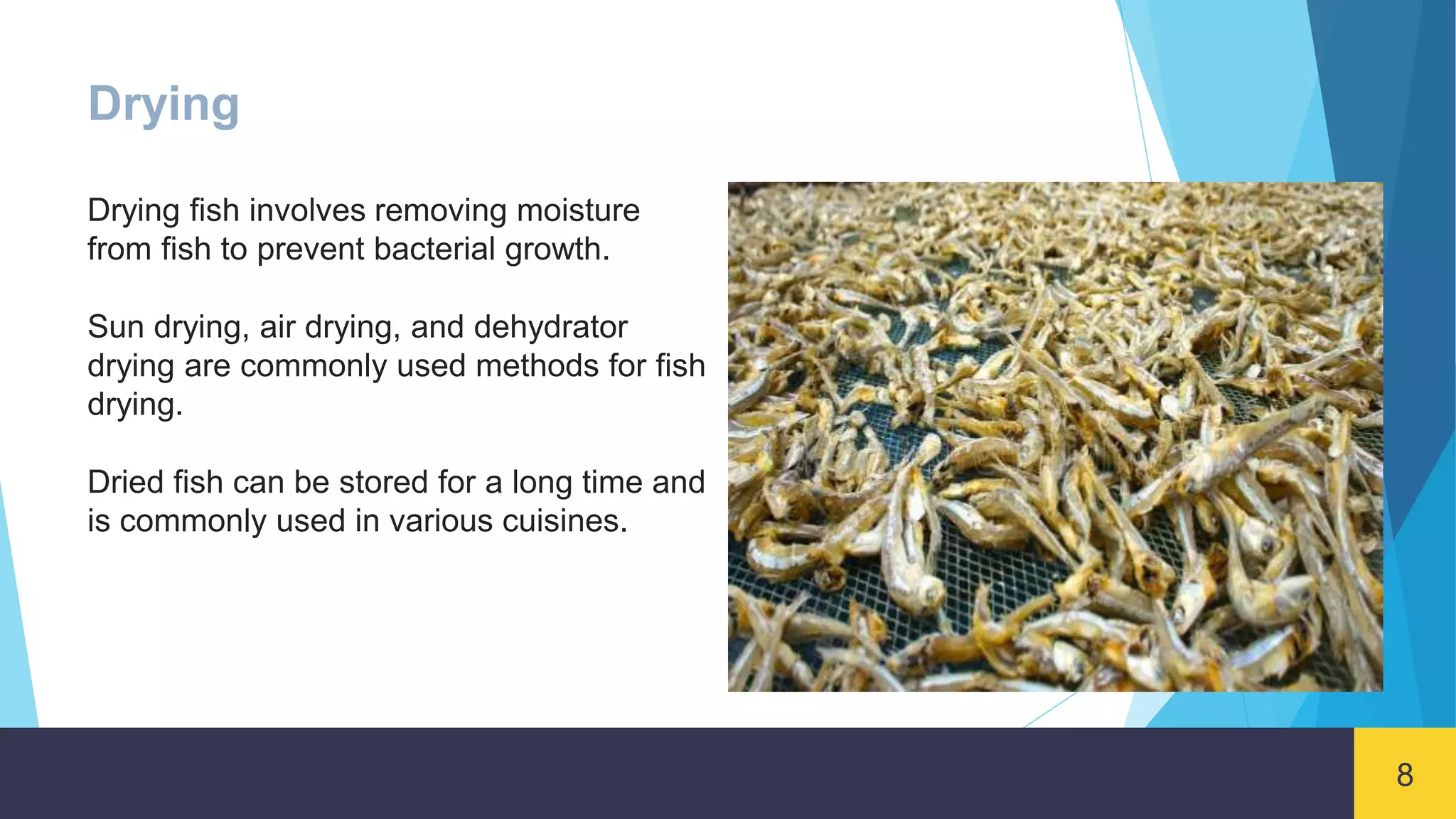
Drying fish involvesremoving moisture
from fish to prevent bacterial growth.
Sun drying, air drying, and dehydrator
drying are commonly used methods for fish
drying.
Dried fish can be stored for a long time and
is commonly used in various cuisines.
10.
9
Chemical Preservation
Chemical preservatives,such as
antioxidants and antimicrobials, can be
used to extend fish shelf life.
Sodium benzoate and potassium sorbate
are commonly used preservatives in fish
products.
Proper regulation and adherence to safety
standards are essential for chemical
preservation.
11.
10
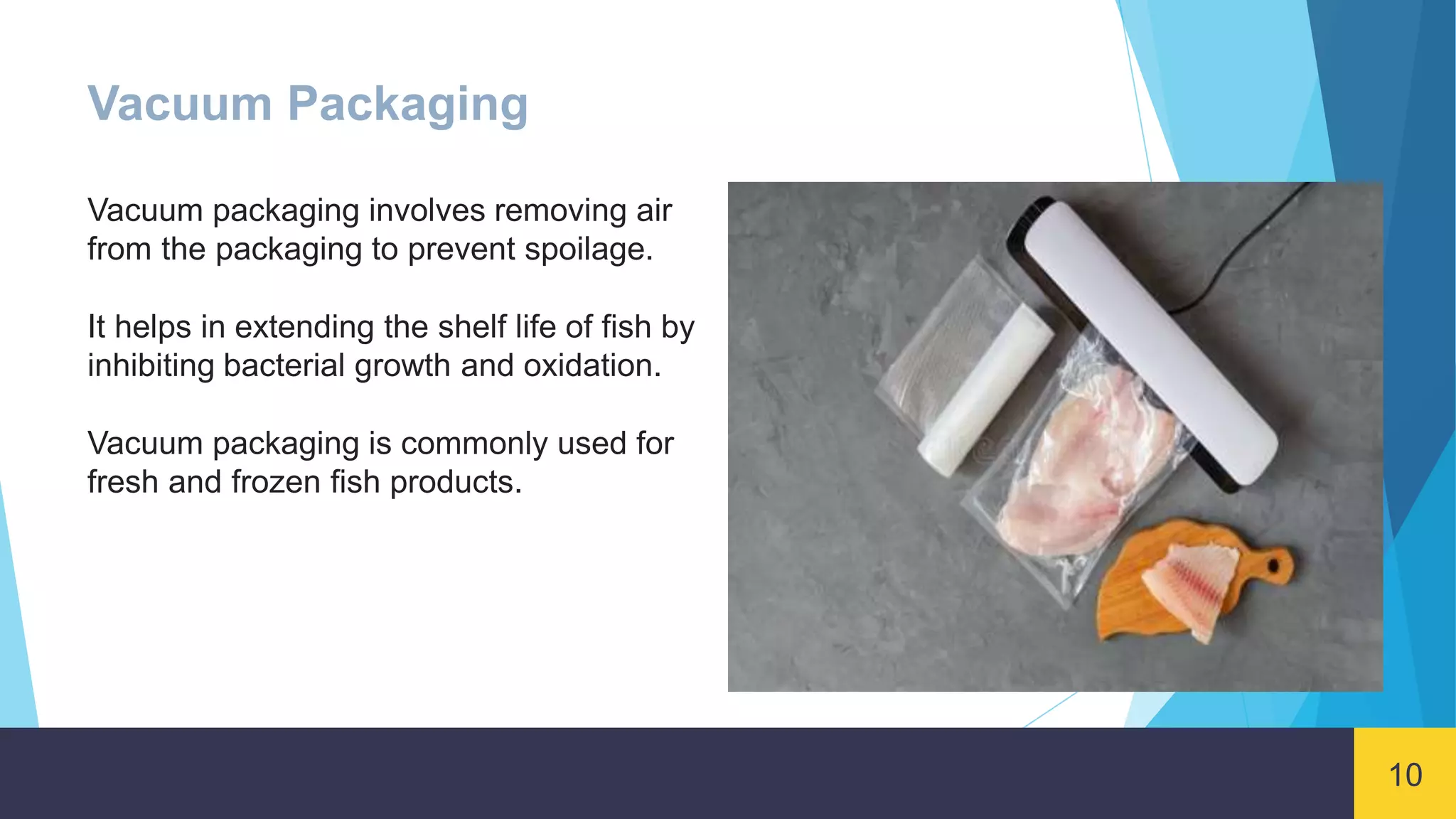
Vacuum Packaging
Vacuum packaginginvolves removing air
from the packaging to prevent spoilage.
It helps in extending the shelf life of fish by
inhibiting bacterial growth and oxidation.
Vacuum packaging is commonly used for
fresh and frozen fish products.
12.
11
Irradiation
Irradiation is apreservation technique that
exposes fish to ionizing radiation.
It helps in reducing bacterial load and
extending the shelf life of fish.
Proper regulations and control are
necessary for safe irradiation of fish.
13.
12
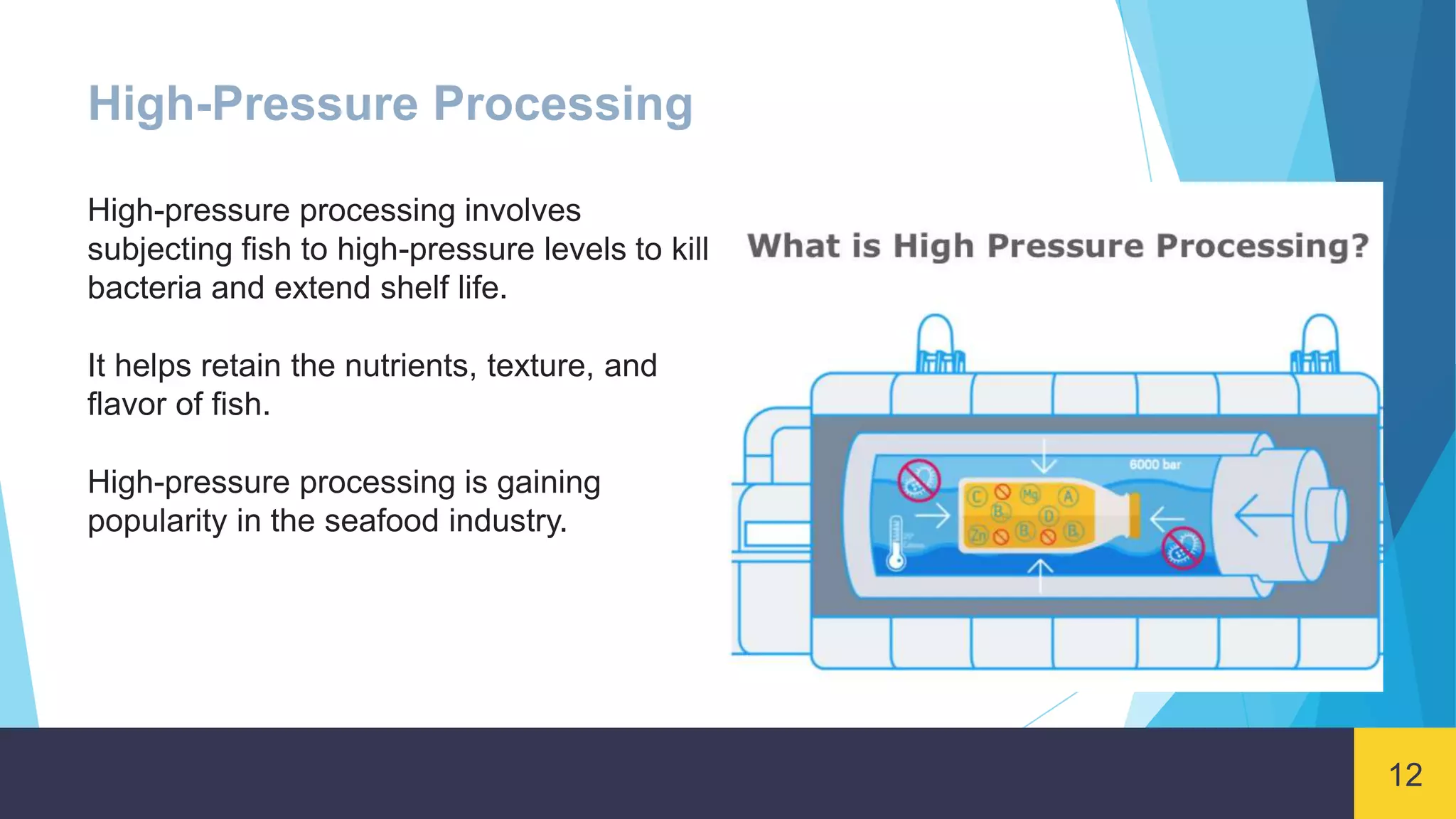
High-Pressure Processing
High-pressure processinginvolves
subjecting fish to high-pressure levels to kill
bacteria and extend shelf life.
It helps retain the nutrients, texture, and
flavor of fish.
High-pressure processing is gaining
popularity in the seafood industry.
14.
13
Combination Methods
Combination methodsinvolve using
multiple preservation techniques to achieve
enhanced preservation.
For example, chilling, vacuum packaging,
and freezing can be combined to extend
the shelf life of fish.
Combination methods can provide
improved preservation results.
15.
14
Factors Affecting FishPreservation
Factors such as temperature, humidity,
packaging, and fish quality impact the
effectiveness of preservation techniques.
Proper handling, storage, and
transportation practices are crucial for
successful fish preservation.
Understanding and controlling these factors
are essential for optimal fish preservation.
16.
15
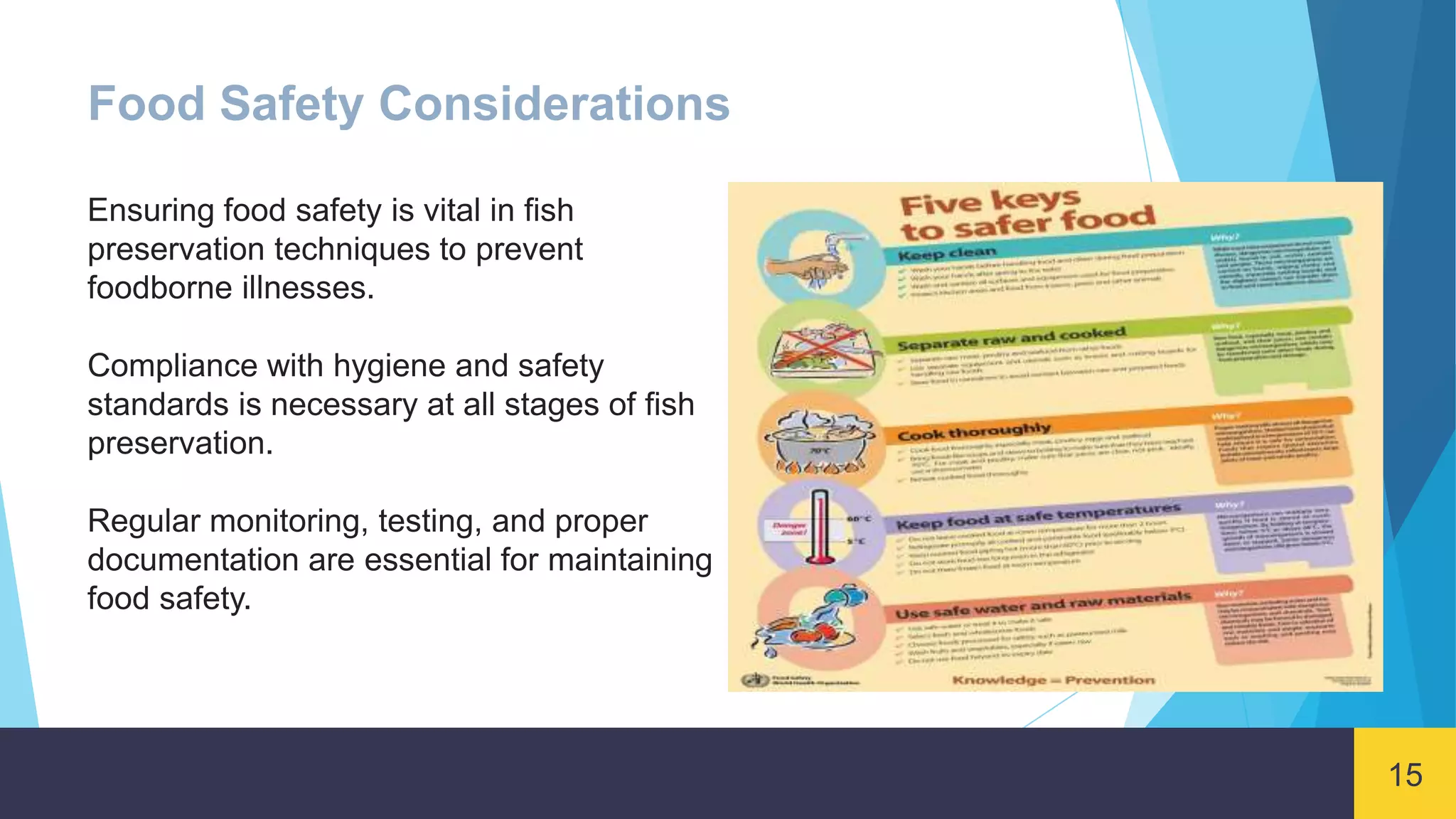
Food Safety Considerations
Ensuringfood safety is vital in fish
preservation techniques to prevent
foodborne illnesses.
Compliance with hygiene and safety
standards is necessary at all stages of fish
preservation.
Regular monitoring, testing, and proper
documentation are essential for maintaining
food safety.
17.
16
Sustainable Practices
Utilizing sustainablepractices in fish
preservation helps in reducing
environmental impact.
Proper waste management, energy-
efficient technologies, and responsible
sourcing contribute to sustainability.
Promoting sustainable fish preservation
techniques ensures the availability of fish
for future generations.
18.
17
Conclusion
Fish preservation techniquesplay a crucial
role in maintaining fish quality and
extending shelf life.
Different methods, such as chilling,
freezing, canning, smoking, and drying,
offer various preservation options.
Adhering to food safety standards and
sustainable practices is essential for
successful fish preservation.
19.
18
References
Food and AgricultureOrganization of the
United Nations. (2018). Fish Handling,
Preservation, and Processing in the
Tropics: Part
[Online]. Available at:
http://www.fao.org/3/y4498e/y4498e04.htm
Food and Agriculture Organization of the
United Nations. (2018). Fish Handling,
Preservation, and Processing in the
Tropics: Part








![18
References
Food and Agriculture Organization of the
United Nations. (2018). Fish Handling,
Preservation, and Processing in the
Tropics: Part
[Online]. Available at:
http://www.fao.org/3/y4498e/y4498e04.htm
Food and Agriculture Organization of the
United Nations. (2018). Fish Handling,
Preservation, and Processing in the
Tropics: Part](https://image.slidesharecdn.com/fishpreservationtechniques2-230819113244-8a367f8e/75/Fish-Preservation-Techniques-2-pptx-19-2048.jpg)


