Immunity
Dr.Hiteshwar D. Lonare
MD Ayu,Ph.D. Sch.(Kriya Sharir)
Assistant Professor ,Kriya Sharir,
Ideal College of Ayurved Wada
DEFINITION
Immunity is defined as the capacity of the body to resist
pathogenic agents. It is the ability of body to resist the
entry of different types of foreign bodies like bacteria,
virus, toxic substances, etc.
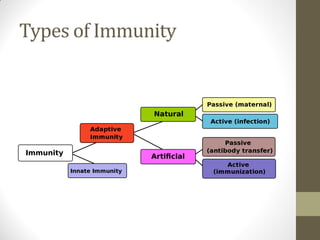
Immunity is of two types:
I. Innate immunity.
II. Acquired immunity.
Types of Immunity
Innate Immunity
Innate immunity is the inborn capacity of the body to resist
pathogens. By chance, if the organisms enter the body, innate
immunity eliminates them before the development of any disease.
It is otherwise called the natural or non-specific immunity.
This type of immunity represents the first line of defense against
any type of pathogens.
Therefore, it is also called non-specific immunity.
Different mechanisms of innate
immunity -
Acquired Immunity
Acquired immunity is the resistance developed in the
body against any specific foreign body like bacteria,
viruses, toxins, vaccines or transplanted tissues. So, this
type of immunity is also known as specific immunity.
It is the most powerful immune mechanism that
protects the body from the invading organisms or toxic
substances. Lymphocytes are responsible for acquired
immunity
T lymphocytes or T cells, which are responsible
for
the development of cellular immunity
B lymphocytes or B cells, which are responsible
for humoral immunity.
„
T lymphocytes
T lymphocytes are processed in thymus. The processing
occurs mostly during the period between just before birth
and few months after birth.
Thymus secretes a hormone called thymosin, which
plays an important role in immunity. It accelerates the
proliferation and activation of lymphocytes in thymus. It
also increases the activity of lymphocytes in lymphoid
tissues.
Types of T lymphocytes
• Helper T cells or inducer T cells. These cells are
also called CD4 cells because of the presence of
molecules called CD4 on their surface.
• Cytotoxic T cells or killer T cells. These cells are
also called CD8 cells because of the presence of
molecules called CD8 on their surface.
• Suppressor T cells – supress the activities of killer T cells and
helper T cells. (
• Memory T cells – some of T cells remain in lymphoid tissue /
not enters in circulation called memory T cell further they
migrate in lymphoid tissue.
B lymphocytes
B lymphocytes were first discovered in the bursa of
Fabricius in birds, hence the name B lymphocytes.
Bursa of Fabricius is a lymphoid organ situated near
the cloaca of birds. Bursa is absent in mammals and the
processing of B lymphocytes takes place in liver (during
fetal life) and bone marrow (after birth).
Types of B lymphocytes
• Plasma cells- it destroys the foregin organisms by producing the
antibodies. Plasma cell produces about 2,000 molecules ogf
antibodies / second. The antibodies are also called Immunoglobins.
• Memory cells – Memory B cell occupy the lymphoid tissue
throughout the body. The memory cell is inactive condition until the
body is exposed to the same organism for the second time.
• These phenomenon forms the basic principal of vaccination against
the infection.
Cellular immunity -
• Also called cell-mediated immunity / T cell immunity
• It is defined as immunity developed by cell mediated
response.
• It involves several types of cells such as T lymphocytes,
macrophages & natural killer T cells and hence name is Cell
mediated immunity.
• This immunity does not involve antibodies.
• Cellular immunity is the major defence mechanism against
infections by viruses, fungi & few bateria like tubercle bacilus.
• It also responsible for rejection of transplanted tissues.
Humoral immunity-
• It is defined as immunity mediated by antibodies, which are
secreted by B lymphocytes.
• B lymphocytes secrete the antibodies into blood and lymph.
• The blood & lymph are the body fluids & in latin called
Humours or Humors.
• Since the B lymhocytes provide immunity through humors ,
this type of immunity called Humoral immunity or B cell
immunity.
• Antibodies are the gamma globulins produced by B
lymphocytes. These antibodies fight against the invading
organisms. The humoral immunity is the major defence
mechanism against the bacterial infection.
The term hypersensitivity. means It is defined as
abnormal immune response to a chemical or physical
agent (allergen). During the first exposure to an allergen,
the immune response does not normally produce any
reaction in the body. Sensitization or an initial exposure
to the allergen is required for the reaction. So, the
subsequent exposure to the allergen causes variety of
inflammatory responses. These responses are called
allergic reactions or immunological hypersensitivity
reactions.
Hypersensitivity.
Immunological hypersensitivity reactions may be innate or
acquired. These reactions are mediated mostly by antibodies. In
some conditions, T cells are involved. Common symptoms
include sneezing, itching and skin rashes. However, in some
persons the symptoms may be severe.
Common allergic conditions are:
1. Food allergy
2. Allergic rhinitis
3. Bronchial asthma
4. Urticaria.
„
Common allergens -
Thank You

First year mbbs physiology - immunity, classification types and examples

  • 1.
    Immunity Dr.Hiteshwar D. Lonare MDAyu,Ph.D. Sch.(Kriya Sharir) Assistant Professor ,Kriya Sharir, Ideal College of Ayurved Wada
  • 2.
    DEFINITION Immunity is definedas the capacity of the body to resist pathogenic agents. It is the ability of body to resist the entry of different types of foreign bodies like bacteria, virus, toxic substances, etc. Immunity is of two types: I. Innate immunity. II. Acquired immunity.
  • 3.
  • 4.
    Innate Immunity Innate immunityis the inborn capacity of the body to resist pathogens. By chance, if the organisms enter the body, innate immunity eliminates them before the development of any disease. It is otherwise called the natural or non-specific immunity. This type of immunity represents the first line of defense against any type of pathogens. Therefore, it is also called non-specific immunity.
  • 5.
    Different mechanisms ofinnate immunity -
  • 6.
    Acquired Immunity Acquired immunityis the resistance developed in the body against any specific foreign body like bacteria, viruses, toxins, vaccines or transplanted tissues. So, this type of immunity is also known as specific immunity. It is the most powerful immune mechanism that protects the body from the invading organisms or toxic substances. Lymphocytes are responsible for acquired immunity
  • 7.
    T lymphocytes orT cells, which are responsible for the development of cellular immunity B lymphocytes or B cells, which are responsible for humoral immunity. „
  • 8.
    T lymphocytes T lymphocytesare processed in thymus. The processing occurs mostly during the period between just before birth and few months after birth. Thymus secretes a hormone called thymosin, which plays an important role in immunity. It accelerates the proliferation and activation of lymphocytes in thymus. It also increases the activity of lymphocytes in lymphoid tissues.
  • 9.
    Types of Tlymphocytes • Helper T cells or inducer T cells. These cells are also called CD4 cells because of the presence of molecules called CD4 on their surface. • Cytotoxic T cells or killer T cells. These cells are also called CD8 cells because of the presence of molecules called CD8 on their surface. • Suppressor T cells – supress the activities of killer T cells and helper T cells. ( • Memory T cells – some of T cells remain in lymphoid tissue / not enters in circulation called memory T cell further they migrate in lymphoid tissue.
  • 10.
    B lymphocytes B lymphocyteswere first discovered in the bursa of Fabricius in birds, hence the name B lymphocytes. Bursa of Fabricius is a lymphoid organ situated near the cloaca of birds. Bursa is absent in mammals and the processing of B lymphocytes takes place in liver (during fetal life) and bone marrow (after birth).
  • 11.
    Types of Blymphocytes • Plasma cells- it destroys the foregin organisms by producing the antibodies. Plasma cell produces about 2,000 molecules ogf antibodies / second. The antibodies are also called Immunoglobins. • Memory cells – Memory B cell occupy the lymphoid tissue throughout the body. The memory cell is inactive condition until the body is exposed to the same organism for the second time. • These phenomenon forms the basic principal of vaccination against the infection.
  • 12.
    Cellular immunity - •Also called cell-mediated immunity / T cell immunity • It is defined as immunity developed by cell mediated response. • It involves several types of cells such as T lymphocytes, macrophages & natural killer T cells and hence name is Cell mediated immunity. • This immunity does not involve antibodies. • Cellular immunity is the major defence mechanism against infections by viruses, fungi & few bateria like tubercle bacilus. • It also responsible for rejection of transplanted tissues.
  • 13.
    Humoral immunity- • Itis defined as immunity mediated by antibodies, which are secreted by B lymphocytes. • B lymphocytes secrete the antibodies into blood and lymph. • The blood & lymph are the body fluids & in latin called Humours or Humors. • Since the B lymhocytes provide immunity through humors , this type of immunity called Humoral immunity or B cell immunity. • Antibodies are the gamma globulins produced by B lymphocytes. These antibodies fight against the invading organisms. The humoral immunity is the major defence mechanism against the bacterial infection.
  • 14.
    The term hypersensitivity.means It is defined as abnormal immune response to a chemical or physical agent (allergen). During the first exposure to an allergen, the immune response does not normally produce any reaction in the body. Sensitization or an initial exposure to the allergen is required for the reaction. So, the subsequent exposure to the allergen causes variety of inflammatory responses. These responses are called allergic reactions or immunological hypersensitivity reactions. Hypersensitivity.
  • 15.
    Immunological hypersensitivity reactionsmay be innate or acquired. These reactions are mediated mostly by antibodies. In some conditions, T cells are involved. Common symptoms include sneezing, itching and skin rashes. However, in some persons the symptoms may be severe. Common allergic conditions are: 1. Food allergy 2. Allergic rhinitis 3. Bronchial asthma 4. Urticaria. „
  • 16.
  • 17.