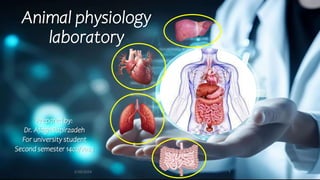

Animal physiology
laboratory
Prepared by:
Dr. Afagh Bapirzadeh
For university student
Second semester 1402/2024
2/20/2024 1
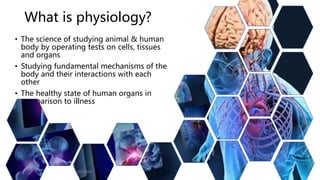
What is physiology?
• The science of studying animal & human
body by operating tests on cells, tissues
and organs
• Studying fundamental mechanisms of the
body and their interactions with each
other
• The healthy state of human organs in
comparison to illness
2/20/2024 2
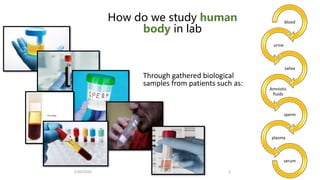
How do we study human
body in lab
Through gathered biological
samples from patients such as:
blood
urine
saliva
Amniotic
fluids
sperm
plasma
serum
2/20/2024 3
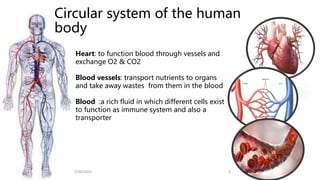
Circular system of the human
body
Heart: to function blood through vessels and
exchange O2 & CO2
Blood vessels: transport nutrients to organs
and take away wastes from them in the blood
Blood :a rich fluid in which different cells exist
to function as immune system and also a
transporter
2/20/2024 4
What are we studying in BLOOD physiology laboratory?
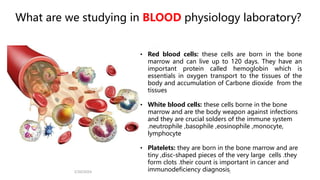
• Red blood cells: these cells are born in the bone
marrow and can live up to 120 days. They have an
important protein called hemoglobin which is
essentials in oxygen transport to the tissues of the
body and accumulation of Carbone dioxide from the
tissues
• White blood cells: these cells borne in the bone
marrow and are the body weapon against infections
and they are crucial solders of the immune system
.neutrophile ,basophile ,eosinophile ,monocyte,
lymphocyte
• Platelets: they are born in the bone marrow and are
tiny ,disc-shaped pieces of the very large cells .they
form clots .their count is important in cancer and
immunodeficiency diagnosis
2/20/2024 5
Phlebotomy/phlebotomist
Phlebotomy: using a needle to take blood from
someone for different laboratory tests
Phlebotomist: a person who is usually a
laboratory technician and is trained to gather
blood samples from people or patients
2/20/2024 6
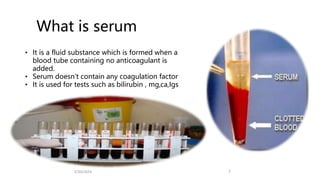
What is serum
• It is a fluid substance which is formed when a
blood tube containing no anticoagulant is
added.
• Serum doesn’t contain any coagulation factor
• It is used for tests such as bilirubin , mg,ca,Igs
2/20/2024 7
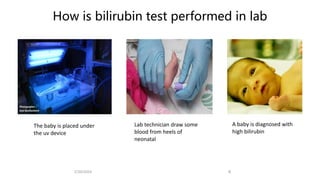
How is bilirubin test performed in lab
A baby is diagnosed with
high bilirubin
Lab technician draw some
blood from heels of
neonatal
The baby is placed under
the uv device
2/20/2024 8
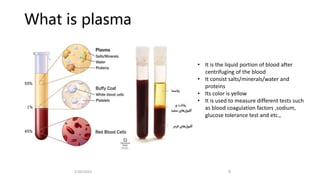
What is plasma
• It is the liquid portion of blood after
centrifuging of the blood
• It consist salts/minerals/water and
proteins
• Its color is yellow
• It is used to measure different tests such
as blood coagulation factors ,sodium,
glucose tolerance test and etc.,
2/20/2024 9
Plasma versus serum
2/20/2024 10
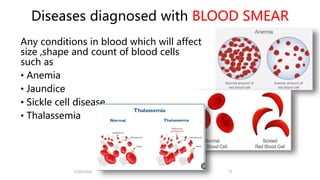
Diseases diagnosed with BLOOD SMEAR
Any conditions in blood which will affect
size ,shape and count of blood cells
such as
• Anemia
• Jaundice
• Sickle cell disease
• Thalassemia
2/20/2024 11
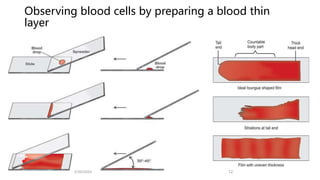
Observing blood cells by preparing a blood thin
layer
2/20/2024 12
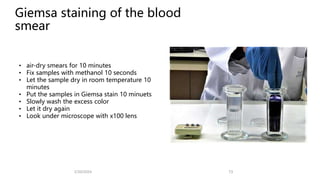
Giemsa staining of the blood
smear
• air-dry smears for 10 minutes
• Fix samples with methanol 10 seconds
• Let the sample dry in room temperature 10
minutes
• Put the samples in Giemsa stain 10 minuets
• Slowly wash the excess color
• Let it dry again
• Look under microscope with x100 lens
2/20/2024 13
2/20/2024 14

first section physiology laboratory.pptx

  • 1.
    Animal physiology laboratory Prepared by: Dr.Afagh Bapirzadeh For university student Second semester 1402/2024 2/20/2024 1
  • 2.
    What is physiology? •The science of studying animal & human body by operating tests on cells, tissues and organs • Studying fundamental mechanisms of the body and their interactions with each other • The healthy state of human organs in comparison to illness 2/20/2024 2
  • 3.
    How do westudy human body in lab Through gathered biological samples from patients such as: blood urine saliva Amniotic fluids sperm plasma serum 2/20/2024 3
  • 4.
    Circular system ofthe human body Heart: to function blood through vessels and exchange O2 & CO2 Blood vessels: transport nutrients to organs and take away wastes from them in the blood Blood :a rich fluid in which different cells exist to function as immune system and also a transporter 2/20/2024 4
  • 5.
    What are westudying in BLOOD physiology laboratory? • Red blood cells: these cells are born in the bone marrow and can live up to 120 days. They have an important protein called hemoglobin which is essentials in oxygen transport to the tissues of the body and accumulation of Carbone dioxide from the tissues • White blood cells: these cells borne in the bone marrow and are the body weapon against infections and they are crucial solders of the immune system .neutrophile ,basophile ,eosinophile ,monocyte, lymphocyte • Platelets: they are born in the bone marrow and are tiny ,disc-shaped pieces of the very large cells .they form clots .their count is important in cancer and immunodeficiency diagnosis 2/20/2024 5
  • 6.
    Phlebotomy/phlebotomist Phlebotomy: using aneedle to take blood from someone for different laboratory tests Phlebotomist: a person who is usually a laboratory technician and is trained to gather blood samples from people or patients 2/20/2024 6
  • 7.
    What is serum •It is a fluid substance which is formed when a blood tube containing no anticoagulant is added. • Serum doesn’t contain any coagulation factor • It is used for tests such as bilirubin , mg,ca,Igs 2/20/2024 7
  • 8.
    How is bilirubintest performed in lab A baby is diagnosed with high bilirubin Lab technician draw some blood from heels of neonatal The baby is placed under the uv device 2/20/2024 8
  • 9.
    What is plasma •It is the liquid portion of blood after centrifuging of the blood • It consist salts/minerals/water and proteins • Its color is yellow • It is used to measure different tests such as blood coagulation factors ,sodium, glucose tolerance test and etc., 2/20/2024 9
  • 10.
  • 11.
    Diseases diagnosed withBLOOD SMEAR Any conditions in blood which will affect size ,shape and count of blood cells such as • Anemia • Jaundice • Sickle cell disease • Thalassemia 2/20/2024 11
  • 12.
    Observing blood cellsby preparing a blood thin layer 2/20/2024 12
  • 13.
    Giemsa staining ofthe blood smear • air-dry smears for 10 minutes • Fix samples with methanol 10 seconds • Let the sample dry in room temperature 10 minutes • Put the samples in Giemsa stain 10 minuets • Slowly wash the excess color • Let it dry again • Look under microscope with x100 lens 2/20/2024 13
  • 14.