Phil Huggins
February 2004
 Description
 Isolation & Mitigation
 Letter of Preservation
 Additional Monitoring
 External Notifications
 Restoring the Systems
 Securing the Systems
 Summary Meeting
 The goal of this phase is to respond to the
data and conclusions drawn in the
assessment phase
 This includes:
 Isolating compromised systems
 Acquisition of systems
 Increased logging and monitoring
 Restoring systems
 Increasing security
 This phase restores the system/s to a known
and trusted state
 The secondary goal of this phase is securing
similar hosts to prevent additional attacks or
at least increase monitoring to identify future
attacks
 The lessons learned will be shared so that
future incidents are more successful
 The goal of acquisition is to save the state of
the system
 Document everything (even mistakes)
 Trust nothing on the suspect system
 Suspect systems should be modified as little
as possible
 Chain of Custody must be kept for all
potential court evidence
 Systems that have been identified as compromised
must be isolated to prevent damage to other
systems and further damage to it
 When possible, unplug from the network and plug
into an empty hub or switch (to prevent network
unreachable errors)
 If it must be kept online, restrict access to and from
it using ACLs on routers and switches
 Apply network monitoring to those systems that are
not removed from the network
 When external systems are identified, a Letter of
Preservation should be issued
 Carries legal weight in the US
 It requests that logs and other data be preserved and not
deleted
 Additional legal procedures are typically required before the
data is actually transferred
 The letter must specify a given host or person to save data
about
 An example can be found in the EnCase Legal Journal
 Additional network monitoring devices may need to
be deployed to:
 Detect and observe future attacks
 Collect additional evidence of an ongoing attack
 Provide data to help identify the incident scope
 These devices can be built during the Readiness
Phase
 Logging levels on firewalls, IDS, and servers may
need to be increased
 Some monitoring may not be allowed depending on
User Privacy Policies
 Snort (http://www.snort.org)
 Ethereal (http://www.ethereal.com)
 tcpdump (http://tcpdump.org)
 snoop (Included in Solaris)
 NetWitness
(http://www.forensicexplorers.com)
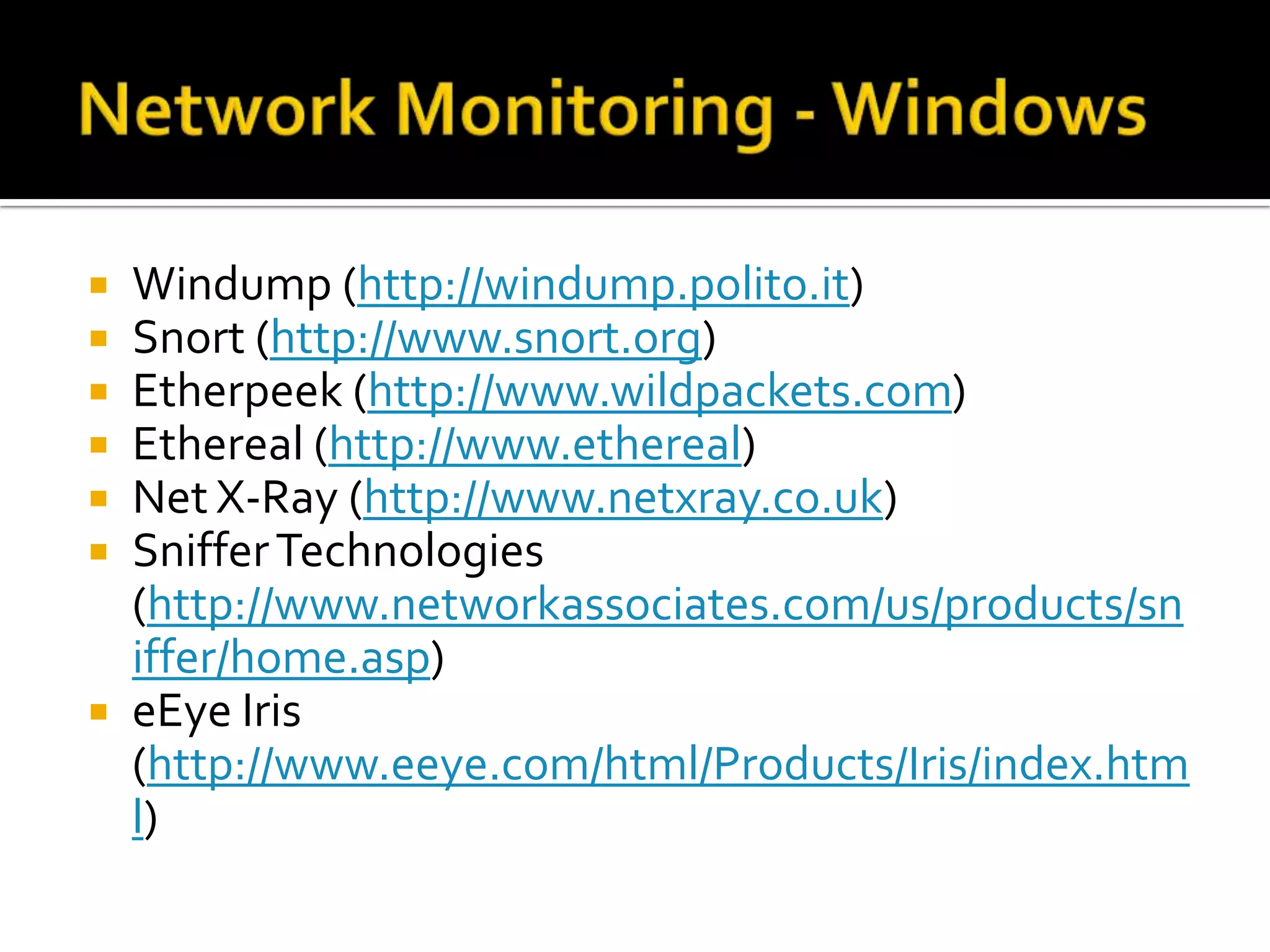
 Windump (http://windump.polito.it)
 Snort (http://www.snort.org)
 Etherpeek (http://www.wildpackets.com)
 Ethereal (http://www.ethereal)
 Net X-Ray (http://www.netxray.co.uk)
 SnifferTechnologies
(http://www.networkassociates.com/us/products/sn
iffer/home.asp)
 eEye Iris
(http://www.eeye.com/html/Products/Iris/index.htm
l)
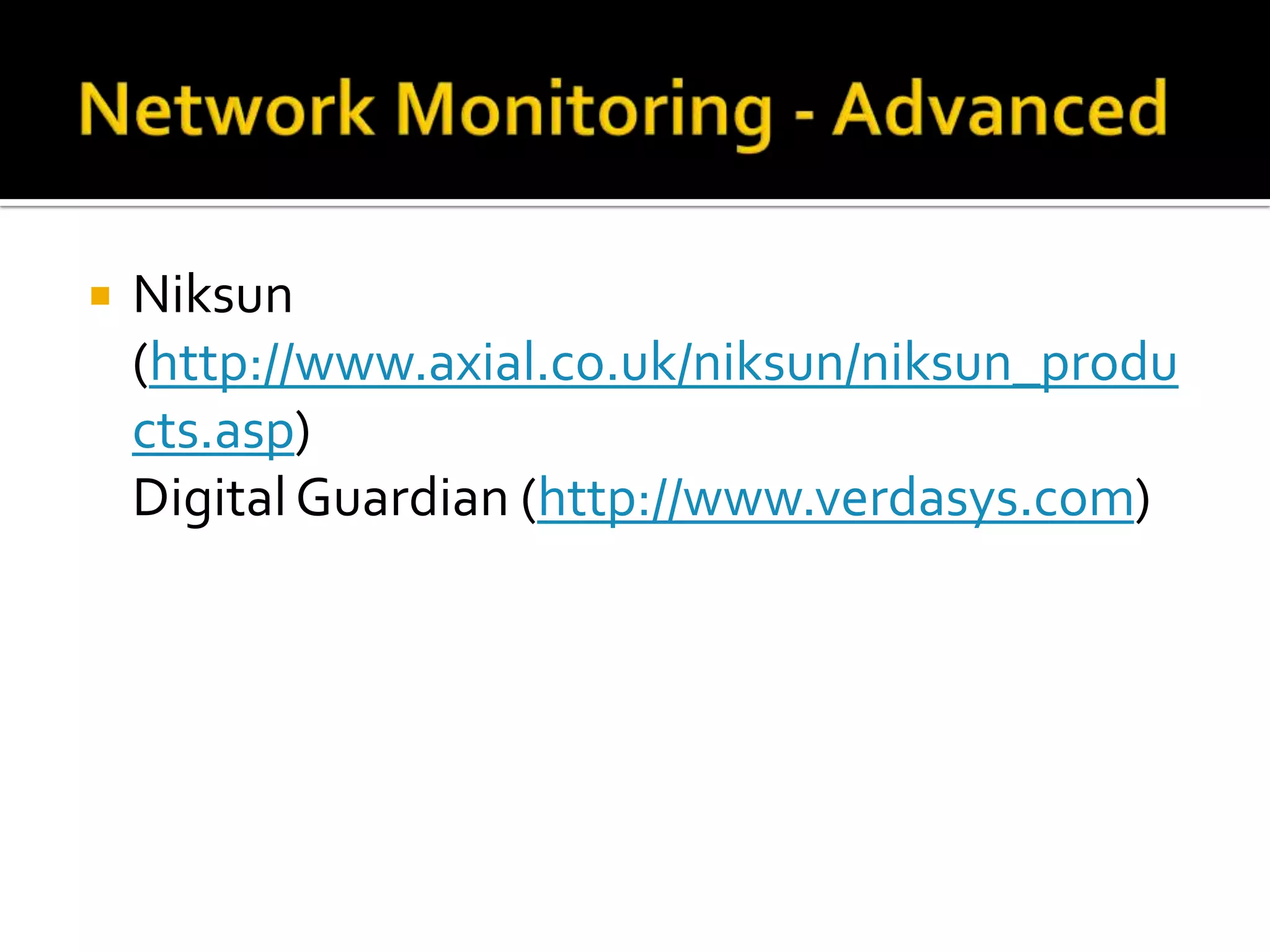
 Niksun
(http://www.axial.co.uk/niksun/niksun_produ
cts.asp)
DigitalGuardian (http://www.verdasys.com)
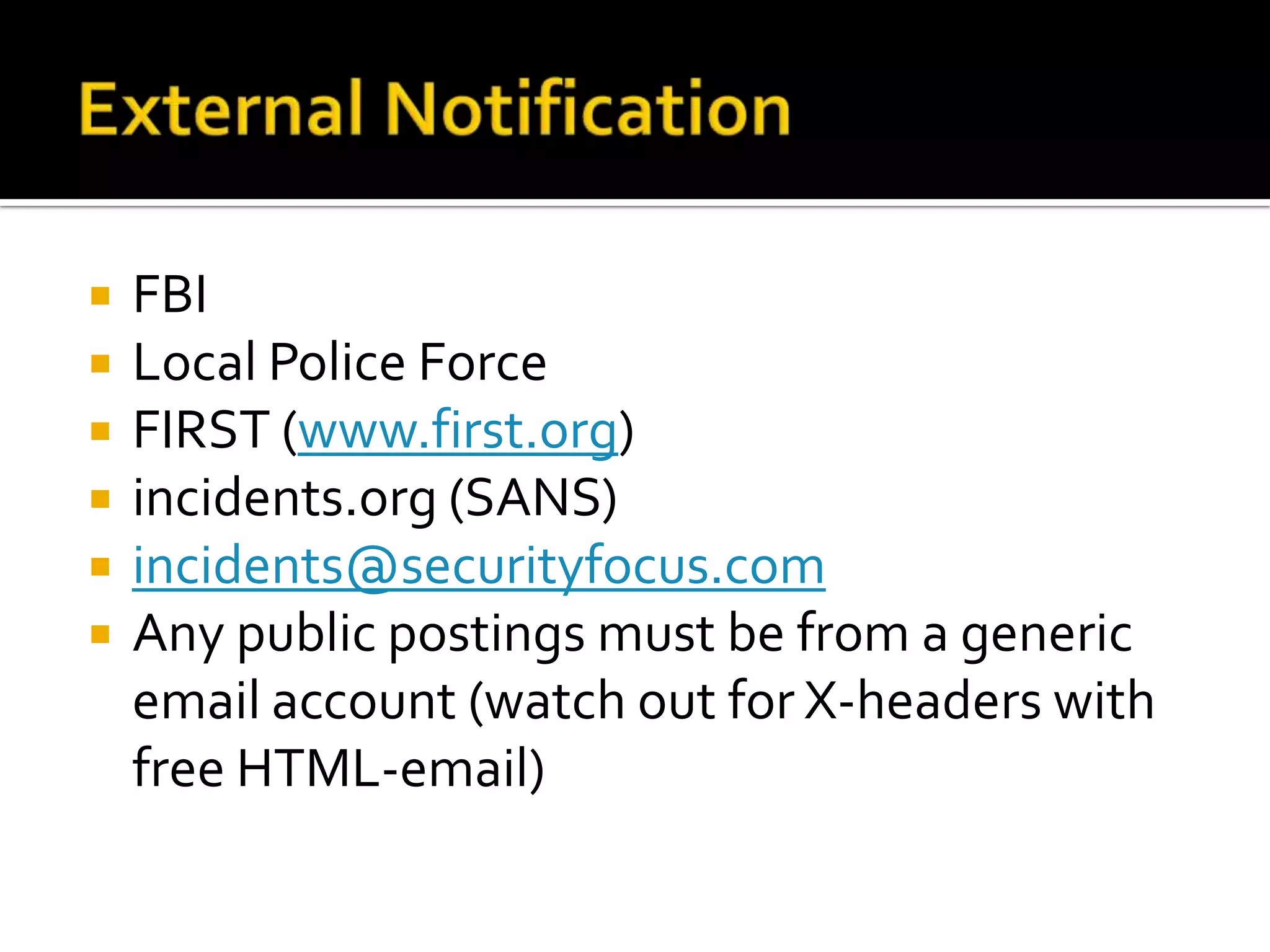
 FBI
 Local Police Force
 FIRST (www.first.org)
 incidents.org (SANS)
 incidents@securityfocus.com
 Any public postings must be from a generic
email account (watch out for X-headers with
free HTML-email)
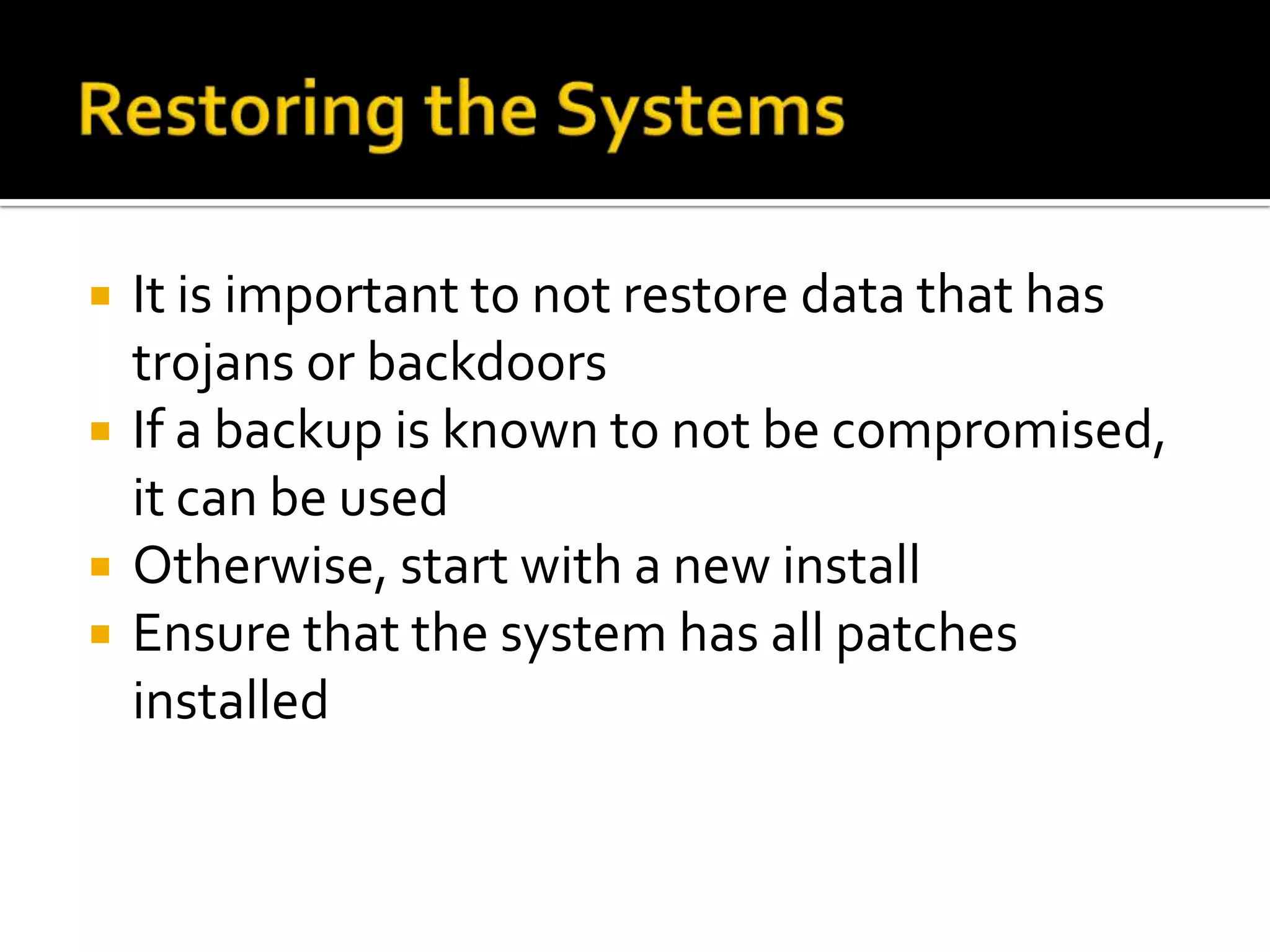
 It is important to not restore data that has
trojans or backdoors
 If a backup is known to not be compromised,
it can be used
 Otherwise, start with a new install
 Ensure that the system has all patches
installed
 If the method of attack is known, secure the
compromised host from it first
 After, secure hosts with the same vulnerability
 If the exact method is not known yet, ensure that
monitoring is in place to detect future attacks
 After a forensic analysis is performed, secure any
vulnerabilities that were found
 Additional filters may be applied to the recovered
host to detect future attempts
 Each person involved with the incident should
attend a summary meeting
 This will cover what worked and what did not
work
 Policies and procedures should be modified
appropriately
 Any ‘tricks’ that were discovered should be
documented to help future responders
 This phase performs actions based on data
found in the Assessment Phase
 Additional monitoring and logging can be
used to collect more data and ensure that
new attacks are detected
 External organizations may provide support
or assistance
 Ensure security holes are plugged and risks
mitigated

First Response - Session 11 - Incident Response [2004]

  • 1.
  • 2.
     Description  Isolation& Mitigation  Letter of Preservation  Additional Monitoring  External Notifications  Restoring the Systems  Securing the Systems  Summary Meeting
  • 3.
     The goalof this phase is to respond to the data and conclusions drawn in the assessment phase  This includes:  Isolating compromised systems  Acquisition of systems  Increased logging and monitoring  Restoring systems  Increasing security
  • 4.
     This phaserestores the system/s to a known and trusted state  The secondary goal of this phase is securing similar hosts to prevent additional attacks or at least increase monitoring to identify future attacks  The lessons learned will be shared so that future incidents are more successful
  • 5.
     The goalof acquisition is to save the state of the system  Document everything (even mistakes)  Trust nothing on the suspect system  Suspect systems should be modified as little as possible  Chain of Custody must be kept for all potential court evidence
  • 6.
     Systems thathave been identified as compromised must be isolated to prevent damage to other systems and further damage to it  When possible, unplug from the network and plug into an empty hub or switch (to prevent network unreachable errors)  If it must be kept online, restrict access to and from it using ACLs on routers and switches  Apply network monitoring to those systems that are not removed from the network
  • 7.
     When externalsystems are identified, a Letter of Preservation should be issued  Carries legal weight in the US  It requests that logs and other data be preserved and not deleted  Additional legal procedures are typically required before the data is actually transferred  The letter must specify a given host or person to save data about  An example can be found in the EnCase Legal Journal
  • 8.
     Additional networkmonitoring devices may need to be deployed to:  Detect and observe future attacks  Collect additional evidence of an ongoing attack  Provide data to help identify the incident scope  These devices can be built during the Readiness Phase  Logging levels on firewalls, IDS, and servers may need to be increased  Some monitoring may not be allowed depending on User Privacy Policies
  • 9.
     Snort (http://www.snort.org) Ethereal (http://www.ethereal.com)  tcpdump (http://tcpdump.org)  snoop (Included in Solaris)  NetWitness (http://www.forensicexplorers.com)
  • 10.
     Windump (http://windump.polito.it) Snort (http://www.snort.org)  Etherpeek (http://www.wildpackets.com)  Ethereal (http://www.ethereal)  Net X-Ray (http://www.netxray.co.uk)  SnifferTechnologies (http://www.networkassociates.com/us/products/sn iffer/home.asp)  eEye Iris (http://www.eeye.com/html/Products/Iris/index.htm l)
  • 11.
  • 12.
     FBI  LocalPolice Force  FIRST (www.first.org)  incidents.org (SANS)  incidents@securityfocus.com  Any public postings must be from a generic email account (watch out for X-headers with free HTML-email)
  • 13.
     It isimportant to not restore data that has trojans or backdoors  If a backup is known to not be compromised, it can be used  Otherwise, start with a new install  Ensure that the system has all patches installed
  • 14.
     If themethod of attack is known, secure the compromised host from it first  After, secure hosts with the same vulnerability  If the exact method is not known yet, ensure that monitoring is in place to detect future attacks  After a forensic analysis is performed, secure any vulnerabilities that were found  Additional filters may be applied to the recovered host to detect future attempts
  • 15.
     Each personinvolved with the incident should attend a summary meeting  This will cover what worked and what did not work  Policies and procedures should be modified appropriately  Any ‘tricks’ that were discovered should be documented to help future responders
  • 16.
     This phaseperforms actions based on data found in the Assessment Phase  Additional monitoring and logging can be used to collect more data and ensure that new attacks are detected  External organizations may provide support or assistance  Ensure security holes are plugged and risks mitigated