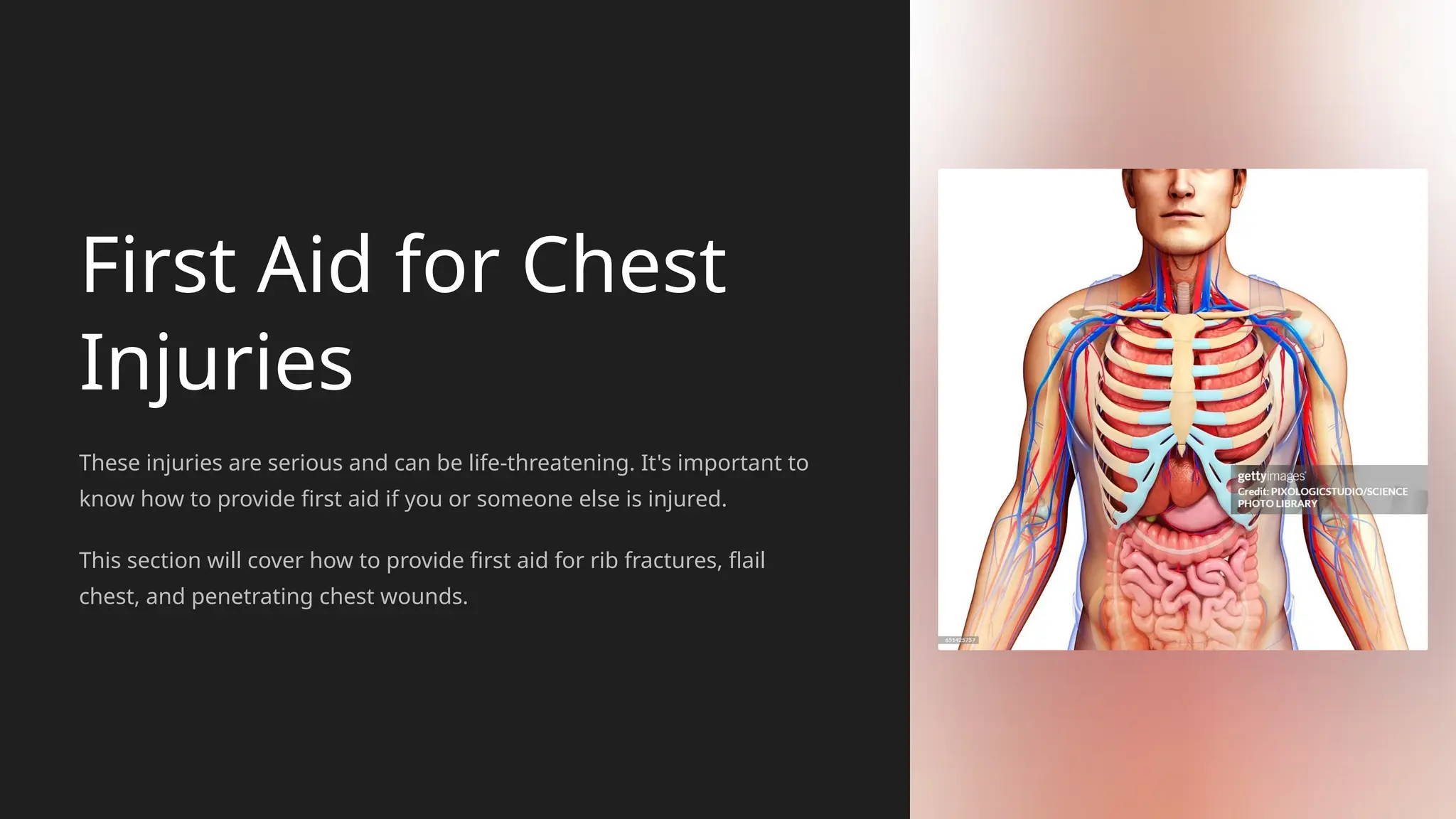
First Aid for Chest
Injuries
These injuries are serious and can be life-threatening. It's important to
know how to provide first aid if you or someone else is injured.
This section will cover how to provide first aid for rib fractures, flail
chest, and penetrating chest wounds.
Recognizing Rib Fractures
Pain and Tenderness
A broken rib is a common injury. It can cause pain and
tenderness in the chest area. The pain can worsen when
you breathe deeply or cough. The location of the pain can
help identify the affected rib. Pain may also be felt in the
back or abdomen depending on the location of the
fracture.
Deformity and Swelling
You may notice a noticeable deformity in the chest area if
the fracture is severe. The affected rib may be displaced or
out of place. The area may also be swollen, bruised, or
discolored. These signs are a clear indication that a rib
fracture has occurred.
Symptoms of Rib Fractures
Pain
Sharp, localized pain that
worsens with breathing,
coughing, or movement.
May radiate to the back. This
pain is a hallmark of rib
fractures and can be quite
severe.
Tenderness
The area of the fracture will
be extremely sensitive to
touch, and even light
pressure can cause
significant pain. This
tenderness is another
defining feature of rib
fractures. It can be helpful in
pinpointing the location of
the fracture.
Difficulty Breathing
Rib fractures can cause pain
that makes deep breathing
difficult, leading to shallow
breaths. This can reduce
oxygen intake and lead to
shortness of breath. If the
pain is severe, it can make it
nearly impossible to take a
full breath.
Bruising and Swelling
Bruising and swelling may
develop around the
fractured rib. The severity of
bruising will depend on the
severity of the fracture and
the amount of tissue
damage. This can take some
time to develop fully and
may not be noticeable right
away.
Treating Rib Fractures
1
Immobilize the Chest
Use a sling and swathe to support the injured rib cage and minimize movement. This helps to prevent further damage and reduce pain.
2
Pain Management
Administer pain relievers, such as over-the-counter medications like ibuprofen or acetaminophen, to alleviate discomfort
and improve the patient's overall well-being.
3
Rest and Breathing Exercises
Encourage the patient to rest and avoid activities that strain the chest. Encourage deep breathing
exercises to prevent pneumonia and improve lung function.
4
Seek Medical Attention
Rib fractures require medical evaluation to determine the severity and ensure
proper treatment.
Treating a rib fracture involves a combination of pain management and immobilization to promote healing. Immobilizing the chest helps to minimize pain and reduce
the risk of further injury. Pain relievers are essential to alleviate discomfort and improve the patient's ability to breathe deeply. Rest is crucial for allowing the fractured
ribs to heal properly, while deep breathing exercises help prevent complications like pneumonia.
Immobilizing the Chest
Padding
Place padding around the injured area to prevent further
movement. Use pillows, blankets, or rolled-up towels. Padding will
help to cushion the rib cage and reduce pain.
Bandaging
Secure the padding with a bandage to keep it in place. Wrap the
bandage tightly but not too tightly, ensuring you can still feel a
pulse in the injured person's wrist. This will help to stabilize the
ribs and prevent further injury.
Splinting
Consider using a splint to immobilize the chest. This may involve
using a board or other rigid material to support the injured area.
Splinting helps to prevent the rib cage from moving and allows for
easier breathing.
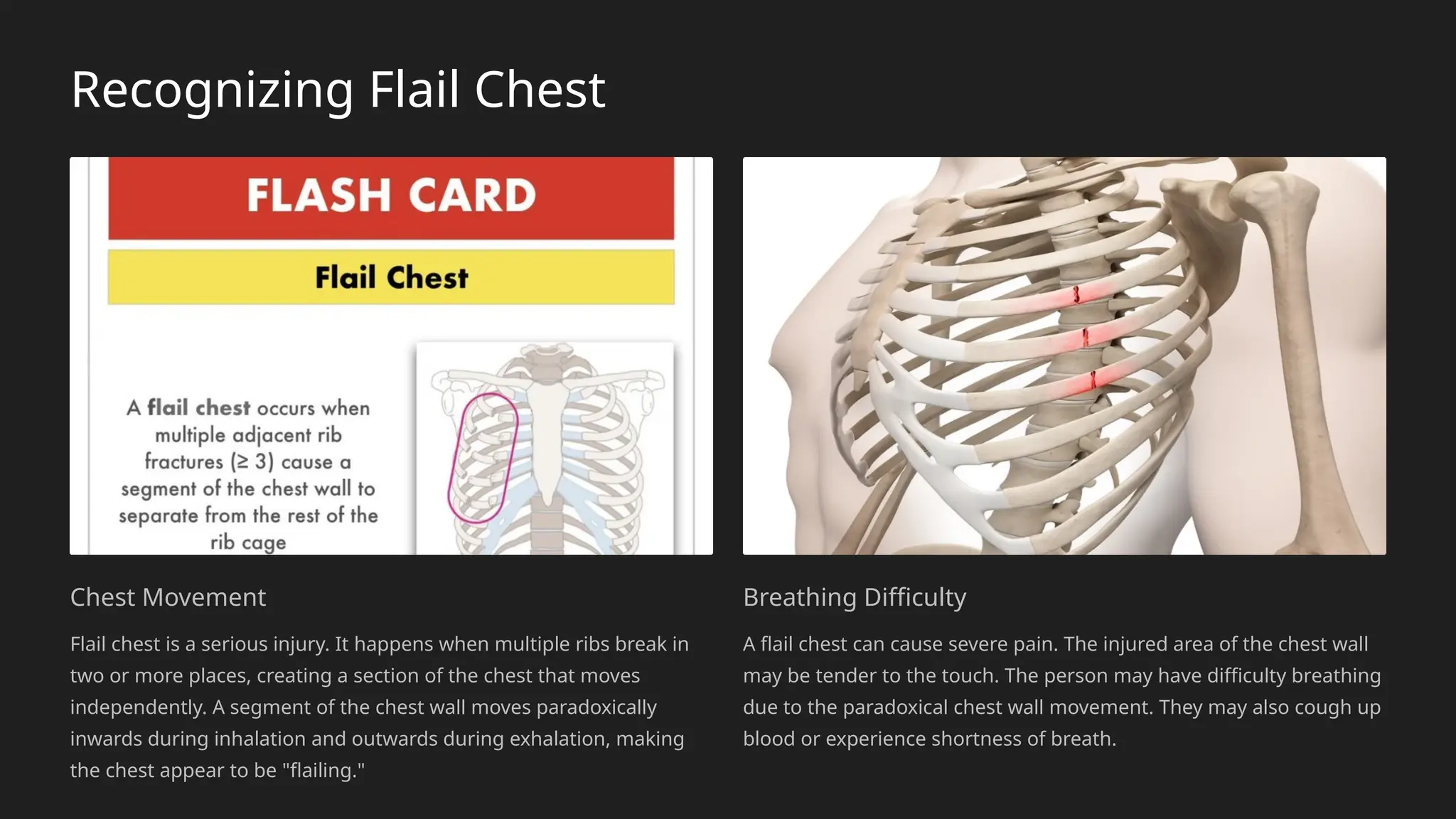
Recognizing Flail Chest
Chest Movement
Flail chest is a serious injury. It happens when multiple ribs break in
two or more places, creating a section of the chest that moves
independently. A segment of the chest wall moves paradoxically
inwards during inhalation and outwards during exhalation, making
the chest appear to be "flailing."
Breathing Difficulty
A flail chest can cause severe pain. The injured area of the chest wall
may be tender to the touch. The person may have difficulty breathing
due to the paradoxical chest wall movement. They may also cough up
blood or experience shortness of breath.
Symptoms of Flail Chest
1 1. Paradoxical Breathing
The affected area of the chest wall moves inward
during inhalation and outward during exhalation, the
opposite of normal breathing. This is because the
broken ribs no longer provide support for the chest
wall.
2 2. Pain
The pain is usually sharp and localized to the area of
the chest where the ribs are broken. The pain can
worsen with deep breaths or coughing.
3 3. Difficulty Breathing
The broken ribs can restrict lung expansion, making it
difficult to breathe deeply. This can lead to shortness
of breath, especially with exertion.
4 4. Bruising and Swelling
The area of the chest wall may be bruised or swollen,
especially if there has been a significant force that
caused the flail chest.
Treating Flail Chest
1
Provide Oxygen
If the victim is struggling to
breathe, provide supplemental
oxygen. Use a face mask or nasal
cannula to deliver oxygen. This will
help to improve their oxygen levels
and make breathing easier.
2
Stabilize the Chest
Use a rigid object like a board or a
pillow to stabilize the affected area
of the chest. This will help to reduce
the pain and prevent further injury.
It's important to keep the victim
comfortable and still.
3
Seek Medical Attention
Call emergency services
immediately. A flail chest is a
serious injury that requires
immediate medical attention. The
victim will need to be transported
to the hospital for further
evaluation and treatment.
Providing Respiratory Support
Monitor Breathing
Observe the person's breathing. Check their chest
movements, listen for any unusual sounds, and count
their breaths per minute. If they are breathing slowly or
irregularly, provide assistance.
Position for Comfort
Help the person sit up or lie in a position that makes
breathing easier. Avoid placing pillows under their head,
as this can make breathing difficult.
Administer Oxygen
If you have oxygen available, administer it according to
your training. Ensure a tight seal on the mask or nasal
cannula.
Keep Warm
Help them stay warm by covering them with a blanket.
Hypothermia can worsen breathing difficulties.
Recognizing Penetrating Wounds
Object Penetration
Penetrating wounds occur when a
sharp object, such as a knife, bullet, or
other projectile, pierces the skin and
enters the body. The depth of
penetration can vary depending on the
size and force of the object, as well as
the area of the body that is injured.
These injuries can be life-threatening if
not treated promptly and appropriately.
Visible Entry and Exit
A penetrating wound often presents
with a visible entry point, where the
object entered the body, and may also
have an exit point where the object
exited. The entry point may be small
and difficult to see, while the exit point
may be larger and more obvious. It is
crucial to evaluate the wound carefully
and control any bleeding.
Internal Damage
Penetrating wounds can cause significant internal damage, affecting organs, tissues,
and blood vessels. The extent of the damage depends on the nature of the object and
the location of the wound. It is important to assess the severity of the injury to provide
appropriate medical attention.
Symptoms of Penetrating Wounds
Bleeding
Penetrating wounds often result in significant
bleeding. The severity of bleeding depends on the size
and location of the wound. Bright red blood may
indicate an artery has been damaged.
Pain
The pain associated with penetrating wounds can be
intense and immediate. Sharp, stabbing pain is
common. Pain may worsen if the wound is moved or
touched.
Difficulty Breathing
Penetrating wounds to the chest or abdomen can
compromise breathing. If the wound is in the chest, air
may leak into the space around the lungs, causing a
collapsed lung. A wound to the abdomen may cause
internal bleeding and pressure on the lungs.
Shock
Severe bleeding and pain from a penetrating wound
can lead to shock. Signs of shock include pale skin,
rapid heartbeat, and weakness. This is a serious
medical emergency that needs immediate attention.
Treating Penetrating Wounds
Penetrating wounds occur when an object pierces the skin and enters the body, potentially causing serious internal damage. These injuries can be life-threatening and
require immediate medical attention. First aid for penetrating wounds aims to control bleeding, prevent infection, and minimize further damage.
1
Control Bleeding
Apply direct pressure to the wound, using a clean cloth or bandage. If the object is still embedded, do not
remove it. Instead, stabilize it with a bulky dressing to prevent further movement.
2
Prevent Infection
Clean the wound gently with sterile saline solution. Do not attempt to irrigate the wound or
scrub it with soap. Cover the wound with a clean dressing to minimize the risk of infection.
3
Call Emergency Services
Call for emergency medical assistance immediately. While waiting for help,
monitor the victim’s vital signs and provide reassurance and comfort.
It is crucial to seek immediate medical attention for penetrating wounds to receive appropriate treatment, including surgical intervention, antibiotics, and tetanus
prophylaxis. Early and effective management of these injuries can significantly improve the chances of a full recovery.
Controlling Bleeding
Direct Pressure
Applying direct pressure to the wound
helps to slow down the bleeding. Use a
clean cloth or bandage and press
firmly on the wound. Maintain
pressure for at least 10 minutes, even if
the bleeding seems to stop.
Elevation
Elevate the injured limb above the
heart. This helps to reduce blood flow
to the wound and minimize swelling.
Support the limb with a pillow or other
comfortable support.
Tourniquet
In cases of severe bleeding, a
tourniquet may be necessary. Apply
the tourniquet 2-3 inches above the
wound and tighten it until the bleeding
stops. Once applied, a tourniquet
should not be removed unless directed
by a medical professional.
Preventing Infection
Wound Care
Thorough wound cleaning is crucial in preventing infection.
Use sterile water, soap, and gauze to remove debris and
dirt. Avoid using hydrogen peroxide or iodine as these can
damage tissue.
Antibiotics
In some cases, a doctor may prescribe antibiotics to
prevent infection. Follow the prescribed dosage and
duration carefully. Antibiotics can help fight bacterial
infections and reduce the risk of complications.
Monitoring Breathing
Respiratory Rate
Check the person's breathing rate.
Count the number of breaths per
minute. A normal breathing rate is 12-
20 breaths per minute. If the person is
breathing too fast or too slow, call 911.
Breathing Depth
Observe the depth of each breath. Is
the person taking shallow breaths or
deep breaths? Shallow breathing can
indicate a lung injury or other medical
condition.
Breathing Effort
Note if the person is using their
muscles to breathe. If they are using
their neck or chest muscles, it could
indicate a problem with their
breathing.
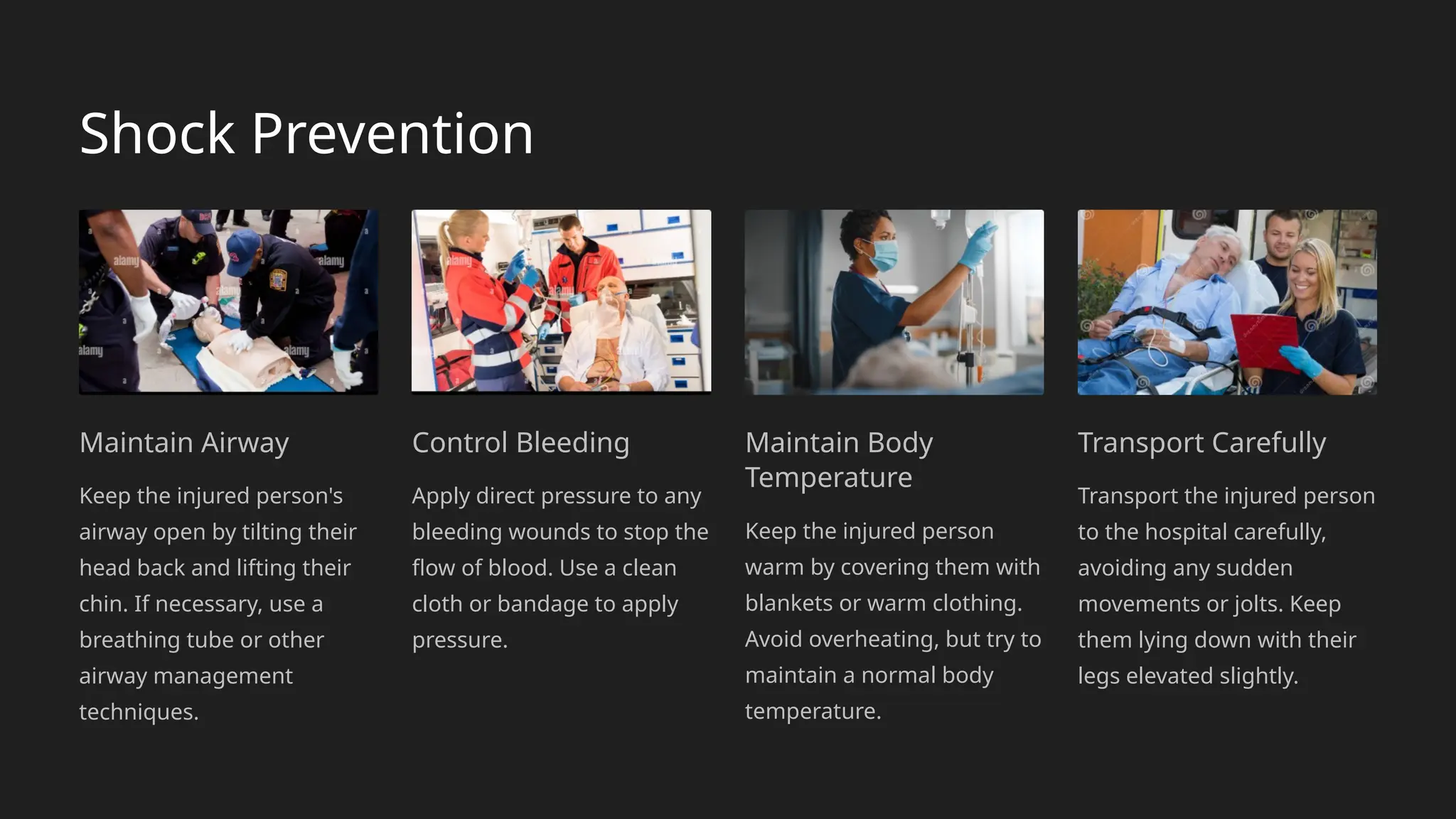
Shock Prevention
Maintain Airway
Keep the injured person's
airway open by tilting their
head back and lifting their
chin. If necessary, use a
breathing tube or other
airway management
techniques.
Control Bleeding
Apply direct pressure to any
bleeding wounds to stop the
flow of blood. Use a clean
cloth or bandage to apply
pressure.
Maintain Body
Temperature
Keep the injured person
warm by covering them with
blankets or warm clothing.
Avoid overheating, but try to
maintain a normal body
temperature.
Transport Carefully
Transport the injured person
to the hospital carefully,
avoiding any sudden
movements or jolts. Keep
them lying down with their
legs elevated slightly.
Calling for Emergency Medical Assistance
1 1. Immediate Action
In cases of rib fractures, flail chest, or penetrating
wounds, immediate medical attention is crucial. It's
essential to call for emergency medical services (EMS)
as soon as possible.
2 2. Provide Clear Details
When calling 911 or your local emergency number, be
prepared to provide accurate information, including
the location, nature of the injury, the patient's
condition, and any other relevant details.
3 3. Follow Instructions
The dispatcher will provide instructions on how to
provide basic first aid until the paramedics arrive. It's
important to listen carefully and follow their
instructions.
4 4. Stay Calm and Assist
While waiting for EMS, remain calm and reassuring to
the injured person. Offer assistance as needed,
ensuring their safety and comfort until professional
help arrives.
Providing Comfort and Reassurance
Calm and Compassionate
Approach the injured person calmly
and compassionately. This can help
reduce their anxiety and stress.
Speak softly and gently. Let them
know that you are there to help and
that everything will be alright.
Explain Procedures
Explain what you are doing and
why. This can help them
understand the situation and feel
more in control. It can also help
prevent any unnecessary fear or
confusion.
Positive Reinforcement
Use positive reinforcement. Tell
them how well they are doing and
how strong they are. This can help
them feel more confident and
hopeful.
Importance of First Aid Training
Preparedness
First aid training equips individuals
with the knowledge and skills to
respond effectively in emergencies. By
learning essential techniques, you can
provide immediate care and potentially
save lives. First aid knowledge is crucial
for anyone who wants to be prepared
to handle unexpected situations.
Confidence
First aid training builds confidence in
your ability to handle emergencies.
You'll be more prepared and less likely
to panic in stressful situations.
Knowing how to provide basic medical
care can empower you to act decisively
and make a difference.
Safety
First aid training promotes safety for
yourself and others. By learning how to
prevent injuries and illnesses, you can
create a safer environment for yourself
and those around you. First aid skills
can help you to recognize potential
hazards and take proactive steps to
minimize risks.
Common Mistakes to Avoid
Improper Handling
Avoid moving or repositioning the injured person without
proper stabilization. This can worsen the injury or cause
further complications. Gently support the injured area and
minimize unnecessary movement.
Delayed Medical Attention
Seek medical attention promptly, especially for severe rib
fractures, flail chest, or penetrating wounds. Do not
attempt to self-treat or delay professional medical care, as
this can lead to serious health consequences.
Preparing a First Aid Kit
Essential Supplies
A well-stocked first aid kit is crucial for
handling emergencies. Include
essential items such as bandages,
antiseptic wipes, pain relievers, and
gauze pads. Consider the specific
needs of your environment and the
individuals you may be assisting.
Adapting for Location
The contents of a first aid kit should be
tailored to the specific location and
activities. For example, a kit for hiking
should include items for treating
blisters, insect stings, and minor cuts.
Accessibility and Maintenance
Keep your first aid kit readily accessible
and in a safe location. Regularly check
the contents and replace expired
medications or damaged items.
Staying Calm and Focused
Manage Stress
First aid situations can be stressful. Staying calm allows you
to think clearly. Take deep breaths and try to relax your
body. Focus on the immediate needs and prioritize actions.
Seek support from others if needed.
Positive Attitude
A positive attitude can be helpful. It can boost your
confidence and help you stay focused on the task at hand.
Remind yourself that you are capable of providing
assistance and making a difference.
Knowing When to Seek Professional Help
Severe Pain
If you or someone else experiences severe pain, seek
immediate medical attention. Rib fractures can be
quite painful and may require specialized care. It's
crucial to prevent further complications and ensure
proper healing.
Difficulty Breathing
If you or someone else is having difficulty breathing,
call emergency services. A flail chest can significantly
impair lung function, potentially leading to respiratory
failure. It's essential to receive prompt medical
intervention in such cases.
Significant Bleeding
Penetrating wounds can cause significant bleeding,
which can lead to shock if left untreated. Apply
pressure to the wound to control the bleeding, but
seek immediate medical attention to ensure proper
wound care and prevent further complications.
Signs of Infection
If you notice signs of infection such as redness,
swelling, or pus around a wound, seek immediate
medical attention. Infection can worsen the condition
and may require antibiotics or other treatment. Prompt
care can prevent serious complications.
Ongoing Care and Recovery
Doctor's Orders
Follow your doctor's instructions carefully. This includes taking prescribed medications, attending physical therapy sessions, and resting when necessary. Failure to
comply with medical advice can hinder healing and may lead to complications.
Pain Management
Manage pain effectively using prescribed medications or pain relief techniques recommended by your doctor. This will help you stay comfortable during the recovery
process and allow you to engage in essential physical therapy activities.
Gradual Activities
Gradually increase your activity level as your body heals. Start with gentle movements and gradually progress to more demanding activities. Listen to your body and
avoid overexertion to prevent further injury.
Nutritional Support
Consume a balanced diet rich in essential nutrients like protein, vitamins, and minerals to support tissue repair and overall health. Adequate hydration is crucial for
healing and recovery. Consult your doctor or a registered dietitian for personalized recommendations.
Mental Well-Being
Prioritize mental well-being during recovery. Practice stress-reduction techniques such as deep breathing, meditation, or yoga. Seek support from loved ones,
healthcare providers, or support groups if needed.
Preventing Future Injuries
Safe Practices
Engaging in safe practices can
significantly reduce the risk of future
injuries. This includes wearing
appropriate protective gear,
maintaining a safe environment, and
adhering to safety guidelines. By
prioritizing safety in all aspects of life,
you can minimize the likelihood of
encountering another injury.
Healthy Habits
Maintaining a healthy lifestyle is crucial
for injury prevention. This involves
engaging in regular physical activity,
eating a balanced diet, and getting
adequate sleep. These habits
strengthen the body, enhance
resilience, and reduce the risk of
accidents.
Strength Training
Incorporating strength training
exercises into your routine is highly
beneficial for injury prevention.
Building muscle strength and
endurance helps improve bone density,
increase stability, and enhance overall
body control. A strong body is more
resistant to injuries and can better
withstand physical challenges.

First-Aid-for-Chest-Injuries chest injuries

  • 1.
    First Aid forChest Injuries These injuries are serious and can be life-threatening. It's important to know how to provide first aid if you or someone else is injured. This section will cover how to provide first aid for rib fractures, flail chest, and penetrating chest wounds.
  • 2.
    Recognizing Rib Fractures Painand Tenderness A broken rib is a common injury. It can cause pain and tenderness in the chest area. The pain can worsen when you breathe deeply or cough. The location of the pain can help identify the affected rib. Pain may also be felt in the back or abdomen depending on the location of the fracture. Deformity and Swelling You may notice a noticeable deformity in the chest area if the fracture is severe. The affected rib may be displaced or out of place. The area may also be swollen, bruised, or discolored. These signs are a clear indication that a rib fracture has occurred.
  • 3.
    Symptoms of RibFractures Pain Sharp, localized pain that worsens with breathing, coughing, or movement. May radiate to the back. This pain is a hallmark of rib fractures and can be quite severe. Tenderness The area of the fracture will be extremely sensitive to touch, and even light pressure can cause significant pain. This tenderness is another defining feature of rib fractures. It can be helpful in pinpointing the location of the fracture. Difficulty Breathing Rib fractures can cause pain that makes deep breathing difficult, leading to shallow breaths. This can reduce oxygen intake and lead to shortness of breath. If the pain is severe, it can make it nearly impossible to take a full breath. Bruising and Swelling Bruising and swelling may develop around the fractured rib. The severity of bruising will depend on the severity of the fracture and the amount of tissue damage. This can take some time to develop fully and may not be noticeable right away.
  • 4.
    Treating Rib Fractures 1 Immobilizethe Chest Use a sling and swathe to support the injured rib cage and minimize movement. This helps to prevent further damage and reduce pain. 2 Pain Management Administer pain relievers, such as over-the-counter medications like ibuprofen or acetaminophen, to alleviate discomfort and improve the patient's overall well-being. 3 Rest and Breathing Exercises Encourage the patient to rest and avoid activities that strain the chest. Encourage deep breathing exercises to prevent pneumonia and improve lung function. 4 Seek Medical Attention Rib fractures require medical evaluation to determine the severity and ensure proper treatment. Treating a rib fracture involves a combination of pain management and immobilization to promote healing. Immobilizing the chest helps to minimize pain and reduce the risk of further injury. Pain relievers are essential to alleviate discomfort and improve the patient's ability to breathe deeply. Rest is crucial for allowing the fractured ribs to heal properly, while deep breathing exercises help prevent complications like pneumonia.
  • 5.
    Immobilizing the Chest Padding Placepadding around the injured area to prevent further movement. Use pillows, blankets, or rolled-up towels. Padding will help to cushion the rib cage and reduce pain. Bandaging Secure the padding with a bandage to keep it in place. Wrap the bandage tightly but not too tightly, ensuring you can still feel a pulse in the injured person's wrist. This will help to stabilize the ribs and prevent further injury. Splinting Consider using a splint to immobilize the chest. This may involve using a board or other rigid material to support the injured area. Splinting helps to prevent the rib cage from moving and allows for easier breathing.
  • 6.
    Recognizing Flail Chest ChestMovement Flail chest is a serious injury. It happens when multiple ribs break in two or more places, creating a section of the chest that moves independently. A segment of the chest wall moves paradoxically inwards during inhalation and outwards during exhalation, making the chest appear to be "flailing." Breathing Difficulty A flail chest can cause severe pain. The injured area of the chest wall may be tender to the touch. The person may have difficulty breathing due to the paradoxical chest wall movement. They may also cough up blood or experience shortness of breath.
  • 7.
    Symptoms of FlailChest 1 1. Paradoxical Breathing The affected area of the chest wall moves inward during inhalation and outward during exhalation, the opposite of normal breathing. This is because the broken ribs no longer provide support for the chest wall. 2 2. Pain The pain is usually sharp and localized to the area of the chest where the ribs are broken. The pain can worsen with deep breaths or coughing. 3 3. Difficulty Breathing The broken ribs can restrict lung expansion, making it difficult to breathe deeply. This can lead to shortness of breath, especially with exertion. 4 4. Bruising and Swelling The area of the chest wall may be bruised or swollen, especially if there has been a significant force that caused the flail chest.
  • 8.
    Treating Flail Chest 1 ProvideOxygen If the victim is struggling to breathe, provide supplemental oxygen. Use a face mask or nasal cannula to deliver oxygen. This will help to improve their oxygen levels and make breathing easier. 2 Stabilize the Chest Use a rigid object like a board or a pillow to stabilize the affected area of the chest. This will help to reduce the pain and prevent further injury. It's important to keep the victim comfortable and still. 3 Seek Medical Attention Call emergency services immediately. A flail chest is a serious injury that requires immediate medical attention. The victim will need to be transported to the hospital for further evaluation and treatment.
  • 9.
    Providing Respiratory Support MonitorBreathing Observe the person's breathing. Check their chest movements, listen for any unusual sounds, and count their breaths per minute. If they are breathing slowly or irregularly, provide assistance. Position for Comfort Help the person sit up or lie in a position that makes breathing easier. Avoid placing pillows under their head, as this can make breathing difficult. Administer Oxygen If you have oxygen available, administer it according to your training. Ensure a tight seal on the mask or nasal cannula. Keep Warm Help them stay warm by covering them with a blanket. Hypothermia can worsen breathing difficulties.
  • 10.
    Recognizing Penetrating Wounds ObjectPenetration Penetrating wounds occur when a sharp object, such as a knife, bullet, or other projectile, pierces the skin and enters the body. The depth of penetration can vary depending on the size and force of the object, as well as the area of the body that is injured. These injuries can be life-threatening if not treated promptly and appropriately. Visible Entry and Exit A penetrating wound often presents with a visible entry point, where the object entered the body, and may also have an exit point where the object exited. The entry point may be small and difficult to see, while the exit point may be larger and more obvious. It is crucial to evaluate the wound carefully and control any bleeding. Internal Damage Penetrating wounds can cause significant internal damage, affecting organs, tissues, and blood vessels. The extent of the damage depends on the nature of the object and the location of the wound. It is important to assess the severity of the injury to provide appropriate medical attention.
  • 11.
    Symptoms of PenetratingWounds Bleeding Penetrating wounds often result in significant bleeding. The severity of bleeding depends on the size and location of the wound. Bright red blood may indicate an artery has been damaged. Pain The pain associated with penetrating wounds can be intense and immediate. Sharp, stabbing pain is common. Pain may worsen if the wound is moved or touched. Difficulty Breathing Penetrating wounds to the chest or abdomen can compromise breathing. If the wound is in the chest, air may leak into the space around the lungs, causing a collapsed lung. A wound to the abdomen may cause internal bleeding and pressure on the lungs. Shock Severe bleeding and pain from a penetrating wound can lead to shock. Signs of shock include pale skin, rapid heartbeat, and weakness. This is a serious medical emergency that needs immediate attention.
  • 12.
    Treating Penetrating Wounds Penetratingwounds occur when an object pierces the skin and enters the body, potentially causing serious internal damage. These injuries can be life-threatening and require immediate medical attention. First aid for penetrating wounds aims to control bleeding, prevent infection, and minimize further damage. 1 Control Bleeding Apply direct pressure to the wound, using a clean cloth or bandage. If the object is still embedded, do not remove it. Instead, stabilize it with a bulky dressing to prevent further movement. 2 Prevent Infection Clean the wound gently with sterile saline solution. Do not attempt to irrigate the wound or scrub it with soap. Cover the wound with a clean dressing to minimize the risk of infection. 3 Call Emergency Services Call for emergency medical assistance immediately. While waiting for help, monitor the victim’s vital signs and provide reassurance and comfort. It is crucial to seek immediate medical attention for penetrating wounds to receive appropriate treatment, including surgical intervention, antibiotics, and tetanus prophylaxis. Early and effective management of these injuries can significantly improve the chances of a full recovery.
  • 13.
    Controlling Bleeding Direct Pressure Applyingdirect pressure to the wound helps to slow down the bleeding. Use a clean cloth or bandage and press firmly on the wound. Maintain pressure for at least 10 minutes, even if the bleeding seems to stop. Elevation Elevate the injured limb above the heart. This helps to reduce blood flow to the wound and minimize swelling. Support the limb with a pillow or other comfortable support. Tourniquet In cases of severe bleeding, a tourniquet may be necessary. Apply the tourniquet 2-3 inches above the wound and tighten it until the bleeding stops. Once applied, a tourniquet should not be removed unless directed by a medical professional.
  • 14.
    Preventing Infection Wound Care Thoroughwound cleaning is crucial in preventing infection. Use sterile water, soap, and gauze to remove debris and dirt. Avoid using hydrogen peroxide or iodine as these can damage tissue. Antibiotics In some cases, a doctor may prescribe antibiotics to prevent infection. Follow the prescribed dosage and duration carefully. Antibiotics can help fight bacterial infections and reduce the risk of complications.
  • 15.
    Monitoring Breathing Respiratory Rate Checkthe person's breathing rate. Count the number of breaths per minute. A normal breathing rate is 12- 20 breaths per minute. If the person is breathing too fast or too slow, call 911. Breathing Depth Observe the depth of each breath. Is the person taking shallow breaths or deep breaths? Shallow breathing can indicate a lung injury or other medical condition. Breathing Effort Note if the person is using their muscles to breathe. If they are using their neck or chest muscles, it could indicate a problem with their breathing.
  • 16.
    Shock Prevention Maintain Airway Keepthe injured person's airway open by tilting their head back and lifting their chin. If necessary, use a breathing tube or other airway management techniques. Control Bleeding Apply direct pressure to any bleeding wounds to stop the flow of blood. Use a clean cloth or bandage to apply pressure. Maintain Body Temperature Keep the injured person warm by covering them with blankets or warm clothing. Avoid overheating, but try to maintain a normal body temperature. Transport Carefully Transport the injured person to the hospital carefully, avoiding any sudden movements or jolts. Keep them lying down with their legs elevated slightly.
  • 17.
    Calling for EmergencyMedical Assistance 1 1. Immediate Action In cases of rib fractures, flail chest, or penetrating wounds, immediate medical attention is crucial. It's essential to call for emergency medical services (EMS) as soon as possible. 2 2. Provide Clear Details When calling 911 or your local emergency number, be prepared to provide accurate information, including the location, nature of the injury, the patient's condition, and any other relevant details. 3 3. Follow Instructions The dispatcher will provide instructions on how to provide basic first aid until the paramedics arrive. It's important to listen carefully and follow their instructions. 4 4. Stay Calm and Assist While waiting for EMS, remain calm and reassuring to the injured person. Offer assistance as needed, ensuring their safety and comfort until professional help arrives.
  • 18.
    Providing Comfort andReassurance Calm and Compassionate Approach the injured person calmly and compassionately. This can help reduce their anxiety and stress. Speak softly and gently. Let them know that you are there to help and that everything will be alright. Explain Procedures Explain what you are doing and why. This can help them understand the situation and feel more in control. It can also help prevent any unnecessary fear or confusion. Positive Reinforcement Use positive reinforcement. Tell them how well they are doing and how strong they are. This can help them feel more confident and hopeful.
  • 19.
    Importance of FirstAid Training Preparedness First aid training equips individuals with the knowledge and skills to respond effectively in emergencies. By learning essential techniques, you can provide immediate care and potentially save lives. First aid knowledge is crucial for anyone who wants to be prepared to handle unexpected situations. Confidence First aid training builds confidence in your ability to handle emergencies. You'll be more prepared and less likely to panic in stressful situations. Knowing how to provide basic medical care can empower you to act decisively and make a difference. Safety First aid training promotes safety for yourself and others. By learning how to prevent injuries and illnesses, you can create a safer environment for yourself and those around you. First aid skills can help you to recognize potential hazards and take proactive steps to minimize risks.
  • 20.
    Common Mistakes toAvoid Improper Handling Avoid moving or repositioning the injured person without proper stabilization. This can worsen the injury or cause further complications. Gently support the injured area and minimize unnecessary movement. Delayed Medical Attention Seek medical attention promptly, especially for severe rib fractures, flail chest, or penetrating wounds. Do not attempt to self-treat or delay professional medical care, as this can lead to serious health consequences.
  • 21.
    Preparing a FirstAid Kit Essential Supplies A well-stocked first aid kit is crucial for handling emergencies. Include essential items such as bandages, antiseptic wipes, pain relievers, and gauze pads. Consider the specific needs of your environment and the individuals you may be assisting. Adapting for Location The contents of a first aid kit should be tailored to the specific location and activities. For example, a kit for hiking should include items for treating blisters, insect stings, and minor cuts. Accessibility and Maintenance Keep your first aid kit readily accessible and in a safe location. Regularly check the contents and replace expired medications or damaged items.
  • 22.
    Staying Calm andFocused Manage Stress First aid situations can be stressful. Staying calm allows you to think clearly. Take deep breaths and try to relax your body. Focus on the immediate needs and prioritize actions. Seek support from others if needed. Positive Attitude A positive attitude can be helpful. It can boost your confidence and help you stay focused on the task at hand. Remind yourself that you are capable of providing assistance and making a difference.
  • 23.
    Knowing When toSeek Professional Help Severe Pain If you or someone else experiences severe pain, seek immediate medical attention. Rib fractures can be quite painful and may require specialized care. It's crucial to prevent further complications and ensure proper healing. Difficulty Breathing If you or someone else is having difficulty breathing, call emergency services. A flail chest can significantly impair lung function, potentially leading to respiratory failure. It's essential to receive prompt medical intervention in such cases. Significant Bleeding Penetrating wounds can cause significant bleeding, which can lead to shock if left untreated. Apply pressure to the wound to control the bleeding, but seek immediate medical attention to ensure proper wound care and prevent further complications. Signs of Infection If you notice signs of infection such as redness, swelling, or pus around a wound, seek immediate medical attention. Infection can worsen the condition and may require antibiotics or other treatment. Prompt care can prevent serious complications.
  • 24.
    Ongoing Care andRecovery Doctor's Orders Follow your doctor's instructions carefully. This includes taking prescribed medications, attending physical therapy sessions, and resting when necessary. Failure to comply with medical advice can hinder healing and may lead to complications. Pain Management Manage pain effectively using prescribed medications or pain relief techniques recommended by your doctor. This will help you stay comfortable during the recovery process and allow you to engage in essential physical therapy activities. Gradual Activities Gradually increase your activity level as your body heals. Start with gentle movements and gradually progress to more demanding activities. Listen to your body and avoid overexertion to prevent further injury. Nutritional Support Consume a balanced diet rich in essential nutrients like protein, vitamins, and minerals to support tissue repair and overall health. Adequate hydration is crucial for healing and recovery. Consult your doctor or a registered dietitian for personalized recommendations. Mental Well-Being Prioritize mental well-being during recovery. Practice stress-reduction techniques such as deep breathing, meditation, or yoga. Seek support from loved ones, healthcare providers, or support groups if needed.
  • 25.
    Preventing Future Injuries SafePractices Engaging in safe practices can significantly reduce the risk of future injuries. This includes wearing appropriate protective gear, maintaining a safe environment, and adhering to safety guidelines. By prioritizing safety in all aspects of life, you can minimize the likelihood of encountering another injury. Healthy Habits Maintaining a healthy lifestyle is crucial for injury prevention. This involves engaging in regular physical activity, eating a balanced diet, and getting adequate sleep. These habits strengthen the body, enhance resilience, and reduce the risk of accidents. Strength Training Incorporating strength training exercises into your routine is highly beneficial for injury prevention. Building muscle strength and endurance helps improve bone density, increase stability, and enhance overall body control. A strong body is more resistant to injuries and can better withstand physical challenges.