Peer Learning and Leadership Network Beyond Job Boards: Finding Job Leads
Cleaning Up Digital Dirt for the Job Search May 12, 2011 1 p.m.  Presenter: Michele Martin , DiscoverAbility NJ,  John J. Heldrich Center for Workforce Development Rutgers, The State University of New Jersey
Use  Chat box  to communicate with chairperson  Use  Hide Chat  for a cleaner, uncluttered webinar Select  Full Screen  to maximize presentation; minimizes chat feature  Webinar   Layout
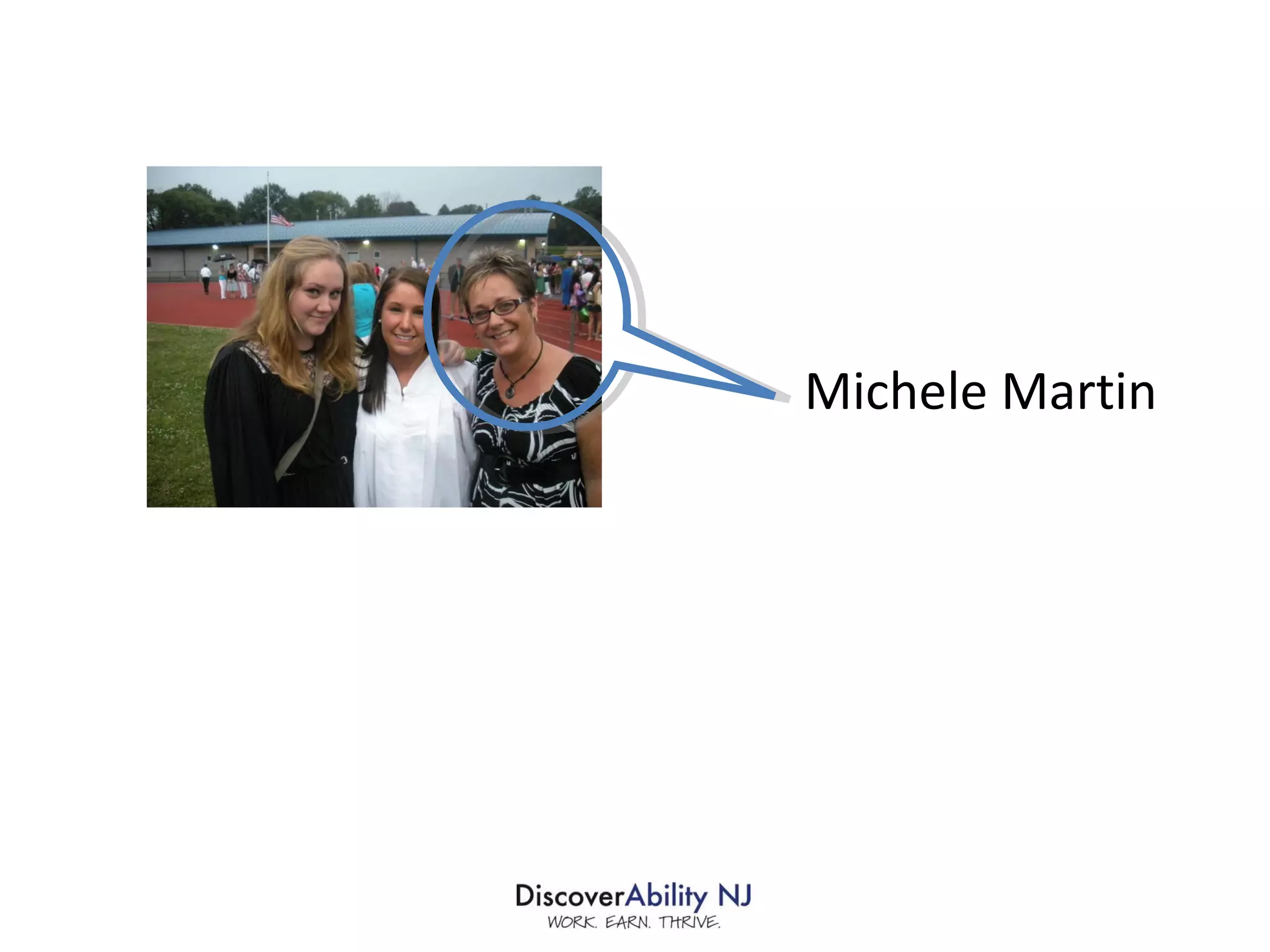
Michele Martin
Materials and an archived version of this webinar will be available at  www.discoverabilitynj.org
Agenda How employers find applicants Types of job openings Finding/accessing advertised job openings Finding/accessing unadvertised job openings
26.7% of  external  new hires come from  referrals One hire for every 15 referrals Number one source for hires Source: CareerXRoads 2010 Survey
22.3% come from company website Source: CareerXRoads 2010 Survey
13.2% come from job boards CareerBuilder and Monster two top sites
Two Types of Job Openings Openings that Exist Now Openings that Are Created for the Right Candidate
Openings that Exist Now Advertised 20% Unadvertised 80%
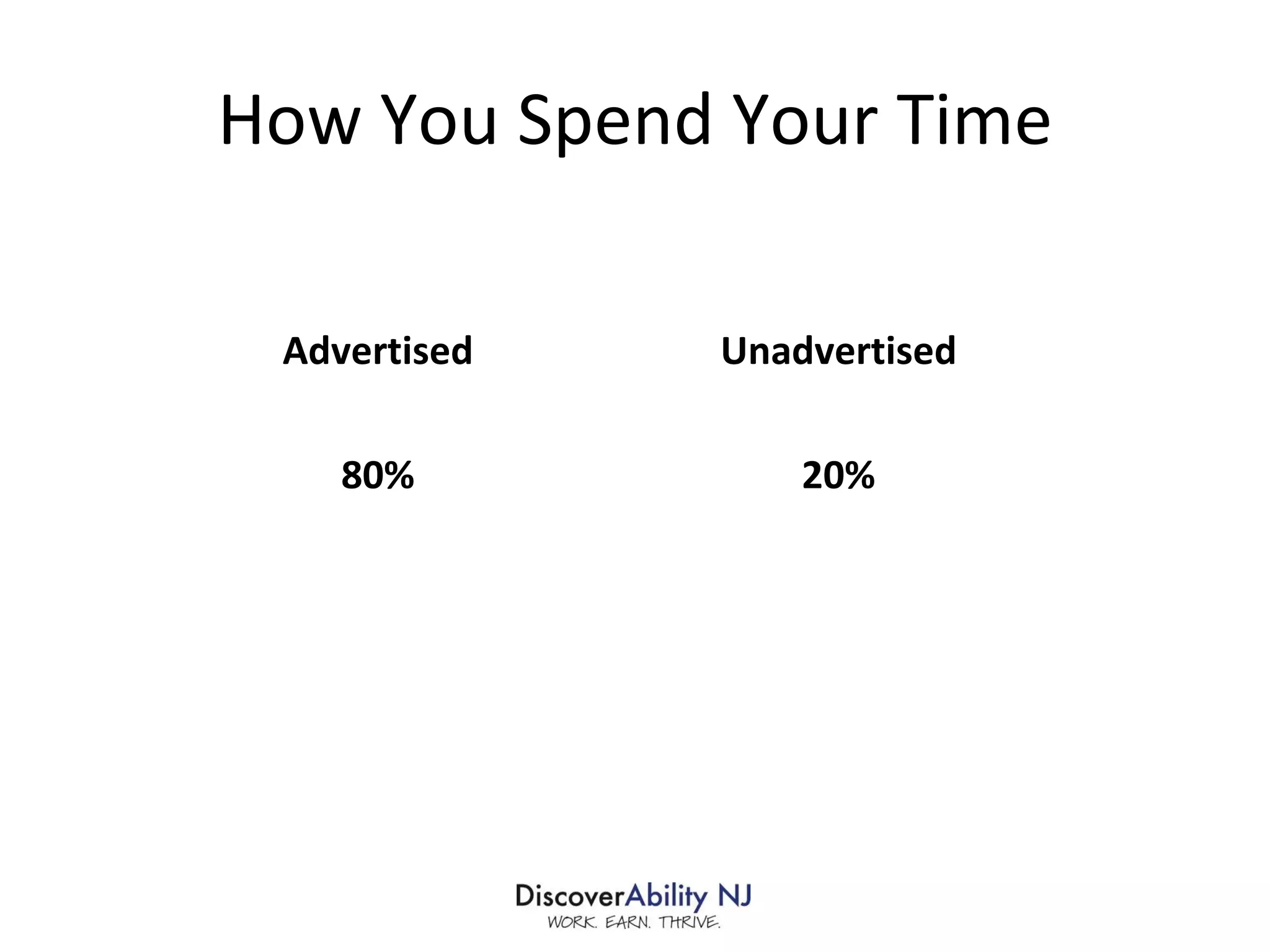
How You Spend Your Time Advertised 80% Unadvertised 20%
Finding Advertised Openings
Job Boards
The Challenges Many openings outdated Multiple postings for one opening Too much competition Employers find least qualified applicants here Employers using boards less
Disability “Niche” Boards Pros More targeted to people with disabilities Cons Disability first, person second May be advertised to satisfy EEOC/ADA requirements Only a subset of available jobs
Tips Don’t spend a lot of time on boards—LEAST effective form of job search Use boards primarily for research Search locally Search specifically Use industry/occupational “niche” boards where possible Find lead and then go to company website to apply.
Google Alerts
Tips Refine search before signing up for Alert Make searches as specific as possible—occupation, industry, companies, skills, geographic location
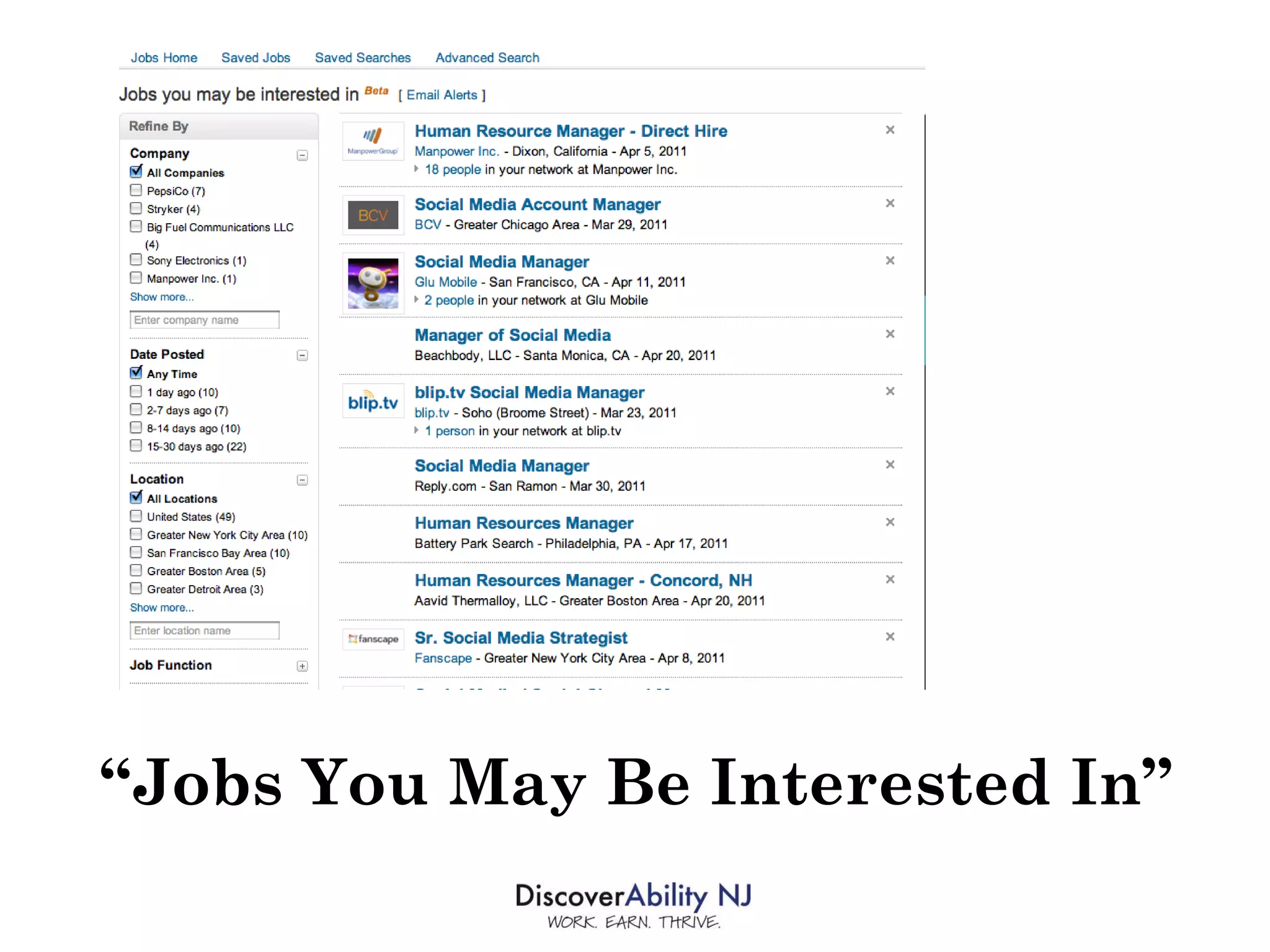
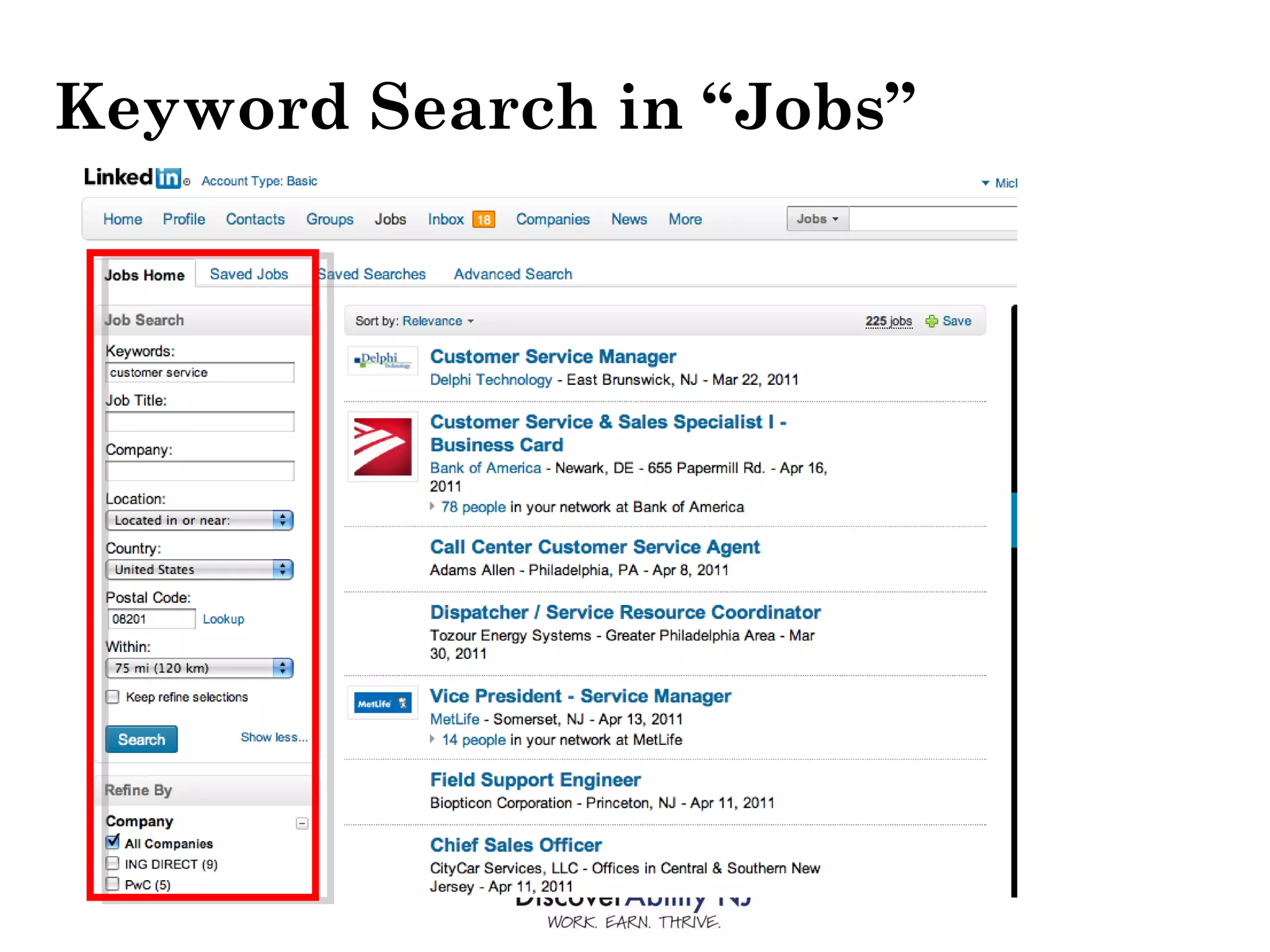
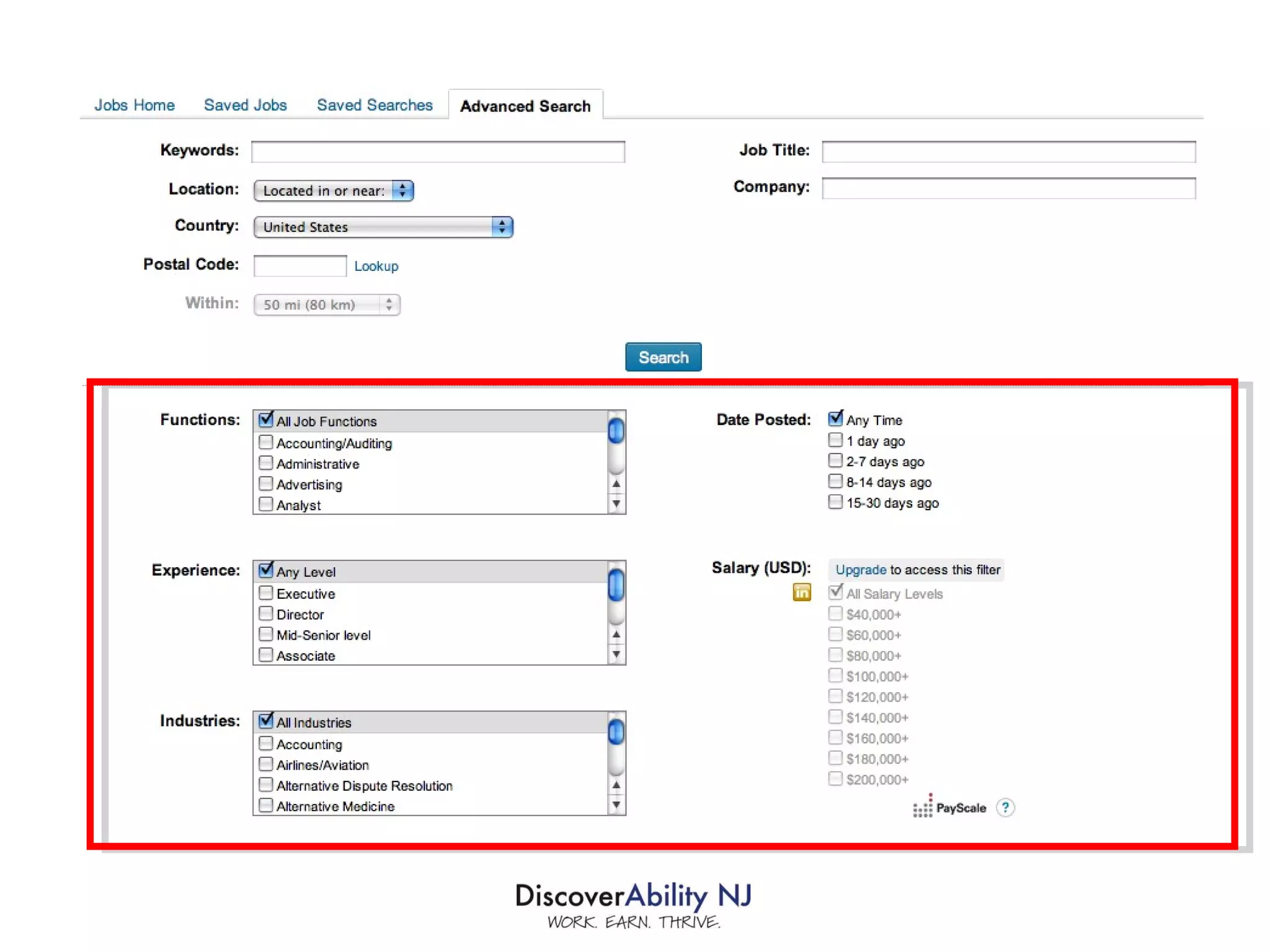
Professional social network Way to research businesses and individuals Professional “branding” opportunity
“ Jobs You May Be Interested In”
Keyword Search in “Jobs”


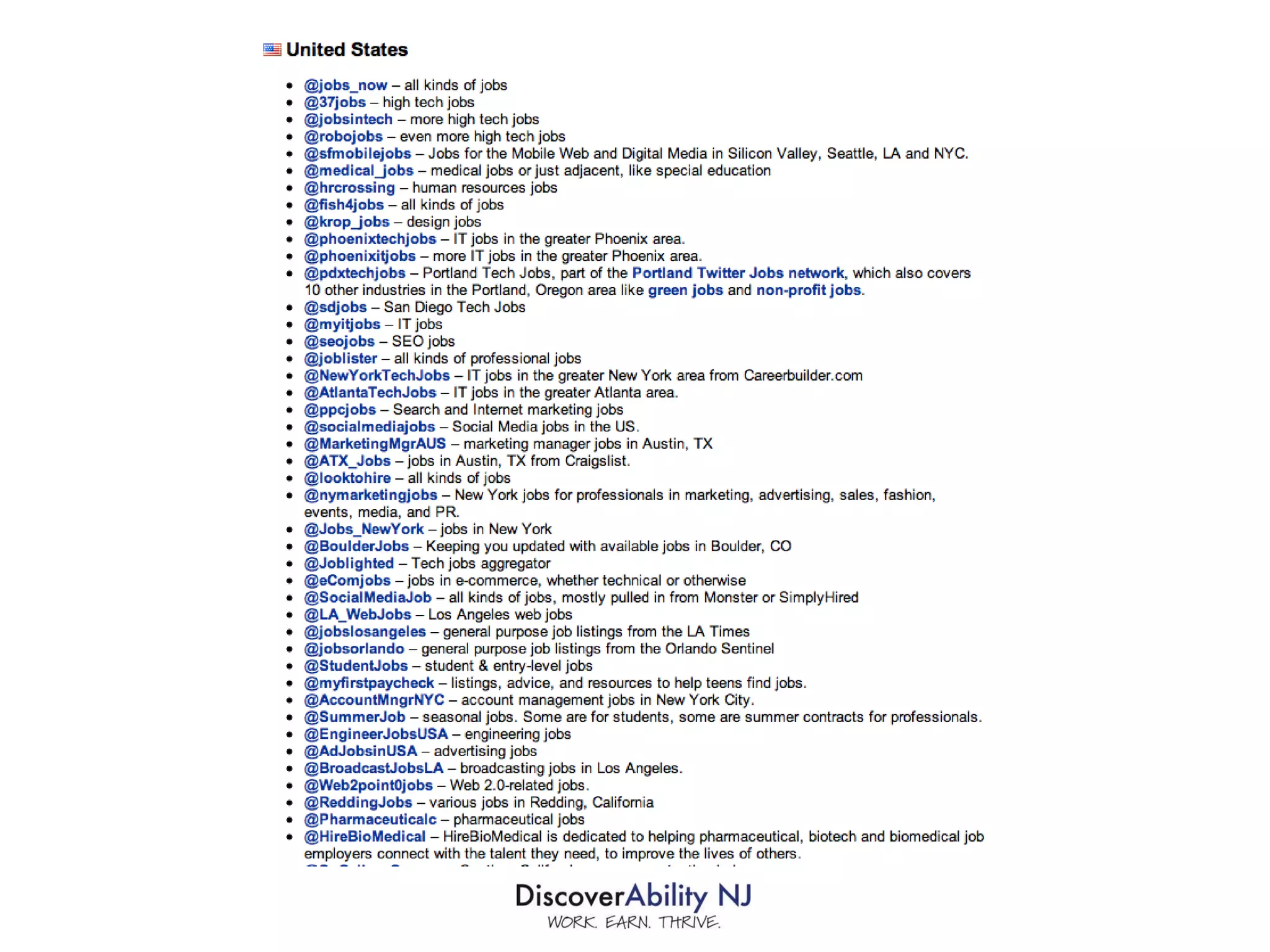
http://www.twitjobsearch.com/


Finding Un-Advertised Openings
For Unadvertised Openings Focus on: Developing relationships with the right people Being a resource Matching your applicants to the culture/needs of the organization
1. Find and Connect to Recruiters  & Hiring Managers Events/Associations Society for Human Resource Managers (SHRM) Industry/Occupational Associations Chambers of Commerce Conferences LinkedIn Twitter Company websites/blogs Email lists/newsletters
2. Listen Follow/read what they post Join their groups to see what they’re discussing Sign up for their newsletters Ask questions Probe for “pain” and problems
Comment and RT Provide resources, information that solve problems and address their “pain” points Connect them to people and resources Answer questions 3. Engage
4. Research What problems/unmet needs do they have? Did someone just leave the company?  What are growth/skill/hiring trends in industry? In company?
Openings that Don’t Currently Exist
Openings for the Right Candidate Match between company needs and applicant skills/experience/personal characteristics Sold on applicant through personal contact  Easier through network referral
Creating Openings Know pain and problems Show how applicant addresses pain or solves problem Show how applicant matches culture/skill needs of the organization Coach applicant to sell him/herself!
 

Finding Job Leads

  • 1.
    Peer Learning andLeadership Network Beyond Job Boards: Finding Job Leads
  • 2.
    Cleaning Up DigitalDirt for the Job Search May 12, 2011 1 p.m. Presenter: Michele Martin , DiscoverAbility NJ, John J. Heldrich Center for Workforce Development Rutgers, The State University of New Jersey
  • 3.
    Use Chatbox to communicate with chairperson Use Hide Chat for a cleaner, uncluttered webinar Select Full Screen to maximize presentation; minimizes chat feature Webinar Layout
  • 4.
  • 5.
    Materials and anarchived version of this webinar will be available at www.discoverabilitynj.org
  • 6.
    Agenda How employersfind applicants Types of job openings Finding/accessing advertised job openings Finding/accessing unadvertised job openings
  • 7.
    26.7% of external new hires come from referrals One hire for every 15 referrals Number one source for hires Source: CareerXRoads 2010 Survey
  • 8.
    22.3% come fromcompany website Source: CareerXRoads 2010 Survey
  • 9.
    13.2% come fromjob boards CareerBuilder and Monster two top sites
  • 10.
    Two Types ofJob Openings Openings that Exist Now Openings that Are Created for the Right Candidate
  • 11.
    Openings that ExistNow Advertised 20% Unadvertised 80%
  • 12.
    How You SpendYour Time Advertised 80% Unadvertised 20%
  • 13.
  • 14.
  • 15.
    The Challenges Manyopenings outdated Multiple postings for one opening Too much competition Employers find least qualified applicants here Employers using boards less
  • 16.
    Disability “Niche” BoardsPros More targeted to people with disabilities Cons Disability first, person second May be advertised to satisfy EEOC/ADA requirements Only a subset of available jobs
  • 17.
    Tips Don’t spenda lot of time on boards—LEAST effective form of job search Use boards primarily for research Search locally Search specifically Use industry/occupational “niche” boards where possible Find lead and then go to company website to apply.
  • 18.
  • 19.
    Tips Refine searchbefore signing up for Alert Make searches as specific as possible—occupation, industry, companies, skills, geographic location
  • 20.
    Professional social networkWay to research businesses and individuals Professional “branding” opportunity
  • 21.
    “ Jobs YouMay Be Interested In”
  • 22.
  • 23.
  • 24.
  • 25.
  • 26.
  • 27.
  • 28.
  • 29.
  • 30.
  • 31.
  • 32.
    For Unadvertised OpeningsFocus on: Developing relationships with the right people Being a resource Matching your applicants to the culture/needs of the organization
  • 33.
    1. Find andConnect to Recruiters & Hiring Managers Events/Associations Society for Human Resource Managers (SHRM) Industry/Occupational Associations Chambers of Commerce Conferences LinkedIn Twitter Company websites/blogs Email lists/newsletters
  • 34.
    2. Listen Follow/readwhat they post Join their groups to see what they’re discussing Sign up for their newsletters Ask questions Probe for “pain” and problems
  • 35.
    Comment and RTProvide resources, information that solve problems and address their “pain” points Connect them to people and resources Answer questions 3. Engage
  • 36.
    4. Research Whatproblems/unmet needs do they have? Did someone just leave the company? What are growth/skill/hiring trends in industry? In company?
  • 37.
    Openings that Don’tCurrently Exist
  • 38.
    Openings for theRight Candidate Match between company needs and applicant skills/experience/personal characteristics Sold on applicant through personal contact Easier through network referral
  • 39.
    Creating Openings Knowpain and problems Show how applicant addresses pain or solves problem Show how applicant matches culture/skill needs of the organization Coach applicant to sell him/herself!
  • 40.