Peer Learning and Leadership Network Cover Letters and Thank You Notes
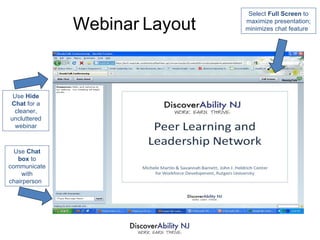
Use  Chat box  to communicate with chairperson  Use  Hide Chat  for a cleaner, uncluttered webinar Select  Full Screen  to maximize presentation; minimizes chat feature  Webinar   Layout
Materials and an archived version of this webinar will be available at  www.discoverabilitynj.org
Agenda Cover Letters and Thank You Notes Purpose Preparation Structure/Format Tips for Writing
COVER LETTERS
A Cover Letter is not. . .
A Rehash of your resume. . .
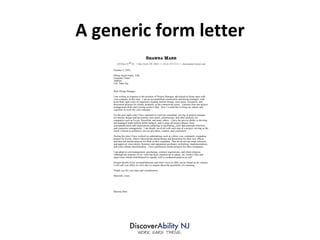
A generic form letter
A Cover Letter is. . .  A 30-second commercial An opportunity to add context to your resume A place to clear up confusion/concern One possibility for addressing disability disclosure (when appropriate)
Preparation
Do your research!
You should know. . .  Details on job and company Key skills, qualifications, etc.  Name and address of key contact to address (no “Dear Sir or Madam”!)
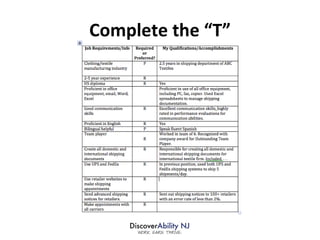
Complete the “T”
Completing the “T” Review job posting and/or company info Identify employer needs, relevant keywords For job For company/culture Fill in job seeker info to complete the T. If you can’t complete The T—DON’T APPLY! If you can, develop your resume/cover letter
A Cover Letter Formula
Four Paragraphs Capture employer’s attention Customized details of professional experience. Relate yourself to the company/why you’re a great fit. Pro-active closing requesting action.
How to Capture Attention Mention networking contact by name “I was speaking to Jane Doe at the Chamber of Commerce meeting yesterday and she suggested that I would be a perfect candidate for your open warehousing position.” Your Unique Selling Proposition (USP)
Unique Selling Proposition (USP) Features —1-2 things that make you stand out Benefits —how these features benefit the employer
A Formula for Your USP "Because of my _______, I can do _______ for you better than typical applicants."
For example. . .  "I have five years of information technology experience. My expertise is in technical support and troubleshooting computer problems. My technical knowledge will be beneficial in reducing call waiting times and will substantially improve the efficiency of your technical support center."  
Four Paragraphs Capture employer’s attention Customized details of professional experience. Relate yourself to the company/why you’re a great fit. Pro-active closing requesting action.
Tips for Second Paragraph Provide more information on benefits mentioned in 1 st  paragraph. Stress accomplishments and achievements. Use solid action verbs. If you lack experience, focus on transferable skills related to the position.  CUSTOMIZE TO JOB AND COMPANY!
Four Paragraphs Capture employer’s attention Customized details of professional experience. Relate yourself to the company/why you’re a great fit. Pro-active closing requesting action.
Tips for Third Paragraph Demonstrate knowledge of the company and position: Industry trends and issues Specific challenges faced by company Highlight your accomplishments, qualities, etc. that show the “fit.”
Four Paragraphs Capture employer’s attention Customized details of professional experience. Relate yourself to the company/why you’re a great fit. Pro-active closing requesting action.
Tips on Final Paragraph Express confidence that you are the perfect fit. Ask for interview Notify employer that you plan to follow up with a call within a specific time.  Include email address and phone number
Cover Letter Checklist for Success Is your cover letter addressed to specific individual? Do the opening sentences “grab” the employer’s attention? Is the letter customized to the specific position and company?  Does the letter show how you will benefit the employer?
Cover Letter Checklist for Success Do you demonstrate expertise by using industry jargon? Do you include specific examples of relevant accomplishments?  Is the letter succinct? Is the letter authentic, conveying a sense of who you are as a person?
Cover Letter Checklist for Success Did you include all requested information mentioned in the ad, such as job reference number, employment availability? Does it end with a  confident call for action? Does it include contact information? Did you sign the letter?
Email Cover Letters Follow employer instructions—attachment or in body of email?  Subject Line Include reference to job, but highlight qualifications (“Experienced Call Center Support Staff for Opening in Call Center”) Include contact information in your email signature
 
THANK YOU LETTERS
Thank You Letters are. . .  Good interview follow-up etiquette Opportunity to sell yourself to the employer again.
Use a thank you letter to. . .  Comment on what you liked about the company, the job, the people, etc.  Reinforce your qualifications and fit for the job. Address a concern or answer a question that came up during the interview. Reiterate your interest in the position.
Thank You Letter Tips Follow-up promptly—don’t wait! Address individually—one per person you interviewed with. Be specific—mention something memorable from the interview. Reiterate qualifications. Express your interest.  Hand written, typed or email?
 
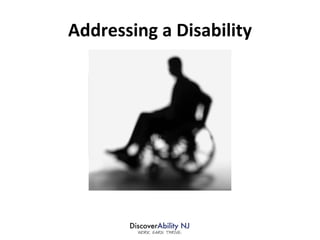
Addressing a Disability
In a Cover Letter Bring up if: You need interview accommodations—be specific about what you will need Obvious disability and want to prepare interviewer. Do NOT lead with disability—mention in final paragraph. Focus on qualifications
In a Thank You Note Mention only if you disclosed during interview. Use Thank You to reiterate qualifications and address any lingering concerns the employer may have.  Emphasize qualifications and your “fit” with the company.

Cover Letters and Thank You Notes

  • 1.
    Peer Learning andLeadership Network Cover Letters and Thank You Notes
  • 2.
    Use Chatbox to communicate with chairperson Use Hide Chat for a cleaner, uncluttered webinar Select Full Screen to maximize presentation; minimizes chat feature Webinar Layout
  • 3.
    Materials and anarchived version of this webinar will be available at www.discoverabilitynj.org
  • 4.
    Agenda Cover Lettersand Thank You Notes Purpose Preparation Structure/Format Tips for Writing
  • 5.
  • 6.
    A Cover Letteris not. . .
  • 7.
    A Rehash ofyour resume. . .
  • 8.
  • 9.
    A Cover Letteris. . . A 30-second commercial An opportunity to add context to your resume A place to clear up confusion/concern One possibility for addressing disability disclosure (when appropriate)
  • 10.
  • 11.
  • 12.
    You should know.. . Details on job and company Key skills, qualifications, etc. Name and address of key contact to address (no “Dear Sir or Madam”!)
  • 13.
  • 14.
    Completing the “T”Review job posting and/or company info Identify employer needs, relevant keywords For job For company/culture Fill in job seeker info to complete the T. If you can’t complete The T—DON’T APPLY! If you can, develop your resume/cover letter
  • 15.
  • 16.
    Four Paragraphs Captureemployer’s attention Customized details of professional experience. Relate yourself to the company/why you’re a great fit. Pro-active closing requesting action.
  • 17.
    How to CaptureAttention Mention networking contact by name “I was speaking to Jane Doe at the Chamber of Commerce meeting yesterday and she suggested that I would be a perfect candidate for your open warehousing position.” Your Unique Selling Proposition (USP)
  • 18.
    Unique Selling Proposition(USP) Features —1-2 things that make you stand out Benefits —how these features benefit the employer
  • 19.
    A Formula forYour USP "Because of my _______, I can do _______ for you better than typical applicants."
  • 20.
    For example. .. "I have five years of information technology experience. My expertise is in technical support and troubleshooting computer problems. My technical knowledge will be beneficial in reducing call waiting times and will substantially improve the efficiency of your technical support center."  
  • 21.
    Four Paragraphs Captureemployer’s attention Customized details of professional experience. Relate yourself to the company/why you’re a great fit. Pro-active closing requesting action.
  • 22.
    Tips for SecondParagraph Provide more information on benefits mentioned in 1 st paragraph. Stress accomplishments and achievements. Use solid action verbs. If you lack experience, focus on transferable skills related to the position. CUSTOMIZE TO JOB AND COMPANY!
  • 23.
    Four Paragraphs Captureemployer’s attention Customized details of professional experience. Relate yourself to the company/why you’re a great fit. Pro-active closing requesting action.
  • 24.
    Tips for ThirdParagraph Demonstrate knowledge of the company and position: Industry trends and issues Specific challenges faced by company Highlight your accomplishments, qualities, etc. that show the “fit.”
  • 25.
    Four Paragraphs Captureemployer’s attention Customized details of professional experience. Relate yourself to the company/why you’re a great fit. Pro-active closing requesting action.
  • 26.
    Tips on FinalParagraph Express confidence that you are the perfect fit. Ask for interview Notify employer that you plan to follow up with a call within a specific time. Include email address and phone number
  • 27.
    Cover Letter Checklistfor Success Is your cover letter addressed to specific individual? Do the opening sentences “grab” the employer’s attention? Is the letter customized to the specific position and company? Does the letter show how you will benefit the employer?
  • 28.
    Cover Letter Checklistfor Success Do you demonstrate expertise by using industry jargon? Do you include specific examples of relevant accomplishments? Is the letter succinct? Is the letter authentic, conveying a sense of who you are as a person?
  • 29.
    Cover Letter Checklistfor Success Did you include all requested information mentioned in the ad, such as job reference number, employment availability? Does it end with a confident call for action? Does it include contact information? Did you sign the letter?
  • 30.
    Email Cover LettersFollow employer instructions—attachment or in body of email? Subject Line Include reference to job, but highlight qualifications (“Experienced Call Center Support Staff for Opening in Call Center”) Include contact information in your email signature
  • 31.
  • 32.
  • 33.
    Thank You Lettersare. . . Good interview follow-up etiquette Opportunity to sell yourself to the employer again.
  • 34.
    Use a thankyou letter to. . . Comment on what you liked about the company, the job, the people, etc. Reinforce your qualifications and fit for the job. Address a concern or answer a question that came up during the interview. Reiterate your interest in the position.
  • 35.
    Thank You LetterTips Follow-up promptly—don’t wait! Address individually—one per person you interviewed with. Be specific—mention something memorable from the interview. Reiterate qualifications. Express your interest. Hand written, typed or email?
  • 36.
  • 37.
  • 38.
    In a CoverLetter Bring up if: You need interview accommodations—be specific about what you will need Obvious disability and want to prepare interviewer. Do NOT lead with disability—mention in final paragraph. Focus on qualifications
  • 39.
    In a ThankYou Note Mention only if you disclosed during interview. Use Thank You to reiterate qualifications and address any lingering concerns the employer may have. Emphasize qualifications and your “fit” with the company.