Financial Statements
& Ratios
Vernita R. Gilbert
And then God answered: “Write this. Write what you see. Write it out
in big block letters so that it can be read on the run. This vision-
message is a witness pointing to what’s coming. It aches for the
coming—it can hardly wait! And it doesn’t lie. If it seems slow in
coming, wait. It’s on its way. It will come right on time. Habakkuk
2:2-3 (MSG)
Agenda
• The Importance of Counting the Cost
• The Formation the Financial Statements
• The 4 Financial Statements and Their Purpose
• Users of the Financial Statements
• Financial Indicators
• Company Analysis
Count the Cost...It’s Scriptural
For which of you, intending to build a tower, sitteth not
down first, and counteth the cost, whether he have
sufficient to finish it? Lest haply, after he hath laid the
foundation, and is not able to finish it, all that behold it
begin to mock him, Saying, This man began to build,
and was not able to finish. Luke 14:28-30 (KJV)
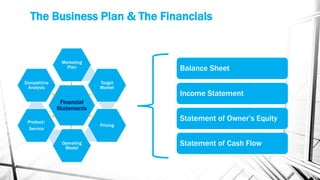
The Business Plan & The Financials
Financial
Statements
Marketing
Plan
Target
Market
Pricing
Operating
Model
Product/
Service
Competitive
Analysis
Balance Sheet
Income Statement
Statement of Owner’s Equity
Statement of Cash Flow
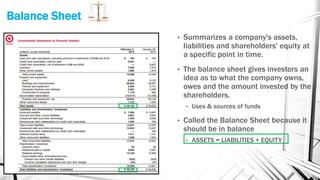
Balance Sheet
• a • Summarizes a company's assets,
liabilities and shareholders' equity at
a specific point in time.
• The balance sheet gives investors an
idea as to what the company owns,
owes and the amount invested by the
shareholders.
• Uses & sources of funds
• Called the Balance Sheet because it
should be in balance
• ASSETS = LIABILITIES + EQUITY
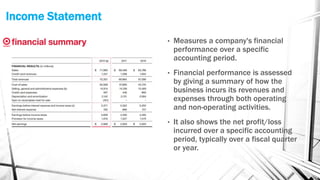
Income Statement
• Measures a company's financial
performance over a specific
accounting period.
• Financial performance is assessed
by giving a summary of how the
business incurs its revenues and
expenses through both operating
and non-operating activities.
• It also shows the net profit/loss
incurred over a specific accounting
period, typically over a fiscal quarter
or year.
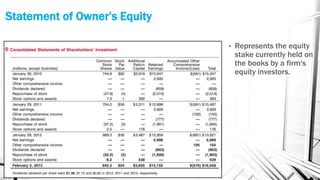
Statement of Owner’s Equity
• Represents the equity
stake currently held on
the books by a firm's
equity investors.
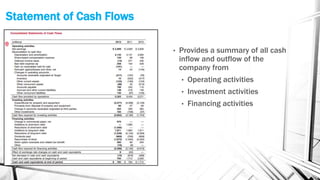
Statement of Cash Flows
• Provides a summary of all cash
inflow and outflow of the
company from
• Operating activities
• Investment activities
• Financing activities
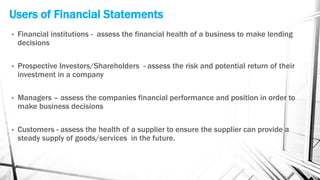
Users of Financial Statements
• Financial institutions - assess the financial health of a business to make lending
decisions
• Prospective Investors/Shareholders - assess the risk and potential return of their
investment in a company
• Managers – assess the companies financial performance and position in order to
make business decisions
• Customers - assess the health of a supplier to ensure the supplier can provide a
steady supply of goods/services in the future.
Users of Financial Statements (cont.)
• Competitors - compare their performance against industry leaders to learn and
develop strategies and improve their competitiveness.
• Governments - to determine the correctness of tax declared in the tax returns
and to measure economic progress
• Employees use Financial Statements for assessing the company's profitability
and its consequence on their future wages and job security.
• General Public may be interested in the effects of a company on the economy,
environment and the local community.
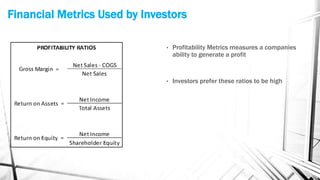
Financial Metrics Used by Investors
• Profitability Metrics measures a companies
ability to generate a profit
• Investors prefer these ratios to be high
Financial Metrics Used by Investors
Curent Assets
Current Liabilities
Curent Assets - Inventory
Current Liabilities
Cash and Cash Equivalents
Current Liabilities
Current Ratio =
Quick Ratio =
Cash Ratio =
LIQUIDITY RATIOS
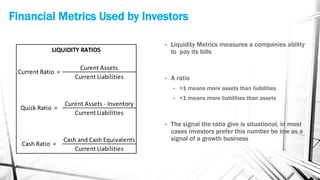
• Liquidity Metrics measures a companies ability
to pay its bills
• A ratio
• >1 means more assets than liabilities
• <1 means more liabilities than assets
• The signal the ratio give is situational, in most
cases investors prefer this number be low as a
signal of a growth business
Financial Metrics Used by Investors
Total Debt
Total Assets
Total Debt
Total Equity
FINANCIAL LEVERAGE
Debt-to-Equity
Ratio
=
=Debt Ratio
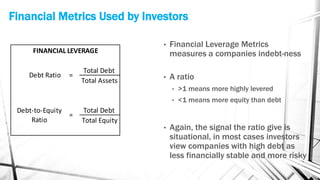
• Financial Leverage Metrics
measures a companies indebt-ness
• A ratio
• >1 means more highly levered
• <1 means more equity than debt
• Again, the signal the ratio give is
situational, in most cases investors
view companies with high debt as
less financially stable and more risky
Break Even Analysis
• Breakeven point = fixed costs/ (unit selling price – variable costs)
• Breakeven analysis is used to determine when your business will be able to
cover all its expenses and begin to make a profit. It is important to identify
your startup costs, which will help you determine your sales revenue
needed to pay ongoing business expenses.
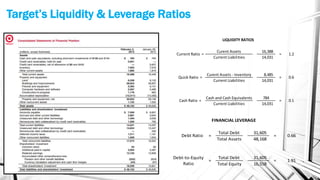
Target’s Liquidity & Leverage Ratios
• a
Total Debt 31,605
Total Assets 48,168
Total Debt 31,605
Total Equity 16,558
0.66
= 1.91
FINANCIAL LEVERAGE
=
Debt-to-Equity
Ratio
=
Debt Ratio =
Curent Assets 16,388
Current Liabilities 14,031
Curent Assets - Inventory 8,485
Current Liabilities 14,031
Cash and Cash Equivalents 784
Current Liabilities 14,031
LIQUIDITY RATIOS
Quick Ratio =
Cash Ratio =
0.6
0.1
=
=
Current Ratio = 1.2=
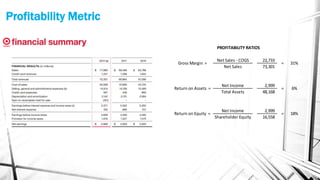
Profitability Metric
Net Sales - COGS 22,733
Net Sales 73,301
Net Income 2,999
Total Assets 48,168
Net Income 2,999
Shareholder Equity 16,558
PROFITABILITY RATIOS
31%
= 6%
= 18%
Return on Assets =
Return on Equity =
Gross Margin = =
BACK-UP
Other Financial Indicators
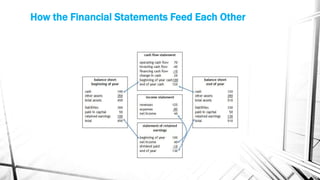
How the Financial Statements Feed Each Other

Financial Statements & Ratios

  • 1.
    Financial Statements & Ratios VernitaR. Gilbert And then God answered: “Write this. Write what you see. Write it out in big block letters so that it can be read on the run. This vision- message is a witness pointing to what’s coming. It aches for the coming—it can hardly wait! And it doesn’t lie. If it seems slow in coming, wait. It’s on its way. It will come right on time. Habakkuk 2:2-3 (MSG)
  • 2.
    Agenda • The Importanceof Counting the Cost • The Formation the Financial Statements • The 4 Financial Statements and Their Purpose • Users of the Financial Statements • Financial Indicators • Company Analysis
  • 3.
    Count the Cost...It’sScriptural For which of you, intending to build a tower, sitteth not down first, and counteth the cost, whether he have sufficient to finish it? Lest haply, after he hath laid the foundation, and is not able to finish it, all that behold it begin to mock him, Saying, This man began to build, and was not able to finish. Luke 14:28-30 (KJV)
  • 4.
    The Business Plan& The Financials Financial Statements Marketing Plan Target Market Pricing Operating Model Product/ Service Competitive Analysis Balance Sheet Income Statement Statement of Owner’s Equity Statement of Cash Flow
  • 5.
    Balance Sheet • a• Summarizes a company's assets, liabilities and shareholders' equity at a specific point in time. • The balance sheet gives investors an idea as to what the company owns, owes and the amount invested by the shareholders. • Uses & sources of funds • Called the Balance Sheet because it should be in balance • ASSETS = LIABILITIES + EQUITY
  • 6.
    Income Statement • Measuresa company's financial performance over a specific accounting period. • Financial performance is assessed by giving a summary of how the business incurs its revenues and expenses through both operating and non-operating activities. • It also shows the net profit/loss incurred over a specific accounting period, typically over a fiscal quarter or year.
  • 7.
    Statement of Owner’sEquity • Represents the equity stake currently held on the books by a firm's equity investors.
  • 8.
    Statement of CashFlows • Provides a summary of all cash inflow and outflow of the company from • Operating activities • Investment activities • Financing activities
  • 9.
    Users of FinancialStatements • Financial institutions - assess the financial health of a business to make lending decisions • Prospective Investors/Shareholders - assess the risk and potential return of their investment in a company • Managers – assess the companies financial performance and position in order to make business decisions • Customers - assess the health of a supplier to ensure the supplier can provide a steady supply of goods/services in the future.
  • 10.
    Users of FinancialStatements (cont.) • Competitors - compare their performance against industry leaders to learn and develop strategies and improve their competitiveness. • Governments - to determine the correctness of tax declared in the tax returns and to measure economic progress • Employees use Financial Statements for assessing the company's profitability and its consequence on their future wages and job security. • General Public may be interested in the effects of a company on the economy, environment and the local community.
  • 11.
    Financial Metrics Usedby Investors • Profitability Metrics measures a companies ability to generate a profit • Investors prefer these ratios to be high
  • 12.
    Financial Metrics Usedby Investors Curent Assets Current Liabilities Curent Assets - Inventory Current Liabilities Cash and Cash Equivalents Current Liabilities Current Ratio = Quick Ratio = Cash Ratio = LIQUIDITY RATIOS • Liquidity Metrics measures a companies ability to pay its bills • A ratio • >1 means more assets than liabilities • <1 means more liabilities than assets • The signal the ratio give is situational, in most cases investors prefer this number be low as a signal of a growth business
  • 13.
    Financial Metrics Usedby Investors Total Debt Total Assets Total Debt Total Equity FINANCIAL LEVERAGE Debt-to-Equity Ratio = =Debt Ratio • Financial Leverage Metrics measures a companies indebt-ness • A ratio • >1 means more highly levered • <1 means more equity than debt • Again, the signal the ratio give is situational, in most cases investors view companies with high debt as less financially stable and more risky
  • 14.
    Break Even Analysis •Breakeven point = fixed costs/ (unit selling price – variable costs) • Breakeven analysis is used to determine when your business will be able to cover all its expenses and begin to make a profit. It is important to identify your startup costs, which will help you determine your sales revenue needed to pay ongoing business expenses.
  • 15.
    Target’s Liquidity &Leverage Ratios • a Total Debt 31,605 Total Assets 48,168 Total Debt 31,605 Total Equity 16,558 0.66 = 1.91 FINANCIAL LEVERAGE = Debt-to-Equity Ratio = Debt Ratio = Curent Assets 16,388 Current Liabilities 14,031 Curent Assets - Inventory 8,485 Current Liabilities 14,031 Cash and Cash Equivalents 784 Current Liabilities 14,031 LIQUIDITY RATIOS Quick Ratio = Cash Ratio = 0.6 0.1 = = Current Ratio = 1.2=
  • 16.
    Profitability Metric Net Sales- COGS 22,733 Net Sales 73,301 Net Income 2,999 Total Assets 48,168 Net Income 2,999 Shareholder Equity 16,558 PROFITABILITY RATIOS 31% = 6% = 18% Return on Assets = Return on Equity = Gross Margin = =
  • 17.
  • 18.
  • 19.
    How the FinancialStatements Feed Each Other