3 Things I Learned From This Course
• The first step to solving any problem is to concisely and
effectively define the problem in a problem statement.
• When brainstorming, don’t be afraid to consider
completely outside-the-box, implausible ideas.
• Feedback from others is critical during the design
process.
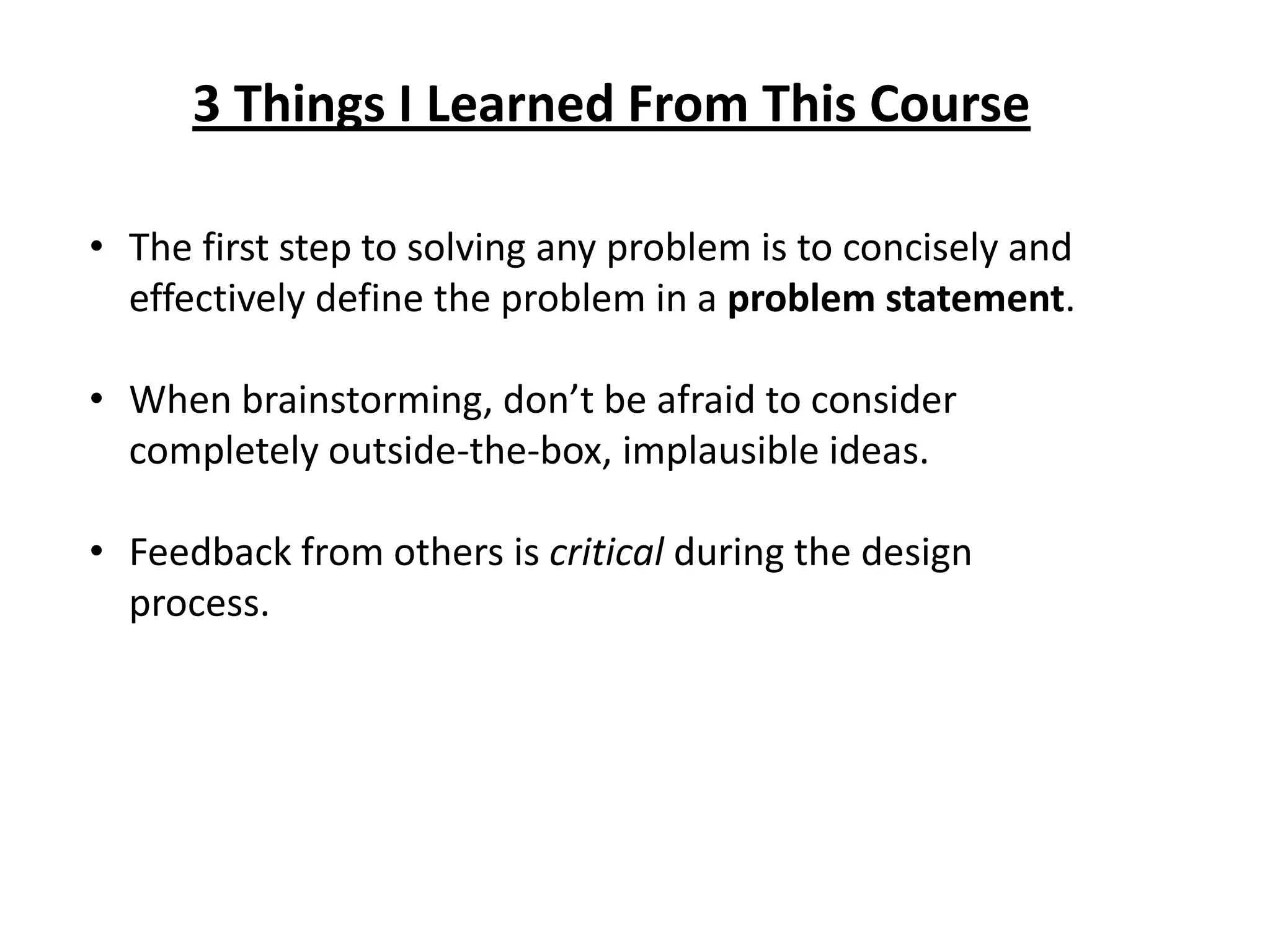
Beginning of the
course
Interviewing and
defining problem
statement
Brainstorming 50
ideas
Building
prototypes
Incorporating
feedback into
prototype
improvements
Considering how
to apply design
thinking to
situations in my
own life
The Future?
Excited
Nervous
Frustrated
Unsure
Curious
Empowered
ExcitedMy Experience with the Design Process
Refine, revise,
redo!!
Flowcharts,
lots of
colors,
modelsGo for a walk,
distract myself
So many problem
solving
opportunities
around me!
Make a list of
questions ahead
of time
Design Process at Work
I wanted to introduce some new fitness habits to my coworkers.
Problem Definition: I spoke to a few coworkers to understand what types of
fitness activities they would be interested in and what would work best for
their schedules.
Ideation: I brainstormed multiple different ideas (from daily walks at lunch to
group zumba classes to skydiving) and finally settled on creating a running
chart at work.
Prototype: I designed a running chart in the office with everyone’s name and
a space to record the mileage they walk/run each day for one month. A
group goal is posted at the bottom of the chart.
Feedback: After one month, I will talk with my coworkers again to see what
worked well and what can be improved for next month.
Applying the Design Process More Broadly
After completing this course, I am now more acutely aware of problems at
work and in my home that I can potentially visualize coming up with a
solution for. In particular, new methods of communication and data
organization would be particularly helpful at work. At home, I’m already
thinking up new ideas for streamlining my route to complete my weekly
errands on the weekend as well as new ways of cleaning my apartment, all
to save money.

Final reflections presentation

  • 1.
    3 Things ILearned From This Course • The first step to solving any problem is to concisely and effectively define the problem in a problem statement. • When brainstorming, don’t be afraid to consider completely outside-the-box, implausible ideas. • Feedback from others is critical during the design process.
  • 2.
    Beginning of the course Interviewingand defining problem statement Brainstorming 50 ideas Building prototypes Incorporating feedback into prototype improvements Considering how to apply design thinking to situations in my own life The Future? Excited Nervous Frustrated Unsure Curious Empowered ExcitedMy Experience with the Design Process Refine, revise, redo!! Flowcharts, lots of colors, modelsGo for a walk, distract myself So many problem solving opportunities around me! Make a list of questions ahead of time
  • 3.
    Design Process atWork I wanted to introduce some new fitness habits to my coworkers. Problem Definition: I spoke to a few coworkers to understand what types of fitness activities they would be interested in and what would work best for their schedules. Ideation: I brainstormed multiple different ideas (from daily walks at lunch to group zumba classes to skydiving) and finally settled on creating a running chart at work. Prototype: I designed a running chart in the office with everyone’s name and a space to record the mileage they walk/run each day for one month. A group goal is posted at the bottom of the chart. Feedback: After one month, I will talk with my coworkers again to see what worked well and what can be improved for next month.
  • 4.
    Applying the DesignProcess More Broadly After completing this course, I am now more acutely aware of problems at work and in my home that I can potentially visualize coming up with a solution for. In particular, new methods of communication and data organization would be particularly helpful at work. At home, I’m already thinking up new ideas for streamlining my route to complete my weekly errands on the weekend as well as new ways of cleaning my apartment, all to save money.