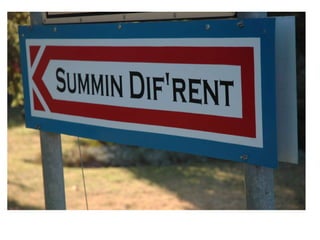
In a constrained environment and  needing new ideas? Design Thinking.. A new way…
What is “Design Thinking” anyway? Roger Martin, the Dean of Rotman Business School provides what might be the simplest and robust definition of design thinking…  “ a way of approaching business problems in the same way that the designer approaches a design problem.” A designer is anyone who plots change for the better…
Key Principle:  It is insight driven not data driven It begins with discovering unmet needs…  & ends with creating new opportunities  for clients/customers
Harsh Jawharkar, University of Chicago Business school
Begins with the Challenge Question? How do we…?
4 Steps Do some field work Analyze the results Ideate and prototype Test the idea
Step 1: Do some field work Understand their context Know your client
Watch
Listen What stories are being told?
Record and Document
Step 2: Analyze the results
Data, observations and stories
Create 3 Personas
An Example: Oma Biography   77 years old Independent living in a senior’s home Has two sons in Toronto Most of her friends have passed away Hasn’t been driving for a few years now Sometimes feels lonely Has a help come in once a week Would like to be able to read more
An Example: Oma Health Has trouble sleeping from time to time. Will wake up in the early hours and often not get to sleep again for 2-3 hours A little arthritis in her hands Has had heart attack and recovered nicely Can move about, perhaps not quite as quickly as she could 10 years ago Sometimes has a rest in the afternoon
An Example: Oma Technology Has never used a computer before, and is a little nervous about them Has a land line phone, and sometimes misplaces the receiver Uses the microwave to prepare many of her meals Watches a great deal of television, does not use a videorecorder
An Example: Oma Goals To not be lonely Keep in touch with her sons and their families Avoid frustrating technology experiences! Not be reliant one anyone
3. Ideate and prototype Artist: Peter Kiss, Vancouver
New possibilities
Collaborate and connect… Multi – discipline- unexpected solutions when people approach problems from different points of view
Draw it…
Collage it…
Create an Idea Wall…
Mind Map it…
Act it out
Step 4: Test the Idea
Pilot and get feedback Is it?
 
Designthinkingmind.com Dr. Bastiaan [email_address] +1 416 624 2094 New solutions New ideas New possibilities

Design Thinking Mind

  • 1.
  • 2.
    In a constrainedenvironment and needing new ideas? Design Thinking.. A new way…
  • 3.
    What is “DesignThinking” anyway? Roger Martin, the Dean of Rotman Business School provides what might be the simplest and robust definition of design thinking… “ a way of approaching business problems in the same way that the designer approaches a design problem.” A designer is anyone who plots change for the better…
  • 4.
    Key Principle: It is insight driven not data driven It begins with discovering unmet needs… & ends with creating new opportunities for clients/customers
  • 5.
    Harsh Jawharkar, Universityof Chicago Business school
  • 6.
    Begins with theChallenge Question? How do we…?
  • 7.
    4 Steps Dosome field work Analyze the results Ideate and prototype Test the idea
  • 8.
    Step 1: Dosome field work Understand their context Know your client
  • 9.
  • 10.
    Listen What storiesare being told?
  • 11.
  • 12.
    Step 2: Analyzethe results
  • 13.
  • 14.
  • 15.
    An Example: OmaBiography 77 years old Independent living in a senior’s home Has two sons in Toronto Most of her friends have passed away Hasn’t been driving for a few years now Sometimes feels lonely Has a help come in once a week Would like to be able to read more
  • 16.
    An Example: OmaHealth Has trouble sleeping from time to time. Will wake up in the early hours and often not get to sleep again for 2-3 hours A little arthritis in her hands Has had heart attack and recovered nicely Can move about, perhaps not quite as quickly as she could 10 years ago Sometimes has a rest in the afternoon
  • 17.
    An Example: OmaTechnology Has never used a computer before, and is a little nervous about them Has a land line phone, and sometimes misplaces the receiver Uses the microwave to prepare many of her meals Watches a great deal of television, does not use a videorecorder
  • 18.
    An Example: OmaGoals To not be lonely Keep in touch with her sons and their families Avoid frustrating technology experiences! Not be reliant one anyone
  • 19.
    3. Ideate andprototype Artist: Peter Kiss, Vancouver
  • 20.
  • 21.
    Collaborate and connect…Multi – discipline- unexpected solutions when people approach problems from different points of view
  • 22.
  • 23.
  • 24.
  • 25.
  • 26.
  • 27.
    Step 4: Testthe Idea
  • 28.
    Pilot and getfeedback Is it?
  • 29.
  • 30.
    Designthinkingmind.com Dr. Bastiaan[email_address] +1 416 624 2094 New solutions New ideas New possibilities