Leela Damodaran and Wendy Olphert
Promoting Digital Inclusion - Unlocking the Potential of the Internet for All,
1. Benefits of digital inclusion
2
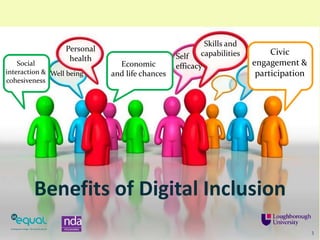
Personal
health
Benefits of Digital Inclusion
Self
efficacy
Well being
Skills and
capabilities
Social
interaction &
cohesiveness
Civic
engagement &
participation
Economic
and life chances
3
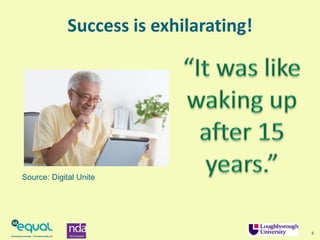
Success is exhilarating!
4
Source: Digital Unite
2. Reality check!
5
6
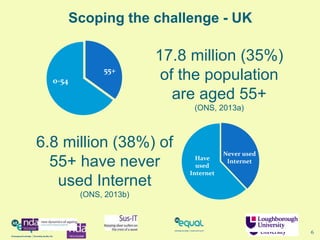
0-54
Have
used
Internet
17.8 million (35%)
of the population
are aged 55+
(ONS, 2013a)
6.8 million (38%) of
55+ have never
used Internet
(ONS, 2013b)
Scoping the challenge - UK
7
Who is excluded?
People:
• over 65 years of age
• with limited educational attainment
• of lower income
• disabled
3. Barriers to inclusion
8
9
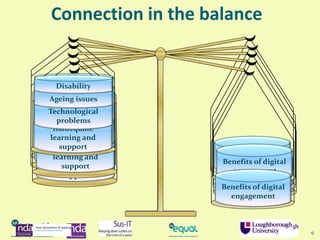
Benefits of digital
engagement
Inadequate
learning and
support
Technological
problems
Ageing issues
Disability
Benefits of digital
engagement
Inadequate
learning and
support
Technological
problems
Ageing issues
Disability
Benefits of digital
engagement
Inadequate
learning and
support
Technological
problems
Ageing issues
Disability
Benefits of digital
engagement
Inadequate
learning and
support
Ageing issues
Disability
Technological
problems
Benefits of digital
engagement
Inadequate
learning and
support
Technological
problems
Ageing issues
Disability
Connection in the balance
The Dual Challenge:
- launching new internet users -
especially the 'hard-to-reach'
- sustaining digital participation of new
and existing users
10
4. Taking on the challenge
11
12
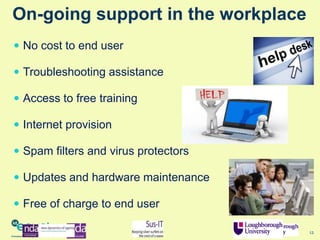
On-going support in the workplace
 Troubleshooting assistance
 Access to free training
 Internet provision
 Spam filters and virus protectors
 Updates and hardware maintenance
 Free of charge to end user
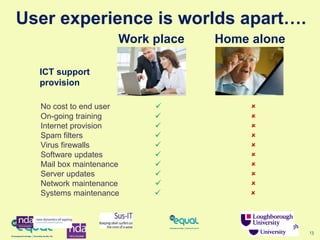
13
No cost to end user  
On-going training  
Internet provision  
Spam filters  
Virus firewalls  
Software updates  
Mail box maintenance  
Server updates  
Network maintenance  
Systems maintenance  
ICT support
provision
Home aloneWork place
User experience is worlds apart….
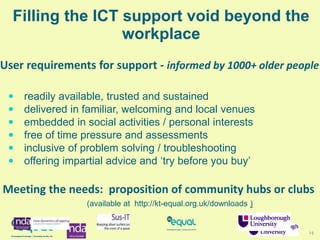
14
Filling the ICT support void beyond the
workplace
 readily available, trusted and sustained
 delivered in familiar, welcoming and local venues
 embedded in social activities / personal interests
 free of time pressure and assessments
 inclusive of problem solving / troubleshooting
 offering impartial advice and ‘try before you buy’
User requirements for support - informed by 1000+ older people
Meeting the needs: proposition of community hubs or clubs
(available at http://kt-equal.org.uk/downloads )
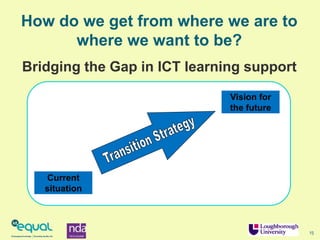
15
How do we get from where we are to
where we want to be?
Bridging the Gap in ICT learning support
Vision for
the future
Current
situation
16
There’s no silver bullet - many contributions
will be needed e.g.:
 Business
 Government
 Third sector
 Policy
 Research
 Design
Meeting the demands of the
challenge
17
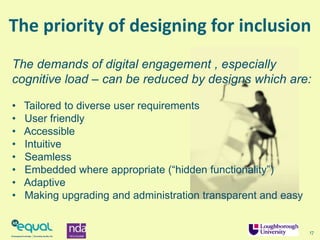
The priority of designing for inclusion
The demands of digital engagement , especially
cognitive load – can be reduced by designs which are:
• Tailored to diverse user requirements
• User friendly
• Accessible
• Intuitive
• Seamless
• Embedded where appropriate (“hidden functionality”)
• Adaptive
• Making upgrading and administration transparent and easy
Role of research
18
 Extensive international research relevant to digital inclusion
 UK Research councils give high priority to achieving impact, informing
business, government, and society : e.g.
New Dynamics of Ageing (NDA) Programme: ‘Sus-IT’ project
Sustaining IT use by older people to promote autonomy and
independence - giving new knowledge and understanding to inform
solutions to empower older people to participate fully in the digital
economy and society. (http://sus-it.lboro.ac.uk/)
KT-EQUAL (formerly SPARC) - a consortium of UK researchers
dedicated to extending quality life for older and disabled people.
Both programmes involve older and disabled people in research and bring
together researchers from different disciplines, policy-makers and service
users. to share knowledge and expertise to inform regulations, policy and
practice across many sectors.
5. Achieving strategic change
19
20
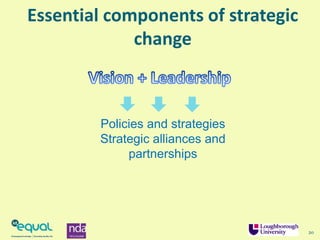
Essential components of strategic
change
Policies and strategies
Strategic alliances and
partnerships
21
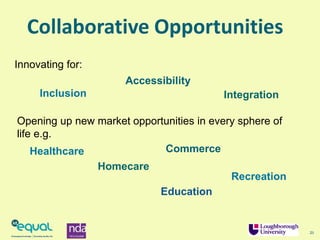
Collaborative Opportunities
Innovating for:
Opening up new market opportunities in every sphere of
life e.g.
Education
Homecare
Commerce
Recreation
Healthcare
Inclusion
Accessibility
Integration
Summing up
• We have the vision of universal connectivity and
inclusion
• The potential economic and social rewards are vast
• The challenges are immense – but we have the know-
how to meet them
• The opportunities for innovation and change in business
and in society are even greater than the challenges.
• With leadership and commitment we can tackle social
inclusion through digital inclusion
22

Tackling Social Exclusion through Digital Inclusion | Leela Damodaran | April 2014

  • 1.
    Leela Damodaran andWendy Olphert Promoting Digital Inclusion - Unlocking the Potential of the Internet for All,
  • 2.
    1. Benefits ofdigital inclusion 2
  • 3.
    Personal health Benefits of DigitalInclusion Self efficacy Well being Skills and capabilities Social interaction & cohesiveness Civic engagement & participation Economic and life chances 3
  • 4.
  • 5.
  • 6.
    6 0-54 Have used Internet 17.8 million (35%) ofthe population are aged 55+ (ONS, 2013a) 6.8 million (38%) of 55+ have never used Internet (ONS, 2013b) Scoping the challenge - UK
  • 7.
    7 Who is excluded? People: •over 65 years of age • with limited educational attainment • of lower income • disabled
  • 8.
    3. Barriers toinclusion 8
  • 9.
    9 Benefits of digital engagement Inadequate learningand support Technological problems Ageing issues Disability Benefits of digital engagement Inadequate learning and support Technological problems Ageing issues Disability Benefits of digital engagement Inadequate learning and support Technological problems Ageing issues Disability Benefits of digital engagement Inadequate learning and support Ageing issues Disability Technological problems Benefits of digital engagement Inadequate learning and support Technological problems Ageing issues Disability Connection in the balance
  • 10.
    The Dual Challenge: -launching new internet users - especially the 'hard-to-reach' - sustaining digital participation of new and existing users 10
  • 11.
    4. Taking onthe challenge 11
  • 12.
    12 On-going support inthe workplace  Troubleshooting assistance  Access to free training  Internet provision  Spam filters and virus protectors  Updates and hardware maintenance  Free of charge to end user
  • 13.
    13 No cost toend user   On-going training   Internet provision   Spam filters   Virus firewalls   Software updates   Mail box maintenance   Server updates   Network maintenance   Systems maintenance   ICT support provision Home aloneWork place User experience is worlds apart….
  • 14.
    14 Filling the ICTsupport void beyond the workplace  readily available, trusted and sustained  delivered in familiar, welcoming and local venues  embedded in social activities / personal interests  free of time pressure and assessments  inclusive of problem solving / troubleshooting  offering impartial advice and ‘try before you buy’ User requirements for support - informed by 1000+ older people Meeting the needs: proposition of community hubs or clubs (available at http://kt-equal.org.uk/downloads )
  • 15.
    15 How do weget from where we are to where we want to be? Bridging the Gap in ICT learning support Vision for the future Current situation
  • 16.
    16 There’s no silverbullet - many contributions will be needed e.g.:  Business  Government  Third sector  Policy  Research  Design Meeting the demands of the challenge
  • 17.
    17 The priority ofdesigning for inclusion The demands of digital engagement , especially cognitive load – can be reduced by designs which are: • Tailored to diverse user requirements • User friendly • Accessible • Intuitive • Seamless • Embedded where appropriate (“hidden functionality”) • Adaptive • Making upgrading and administration transparent and easy
  • 18.
    Role of research 18 Extensive international research relevant to digital inclusion  UK Research councils give high priority to achieving impact, informing business, government, and society : e.g. New Dynamics of Ageing (NDA) Programme: ‘Sus-IT’ project Sustaining IT use by older people to promote autonomy and independence - giving new knowledge and understanding to inform solutions to empower older people to participate fully in the digital economy and society. (http://sus-it.lboro.ac.uk/) KT-EQUAL (formerly SPARC) - a consortium of UK researchers dedicated to extending quality life for older and disabled people. Both programmes involve older and disabled people in research and bring together researchers from different disciplines, policy-makers and service users. to share knowledge and expertise to inform regulations, policy and practice across many sectors.
  • 19.
  • 20.
    20 Essential components ofstrategic change Policies and strategies Strategic alliances and partnerships
  • 21.
    21 Collaborative Opportunities Innovating for: Openingup new market opportunities in every sphere of life e.g. Education Homecare Commerce Recreation Healthcare Inclusion Accessibility Integration
  • 22.
    Summing up • Wehave the vision of universal connectivity and inclusion • The potential economic and social rewards are vast • The challenges are immense – but we have the know- how to meet them • The opportunities for innovation and change in business and in society are even greater than the challenges. • With leadership and commitment we can tackle social inclusion through digital inclusion 22