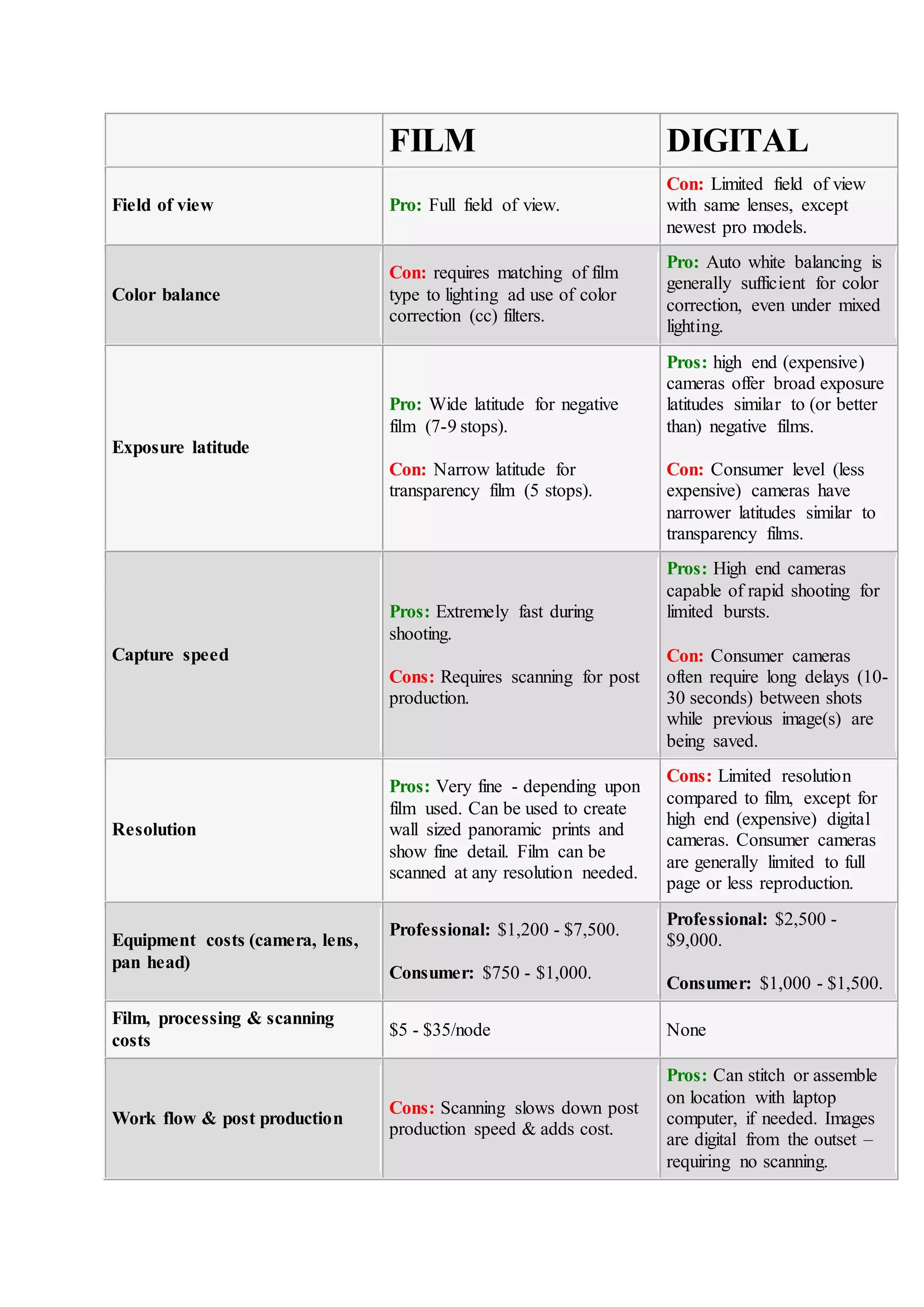
FILM DIGITAL 
Field of view Pro: Full field of view. 
Con: Limited field of view 
with same lenses, except 
newest pro models. 
Color balance 
Con: requires matching of film 
type to lighting ad use of color 
correction (cc) filters. 
Pro: Auto white balancing is 
generally sufficient for color 
correction, even under mixed 
lighting. 
Exposure latitude 
Pro: Wide latitude for negative 
film (7-9 stops). 
Con: Narrow latitude for 
transparency film (5 stops). 
Pros: high end (expensive) 
cameras offer broad exposure 
latitudes similar to (or better 
than) negative films. 
Con: Consumer level (less 
expensive) cameras have 
narrower latitudes similar to 
transparency films. 
Capture speed 
Pros: Extremely fast during 
shooting. 
Cons: Requires scanning for post 
production. 
Pros: High end cameras 
capable of rapid shooting for 
limited bursts. 
Con: Consumer cameras 
often require long delays (10- 
30 seconds) between shots 
while previous image(s) are 
being saved. 
Resolution 
Pros: Very fine - depending upon 
film used. Can be used to create 
wall sized panoramic prints and 
show fine detail. Film can be 
scanned at any resolution needed. 
Cons: Limited resolution 
compared to film, except for 
high end (expensive) digital 
cameras. Consumer cameras 
are generally limited to full 
page or less reproduction. 
Equipment costs (camera, lens, 
pan head) 
Professional: $1,200 - $7,500. 
Consumer: $750 - $1,000. 
Professional: $2,500 - 
$9,000. 
Consumer: $1,000 - $1,500. 
Film, processing & scanning 
costs 
$5 - $35/node None 
Work flow & post production 
Cons: Scanning slows down post 
production speed & adds cost. 
Pros: Can stitch or assemble 
on location with laptop 
computer, if needed. Images 
are digital from the outset – 
requiring no scanning.
Portability & durability in the 
field 
Good to excellent. 
Poor to good, depending 
upon model. 
Obsolescence period 
Pro: 35mm cameras & lenses 
retain value fairly well over 5–10 
year period. 
Con: Digital systems can 
lose value quickly (up to 50% 
or more each year). 
Stitching technologies (QTVR) 
Pros: Relatively high quality and 
resolution possible, variety of 
software authoring applications 
available, can be viewed on any 
computer with industry standard 
QuickTime™ installed. 
Cons: Requires 8-12 photos (or 
more) for each panorama, more for 
multi-row (cubic) panos. Cubic 
viewing requires that viewers have 
a recent version of QuickTime 
installed, although this is already 
standard on most computers. 
Pros: Same advantages as 
film. 
Cons: Same disadvantages as 
film, but digital capture 
generally requires more 
source images per panorama 
in order to yield same field of 
view as with film.

Film vs Digital

  • 1.
    FILM DIGITAL Fieldof view Pro: Full field of view. Con: Limited field of view with same lenses, except newest pro models. Color balance Con: requires matching of film type to lighting ad use of color correction (cc) filters. Pro: Auto white balancing is generally sufficient for color correction, even under mixed lighting. Exposure latitude Pro: Wide latitude for negative film (7-9 stops). Con: Narrow latitude for transparency film (5 stops). Pros: high end (expensive) cameras offer broad exposure latitudes similar to (or better than) negative films. Con: Consumer level (less expensive) cameras have narrower latitudes similar to transparency films. Capture speed Pros: Extremely fast during shooting. Cons: Requires scanning for post production. Pros: High end cameras capable of rapid shooting for limited bursts. Con: Consumer cameras often require long delays (10- 30 seconds) between shots while previous image(s) are being saved. Resolution Pros: Very fine - depending upon film used. Can be used to create wall sized panoramic prints and show fine detail. Film can be scanned at any resolution needed. Cons: Limited resolution compared to film, except for high end (expensive) digital cameras. Consumer cameras are generally limited to full page or less reproduction. Equipment costs (camera, lens, pan head) Professional: $1,200 - $7,500. Consumer: $750 - $1,000. Professional: $2,500 - $9,000. Consumer: $1,000 - $1,500. Film, processing & scanning costs $5 - $35/node None Work flow & post production Cons: Scanning slows down post production speed & adds cost. Pros: Can stitch or assemble on location with laptop computer, if needed. Images are digital from the outset – requiring no scanning.
  • 2.
    Portability & durabilityin the field Good to excellent. Poor to good, depending upon model. Obsolescence period Pro: 35mm cameras & lenses retain value fairly well over 5–10 year period. Con: Digital systems can lose value quickly (up to 50% or more each year). Stitching technologies (QTVR) Pros: Relatively high quality and resolution possible, variety of software authoring applications available, can be viewed on any computer with industry standard QuickTime™ installed. Cons: Requires 8-12 photos (or more) for each panorama, more for multi-row (cubic) panos. Cubic viewing requires that viewers have a recent version of QuickTime installed, although this is already standard on most computers. Pros: Same advantages as film. Cons: Same disadvantages as film, but digital capture generally requires more source images per panorama in order to yield same field of view as with film.