FILM OPENING CODES &
CONVENTIONS
PREESHA PATEL
THE MAIN
CONVENTIONS
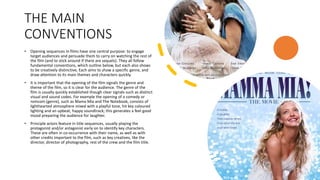
• Opening sequences in films have one central purpose: to engage
target audiences and persuade them to carry on watching the rest of
the film (and to stick around if there are sequels). They all follow
fundamental conventions, which outline below, but each also shows
to be creatively distinctive, Each aims to show a specific genre, and
draw attention to its main themes and characters quickly.
• It is important that the opening of the film signals the genre and
theme of the film, so it is clear for the audience. The genre of the
film is usually quickly established though clear signals such as distinct
visual and sound codes. For example the opening of a comedy or
romcom (genre), such as Mama Mia and The Notebook, consists of
lighthearted atmosphere mixed with a playful tone, hit key coloured
lighting and an upbeat, happy soundtrack; this generates a feel good
mood preparing the audience for laughter.
• Principle actors feature in title sequences, usually playing the
protagonist and/or antagonist early on to identify key characters.
These are often in co-occurrence with their name, as well as with
other credits important to the film, such as key creatives, like the
director, director of photography, rest of the crew and the film title.
Art of The Title
• Art of the is a web guide committed t identify collection
layout, spanning the film, television, conference, and
online fame industries. The guide is each an academic
and ancient aid and a modern-day guide, focusing at
the innovative method in the back of the layout of
identify sequences.
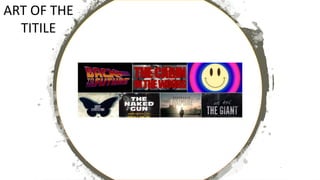
• I recently studied various title sequences using the Art
of the Title in order to gain an improved understanding
of codes and conventions. These consisted of Little
Women, …. I also viewed a number of additional
opening film sequences.
ART OF THE
TITILE
NARRATIVE CODES
• Roland Barthes developed a concept of narrative being interwoven with one of two codes: action or enigma. The
function of an opening sequence is used to capture then retain audience interest, so that the audience/fans keeps
watching to find out what happens. In order to maintain the audience’s interest in the story, different techniques
are used, for example: creating suspense in the narrative by unanswered questions followed by anticipation of an
action’s revolution (more to an ending). Barthes called this the enigma code
• Egnimas exist as unexplained plot elements which are manipulated into the story line. The effect of enigmas result
in a desperate need for resolution. The developing narrative allows for discoveries and questions to be uncovered.
• But in contrast, film narrative expressed though action codes feature events that unfold, triggering further actions
to be taken place. Each development leads to the following stages of the narrative, culminating in the plot.
ENIGMA CODES
• This is an editing technique in which the camera
shows only some of the narrative, leaving the
audience with a sense of mystery as to where
the narrative will go next.
• This is effective in hooking audiences into
continue watching the film as they find
themselves wanting to know the answers to
these questions proposed through the opening.
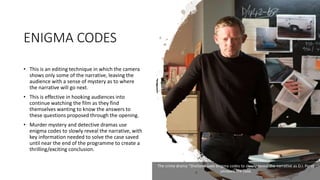
• Murder mystery and detective dramas use
enigma codes to slowly reveal the narrative, with
key information needed to solve the case saved
until near the end of the programme to create a
thrilling/exciting conclusion.
The crime drama “Shetland uses enigma codes to slowly reveal the narrative as D.I. Perez
unravels the case.
ACTION CODES
• These are actions in the narrative that tip off the
viewer about what to expect as the narrative
progresses. It relies on the idea of cause and
effect
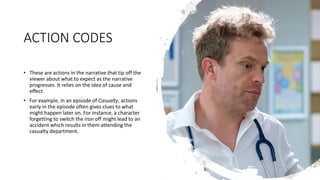
• For example, in an episode of Casualty, actions
early in the episode often gives clues to what
might happen later on. For instance, a character
forgetting to switch the iron off might lead to an
accident which results in them attending the
casualty department.
ESTABLISHING GENRE
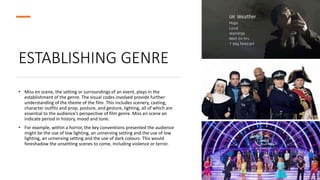
• Miss en scene, the setting or surroundings of an event, plays in the
establishment of the genre. The visual codes involved provide further
understanding of the theme of the film. This includes scenery, casting,
character outfits and prop, posture, and gesture, lighting, all of which are
essential to the audience’s perspective of film genre. Miss en scene an
indicate period in history, mood and tone.
• For example, within a horror, the key conventions presented the audience
might be the use of low lighting, an unnerving setting and the use of low
lighting, an unnerving setting and the use of dark colours. This would
foreshadow the unsettling scenes to come, including violence or terror.
SOUND CODES
• In the opening scene of the films the soundtrack in an
important part of creating meaning. Sound at be diegetic
or non-diegetic. Sound codes are important tools in
creating atmosphere, signalling the genre and making the
narrative as convincing as possible.
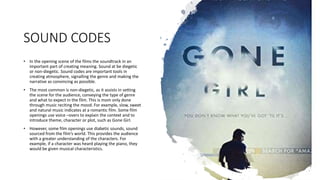
• The most common is non-diegetic, as it assists in setting
the scene for the audience, conveying the type of genre
and what to expect in the film. This is mom only done
through music reciting the mood. For example, slow, sweet
and natural music indicates at a romantic film. Some film
openings use voice –overs to explain the context and to
introduce theme, character or plot, such as Gone Girl.
• However, some film openings use diabetic sounds, sound
sourced from the film’s world. This provides the audience
with a greater understanding of the characters. For
example, if a character was heard playing the piano, they
would be given musical characteristics.
TITLES
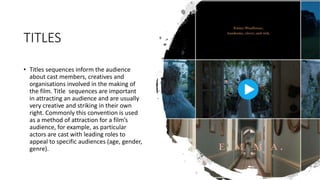
• Titles sequences inform the audience
about cast members, creatives and
organisations involved in the making of
the film. Title sequences are important
in attracting an audience and are usually
very creative and striking in their own
right. Commonly this convention is used
as a method of attraction for a film’s
audience, for example, as particular
actors are cast with leading roles to
appeal to specific audiences (age, gender,
genre).
LOGOS FOR DISTRIBUTORS,
STUDIOS & PRODUCTION
COMPANIES
• Film openings will always show logos or
identification of the companies
production as well as the distribution
companies involves. These often provide
the audience with insight to the film,
contributing to the expectations. Often
large production companies have a larger
budget available and it is expected to be
a big budget block buster film, for
example Walt Disney.
TYPOGRAPHY
• “Typography is a key element in creating brand
recognition in a title. The font used for the film
title carries across to the film posters, website and
all social media feeds. Fonts and typography
makes an important part to film promotion, it
helps the title or other information stand out and
be unique.
• I have observed how significant to the meaning of
the film are the title fonts for films such as Black
Panther and Split…..”
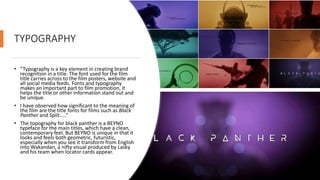
• The topography for black panther is a BEYNO
typeface for the main titles, which have a clean,
contemporary feel. But BEYNO is unique in that it
looks and feels both geometric, futuristic,
especially when you see it transform from English
into Wakandan, a nifty visual produced by Lasky
and his team when locator cards appear.

Film opening codes & Conventions - Media A Level

  • 1.
    FILM OPENING CODES& CONVENTIONS PREESHA PATEL
  • 2.
    THE MAIN CONVENTIONS • Openingsequences in films have one central purpose: to engage target audiences and persuade them to carry on watching the rest of the film (and to stick around if there are sequels). They all follow fundamental conventions, which outline below, but each also shows to be creatively distinctive, Each aims to show a specific genre, and draw attention to its main themes and characters quickly. • It is important that the opening of the film signals the genre and theme of the film, so it is clear for the audience. The genre of the film is usually quickly established though clear signals such as distinct visual and sound codes. For example the opening of a comedy or romcom (genre), such as Mama Mia and The Notebook, consists of lighthearted atmosphere mixed with a playful tone, hit key coloured lighting and an upbeat, happy soundtrack; this generates a feel good mood preparing the audience for laughter. • Principle actors feature in title sequences, usually playing the protagonist and/or antagonist early on to identify key characters. These are often in co-occurrence with their name, as well as with other credits important to the film, such as key creatives, like the director, director of photography, rest of the crew and the film title.
  • 3.
    Art of TheTitle • Art of the is a web guide committed t identify collection layout, spanning the film, television, conference, and online fame industries. The guide is each an academic and ancient aid and a modern-day guide, focusing at the innovative method in the back of the layout of identify sequences. • I recently studied various title sequences using the Art of the Title in order to gain an improved understanding of codes and conventions. These consisted of Little Women, …. I also viewed a number of additional opening film sequences.
  • 4.
  • 5.
    NARRATIVE CODES • RolandBarthes developed a concept of narrative being interwoven with one of two codes: action or enigma. The function of an opening sequence is used to capture then retain audience interest, so that the audience/fans keeps watching to find out what happens. In order to maintain the audience’s interest in the story, different techniques are used, for example: creating suspense in the narrative by unanswered questions followed by anticipation of an action’s revolution (more to an ending). Barthes called this the enigma code • Egnimas exist as unexplained plot elements which are manipulated into the story line. The effect of enigmas result in a desperate need for resolution. The developing narrative allows for discoveries and questions to be uncovered. • But in contrast, film narrative expressed though action codes feature events that unfold, triggering further actions to be taken place. Each development leads to the following stages of the narrative, culminating in the plot.
  • 6.
    ENIGMA CODES • Thisis an editing technique in which the camera shows only some of the narrative, leaving the audience with a sense of mystery as to where the narrative will go next. • This is effective in hooking audiences into continue watching the film as they find themselves wanting to know the answers to these questions proposed through the opening. • Murder mystery and detective dramas use enigma codes to slowly reveal the narrative, with key information needed to solve the case saved until near the end of the programme to create a thrilling/exciting conclusion. The crime drama “Shetland uses enigma codes to slowly reveal the narrative as D.I. Perez unravels the case.
  • 7.
    ACTION CODES • Theseare actions in the narrative that tip off the viewer about what to expect as the narrative progresses. It relies on the idea of cause and effect • For example, in an episode of Casualty, actions early in the episode often gives clues to what might happen later on. For instance, a character forgetting to switch the iron off might lead to an accident which results in them attending the casualty department.
  • 8.
    ESTABLISHING GENRE • Missen scene, the setting or surroundings of an event, plays in the establishment of the genre. The visual codes involved provide further understanding of the theme of the film. This includes scenery, casting, character outfits and prop, posture, and gesture, lighting, all of which are essential to the audience’s perspective of film genre. Miss en scene an indicate period in history, mood and tone. • For example, within a horror, the key conventions presented the audience might be the use of low lighting, an unnerving setting and the use of low lighting, an unnerving setting and the use of dark colours. This would foreshadow the unsettling scenes to come, including violence or terror.
  • 9.
    SOUND CODES • Inthe opening scene of the films the soundtrack in an important part of creating meaning. Sound at be diegetic or non-diegetic. Sound codes are important tools in creating atmosphere, signalling the genre and making the narrative as convincing as possible. • The most common is non-diegetic, as it assists in setting the scene for the audience, conveying the type of genre and what to expect in the film. This is mom only done through music reciting the mood. For example, slow, sweet and natural music indicates at a romantic film. Some film openings use voice –overs to explain the context and to introduce theme, character or plot, such as Gone Girl. • However, some film openings use diabetic sounds, sound sourced from the film’s world. This provides the audience with a greater understanding of the characters. For example, if a character was heard playing the piano, they would be given musical characteristics.
  • 10.
    TITLES • Titles sequencesinform the audience about cast members, creatives and organisations involved in the making of the film. Title sequences are important in attracting an audience and are usually very creative and striking in their own right. Commonly this convention is used as a method of attraction for a film’s audience, for example, as particular actors are cast with leading roles to appeal to specific audiences (age, gender, genre).
  • 11.
    LOGOS FOR DISTRIBUTORS, STUDIOS& PRODUCTION COMPANIES • Film openings will always show logos or identification of the companies production as well as the distribution companies involves. These often provide the audience with insight to the film, contributing to the expectations. Often large production companies have a larger budget available and it is expected to be a big budget block buster film, for example Walt Disney.
  • 12.
    TYPOGRAPHY • “Typography isa key element in creating brand recognition in a title. The font used for the film title carries across to the film posters, website and all social media feeds. Fonts and typography makes an important part to film promotion, it helps the title or other information stand out and be unique. • I have observed how significant to the meaning of the film are the title fonts for films such as Black Panther and Split…..” • The topography for black panther is a BEYNO typeface for the main titles, which have a clean, contemporary feel. But BEYNO is unique in that it looks and feels both geometric, futuristic, especially when you see it transform from English into Wakandan, a nifty visual produced by Lasky and his team when locator cards appear.