100%
90%
80%
70%
60%
50%
40%
30%
20%
10%
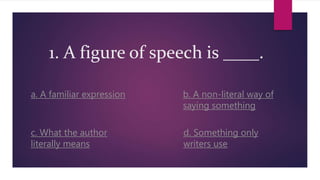
1. A figure of speech is ____.
b. A non-literal way of
saying something
a. A familiar expression
c. What the author
literally means
d. Something only
writers use
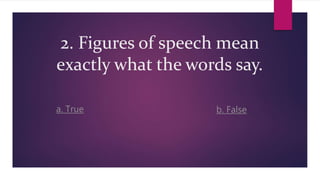
2. Figures of speech mean
exactly what the words say.
a. True b. False
3. A figure of speech has to be
interpreted by the reader or
listener.
a. True b. False
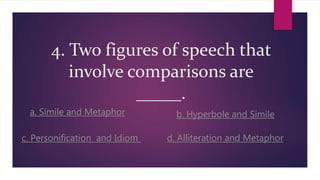
4. Two figures of speech that
involve comparisons are
_____.
a. Simile and Metaphor b. Hyperbole and Simile
c. Personification and Idiom d. Alliteration and Metaphor
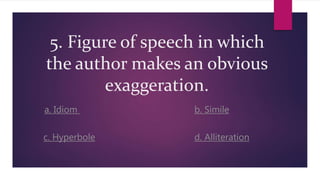
5. Figure of speech in which
the author makes an obvious
exaggeration.
a. Idiom b. Simile
c. Hyperbole d. Alliteration
6. The words “like” and “as”
typically appears in a ____.
a. Simile b. Metaphor
c. Hyperbole d. Idiom
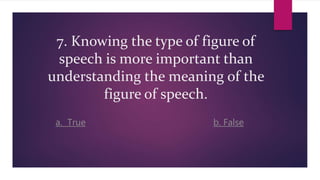
7. Knowing the type of figure of
speech is more important than
understanding the meaning of the
figure of speech.
a. True b. False
8. When words are literal,
they mean exactly what they
say.
a. True b. False
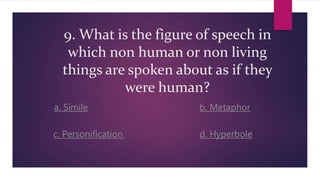
9. What is the figure of speech in
which non human or non living
things are spoken about as if they
were human?
a. Simile b. Metaphor
c. Personification d. Hyperbole
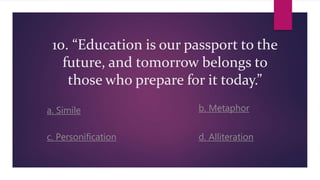
10. “Education is our passport to the
future, and tomorrow belongs to
those who prepare for it today.”
a. Simile b. Metaphor
c. Personification d. Alliteration
Figures of-speech
Figures of-speech

Figures of-speech

  • 2.
  • 3.
    1. A figureof speech is ____. b. A non-literal way of saying something a. A familiar expression c. What the author literally means d. Something only writers use
  • 4.
    2. Figures ofspeech mean exactly what the words say. a. True b. False
  • 5.
    3. A figureof speech has to be interpreted by the reader or listener. a. True b. False
  • 6.
    4. Two figuresof speech that involve comparisons are _____. a. Simile and Metaphor b. Hyperbole and Simile c. Personification and Idiom d. Alliteration and Metaphor
  • 7.
    5. Figure ofspeech in which the author makes an obvious exaggeration. a. Idiom b. Simile c. Hyperbole d. Alliteration
  • 8.
    6. The words“like” and “as” typically appears in a ____. a. Simile b. Metaphor c. Hyperbole d. Idiom
  • 9.
    7. Knowing thetype of figure of speech is more important than understanding the meaning of the figure of speech. a. True b. False
  • 10.
    8. When wordsare literal, they mean exactly what they say. a. True b. False
  • 11.
    9. What isthe figure of speech in which non human or non living things are spoken about as if they were human? a. Simile b. Metaphor c. Personification d. Hyperbole
  • 12.
    10. “Education isour passport to the future, and tomorrow belongs to those who prepare for it today.” a. Simile b. Metaphor c. Personification d. Alliteration