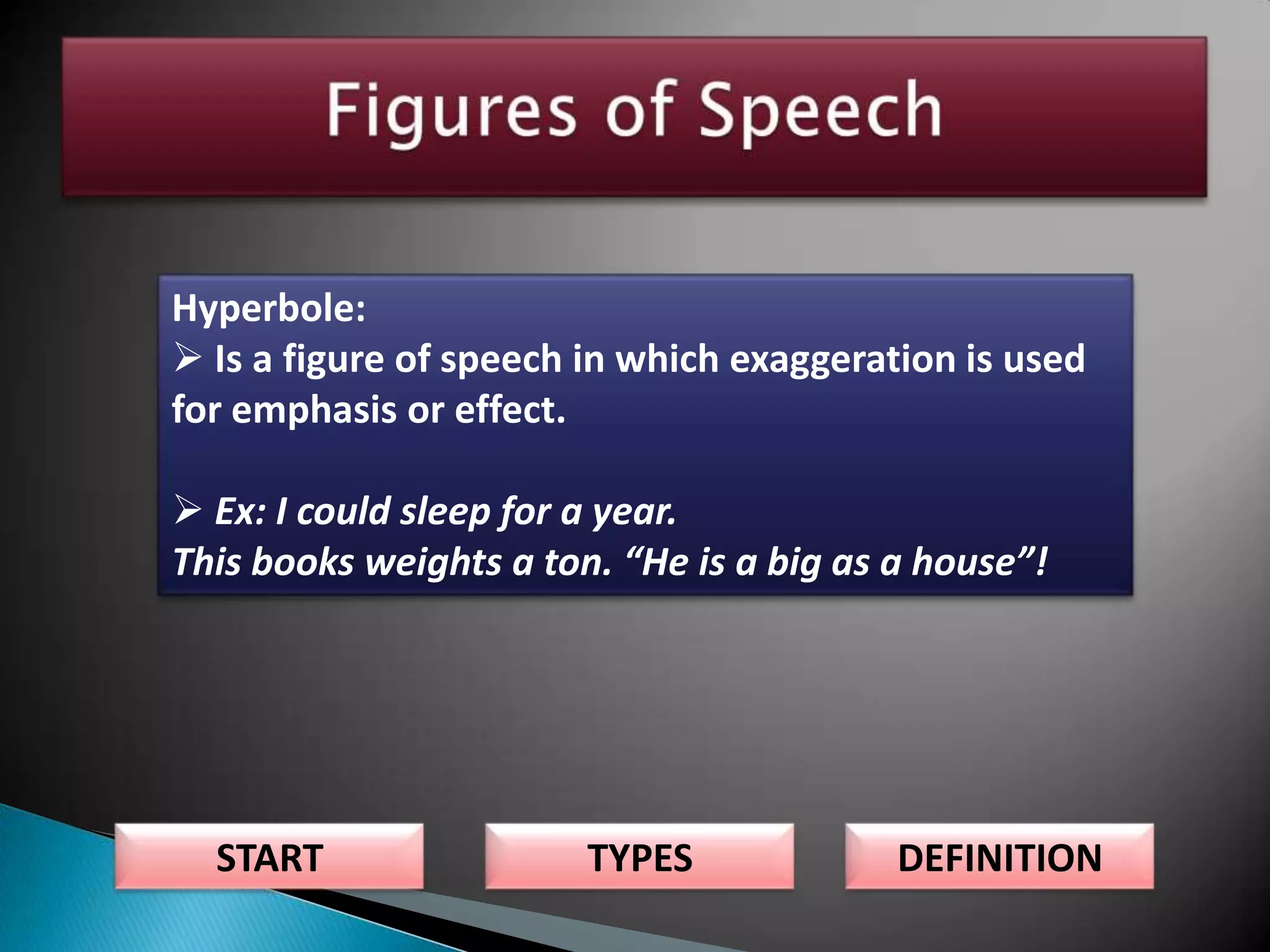
This document defines and provides examples of common types of figurative language, including simile, metaphor, personification, hyperbole, and imagery. It explains that figurative language uses words in a non-literal sense to stimulate the imagination. Similes explicitly compare two unlike things using words like "like" or "as." Metaphors implicitly compare two unlike things. Personification gives human attributes to non-human objects. Hyperbole exaggerates for emphasis. Imagery uses vivid descriptions to create mental images.