A Report on Rigid Pavement
Construction Site of Sylhet -
Bholaganj Road
SUBMITTED BY: GROUP NO. 03
Submitted To,
Dr. Md. Jahir Bin Alam
Professor
Dept. of CEE, SUST
Mohammad Rafiqul Islam
Assistant Professor
Dept. of CEE, SUST
SHAHJALAL UNIVERSITY OF SCIENCE
AND TECHNOLOGY, SYLHET
Course No.: CEE 436 Course Title: Field Work for Engineers
Members Recognition
Group No. 03
Registration No. Name
2015333005 Warda Jannat Juhin
2015333014 Raihan Uddin Ahmed
2015333016 Swarna Akter
2015333029 Sk. Md. Towhidul Islam
2015333043 Enan Ahmed
2015333045 Nirob Ahmed
2015333047 Nawshin Haque
2015333053 Plai Frue
2015333055 Rahul Das
2015333064 Akikur Rahman Borolaskar
2015333071 Md. Sohel Molla
2015333074 Md. Raju Ahmed
CONTENTS
Introduction 1-2
Objectives 2
Observations 2-6
Conclusion 7
References 7
1 | P a g e
Introduction
Field visits are important part of learning. Visiting a construction project or design
office allows us as a student to develop a greater understanding of how Civil
Engineering theories are put into practice. We were given the opportunity of a field
visit as a part of our course Field Work for Engineers (CEE-436) by our course
teachers Professor Dr. Md. Jahir Bin Alam sir and Assistant Professor Mohammad
Rafiqul Islam sir. We visited the rigid pavement construction site of Sylhet-
Bholaganj road.
Group Photo with our respected teacher and authorities of the project of
RHD
We visited the site on 30th
March, 2019. On Due date, we the students of CEE 21st
batch along with our respected teacher gathered at Gol Chottor, SUST and started
our journey with a bus from SUST campus.
2 | P a g e
We were given a short brief about the project after we reached there.
Objectives
The main objectives are:
1. To observe the different activities and techniques carried out on site.
2. To explore the various types of construction process.
3. To have a feel of how the condition of the site really is and how safety is a
priority.
4. To have an up-close view of the entire rigid pavement construction as opposed
to seeing it in the drawings.
5. To develop our report writing skills.
Observations
The Roads and Highways Department (RHD) Sylhet has recently started
construction of the Sylhet-Companiganj-Bholaganj road. The Executive Committee
3 | P a g e
of the National Economic Council (ECNEC) approved Tk 4.41 billion for the road
construction project on April 7, 2015. It is a huge project and would substantially
end sufferings of the local people. Transporting stones from the country's largest
quarry at Bholaganj on the Meghalayan border had been hampering since long due
to the dilapidated condition of the busy road. Thousands of visitors who come to
visit Bholaganj and Bisnakandi tourist locations every year will also be benefited.
The project is set to be completed by July 2019 (as predicted at the start of the
project). 13 km length of road of the project would be rigid pavement spending Tk
1780 million.
Works that we have witnessed at the construction site of rigid pavement:
1. Preparation of subgrade: The materials and their specifications for base, sub-
base and subgrade preparation shall be as per IRC:15. The camber and super
elevation of subgrade shall be same as that of the concrete slabs. The thickness of
subgrade shall be 150-300 mm. If the k value of the subgrade tested under wet
condition is less than 6 kg/cm^2(Aprox.CBR Value 15%), the cement concrete
pavement should not be laid directly over the subgrade. A sub-base layer may be
provided. Hence, poor clayey soil was removed and then a layer of sandy soil was
compacted along the road surface.
Figure 01: A sub-base layer compaction.
4 | P a g e
2. Design Mix: Concrete is an extremely versatile building material because, it can
be designed for strength ranging from M10 to M100 and workability ranging from
0 mm to 150mm slump. Concrete Design Mix is made mandatory for M20 and
above grades by IS 456-2000. Design mix is the process of proportioning by weight
of all ingredients by Trial and Error with different quantities to arrive exact
proportions such that the desired target mean strength is achieved.
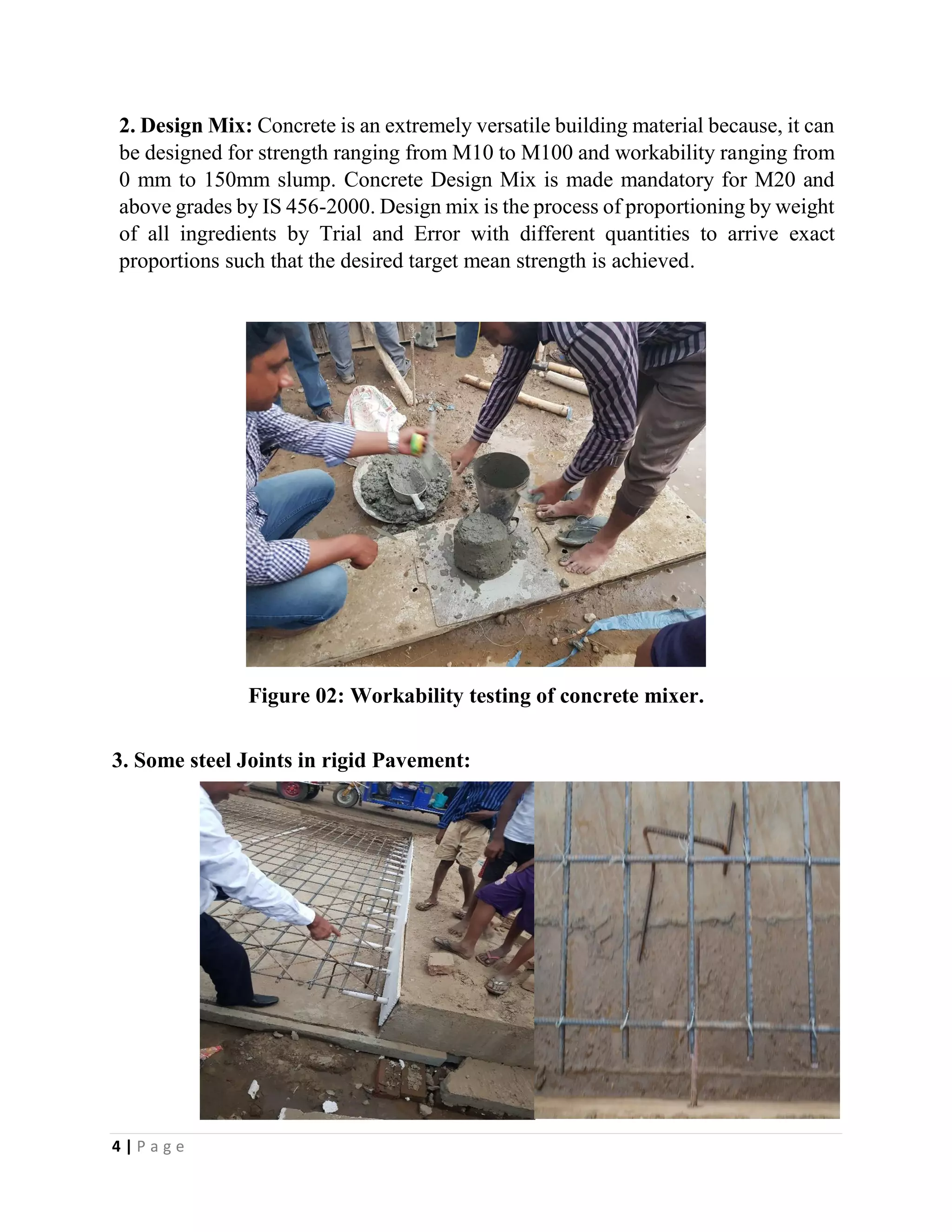
Figure 02: Workability testing of concrete mixer.
3. Some steel Joints in rigid Pavement:
5 | P a g e
Figure 03: Different types of steel joints
4. Application of Concrete mixer:
Figure 04: Concrete mixer is
being applied over the
compacted surface.
6 | P a g e
5. Compaction: Compaction is the process which expels entrapped air from
freshly placed concrete and packs the aggregate particles together so as to achieve
maximum strength, increase the density, abrasion resistance and durability of
concrete, also decreases the permeability and reduction of honey combing and
blowholes on the surface of concrete, helps to minimise its shrinkage-and-creep
characteristics.
Figure 05: Compaction
of concrete mixer.
Surface vibrators (Double beam Screed Vibrators), Immersion Vibrators (Pin,
Needle), Plate Vibrators shall be used for compaction of concrete. It has to be
checked that no extra water or bleeding shall occur on the top surface of concrete.
Excessive water at the top will make the top surface very weak and there will be
more abrasion (IRC:SP:20-2002). Use of vibrator near side forms is essential to
eliminate honey combing.
6. Finishing of concrete pavement slab:
Figure 06: Concrete slab
finishing.
7 | P a g e
Conclusion
The speciality of this rigid pavement construction is that here reinforcement only
used for controlling temperature and shrinkage effects. This site visit surely
enhanced our knowledge and helped us to compare between what we studied and
how it is practically implemented. Apart from the experience, it also seems like a
good place to talk to some of the people involved to get more insight on this field.
The whole scenario can change after the completion of the project. The suffering of
the locals will be reduced greatly.
References
1. http://rhd.portal.gov.bd/
2. http://www.rthd.gov.bd/gob_major_projects.php
3. https://www.dhakatribune.com/bangladesh/2016/04/05/sylhet-companyganj-
bholaganj-road-nightmare-commuters
4. https://www.highwayengineers.org/rigid-pavement-construction/

Field visit report 2019

  • 1.
    A Report onRigid Pavement Construction Site of Sylhet - Bholaganj Road SUBMITTED BY: GROUP NO. 03 Submitted To, Dr. Md. Jahir Bin Alam Professor Dept. of CEE, SUST Mohammad Rafiqul Islam Assistant Professor Dept. of CEE, SUST SHAHJALAL UNIVERSITY OF SCIENCE AND TECHNOLOGY, SYLHET Course No.: CEE 436 Course Title: Field Work for Engineers
  • 2.
    Members Recognition Group No.03 Registration No. Name 2015333005 Warda Jannat Juhin 2015333014 Raihan Uddin Ahmed 2015333016 Swarna Akter 2015333029 Sk. Md. Towhidul Islam 2015333043 Enan Ahmed 2015333045 Nirob Ahmed 2015333047 Nawshin Haque 2015333053 Plai Frue 2015333055 Rahul Das 2015333064 Akikur Rahman Borolaskar 2015333071 Md. Sohel Molla 2015333074 Md. Raju Ahmed
  • 3.
  • 4.
    1 | Pa g e Introduction Field visits are important part of learning. Visiting a construction project or design office allows us as a student to develop a greater understanding of how Civil Engineering theories are put into practice. We were given the opportunity of a field visit as a part of our course Field Work for Engineers (CEE-436) by our course teachers Professor Dr. Md. Jahir Bin Alam sir and Assistant Professor Mohammad Rafiqul Islam sir. We visited the rigid pavement construction site of Sylhet- Bholaganj road. Group Photo with our respected teacher and authorities of the project of RHD We visited the site on 30th March, 2019. On Due date, we the students of CEE 21st batch along with our respected teacher gathered at Gol Chottor, SUST and started our journey with a bus from SUST campus.
  • 5.
    2 | Pa g e We were given a short brief about the project after we reached there. Objectives The main objectives are: 1. To observe the different activities and techniques carried out on site. 2. To explore the various types of construction process. 3. To have a feel of how the condition of the site really is and how safety is a priority. 4. To have an up-close view of the entire rigid pavement construction as opposed to seeing it in the drawings. 5. To develop our report writing skills. Observations The Roads and Highways Department (RHD) Sylhet has recently started construction of the Sylhet-Companiganj-Bholaganj road. The Executive Committee
  • 6.
    3 | Pa g e of the National Economic Council (ECNEC) approved Tk 4.41 billion for the road construction project on April 7, 2015. It is a huge project and would substantially end sufferings of the local people. Transporting stones from the country's largest quarry at Bholaganj on the Meghalayan border had been hampering since long due to the dilapidated condition of the busy road. Thousands of visitors who come to visit Bholaganj and Bisnakandi tourist locations every year will also be benefited. The project is set to be completed by July 2019 (as predicted at the start of the project). 13 km length of road of the project would be rigid pavement spending Tk 1780 million. Works that we have witnessed at the construction site of rigid pavement: 1. Preparation of subgrade: The materials and their specifications for base, sub- base and subgrade preparation shall be as per IRC:15. The camber and super elevation of subgrade shall be same as that of the concrete slabs. The thickness of subgrade shall be 150-300 mm. If the k value of the subgrade tested under wet condition is less than 6 kg/cm^2(Aprox.CBR Value 15%), the cement concrete pavement should not be laid directly over the subgrade. A sub-base layer may be provided. Hence, poor clayey soil was removed and then a layer of sandy soil was compacted along the road surface. Figure 01: A sub-base layer compaction.
  • 7.
    4 | Pa g e 2. Design Mix: Concrete is an extremely versatile building material because, it can be designed for strength ranging from M10 to M100 and workability ranging from 0 mm to 150mm slump. Concrete Design Mix is made mandatory for M20 and above grades by IS 456-2000. Design mix is the process of proportioning by weight of all ingredients by Trial and Error with different quantities to arrive exact proportions such that the desired target mean strength is achieved. Figure 02: Workability testing of concrete mixer. 3. Some steel Joints in rigid Pavement:
  • 8.
    5 | Pa g e Figure 03: Different types of steel joints 4. Application of Concrete mixer: Figure 04: Concrete mixer is being applied over the compacted surface.
  • 9.
    6 | Pa g e 5. Compaction: Compaction is the process which expels entrapped air from freshly placed concrete and packs the aggregate particles together so as to achieve maximum strength, increase the density, abrasion resistance and durability of concrete, also decreases the permeability and reduction of honey combing and blowholes on the surface of concrete, helps to minimise its shrinkage-and-creep characteristics. Figure 05: Compaction of concrete mixer. Surface vibrators (Double beam Screed Vibrators), Immersion Vibrators (Pin, Needle), Plate Vibrators shall be used for compaction of concrete. It has to be checked that no extra water or bleeding shall occur on the top surface of concrete. Excessive water at the top will make the top surface very weak and there will be more abrasion (IRC:SP:20-2002). Use of vibrator near side forms is essential to eliminate honey combing. 6. Finishing of concrete pavement slab: Figure 06: Concrete slab finishing.
  • 10.
    7 | Pa g e Conclusion The speciality of this rigid pavement construction is that here reinforcement only used for controlling temperature and shrinkage effects. This site visit surely enhanced our knowledge and helped us to compare between what we studied and how it is practically implemented. Apart from the experience, it also seems like a good place to talk to some of the people involved to get more insight on this field. The whole scenario can change after the completion of the project. The suffering of the locals will be reduced greatly. References 1. http://rhd.portal.gov.bd/ 2. http://www.rthd.gov.bd/gob_major_projects.php 3. https://www.dhakatribune.com/bangladesh/2016/04/05/sylhet-companyganj- bholaganj-road-nightmare-commuters 4. https://www.highwayengineers.org/rigid-pavement-construction/