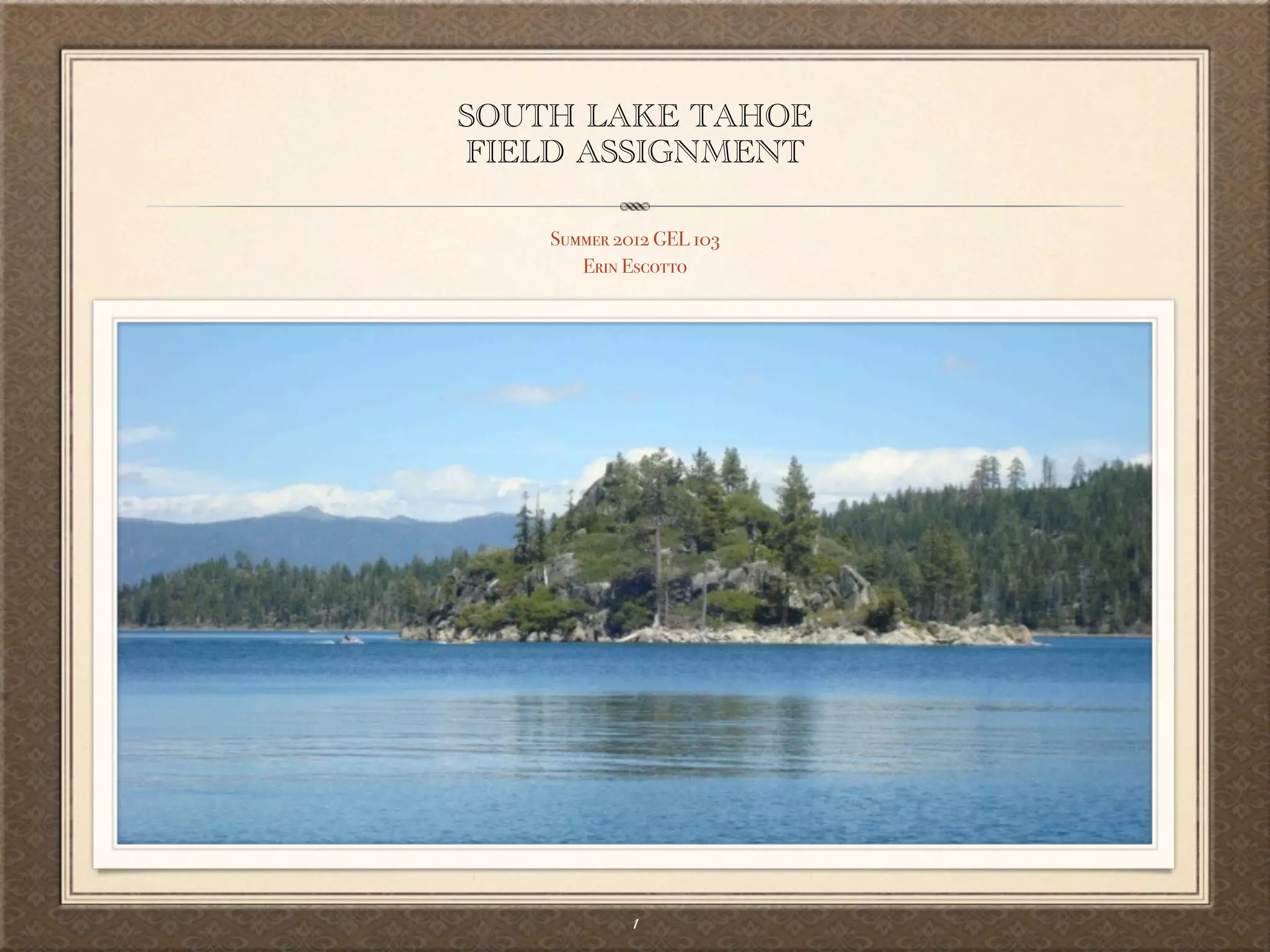
SOUTH LAKE TAHOE
FIELD ASSIGNMENT

    Summer 2012 GEL 103
       Erin Escotto


             1
TABLE OF CONTENTS
Introduction of South Lake Tahoe

Rocks: Granite & Quartz

Plants: Snow Plant & Ponderosa Pine

Animals: Raccoon & Black Bear

Mans footprint left behind

Closing

Resources
                             2
THE ROCKS, MINERALS, FOSSIL RECORDS NATURAL
      HISTORY AND WILDLIFE HABITATS ARE BUT AN
     OVERVIEW TO MILLIONS OF YEARS OF GEOLOGIC
  DATA THAT RELATES TO THE TAHOE BASIN AND THE
    FORMATION OF THE SIERRA NEVADA MOUNTAINS.
     LOCATED ON THE CALIFORNIA-NEVADA BORDER,
   LAKE TAHOE IS THE SECOND LARGEST ALPINE LAKE
  IN THE WORLD. AT AN ELEVATION OF 6,229 FEET THE
    WATER IS CLEAR AND BLUE AND HOST TO A HUGE
    VARIETY OF PLANT AND ANIMAL LIFE. AS MASSIVE
    TECTONIC COLLISIONS OCCURRED THE LANDMASS
      KNOWN TODAY AS CALIFORNIA WAS FORMED.
  ABOUT 170 MILLION YEARS AGO THE SEA FLOOR ROSE
  TO CREATE MOUNTAINS AND MOUNTAINS FELL INTO
   THE SEA. VOLCANIC ACTIVITY ALSO HELPED IN THE
  CREATION OF THE SIERRA NEVADA MOUNTAINS AND
               THE LAKE TAHOE BASIN.


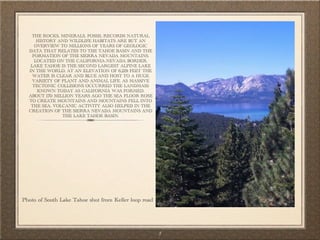
Photo of South Lake Tahoe shot from Keller loop road


                                                       3
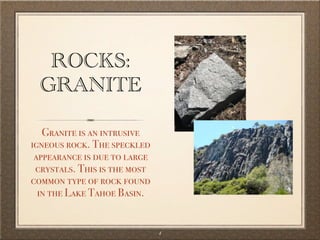
ROCKS:
  GRANITE

   Granite is an intrusive
igneous rock. The speckled
 appearance is due to large
 crystals. This is the most
common type of rock found
  in the Lake Tahoe Basin.


                              4
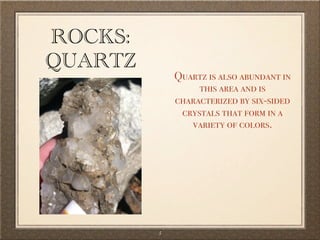
ROCKS:
QUARTZ
             Quartz is also abundant in
                  this area and is
             characterized by six-sided
              crystals that form in a
                variety of colors.


         5
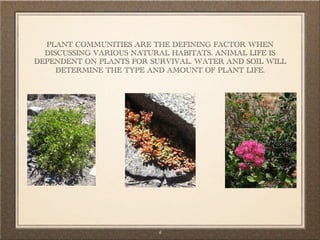
PLANT COMMUNITIES ARE THE DEFINING FACTOR WHEN
  DISCUSSING VARIOUS NATURAL HABITATS. ANIMAL LIFE IS
DEPENDENT ON PLANTS FOR SURVIVAL. WATER AND SOIL WILL
     DETERMINE THE TYPE AND AMOUNT OF PLANT LIFE.


                          6
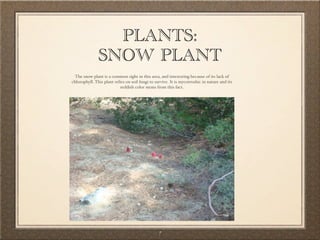
PLANTS:
               SNOW PLANT
 The snow plant is a common sight in this area, and interesting because of its lack of
chlorophyll. This plant relies on soil fungi to survive. It is mycotroshic in nature and its
                           reddish color stems from this fact.


                                                  7
PLANTS:
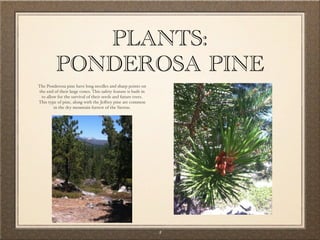
          PONDEROSA PINE
The Ponderosa pine have long needles and sharp points on
the end of their large cones. This safety feature is built in
 to allow for the survival of their seeds and future trees.
This type of pine, along with the Jeffrey pine are common
        in the dry mountain forrest of the Sierras.


                                                                8
Animals:
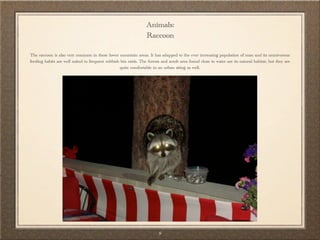
                                                                 Raccoon

The raccoon is also very common in these lower mountain areas. It has adapped to the ever increasing population of man and its omnivorous
feeding habits are well suited to frequent rubbish bin raids. The forests and scrub area found close to water are its natural habitat, but they are
                                                  quite comfortable in an urban siting as well.


                                                                        9
Animals:
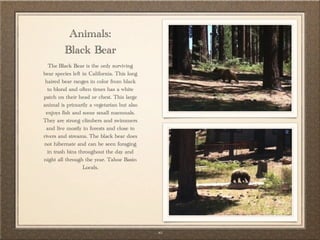
         Black Bear
  The Black Bear is the only surviving
bear species left in California. This long
 haired bear ranges in color from black
  to blond and often times has a white
patch on their head or chest. This large
animal is primarily a vegetarian but also
 enjoys fish and some small mammals.
They are strong climbers and swimmers
 and live mostly in forests and close to
rivers and streams. The black bear does
not hibernate and can be seen foraging
  in trash bins throughout the day and
night all through the year. Tahoe Basin
                  Locals.


                                             10
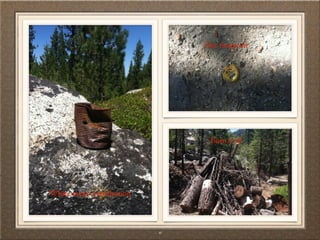
Our footprint


                                Burn it all


White mans contribution


                          11
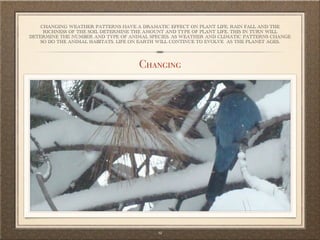
CHANGING WEATHER PATTERNS HAVE A DRAMATIC EFFECT ON PLANT LIFE. RAIN FALL AND THE
     RICHNESS OF THE SOIL DETERMINE THE AMOUNT AND TYPE OF PLANT LIFE. THIS IN TURN WILL
DETERMINE THE NUMBER AND TYPE OF ANIMAL SPECIES. AS WEATHER AND CLIMATIC PATTERNS CHANGE
    SO DO THE ANIMAL HABITATS. LIFE ON EARTH WILL CONTINUE TO EVOLVE AS THE PLANET AGES.


                                    Changing


                                           12
RESOURCES


Escotto, Erin M. 2012. Photos. South Lake Tahoe.

Lyon, James, Tony Wheeler, Marisa Gierlich, Nancy Keller,
and John Gottberg. California & Nevada. Hawthorn: Lonely
Planet Publications, 1996. N. pag. Print.

 Richard, Bryan. A field guide to the wildlife of north
america. N.p.: Atlantic Publishing, 2009. N. pag. Print.


                             13

Field assignment-Escotto

  • 1.
    SOUTH LAKE TAHOE FIELDASSIGNMENT Summer 2012 GEL 103 Erin Escotto 1
  • 2.
    TABLE OF CONTENTS Introductionof South Lake Tahoe Rocks: Granite & Quartz Plants: Snow Plant & Ponderosa Pine Animals: Raccoon & Black Bear Mans footprint left behind Closing Resources 2
  • 3.
    THE ROCKS, MINERALS,FOSSIL RECORDS NATURAL HISTORY AND WILDLIFE HABITATS ARE BUT AN OVERVIEW TO MILLIONS OF YEARS OF GEOLOGIC DATA THAT RELATES TO THE TAHOE BASIN AND THE FORMATION OF THE SIERRA NEVADA MOUNTAINS. LOCATED ON THE CALIFORNIA-NEVADA BORDER, LAKE TAHOE IS THE SECOND LARGEST ALPINE LAKE IN THE WORLD. AT AN ELEVATION OF 6,229 FEET THE WATER IS CLEAR AND BLUE AND HOST TO A HUGE VARIETY OF PLANT AND ANIMAL LIFE. AS MASSIVE TECTONIC COLLISIONS OCCURRED THE LANDMASS KNOWN TODAY AS CALIFORNIA WAS FORMED. ABOUT 170 MILLION YEARS AGO THE SEA FLOOR ROSE TO CREATE MOUNTAINS AND MOUNTAINS FELL INTO THE SEA. VOLCANIC ACTIVITY ALSO HELPED IN THE CREATION OF THE SIERRA NEVADA MOUNTAINS AND THE LAKE TAHOE BASIN. Photo of South Lake Tahoe shot from Keller loop road 3
  • 4.
    ROCKS: GRANITE Granite is an intrusive igneous rock. The speckled appearance is due to large crystals. This is the most common type of rock found in the Lake Tahoe Basin. 4
  • 5.
    ROCKS: QUARTZ Quartz is also abundant in this area and is characterized by six-sided crystals that form in a variety of colors. 5
  • 6.
    PLANT COMMUNITIES ARETHE DEFINING FACTOR WHEN DISCUSSING VARIOUS NATURAL HABITATS. ANIMAL LIFE IS DEPENDENT ON PLANTS FOR SURVIVAL. WATER AND SOIL WILL DETERMINE THE TYPE AND AMOUNT OF PLANT LIFE. 6
  • 7.
    PLANTS: SNOW PLANT The snow plant is a common sight in this area, and interesting because of its lack of chlorophyll. This plant relies on soil fungi to survive. It is mycotroshic in nature and its reddish color stems from this fact. 7
  • 8.
    PLANTS: PONDEROSA PINE The Ponderosa pine have long needles and sharp points on the end of their large cones. This safety feature is built in to allow for the survival of their seeds and future trees. This type of pine, along with the Jeffrey pine are common in the dry mountain forrest of the Sierras. 8
  • 9.
    Animals: Raccoon The raccoon is also very common in these lower mountain areas. It has adapped to the ever increasing population of man and its omnivorous feeding habits are well suited to frequent rubbish bin raids. The forests and scrub area found close to water are its natural habitat, but they are quite comfortable in an urban siting as well. 9
  • 10.
    Animals: Black Bear The Black Bear is the only surviving bear species left in California. This long haired bear ranges in color from black to blond and often times has a white patch on their head or chest. This large animal is primarily a vegetarian but also enjoys fish and some small mammals. They are strong climbers and swimmers and live mostly in forests and close to rivers and streams. The black bear does not hibernate and can be seen foraging in trash bins throughout the day and night all through the year. Tahoe Basin Locals. 10
  • 11.
    Our footprint Burn it all White mans contribution 11
  • 12.
    CHANGING WEATHER PATTERNSHAVE A DRAMATIC EFFECT ON PLANT LIFE. RAIN FALL AND THE RICHNESS OF THE SOIL DETERMINE THE AMOUNT AND TYPE OF PLANT LIFE. THIS IN TURN WILL DETERMINE THE NUMBER AND TYPE OF ANIMAL SPECIES. AS WEATHER AND CLIMATIC PATTERNS CHANGE SO DO THE ANIMAL HABITATS. LIFE ON EARTH WILL CONTINUE TO EVOLVE AS THE PLANET AGES. Changing 12
  • 13.
    RESOURCES Escotto, Erin M.2012. Photos. South Lake Tahoe. Lyon, James, Tony Wheeler, Marisa Gierlich, Nancy Keller, and John Gottberg. California & Nevada. Hawthorn: Lonely Planet Publications, 1996. N. pag. Print. Richard, Bryan. A field guide to the wildlife of north america. N.p.: Atlantic Publishing, 2009. N. pag. Print. 13

Editor's Notes