Lawyers | Patent and Trade-mark Agents

                                   MaRS Centre, 101 College Street, #120E
                                                   Toronto, ON M5G 1L7


June 17, 2011

lawTechcamp 2011

An Open and Non-Traditional Analysis of
Intellectual Property Law

Felix Tang, B.A.Sc. (Eng. Sci.), M.A.Sc., LL.B.
Lawyer & Engineer
Goals
●   Practical IP information and strategies
    ●   i.e. “Business Strategy Drives IP Strategy”


●   Future issues to consider?
    ●   i.e. Openness, Sharing, Our digital lives...
I. Business Goals
●   Clearly understand your business goals
    ●   Create value through innovation.
    ●   How do you protect that value?

●   Phase 1: IP Administration
    ●   Creation of IP assets
●   Phase 2: IP Management
    ●   Creating economic benefits from IP
What is IP?
●   IP protects the intangible assets of your
    business
    ●   Brand, inventions, software, know-how
●   IP used to accomplish strategic goals
    ●   Competitive advantage
    ●   Tick IP box to get funding
●   Jurisdiction – each country is separate
●   How to select type of IP protection?
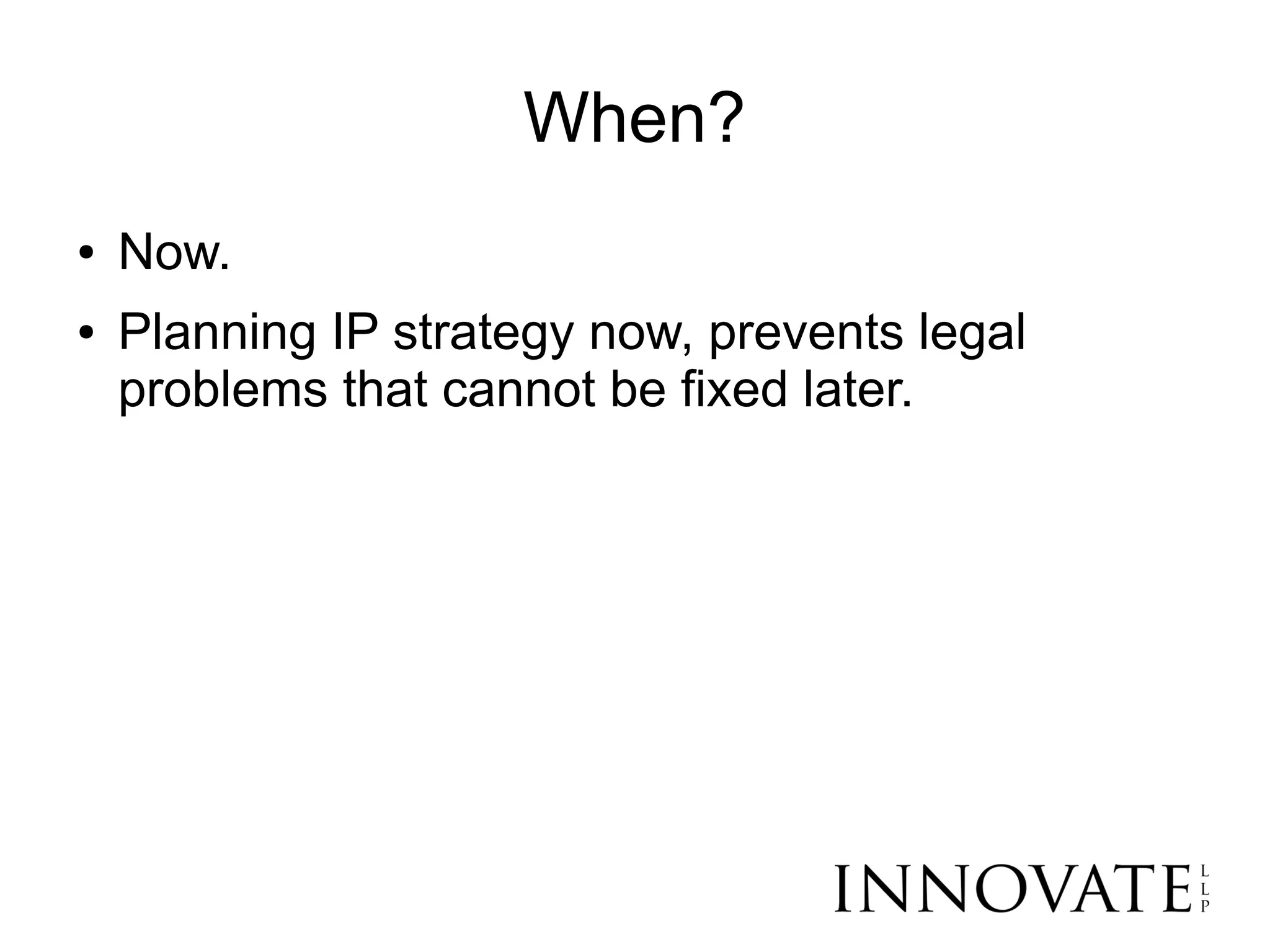
When?
●   Now.
●   Planning IP strategy now, prevents legal
    problems that cannot be fixed later.
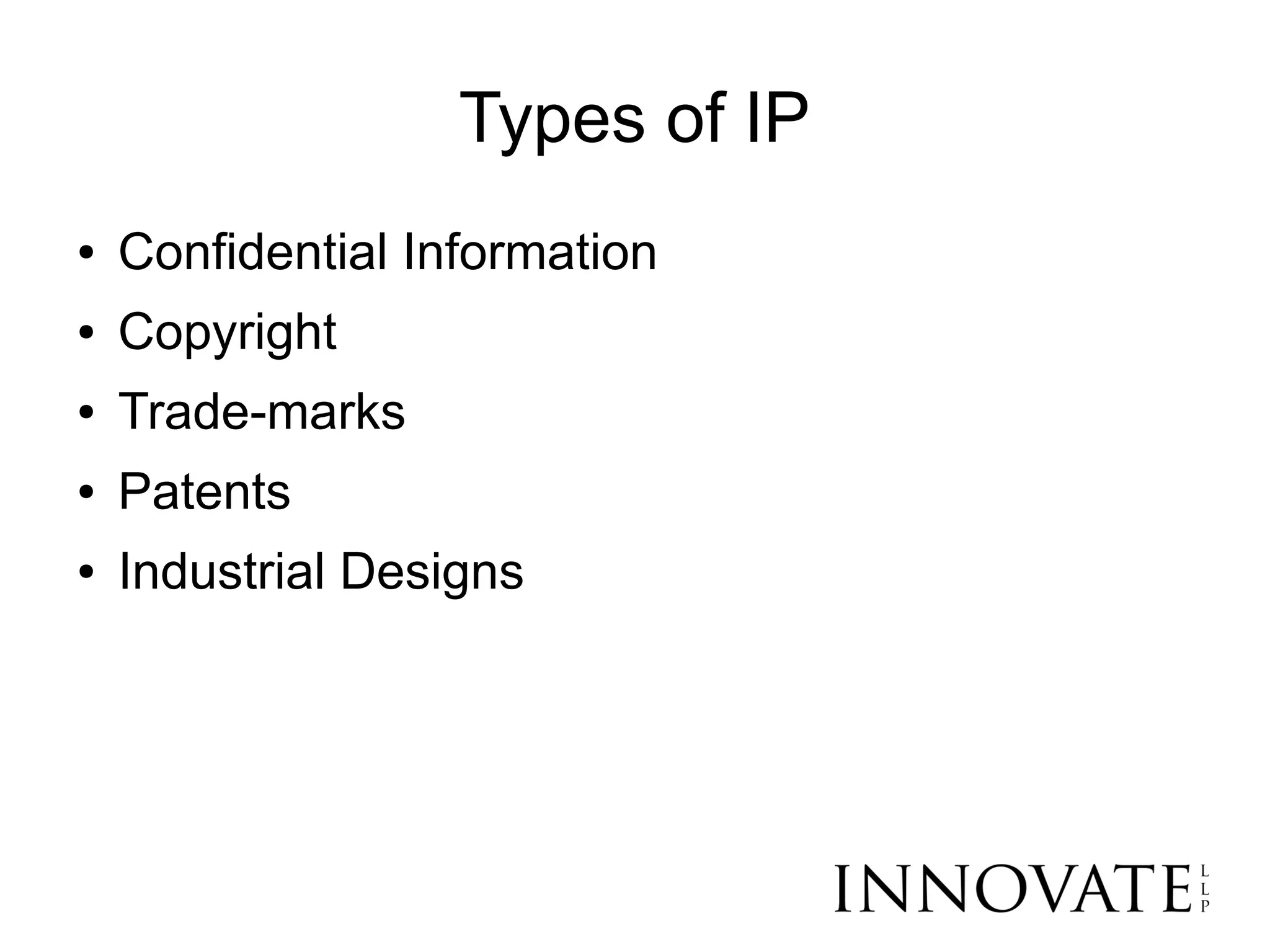
Types of IP
●   Confidential Information
●   Copyright
●   Trade-marks
●   Patents
●   Industrial Designs
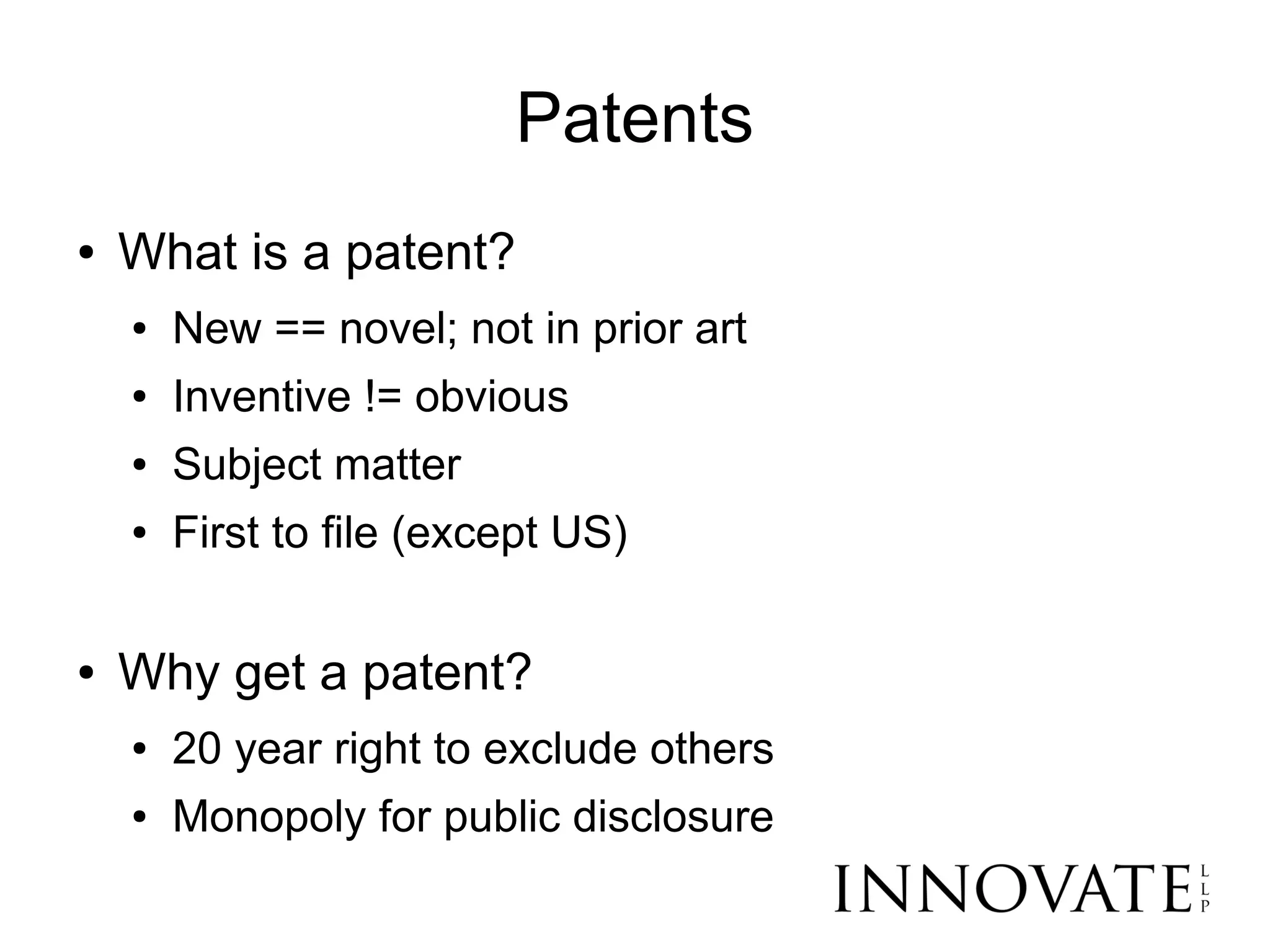
Patents
●   What is a patent?
    ●   New == novel; not in prior art
    ●   Inventive != obvious
    ●   Subject matter
    ●   First to file (except US)

●   Why get a patent?
    ●   20 year right to exclude others
    ●   Monopoly for public disclosure
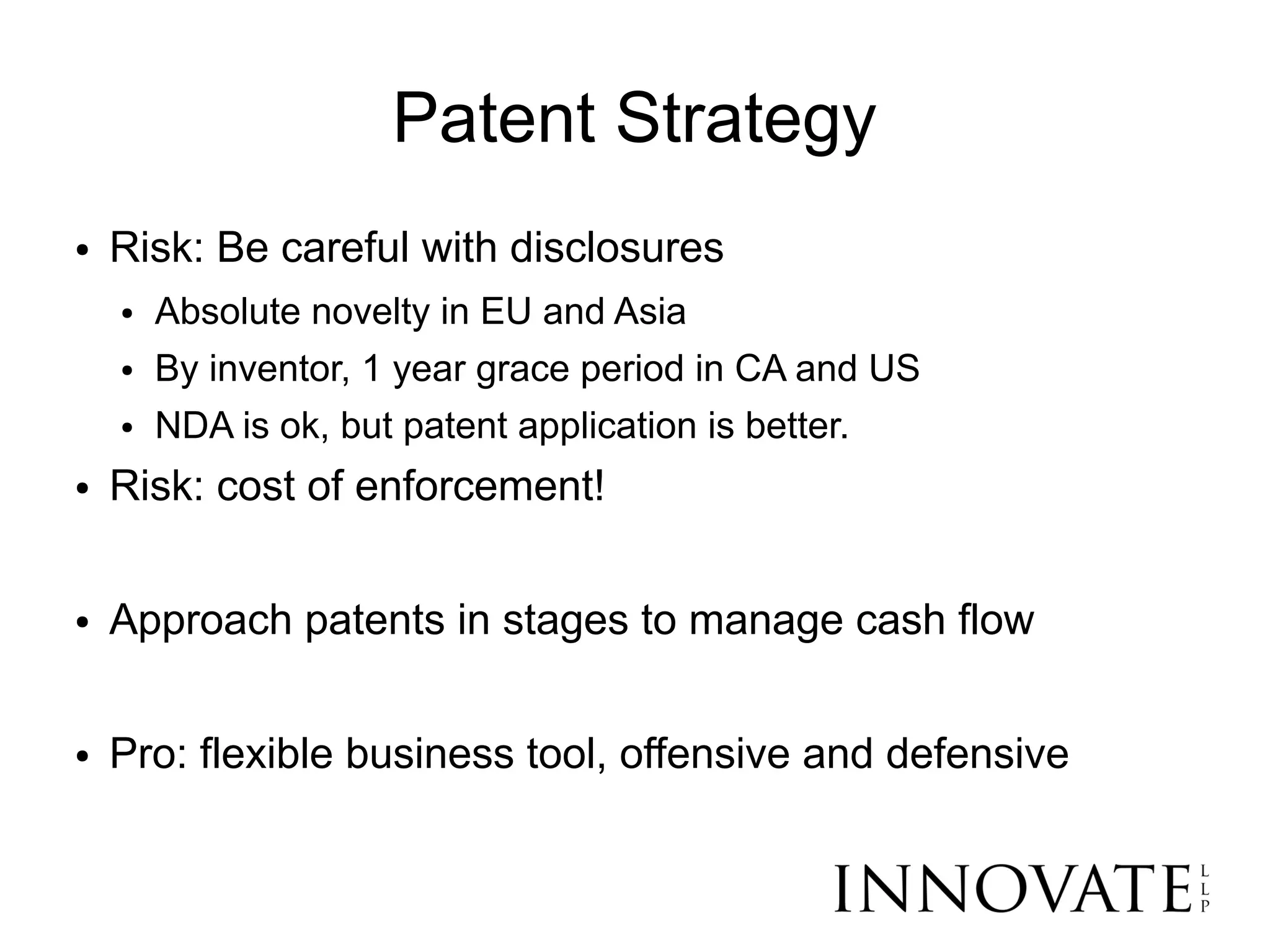
Patent Strategy
●   Risk: Be careful with disclosures
    ●   Absolute novelty in EU and Asia
    ●   By inventor, 1 year grace period in CA and US
    ●   NDA is ok, but patent application is better.
●   Risk: cost of enforcement!

●   Approach patents in stages to manage cash flow

●   Pro: flexible business tool, offensive and defensive
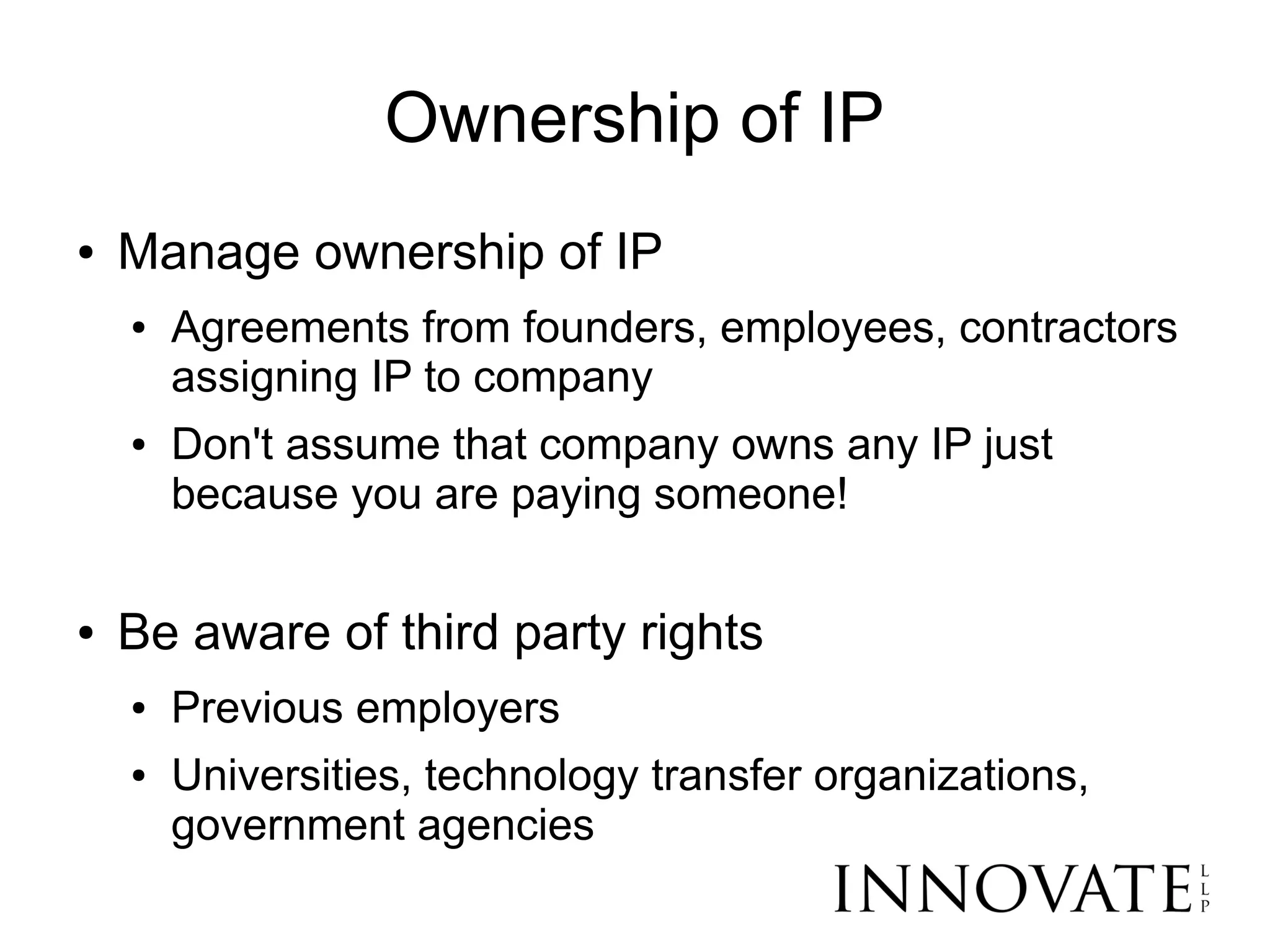
Ownership of IP
●   Manage ownership of IP
    ●   Agreements from founders, employees, contractors
        assigning IP to company
    ●   Don't assume that company owns any IP just
        because you are paying someone!

●   Be aware of third party rights
    ●   Previous employers
    ●   Universities, technology transfer organizations,
        government agencies
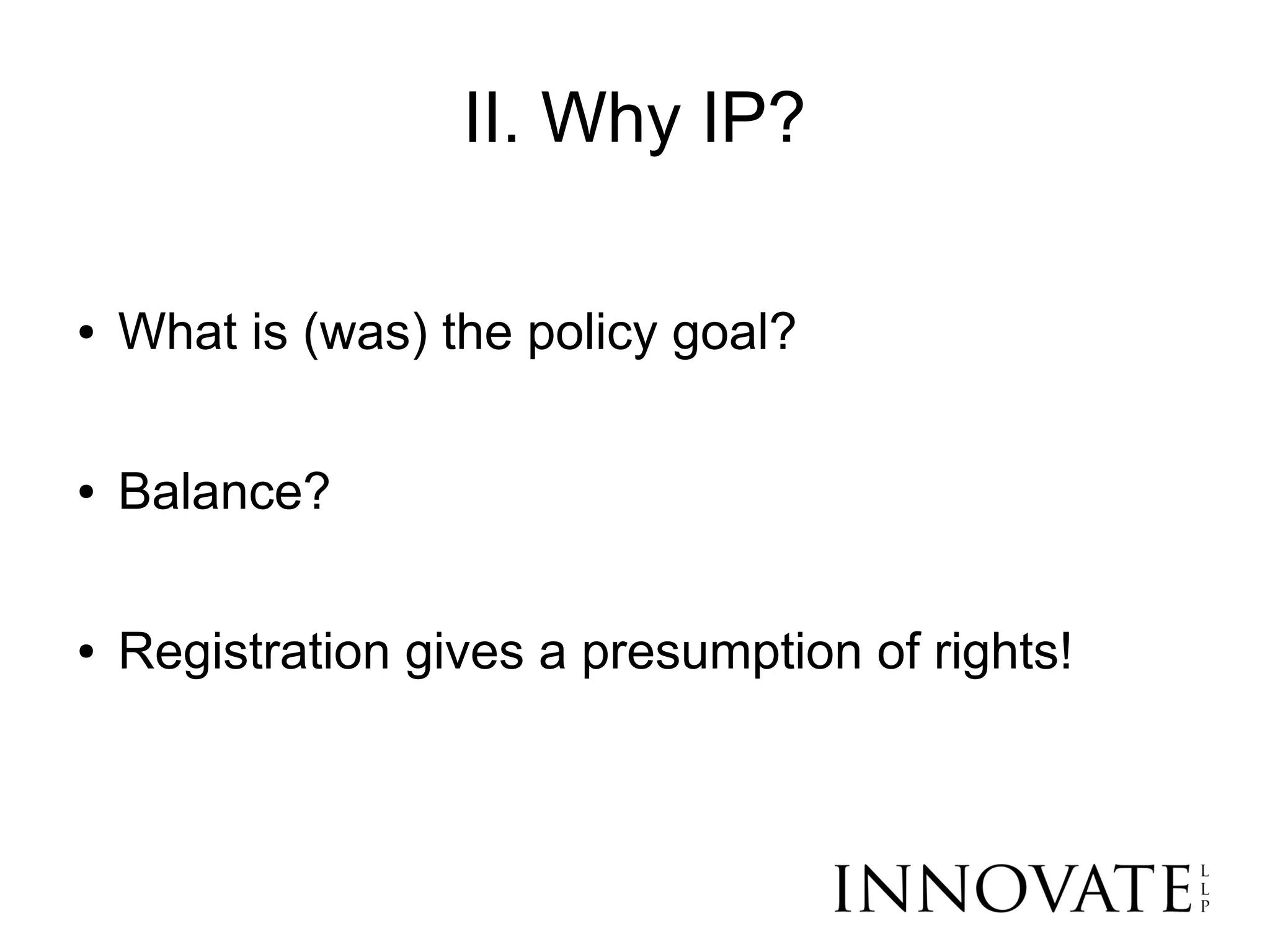
II. Why IP?

●   What is (was) the policy goal?

●   Balance?

●   Registration gives a presumption of rights!
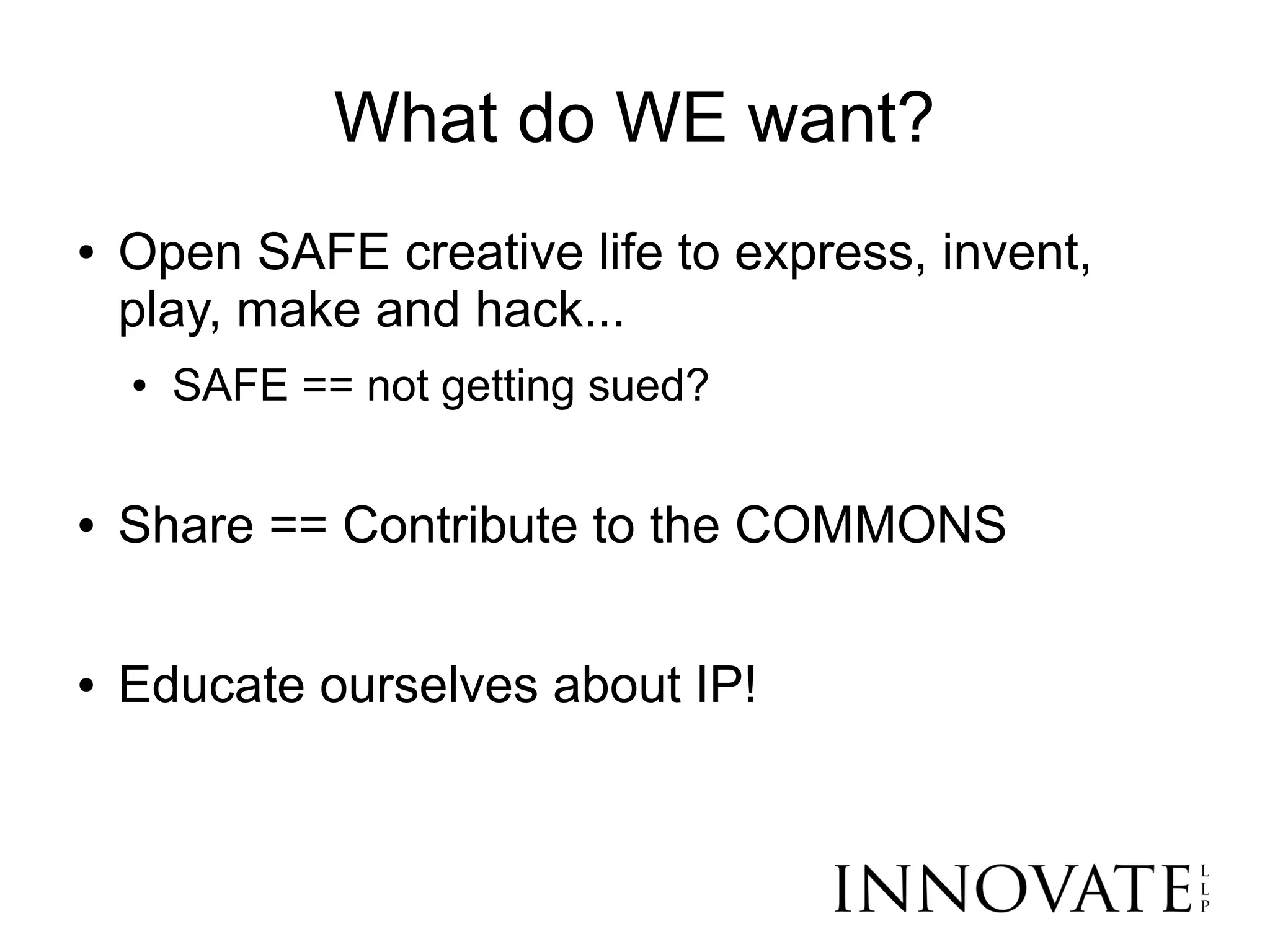
What do WE want?
●   Open SAFE creative life to express, invent,
    play, make and hack...
    ●   SAFE == not getting sued?

●   Share == Contribute to the COMMONS

●   Educate ourselves about IP!
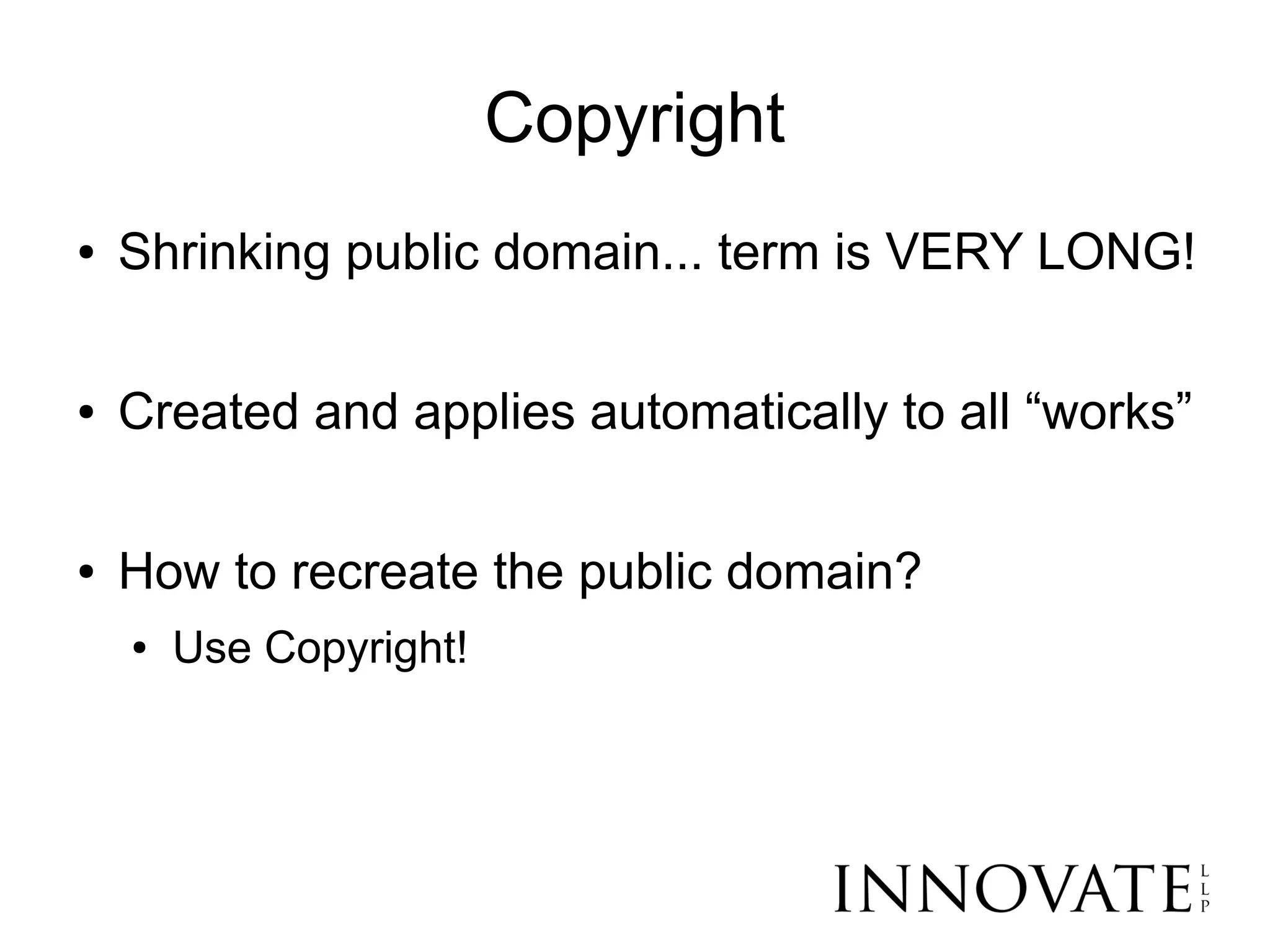
Copyright
●   Shrinking public domain... term is VERY LONG!

●   Created and applies automatically to all “works”

●   How to recreate the public domain?
    ●   Use Copyright!
License
●   License == Contract

●   Contract == an agreement, a tool

●   Contract to use copyright protected material

●   Open Source && Creative Commons
Patents
●   Goal: Prevent patent from issuing

●   How: ANTICIPATION – attack novelty

●   Practically: PUBLICLY DOCUMENT
    EVERYTHING
    ●   I don't want anyone to patent it.
Trade-marks
●   “Genericide” == death by a thousand cuts

●   Not really an issue, even trade dress, unless
    out of balance or commercial USE

●   Overzealous demands? Channels of trade is
    limiting.
Open Source Hardware
●   Interesting issues... copyright + industrial
    design + trade dress + patents !!!

●   Copyright applies to practically all the plans to
    make the hardware. But not the hardware itself.

●   What about patents? New or existing? Patent
    pools...
Industrial Design
●   I believe will become more important because
    of 3D printing.

●   “design” or “industrial design” means features of
    shape, configuration, pattern or ornament and
    any combination of those features that, in a
    finished article, appeal to and are judged solely
    by the eye;
Trolls / NPE
●   Are you making a lot of $$$?

●   If not, don't worry too much.
    ●   Actually not true anymore... they like small “weak”
        targets!
Demand Letter
●   Is a threatening letter BUT...

●   Be careful. Don't say anything, especially in
    writing.

●   “without prejudice”
What can I do?
●   Always negotiate!

●   Are you infringing? Why? Be honest with
    yourself.

●   Be prepared to have your bluff called, if you try
    to call their bluff. Litigation == EXPENSIVE
General Strategy
●   Marketing and advertising == tell a story that
    the public understands and relates to

●   Help create a “Streisand effect”

●   Don't be intimidated! Don't be naive!
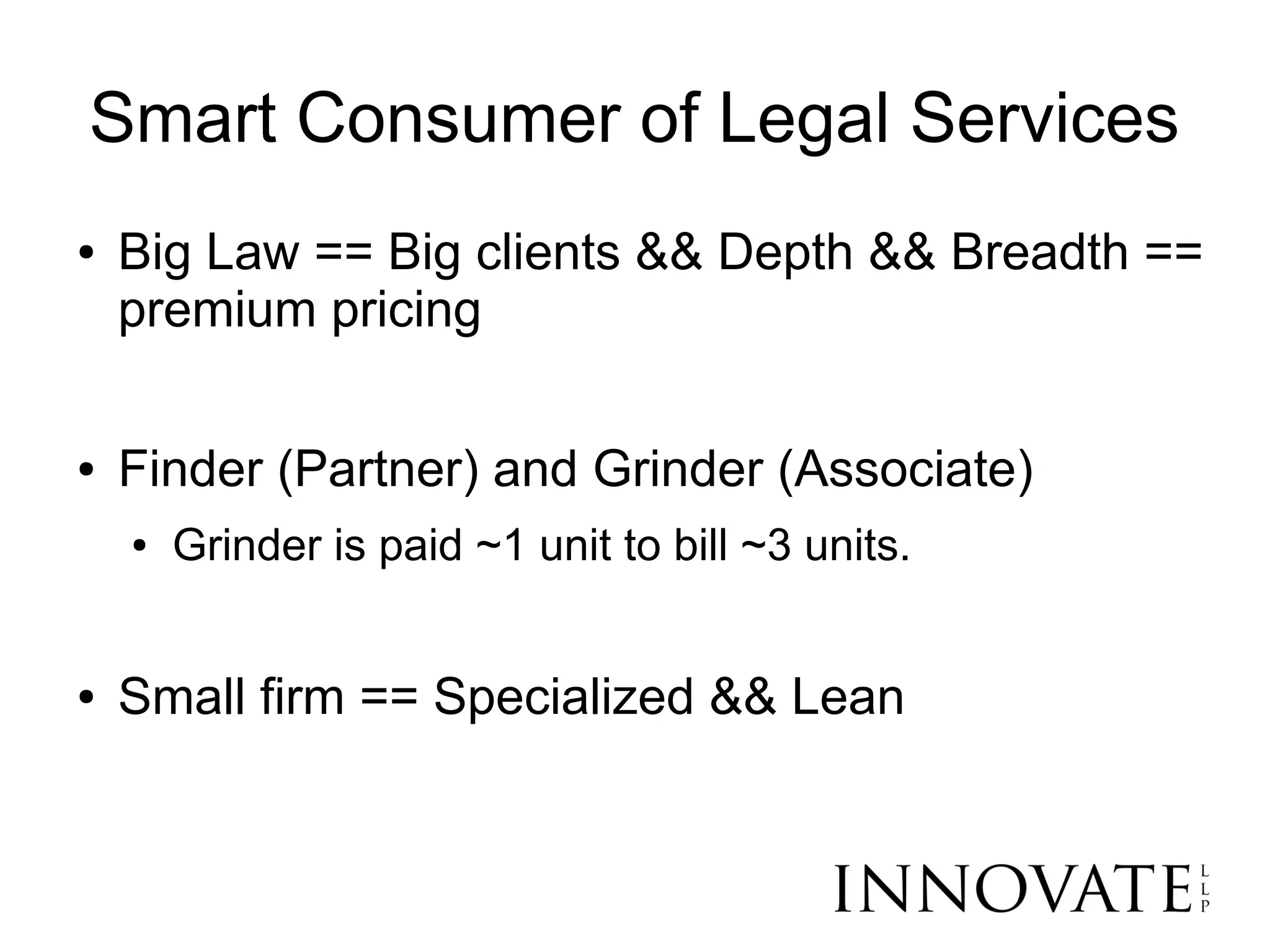
Smart Consumer of Legal Services
●   Big Law == Big clients && Depth && Breadth ==
    premium pricing

●   Finder (Partner) and Grinder (Associate)
    ●   Grinder is paid ~1 unit to bill ~3 units.


●   Small firm == Specialized && Lean
What can I ask my Lawyer?
●   Understanding of your business.

●   Who is doing the work? Estimate? Range?

●   Breakout bill: work done, hours, who.

●   Challenge bill: Court Assessment Office
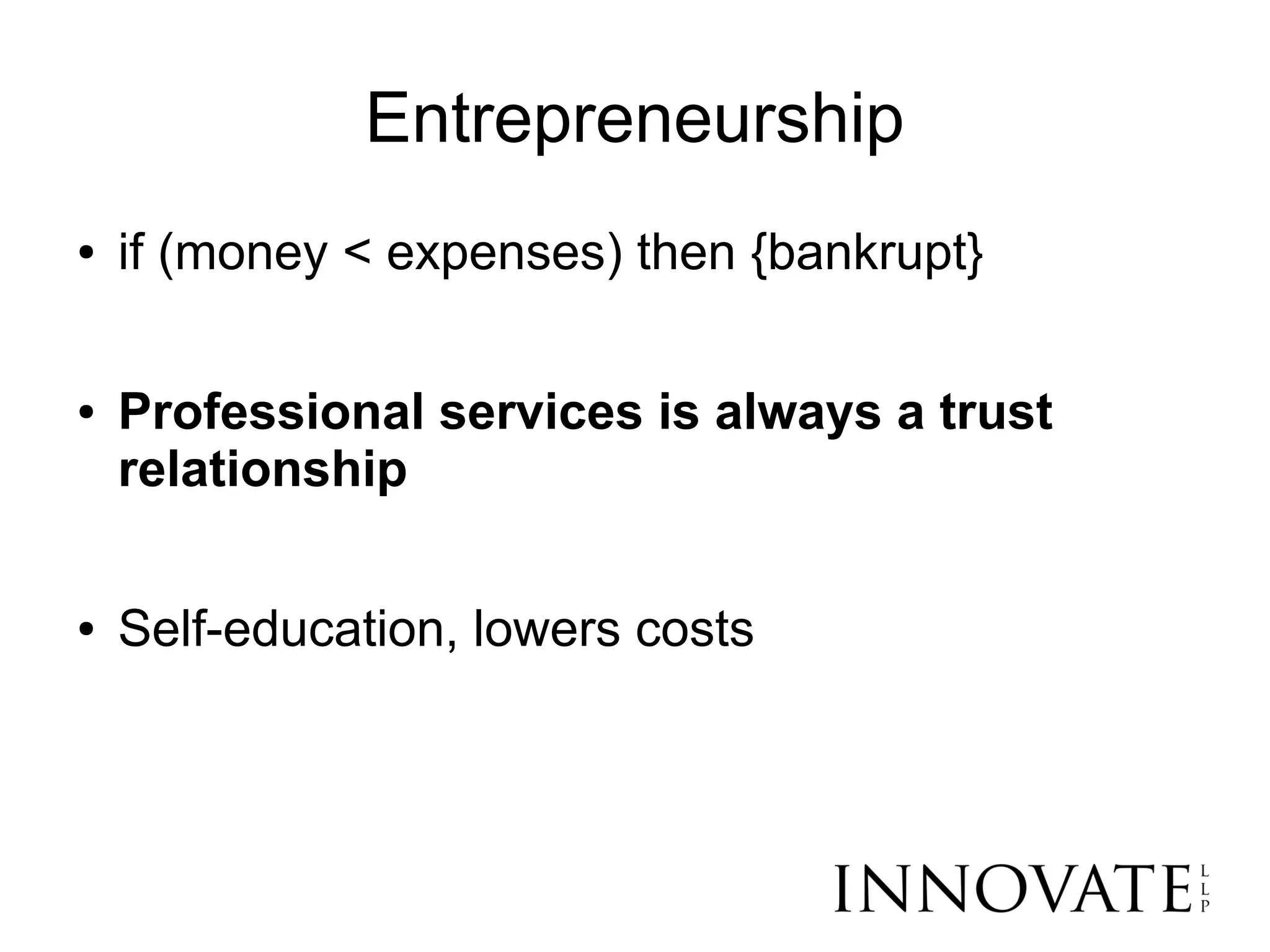
Entrepreneurship
●   if (money < expenses) then {bankrupt}

●   Professional services is always a trust
    relationship

●   Self-education, lowers costs
Lawyers | Patent and Trade-mark Agents

                              MaRS Centre, 101 College Street, #120E
                                              Toronto, ON M5G 1L7


Thank you!

Remember: This is information, not legal advice.

Felix Tang, Lawyer & Engineer

felix.tang@innovatellp.com
@felixstang
1.888.433.2030

Felix Tang Innovate LLP lawTechCamp

  • 1.
    Lawyers | Patentand Trade-mark Agents MaRS Centre, 101 College Street, #120E Toronto, ON M5G 1L7 June 17, 2011 lawTechcamp 2011 An Open and Non-Traditional Analysis of Intellectual Property Law Felix Tang, B.A.Sc. (Eng. Sci.), M.A.Sc., LL.B. Lawyer & Engineer
  • 2.
    Goals ● Practical IP information and strategies ● i.e. “Business Strategy Drives IP Strategy” ● Future issues to consider? ● i.e. Openness, Sharing, Our digital lives...
  • 3.
    I. Business Goals ● Clearly understand your business goals ● Create value through innovation. ● How do you protect that value? ● Phase 1: IP Administration ● Creation of IP assets ● Phase 2: IP Management ● Creating economic benefits from IP
  • 4.
    What is IP? ● IP protects the intangible assets of your business ● Brand, inventions, software, know-how ● IP used to accomplish strategic goals ● Competitive advantage ● Tick IP box to get funding ● Jurisdiction – each country is separate ● How to select type of IP protection?
  • 5.
    When? ● Now. ● Planning IP strategy now, prevents legal problems that cannot be fixed later.
  • 6.
    Types of IP ● Confidential Information ● Copyright ● Trade-marks ● Patents ● Industrial Designs
  • 7.
    Patents ● What is a patent? ● New == novel; not in prior art ● Inventive != obvious ● Subject matter ● First to file (except US) ● Why get a patent? ● 20 year right to exclude others ● Monopoly for public disclosure
  • 8.
    Patent Strategy ● Risk: Be careful with disclosures ● Absolute novelty in EU and Asia ● By inventor, 1 year grace period in CA and US ● NDA is ok, but patent application is better. ● Risk: cost of enforcement! ● Approach patents in stages to manage cash flow ● Pro: flexible business tool, offensive and defensive
  • 9.
    Ownership of IP ● Manage ownership of IP ● Agreements from founders, employees, contractors assigning IP to company ● Don't assume that company owns any IP just because you are paying someone! ● Be aware of third party rights ● Previous employers ● Universities, technology transfer organizations, government agencies
  • 10.
    II. Why IP? ● What is (was) the policy goal? ● Balance? ● Registration gives a presumption of rights!
  • 11.
    What do WEwant? ● Open SAFE creative life to express, invent, play, make and hack... ● SAFE == not getting sued? ● Share == Contribute to the COMMONS ● Educate ourselves about IP!
  • 12.
    Copyright ● Shrinking public domain... term is VERY LONG! ● Created and applies automatically to all “works” ● How to recreate the public domain? ● Use Copyright!
  • 13.
    License ● License == Contract ● Contract == an agreement, a tool ● Contract to use copyright protected material ● Open Source && Creative Commons
  • 14.
    Patents ● Goal: Prevent patent from issuing ● How: ANTICIPATION – attack novelty ● Practically: PUBLICLY DOCUMENT EVERYTHING ● I don't want anyone to patent it.
  • 15.
    Trade-marks ● “Genericide” == death by a thousand cuts ● Not really an issue, even trade dress, unless out of balance or commercial USE ● Overzealous demands? Channels of trade is limiting.
  • 16.
    Open Source Hardware ● Interesting issues... copyright + industrial design + trade dress + patents !!! ● Copyright applies to practically all the plans to make the hardware. But not the hardware itself. ● What about patents? New or existing? Patent pools...
  • 17.
    Industrial Design ● I believe will become more important because of 3D printing. ● “design” or “industrial design” means features of shape, configuration, pattern or ornament and any combination of those features that, in a finished article, appeal to and are judged solely by the eye;
  • 18.
    Trolls / NPE ● Are you making a lot of $$$? ● If not, don't worry too much. ● Actually not true anymore... they like small “weak” targets!
  • 19.
    Demand Letter ● Is a threatening letter BUT... ● Be careful. Don't say anything, especially in writing. ● “without prejudice”
  • 20.
    What can Ido? ● Always negotiate! ● Are you infringing? Why? Be honest with yourself. ● Be prepared to have your bluff called, if you try to call their bluff. Litigation == EXPENSIVE
  • 21.
    General Strategy ● Marketing and advertising == tell a story that the public understands and relates to ● Help create a “Streisand effect” ● Don't be intimidated! Don't be naive!
  • 22.
    Smart Consumer ofLegal Services ● Big Law == Big clients && Depth && Breadth == premium pricing ● Finder (Partner) and Grinder (Associate) ● Grinder is paid ~1 unit to bill ~3 units. ● Small firm == Specialized && Lean
  • 23.
    What can Iask my Lawyer? ● Understanding of your business. ● Who is doing the work? Estimate? Range? ● Breakout bill: work done, hours, who. ● Challenge bill: Court Assessment Office
  • 24.
    Entrepreneurship ● if (money < expenses) then {bankrupt} ● Professional services is always a trust relationship ● Self-education, lowers costs
  • 25.
    Lawyers | Patentand Trade-mark Agents MaRS Centre, 101 College Street, #120E Toronto, ON M5G 1L7 Thank you! Remember: This is information, not legal advice. Felix Tang, Lawyer & Engineer felix.tang@innovatellp.com @felixstang 1.888.433.2030