Downloaded 17 times



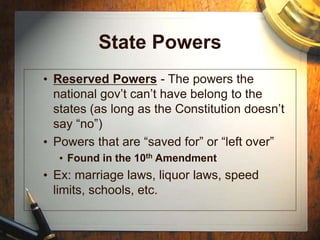
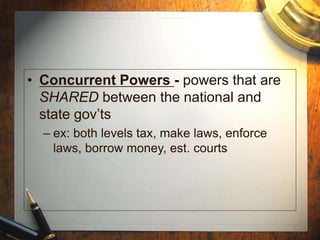
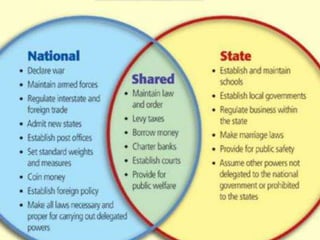
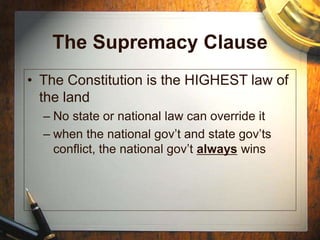
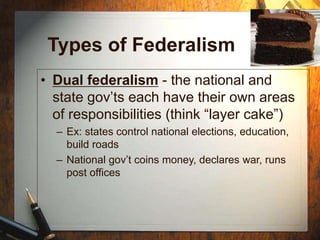



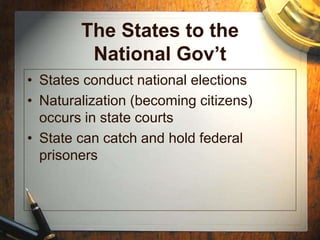




















Federalism refers to the division of power between the national and state governments. The national government has express, implied, and inherent powers granted by the Constitution. State governments have reserved powers not given to the national government according to the 10th Amendment. Some powers, like taxation and lawmaking, are concurrent between the two levels. The Supremacy Clause establishes that federal law overrides conflicting state law. Federalism takes different forms, from a strict division of powers between levels to more cooperative relationships where governments work together.


