IJRET: International Journal of Research in Engineering and Technology eISSN: 2319-1163 | pISSN: 2321-7308
__________________________________________________________________________________________
Volume: 03 Issue: 05 | May-2014, Available @ http://www.ijret.org 76
FEASIBILITY STUDY OF CONCRETE BASED PAVEMENT BY USING
FIBERS & CEMENTING WASTE MATERIALS
Abhinav S. Pawar1
, K.R. Dabhekar2
1
PG student M-tech Transportation Engineering, GHRCE, Nagpur, Maharashtra, India
2
Asst.Professor Civil Engineering Department GHRCE Nagpur, Maharashtra, India
Abstract
The main purpose of this investigation is to study the behavior of rigid pavement (concrete) which occurs when cementing waste
material (GGBS) and steel fibers are added and to compare with normal concrete of M40 grade. For this study, concrete cubes and
beams were produced of five partial GGBS replacement ratios (10%, 20%, 30%, 40% and 50%) with constant water-cement ratio
(0.37) and cement dose of 486 kg/m3
. To keep a constant workability, super plasticizer was used in concrete. The cubes and beams
were tested at the age of 7, 28 and 56 days with continuous water curing condition. The comparison between normal concrete, GGBS
concrete and with steel fiber concrete was made. After testing it was found that at 30% GGBS replacement we can get M40 strength of
concrete. But flexural strength decreases by increasing percentage of GGBS so that to increase in flexural strength steel fibers of two
different aspect ratios (7560 & 7530) was used. Steel fibers were added in concrete by 1% of total weight of concrete with different
proportions. Thus the compressive and flexural strength reached up to considerable limit.
Keywords: GGBS, Steel Fibers, concrete.
-----------------------------------------------------------------------***-------------------------------------------------------------------
1. INTRODUCTION
In India, we produce about 7.8 million tons of Ground
Granulated blast furnace slag as a bye product obtained in the
manufacture of pig iron in the blast furnace. It is a non-
metallic product consisting essentially of silicates and
aluminates of calcium and other bases. The molten slag is
rapidly chilled by quenching in water to form a glassy sand
like granulated material. The disposal of such slag even as a
waste fill is a problem and may cause serious environmental
hazards with the projected economic growth and development
in the steel industry, the amount of production is likely to
increase many folds and environmental problem. It is seen that
high volume eco-friendly replacement by such slag leads to
the development of concrete which not only utilizes the
industrial wastes but also saves a lot of natural resources and
energy. This in turn reduces the consumption of cement
2. EXPERIMENTAL PROGRAM
Compressive strengths and flexural strengths of specimens
with various percentage replacement of cement with GGBS is
determined by casting concrete cubes of size 150 mm X
150mm X 150mm and beams of size 100mm X 100mm X
500mm and testing them after 7, 28 and 56 days of curing.
Concrete use was standard (M40) grade of concrete mix.
3. CONCRETE MIX DESIGN
As per IS 10262:2009 (recommended guidelines for concrete
mix design) concrete mix design was made for M40. Table 1
shows the mix proportion for M40 mix.
Table 1 - Quantity for 1m³ concrete
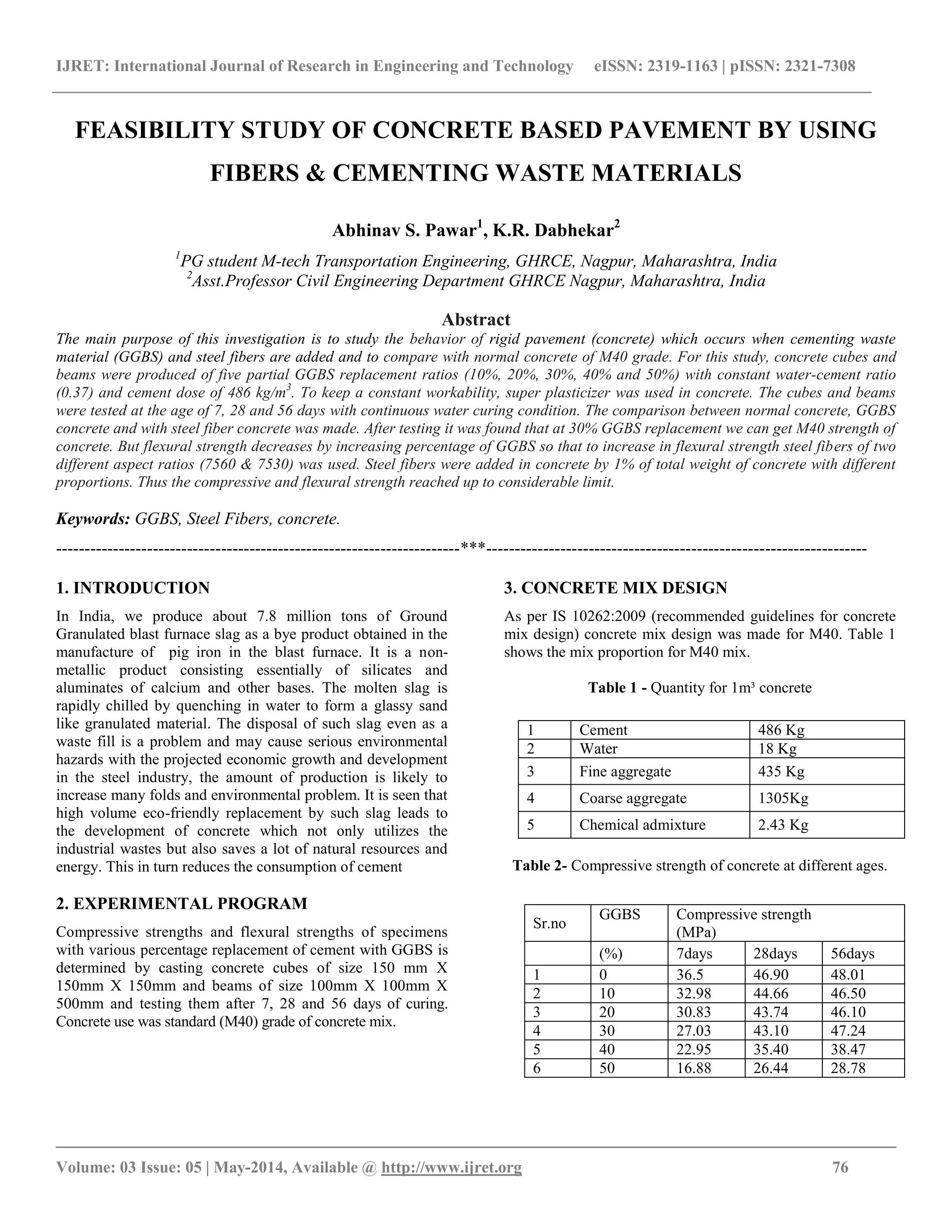
Table 2- Compressive strength of concrete at different ages.
Sr.no
GGBS Compressive strength
(MPa)
(%) 7days 28days 56days
1 0 36.5 46.90 48.01
2 10 32.98 44.66 46.50
3 20 30.83 43.74 46.10
4 30 27.03 43.10 47.24
5 40 22.95 35.40 38.47
6 50 16.88 26.44 28.78
1 Cement 486 Kg
2 Water 18 Kg
3 Fine aggregate 435 Kg
4 Coarse aggregate 1305Kg
5 Chemical admixture 2.43 Kg
IJRET: International Journal of Research in Engineering and Technology eISSN: 2319-1163 | pISSN: 2321-7308
__________________________________________________________________________________________
Volume: 03 Issue: 05 | May-2014, Available @ http://www.ijret.org 77
Graph.2
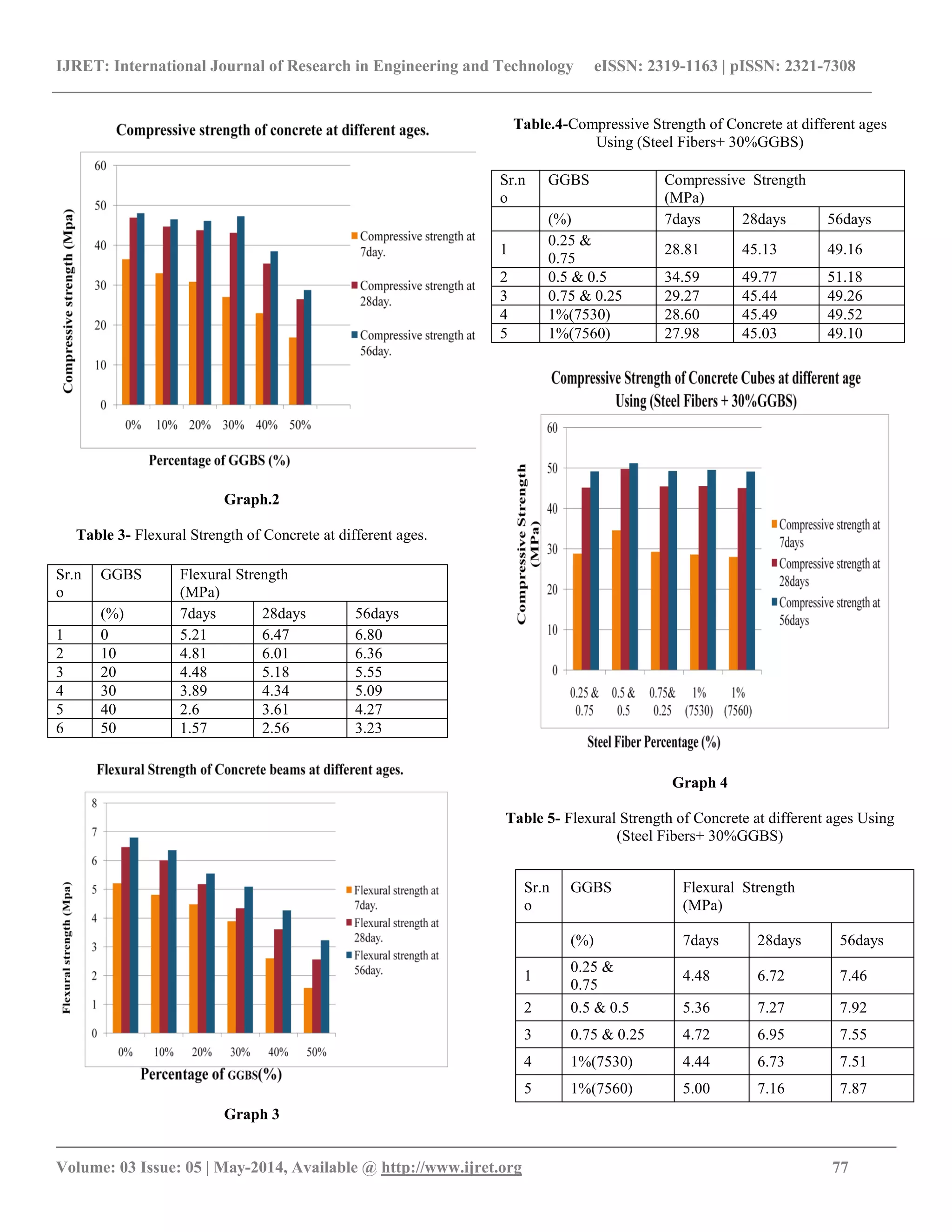
Table 3- Flexural Strength of Concrete at different ages.
Graph 3
Table.4-Compressive Strength of Concrete at different ages
Using (Steel Fibers+ 30%GGBS)
Graph 4
Table 5- Flexural Strength of Concrete at different ages Using
(Steel Fibers+ 30%GGBS)
Sr.n
o
GGBS Flexural Strength
(MPa)
(%) 7days 28days 56days
1 0 5.21 6.47 6.80
2 10 4.81 6.01 6.36
3 20 4.48 5.18 5.55
4 30 3.89 4.34 5.09
5 40 2.6 3.61 4.27
6 50 1.57 2.56 3.23
Sr.n
o
GGBS Compressive Strength
(MPa)
(%) 7days 28days 56days
1
0.25 &
0.75
28.81 45.13 49.16
2 0.5 & 0.5 34.59 49.77 51.18
3 0.75 & 0.25 29.27 45.44 49.26
4 1%(7530) 28.60 45.49 49.52
5 1%(7560) 27.98 45.03 49.10
Sr.n
o
GGBS Flexural Strength
(MPa)
(%) 7days 28days 56days
1
0.25 &
0.75
4.48 6.72 7.46
2 0.5 & 0.5 5.36 7.27 7.92
3 0.75 & 0.25 4.72 6.95 7.55
4 1%(7530) 4.44 6.73 7.51
5 1%(7560) 5.00 7.16 7.87
IJRET: International Journal of Research in Engineering and Technology eISSN: 2319-1163 | pISSN: 2321-7308
__________________________________________________________________________________________
Volume: 03 Issue: 05 | May-2014, Available @ http://www.ijret.org 78
Graph 5
4. CONCLUSIONS
The following conclusions can be drawn from the
experimental investigations conducted on the behavior of
concretes with GGBS as partial replacements for cement-
1) With increase in percentage of G.G.B.S the flexural
and compressive strength of concrete decreases.
2) With maximum 30% percent replacement of GGBS
with cement the strength of concrete is found at
considerable limits.
3) It was also observed that the early strengths (up to 28
days) of concrete mix (with 10%, 20%, 30%, 40 and
50% GGBS replacements) were lower than that of
Portland cement concrete mixes.
4) By 56 days, the strength of 30% GGBS mix exceeded
that of the 10%, 20%, 40%, & 50% GGBS mixes.
REFERENCES
[1] M. Regourd, J.H. Thomassin, P. Baillif, J.C. Touray,
“Blast-furnace slag hydration: surface analysis”, Cem.
Concr. Res. 13 (4) (1983) 549–556.
[2] OzkanSengul and Mehmet Ali Tasdemir;
“Compressive Strength and Rapid Chloride
Permeability of Concretes with Ground Fly Ash and
Slag” Journal of Materials in Civil Engineering,
2009.21:494-501.
[3] Yeau KY, Kim EK. “An experimental study on
corrosion resistance of concrete with ground
granulateblast-furnace slag”, Cement Concrete Res
2005;35:1391–9.
[4] Song HW, Saraswathy V. “Studies on the corrosion
resistance of reinforced steel in concrete with ground
granulated blast-furnace slag – an overview” J Hazard
Mater 2006;B138:226–33.
[5] Jau WC, Tsay DS. “A study of the basic engineering
properties of slag cement concrete and its resistance to
sea water corrosion”CemConcr Res 1998;28(10):1363–
71.
[6] Pal SC, Mukherjee A, Pathak SR. “Corrosion
behaviour of reinforcement in slag concrete” ACI
Mater J 2002;99-M52:521–7.
[7] American Concrete Pavement Association (2006)
Concrete Pavement Progress [online] available from
<http:/ www.pavement.com
[8] Road surfacing (2000). Journal of Highways and Public
Work 69, (4) 13-14.
[9] Zhang and Monotonic, “Fatigue performance in
bending of fibre-reinforced engineered cementitious
composite in overlay system”, Journal of Cement and
Concrete Research, 2002 32,(9) 415-423.
[10] Janet, M.L. and J.B. Cris, “Experimental study of
Influence of bond on flexural behavior of concrete
beams pretensioned with Aramid fibre reinforced
plastics”,ACI structural Journal 9, (3) 377-386.
BIOGRAPHIES
Mr.Abhinav S. Pawar, PG Student M-tech
Transportation Engineering, GHRCE,
Nagpur, Mahatrashtra, India
Mr. Kuldeep R. Dabhekar, Asst. Professor GHRCE, Nagpur,
Maharashtra, India

Feasibility study of concrete based pavement by using fibers & cementing waste materials

  • 1.
    IJRET: International Journalof Research in Engineering and Technology eISSN: 2319-1163 | pISSN: 2321-7308 __________________________________________________________________________________________ Volume: 03 Issue: 05 | May-2014, Available @ http://www.ijret.org 76 FEASIBILITY STUDY OF CONCRETE BASED PAVEMENT BY USING FIBERS & CEMENTING WASTE MATERIALS Abhinav S. Pawar1 , K.R. Dabhekar2 1 PG student M-tech Transportation Engineering, GHRCE, Nagpur, Maharashtra, India 2 Asst.Professor Civil Engineering Department GHRCE Nagpur, Maharashtra, India Abstract The main purpose of this investigation is to study the behavior of rigid pavement (concrete) which occurs when cementing waste material (GGBS) and steel fibers are added and to compare with normal concrete of M40 grade. For this study, concrete cubes and beams were produced of five partial GGBS replacement ratios (10%, 20%, 30%, 40% and 50%) with constant water-cement ratio (0.37) and cement dose of 486 kg/m3 . To keep a constant workability, super plasticizer was used in concrete. The cubes and beams were tested at the age of 7, 28 and 56 days with continuous water curing condition. The comparison between normal concrete, GGBS concrete and with steel fiber concrete was made. After testing it was found that at 30% GGBS replacement we can get M40 strength of concrete. But flexural strength decreases by increasing percentage of GGBS so that to increase in flexural strength steel fibers of two different aspect ratios (7560 & 7530) was used. Steel fibers were added in concrete by 1% of total weight of concrete with different proportions. Thus the compressive and flexural strength reached up to considerable limit. Keywords: GGBS, Steel Fibers, concrete. -----------------------------------------------------------------------***------------------------------------------------------------------- 1. INTRODUCTION In India, we produce about 7.8 million tons of Ground Granulated blast furnace slag as a bye product obtained in the manufacture of pig iron in the blast furnace. It is a non- metallic product consisting essentially of silicates and aluminates of calcium and other bases. The molten slag is rapidly chilled by quenching in water to form a glassy sand like granulated material. The disposal of such slag even as a waste fill is a problem and may cause serious environmental hazards with the projected economic growth and development in the steel industry, the amount of production is likely to increase many folds and environmental problem. It is seen that high volume eco-friendly replacement by such slag leads to the development of concrete which not only utilizes the industrial wastes but also saves a lot of natural resources and energy. This in turn reduces the consumption of cement 2. EXPERIMENTAL PROGRAM Compressive strengths and flexural strengths of specimens with various percentage replacement of cement with GGBS is determined by casting concrete cubes of size 150 mm X 150mm X 150mm and beams of size 100mm X 100mm X 500mm and testing them after 7, 28 and 56 days of curing. Concrete use was standard (M40) grade of concrete mix. 3. CONCRETE MIX DESIGN As per IS 10262:2009 (recommended guidelines for concrete mix design) concrete mix design was made for M40. Table 1 shows the mix proportion for M40 mix. Table 1 - Quantity for 1m³ concrete Table 2- Compressive strength of concrete at different ages. Sr.no GGBS Compressive strength (MPa) (%) 7days 28days 56days 1 0 36.5 46.90 48.01 2 10 32.98 44.66 46.50 3 20 30.83 43.74 46.10 4 30 27.03 43.10 47.24 5 40 22.95 35.40 38.47 6 50 16.88 26.44 28.78 1 Cement 486 Kg 2 Water 18 Kg 3 Fine aggregate 435 Kg 4 Coarse aggregate 1305Kg 5 Chemical admixture 2.43 Kg
  • 2.
    IJRET: International Journalof Research in Engineering and Technology eISSN: 2319-1163 | pISSN: 2321-7308 __________________________________________________________________________________________ Volume: 03 Issue: 05 | May-2014, Available @ http://www.ijret.org 77 Graph.2 Table 3- Flexural Strength of Concrete at different ages. Graph 3 Table.4-Compressive Strength of Concrete at different ages Using (Steel Fibers+ 30%GGBS) Graph 4 Table 5- Flexural Strength of Concrete at different ages Using (Steel Fibers+ 30%GGBS) Sr.n o GGBS Flexural Strength (MPa) (%) 7days 28days 56days 1 0 5.21 6.47 6.80 2 10 4.81 6.01 6.36 3 20 4.48 5.18 5.55 4 30 3.89 4.34 5.09 5 40 2.6 3.61 4.27 6 50 1.57 2.56 3.23 Sr.n o GGBS Compressive Strength (MPa) (%) 7days 28days 56days 1 0.25 & 0.75 28.81 45.13 49.16 2 0.5 & 0.5 34.59 49.77 51.18 3 0.75 & 0.25 29.27 45.44 49.26 4 1%(7530) 28.60 45.49 49.52 5 1%(7560) 27.98 45.03 49.10 Sr.n o GGBS Flexural Strength (MPa) (%) 7days 28days 56days 1 0.25 & 0.75 4.48 6.72 7.46 2 0.5 & 0.5 5.36 7.27 7.92 3 0.75 & 0.25 4.72 6.95 7.55 4 1%(7530) 4.44 6.73 7.51 5 1%(7560) 5.00 7.16 7.87
  • 3.
    IJRET: International Journalof Research in Engineering and Technology eISSN: 2319-1163 | pISSN: 2321-7308 __________________________________________________________________________________________ Volume: 03 Issue: 05 | May-2014, Available @ http://www.ijret.org 78 Graph 5 4. CONCLUSIONS The following conclusions can be drawn from the experimental investigations conducted on the behavior of concretes with GGBS as partial replacements for cement- 1) With increase in percentage of G.G.B.S the flexural and compressive strength of concrete decreases. 2) With maximum 30% percent replacement of GGBS with cement the strength of concrete is found at considerable limits. 3) It was also observed that the early strengths (up to 28 days) of concrete mix (with 10%, 20%, 30%, 40 and 50% GGBS replacements) were lower than that of Portland cement concrete mixes. 4) By 56 days, the strength of 30% GGBS mix exceeded that of the 10%, 20%, 40%, & 50% GGBS mixes. REFERENCES [1] M. Regourd, J.H. Thomassin, P. Baillif, J.C. Touray, “Blast-furnace slag hydration: surface analysis”, Cem. Concr. Res. 13 (4) (1983) 549–556. [2] OzkanSengul and Mehmet Ali Tasdemir; “Compressive Strength and Rapid Chloride Permeability of Concretes with Ground Fly Ash and Slag” Journal of Materials in Civil Engineering, 2009.21:494-501. [3] Yeau KY, Kim EK. “An experimental study on corrosion resistance of concrete with ground granulateblast-furnace slag”, Cement Concrete Res 2005;35:1391–9. [4] Song HW, Saraswathy V. “Studies on the corrosion resistance of reinforced steel in concrete with ground granulated blast-furnace slag – an overview” J Hazard Mater 2006;B138:226–33. [5] Jau WC, Tsay DS. “A study of the basic engineering properties of slag cement concrete and its resistance to sea water corrosion”CemConcr Res 1998;28(10):1363– 71. [6] Pal SC, Mukherjee A, Pathak SR. “Corrosion behaviour of reinforcement in slag concrete” ACI Mater J 2002;99-M52:521–7. [7] American Concrete Pavement Association (2006) Concrete Pavement Progress [online] available from <http:/ www.pavement.com [8] Road surfacing (2000). Journal of Highways and Public Work 69, (4) 13-14. [9] Zhang and Monotonic, “Fatigue performance in bending of fibre-reinforced engineered cementitious composite in overlay system”, Journal of Cement and Concrete Research, 2002 32,(9) 415-423. [10] Janet, M.L. and J.B. Cris, “Experimental study of Influence of bond on flexural behavior of concrete beams pretensioned with Aramid fibre reinforced plastics”,ACI structural Journal 9, (3) 377-386. BIOGRAPHIES Mr.Abhinav S. Pawar, PG Student M-tech Transportation Engineering, GHRCE, Nagpur, Mahatrashtra, India Mr. Kuldeep R. Dabhekar, Asst. Professor GHRCE, Nagpur, Maharashtra, India