Rabia Aurangzeb
1st Year BDS
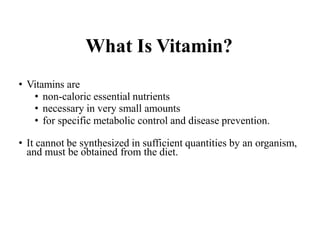
What Is Vitamin?
• Vitamins are
• non-caloric essential nutrients
• necessary in very small amounts
• for specific metabolic control and disease prevention.
• It cannot be synthesized in sufficient quantities by an organism,
and must be obtained from the diet.
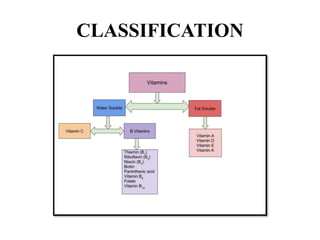
CLASSIFICATION
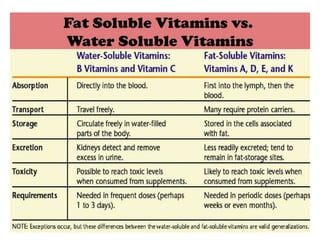
• Fat soluble vitamins usually accumulate in
tissues and are not leached out quickly
• Unlike water soluble vitamins, and excess of a
fat soluble vitamin can be just as harmful as a
deficiency
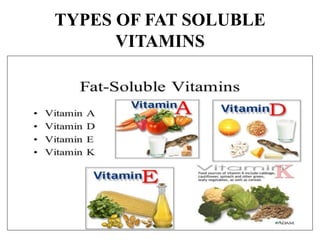
TYPES OF FAT SOLUBLE
VITAMINS
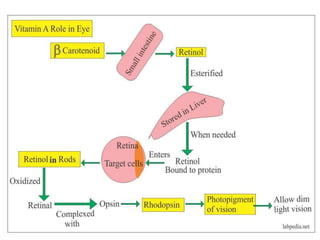
• Vitamin A is a fat-soluble vitamin and
essential nutrient for humans.
• It is a group of organic compounds that
include :
• Retinol
• Retinal
• Retinoic acid
• Several carotenoids
VITAMIN A (RETINOL)
• Foods from animal source provide various
retinoid that are easily converted to retinol in the
body
• Foods from plants source provide carotenoids
• Over 500 carotenoids found in nature
• Less than 10% with pro vitamin A activity
• Beta carotene highest activity
• Must be acted upon in the gut or by the liver to
form retinol
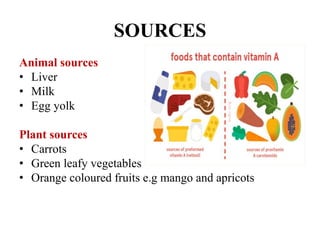
SOURCES
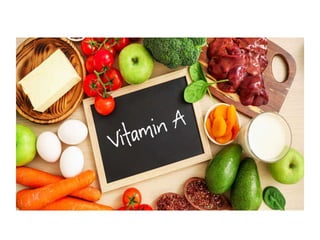
Animal sources
• Liver
• Milk
• Egg yolk
Plant sources
• Carrots
• Green leafy vegetables
• Orange coloured fruits e.g mango and apricots
RETINOIDS
• Three forms of Vitamin A are important for
health
1. Retinol (key player can be converted to other
forms)
2. Retinal
3. Retinoic Acid
• Beta Carotene
Potent Pro Vitamin A
METABOLIC FUNCTIONS OF
VITAMIN A
• Each form of retinoid plays a specific role in
the body. Retinal (the aldenhyde form)
participates in vision.
• The hormone like action of retinoic acid is
essential for growth and development of cells
including bone development
• The retinol (alcohol form) supports
reproduction and healthy immune system
• In addition Vitamin A may help prevent cancer
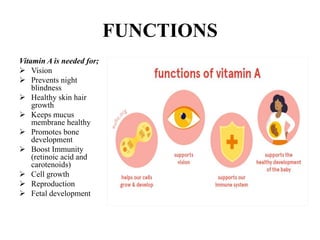
FUNCTIONS
Vitamin A is needed for;
 Vision
 Prevents night
blindness
 Healthy skin hair
growth
 Keeps mucus
membrane healthy
 Promotes bone
development
 Boost Immunity
(retinoic acid and
carotenoids)
 Cell growth
 Reproduction
 Fetal development
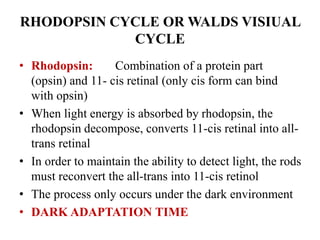
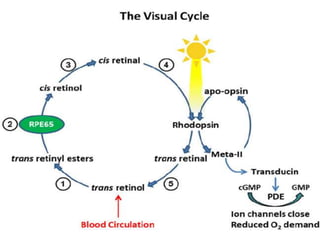
RHODOPSIN CYCLE OR WALDS VISIUAL
CYCLE
• Rhodopsin: Combination of a protein part
(opsin) and 11- cis retinal (only cis form can bind
with opsin)
• When light energy is absorbed by rhodopsin, the
rhodopsin decompose, converts 11-cis retinal into all-
trans retinal
• In order to maintain the ability to detect light, the rods
must reconvert the all-trans into 11-cis retinol
• The process only occurs under the dark environment
• DARK ADAPTATION TIME
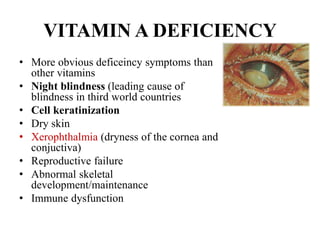
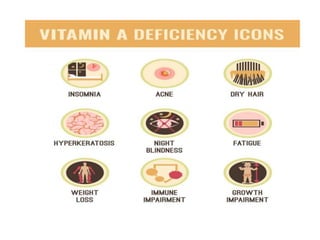
VITAMIN A DEFICIENCY
• More obvious deficeincy symptoms than
other vitamins
• Night blindness (leading cause of
blindness in third world countries
• Cell keratinization
• Dry skin
• Xerophthalmia (dryness of the cornea and
conjuctiva)
• Reproductive failure
• Abnormal skeletal
development/maintenance
• Immune dysfunction
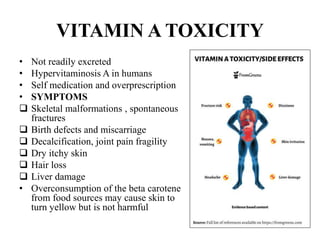
VITAMIN A TOXICITY
• Not readily excreted
• Hypervitaminosis A in humans
• Self medication and overprescription
• SYMPTOMS
 Skeletal malformations , spontaneous
fractures
 Birth defects and miscarriage
 Decalcification, joint pain fragility
 Dry itchy skin
 Hair loss
 Liver damage
• Overconsumption of the beta carotene
from food sources may cause skin to
turn yellow but is not harmful
BENEFICIAL EFFCETS OF B-
CAROTENE
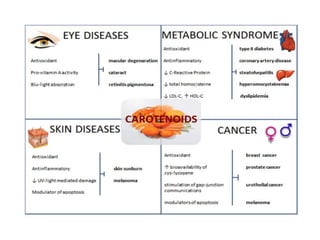
• Antioxidant role of B-carotene
• Increased consumption of B-carotene is
associated with decreased incidence of heart
attacks, skin and lung cancer
• High doses of carotene for long periods are
not toxic
FAT SOLUBLE VITAMINS A.pptx

FAT SOLUBLE VITAMINS A.pptx

  • 1.
  • 2.
    What Is Vitamin? •Vitamins are • non-caloric essential nutrients • necessary in very small amounts • for specific metabolic control and disease prevention. • It cannot be synthesized in sufficient quantities by an organism, and must be obtained from the diet.
  • 3.
  • 5.
    • Fat solublevitamins usually accumulate in tissues and are not leached out quickly • Unlike water soluble vitamins, and excess of a fat soluble vitamin can be just as harmful as a deficiency
  • 6.
    TYPES OF FATSOLUBLE VITAMINS
  • 8.
    • Vitamin Ais a fat-soluble vitamin and essential nutrient for humans. • It is a group of organic compounds that include : • Retinol • Retinal • Retinoic acid • Several carotenoids
  • 9.
    VITAMIN A (RETINOL) •Foods from animal source provide various retinoid that are easily converted to retinol in the body • Foods from plants source provide carotenoids • Over 500 carotenoids found in nature • Less than 10% with pro vitamin A activity • Beta carotene highest activity • Must be acted upon in the gut or by the liver to form retinol
  • 10.
    SOURCES Animal sources • Liver •Milk • Egg yolk Plant sources • Carrots • Green leafy vegetables • Orange coloured fruits e.g mango and apricots
  • 11.
    RETINOIDS • Three formsof Vitamin A are important for health 1. Retinol (key player can be converted to other forms) 2. Retinal 3. Retinoic Acid • Beta Carotene Potent Pro Vitamin A
  • 12.
    METABOLIC FUNCTIONS OF VITAMINA • Each form of retinoid plays a specific role in the body. Retinal (the aldenhyde form) participates in vision. • The hormone like action of retinoic acid is essential for growth and development of cells including bone development • The retinol (alcohol form) supports reproduction and healthy immune system • In addition Vitamin A may help prevent cancer
  • 14.
    FUNCTIONS Vitamin A isneeded for;  Vision  Prevents night blindness  Healthy skin hair growth  Keeps mucus membrane healthy  Promotes bone development  Boost Immunity (retinoic acid and carotenoids)  Cell growth  Reproduction  Fetal development
  • 15.
    RHODOPSIN CYCLE ORWALDS VISIUAL CYCLE • Rhodopsin: Combination of a protein part (opsin) and 11- cis retinal (only cis form can bind with opsin) • When light energy is absorbed by rhodopsin, the rhodopsin decompose, converts 11-cis retinal into all- trans retinal • In order to maintain the ability to detect light, the rods must reconvert the all-trans into 11-cis retinol • The process only occurs under the dark environment • DARK ADAPTATION TIME
  • 17.
    VITAMIN A DEFICIENCY •More obvious deficeincy symptoms than other vitamins • Night blindness (leading cause of blindness in third world countries • Cell keratinization • Dry skin • Xerophthalmia (dryness of the cornea and conjuctiva) • Reproductive failure • Abnormal skeletal development/maintenance • Immune dysfunction
  • 19.
    VITAMIN A TOXICITY •Not readily excreted • Hypervitaminosis A in humans • Self medication and overprescription • SYMPTOMS  Skeletal malformations , spontaneous fractures  Birth defects and miscarriage  Decalcification, joint pain fragility  Dry itchy skin  Hair loss  Liver damage • Overconsumption of the beta carotene from food sources may cause skin to turn yellow but is not harmful
  • 20.
    BENEFICIAL EFFCETS OFB- CAROTENE • Antioxidant role of B-carotene • Increased consumption of B-carotene is associated with decreased incidence of heart attacks, skin and lung cancer • High doses of carotene for long periods are not toxic